09232014 Stapp’s Ironical Paradox


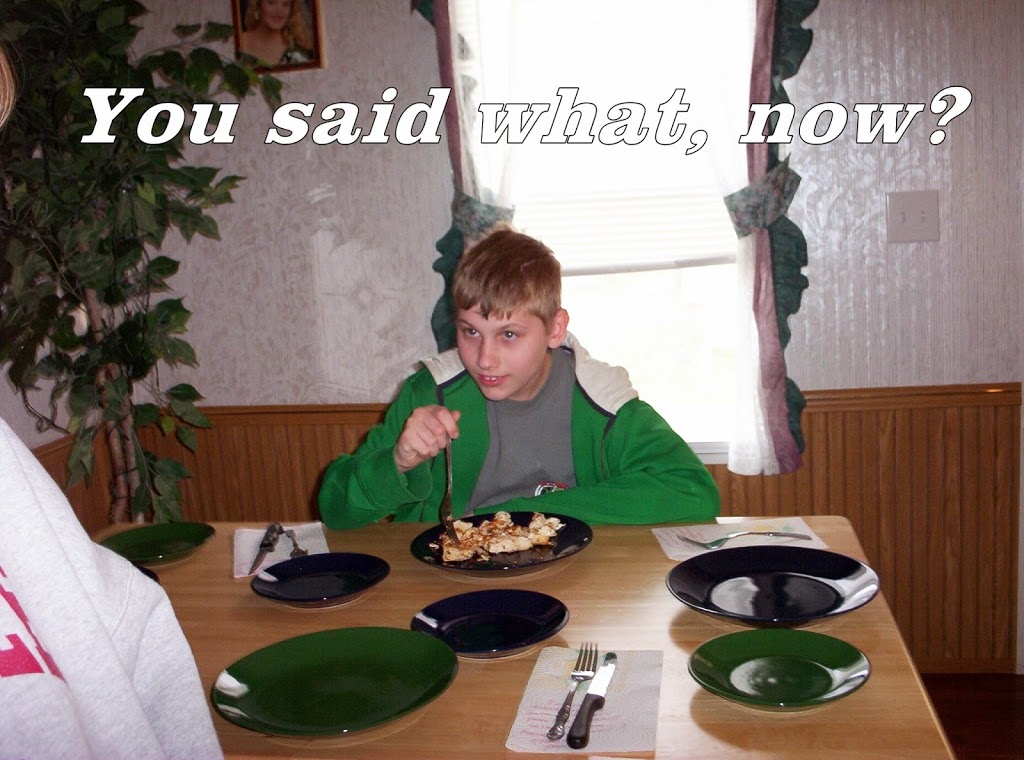
Stapp’s ironical paradox: “The universal aptitude for ineptitude makes any human accomplishment an incredible miracle.”
 .
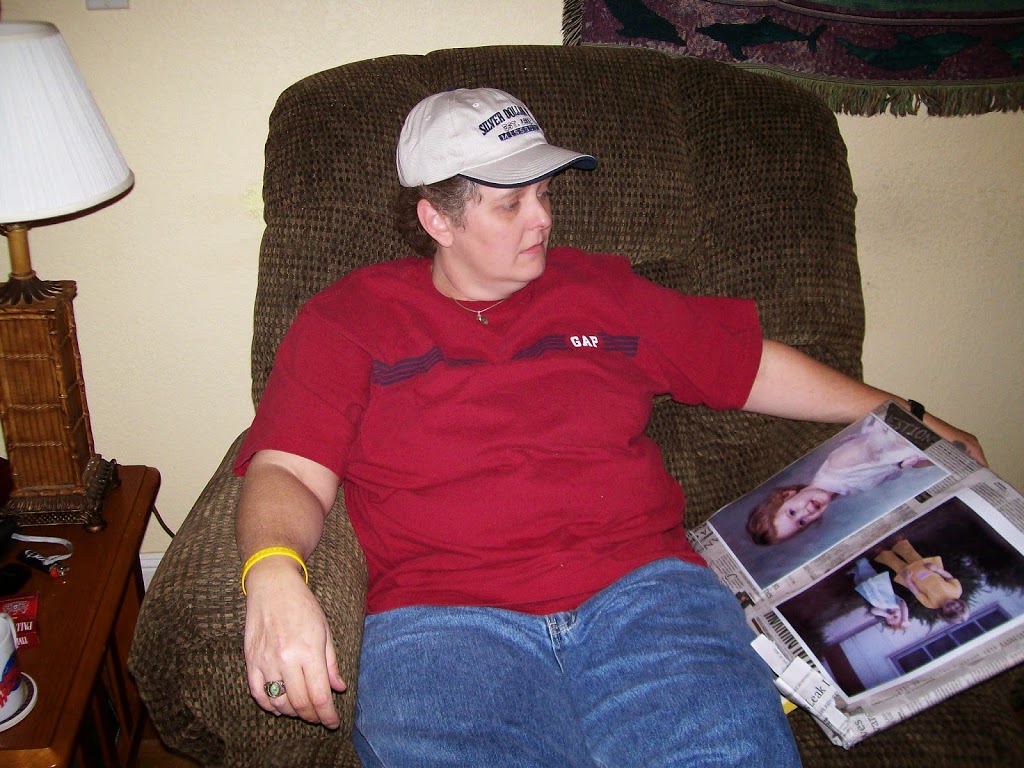
P.S. This picture is of my dad, after he miraculously avoiding being killed after driving into a holler while incredibly intoxicated. True Story, too…
Rare Googly-Eyed Species of Deer in Central Arkansas

Rarer than the Ivory-Billed Woodpecker, a friend of mine spotted the even more reclusive “Googly-Eyed Whitetail Deer” in Central Arkansas today. To assist mobile users, I’ve zoomed in on the shot for you all to enjoy. The good thing about these deer is that it is impossible to determine whether you’ve startled them or not, as their perpetually “surprised-face” never changes.

Adrian Peterson Social Media Commentary

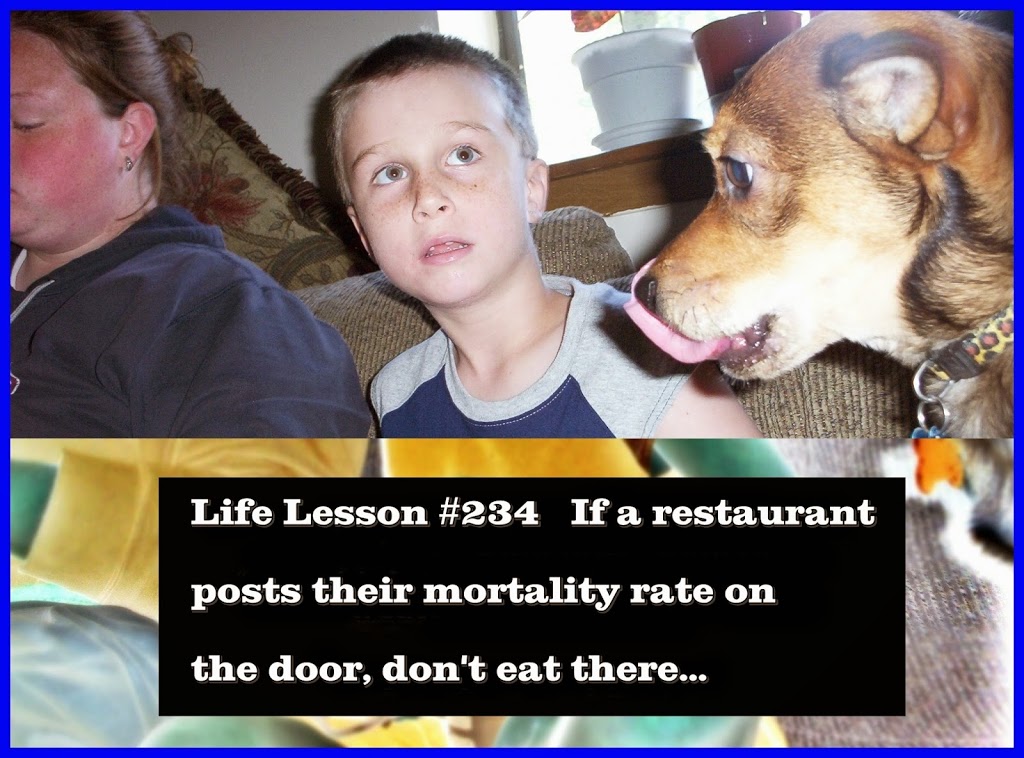
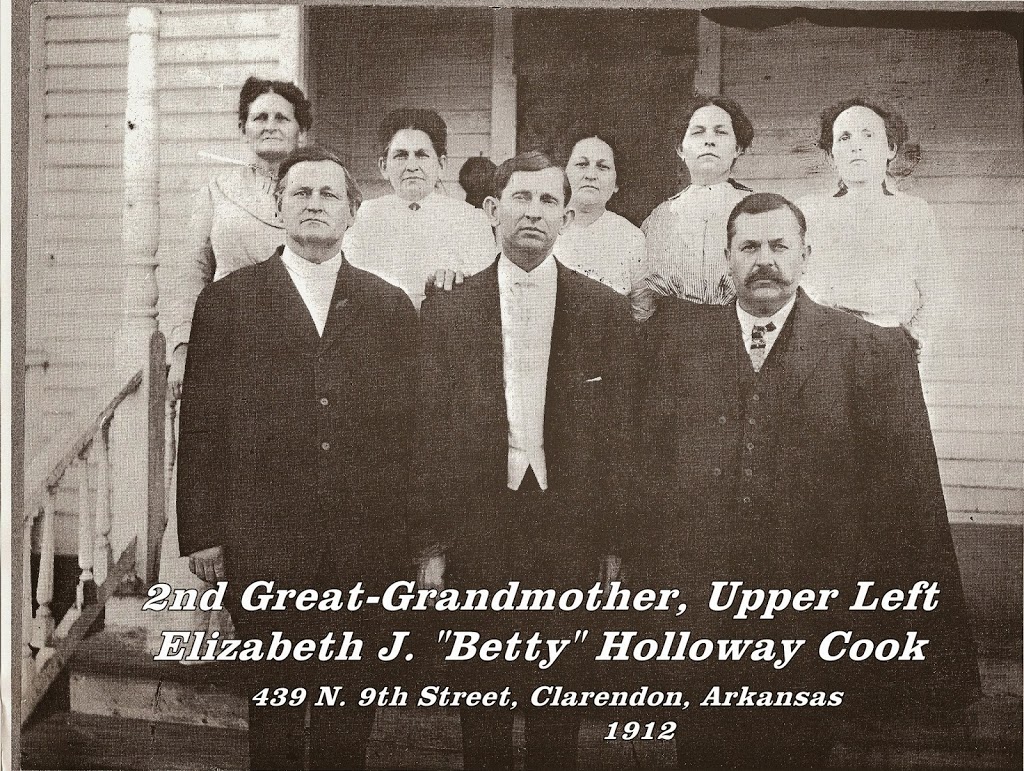
My dad on the left. I didn’t make the notations on the picture.

Recently, I posted a status update on social media. It generated a lot of personal commentary, which is one of the best things that is possible from social media. I’ve written and talked about some of the abuse. It’s not a secret, especially in my regard.

For Adrian Peterson’s case, please keep in mind that I am in no way a sports fan. What triggered such a reaction from me were the words coming out of his mouth in regards to how he behaved. It’s bad enough when a blue-collar works echoes those sentiments, but when a famous multimillionaire does it while cloaking himself in both the Bible and old-fashioned “that’s what they done to me,” it galls me relentlessly. I could use the same idiotic logic and beat my spouse and children, too, almost to the point of death – because that is how some in my family deal with their problems.

“Not to cast aspersions on Adrian Peterson, but commentary: my father thought it would be appropriate to hit me across the back with a wooden rake. I wasn’t looking when he did it – the rake broke across my lower back. I urinated blood for days and didn’t get medical attention. He hit me with his fists, inner tubes, belts, sticks on many other occasions, yet I was somehow made to feel guilty about it – and then face the revisionists who would still insist that it wasn’t that bad. It’s a constant battle to not scream at other adults for failing to distinguish between discipline and abuse. If you are disciplining your child and draw blood or create bruises, you deserve to lose your job, go to jail, and be judged. Get help. If you are hurting your children to that degree, you are raising future adults who are heading into life as damaged victims ready to repeat the cycle.I would give anything to go back to several moments in my life and dole out in equal measure what was given to me. That desire is one of the single biggest impediments to living a joyous life.”

Several people contacted me privately, as they had a lot to say about it. Abuse, whether it is psychological or physical, is more common that people would like to acknowledge. It’s also commonly hidden and actively concealed from others. There are so many reasons that such things aren’t talked about.

Here are a few of the excerpts from social media (public comment, not private content):
 
“The system will work great IF people will talk. When they see it or hear, they should call or better yet go talk to someone to report it. Face-to-face makes the story much more credible. It’s not the police’s fault or social services when really all that needs to be done to vastly improve this is for people to come forward and tell someone.”

 “A lot of people ask why people wait until the are adults before speaking out. As a child you are afraid and ashamed. You believe it is your fault. The guilt combined with the fear is overwhelming. You also believe the threats to harm you or your loved ones are real. If you do tell someone, they don’t believe it, or choose to ignore it because it is too ugly. It takes years to recover to the point of being able to talk about it. When you do, people don’t understand unless they experienced it too.”

ALSO, other members of your family can be very disapproving of your coming forward. They will try to shame you into silence.”

 “…everything you say about abuse is true. People need to speak it instead of hide it, for many reasons. There is so much abuse in the world it’s sickening.”


“I so agree. And you know it’s hard when defenders say…. It’s private. I’m a firm believer in sunshine makes situations better.”

Did you know that Adrian Peterson also stuffed LEAVES into his boy’s mouth to keep him from screaming? He also whipped him in the testicles. I think everyone I respect is going to say that stuffing a kid’s mouth with leaves is evidence of pure crazy.”  (Allegedly?)

Others wrote privately about their own struggles and specifics. Much of it was a total surprise to me. I’m glad I wrote the post, even though it shared “too much” for some people. I noticed several key people in my life didn’t touch the post, even though it was sponsored and all over their news feeds.

It is always odd to me when someone engages in an open and honest way and other people have so much baggage that they are afraid to interact.  We can talk and snipe endlessly about politics and other superficial things but when the focus turns intense and personal, for some people, they simply can’t do it.


09142014 Authentic Abuse

Sometimes, I watch a show or movie and the authenticity of the violence is so spot on that it surprises me. Watching this week’s premiere of “Boardwalk Empire” on HBO served up such a moment.

Even though the father of Nucky Thompson had been previously portrayed as malignant, the flashback added an aura of inevitability to the scene. Factoring in that I had told a couple of “you won’t believe how mean my dad was” stories at work that day added a note of surreal to the tv episode. Seeing Nucky’s father act so casual in advance of the brutality seemed real to me. Maybe the writer had experienced abuse but whatever the past circumstances, the chilling expectation of violence shrouded the scene until it happened.

At work, I wasn’t trying to play the “one up” game on my co-workers. But the first of my stories basically slammed the conversation into a wall.. The second anecdote proceeded to burn down the building that the conversation would have been held in.

Infrequently, I forget that not everyone had exposure to such gratuitous violence growing up. Not everyone even really believes such stories, so alien they are to them. All I can do is shrug my shoulders and go on about my day when I encounter doubt.

I don’t live in that house of violence in my adult life. But I certainly drive by it every once and a while and even though I know I should avoid it, I pull into the driveway of my youth and visit old memories stored there. I visit it only because memories are much of my life. Forgetting them is a disservice, just as using them as a crutch would be.

Pollyannaism

Pollyannas. No one wants undue cynicism in their lives. But equally vexing are those insisting to the point of madness that all things be painted in the most positive light.

Or that if you are experiencing any manner of ill luck, bad experience, or irksome environment, that you should self-censor or desist from expressing it. As if the expression of same is itself infectious.

This post isn’t intended to point a finger at anyone, nor single out any particular line of positive thinking. Rather, it is to contrast the need for positivity against the increasingly sophisticated madness to lessen the output of people who have valid complaints, interesting criticism or words not powered by the blissful lightness of being. There are broken shards of darkness in the world, just as there are beacons of light and hope. Both have their uses in the world and both need room for expression. We don’t need to feed our demons or nightmares- but repression is no less a horrible response.

One person’s complaint is another person’s call to action.

Oliver Burkeman noted in “The Antidote: Happiness for People Who Can’t Stand Positive Thinking,” “Ceaseless optimism about the future only makes for a greater shock when things go wrong; by fighting to maintain only positive beliefs about the future, the positive thinker ends up being less prepared, and more acutely distressed, when things eventually happen that he can’t persuade himself to believe are good.”

(“Your excessive optimism and insistence that everyone and everything be happy and ecstatic is annoying me.”)

09052014 Who Put the “Curse” in Cursive Writing?

5555
This is the logo used when I was kid. Dolly Madison is now owned by Hostess Foods. I wrote them many years ago, telling their marketing department that their logo sparked my ability to write words.

For those of who know me, I love the style of cursive writing. Writing “longhand,” as we can archaically call it, is a peaceful, meditative thing – at least for me. I wrote letters long after my contemporaries abandoned the practice.For those who had to attempt to read and comprehend my writing, I apologize! My handwriting resembles the scrawls of a man being forced to write at gunpoint, while receiving random electrical shocks. It’s that bad – regardless of the time I spent trying to do it better.

But (and there is always a “but” in these essays), as a left-handed person, cursive written was indeed a cursed activity in school. I remember the first cursive letter I ever wrote. It was an “L.” I was living with my grandparents at the time and they had a small black and white television, so we gathered around it to be entertained. It was either Friday or Saturday evening and we were watching a show sponsored by Dolly Madison. In rural Central-Eastern Arkansas back in the very early 1970s, being able to get even 3 stations was a miracle. Much of the programming was very tame by today’s standards, too. Putting an antennae up was also a necessity but it increased the chances of a lightning bolt to the house, too.

If you look casually at the logo above you can see that the “L” that my grandma showed me how to draw was essentially the bonnet in the logo. I was so proud of myself.

I learned a lot of letters from my grandparents. What is amusing is how relatively uneducated they both were, but they loved the time they spent showing me words. In fact, the way grandpa taught me to read words caused me considerable trouble in 1st grade. My teacher ultimately assigned me special help. I was regarded as a little simple. I simply didn’t know how to sound out words in the way preferred in the alleged modern teaching method. Grandpa had taught me to recognize an immense list of words. I could pronounce them and use them in sentences correctly, but it set me back compared to other kids my age, as I could not break down words into syllables and sounds distinguished by letters. My favorite thing to use to learn new words: the TV guide. In grandma Nellie’s house, the TV guide had more stature than the bible. As I progressed, learning how to sound out the alphabet in pieces instead of whole words, the truth is that I actually learned how to conceal the fact that I was still learning much, much more by learning entire words than I was by sounding them out. I’m still convinced that I can read so quickly precisely because I learned how to read the wrong way. (If you believe that there is a wrong way to learn.)

Before I forget, I didn’t go to kindergarten. Due to mom and dad moving to Northwest Arkansas between school years, I skipped having to go. I went from reading TV Guide to 1st grade at John Tyson Elementary. It is now considered highly unusual for a kid my age to have skipped kindergarten. Back then, though, there weren’t any stringent truancy laws to exact revenge on parents who didn’t enroll their kids in kindergarten or other programs before elementary school.

Later, in school, I had the terrible misfortune of having to deal with a couple of teachers who stupidly insisted that writing with my left-hand was wrong and needed to be harshly weeded out of me. Naturally, I resisted them. My grandpa had insisted that I learn to write and draw with whichever hand was comfortable. He wasn’t progressive in any sense of the word – but he did make an effort to be sure that I enjoyed writing and drawing, even if I did it poorly. And make no mistake about it, my drawing and penmanship were terrible. Unlike other kids, though, I never learned to loathe writing or to be embarrassed about my notable lack of skill. Even as my left hand left huge smears on the paper as I wrote, I didn’t let it dampen my enthusiasm. Even when those very few teachers were asses to me about writing left-handed, I knew they were wrong. One of them in particular tried vainly to shame me for my horrible penmanship. I didn’t care, as I knew that no matter how hard I worked, my penmanship was never going to be great. Some teachers just couldn’t get it through their heads that, as a left-hander, their methods of instruction were exactly backwards to me. Even in the 6th grade, I had a teacher treat me like an ape over my lack of concern over writing with the “correct” hand. She never missed an opportunity to tell me my handwriting was atrocious. Little did she know that my dad had already provided infinite training in the ability to ignore a lot of harshness being directed at me. She was a child in an adult’s world, at least in my mind. I do wonder sometimes whether she realized how horrible she seemed to me then.

Now, seeing that the tide is turning regarding cursive writing, I would like to weigh in and say that I admire cursive writing. It’s elegant and evokes times past. It does enhance motor control and acuity. But so do many other activities, ones more anchored in our ever-changing world.

But it is still wrong to continue to require it. The arguments being made for continuing to teach it are usually based on not understanding where cursive originated.

The world has moved on and those who would shout to the heavens to require this antiquated way of writing are wrong to insist on their stubbornness to require it. Focus on regular writing and leave cursive writing with calligraphy, which once was an admired and respectable means to write. Like it or not, the world has shifted to block lettering, preferred by computers and keyboards. Try as you might to anchor written communication to the past, it is not going to be successful or even necessary. It is the way of the world to claim remorse over the changing ways we live our lives and to seek to keep elements of our past alive, long after the necessity or even the utility of it has passed. I can understand the appeal toward maintaining old customs, even when they are no longer relevant.

Remember, I love cursive writing, even though it was very difficult for me to learn. Part of it might have been that everything looked backwards to me in my hard-wired left-handed world. As much as I love the idea and essence of cursive writing, it is already an elective art.

It is time for schools to acknowledge the antiquated status of cursive and use the immense time involvement on something much more useful, such as reading. One of my personal prejudices is the belief that reading in and of itself is one of the most redeeming and intellectually valuable pursuits of anyone, at any age.

Sidenotes:

If you are interested, you should google “Writing in Cursive,” or read the link here: Click Here for Cursive Wikipedia Article        Cursive was used for informal writing, while what we might call block lettering was the preferred and more esteemed way to write. Cursive was considered to be more illegible. Interesting? I think so. If you only read the Wikipedia page in the leak, I’m certain that you will discover that the issue is a little more convoluted than those arguing about it would admit to.

Cursive writing also originated from the necessity of compensating for quills and other antiquated writing utensils. Not lifting one’s writing utensil not only provided for greater speed, but also mitigated limitations of the method used to write. Please note that people arguing in favor of mandatory cursive training in school are in fact making an argument based on aesthetics over obsolescence.