Meat Safety and General Opinion

(This blog post was written quite a while ago.) The average person doesn’t know how food is produced. And that’s a good thing. It’s easier to assume safeguards are followed and that food is generally safe to eat. We are at the mercy of giant corporations whose commitment to safe food is not always a given. We hope that circumstances in facilities producing our food are not operated in an undesirable way- but we know in our hearts that it probably isn’t true.

I don’t want to complain about Meatsack Inc (fake name, of course), as it pays the bills for a lot of people. Despite the rough work environment, I ran into a lot of great people when I worked in a meat plant. Most of the people were great. A lot of those great people would be shocked at the conditions that existed under their noses. And the environment seemed to promote and reward people who were able to cross the food safety line. Speed kills – both on the road and in food production. It injures human beings and it injures the ability to take appropriate safety measures for food consumption. Day in and day out I watched as management said and did the most asinine and unsafe things. Nothing got in the way of the efficiency god and cost was trumped by safety only when unavoidable. It was like watching a preacher give a sermon and rob the congregation at gunpoint.

However, is it wrong of me to feel happy that the company has suffered a least a degree of bad publicity lately? I know that it’s almost impossible to guarantee a safe food supply. The “however” comes into play because when you personally see avoidable and ignored conditions that lead to unsafe food practices, it tends to carry a different significance. Mistakes can and do happen. Willful misapplications and failures to follow rules and guidelines can’t be hidden as “mistakes.” (Even if the marketing and legal departments spends millions attempting to convince us of this.)
While much of my criticism is my OPINION, the reality is that meat facilities of any kind aren’t really operated in a manner that I agree with, to put it nicely. They are generally dehumanizing, dirty, and even established procedures are blithely ignored in order to increase efficiency and allegedly, profits. Or they were back in my day. I have to admit that my opinion could be 100% inaccurate now. Based on what I am told by people I trust, the same objections I once raised are still being shouted today as well.
One positive: Meatsack, Inc. left me with an appreciation for other jobs. Even simple acts such as being able to go to the  restroom can’t be taken for granted for many meat facility employees. Need a drink of water? Have a muscle cramp? Good luck getting human attention.There is a huge gap between the expectation of an honest day’s work for honest pay and the human exploitation of designing processes that don’t fundamentally address the physical effects of long-term repetitive motion issues, among others, on employees. Regardless of cost – even if higher prices result. Of what purpose is the perpetuation of any industry that doesn’t address profit as a result of human-oriented activity?
Working for so many years at a meat facility also demonstrated to me that management cannot survive without “open secrets” behind every aspect of operations. Don’t have time to document inspections, much less do them? How will anyone know it’s done if you document it, but don’t do it? That’s why publicized issues with cleanliness and disease always at first seem credible to me. I’m sure I’ve been mistaken in my contempt for some of the businesses embroiled in these food safety debacles. There must be companies dedicated to cleanliness at any cost. There must be…
It’s not that people who work at meat facilities are bad. It’s that the production method itself inspires nonsensical behavior. Add management who literally can’t communicate with much of the workforce and who know, but can’t acknowledge, that every day must be run one small second away from a disaster. Good people have to adjust a lot of behavior in order to work long-term at meat facilities. In dehumanizing jobs, it is difficult to avoid the pull downward in regards to what you can not only personally put up with, but what you can stomach doing to others. It becomes easier to disconnect from the consequences of doing things wrong. We’re not the ones making the decisions, we tell ourselves.
Daily, however, I saw and participated in processes that simply failed to be hygienic. Managers would become angry if you stopped and pointed out that the way we were doing things was just WRONG. Production seemed to consistently run on the edge of disaster, products needed to be shipped before they were even made and the “get it out the door” mentality was the dominant mantra, even if it was implemented with a wink. Everyone “knew” that rules had to be bent to make production. Discussion of these exceptions was simply not acceptable. (I won’t digress too much into  how SAFETY is considered in exactly the same way, but I worked in an area where someone with decades of experience was almost decapitated. I, too, was exposed many times to the extra SAME danger. Honestly speaking, my exposure was worse than the person who was almost mortally injured in that area. Everything about that area was operated in direct opposition to its inherent dangers and people were injured because of management’s mentality about it.)
Worse still, I had to actively participate in the “overlooking” sometimes, even when I knew beyond a doubt that it was contributing to the likelihood of a degraded food product. On many occasions, I was threatened directly and indirectly to stop talking and do as I was told, even though it was my name on the line. Working in a couple of areas was a course in counter-espionage, with the enemy being anyone or anything standing in the way of MAXIMUM production. A couple of the best people I ever met were inspectors of one kind or another and it was toward them that management ordered me to not only not answer questions, but to actively engage in behavior that was questionable and to falsify inspections and data. If I were under subpoena, I of course could name some of them after all these years. They would have a different recollection. Guess what? There would be no documented proof, as we falsified it all! I got the ‘wink’ from management so often I forgot that it was possible to do things correctly without cooking the books, so to speak. Repeatedly. Like dirty ceilings dripping directly into the food supply, meat spilled onto the floor and then shoveled up off of the floor without being reported, chill coolers being way too hot for storage, fresh product being frozen solid and then sneaked through production to avoid temperature inspection, etc. Did really bad things happen every day? No, of course. Very often? Yes.People don’t like to be reminded that they were involved in the shenanigans, as they feel like they had no choice. But when you are the one making the decisions, the buck can’t be passed.
I’ll never forget the summer when someone was putting a contaminant into cooked deli. Despite our supposedly rigorous detection procedures, we shipped a lot of this stuff out the door to customers. We had to work a lot of overtime to run it all through detectors again – after the contaminant was being found for the second time in cooked meat that we had already processed twice. And even missed some the second time. Yet, at each point, our procedures were documented, our machines calibrated. Or were they? Did speed trump safety? To ask is to answer affirmatively. Someone was paying for all that overtime. We also had lie detectors being used on us during this period, to catch the person contaminating the cooked food supply with metal. At the outset, I knew that only a select few could have been guilty. Management knew my crazy reputation so I wasn’t a suspect. But it bothered a couple of them that an idiot from line production like me could take a cursory look at the circumstances and correctly narrow the suspect pool to a handful of people. Nevertheless, they wasted a lot of resources chasing phantoms instead of taking an honest look at how they were producing food. Any real emphasis on checking the food supply more carefully would have guaranteed a safe food supply. Instead, we focused on production speed. So focused on the necessity of production to keep their respective jobs that sensible group safety thinking among managers often disappeared. Being well-educated, many of the management team could fast-talk themselves and others into forgetting that many of us on the front lines of production knew better than to drink the “we’re doing things right” kool-aid. We didn’t inspect the cooked end enough to guarantee no trapped air or holes in the packaging. If we sliced a box accidentally and into the meat or bird below the cardboard, we often ignored it. Did we use the wrong broth formulation because we knew it couldn’t be proven? Yes, of course. Time was always trumping quality. Yet, we had to listen to paradoxical exhortations to be safe and to treat the food products safely – until we couldn’t, at which point every objection people had to doing things correctly was treated as insubordination. As I was quite the ass when younger, many times it was me doing the objecting and listening to the stupidity of their “shhhh system” of dealing with problems.
If you are reading this and thinking, “Can any of this be true?” Just remember that I am heavily censoring and editing what I say. It is not a specific company or person I want to comment on, even though I am addressing my situation. I’d rather you focus on the idea that if it happened one place it happened many places. Which of course it did. I could tell some hypnotic and horrifying stories of what was done to the food supply. Most of them can be summed up this way: Management said to do it and to shut up about it – or else.
I’ve long said that the way to determine a company’s true values and purpose can be learned by listening, watching, and experiencing things as they happen. If you are in a meat facility, go to where the less-educated workers are holding knives and cutting. It’s the best place to start. Talk to them, in their language, if it isn’t English. Patterns image. You can’t blame all of the negativity on the people expressing their opinions.
(Reading the lofty statements on plaques near the front door only serves to confuse your vocabulary.)
With meat facilities, at least in my past experience, the emphasis is on maximum production. This is the case with most businesses. People forget that a critical difference is that meat plants produce food that can either nourish or kill someone.

Meatsack, Inc hopefully will be reminded to be more careful. Not because of the public spectacle of hurting people avoidably. But because it’s the right thing to do. Again, I’m writing this years later. Maybe the entire business has changed and maybe I was just in the right place at the right time, exposed to a specific set of people who aren’t and weren’t representative of how things should be done in the food supply.

On the other hand, I still see the same stories and allegations about meat suppliers. I’m not sure what an acceptable number of bad companies might be.

Death Vultures Want Your Stuff

When someone dies, why is it that some people focus immediately on what the person has when he/she dies? Instead of being concerned about the people left behind, the “death vultures” shift into a market mentality and begin to imagine what they might get out of the occasion. Or worse, begin to imagine what “should” be theirs.

My wife gets credit for getting the “death vulture” phrase stuck into my head.

There’s 2 ways to look at “death vultures.” The first obligates us to realize that the dead aren’t needing their stuff anymore and that discussion about their stuff isn’t harming the deceased in any way whatsoever. It’s just a practical concern. The second way we might look at, and judge, I might add, the death vultures is to note how impersonal and selfish the attitude is.

I’m assuming that a normal person (whoever that might be) would look at death vultures with disdain and contempt.

Once the funeral dust settles, the focus shifts to cars, houses, pictures, jewelry, money – anything that is left.

If a person has a legitimate claim on what should be his or hers after someone they know or love dies, then he or she must decide how crassly they must insist on getting it. Personally, I’d be more likely to just shake my head and walk away if arguing or refusals surfaced about my the stuff I was laying claim to. Even if it were something very personal or worth significant money. On the other hand, if a family member was simply being evil about it, I would at least consider being evil in response – and not waste my time with guilt about it, either.

The reality is that very few things are worth worrying about once the person you love has died. My main wish is to have access to pictures to scan – and give back so that everyone can enjoy. Everything else is just stuff. People need to stop fooling themselves into thinking we are here forever. Our stuff piles up, we die, it goes to people we love and once those people die it becomes junk or forgotten.

I did decide, however that the death vultures should wait until the close family members of the deceased bring the subject up and especially not to mention their wishes for stuff until after all the funeral-related activities are done.

Finding Forgotten Souls

I’ve found someone’s father for them, with almost no information to start with. I’ve discovered birth certificates that never existed, marriages that supposedly never happened and a pile of family secrets. I’ve done family research that led me down very interesting paths. Some searches led me into multiple roads that all ultimately led nowhere – but it was still worthwhile to do walk down them and research along the way, as I continue to learn how interconnected so many of us really are.

Recently, I offered to help someone find a long-lost friend, someone once dear to them. The ‘missing’ person had suffered mental health issues and went from best friend to simply vanished. The person I was helping had spend years off and on thinking about her lost best friend. The lure and pull of a possible reconnection was too tempting to pass up.

Even though I didn’t have a lot of information, I knew that if I persisted long enough and used all the possible leads that I found that I would find the missing friend. After a few days and only a very few emails, I heard back from an ex-husband; the missing best friend had died a few years ago in California.

While it bothered me to have to tell my friend who had spent years thinking about her long-lost best friend, for some reason the unhappy ending opened up a great dissatisfaction within me. Not from the discovery of the woman’s untimely passing, but from the wasted “could have been” of the lost friendship. For whatever reason, I connected with the idea of “loss.” How strange it must be to mourn a friend years after the fact.

There’s a lesson in here somewhere but I don’t mind that I’m not sure what it is.


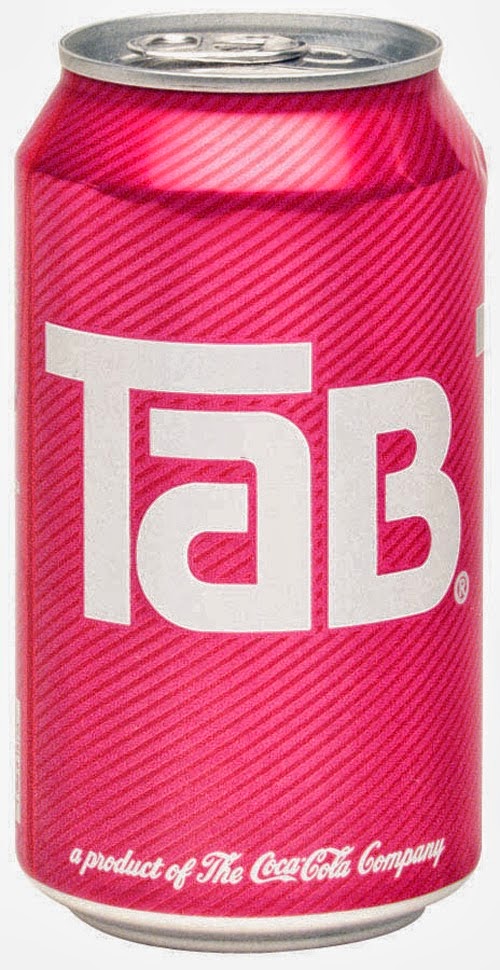
Tab (the soda)

Tab cola is one of those exotic things from my past. I love everything about it. Like the funyons from Piggly Wiggly I wrote about earlier, it evokes memories that normally lie dormant.

Earlier this year, I went to amazon.com to buy some and have it shipped to my house. It’s strange to think that things like this are so easily purchased online. While it hadn’t been too long since I had drank Tab, it seemed like a lifetime. This soda was once very easily obtained in a variety of stores; like so many other products, it got pushed out by the shiner, newer products.

I remember the first time I ever drank a Tab. It was sometime around November, 1976 and my family had moved back to a place near my hometown of Brinkley, Arkansas. I had some coins during 3rd grade recess, and one of my classmates, Calvin Hill, showed me where the coke machine was. (We called all soda machines “coke machines,” by the way.) The machine had grape soda, regular coke, orange soda and things like that. But Tab caught my eye. I bought a bottle of it and Calvin looked at me like I was a madman recently escaped from the local asylum. Bear in mind that I had been raised on the idea that Coke (the original) was the preferred soda. Tab’s taste back then was very tart. Tab never tasted sweet or smooth. In fact, its distinctive weird flavor is why I loved it so much. Most people thought it tasted like boiled tree bark – but given my strange tastes, that, too, might have been a great choice for me. The bottle was very cold and I drank it so fast that my stomach swelled from the carbonation. As poor as I was, I drank one every chance I could.

It’s strange how our memories are tied so closely to tastes and smells of our childhoods. Even though I drank a swimming pool of Tab throughout the years, it didn’t lose its appeal to me. I would like to be very clear, too, that I didn’t drink it because it was “diet.” When I first tried Tab in the 3rd grade, the word “diet” was about as foreign a word as I could imagine. There was simply “good” and “not good” to eat.

(By the way, I would like to mention that I generally don’t remember names at all from early school. There are just a few that come easily to the tongue. I’m trying to remember to remind people that I’m not in possession of a great memory and sometimes I should be. With a name like mine, you might jump to the wrong conclusion that names are easy for me.)

The Wire (TV)

 100 Top Quotes Video

Although I imagine that every person on the planet has at least heard of “The Wire,” I’m still surprised that many haven’t heard much about it or even tried to watch it. Even though I don’t necessarily place much credence in popularity or critical review, “The Wire” has placed high or on top of many polls of enumerating ‘the best of.’

The Wikipedia Page
The Wire IMDB

The wikipedia and IMDB links are for anyone who is interested in taking a cursory glance at that details of the show.

“The Wire” is a slow-starter. Despite its crime backdrop, the show is really a look at how people think, react and live. It’s meticulously realistic and relates to anyone watching.

I count this show as one of the best I’ve ever seen.

Rest in peace, Omar! (The best ‘bad’ guy ever on television.)

Toilet Photos (Update)


One of my previous hobbies involved taking pictures of the toilets (or a toilet) in a place I visited. (I didn’t take a picture if the place were filthy.) At the apex of my hobby, I had at least a 100 great toilet pictures. I’ll bet you’ve never read that sentence in your life before, have you? Say what you will about the foolishness of such an endeavor, it was certainly inexpensive to collect such “mementos” of the places I had visited. I would even take them back when all I had was a traditional film camera. Imagining what the people printing the pictures were thinking was no small part of the fun of the stupidity I enjoyed.

Whether I sauntered into the Imax in Tulsa, Oklahoma, or Liberace’s private bathroom, I would take a snapshot of the toilet. Doing this rarely failed to give a me a burst of laughter. There were times someone might walk in during my shot. More than once, I had looks of outlandishly bewildered expressions thrown at me. On one occasion, I took a shot and the flash must have bewildered someone in an adjacent stall I thought to be empty. I heard a very quiet “What the f$%^” come out of the supposedly empty stall. Explaining what I was doing in these situations didn’t seem to sate the curiosity of those who walked in during these photography sessions! No, it usually inspired the inquisitive people to march away quickly, very quickly.

A few years ago, I had visited Olive Garden in Fayetteville with my cousin Jimmy Terry. He wanted to “see me in action,” so to speak. He accompanied me to the bathroom and as I opened the stall door, he couldn’t control his laughter. “I can’t believe you do this all the time!” he giggled. I let him take the picture but his giggling resulted in all 3 of the pictures coming out looking like he had a seizure while trying to take the picture. More than once, Jimmy would later ask me if I took a picture of any toilets while I went to Vegas or to a new restaurant. He liked to joke that I should get a photography service started and do the photo shoots ONLY in bathrooms. He said it would be easier to clump everyone together if they were all crammed in a stall together – and that they would be more inclined to not waste time, especially if the stall were “between users,” so to speak. He added that since people were always running off to the bathroom, doing the shoot IN the bathroom would be thereby eliminated as an excuse, too.

When going through old photo albums, you could have seen two dozen pictures of the Air Museum only to be thrown off guard halfway through by a full-color shot of one of the toilets residing there. Every once and a while, I would throw in a picture of one of the toilets in the dvd picture slideshows I loved making. (From my perspective, there was just as much recognition of my visit having seen the toilet as the front of the building housing it.) Including toilet pictures in a person’s slideshow is a quick method to determine how much of a sense of humor someone might have.

(I used to joke that such a book would make an excellent coffee table book. The novelty of such an item should have been enough to achieve modest sales, even as a gag gift.)

Sometime not too long ago, I thought I was doing myself a favor by culling the toilet shots out of my photo collections. I think by doing so that I excised a portion of my wonderment and amusement toward the world. It would be a great pleasure to laugh at some of those pictures again and to test how many I could identify without any context.

Newser Story Containing a Couple of Links Directly Related to This 


08082013 Deadwood (TV Series)

STOP reading now if your sensibilities are injured by profanity. You have been warned!

(By way of preface, I love this show, at risk of darkening my reputation and maligning my own character!)

Deadwood is an older HBO series, one which sometimes gets overlooked against stalwarts such as “Six Feet Under” or “The Sopranos.” I recently started re-watching the entire series. It is a much better series now that I’m older. There were some themes that I didn’t quite understand through my first viewing many years ago. Now that my wife has been exposed to so many accents and strange modes of speech, she doesn’t find it a chore to decipher the complexity of Deadwood with me. I’m so glad that she’s watching it with me.

Despite its frontier setting, Deadwood is one of those rare shows which owes much of its appeal to the subtle words of wisdom littered throughout the dialogue. Many of the characters are on the show are so apparently ‘gross’ on the surface that we sometimes forget that intelligence and wit don’t always arrive in pretty containers. (They are quite often covered in mud and guarded by a snarling rat.) Many fans of the show don’t know that the creator originally was to use the same themes in a show based in Roman times but due to HBO already sponsoring “Rome,” the creator adapted the ideas to a similarly-themed time and place. The series at its heart is supposed to detail how any group of people move away from chaos toward organization.

Ian McShane had the meatiest part, the one of Al Swearengen. Some might argue that Timothy Olyphant had the best role as Seth Bullock, but I disagree entirely. Al’s character is one of the most authentic roles I’ve ever seen in television. Al was also a real person historically and is reputed to have been brutal. Whatever the real reach of his tendency toward anger, I much prefer the television-inspired version HBO brought to life. Al’s villain in this show is at least consistent to his nature, as well as having an astute understanding of the what drives people (and it usually isn’t what they say it is.)

One reason I linked to my original profanity blog is that Deadwood has one of the highest cursing frequencies in television. The “F-bomb” is used so often that it almost gets ignored. At the time, the creator, David Milch, got a lot of attention for such blatant cursing. Personally, I think it makes the show much more credible. If you watch the show and listen attentively, you’ll note that much of the true message is conveyed by those who tend to speak the most coarsely.

The real word of surprise in Deadwood is the word “cocksucker.” This is not your typical dinner party word. In Deadwood, it is used incessantly. “Cocksucker” was on of my dad’s favorite words. A few of my earliest memories involve my dad convincing me to go approach one of my religiously-inclined elders and utter the word in their presence. While no match in style, my dad would have agreed that he had much in common with Al Swearengen. He certainly had some physical attributes in common.

A Few Quotes from Deadwood…

Al Swearengen: Pain or damage don’t end the world. Or despair or fucking beatings. The world ends when you’re dead. Until then, you got more punishment in store. Stand it like a man… and give some back.

Al Swearengen: In life you have to do a lot of things you don’t fucking want to do. Many times, that’s what the fuck life is… one vile fucking task after another.

Al Swearengen: Announcin’ your plans is a good way to hear god laugh.

Calamity Jane: Maybe I will have a fuckin’ drink, for sociability’s sake and ’cause I’m a fuckin’ drunk.
Joanie Stubbs: What’s your preference?
Calamity Jane: That it ain’t been previously swallowed.

E.B. Farnum: Some ancient Italian maxim fits our situation, whose particulars escape me.
Francis Wolcott: Is the gist that I’m shit out of luck?
E.B. Farnum: Did they speak that way then?

Hugo Jarry: And you, Mr. Wolcott, I find you the most severe disappointment of all.
Francis Wolcott: Often to myself, as well.

Miles Anderson: God bless you, Mr. Swearengen.
Al Swearengen: Well, not likely. But my prospects have just improved.

Cy Tolliver: Sayin’ questions in that tone and pointin’ your finger at me will get you told to fuck yourself.

Al Swearengen: I wouldn’t trust a man who wouldn’t try to steal a little.

Al Swearengen: What’s your partner so mad about all the time?
Sol Star: He’s not mad.
Al Swearengen: He’s got a mean way of being happy.

A.W. Merrick: Why did you strike me? 
Doc Cochran: To secure your attention.


Thanksgiving Meal Is Dinner?

This year, I read several more articles and blogs from writers insisting that the meal served on Thanksgiving day is “Thanksgiving Dinner.” I don’t call it that. Many people do, but I don’t, and nor do quite a lot of other people. Perhaps I’m out of the loop with most Americans, but almost no one I know serves the Thanksgiving meal late in the afternoon and anything after 6 p.m. would seem barbaric to most of my world.

If I’m inviting someone to eat the meal with me, I would say “Would you like to come over for Thanksgiving?” After the initial question, there might be follow ups to nail down the exact time frame. I don’t need to add the word “dinner” to my invitation to make it understandable. Regardless, there is too much confusion resulting from the words “dinner” and “supper” being used interchangeably, when they shouldn’t be.

(“Dinner” is earlier in the day and “supper” is always later, regardless of time frame.)

In times past, ‘dinner’ was served around 1 and 2 p.m. As technology and industrialization progressed, dinner crept up into the afternoon. With commercialization and sports becoming intertwined with the eating traditions on Thanksgiving, the reality is that most people wouldn’t dream of waiting late into the afternoon to have the holiday meal. But, there are purists, East Coast residents, and wealthy people who would eat later, even though they are going to be snacking nonstop up until the holiday meal commences.

If someone were to offer for me to eat Thanksgiving with them at 6 p.m. I would certainly think it to be a joke when first uttered. I might accept the offer but there is no way I would wait until that late to celebrate the holiday meal. You would catch me 5-6 hours earlier, eating cranberry sauce from a can if necessary.

But while I’m writing this lazy post about eating, I’ve never enjoyed the labor-intensive part of this holiday. Sure, turkey breast is great. But to have 19 sides items, 7 desserts and 3 types of bread? Someone is working too hard. Invariably, the person doing too much work will be very irritated after the fact.

Despite tradition, the meal should be about companionship and company, not so much about  the food. People today use the holiday as a reason to watch football, socialize and be around other people. And that’s a good thing. Trying to force a ritual of “gratitude” on top of the day is just foolish. Let family and friends get together and enjoy themselves. (And maybe even the in-laws.)

Personally, I would rather eat spaghetti, pizza or even finger foods all day than concern myself with a traditional meal. For those who insist on tradition, that is certainly their right. I’ve just found that the traditionalists many times steal the ‘fun’ and spontaneity that is possible with holidays. I get tired trying to get people to do it differently, even once, to see that it’s not necessary to kill a large bird and cook 22 other dishes to accompany its sacrifice.

08022014 Macaroni Afternoons With Grandma

As I was finishing off a delicious can of V-8 this morning, I had one of those surprising memory associations assail me: one of the many reasons that I love V-8s might be that the overall taste is evocative of summers at my grandma Nellie’s house. I’ve consumed a few thousand V-8s in my life; I can say that without fear of exaggeration. To have just now made the connection between the tomato aftertaste of V-8 and being at my grandma’s house was a nice surprise for me.

One thing grandma loved to fatten me up with was plain macaroni. After cooking it, she would add tomato sauce and/or paste to the water and let the macaroni continue to soak up more water. The heated concoction would pass the aroma around the kitchen and house. Even if I had recently eaten, I would tell myself I could eat a big bowl of macaroni and tomato sauce as “just a snack,” as if an entire box of any kind of pasta is anything less than a ridiculous challenge to most people. The legend that I could consume a dozen adult portions at one sitting was no exaggeration. It was an easy, cheap food to make for me. It just so happened that I LOVED macaroni cooked this way. There were many afternoons were I would eat the entire pot of macaroni by myself, usually washing it down with Coke from a 2-liter bottle.

I drank a second V-8 later today, this time deliberately thinking about how much it reminded me of grandma’s macaroni, sitting on a rough wood floor, watching a very poor tv signal, enjoying myself as if I were a king.

It is hard to imagine anything simpler than those moments.  No amount of complexity and choice would have made those bits of macaroni any more delicious.

Were it possible, I sometimes would choose to be able to go back to one of those summer afternoons, with nothing except a bowl of macaroni, a glass of coke, and a small house on a small rise in the road, looking out toward the big world with my grandma and granddad. I never noticed how scarce my tv options were and I never felt poor at their house. And I would never have thought I wasn’t well-fed.

” Pre-Cap” for TV Shows

While watching some shows, I get annoyed by the way they are segmented, especially around commercial breaks. I admit that I don’t watch much TV that includes commercials, even on DVR.

A growing trend that bugs me is what I have named the “precap.” I know this word already exists, but not in the sense I use it. A “precap” is the tendency of a show to show us what is going to happen after the commercial; after the commercial break, we then see what happened before and what is yet to come. Sometimes, the same material is referenced several times before being shown. Ugh!

I have to learn new ways to stop noticing this trend, as it is slowly killing the little enjoyment I can glean from a few TV shows.