On the way back home from Texas, I turned off the discolored and uneven blacktop highway and drove through a small farming town in Arkansas. It was almost 7 p.m. on a windless Sunday evening. My windshield was a graveyard of hundreds of insects. The richness of the delta has its gifts.
I had lost all sense of urgency and time. Because I knew I wouldn’t drive all the way home that evening, I chose the blue highways to take me across part of my journey. These highways were once the only way to traverse the country and each one of them pierced rural communities, loosely connecting them to the outside world. As interstates rose to meet the demands of speed and commerce, the blue highways remained, like half-forgotten pictures tucked away in the top drawer of a dresser in one’s extra bedroom.
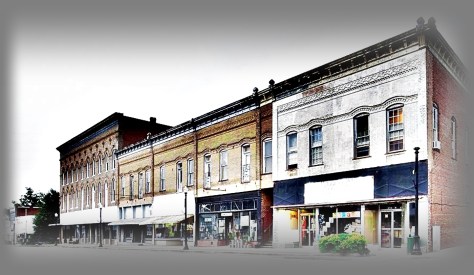
Downtown was a disintegrating and deceitful testament to the past. The solitary water tower still stood, rusting, and even the town’s name, once proudly emblazoned there, was long erased. The youthful graffiti always found on such a tower was illegible. The few young people who might live nearby attended school in another town, their own hometown mascot supplanted with another. Each of them quietly reminded themselves that they’d leave as soon as graduation came.
The jolt of crossing a desolate set of railroad tracks caused me to reach over and turn off the radio. A town’s railroad crossing conveys a clear message: a smooth transition indicates a thriving economy and nicer vehicles, while an uneven and poorly maintained one usually means that people live lives filled with less. People with money and separated from their agricultural roots clamor for better roads, ones devoid of historical reminders of commerce and transport.
History accompanied me as I made my way slowly across the brick-paved street. Without any evidence, I knew that several years ago, some well-meaning resident with a little money had vainly attempted to rejuvenate the corpse of this place, one founded on the backs of farmers. With his passing, the enthusiasm for saving the heritage of the place no longer loomed large on the psyche of the town. His tombstone, larger than those surrounding his resting place, is easily found in the cemetery not too far from the train tracks. In a generation, most of the cemeteries would be overgrown and many of these buildings would fall in on themselves, a gradual shattering and splintering of history. If I were to look, somewhere in the juncture of the small side streets would be a shuttered museum; its existence once contained within but with time, opened to spread out and include the entire town. My own hometown shares a similar and degenerative trajectory; the fiercely loyal will stay until nothing remains. They are the geographical observations points for entropy. Death need not make haste in these places.
Somewhere within the 4 blocks traversing west to east, I noticed a particular vacant storefront, displaying a single white rocking chair perched haphazardly up front, undoubtedly home to the bones of a once-thriving furniture store. The setting sun illuminated the faces of a hundred stacked cardboard boxes near the front windows. As carefully as the boxes were stacked, I couldn’t shake the feeling that they had been packed in haste and then abandoned, much like the store and probably like the town in general. I was certain that human hands hadn’t touched the boxes in years and that no one had relaxed in the rocking chair since its placement there. People were choosing to leave with as small a burden as possible.
Something about this store spoke to me. I pulled unevenly toward the broken curb and hesitated as I shut off the engine. The brick pavers had ended with the last block, probably as fund-raising dried up and people chose to leave instead. Every few feet a clump of grass was triumphantly sprouting from the untarred cracks in the road. I sat there, hands on the wheel, watching. Nothing moved around me. Maybe nothing had moved in the last hour, day, or week. A block ahead, the only traffic light in town blinked a dull red, casting a strange pall on an approaching evening. The light wasn’t blinking to any certain tempo and its arrhythmia went unheeded.
Looking at the sun reflected in the terrible facade of that building, I felt a creeping sadness wash over me. It seemed like I could feel the glances of the thousands of inhabitants who had passed here, reluctant to leave their hometown, but certain that they must. Brake lights always yield to a foot on the gas as nostalgia loses inevitably to hope. The fondness we so often feel for the places in our rearview mirrors softens our doubts about leaving yet rarely detains us.
The sun gave me its warmth as I sat in my car. Though the air was still and uncomfortable, I couldn’t break the silence by starting my car. The heat seemed to stir the ghosts of this place. I could hear their whispered names: Robert, Henry, Thomas, Samuel, Maggie and Jane Elvira. It was both melodious and cacophonous, like a choir warming up to an unspecified crescendo that would never quite arrive.
I could picture a shotgun house not too far from here, its ancient inhabitant eating cold cereal or buttermilk-soaked bread from a chipped white bowl. The metal fan nearby would be loudly alternating air through the cramped room. Around the person would be dozens of pictures, spanning generations, each of them revealing the face of someone long departed or of one who visits with less frequency. Next to the stubborn resident was a small wooden table. It was adorned with dozens of pill bottles, knick-knacks, and an older telephone, one wired to the world. In the rare event of a call, I could hear the fizzled and tired ring and recite almost every word that would ensue in the phone call, one measured by regret, loss, and small details.
I imagined the smell of cornbread, mustard greens, and fish quickly fried under the shade of any available tree. This place, once dominated by the sounds of screen doors casually slammed, pitchers of iced tea, and enthusiastic summer baseball games, was losing its voice. It seemed that even the echoes of lives once lived were fading now, departing with their particular smells and customs.
Before leaving town, I turned on the radio again. I pressed the ‘next station’ button and to my surprise, Merle Travis was singing “No Vacancy.” I smiled, pressed the gas pedal with enthusiasm, and took one last glance in the driver side mirror.
As I passed over the railroad tracks, I didn’t even notice the jolt.
I would wake up in another town tomorrow morning and this haunted place would fade to become an uncertain memory. All who had departed this place would unknowingly share this in common with me.
I, too, am from such a town. It is with me, always, in my quiet moments.


 P.S. Parenthetically Speaking