
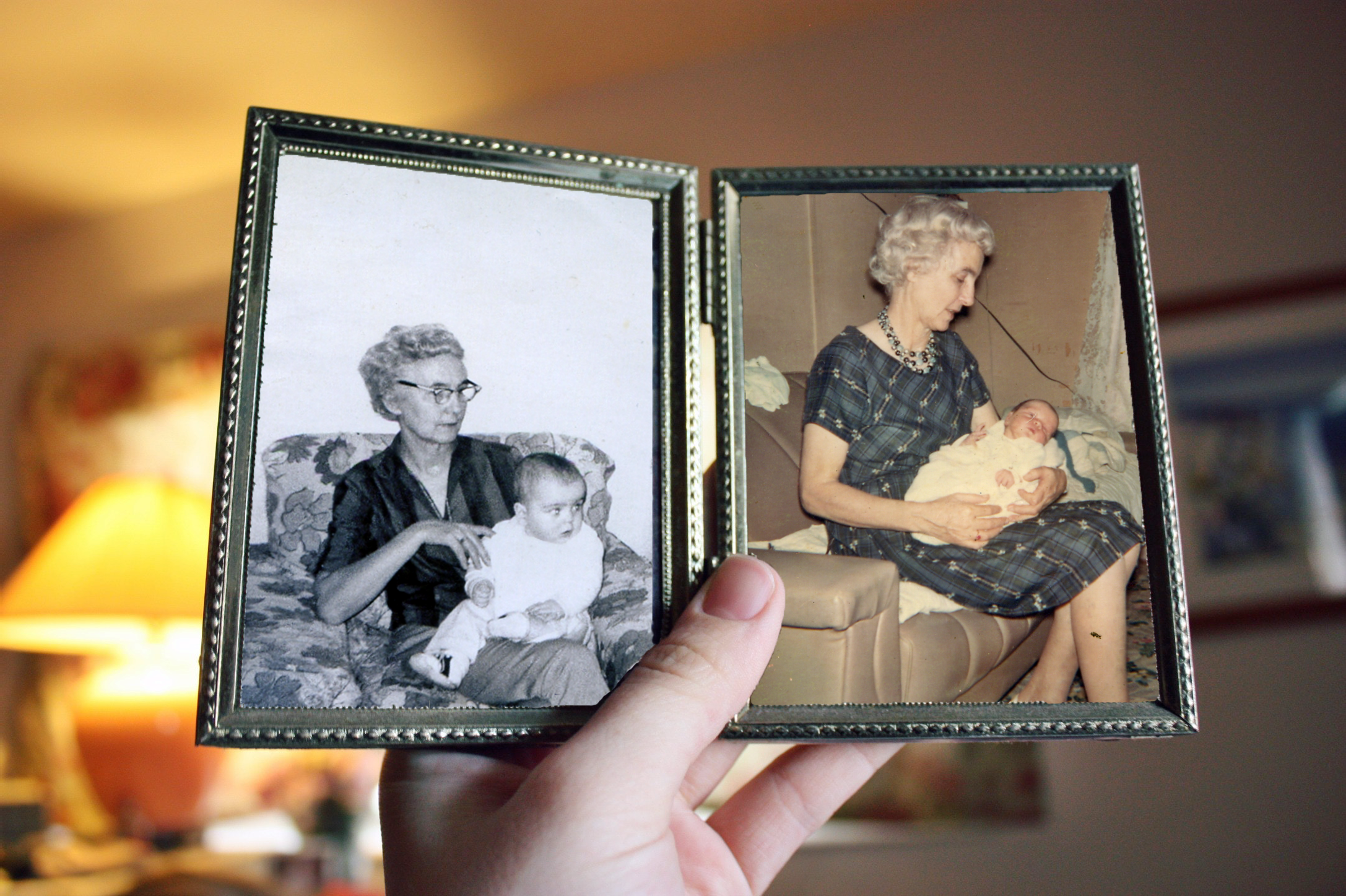
Framed
It wasn’t until I read Theo’s internal monologue that I realized I had noticed the same thing as I’ve grown older.
Our society suffers from a lack of framing. Pictures now are mostly snapped and stored digitally. Yes, some are posted to social media where they might occasionally be revealed by accident from scrolling through the uncurated mass of someone’s pictures.
By and large, however, they asphyxiate by inattention. Our phones have replaced shoeboxes shoved under beds or on top of closets. Unlike a person’s phone, a shoebox can be discovered and rifled through when one needs recollection and memory’s touch.
We’ve lost something. We’ve stopped selecting and picking pictures to enlarge and frame on our walls. Portraiture has, in some ways, become gauche, as if personalization violates a decided-upon but unwritten rule of our homes.
Our psyche needs framed pictures to bind us and to declare ownership and presence where we reside. We need the timestamp of cemented memory, which most makes us remember fondly and wonder who we once were.
The clothes we once wore become amusing. The hairstyles often develop a ridicule all their own. But each picture is us, captured, frozen, and encapsulated under glass in a frame that declares its territory where it’s placed. Someone possessing our picture in their space has declared an interest in, if not a love for, us.
Framing requires deliberate use of both resources and space. Endless digital storage encourages archiving without regard and memory.
Framed.

