Category Archives: Writing

The Most Beautiful Stranger In The World

Paul walked the aisles of the crowded flea market, looking at the trash and treasures piled everywhere. He agreed to do a flea market crawl out of reluctant obligation. His girlfriend Jessica loved browsing and prowling the dusty aisles of old buildings. “You never know!” she repeatedly admonished him. He never said it, but he thought in his head, “Yeah, I never know how much time I might waste.” Paul loved some of the things he found but tired quickly of the prowl.

They’d returned to his hometown for a long weekend. Though he had no plans to attend his Aunt Jill’s funeral, he did agree to return to go to visitation at Crowley’s Funeral Home. Jessica took the opportunity of their visit to ask to see downtown, all two streets of it. There were four flea markets in that small area. Paul imagined that the number of flea markets would soon reach a pinnacle, as most of the older population were dying rapidly. No one wanted their stuff filling their attics and cupboards.

Paul meandered through the maze of trinkets and what-nots until he spotted Jessica an aisle over from where he stood. He pantomimed tapping at his wristwatch, the one he never wore. She shook her head “no.” She held up five fingers. Though it meant five minutes to a normal person, Paul resigned himself to at least thirty more minutes of browsing. He nodded and walked all the way to the back of the crowded flea market.

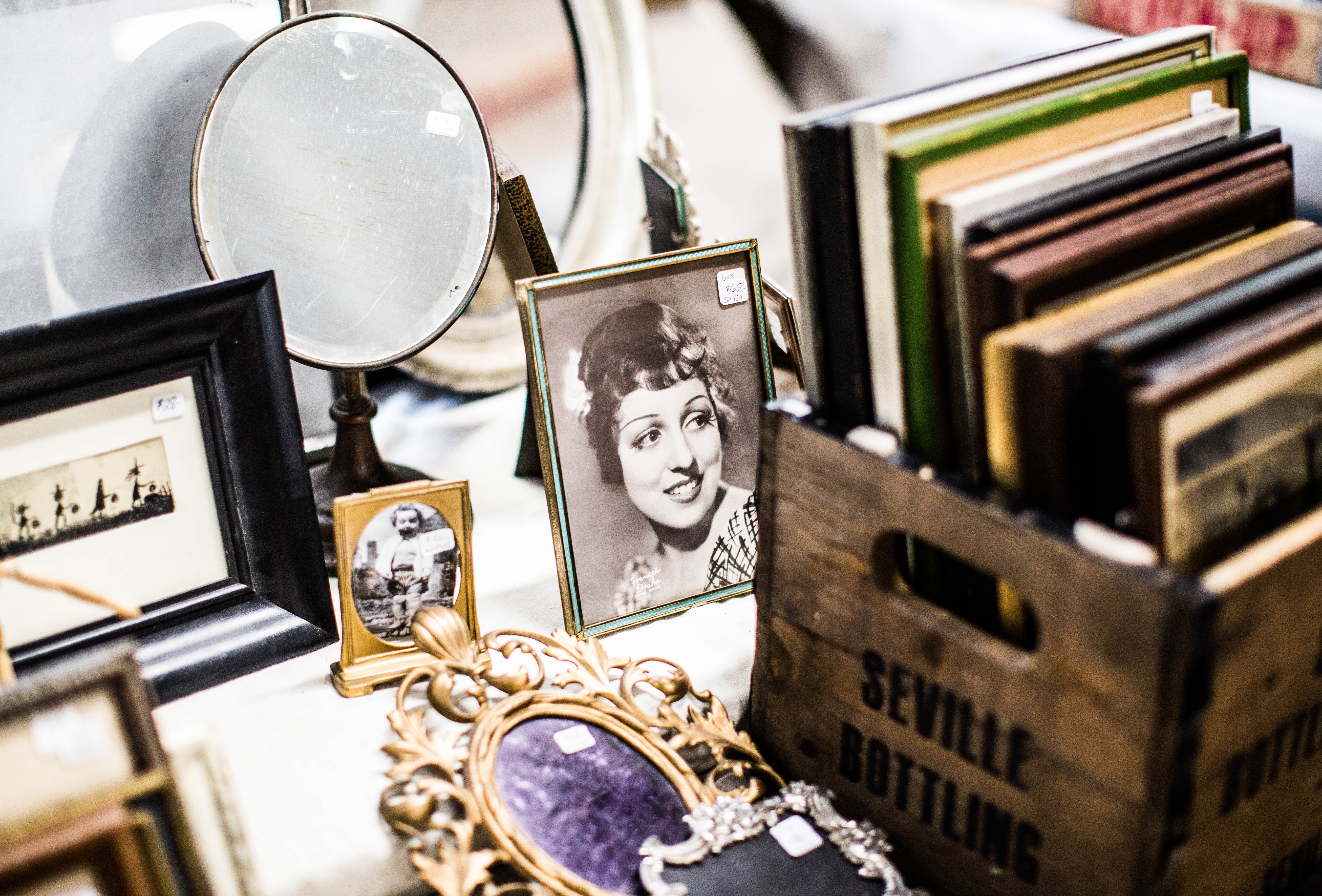
He saw her face immediately, propped up against a plate. Her picture was printed as an 8 X 10 black and white picture, taken decades ago. Though the picture was a bit water-stained at some point, it didn’t conceal the set of her piercing eyes or the subtle smile on her face. Her lips filled toward the center, and her curly hair framed her face perfectly. Paul had rarely seen such a picture capture beauty like hers.

He picked up the photo and looked at the back. He first noticed that a small photo was glued to the back. Next to it, the name “Loretta” was scrawled with immaculate handwriting. The picture on the back showed Loretta slightly in profile. Her face was angular, defined, and revealed a slender neck. Paul found himself enraptured by the image. A slight smile framed her lips, a smile that seemed to be reflected in her eyes. Somehow, he also knew that Loretta was smart and had a wickedly sharp sense of humor.

Paul flipped the picture over again, taking a long second look at the front. He sighed. He walked back to the front, where the cashier stood inattentively. She looked up as he approached.

“This item isn’t marked,” he said, showing it to her without handing it over.

The cashier pointed to the sign by the register: “Unmarked items or items missing a price cannot be sold without the permission of the owner of the booth.”

“I’m in town for a couple of days. I really need this picture,” Paul said, surprised by his own words.

“No can do!” the clerk replied.

Paul thought a minute. “Look. I will give you twenty dollars for this picture.”

The bored cashier showed a bit of interest by arching her left eyebrow.

“I can’t. No exceptions,” the cashier said, her voice rising.

Paul didn’t miss the implication. “My apologies. I meant that I will give you forty dollars for this picture.”

“Sold,” the clerk said and laughed. She would have been irritated to know that he probably would have given her a hundred dollars.

Paul took out his wallet and handed the clerk forty dollars.

A few minutes later, Jessica appeared from the bowels of the byzantine flea market. She found Paul standing next to one of the long glass curio countertops, leaning over it and peering at an old photograph there. She leaned in and craned her neck around his elbow.

“Isn’t she gorgeous?” he asked her without looking. Jessica nodded. She found herself admiring the stranger’s face. She was a classic beauty, one that defied time. Paul flipped the picture over and showed Jessica the smaller image on the back. “Loretta,” he said, his voice taking on the tone of someone lovingly reading a poem.

“Okay, weirdo. Let me pay for this old watch, and we can skedaddle.” She smiled at Paul, who ignored her. His eyes were still locked in on the picture. “Don’t forget to bring the picture of your new girlfriend with you, Paul.” He didn’t hear her.

Jessica teased Paul a dozen times about taking another look at the pictures throughout the afternoon.
.
.

Saturday afternoon, Paul and Jessica arrived at Crowley’s a bit early. Paul wanted to be able to arrive comfortably and watch people as they walked up. He needed cues and reminders for some of the family. As for the rest, he wanted to prepare himself for the inevitable comments about his long absence from home, questions about his family status, along with the other obligatory comments people make at funerals.

Mr. Crowley stood by the main entrance. Paul assumed he was at least ninety years old. He knew everyone in town, though, and a lot of secrets that would shock people. There were times when his failing hearing led him to answer questions that people hadn’t asked him.

Paul shook his hand enthusiastically and introduced Jessica. To his surprise, Jessica hugged Mr. Crowley, who turned red and smiled. Mr. Crowley directed them both to enter the building. Inside the vestibule, Paul picked up an announcement and handed it to Jessica. The music that always fills such places echoed strangely inside the main door. Paul hurried through.

In front of the long room, he noted Aunt Jill’s casket, adorned with a variety of flowers and a picture of her, one he had seen in someone’s living room when he was younger. Aunt Jill had been a beautiful young woman. Seeing her as a young woman in the memorial photo gave him a sense of deja vu.

Within minutes, a couple of dozen people had entered, each saying hello to Paul if they recognized him. Most attendees were well over retirement age. Paul did his best to pretend that he recognized them all. Jessica, who seemed to have magically acquired the ability to make personal connections, helped him by hugging each person who approached. Paul didn’t know she was such a hugger. In a quiet moment, he asked her about it. She smiled and shrugged. “I love people, Paul.”

At the moment Paul assumed that everyone had arrived, the door opened, and he felt his heart leap to see Aunt Jill’s partner, Betsy. Betsy had watched Paul countless times when he was young. She and Aunt Jill were together before such things were acceptable. Though she was with his Aunt Jill, Betsy always kissed him on the lips when she saw him, something that used to cause his mother a bit of grief. After pecking him, she always cackled with glee and winked at him. When he turned eighteen, she casually told him that she didn’t know she liked women until she met his Aunt Jill, who stole her heart. But that she hadn’t forgotten to appreciate a good-looking man.

Betsy slowly walked toward him, already smiling. He instantly felt glad that he’d answered her phone call a couple of days, asking when he would arrive in town. Paul bent toward her, and she put her hands on both sides of his face and kissed him thoroughly on the lips. Had he not pulled away, Betsy might have kissed him for five seconds. She laughed, looking at Jessica. Jessica also burst out laughing. “You must be Betsy!” Jessica said and moved to hug her. Betsy caught Jessica off guard, too, and gave her a kiss on the mouth. At that point, all three of them burst out laughing, which drew everyone’s attention around them. Jessica took Betsy’s right arm and wrapped it around her left arm, standing with her.

Once their laughter subsided, Betsy said, “I wish your mother were here, Paul. I can’t believe she’s been gone for all these years. She died too young, just like their momma.” She nodded toward the casket. “We had a good life together, even when people didn’t appreciate our kind. Your momma told us to keep our heads up and to love who we wanted to. And we did.”

Jessica looked at Betsy inquisitively. “Paul doesn’t have any pictures of his grandmother, Betsy. Did Aunt Jill look like her?”

“Oh lord, girl. You won’t believe it! I have some pictures in the car. Our friend Bill drove me. I’ll have Bill fetch them for you.” Betsy got distracted by another visitor as she looked around the room for Bill. He saw her craning her head and started to walk toward her.

“I’ll be back in a minute, Jessica. I forgot the pictures in the car.” Paul turned to exit the building from the service entrance on the side. Jessica followed Betsy toward the front pew and kept an eye out for anyone needing a hug. She discovered that a few did.

.
.
A few minutes later, Paul returned, carrying a leather folder with the pictures he brought. He was chewing furiously as he walked up to Jessica, who laughed at the absurd mouthful he displayed.

Between chews, Paul managed to tell her that Mr. Crowley’s brother Earl insisted on giving him a handful of his homemade beef jerky before coming inside. Paul also told her he ate a ton of the stuff when he was a teenager and worked for Earl at the hardware store. “Better his beef jerky than his wife’s dipping snuff,” Paul said.

Paul and Jessica went to sit on the front pew with Betsy.

“Earl is here, I see,” Betsy said and winked. Paul nodded, trying to swallow the last of the jerky.

Betsy pulled a handkerchief from her black purse. He noted she had a cigarette case inside. She saw him looking and said, “That’s where I keep my gun. People see it and assume it must be cigarettes.” She handed Jessica the case. Jessica opened it. She laughed. The cigarette case contained a tiny .22 single-shot pistol. “Betsy!” Paul exclaimed, unsure what to say.

Betsy shrugged, took back the case, and stuffed it back inside her purse.

She unfolded the handkerchief and uncovered several pictures stacked together. “Let me see,” she said as she moved her fingers across them.

“Here it is. This is your Grandmother Mary, Paul. Quite the looker! You can definitely see my Jill and your mom Rosie in her face.” Betsy handed the picture to Jessica, whose mouth dropped open. The confusion on her face was unmistakable.

“What’s the matter, honey?” Betsy asked.

Without a word, Jessica handed the picture to Paul, who stared at the picture in surprise.

“What is it y’all? You’re making me nervous!” Betsy seemed to be a bit alarmed.

Instead of answering, Paul handed the picture back to Jessica. He unclasped his leather folder and picked out the 8 X 10 he bought yesterday at the flea market.

He leaned across Jessica and handed the picture to Betsy. She went pale and took a sharp breath. “Oh my!” She turned the picture over and saw the other one on the back, along with the inscription “Loretta.”

Tears formed in her eyes. “Loretta’s middle name was Mary, Paul. This picture was in her living room when she died. We wondered what happened to it. Where did you get it?”

Paul, still in a bit of shock, said, “At the bigger flea market downtown, the one off Main Street. Yesterday. I bought it because I thought it was the most beautiful woman I’ve ever seen.”

Jessica didn’t take offense. Tears were forming in both of her eyes.

Betsy nodded. “Yes, she was. Jill and your mom had her looks and definitely her kind heart. She was the smartest person I ever knew, Paul. That’s saying a lot.”

The three of them sat in silence for a full moment. Betsy sighed.

“Let’s go say our goodbyes to my precious Jill, shall we? Help me walk up there if you will.” Betsy didn’t attempt to wipe away the tears on her face.

As they stood, Paul found himself hugging both Jessica and Betsy. They held the hug for at least thirty seconds.

They walked to the casket, looking at Aunt Jill’s memorial picture on the display stand near the casket. Paul held up Loretta Mary’s picture from yesterday. Somewhere in between, he could picture his mom’s face.

Betsy, her sense of timing as perfect as it always was, said, “When are you two going to be proper and get married? You can’t shack up forever, you know.”

As the three of them looked at each other, they burst out laughing, even as tears rolled from all their faces. Though the onlookers didn’t understand what they bore witness to, everyone smiled.

In the distance, thunder boomed across the sky.

Paul decided he might stay a few more days to keep Betsy company. And to prowl flea markets with his girlfriend.

“Goodbye, Loretta Mary,” Paul whispered, even as he stole a sideways glance at Betsy. She was crying, though a smile was on her face. And he looked over at Jessica, who also cried as she held Betsy against her. He couldn’t remember why he had avoided his small hometown. His whole world was with him at that moment.
.

.

.

.

An Echo Of A Life

An Echo Of A Life

Maureen entered the house through the garage. “Mark? You in here?” she half-shouted a couple of times as she pushed the door closed behind her using her left foot. She had two bags of groceries in each hand, haphazardly hooked on her fingers. No answer.

She carried the bags into the kitchen, noticing that someone had done the dishes. She put the four plastic bags of food on the stove near the fridge. “Mark?” she said loudly one more time. Odd, she thought.

After putting the groceries away and tossing the sacks, she made her way through the house. Though she and Mark were married over six months ago, she still didn’t know his routine of how he filled his spare moments. Neither of the two kids was home yet. After checking the far bedrooms and the patio, she made her way across the house to the odd storage room where all the miscellaneous parts of their lives got tossed. She heard movement inside and a faint melody playing, so she pushed the sliding door to one side.

Mark was inside, folding shirts and doing laundry. When he saw her, he said, “Hey honey! What’s up?” and then smiled at her with a huge smile. “Hug?” he asked her, spreading his left arm in a faux hook. She walked to him and let him hug her. She kissed him on the lips, a quick peck. “I’m just listening to some tunes in here,” he said.

“Thanks for doing this laundry! I dreaded it.” Maureen gave him another quick peck on the cheek as she thanked him.

“Maureen. We talked about this. Don’t thank me for doing what I should be doing, okay?” He winked at her. “At least not that way.”

Maureen gave him a look of scorn, then smiled.

He was a keeper.

After giving him a real kiss, one loaded with promise for later, Mark told Maureen he’d be in the kitchen in a few minutes. He wanted her to help him cook a chicken dish of hers before the kids piled into the kitchen and made it impossible to cook. “I already did the dishes and cleared the drain tray,” he told her as she turned to leave. She bit her tongue, silencing another “thank you.”

Life wasn’t like she imagined. And she was beyond happy to realize it.

Love indeed resides in the laundry.

A Treehouse Filled With Love

Tom Mason’s neighbors watched him surreptitiously through the long months after his son Tommy died unexpectedly. He quit his job, cashed out his retirement, sold his two vehicles, and rid himself of almost every furnishing in his house. Audrey left him a week after Tommy’s funeral. Those around Tom could smell the smoke from his grill nightly. No one suspected that he slept every night under the stars. Though Tom was still friendly, he no longer accepted invitations to socialize, and no one visited him. He waved and smiled at them as they passed his house. In time, he lost at least seventy pounds and grew a beard past his neckline.

Tom spent hours outside working on the impressive treehouse he erected high up in the backyard trees. The yard transitioned to dense trees and foliage behind Tom’s house, an area technically owned by the township. Tom strategically built the treehouse on the edge of the unmaintained property. People wondered if he had permits for the work, but no one dared break the taboo of reporting him. Losing a son had short-circuited something inside him; no one wanted the burden of being the one to shatter him completely.

Two months after starting the mysterious project, he was the talk of the block when he spent one entire day back there tearing it all down. The neighbors wrongly assumed he abandoned his plan to build a treehouse. Some of them expected a bonfire to follow the demolition. They realized later that most of them collectively held their breath that night, waiting for something terrible to happen. It didn’t.

The next morning, several of them laughed in relief when they saw the local lumber yard send a construction truck to Tom’s house. It unloaded an impressive load of lumber. By 8 a.m. Tom was already up in the trees without a harness or safety scaffolding. He’d torn down the weeks of work because it wasn’t perfect, and he knew he could do better.

Day after day, Tom stayed outside, experimenting, measuring, and learning new skills that he added to the structure. At times, the neighbors could hear the echoes of work being done inside the house, too.

One night in July, after most neighbors finished late suppers, lights came on in the trees, casting an eerie and beautiful bouquet of illumination into the adjacent yards. Tom learned wiring at some point. A few nights later, people craned their necks from his neighbor’s yards to note that he’d erected light posts across the perimeter of the property, as well as installed solar lights on the city property behind it. Lights curled around trees, and some of them were vivid colors: blue, red, and soft green. Most neighbors would have been shocked to know that Tom installed an array of solar batteries in weatherproof containers, ones concealed in the foliage. He installed an electrical subpanel in the back, too, for times when solar power wouldn’t suffice. He wanted the next occupant of the house to know that he thought of every eventuality.

On August 3rd, each neighbor awoke to discover a hand-printed envelope on their front door. To each recipient’s surprise, inside was an invitation to a party at Tom’s house on Saturday. Though the notice was short, no one considered not attending. Curiosity consumed everyone. Later that morning, dozens of calls, texts, and emails passed between the neighborhood’s connections.

The following day, cargo and utility trucks arrived, each with a different specialty emblazoned on the vehicles’ sides. Electrical, cabinet, ironworks, painters. Tom had a vision for his treehouse. By noon on Saturday, all the hired help departed, and a strange silence fell over Tom’s house. No one felt at ease. Months had passed with an endless series of new sounds. Tom’s project was done. The neighborhood once again held its breath, hoping that nothing terrible would happen. By 6 p.m., everyone was tapping their feet in anticipation. By 6:30, people lost their ability to wait and found themselves walking to Tom’s house early.

As each person or couple walked up to Tom’s front door, they discovered to their delight that a man dressed in a bright blue suit stood at the front door. He handed each party an envelope. “Please don’t open it until Tom makes the announcement.”

Inside the door, Tom stood. He was tanned, healthy, and smiling. As if his son hadn’t died and his wife left him, he smiled ear-to-ear, and he hugged everyone. “Come inside. Go anywhere in the house you want. Just don’t go outside yet.” By 7 p.m., all the people who received invitations were inside the house. Slightly after 7, Audrey came inside the house. Without saying a word, she hugged Tom fiercely for a few moments and then went for a drink.

Each guest noted that Tom had utterly remodeled the inside of the house, too. Wood floors, new furniture, walls removed, and custom tile work through the bathrooms and kitchens. It was a fantastic transformation, fueled by grief and unlimited time. In the kitchen, Tom built a fifteen-foot long sapphire river table that had inlaid lighting. On its wooden edge stood buckets of beer, wine, champagne, and carafes of bitter coffee.

“Drink! Enjoy!” Tom shouted until his guests realized he meant it. Everyone breathed a sigh of relief.

“Now, outside,” Tom said, ensuring that everyone had a drink of their choice as they exited. Tom also replaced the back patio. Instead of broken concrete, his guests discovered that he’d carried the custom tile and brickwork outside. Hand-carved columns now supported a raw wood roof that smelled of fresh wood. Along one side of the new patio stood several tables, each also built by Tom. They were filled with bbq, salads, chips, and a thousand condiments. Two younger women stood by, keeping everything replenished. Another woman stood near two large gas grills as smoked slowly made its way out.

“Let’s eat!” Tom said. And then he added, “Before the big event.” He smiled as if he knew a secret. He turned to a panel by the double french doors leading the patio and pressed a button. The entire backyard exploded in soft colors. A thousand subdued lights suddenly illuminated the whole back yard, all the way into the trees. Several people gasped at the unexpected beauty of the lights and colors. From somewhere, soft music filled the air.

“Seriously. Let’s eat.” He clapped, and though people still gawked at the lights, they began to eye the food selections eagerly. For thirty minutes, the guests consumed their food with abandon. Tom moved among them, talking and smiling. Everyone kept watching Audrey as she occasionally approached Tom, touch his arm, and speak to him softly.

The lights dimmed and brightened a few times, a signal that the ‘event’ was due to start. A hush fell over everyone.

Tom climbed up on one of the tables in the grass.

“Everyone open their envelopes.” He laughed.

Each guest or couple tore the seam of their respective envelope. Inside was a single sheet of gold paper:

“We lost Tommy a year ago. And it destroyed us. He wouldn’t have wanted that. It ended our marriage. We had a beautiful house, a beautiful ten-year-old son, and beautiful life. I’ve spent a year making this house one anyone could be proud of. And we are proud again. We are doubly proud because we are giving this house to the Leer family. The Leers, for those who don’t know them, have three kids, one two, one four, and one eight years old. They live two streets over. This remodel is a gift for them, so that a family can once again live in this house. I built the treehouse for the kids. Tommy always wanted a treehouse. I took for granted that we would have time to build it. Everyone welcome the new owners, the Leer family. They are not here tonight. We gave them the news yesterday. We’re moving to their house Monday. Audrey and I love you all.”

No one spoke. From somewhere, someone clapped. And then another. In a few seconds, everyone was applauding. As the crescendo of applause deepened, Tom hung his head and looked at the ground. When he raised his head, tears rolled off his face. He did not attempt to conceal them or wipe them away.

Tom raised his hand. “Now, let’s go look at the treehouse, shall we?” Audrey walked over to him and took Tom by the hand as he led her to the rear of the property.

Ahead of them, the colorful lights lit the way.

Darkness had departed.

*

The Bus To Nowhere

The bus station was long past its prime. Nothing about it caught the eye. Even the once-polished metal looked abandoned and ready for demolition. When Mayor Gates built it in 1965, Wheaton’s residents were in a fugue of excitement, anticipating that the new interstate would revive the economy. As happens in so many other towns, they didn’t realize that the speedy conduit would rocket people away from their respective hometowns and rupture their connection to home. When 1970 came, no one noted that the town had passed its zenith.

Zeke stood along Main Street, his eye carefully absorbing the details of the surrounding businesses. Most were long-shuttered, and none of the marquee signs were freshly-painted or modern. He only returned this time to sign away his parcel of land along Sherman Street. The house had been demolished years ago. His distant cousin Jermaine wanted it to build another house across two lots. Zeke was happy to reward him for staying and keeping roots here. Few could do so.

Zeke departed Wheaton for the Army the week after high school. Vietnam was a concern, but college was not an option for him. He witnessed a few people come back as completely different people. Unlike many of his contemporaries, Zeke loved the Army. He stayed in for eight years until he met Sally Jenkins. They married and moved back to her hometown in Mississippi. To Zeke’s surprise, her hometown was exactly like Wheaton, a declining farm town with few jobs. She died in 1992 of an inoperable brain tumor. Zeke never remarried, though a couple of women asked him. For reasons he couldn’t explain, he stayed in Sally’s hometown. Zeke appreciated it in a way that he couldn’t love Wheaton.

Zeke’s mind drifted back to 1965.

The day the bus station opened, Zeke was ten years old. His Mom told him he was going to witness history and insisted that he accompany her downtown. She also made him dress up, including a tie and hat. All he remembered were people talking excitedly about an old bus as it pulled into town. The town newspaper sent out a junior reporter who animatedly took pictures of the ribbon-cutting and people stuffing hot dogs in their faces. The diner next door, owned by Mayor Gate’s brother, gave out free soda, coffee, and hot dogs. Zeke quickly consumed four hot dogs, much to the embarrassment of his Mom. She stopped him as he went for number five.

Zeke escaped his Mom’s rebuke and sat on an extended bench on the side of the building. The relief driver who came in on the bus sat there, too, smoking a long cigarette. He offered Zeke a drag. After carefully considering that someone might see him, he declined. Zeke acquired a taste for smoking when he was seven. His uncles gave him cigarettes regularly when his Mom wasn’t paying attention. To his Mom’s credit, she pretended that she couldn’t smell the stench of tobacco on him. She was a mix of disciplinary contrast, and it was her voice of conscience he heard in his dark moments of indecision.

“What’s so special about a bus station?” Zeke asked the middle-aged and weary driver.

“They think it will save them. It won’t. It will siphon all of you out of here. I’ve driven all over the United States. That is what happens.” He took another long drag of the absurd cigarette and laughed. “Can’t tell adults anything, though, right?” He asked. Zeke couldn’t tell if he was serious.

Zeke sat on the bench with the bus driver, talking, for at least thirty minutes until the crowd realized that no further excitement would ensue. A few minutes later, the bus pulled away from the new bus station without any additional passengers. Zeke waved enthusiastically as the tired passengers from other places watched him recede from view. He had a fresh pack of Lucky Strikes in his pocket, a departing gift from Petey, the driver.

Zeke thought about the intervening years, fifty-five incredible years. In the interim, the town dwindled by two-thirds. Zeke’s return trips gradually declined. After his Mom passed, he stopped coming for obligatory funerals, too. His hometown had become a reunion base for those who refused to leave. With each visit, a little bit of vitality disappeared from the buildings and the faces of those there.

Another bench now stood against the side of the old diner building. Though it probably had been replaced repeatedly, the bench there looked to be one hundred years old. Zeke could still picture the relief bus driver in his uniform, sitting there and smoking in the early May afternoon sun. He could almost taste the mustard-covered hotdogs he had indulged in, too. Zeke found himself walking toward the bench to sit down. As he did, he stretched his legs out in front of him.

His imagination filled his head with the remembered murmur and the excited chatter of the people assembled here in 1965 to witness the new bus station being christened by the arrival of a tired Greyhound bus.

Zeke decided to sit there for just a minute. He felt exhausted, and his memories weighed on him like nostalgic sandbags.

Two hours later, one of the residents walking her dog found Zeke sitting on the bench, his hat askew, his eyes wide open to the receding sun.

He wouldn’t leave Wheaton after all. He would have been happy to know he hadn’t escaped. No one escapes where they are from, and if you consider the implications of this truth, a big piece of your heart will swell and float away.

A January Silhouette

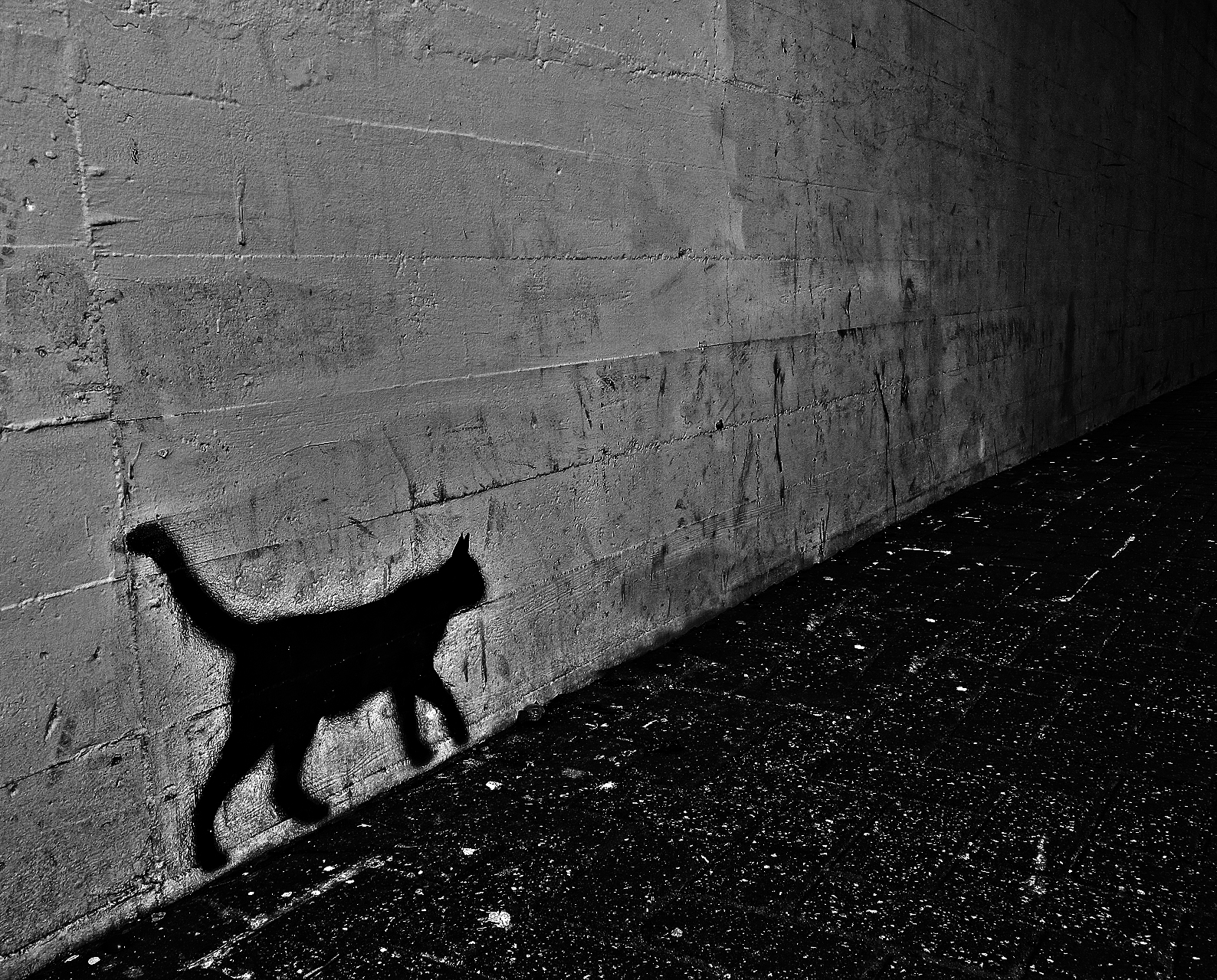
Alex sat in the nondescript sedan, huddled into the driver’s seat, hoping the shivers would soon subside, and cursing under his breath. Two hours standing against a wind-swept building in January made him question his choices. The man he was supposed to meet didn’t appear at 9 p.m. A friendly black cat kept him company, sitting at his feet as if it were waiting for someone as well. Alex waited another hour until the cold seeped into his joints. Knowing that texting their mutual acquaintance would be pointless, he carefully walked back to his borrowed car. As the car warmed, some of Alex’s ability to reason returned. He knew he would need to go back and wait, even if the person he was to meet took all night to make an appearance. So, he sat and felt the warmth of the vents surround him. Twenty years of this job made him cynical. And also practical. Five more minutes.

As he shut off the ignition and opened the driver’s door of his car, a gunshot echoed through the alleys of the nearby buildings. Unlike what happens in tv shows, Alex’s pulse quickened involuntarily, but he did not react. And he didn’t rush to hurry. Only fools or rookies barge into gunshots. Also, he knew in his gut that the man he was supposed to meet undoubtedly was the one receiving the bullet. Men like him invited such calamity. Alex calculated the odds of the police arriving in less than five minutes. He shut the car door and walked back toward the place he’d waited previously. As he neared the spot, Alex saw a body on the ground. A light above one of the stores’ rear doors provided enough illumination to see the body slumped against the bricks and cement. The friendly black cat sat a few feet away, watching. It didn’t surprise Alex that the gunshot hadn’t scared the cat. Like Alex, it had undoubtedly seen a lot.

Alex paused and listened for approaching cars, voices, or footsteps. Silence. He moved along the edge of the wall, face tilted down in case of clandestine cameras. He pushed against the slouched body with the tip of his right shoe. Dead. Alex crouched to his knees and carefully put on a nylon glove, which resisted stretching in the cold. Using his left hand, he pulled the torso of the body toward him and over.

For a few seconds, Alex’s mind went blank. Nothing in his twenty years of this crazy life prepared him for what he saw. He always considered himself prepared for anything. Alex remained crouched, staring at the face on the ground. It was his own face, detailed down to the bullet scar across the bridge of his nose. Alex reached down and inside the corpse’s coat. He removed the wallet and flipped it open. He saw himself in the driver’s license photo. Everything in the wallet looked identical to the same wallet he had inside his coat pocket.

Alex didn’t notice the approaching figure, stealthily moving behind him. He didn’t see the arc of the baton as it descended on the back of his head, knocking him unconscious. The cold cement welcomed him as he fell.

The black cat, having seen enough, meandered away into the darkness.

*

A Renewal Of Vows

From somewhere across the plaza in the revitalized small-town downtown, the sounds of a soft piano wafted into the air. Alex shifted uncomfortably, without realizing the piano brought unwelcome anxiety as it reached him. He nervously took a large sip of his bitter coffee, burning his throat a little. He relished the distraction of the pain. Across from him at the nearest table, a couple sat quietly in the fading afternoon light. Neither had spoken for the last twenty minutes. He knew they were both wrestling with ending their marriage, though for different reasons.

Alex felt their pain. It gave him no comfort to know that he would end their stagnant conversation for them: the husband wouldn’t leave this place alive. Seventy thousand dollars in Alex’s bank account guaranteed that Steve wouldn’t walk away. Though he didn’t know the details, he studied Steve’s life just enough to understand that he had crossed the line with a business partner. His wife Kathy was blameless.

Alex and the couple were the last three people in the plaza. The approaching chill encouraged the others to leave. The restaurant attendant tasked with keeping the shared area clean moved to clear the remainder of the tables. Alex indicated that he could take his coffee cup and saucer, as well as the $10 bill for the tip.

Just as Alex prepared to stand up and do what he came for, Steve looked across the small table and said, “I love you, Kathy. I’m not having an affair. My partner Mark is embezzling. He’s ruined us.” Kathy unexpectedly reached across the table and grabbed her husband’s hand. “I’m so sorry! I love you.”

Alex rarely saw anything to surprise him. They still loved each other.

Alex stood up, stretched slightly, and walked over to the couple’s table. “Have a good evening, both of you. And great lives,” Alex said to them. They look at either confusedly, and then both said, “You too!” reflexively.

Alex walked across the plaza to find his car. His plans had changed. He would kill Mark, the partner.

He hoped Kathy and Steve would consider it a belated wedding present from an interested bystander.

A Hint Of Murder

~One~

It had been a typical Friday night until his cellphone rang. All calls routed through the office system caused his phone to ring with the sound of a baby crying. Sheriff Taylor learned through experience that the sound would wake him from the dead. If it failed to rouse him, it certainly woke everyone around him.

Sheriff John Taylor sat on his plush living room couch, with plans to stay there until the next morning. His wife Jamie often told people she’d find the Sheriff loudly snoring, with the television still playing an endless list of home improvement shows. It was true. The Sheriff loved all of them. He didn’t need the woods, bar, or a fishing pole, which suited Jamie just fine. Before coming back home to take the Sheriff’s job, John caused her many nights of worry.

Because his back and hip hurt a lot, sitting up to sleep sometimes was his only recourse. He knew if his cell was ringing that one of his deputies decided to ignore his do-not-disturb order for a good reason. Even Burt Reynolds, his bloodhound mutt, raised his head in protest of the cellphone ring. Dogs weren’t fans of babies crying, as it turns out. “Okay!” the Sheriff grumbled as he reached for his phone on the table.

“Go,” John said to the voice on the line. He nodded his head a few times as he listened. “Will be there in twenty.” Sheriff Taylor preferred concise work-related communications. Except for Deputy Barnes, all of his deputies diligently adhered to his taciturn way of speaking. Barnes graduated from college with a Master’s in English and Latin.

When the Sheriff pulled into the long driveway, he saw that two of his six deputies were parked on each side of the drive while leaving ample room for other vehicles. As he’d trained them, neither had their lights flashing. Unless someone was in danger, lights were a ridiculous distraction. Most days, the Sheriff didn’t even require that his deputies wear uniforms. They were fiercely loyal.

He walked up to the porch as Deputy Hensley told him the little bit he knew. “Call thirty minutes ago, anonymous. Gunshot. I arrived, front door open. Jimmy next to the kitchen table with a gunshot wound to the head. Dead.” The Sheriff nodded and went inside as he opened the screen door to the house. It banged shut behind him.

His other deputy took pictures as he walked around carefully inside the house. Jimmy was on the dirty linoleum floor. Blood pooled around his head and shoulders. The Sheriff noted the small hole in Jimmy’s left temple. He couldn’t see the exit wound. A dark spray pattern was visible across the fridge. Every inch of counter space contained dirty dishes and empty beer cans and bottles.

Deputy Barnes walked into the small kitchen behind the Sheriff. “Suicide?” He asked. “Or did Jimmy succumb to the unnaturally unkempt condition of his own residence?”

Ignoring Deputy Barne’s flowery language, the Sheriff said, “Too soon to say. But if it is a suicide, someone will have to explain why there are two other water rings on the ends of the table.”

Deputy Barnes looked at the table, surprised that he had missed that detail. He picked up the half-empty beer bottle from Jimmy’s presumed place at the table. A water ring formed there from the beer bottle’s condensation. “I surmise the bottles aren’t in the trash. Someone outwitted themselves, didn’t they?” The Sheriff nodded affirmatively.

It was going to be a long night.

Someone would have to find Jimmy’s dad, Tiny. They’d start with the dives and bar parking lots in Evansville. And the Sheriff would find a way to sober him up enough to tell him someone probably murdered his son. Jimmy was Tiny’s youngest son. Both other boys had died in the last eighteen months. Counting Jimmy, this was the Sheriff’s first murder case in his six years on the job. He was beginning to get a tickle in his brain, one that told him that Jimmy’s brothers might have been murdered too. The Sheriff never ignored those tickles in the back of his head. They saved him several times at his last job. The last time he ignored one, he got six bullets to show for his carelessness. Not to mention a furious wife. The Sheriff knew that the wife had been a more significant risk to his health than six bullets.

As the Sheriff turned to Deputy Barnes, the deputy said, “Protocols commenced, boss.”

~Two~

The night did indeed drag on. By the time Sheriff Taylor drove back to his own house, the sun was over the horizon, blinding him. His right hip flared with a pain that he couldn’t ignore. A dark sedan sat next to his mailbox, engine idling. The tint was so dark that he couldn’t see the occupant. The car screamed, “Federal Government.”

Sheriff Taylor exited his vehicle and pocketed his keys. Instead of going inside, he turned and walked back to the mailbox. Without seeing the occupant, he made the universal sign to “roll down the window.” The dark window slithered down, revealing a shockingly young face. The agent inside smiled, revealing brilliantly white teeth, the best that money could buy. He held up his identification card, one emblazoned with “Special Agent” on the front. “Agent Shatner. Get in.” He tilted his head quickly to the right, indicating that the Sheriff should get in the passenger side.

Instead of arguing and asking needless questions, the Sheriff walked around the front of the car. As he did, he looked up to see his wife Jamie watching from the porch. He motioned that he was going to be a while longer. Jamie waved and went back inside. Years of being married to a mercurial cop taught her to conserve her commentary for later.

The Sheriff opened the door and climbed inside, shutting the door behind him.

Agent Shatner put the car in gear and accelerated away. “It’s better for you to see this first, Sheriff Taylor.” The agent was surprised to see that the Sheriff only nodded and remained quietly watchful from the passenger seat. They drove in silence for ten minutes. Agent Shatner turned off Highway 47. As they neared Hunnington Creek, Sheriff Taylor noted that a red pickup truck was parked near the bridge on the creek’s Evansville side. Beyond was Hunnington County, outside the Sheriff’s jurisdiction.

Agent Shatner pulled over, turned off the ignition, and climbed out. The Sheriff followed suit. A man dressed in blue jeans and a Georgia Tech t-shirt got out of the red truck as they did. “No issues, Agent,” he said and nodded to the creek. Agent Shatner wordlessly walked to the bridge.

“That’s going to be a problem, Sheriff,” he said, as he pointed to the opposite creek bank.

When the Sheriff peered over, he saw two dead bodies, men at least forty years old. He recognized neither of them.

Because Sheriff Taylor didn’t believe in coincidences, he asked, “These two murdered Jimmy last night?”

“Yes, they did.” Agent Shatner said.

“Do you know why?” Sheriff Taylor asked.

“You’re not going to believe this one, Sheriff.”

~Three~

A Life-Threatening Laugh

I never thought of her as pretty. Or interesting. She snarled even when saying, “Hi.” In the same way some people exude enthusiasm, for her, it was a startling disposition and a propensity to snark. Chatting her up was like trying to interrogate an irritated detective on his way to the dentist. If first impressions always proved right, I imagine that I crossed Lisa off my list within five minutes. We spent many weeks pointedly ignoring one another, much in the same way that two hyenas avoid the water hole when the other approaches.

Three months later, I realized I was wrong.

I sat at my desk, several cubicles away from my other coworkers. I heard the most vibrant and laugh I’d ever heard. It sounded like a warbling bird being driven over a series of speed bumps at a high rate of speed. Without realizing it, I started laughing. As the laughter from the other cubicle continued, I laughed harder and louder. Seconds later, I was crying from the effort and turned away from the cubicle entrance. As my laughter subsided, I swiveled my chair back to face my desk.

To my horror, Lisa stood at the entrance to my cubicle, hands on hips, snarl glued to her face. Her hair fell over her blue eyes. I realized that it had been Lisa’s laugh chirping all over the office.

“Something to share, Lenny?” She tapped her foot in impatience.

“Uh… listen. I’m sorry. Your laugh is awesome, Lisa.” I don’t know why I blurted out the truth in such simple terms.

“Haha, very funny, Lenny! Laughing with me, right? Not at me. Jackass.” Lisa started to march off, probably to recite my list of defects to our other coworkers.

“Wait, Lisa. I’m sorry. Your laugh is infectious. I mean that. I never heard you laugh before.” I stopped talking.

“I’ve been told that my laugh is life-threatening,” Lisa said and marched away. The snarl never left her face.

Her comment lingered in my head. Something inside me tingled.

*

A couple of hours later, my desk phone rang. Expecting a call from accounting, I picked it up immediately.

“Lenny. This is Lisa. Here’s what’s going to happen. You’re going to take me out to eat at that Italian place, the new one. Saturday, at 6.” I started to answer her, but the phone went dead.

Confused, I hung up the phone. From a distance, I heard Lisa’s high-pitched warbling laugh. She probably had someone else listen to our brief conversation on her end. Involuntarily, I smiled as her laughter echoed across the row of cubicles. She won that round.

On the way out that day, I stopped at Lisa’s cubicle, something I’d never done. She looked up, her hair still falling across her blue eyes. The snarl was already up and locked.

“I’ll pick you up at 6? On Saturday?” As I asked, the snarl fell away from Lisa’s face. Her eyes lit up. For the first time, she smiled at me.

“I’d love that, Lenny. Bring someone good-looking with you for me to look at, will you?” And she laughed. The cubicle filled with her laughter. I laughed too. “Yeah, as long as you bring a hat the reaches your chin.” We laughed harder.

Lisa’s closest work friend Antonia looked over the cubicle, probably wondering if she were in an episode of the Twilight Zone. She looked from Lisa’s face to mine, then back again as she shook her head.

As Antonia ducked away from sight, Lisa looked at me. “For real, though. 6.” She took a slip of paper and noted an address on it. Presumably, hers, although it would be impossible to know.

*

A year later, we were married. During the vows, Lisa broke out in laughter. As the pastor’s face recoiled in surprise at the raucous laugh from Lisa, I joined her.

Lisa was the prettiest girl there.

The only one, really.

Apology

“I can only write from the porch of my narrow world.” -x

Not too long ago, someone took exception to something I wrote regarding diet and exercise. She wrote a fierce and compassionate series of personal messages to walk me through her thoughts. I read them all carefully. It’s rare for people to take the time to explain what they’re thinking. She earned much of her opinion the hard way, through life experiences. Voicing her opinion to me also provided me with new things about her that I didn’t know.

Saying nothing is easier. (So is writing nothing.)

I considered what she wrote because she’s smart. She also has experienced some significant obstacles and challenges in life, yet still managed to live a good life. Many of us don’t. Having that kind of person in one’s orbit usually makes everyone live a richer life.

She later felt she had over-reacted. I disagreed. She spoke from the heart. Yes, she bashed me reasonably well. But criticism from people you don’t respect seldom wounds you. It’s just background chatter.

I felt terrible. Her reaction was genuine and not based on a personal attack. That’s rare in people.

Most of the disagreement stemmed from the idea that I was writing for everyone. Or worse, disregarding the immense challenges some people face.

That’s bad writing on my part. I often warn people that I’m not a perfectionist and not a professional writer. That’s not to say that I’m also not wrong. If for no other reason, thinking I was right about things when I was younger, only to discover how wrong I was, taught me that I could just as easily be completely wrong NOW.

For anyone who takes the time and effort to explain to me that I’ve said something stupid, I’ll take the time to read it and consider it. I am a snob about it, though. I have to know that the person writing or talking is motivated by self-expression and a hope that I will understand their ideas.

In this case, she was explaining from a position of wanting me to understand her viewpoint.

I’m sorry I made her doubt herself.

She should continue to speak fiercely. I won’t fault her for it. She’s demonstrated that communication isn’t to wound others. Did I mention how rare that can be?

“It is no accident that those who scream the loudest for you to speak only when you have something positive to say are usually the ones with the most interest in keeping you quiet.” -x

P.S. Not related, but:

A List of Warnings About Writing Anything (Previous Post From Very First Blog)

Girl On Fire

Rhonda and Chris swayed together in the middle of the softly-lit bedroom, his hands across her hips. Neither danced well, but their movements were effortless and graceful. Chris found himself unable to look away from Rhonda’s face.

A few feet away, Rhonda’s phonograph whirled as it played “Like a Bandaid On a Bullethole.” She bought the vinyl album a couple of days before, hoping it would unlock more secret rooms in her heart. For the longest time, she kept the rooms locked; in time, she forgot they existed. When she looked at Chris, she found herself mentally flinging all the doors in her heart open. For the first time, she wanted to throw them open.

Over the last months, Rhonda took the time to make the room her own again. All the past relics slowly diminished and disappeared until one morning, she awoke to realize that the space was now entirely hers. Her grandfather’s table, the lamp she made, now entwined with fairy lights, and her wall of hats, each of these things shouted her singular name.

When Chris asked her if she wanted to go on a date, she said, “No. Come over. We’ll cook together, drink some coffee, have a glass of wine, and laugh.” Chris laughed and said he’d like nothing better. And the night had unfolded as effortlessly as one between two close friends. They made pasta, each contributing to the messy process and both doing the dishes afterward. They discovered that they already had a shorthand for movement.

Rhonda took the time to explain her aloofness and reluctance. To her surprise, Chris already knew. “Hurt creates space,” he told her. They looked at each other, smiling, knowing they just had an entire conversation in one sentence.

They sat at the kitchen table, the most unromantic of places, and drank a cup of coffee. Both felt as if they’d done so a thousand times before. Their eyes danced and queried each other as they sipped. Rhonda got up from the table and reached over for his cup, placing both cups in the sink. She reached out with her right hand for Chris to give her his hand. She led him through the living room into her bedroom. She stepped away and placed the needle on the vinyl album. Music flooded the room.

Neither spoke as Chris stepped toward her, already swaying.

As the song ended and the scratchy interim played, “Me On Whiskey” began to play. Rhonda nodded at Chris, who bent his head to kiss her for the first time.

In this new room, surrounded by a new life, and more importantly, new hope. And they danced, in all the ways that two people discovering each other do.