Thomas smashed the gray urn against the mantle, shattering it in dozens of pieces. He wasn’t prepared for the massive dust cloud that eddied and spread.
“F*** him.” He didn’t raise his voice. Anger suffered long enough becomes calm.
His mom didn’t react. She didn’t jerk, or even let her eyes widen. After thirty-two years with the object of her son’s anger, she understood. Her husband had no idea how many times she calculated the odds of getting caught if she ended him. Two weeks ago, she decided that waiting for him to do her in didn’t work for her any longer.
“Thomas, leave the mess. I’ll make us a cup of coffee with a dash of whiskey. We can curse about him as we drink it.”
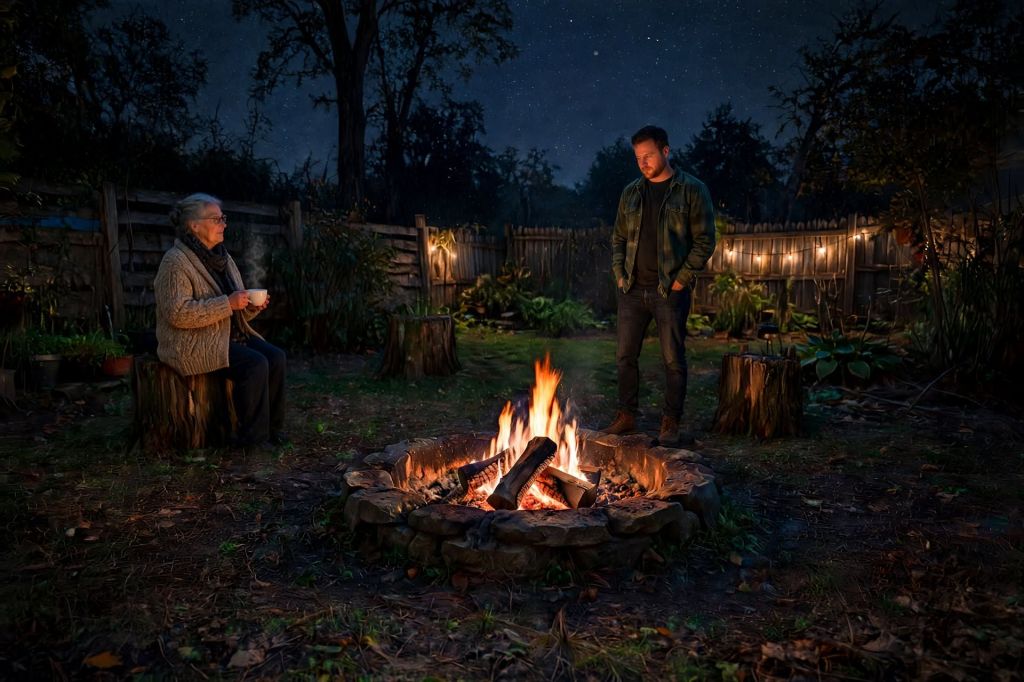
Thomas followed his mom into the kitchen as she made them both a cup of coffee. Each of them were mired in their own thoughts as they picked up their cups and exited the house through the back door.
“What are you going to do now?” Thomas sat on one of the three stumps that served as seats. He stared at the fire pit between them.
“Well, I don’t know, but it can be whatever the hell I want to for once.”
Thomas burst out laughing. After a couple of seconds, his mom joined him.
His mom took a sip of her coffee and smiled. “I guess I can vacuum up the mess. I could leave the vacuum bag on the mantle when I’m done.”
“I’m sorry about the mess. I’ll clean it up when we go back inside.”
“You know, I just realized it’s the last time either one of us will have to clean up after him.”
Thomas laughed again. Standing up, he pulled the little bottle out of his pocket and poured the liquid into the flickering fire.
“We don’t need this anymore.”
“Never again,” his mom reverently whispered.
Thomas dropped the empty bottle into the flames.
Both of them watched the bottle blacken and then crack as the heat enveloped it.
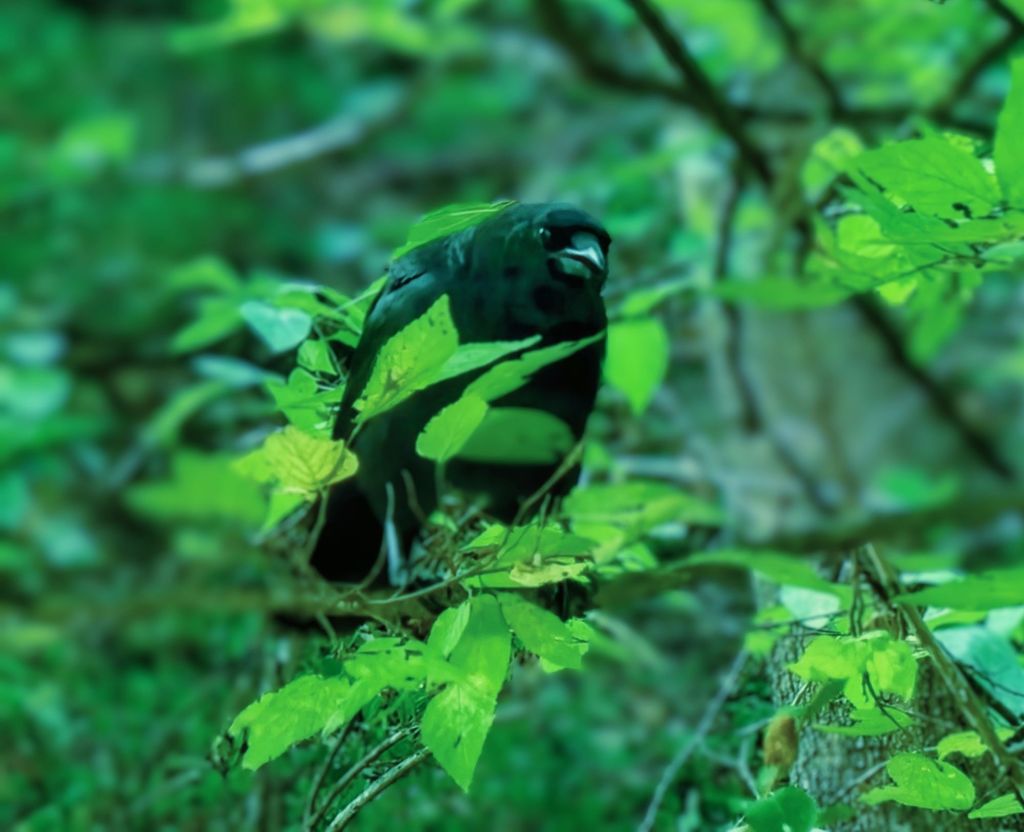
He preferred to amble like he was a roaming laggard with purpose. He inherited the phrase from a friend long dead, with whom he shared an affinity for Bukowski. On that day, onlookers would have described him as oblivious, or perhaps careless. Unlike other cotidian days, he had no interest in the mundane goings-on around him. His singular focus rested on the slightest possibility that the crow would seek him out once again. Nestled inside a blue tissue in his pocket was a gold button he’d bought at a bohemian flea market. Next to it was a prepared packet of nuts and dried bits of fruit.
Despite the sidewalk’s occasional deficiencies, the man mostly kept his head tilted up. He’d learned that accident and providence were equally inscrutable and unforeseeable. He listened for distant echoes that might betray the approach of the crovid he sought.
The man had all but surrendered hope when a distant call reached his ears. He stopped in the middle of the sidewalk, unconcerned whether another pedestrian considered him an obstacle. He waited. Not restlessly or annoyingly, like most modern people. He was immobile and unflinching, breathing deeply and evaluating the approaching sound as if his ears were governed by Doppler.
The crow swooped low, as if it intended to touch the ground. Turning gracefully, it landed and perched atop a wooden fence in need of repair. It pecked at the gray wood beneath it, raised its head, and looked at the man.
At that moment, a bicyclist approached. “To your left,” he shouted, as if the danger of hitting someone was greater than the risk of seeing the ridiculously tight shorts he wore.
“You’re standing in the middle of the sidewalk.” The bicyclist turned his head as he sped past.
“I am not merely standing. I am experiencing.” The man didn’t turn his head as he addressed the cyclist.
Like most denizens of the area, the cyclist had no idea what the man meant. His vocabulary was stuffed and stocked with practical words, absent metaphors. He shook his head and pedaled faster.
The man reached into his pocket and pulled out both tissue and packet. Unfolding the tissue, he retrieved the button from its confines and walked across the grass to the fence. He knew better than to seek conversation with the crow directly. Reaching up, he carefully placed the gold button on the rectangular top of one of the posts that allegedly held up the fence. After unrolling it, he upended the packet and poured the nuts and fruit onto the wood next to the button.
Walking backward without looking behind him, the man stopped when his feet found the sidewalk again. He nodded toward the bird.
The bird hunched almost imperceptibly, flew effortlessly across, and landed on the boards nearest the post.
“Kraa! Kraa!”
The man smiled as the crow raspily acknowledged the gifts. Its gravelly call was the equivalent of italics and enthusiasm. Pecking studiously, the bird efficiently consumed several nuts and bits of fruit. It turned and stretched its wings like a phoenix.
“Kraa!”
The bird pirouetted and used its beak to clasp the button. Hunching again, it flew down toward the ground in the man’s direction, then shot upward above him.
The man smiled, recognizing that the bird had chosen to dive as an acknowledgment. The gold button prohibited its call.
Within seconds, the crow disappeared over the crest of the trees, almost as if the sunlight caressing it had rendered it invisible.
For all who patiently wait for sublime, subdued moments, there is recompense. Perhaps not in the flashy way we are ingrained to seek. The man had learned to notice things, even when unwarranted.
Before the man turned to traipse away, two argumentative starlings landed like teenagers trying a skateboard trick they had seen but never attempted. In seconds, they devoured the remaining bits. Because the sun graced the skies, the man observed the starlings’ spring iridescence. He wondered how much ultraviolet the birds could actually see.
They flew off as if governed by misprogrammed GPS. Though they lacked the grace of his most recent friend, the crow, their inelegance had its own beauty.
Sunlight and success propelled the man back home, as if his feet were supported by a layer of air. His mental to-do list grew by one when he realized he might need more buttons, along with fresh coffee. It was anyone’s guess which would bring more happiness.
In the years before everything changed, Greg knew that someday he would send his last message, speak his last words, and enjoy a sunset. One day, someone would speak his name for the last time. Finality brings focus. When a cup of coffee potentially becomes your last, the sips are dark and delicious, and even a drop wasted brings regret.
It was all theoretical until the doctor uncomfortably leaned forward and adjusted his tie. Even after years of practice, he hadn’t acquired the ability to tell someone that they would soon be defined by a dash between dates. “It’s everywhere. The exploratory surgery confirmed it.”
Greg asked the only question he could think of.
“I’d say two months. I’m so sorry,” the doctor answered.
Greg’s days were truly numbered.
After leaving the doctor’s office, he drove home. Instead of going inside, he walked across the railroad tracks. He meandered through the abandoned industrial district that once fueled the small town. He’d seen it all dozens of times. This time, however, he paid attention to every detail.
Greg stopped near an abandoned building that once held dozens of workers. The sign that once displayed the name of a thriving company was now rusted and faded. It was a relic now, succumbing to time. When Greg was young, the place was buzzing with life. Now, it slowly rusted and constantly sought ways to disintegrate.
“I thought I had more time. I thought I could take back all the ways I insisted I was right. In faith, in action, and words.” He didn’t know why he said it aloud.
The trees above him didn’t acknowledge him like he expected. They rebuffed his excessive self-reflection. For once, he stood under them and let the breeze wash over him.
The abandoned cat chose that moment to make his appearance and introduction. He poked through between bent pieces of galvanized metal, probably after hearing Greg’s voice.
Greg didn’t have time to react as the scruffy grey cat ran over to him, meowed, and then forcefully rubbed against the back of his leg. Bending down, he rubbed the cat’s head as it arched its back to meet his fingers. The cat’s fur was messy and tangled in a few places.
As Greg ran his fingers along the cat’s back, he felt a scar that traversed at least four inches of the cat’s back. Pushing the fur aside, he could see that the jagged scar was long-healed, even though the cat didn’t appear to be very old.
The cat meandered behind him as Greg walked home. Greg walked slowly, appreciating the leaves, the fading sun, and his collection of memories. He stopped at the railroad tracks, staring in each direction as the tracks stretched away from him.
“I’ve got a scar like that too,” Greg told the cat as it peered up at him and rubbed his leg. Greg’s scar was only a few months old. He caught himself touching it lightly through his shirt several times a day. The surgery that could have lasted three hours took only fifteen minutes before the surgeon closed him back up.
“Go home, doofus,” Greg said as he turned to rub the cat’s head one last time.
Greg avoided looking back at the cat as he neared his house. Taking his keys from his pocket, he turned. The cat sat directly behind him, looking up.
Greg opened the door and held it open. The cat meowed and walked inside as Greg shook his head.
“Just for a minute, okay? I can’t give you a permanent home.”
He watched as the cat ran to the couch, jumped up to the edge, and watched him.
When Greg reached for the cat to pet it, it hunkered down slightly and then jumped. Greg caught him as the cat arched up and nuzzled under his chin. Greg laughed as the cat’s whiskers rubbed against his face.
“Let’s see what I can find to give you to eat, Mr. Doofus.” Greg finally bent down to let the cat sit on the floor and look up at him.
Within a couple of minutes, Greg placed a small plate of tuna on the floor. “Your dinner is served,” Greg said.
Mr. Doofus meowed a loud thank-you and began eating the tuna noisily.
Greg placed a bowl of water next to the kitchen table. Mr. Doofus slowly walked over to the bowl and began drinking.
After heating up a microwave meal, Greg picked up his small tray and turned to the living room.
Mr. Doofus jumped up in the middle of the couch, turned, and faced the TV.
Greg sat down on the couch and turned on the TV. News wouldn’t hold his interest. It mattered only when you thought you might be around to see how everything worked out.
Mr. Doofus climbed onto Greg’s lap and curled up, purring loudly. Greg ate a few bites of his meal before pushing it across the coffee table. Instead of paying attention to the TV, Greg rubbed his hands along Mr. Doofus until he was purring like a jet engine.
For the first night in weeks, Greg slept soundly, despite sprawling out on the uncomfortable couch. He didn’t remember falling asleep, nor that Mr. Doofus had curled up next to him.
The next morning, Greg sat up, certain that he would be stiff and sore from sleeping on the couch. Instead, he felt like his old self.
Mr. Doofus rubbed his head along Greg’s leg until he jumped down and walked over to the door to paw at it.
“Gotta go to the bathroom?”
Greg opened the door as the cat meandered out. It didn’t even occur to Greg that his new friend might not return. He left the door open.
By the time Greg had finished his coffee, brushed his teeth, and decided he needed to go to the store to get Mr. Doofus some supplies, Mr. Doofus popped back inside, meowing loudly to announce his presence.
The cat ran across to jump up on the couch as Greg’s fingers rubbed along his fur.
“Keep an eye on things for me. I’ll be back in thirty, okay?”
Mr. Doofus jumped down and walked over to the window. He jumped up and sat on the sill, licking his paw before running it smoothly across the top of his head.
Greg made it back home in forty-five minutes. He set up the litter box and put out the special decorated bowls for his new friend. Opening the bag of special cat food, he poured it into the bowl.
“I picked this out because the cat on the bag looks like you,” Greg told Mr. Doofus, who was already eating from the new bowl.
Greg turned on the TV and pulled out his phone. Mr. Doofus jumped up onto his lap and spread across him as Greg petted him.
“I’ll be back Monday,” Greg said, after his manager answered.
“That’s great news! So you’re doing okay? We were worried.” Greg’s manager sounded relieved.
“Yes, everything’s okay now.”
Mr. Doofus peered up at Greg as he finished the call.
“What? I’m fine. I’m just not going to be around as long as I thought. None of us is.”
Mr. Doofus seemed unconvinced, but settled back down when Greg ran his hand all the way down his back to the end of his tail.
When Greg got up to make another coffee and then went outside, the cat followed him and sat next to his left leg, rubbing and purring.
Over the next eleven months, Greg fell into a routine, including this new friend in everything he did. He wasted a lot of money buying the cat toys until one day he accidentally dropped an empty toilet paper roll on the bathroom floor. Mr. Doofus growled and attacked it. He spent the next ten minutes fighting it to the death. Soon after, Greg came home from work with multiple empty rolls that people had saved for him. He didn’t mind cleaning up the shredded cardboard because it was the only thing that reminded Mr. Doofus that he had once been wild.
…
The day finally came when he knew he had to put aside the veneer of privacy and talk to his neighbor Jane. She lived across the street and two houses down. They had greeted each other more than once, but never had a real conversation. Greg knew that she was a single mom and had struggled financially for a long time. Just looking at her car, it was obvious that crossed fingers probably kept it intact.
Jane took a bit to answer the door. She left the storm door closed as she smiled. Greg didn’t blame her for being cautious.
“Jane, I’m sorry to bother you, but if you have a few minutes, I would like to talk to you.”
Jane pushed the store door open and almost stepped out. She looked at Greg strangely and then pushed it out and held it open.
“Come on in. I’m making supper, if you don’t mind me doing that while we talk.”
As Greg stepped inside, the aroma of whatever she was making assaulted him. Hunger had mostly become a thing of the past, but the smell made his stomach growl.
Jane walked into the kitchen as Greg followed her. He stopped by the kitchen table as Jane stirred marinara on the stove top.
When Greg hesitated, Jane smiled. “Don’t be nervous. Unless you’re asking me for money.”
“I don’t know how to tell you all this. I apologize in advance for hitting you with it.”
Jane’s face changed as she listened. The smile became flat.
“No, it’s not anything bad or about you,” Greg said. “You know I don’t have any family left, right?”
Jane nodded. “I’m sorry.”
“It’s okay. Sixty years taught me it’s the way life is. And the last year definitely reminded me. Anyway, I’m not going to be around much longer.”
Jane grimaced. Greg could see her recoil instinctively.
“I’ve lived longer than the doctor said I would. But now it’s time to face facts. I don’t know you at all, really, but if you agree, I’d like to make you an offer.”
“Oh?” It was easy to see that Jane was confused and probably a little worried because she had no context.
“Because I have no family, I want to give you my house, my car, and everything else left over.”
Jane’s face went through a series of contortions as she tried to catch up to what Greg had said.
“Give me your house? But you don’t know me!”
“I know. But I know you’re renting this house. And I know it’s a struggle as a mom with a 10-year-old boy.”
“So you want to just give me your house? What’s the catch? I’m sorry for being cynical. There has to be one.”
Greg shook his head. “There is. I want you to let my cat, Mr. Doofus, live in the house with you once I’m gone. That’s it. I think I’m only still alive because he adopted me a while back, at the exact moment I needed him.”
Jane’s eyes widened as she studied Greg’s face. In the thirty-eight years she had lived, she had learned to trust her instincts. Her gut told her Greg was telling the truth.
Her eyes welled up with tears as she continued to stare at Greg.
“I will need some more details from you, but I’m going to take care of everything so that I can make sure you don’t have to do anything or pay any legal bills.”
Jane turned awkwardly, turned off the stove burner, and moved the pan. She moved to the table, pulled the chair away from it, and sat down. As Greg watched, she put her face between her hands and sobbed.
Because he didn’t know her well, he waited silently. It took Jane a bit before she raised her head and wiped her eyes with her hands.
“Are you sure? There’s no one else?”
Greg shook his head. “Don’t be sad for me. Think of it as karma from the universe. I didn’t do anything to deserve the tumor that grew inside of me for a year before I knew it was there. But you deserve a chance, and I can give it to you. A place for your son to finish growing up and a place that’s yours. I’m going to get a new car and put the title in both of our names. It will be yours too, along with any money I have left over.”
“I’m so sorry, Greg. Jesus, I don’t know what to say. Last week I almost couldn’t make rent, and now you’re telling me you’re just giving me your house.”
Greg smiled. He instinctively knew that she was coming around to the idea.
“And yes, I will adopt Mr. Doofus and keep him for as long as he lives.” Jane wiped her eyes again. “I would have a pet, but I’d have to pay another deposit.”
Greg pulled a folded piece of paper from his pocket and flattened it. He put it on the table near Jane.
“Fill in these details tonight, if you don’t mind. You can put it on my door if you’d like. I have the day off tomorrow, and I’m going to meet my lawyer.”
Jane pushed back from the table, stood up, and took three steps before throwing her hands around Greg and hugging him.
“I am so sorry, Greg. Please don’t fault me for maybe looking happy. I’m sad for you.”
Greg tentatively put his arms around Jane and squeezed her.
When she stepped back, he smiled.
“I promise you I’m okay. I’ll let you finish dinner. I know your son’s coming home soon. Enjoy your evening, okay?”
Jane nodded, but didn’t reply. Greg knew that she was about to burst into tears. Had he told her she would probably end up with $200,000, she might have completely lost control.
…
When Greg went inside his house, Mr. Doofus meowed loudly until he sat on the floor and playfully wrestled with him. He ignored the pain running across his sides.
“You’re going to get a new friend to take care of you,” Gred said. Mr. Doofus stopped playfully biting at Greg’s fingers as he looked up. “Thank you for finding me, you little doofus.”
Mr. Doofus grabbed Greg’s right hand with his paws and resumed nipping at him with his teeth. Greg laughed and forgot about everything for a while.
…
A few weeks later, Maple Street became lined with colorful red, yellow, and orange leaves. The blue house with the blue door filled the air with competing colors. Inside, Jane sat on the couch. Her son Jefferson playfully tossed a cardboard roll to Mr. Doofus as he sat on the windowsill. Catching it in his paws, he attacked it. Little pieces of cardboard floated to the floor below. Jane shook her head, knowing that she would dutifully sweep it up later, once Mr. Doofus had vanquished the cardboard invader.
She thought of Greg almost every time she looked at Mr. Doofus. He wasn’t a cat at all. He was a timely angel, furry and loving. Had it not been for him, Greg wouldn’t have had enough time to come to terms with his death or his ability to help someone like her.
“Mom, is this really our house forever?” Her son Jefferson had asked her the same question a hundred times.
“No, it’s our home,” Jane said, smiling. “With our very own guardian angel.”
Mr. Doofus turned in a circle as he sat on the windowsill. He stared out the window as the leaves drifted to the ground.
“We are what we pretend to be, so we must be careful about what we pretend to be.”
Vonnegut’s warning about adapting and conforming to roles and behaviors is as true today as it was 65 years ago.
It runs in the back of my mind all the time as I watch people sacrifice agency and personality.
If you dehumanize people, convinced you’re doing it for profit, eventually you are not separate from the organization that financially motivates you to do it.
If you spout ideology, whether for entertainment purposes or views, at some point you become your words.
The positive aspect of this is that of course you can become kinder by using habit to constantly reinforce the behavior you want from yourself.
The main focus that runs through my mind is that people are maintaining appearances and adopting personalities that serve them to make a living. Paradoxically, however, they often find themselves becoming what initially was a facade.
One of my favorite wood panels that I’ve made. I made it as a reminder of youth. And to never be the one on the sideline watching other people find a way to get the crayons and stick them out of their nostrils. I’ve not done well with this lately.
This isn’t the kind of post I started out to write. I don’t mind expressing myself on the fly, nor do I worry about being vague when I shouldn’t be, or about not getting it quite right. There are so many reasons NOT to write off-the-cuff. But I usually don’t let that stop me. If you want to get into hot water or draw unwelcome scrutiny, just try openly talking about sexuality.
When we’re young, we don’t fully understand it. It takes experience, tempered with real-world knowledge of the rituals and social norms of sexual expression and interaction. By the time we’re older, our bodies begin to revolt, and our expectations can get skewed by people, circumstances, or frustration. It’s not supposed to be that way.
Most of us are sexual beings. It’s one of those facts that’s obvious. Yet, we spend an inordinate amount of time keeping it hidden in plain sight. Most of the time, anyway. We wonder about our attractiveness, even when we’re in a committed, monogamous relationship. Hair, makeup, clothes, body, just about everything gets intertwined in our sexual identity.
For much of our lives, seeking pleasure is a constant companion. When it’s good, it’s one of the best possible things we can experience. It’s free. It’s liberating. It creates a connection. At least it is supposed to. When love is present, it can be freely expressed without so much shame, guilt, or embarrassment.
Each of us has our own limits, boundaries, expectations, and fantasies. They aren’t something we talk about in our daily lives. If you’re lucky enough to have someone who loves you and is selfless enough to keep you satisfied, you are fortunate. If you don’t have unresolved issues, anger, or distance to keep you apart, you’re lucky.
Sex gets twisted into so many things it doesn’t need to be.
Because this is my blog, I can say anything I want. It doesn’t shield me from potential recoil, shock, or embarrassment if I share too much or share things people don’t want to know. It’s not as if I’m explicit.
I like writing romance stories. Especially shorter ones. I graduated with a woman who makes her living entirely from writing romance. The only difference between romance stories and erotica is that the latter breaks the barrier of explicitness. Romance novels use implication, innuendo, and roundabout means to signal all the things that erotica can express without limitation.
Is erotica literature? Not always. But it can be if done with elegance and care. Exactly like sex can be connection and intimacy, even though it is rendered in flesh and bone and a messy adventure. People will smirk at erotica, as if some people don’t watch “Dancing With the Stars” for inspiration, or watch steamy movies without realizing it is running along the same rail as erotica.
Imagination powers a lot of sexual expression. Just a fantasy does.
Because people don’t think about it comfortably, they can’t distinguish the subtle differences between fantasy and real-life expressions. They conflate a person’s fantasy life with their actual motivations.
As the long, dry spells of no sexual expression occur, I turn to erotica. I never thought I would be in a position to experience a life with such absences. However, as everyone knows, many relationships are more akin to roommate scenarios than to committed, loving, and intimate connections. I prefer erotica, whereas most people, it seems, turn to porn. Instead of reading what others have written, I prefer to compose it myself. To imagine people and scenarios. But all of them have the common theme of sexuality expressed as mutual satisfaction and selfless fulfillment. Don’t get me wrong. Sexual expression is amazing. But will anyone argue with the fact that it’s immeasurably better when you have someone who loves you and trusts you?
Perhaps erotica is old school in an era of so much technology. However, it’s about imagination, and very few things can trump someone who has a fantastic imagination.
It is fascinating to watch people as they live their lives and wrestle with the hidden fact of their sexuality. We don’t know what people think in the privacy of their minds. What turns them on. But we do know that sexuality ruins a lot of people and a lot of relationships. Especially when it’s absent or used in a way it’s not supposed to be. A big part of that is because sexual discussion is very taboo except in very limited circumstances.
What makes it worse is that the very people most likely to criticize or shame others are also the ones who are most likely to be secretly consuming all manner of explicit content.
It shouldn’t be the outliers trying to guilt us or shame us. We’re all created and hardwired with the drive for sexual expression. Most of us, anyway. And there is an entire spectrum of differing sexual expression and need.
A good, satisfying life is about striking a balance in all things. Sex is just one of those things. On the other hand, I often think of one of my favorite lyrics, “I didn’t buy the house for the kitchen, but try living there without one.” If one thing is out of balance, it creeps into everything. Modern society constantly reminds me that people will lose all reason in their search for what they think is missing. It is also the cousin of alcoholism and addiction.
I don’t like the idea of objectifying people. That’s one main difference between erotica and other means. It’s entirely imagination. And the kind I like requires people who are excited to experience another person, trying to find the right mix of pleasure and living life with someone who wants the same.
For a year, I searched for May in the crowds and along the city’s walkways. My eyes sought her out in the early morning or late evening during all manner of weather. I only met May once, on a warm afternoon in early June. The times I’d fantasized about meeting her again were countless. Something about her convinced me she had dropped her guard with me in a moment of spontaneous connection.
After a few months, I occasionally left a scribbled message along the walkway: “May, remember me? Clark.” More and more frequently, I’d return to the messages, hoping I’d see a sign.
Months passed without an answer. I questioned whether she might have told a white lie by omission; an implied untruth allowed me to believe she lived nearby. Maybe she didn’t visit this part of town. Every detail of our encounter plagued me. …
A year ago, I walked fast along a portion of the city’s most unfamiliar walkways. A long, aimless walk was the only thing that might distract me. After several miles, I stopped to sit on a wooden bench near the edge of one of the city parks. Looking for a song on my phone, I sat without paying attention to who might pass by.
“Hey, I hope you don’t mind if I sit here.” I looked up to see an older woman wearing headphones. She pulled them from her ears and wrapped them around her neck. She wore denim shorts and a loose-fitting white T-shirt. I’m not sure how old she was. I’d guess she was five years older than me. Her long black hair fell loosely around her shoulders.
“Sure. Just taking a break,” I told her.
The woman sat on the bench. Taking her phone out, she fiddled with something onscreen and leaned back against the bench.
“Me too. I walked too far today. The apartment was too quiet. I could almost hear the shadows, if you know what I mean.”
I looked briefly to my right as the woman spoke. The way she phrased her motivation sparked interest.
“I do. That’s a good way to put it.”
The woman smiled. “I just retired six months ago. Too early, according to some.”
“Congratulations,” I told her.
“Thank you. I thought I’d retire and be happy with my husband.”
The way her voice changed slightly as she ended her comment told me that her husband had other plans.
“Oh? I’m sorry. Did something happen?” When the words came out, I realized how intrusive they might be. I quickly added, “I didn’t mean to pry.”
The woman laughed. “If you can’t disclose your secrets to a stranger on a bench, who can you trust?”
I smiled, thankful that she diffused my awkwardness.
“We planned our retirement early. To enjoy life. It turns out he wanted to enjoy his with someone else.” The woman looked up at the trees on the other side of the walkway.
I don’t know why I blurted it out. “After years of being lonely with my girlfriend, I left her. Now, at least, I’m lonely for real.”
The woman turned and looked deeply into my eyes. “I’m May. I’m sorry about your girlfriend.”
“And I’m sorry about your husband, May.” I found myself not looking away from May’s green eyes. The wrinkles around her eyes and mouth looked earned – probably from happier years of laughing and living.
May shrugged. “I’m stuck in a holding pattern, trying to figure out what’s supposed to be next.”
I nodded. “I agree with that sentiment.”
We fell silent momentarily as a young woman walking two large dogs passed by. We both waved at the woman simultaneously. She waved back and smiled at us, probably thinking we were together.
I realized I hadn’t introduced myself. “I’m Clark, by the way.”
“That name suits you,” May answered. “Rumpelstiltskin might have worked, though.”
I laughed. “Too much writing.”
May smiled back at me. She looked away quickly and then immediately back to me.
To my surprise, May reached for my right hand with her left. Her fingers were warm as they wrapped around mine. I didn’t pull away from her touch. May stared at me as if she wanted to say something.
I’ve often thought about what I did next, but no good explanation comes to mind. I moved my fingers from hers and held my right arm up above the back of the bench. May understood my intentions.
She stood slightly and moved to sit beside me, her leg against mine. May leaned her head against my shoulder. I wrapped my arm around her and squeezed her right arm. Had I known May, it would have been the most natural thing in the world to do.
May sighed. I felt her body relax into mine.
“Clark, you feel so good. I haven’t been held in such a very long time.”
“Likewise, May. Can we sit here for a month and just hold each other? Pretend we’ve been together forever?”
May nodded against my shoulder. Her left arm pushed behind me and around me. She squeezed my ribs with her fingers. I rubbed her arm like I’d done it a thousand times.
We sat for several minutes, unmoving, each of us lost in our thoughts.
May began to speak in a low voice. “I had been married for thirty-three years. The first twenty-five were amazing. And then they weren’t. My daughter, April, moved to Australia, and my husband seemingly had to work all the time. I knew something had fundamentally changed, even though I couldn’t quite identify what. We planned our retirement, to see the world, and to enjoy life. And then he was gone.”
I squeezed May against me. Her right hand moved to rest on my chest and rubbed. Whether it was subconscious or deliberate, I wasn’t sure. But I did recognize that it was something that she probably did when she felt safe.
I spoke without worrying about how I might sound. “I spent years trying to feel valued, much less touched with passion. One morning, something snapped. I realized that being alone might be better than being scared of being alone. There is no doubt about it: I need to be with someone to be happy. But that someone has to reciprocate.”
“Of course,” May whispered.
We once again fell silent. The birds and nature sounds filled the gaps as we softly touched one another.
Five minutes later, we heard a dog barking as it ran down the walkway. As it approached, May raised her head to look. She sat up quickly.
“I think that’s Bert, my neighbor’s dog. Susan will be out of her mind.”
Feeling disoriented, I sat up as May stood. May turned to me as the dog scampered past, trailing its leash.
“I have to catch up to it. Bert is too old to go looking for her dog. I’ll see you later, Clark, if you’d like?”
I nodded. “Yes, I’d like nothing better.”
Before I could tell her where I lived, May smiled at me, turned, and walked away fast. I watched her grow smaller in the distance, heading away from me.
It wasn’t until she was out of sight that I realized I should have accompanied her if only to be near her. I still felt May’s body leaning against mine.
That was the last time I saw her.
…
As the months passed, I felt messages on the walkways. I looked not only for May, but also for a Labrador with a long green leash. Nothing.
The one benefit to the chance encounter was that I walked miles each day, learning the city’s secret and hidden paths. No one knew that I searched for May. Thinking of holding her again occupied my thoughts. As unrealistic as my fantasy might be, I hoped she might want to be held again.
Last Saturday morning, as I approached the bench I shared with May, I bent to leave another message—the same one I always left.
A voice interrupted me. “Are you leaving notes for May Smith?”
I looked up, still bent down. A woman wearing a tracksuit and absurdly white shoes stared down at me.
I stood up. “I’m not sure. I don’t know her last name.”
The woman gave me a look of suspicion. “It seems odd that you don’t know her last name if you leave odd notes on the concrete.”
I shrugged. “You’re not wrong. I can’t explain it. We met about a year ago.”
“Does she have long black hair? Green eyes? She’s sixty-six years old.” The woman seemed hesitant. Her curiosity got the best of her.
I nodded, smiling. “You know her? Sixty-six? She doesn’t look like it. I’ve been looking for her for a year.”
“Yes, that’s her. I’m not telling you anything unless you can give me some context. There are too many weirdos in the world.” The woman gave me a look as if to indicate that I probably was one of those weirdos.
I felt like another person took control of my voice as I answered. “Her husband left her. All I can tell you is that we sat on the bench over there and held each other for what felt like a month. I think we had a connection. Her neighbor’s dog Bert ran by. She left too quickly before I could find out who she was.”
The woman listened intently. Finally, she shrugged. “What the hell? Why not? That’s her. You seem genuine. I’ll give you her address. But I will need to see your license if you’re one of those quietly crazy people.”
I pulled my wallet from my back pocket and opened it for the woman to inspect. She carefully looked it over.
“I hope you find her and what you’re looking for, Clark.”
I typed May’s address into my phone as the woman recited it.
“Thank you so much!” I felt the excitement in my chest.
“Good luck to you both. I wish my husband were so interested,” she said as she walked away.
I stood for at least a minute, arguing with myself about walking to find May immediately.
…
Thirty-five minutes later, I turned at the corner of Williams and Jones. The street was lined with nice two-story townhouses. May’s unit had to be somewhere along the street. I walked faster as my eyes scanned the numbers on the front of each building.
Up ahead, I saw a woman opening her mailbox. As she reached inside, I felt a twinge of anticipation. I knew it had to be May. Her long black hair covered her neck. She turned to walk back toward her townhouse.
Even though I was at least thirty feet away, I almost shouted. “May, is that you?”
The woman froze. When she turned, I saw the recognition in her eyes.
I didn’t know anything about her. She might be with someone now or not remember the encounter as magical or laden with potential. The “what ifs” almost stopped me, but the hope of the “what ifs” drowned out my worries.
“Clark!” May excitedly answered.
We locked eyes as I stopped in front of her. As I struggled to speak, May took away the need. She opened her arms despite the mail clutched in her right hand.
I moved in to hug her. May’s arms wrapped around me and squeezed.
“I’ve been looking for you for a year, May,” I told her, melting against her.
“I’ve wondered about you every day, Clark.”
“You have?” I almost lost my voice as the emotion of a year of searching welled up.
We wrapped our arms around each other more tightly. May’s face pressed against my shoulder. Once again, I felt like we had known each other forever.
Finally, May stepped back. Her eyes held mine.
“What are we doing?” May smiled.
“Getting to know each other. We can’t hug forever, you know.”
“I don’t see why not. I’d love to get to know you, Clark.”
I gulped. “I’d love that.”
May continued to smile. “Then come inside, and let’s start the dance of getting to know everything about one another.”
I followed May into her townhouse and into another life.
I don’t expect people to take the time to listen or absorb the message. Whether other people think so or not, some of the lyrics are insightful. The female voice version seemed to have an unpleasant tone, even though it resonated with me, and I worked diligently until I achieved that sound.
I don’t create things with the exclusive motive of it being liked. If I had that fear, I would do what most people would and fail to summon magical words from the air.
I have three versions of this song.
Here are the lyrics:
the January sun shone on your hair your shirt clung to you like a glove I held my breath for a fleeting moment as I watched you walk toward me
I knew your mind was elsewhere I waited for our eyes to meet A smile, a glance, flickering enthusiasm The reciprocal charm of being waited for
I couldn’t do what came to mind I couldn’t say the things in my heart I swallowed down the hungry tingle and instead urgently looked away
When you feel like you’ve been hungry The difficulty lies in thinking straight You don’t buy a house just for the kitchen But try living there without one
The gradual wither of my affection Leaves me a little shredded and uncertain I can’t find the words to explain the color blue When you don’t see the things that I see as true
Beauty truly lies in the eye of the beholder its value diminishes when someone grows colder Confidence and esteem have their place Yet it’s a tango, a duet, and a mutual dance
One person’s truth is another’s lie It’s easy to forget that it takes two Both being nurtured, seen, and felt
One person’s truth is another’s lie And I can’t find the words to tell you why I crave a life filled with overflowing Freely shared and effortlessly showing
Dancing alone just isn’t the same It moves your feet yet traps the pain
if art is food for the soul of what use are eyes if not to see of what use are arms if not to hold and behold
She sat in the shade on a hot summer afternoon. Another woman was with her. The other woman chatted with her while they both watched the two children attempt to swing high.
As I walked by on the dirt path barefoot, my pants rolled up to my knees, I noted that she glanced at me more than once. Initially, I thought maybe the multiple glances were due to the rarity of spotting a middle-aged man walking barefoot—and in the heat.
The woman’s ponytail swished across her shoulders as she turned her head. She was about forty-five years old. The next time her head swiveled toward me, I met her gaze. She smiled at me and nodded. I smiled and nodded back. She was a pretty woman, and her smile amplified her face.
I walked past her and her companion. As I neared the edge of the dirt path, I heard a voice call out, “Hey, man with his pants rolled up!”
Since I doubted there were multiple iterations of men with their pants rolled up, I turned and stopped.
The woman with the ponytail trotted toward me and stopped as she put her hands on her hips. She stood about ten feet from me.
“I’m Jane, ” she said.
“I’m Jay,” I replied. “Nice to meet you.”
“This is going to sound odd, but you look interesting. Do you want to come sit under the shade with me? I have a lot of questions.”
I smiled immediately. “Fair warning. I love being cryptic and clever.”
“Not half as much as me!” Jane’s smile became even broader. She turned as if she assumed I would follow.
I walked back toward the canopy of trees over the swings. Jane’s friend saw me approach.
“Jane, you’ve got to stop talking to strangers.”
“What? He’s going to rob us and then run away barefoot? Everyone is a stranger until they’re not. Besides, your psychic sister told me I would run into the love of my life under unusual circumstances.”
I laughed.
“See, Becky, he’s laughing. How dangerous can he be?” Jane raised her right eyebrow and stuck her tongue out at Becky.
“You are as bad as my two kids, Jane.” Becky waved at me and introduced herself.
Jane motioned for me to sit near her on the swing perimeter.
“What are you doing walking around barefooted, Jay?” I noticed that Jane looked at me from the corner of her eye as she spoke.
“It feels good,” I told her. “And I get a dollar for each sharp object I find with my toes.”
Jane laughed. Her friend Becky shook her head as if I had said something ridiculous.
“Okay. Why are your pants rolled up?”
I smiled. “To keep my pants dry. I walked at least a mile upstream and back.”
“That means you’re single.” Jane’s expression didn’t change as she made the announcement.
“I am. But what makes you come to that conclusion!”
Jane paused. “Because people who are taken don’t go on barefoot adventures in the creek.”
“That makes sense. But I could have been throwing off the bloodhounds.” I knew she would have a quick reply.
“I’m not sure that sauntering barefoot in plain sight is an effective escape strategy.”
“Perhaps escape isn’t my objective.” I couldn’t stop grinning at our rapid-fire exchanges.
“You must be one of those rare stop-and-pet-the-bloodhound guys I’ve heard nothing about.”
“Yes. I used to be a stop-and-smell-the-roses guy, but the neighbor got me arrested.”
I heard Becky laugh.
“Y’all are made for each other. Not a lick of sense between the two of you.”
“Is she your matchmaker Jane?”
“No, that’s her sister Reba. She’s the psychic I mentioned. She told me I would meet my ideal man a month ago. That’s why I booked the day trip to the county jail, hoping to find just the right one.” Jane turned to look at me directly. Even though I laughed, I took a moment to hold her gaze.
“I am the man of your dreams. Freddy Krueger minus the sweatshirt.”
Before I barely had the words out of my mouth, she replied, “I am looking for a total mismatch. Someone too dumb to get out of the rain.”
I hesitated because her comment struck a nerve. In the back of my mind, I always thought I belonged with someone who would go out in the rain with me without worrying about their hair, makeup, or how they might look.
Because of the unusual circumstance of being invited into a conversation in a public park, I couldn’t help myself. “Would you like to go out with me sometime?”
Jane grinned. “Just like that? How do you know I’m interested?”
“I don’t. But you asked me over to ask questions. I’m assuming you’re not taken either. I doubt your boyfriend or husband would encourage you to talk to random strangers like this.”
“You’re not random. I was waiting for someone barefooted with their pants rolled up. Duh!” She reached over and swatted my arm. “You’re just the first guy who has qualified.”
Becky spoke. “She’s single. Believe me. You’re signing up for nutso if she goes out with you.”
Jane startled me by speaking unexpectedly loudly. “That’s rich, coming from you. Your husband Pete has everything but clown shoes.”
“Ha ha,” Becky replied.
“Okay, Jay. Technically, we’re already out, so we’ll call this our first date. When would you like the second to be?”
“As soon as provident.”
“Provident, huh? Who uses that word? I’m definitely in if you will wow me with your vocabulary.”
I stood up and walked to the edge of the trees bordering the park. I picked up a flat stone and a smaller one. Jane watched me intently. Becky pretended that we were behaving normally.
I scratched my phone number into the bigger flat rock, walked back to Jane, and handed it to her.
“Positively prehistoric. Going old school on me. I love it.” Jane’s head tilted, and her eyes met mine.
I can’t explain it. I knew at that moment that she would call. And that she would violate the presumptive rules of dating and call me within a couple of hours.
I also knew I would have my phone near me to receive it.
… I often think about that random encounter. So many things could have prevented the synchronicity and coincidence of that connection.
Jane and I often joke about the afternoon we met. Seven hundred and three days have passed (…but who is counting…) since that afternoon. Becky still gives us hell about it. We both laugh, thinking about the ease and unlikelihood of our first conversation. Each time we’re standing in the creek, we look up at the trees and the sun shining through the branches.