Category Archives: Writing

11292014 To Offend None Is To Delight Few

Bull Abstract Silhouette

Almost every joke can offend someone. No matter how innocuous its content or noble your motive, it is possible that your humor or words can cause pain.

This isn’t an excuse to deliberately go forth and start spouting hurtful things.

But it is a reminder to use your internal filter to acknowledge that someone, somewhere, might take your words or jokes in a manner unintended. You can’t censor everything you say out of fear.

Doing so weakens your ability to communicate.

09052014 Who Put the “Curse” in Cursive Writing?

5555
This is the logo used when I was kid. Dolly Madison is now owned by Hostess Foods. I wrote them many years ago, telling their marketing department that their logo sparked my ability to write words.

For those of who know me, I love the style of cursive writing. Writing “longhand,” as we can archaically call it, is a peaceful, meditative thing – at least for me. I wrote letters long after my contemporaries abandoned the practice.For those who had to attempt to read and comprehend my writing, I apologize! My handwriting resembles the scrawls of a man being forced to write at gunpoint, while receiving random electrical shocks. It’s that bad – regardless of the time I spent trying to do it better.

But (and there is always a “but” in these essays), as a left-handed person, cursive written was indeed a cursed activity in school. I remember the first cursive letter I ever wrote. It was an “L.” I was living with my grandparents at the time and they had a small black and white television, so we gathered around it to be entertained. It was either Friday or Saturday evening and we were watching a show sponsored by Dolly Madison. In rural Central-Eastern Arkansas back in the very early 1970s, being able to get even 3 stations was a miracle. Much of the programming was very tame by today’s standards, too. Putting an antennae up was also a necessity but it increased the chances of a lightning bolt to the house, too.

If you look casually at the logo above you can see that the “L” that my grandma showed me how to draw was essentially the bonnet in the logo. I was so proud of myself.

I learned a lot of letters from my grandparents. What is amusing is how relatively uneducated they both were, but they loved the time they spent showing me words. In fact, the way grandpa taught me to read words caused me considerable trouble in 1st grade. My teacher ultimately assigned me special help. I was regarded as a little simple. I simply didn’t know how to sound out words in the way preferred in the alleged modern teaching method. Grandpa had taught me to recognize an immense list of words. I could pronounce them and use them in sentences correctly, but it set me back compared to other kids my age, as I could not break down words into syllables and sounds distinguished by letters. My favorite thing to use to learn new words: the TV guide. In grandma Nellie’s house, the TV guide had more stature than the bible. As I progressed, learning how to sound out the alphabet in pieces instead of whole words, the truth is that I actually learned how to conceal the fact that I was still learning much, much more by learning entire words than I was by sounding them out. I’m still convinced that I can read so quickly precisely because I learned how to read the wrong way. (If you believe that there is a wrong way to learn.)

Before I forget, I didn’t go to kindergarten. Due to mom and dad moving to Northwest Arkansas between school years, I skipped having to go. I went from reading TV Guide to 1st grade at John Tyson Elementary. It is now considered highly unusual for a kid my age to have skipped kindergarten. Back then, though, there weren’t any stringent truancy laws to exact revenge on parents who didn’t enroll their kids in kindergarten or other programs before elementary school.

Later, in school, I had the terrible misfortune of having to deal with a couple of teachers who stupidly insisted that writing with my left-hand was wrong and needed to be harshly weeded out of me. Naturally, I resisted them. My grandpa had insisted that I learn to write and draw with whichever hand was comfortable. He wasn’t progressive in any sense of the word – but he did make an effort to be sure that I enjoyed writing and drawing, even if I did it poorly. And make no mistake about it, my drawing and penmanship were terrible. Unlike other kids, though, I never learned to loathe writing or to be embarrassed about my notable lack of skill. Even as my left hand left huge smears on the paper as I wrote, I didn’t let it dampen my enthusiasm. Even when those very few teachers were asses to me about writing left-handed, I knew they were wrong. One of them in particular tried vainly to shame me for my horrible penmanship. I didn’t care, as I knew that no matter how hard I worked, my penmanship was never going to be great. Some teachers just couldn’t get it through their heads that, as a left-hander, their methods of instruction were exactly backwards to me. Even in the 6th grade, I had a teacher treat me like an ape over my lack of concern over writing with the “correct” hand. She never missed an opportunity to tell me my handwriting was atrocious. Little did she know that my dad had already provided infinite training in the ability to ignore a lot of harshness being directed at me. She was a child in an adult’s world, at least in my mind. I do wonder sometimes whether she realized how horrible she seemed to me then.

Now, seeing that the tide is turning regarding cursive writing, I would like to weigh in and say that I admire cursive writing. It’s elegant and evokes times past. It does enhance motor control and acuity. But so do many other activities, ones more anchored in our ever-changing world.

But it is still wrong to continue to require it. The arguments being made for continuing to teach it are usually based on not understanding where cursive originated.

The world has moved on and those who would shout to the heavens to require this antiquated way of writing are wrong to insist on their stubbornness to require it. Focus on regular writing and leave cursive writing with calligraphy, which once was an admired and respectable means to write. Like it or not, the world has shifted to block lettering, preferred by computers and keyboards. Try as you might to anchor written communication to the past, it is not going to be successful or even necessary. It is the way of the world to claim remorse over the changing ways we live our lives and to seek to keep elements of our past alive, long after the necessity or even the utility of it has passed. I can understand the appeal toward maintaining old customs, even when they are no longer relevant.

Remember, I love cursive writing, even though it was very difficult for me to learn. Part of it might have been that everything looked backwards to me in my hard-wired left-handed world. As much as I love the idea and essence of cursive writing, it is already an elective art.

It is time for schools to acknowledge the antiquated status of cursive and use the immense time involvement on something much more useful, such as reading. One of my personal prejudices is the belief that reading in and of itself is one of the most redeeming and intellectually valuable pursuits of anyone, at any age.

Sidenotes:

If you are interested, you should google “Writing in Cursive,” or read the link here: Click Here for Cursive Wikipedia Article        Cursive was used for informal writing, while what we might call block lettering was the preferred and more esteemed way to write. Cursive was considered to be more illegible. Interesting? I think so. If you only read the Wikipedia page in the leak, I’m certain that you will discover that the issue is a little more convoluted than those arguing about it would admit to.

Cursive writing also originated from the necessity of compensating for quills and other antiquated writing utensils. Not lifting one’s writing utensil not only provided for greater speed, but also mitigated limitations of the method used to write. Please note that people arguing in favor of mandatory cursive training in school are in fact making an argument based on aesthetics over obsolescence.


A Blogging Note / Update

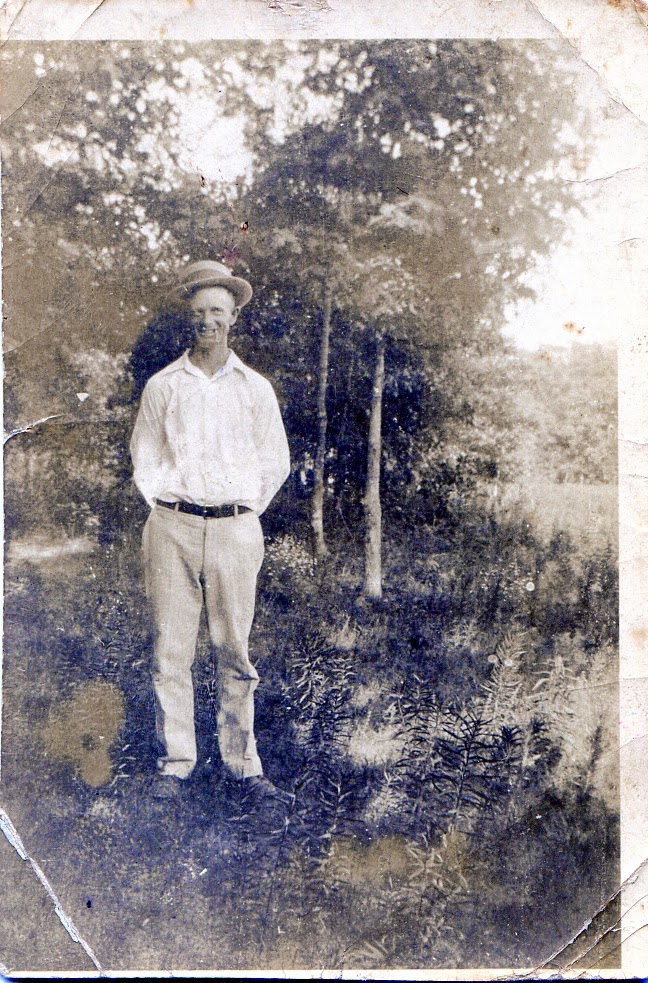
 The above picture is of my paternal grandfather, James Terry.
For several reasons, I recently had to revamp my blog. It turned out to be much more problematic than I intended. In fact, it was a mess.

One positive thing to come from the mess was that I decided to practice some organizational minimalism and simply “delete” 97 drafts, some of which were either intricate or lengthy. It wasn’t easy to hit the button. My internal argument was to remind myself that if I had not finished most of them, it was because they would never be ready or they were somehow broken. Likewise, I also deleted 167 posts that had been previously published. Some of the ones I trashed probably should have been kept while some of the ones I chose to save definitely should have been discarded. To my surprise, many of the ones I chose to trash were humorous or whimsical. I didn’t notice a trend until I was almost done decimating my lists. A few of the posts will be missed as time passes. I’ll treat them as an incentive toward doing better in the future.

But I promised myself to always try to avoid perfectionism, no matter how uncomfortable.

The above picture is of me when I was just a few days old, with my siblings.
P.S. I know that these pictures don’t have anything to do with the blog message, at least not directly.

We Are All Unreliable Witnesses (and memories can’t be trusted)

Since I’ve started genealogy, I’ve discovered that almost everything we do, think, say, and recall is riddled with inconsistencies and errors. Not that I didn’t know that before. One look at my idea of fashion proves that point.

An example: I’ve heard the story repeatedly that my maternal grandfather William A. Cook lied about his age to gain entry into the U.S. Army during WWII. Turns out, it’s completely untrue. My favorite cousin sent me a discharge paper from his personal wallet. His original birth date is on the document. He used his original DOB on everything that’s come up so far.

Among other things, I’m waiting to see when and if he and my maternal grandmother Nellie Cook were ever married. Family says that a marriage license had been seen but that grandma had scratched over the dates repeatedly. While I haven’t visited any of the likely 6 county courthouses yet, no one has any source verification, other than “they were married.”
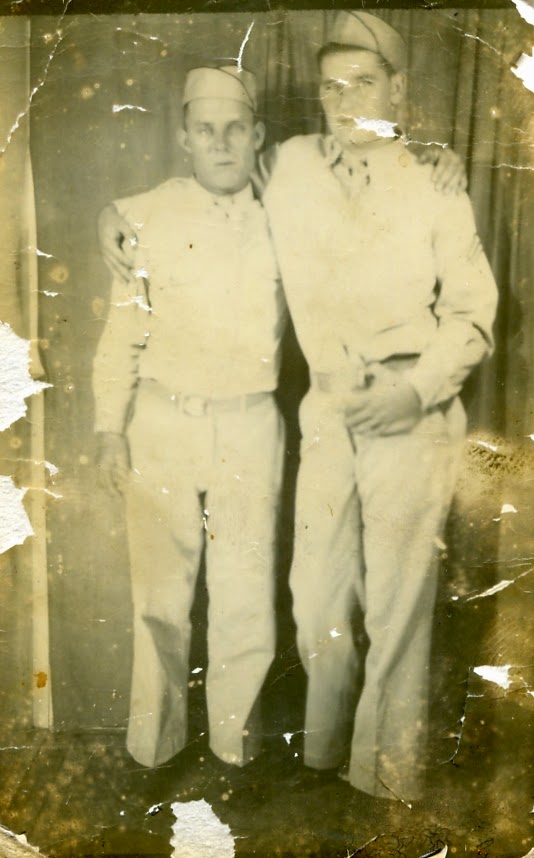
This picture of my grandparents was taken in Rich, when they lived relatively close to White Church and cemetery there.

 Start with NOTHING as a precondition.

One of my earliest blog posts dealt with the errors and inconsistencies of our family stories.

Now, more than ever, I am convinced that much of what we “know” from memory is a large Swiss cheese.(And the more motivated we are to be revisionists, the easier it is to convince ourselves…)

As I learn more about cognitive function and memory, I wonder what percentage of my collective memories might be wrong.

Since having my DNA tested, I can now say that I have NO detectable American Indian bloodline. For some reason, another close family member had still believed that we were at least a small part Indian.Where the stories originated, I’m not sure. As with most issues, the family member kept insisting that “so and so” told him/her that we had Indian ancestry. When I mentioned that I had asked several of the elder generation and told them I was getting DNA-tested for confirmation, all stated that they had no idea where the mistaken idea of Indian ancestry originated. Still, the family member persisted – no amount of facts would sway him/her.

But as it was repeated, it became a truth, probably forever. That’s how family myths get passed down erroneously. 

Perhaps a future genetic marker will contradict the genetic information I’ve discovered, but I doubt it. One of the great values of new technology is that it wipes the slate clean, truth or otherwise, whether we like it or not.

Our Right to Believe – Their Right to Criticize

“Who says we can’t challenge or joke about religion? You have the right to believe what you want; I have the right to believe it’s ridiculous.” -Ricky Gervais

This quote is true. And you have the right to think my belief is ridiculous.

One thing people don’t like to acknowledge is that we don’t like being ridiculed for beliefs. We also don’t like being called out when we do it to others – even when they deserve it.

It’s more difficult to get by with criticizing if you are criticizing something mainstream, such as Catholics. But if you walk into a room of Catholics listening to a story about Mormons or Scientology, you will hear derision and laughter. But if you point out to the Catholics that much of their ideas are just as crazy to you as the Mormon’s beliefs are to them, you have basically just punched them in the face.

Common courtesy dictates that you don’t go out of your way to ridicule or undermine someone’s beliefs.

But if you are expressing your beliefs in public please don’t expect to be given a free pass. People do have the right to express their opposing beliefs. And we can do it without calling everyone else names.

Maybe.

Steve Pavlina

http://www.stevepavlina.com/

This “blog” goes back several years. Off and on, I have went back and re-read many of his posts. While I don’t agree with a lot of it, the truth is that Steve is smarter than me and a  better writer. In case I forget to mention it, he believes a lot of things that I disagree with and that I know aren’t defensible.

I would say that much of his content is the vague ‘personal development’ genre. In light of that comment, I will admit that I once was an avid Wayne Dyer reader. One of my remote family members had a copy of Your Erroneous Zones in English. I read it. Being incapable of understanding most of it, it wasn’t until years later that I realized how blindingly obvious it was – and surprising. Not only did I go on to read all of his books, but I read most of them the first time in Spanish. I reread it until I could cite much of it verbatim.

Especially with some of his earlier writing, I liked the brash style. His comments on religion echoed a lot of what was swirling around in my mind. Paradoxically, his blog also contributed to my interest in returning to church to investigate the fuss before I got too old and close-minded.

The point of this note is to point people toward Steve Pavlina. Agree or disagree, he is one of the best at what he does.

He will piss you off if you are reading closely. Much of his later stuff dealing with his personal choices makes me itch – it really is that far off base.

But many good writers can have great things to say – even when they sometimes sound like madmen dancing in shards of glass.

Spider Salad, The N.R.A., World Cup FIFA, Pinterest and the NFL on Thanksgiving

Spider Salad, The N.R.A., World Cup FIFA, Pinterest and the NFL on Thanksgiving

Warning: this post is just plain weird… I apologize for the weird title, but it will likely drive in random traffic. Anyone coming to this blog post by accident needs a good surprise. Sometimes I like to unwind by writing creatively and coming up with purportedly clever things to say and then randomly call people and whisper the pithy quotes to them. Or put them on the internet, where time and human dignity intertwine to create something both interesting and horrifying simultaneously.

My new book, “Spider Salad” will be published soon, possibly the first ever to be printed in invisible ink on pre-recycled paper. (Is that joke too layered?) A lot people don’t know that I make a living writing. A terrible living, perhaps, but one not aspiring to glamor or box seats at some ignominious sporting event. True, I punch a clock daily to buy my daily bread; believe me, the clock deserves a good punch or two on a routine basis – and I owe it no loyalty for having conspired to steal my creative life in lumps of 8 hours at a time, year after year.

If I were going to write a book, I mean. The Braille edition might come out first. The plan is to pull a prank on those needing it and use small, sharp tacks instead of exclamation marks. As they read, their fingers tracing the bumps and indentations, they will involuntarily provide the “!” when the sharp points hit them. This might cause a problem in libraries, as random shouts of exclamation are generally met with disfavor there.

“Spider Salad” has all the suspense and vague implications that a great book should possess, minus all the words, plot and nonsense to get in the way. It could be a cookbook, a societal diatribe or even a murder-mystery.

This title has something for everyone, unless you are a nihilist, in which case it literally has nothing that will interest you.

It could be a book about self-reflection. I could put a small mirror on page 98 so that it could literally be self-reflective.

I could glue 4 or 5 coins to the inside cover, so it could literally bring change to your life.

“Spider Salad: A Recipe for Disaster”  (A FEMA manual.)
“Spider Salad: Oops, Sorry I Shot You Twice” (An NRA pamphlet.)
“Spider Salad: Why Teaching Isn’t a Real Job” (A Workaholic’s Daily Motivational.)
“Spider Salad:  Why Do I Bother With Rhetorical Questions?” (A Debate Guide.)
“Ensalada de Araña:Y Tú No Me Compras?” (A Marketing Book for Hispanics.)

This book is going to have everything – except a plot, words, or content. (The Republicans among you are already familiar with this glaring lack of substance and content. If you are Republican, please mentally go back and insert the word “Democrat” in lieu of “Republican.” If that’s too many steps, you probably are either a sports fan or management of some sort. We know who you are – you lips are moving as your read this. If you are a Tea Partier, then you are still staring at the first few words of this post, wondering where all the pictures might be.)

“Be known what you are for, not what you are against.”


“Be known what you are for, not what you are against.”

Reading the title of this post, I’d like to go on record as saying that this makes sense to me. It doesn’t make me happy, however, as I’m failing at meeting the goal it states.
 .
I’m quick to point out that most of my environment is equally guilty of not meeting it, either. That probably doesn’t mitigate my guilt, though, does it?
.
There’s one person in my life in particular who is almost consumed by his insistence of categorizing the world in 2 columns: For / Against. I laugh when I hear him talk, sometimes. He would be furious at me if he knew that I was privately not only noting this tendency but laughing about it. He probably doesn’t realize that he does this so pervasively. I’m sure, too, that he doesn’t see that people often delegate him to the “crackpot” status due to the vehemence of his opinion.
 .
Having said that, I wonder how often I’m guilty of the same and don’t notice that people are placing me in the same “negative” group?  Hmmm… (But blogging or anything worthwhile is almost impossible to do well without sounding like you oppose everything.)

Soapbox Part II, Sort Of…

Another post quite a while ago, I reminded people why I don’t usually have comments turned on for immediate publication on this blog.

Having suffered with the idiocy of the internet, my opinion hasn’t changed. Anytime you put out an opinion, even an honest, reasoned one, many people simply can’t overcome the need to snark and snarl at it. People reading casually don’t tend to think deeply about the content and they then latch on to the most irrelevant details of your thoughts, twist it, and then retort back with the weirdest, least helpful things they can say. That’s the internet. I can’t change it, nor do I want to.

The more honest and personal the content, the greater the propensity for needlessly harsh commentary. Just as your Aunt Kathy will fill every status update on facebook with crazy religious nonsense (even posts about raising money for kittens), you will find yourself spending way too much time trying to get into people’s heads about what they write. (Remember one of my favorite quotes: “Never attribute to malice that which can be adequately explained by stupidity.”) Give them the benefit of the doubt and just assume that they are bored.

In an ideal world, I would love to leave commenting active for the blog. Many people have some great criticism or helpful advice. Other readers will see this and learn more from the comments at times than the even the writer can convey. The reality is, though, that much of the commentary on blogs is either edited praise or a crazy mashup of hatred and snipe, usually involving politics or religion. I’ve found that people with really great commentary or ideas find a way to get that idea to you in another form. The snipers tend to have a “drive-by” lazy mentality about their ideas. If they can’t lob an easy verbal bomb, they leave more quickly.

Many will criticize but few will take the time to rebut or argue in either a fun or meaningful way.

As always, I recommend that you get your own forum for your ideas if mine at too liberal, weird, or uninteresting for you. X