
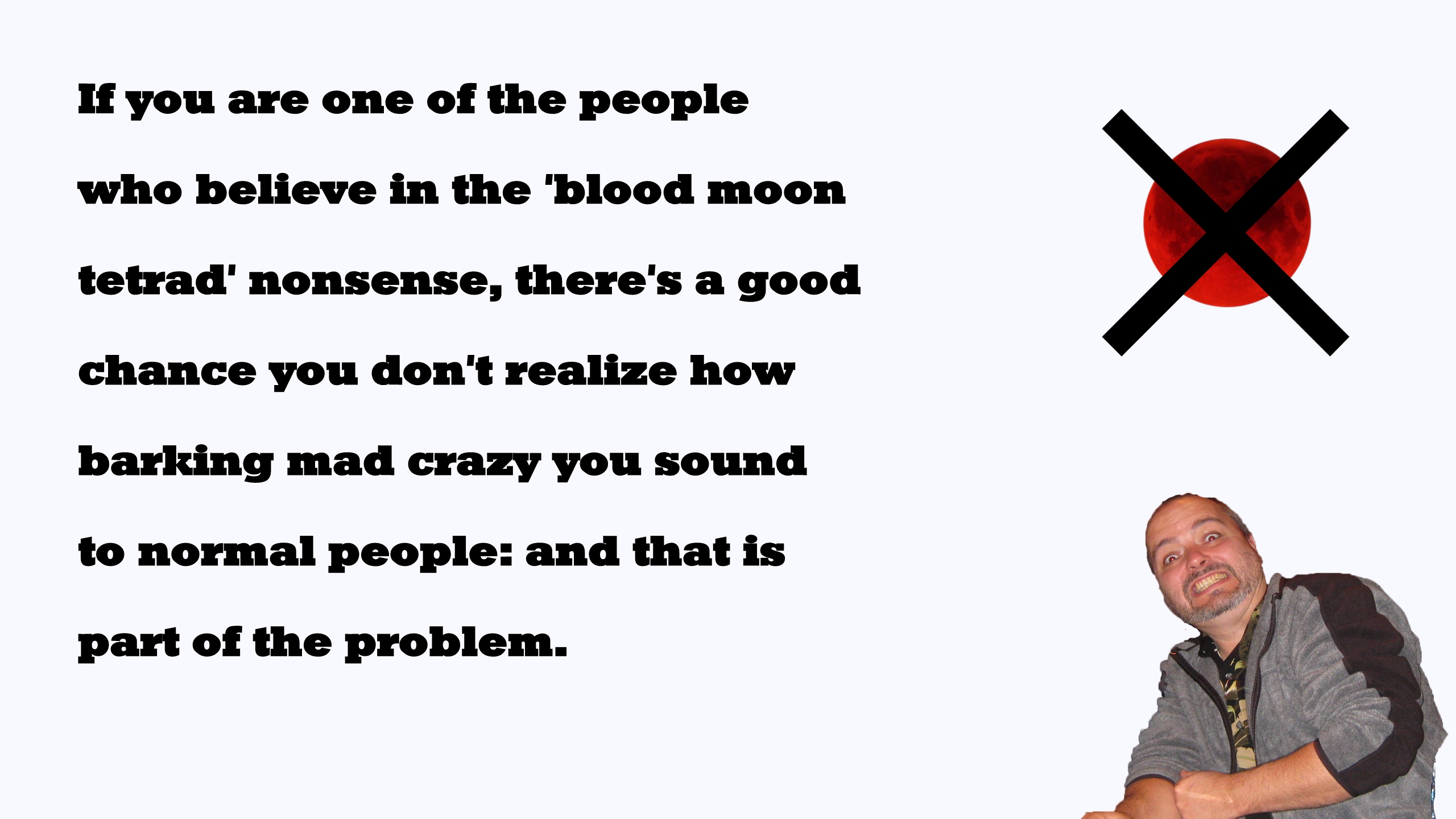
 Not related to the flu, but just as insidiously irritating, like a sliver of glass in your bowl of ice cream: religious people who fervently desire to believe the most asinine, horrific stuff that even my feverish mind could never imagine.
(In the last few years, I’ve read a few hundred similar shunning stories on Reddit and other sites. It must be exceedingly common for friends to inexplicably shun people. I’ve been fascinated with the complex stories people have shared – with quite a few being very close to my story. I’m certain I have read a few thousand of them in the last 7-8 years.)
.
This blog post is actually several years old and I’ve modified it slightly a couple of times, especially as I’ve seen so many people come forward with similar stories.
.
It’s been a few years now since one of the best people I thought I had ever known revealed himself to be indifferent toward me. For the purposes of this essay, I’ll call him John, to ensure his identity is protected. Every couple of years, I revisit this very old blog post and update it. Time changes all stories, that is for certain.
.
Even though I had known John a long time, evidently he had awakened one morning and decided that I was scum – without saying a word to me about it. I had often described him as one of the best people I had ever known, used him for a reference, house-sat for him, defended him more than once even though I was being ridiculed for it, and shared many quiet and powerful moments in my life with him. To say that I had a high opinion of him would be an understatement. He shared the day I got the call my dad died unexpectedly, and he was there for me the morning my wife dropped dead.
.
Despite having many private and available opportunities, he never took a moment to express his resentment toward me, which is what we usually expect from people in our lives. He could have emailed after the first brush off, called and left a message, or any number of methods. But he didn’t. He allowed me to plod on, increasingly curious and surprised by my friend’s brush-off.
.
That I had recently suffered the single biggest and harshest personal blow in my life evidently didn’t matter. That I had always defended him, helped him in any way I could and been a steadfast friend ultimately were ignored. It is important to understand that I had just went through one of the hardest personal tragedies anyone could imagine. He knew that, as he was there for me when it happened. Everything about the surprise of the way he changed toward me and then treated me should be imagined through that perspective. Nothing he alleged to be his reason for shunning me compared even slightly to my story. He did ultimately offer a story about throwing peanuts at a restaurant which caused him personal embarrassment; it’s his life and only he knows whether it mattered in the scheme of things. It would be arrogant for me to presume to know, except for the fact that this is how our minds work. My defense is that my wife had dropped dead unexpectedly. All things considered, I behaved very well on the spectrum of possible behaviors.
.
It was his right to do anything he wanted, even with no motive, or with a motive unexplained to me. That has been the hardest lesson in life – that people are transitory and often inexplicably motivated. Needing an answer for all the travails will not result in a satisfying life if you live it that way.
.
But it was a terrible way to treat a friend – and if he had mentally decided to no longer be my friend there were a million different ways for him to have told me so. I know that confrontation isn’t easy. He could have emailed or texted or sent a note. Knowing that the had made a mental break with me would’ve still been an angry blow, but one tempered by his decision.
.
All of the good memories of him were soured when he lashed out at me. (Granted, my former friend continues on in his life, hopefully happily. My opinion doesn’t affect him in any way.) It was hard not knowing what prompted his revelation of disdain toward me. To say that there was no advance warning is truthful. His indignation toward me bloomed suddenly, without notice. As I was already deeply wounded by another horrific personal experience, it affected me more strongly than it should have. After I wrote him a personal letter, he finally lashed out with a couple of justifications, but each sounded hollow. Please remember that I’m living my life from inside my window and he is doing the same. Maybe he knew something about me I hadn’t realized?
.
The reason I mention all this is that sometimes lessons come from unexpected places. It’s a reminder to me that sometimes you can’t be sure of anyone, no matter how well you think you know that person. It reminds me that it’s no excuse to be cynical toward everyone else – that all judgments, if possible, should be reserved toward the specific person at hand, which is a tough challenge. We often are unaware of what another person is thinking until they file for divorce, tell us that they’ve secretly hated us for a year, or find us unworthy as people.
.
(People change their lives inside their own minds long before they change their behavior or make changes in their lives. I often say that a change of behavior is always a result of change in one’s thinking. Whether John slowly changed his mind about me and concealed it very, very well or arrived at some horrific conclusion about me, all at once, is for the ages to decide.)
.
John’s hardened heart toward me has contributed to a better environment for a lot of people. His surprise rejection gave me the ability to step back many times and practice: “Never attribute to malice that which can be adequately explained by stupidity.” Or indifference. But in some cases I think it might have hardened some of my edges and led me to lend too much credence to my instincts and avoid someone in my life.
.
One thing it definitely helped me with was deciding that it would be stupid to avoid loving again, regardless of the time which had elapsed after my wife had died. John’s decision to drop me from his life compelled me to acknowledge the stupidity of living for other people or worrying about their opinions of my footsteps. It was painfully obvious that no matter how measured my actions that people were going to attribute motives to each thing I did. Even the people who were close to me. If someone as close as John could throw a bucket of cold water in my life, it seemed plausible to conclude that everyone in my life could do the same. It was John’s example that also allowed me to finally tell my mom to stay out of my life after 40+ years of abuse and disrespect.
.
What I’ve learned without question is that I can more easily gauge people’s veneer of civility. Some people, like my former friend, have a better capacity to conceal their opinions. He was always diplomatic, even when I knew that he didn’t care for the person he was addressing or that he disagreed strongly with something. His background and training molded him into being a social diplomat. In turn, this helped me to learn that you can’t consistently take people’s words at face value. Without being treated so unfairly by my former friend, I don’t think I would have ever had the realization that he could turn that same skill toward me. It was arrogance on my part to not expect it, wasn’t it? When I sometimes find myself thinking I understand a person, good or bad, I see my former friend in my mind’s eye and remind myself that I could easily be under the spell of manipulation or be fooled by civil appearance. (…seeing only what that person wants me to see, hear, or think…) Or worse, that I’m being quietly judged or shunned, unaware of the change.
.
The balance lies in not being horribly cynical or holding the concealment of my former friend against other people. It’s not easy. I had always adhered to being honest with him, as I felt a kinship toward him.
.
While I can’t “prove” it, I think he developed some crazy theory about me that wasn’t rooted in anything realistic. That’s his right, fair or not. Again, the little bit of explanation he did offer sounded illogical and disjointed, especially after what I had just survived. One part of his reasoning was that I had embarrassed him in public, unbeknownst to me. He had to make amends to another mutual friend because of my innocent misbehavior. I don’t remember the incident, but all I can say is that we were having a good time and someone extremely close to me had just died. That’s why I was out with him that day in the first place. I can only surmise he had washed out the memories of the craziness he had put me through a couple of times – I don’t know. My instincts kept telling me he wasn’t being honest about it. Years later, after witnessing so much human interaction, I’m certain that he arrived at some ridiculous conclusion about me, quite possibly as the result of gossip and rumor.But, I could be totally wrong.
.
Would my life have been better had he not turned on me? Probably, because right up until he figuratively hit me in the face with a nail-studded verbal 2 X 4, I thought everything was all peaches. I think his life was better with me in it and that he diminished himself by treating me so poorly. Again, though, it is his right, even without explanation or warning. Coming to terms with it when it happens falls to each of us.
.
It turned out that John was not the person I thought after all, and he had me fooled. I don’t think there was any way at that point in my life I would have seen it coming.
.
I know that 1 huge challenge in life is letting go of things and letting go of people. It’s really hard when the people you are letting go of do it unexpectedly or unfairly. There’s no closure, no “aha!” moment to reconcile. I think that most of the time we know we are not doing the right thing and pride or anger prevents us from coming forward. In this case, there was no precursor or advance warning to let me know what the true motives were.
.
One day I had a great friend and the next, only the cold shoulder and bewilderment. I often wonder what our friendship might have been like and I certainly use his surprise shunning toward me to remind myself to carefully watch how people behave and react to those around them.
My life would have been different – and better – had John stayed in my life. That is what saddens me. I say it without any rancor or bitterness. It’s simply the truth from my perspective.
“But you became a villain. ‘Cause that’s what villains do. They make themselves happy at the expense of others. But it just makes them more unhappy….. That isn’t something to idolize. It’s something to pity.” Snow White… “Once Upon A Time” TV show.
I see this quote often, usually in the context of “being a better person.” The first time I saw it without attribution, so I did not realize it was from a tv show. And even though I know I am over-thinking it, I think it is cognitive dissonance to relate meaningfully on a personal level to the above type of statement and fail to relate it to a larger scale.
To me, though, I can only see it on a large scale, and instead of related it to individuals, I think of societies, our planet and huge groups of people. The villains are those consuming and exhausting resources disproportionately to their size. Some are robbing other groups and countries and people of their equal ability to live and thrive, through which happiness (or at least peace and human comfort) becomes possible. If we are indeed our brothers keepers and stewards of our planet, we are willingly playing the villain on a large collective scale. Our role is so deeply entrenched into our way of life that we even recoil at the mere idea of being complicit. We use our beliefs and religions to move our attention away from an unavoidable conclusion: we are villains. Capitalism is fed through consumption and consumption is evidenced in large houses, sections of yards, investments and savings instead of real-life food and shelter for the homeless, helping those who have served and helping future combatants by demanding our respective societies stop waging war. Instead of large stone pillars to our lofty creator whose sole message apparently is “love thy neighbor,” let’s build houses for the less fortunate, provide medicine for anyone who needs it, and an arm on a shoulder to pull someone toward us instead of using it to push away.
I know, I’ve heard the reactions to my crazy line of reasoning. But let’s face the fact that only through geography do many of us owe our success in life. Whether you were born in a time that fostered education, or had a great family, the reality is that you were probably born white in the United States of America. Yes, you were probably motivated, worked hard, and did your part of the equation to help ensure that your life would have a better chance to yield the correct result. Underlying all that effort, however, is the simple fact of your equation have fewer variables and more favorable factors. Catastrophe, death, illness – anything could have toppled your house of cards. The same holds true for our cities, states, and nations. We cannot invalidate the mutual interaction of all the moving parts. You are lucky, no matter how you examine your life. I know some of you can and must believe that you are special, that hard work ‘deserves’ reward. Many on our planet work incredibly hard every day of their lives without the opportunity to excel, be creative, or even eat meals that can sustain them. Our personal fulfillment must seem like an impossible fantasy to so many in the world – because it is.
Many of us didn’t make it this far, even when they played by all the known rules. It is a problem of ours that we so often see the “lesser” in our world, whether they are people or entire societies, then jump to the untenable conclusion that they must be unworthy or probably failed to act according to their ability. As Picard said, “It is possible to commit no mistakes and still lose.”
Taken on a greater scale, we as a nation are lucky, despite all our hard work and intelligence, that factors beyond our control haven’t eliminated many of our chances to allow one another to grow, love, and prosper.
That ability should translate toward a fierce dedication toward our fellow man. Not just those in our house, yard, or country, but those all across the globe. We should be desperately trying to figure out to help. All the lofty ideals we espouse push us toward that very goal.
We are the villains Snow White was railing against. Just because we don’t see ourselves in that light doesn’t diminish the possibility of it being true. Most villains don’t recognize themselves in that same harsh light, either. Through our eyes and in the context of the choices we feel we’ve had to make, it all makes sense. This is also true for us as a country, too. It’s easy to believe otherwise as our hand reaches into the ever-present bag of hot popcorn, warm and comfortable.
We are hoarding resources and ability, things which would do tremendous good in the world. Yet, we prefer to buy our athletic shoes from factories employing children for dollars a day. It’s easy to bomb people who don’t look like us or who don’t live next door. We can justify these things easily, because we have carefully practiced the art of oblique villainy.
A few times this week, people I know on social media posted, yet requested no debate or opinionated comment. Two of those posters are people I highly respect – the other two are missing some chicken nuggets from their Happy Meal. For anyone reading my thoughts, you undoubtedly know in which camp your are setting up tent. I agreed with 2 of the posts in entirety, but felt a twinge of discomfort at the cacophony of backslaps and agreement. Normal life is filled with disparate voices, sometimes talking over one another. Social media is the same, albeit with an unnatural time-lapse. I’m very accustomed to people disagreeing wildly with my views and relish it when people wittily and intelligently tear my ideas apart. If we all are open to honest critiques, we are more likely to continue to believe less stupid nonsense.
Social media, especially Facebook, relies on the exchange of ideas, even stupid ones. If you aren’t looking for debate, commentary, or critique, use another social media or try to be more accepting of how it works. “That’s not how any of this works” from a current insurance commercial conveys exactly the admonition to avoid attempting to have it both ways with social media. If you post, you must welcome the risky proposition that people will disagree. Otherwise, the “social” is absent from the communication – it becomes a monologue instead of a dialogue. (A blog is more aligned with “no criticism, please” status updates.)
Demanding no debate is considered to be code for “don’t disagree with me.” If you don’t believe me, review several posts which request no debate or contrary opinion. There are usually dozens of complimentary comments. That voice of agreement creates an echo chamber wherein people stop saying anything substantive and all the voices are in unison. It foments silence, both from the idiots and those who have contradictory input and experience. It’s easier to delete excessive negativity and limit the audience of posts than it is to risk avoiding the spirited exchange of ideas. If people are abusive, limit their view of your posts, unfriend, unfollow, or block them. But as in real life, you normally await abnormal or anti-social treatment from someone before muzzling them. And you probably expect the same from others.
(For many people who post and demand only agreement, I’ve also noticed the overwhelming tendency for many of them to know that their ideas are at a minimum not sustainable under scrutiny and at worst, prejudicial or hateful in their intent.)
When you use social media in a limiting way, it gives the appearance that you aren’t comfortable with critically thinking about your position, or are so weakly decided that any criticism is treated as a personal attack.
Good people in general don’t attack people – they attack ideas.
If you post, you should invite both the monkeys and scholars to engage with you – otherwise, why have them as friends on a social network? It is possible, although exceedingly difficult, for adults to strongly disagree yet not engage in destructive argumentation. Many people confuse disagreement with dis-courteousness and nothing can be further from the truth when we are considering responsible, reasonable adults.
Trying to control contrary opinion only causes those who disagree to get creative and even more belligerent in their expression of opinion. It is in your best interest to let them vent and express, as fools exist to prove that nothing is foolproof. Let them talk – but demand that everyone be courteous.
If your ideas have merit, you will draw criticism. Silence or the demand for same is what creates the vacuum chamber which foments disproportional negativity.
Reconsider that temptation to request no criticism.
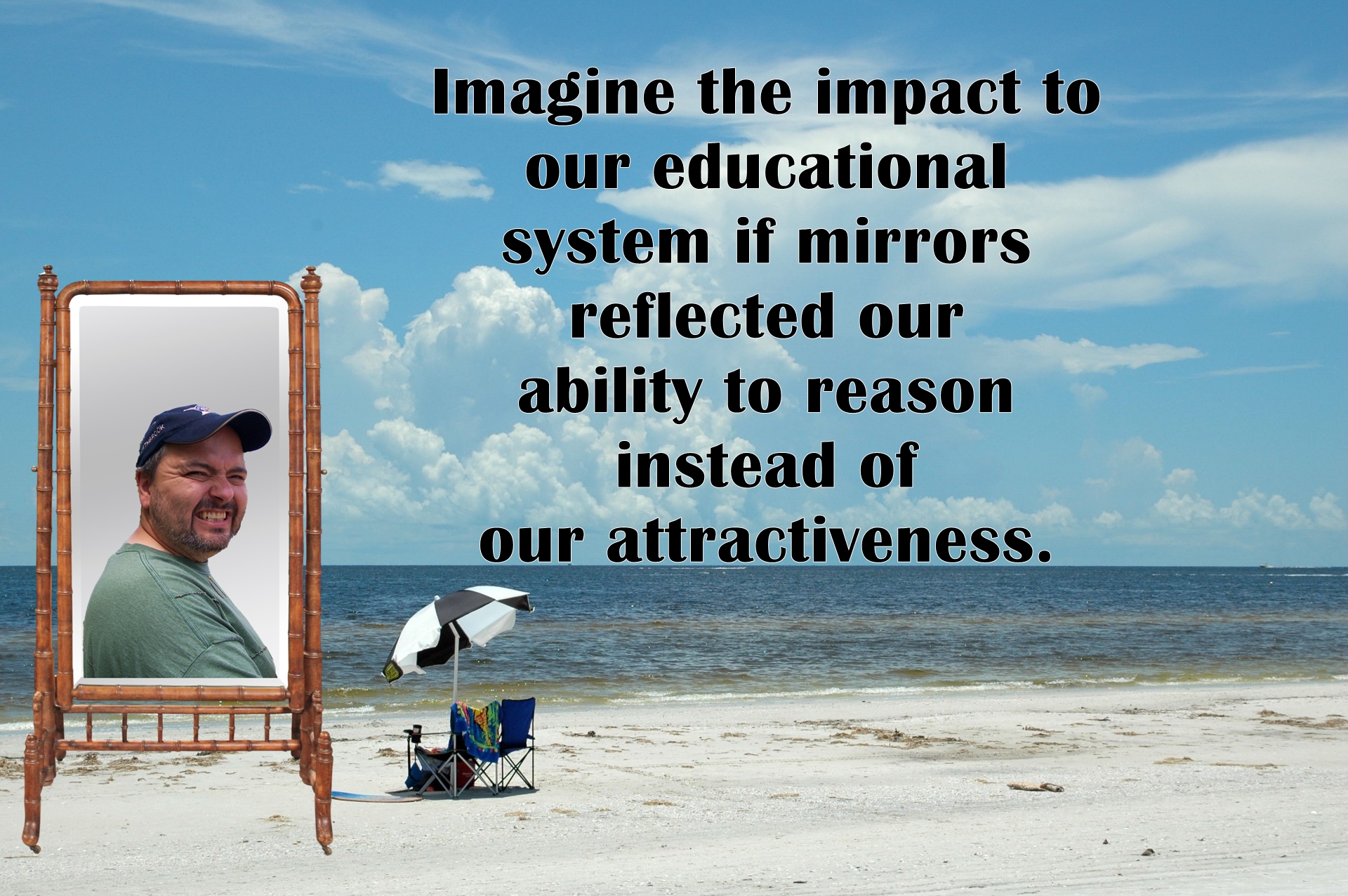
PS The picture is one I made a long time and posted before. But it is as true as anything has ever been.

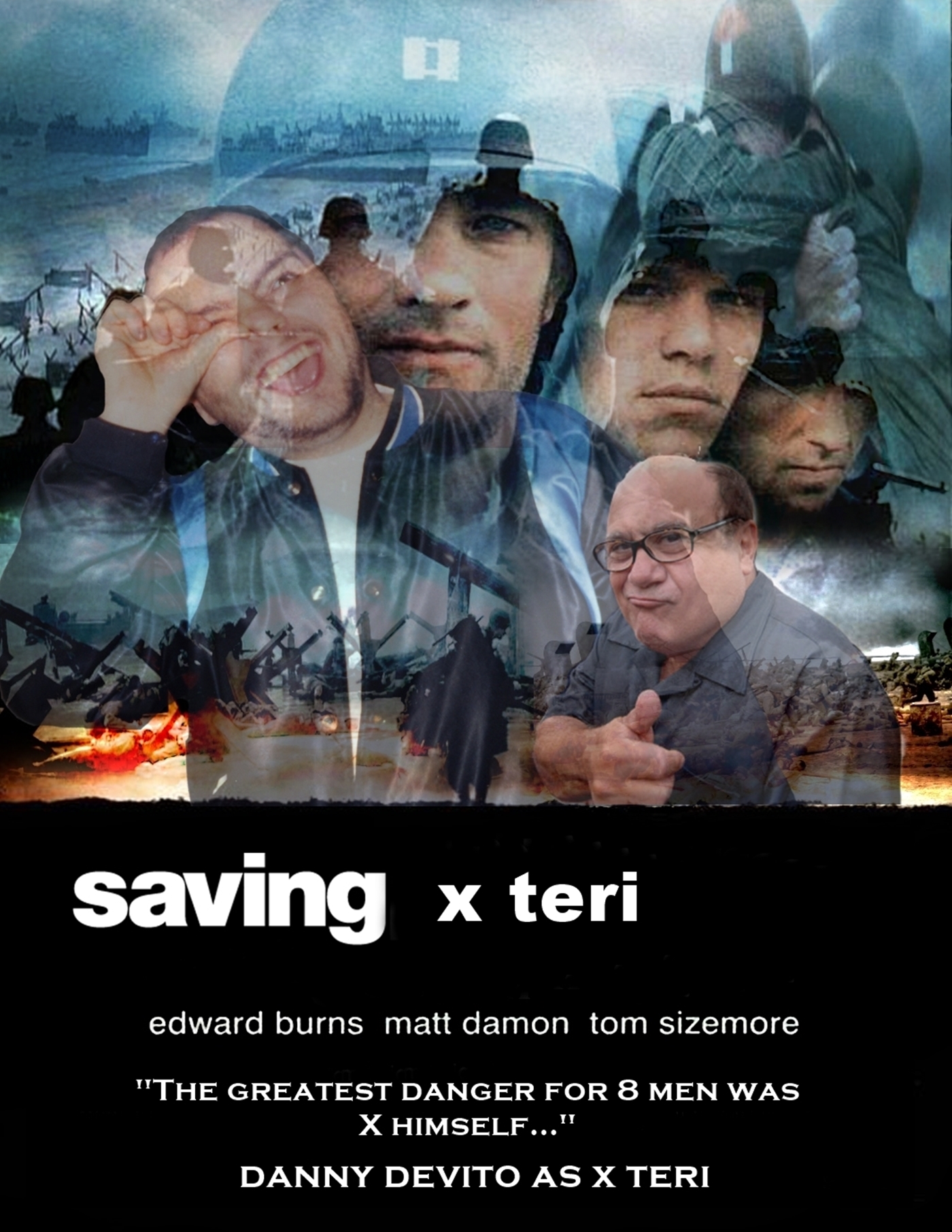
I made this humorous picture for a realtor friend. I was quite pleased with myself!

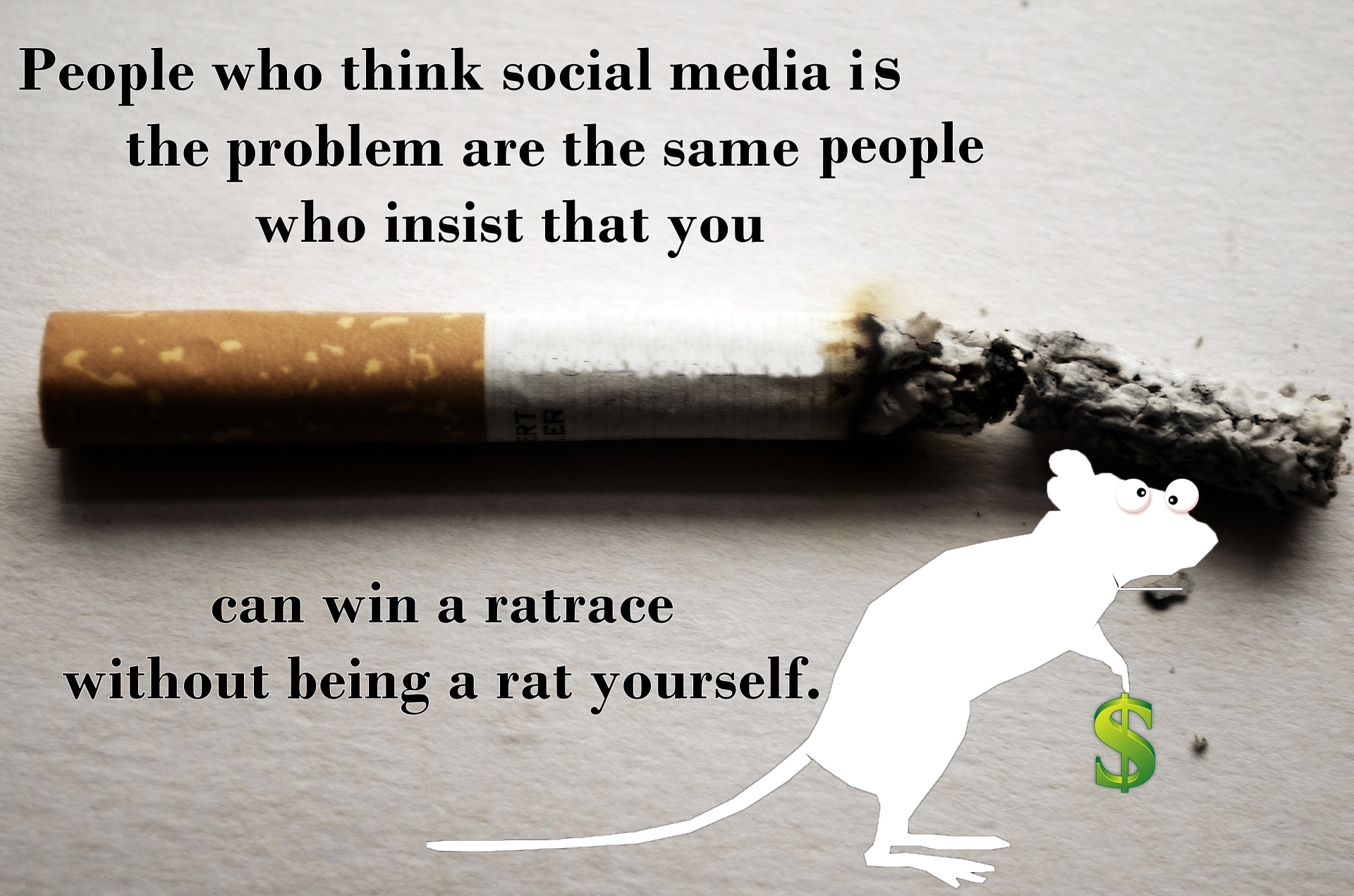
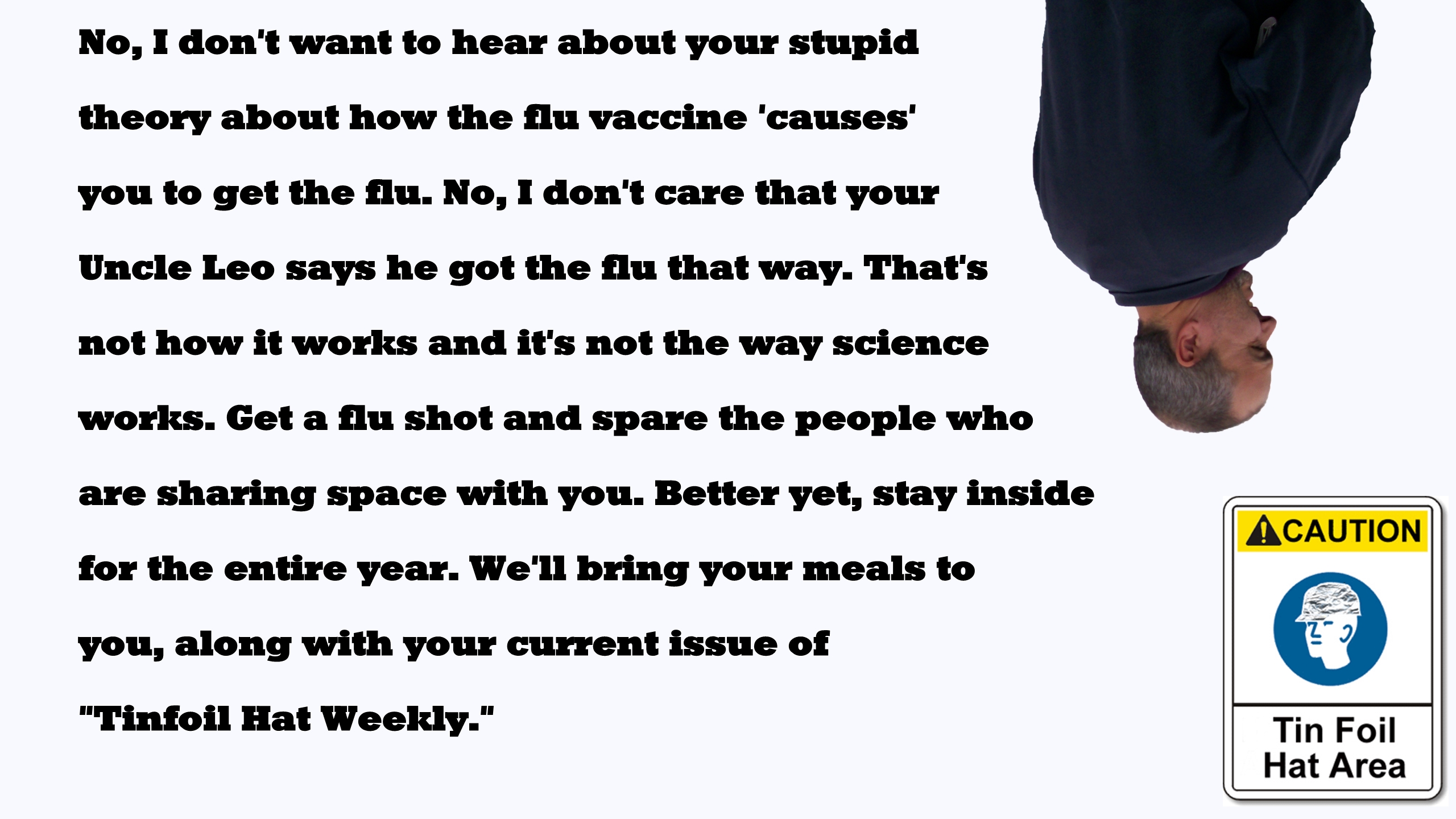
I was asked to make a subtle, tasteful, courteous reminder to stop saying stupid things about the flu shot. Instead of that, I made this, a more effective hammer-to-the-face approach. I think this year might be the year I go bonkers-stupid-raving-nuts if I keep hearing neanderthals insisting that the flu shot should be avoided; or worse, that it ’causes’ the flu. Edit: not everyone liked this post – and some thought it was directed at them.
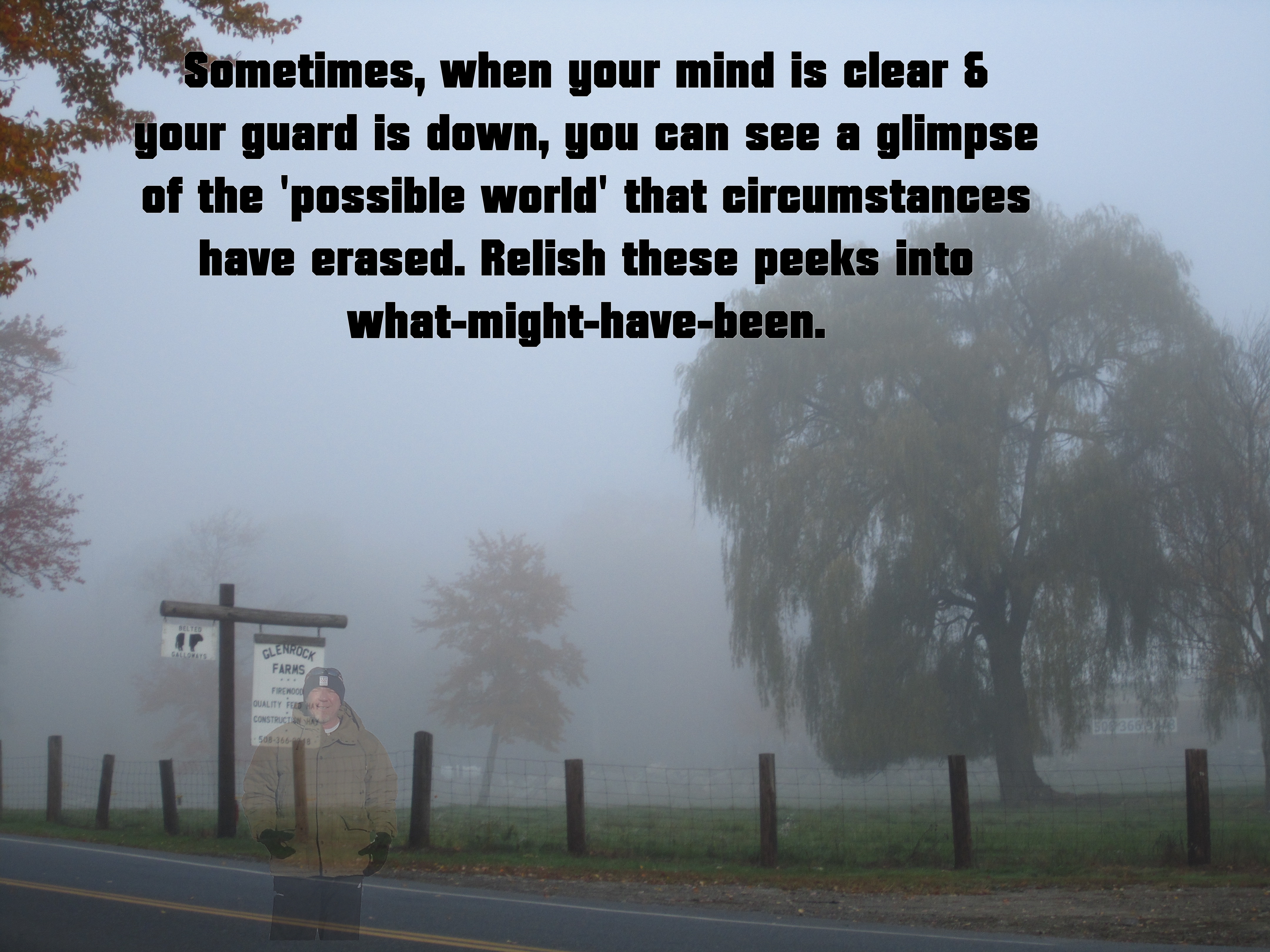 The person in the above photo is my cousin Jimmy, who died of cancer a couple of years ago. For whatever reason, I’ve seen him in many people lately.
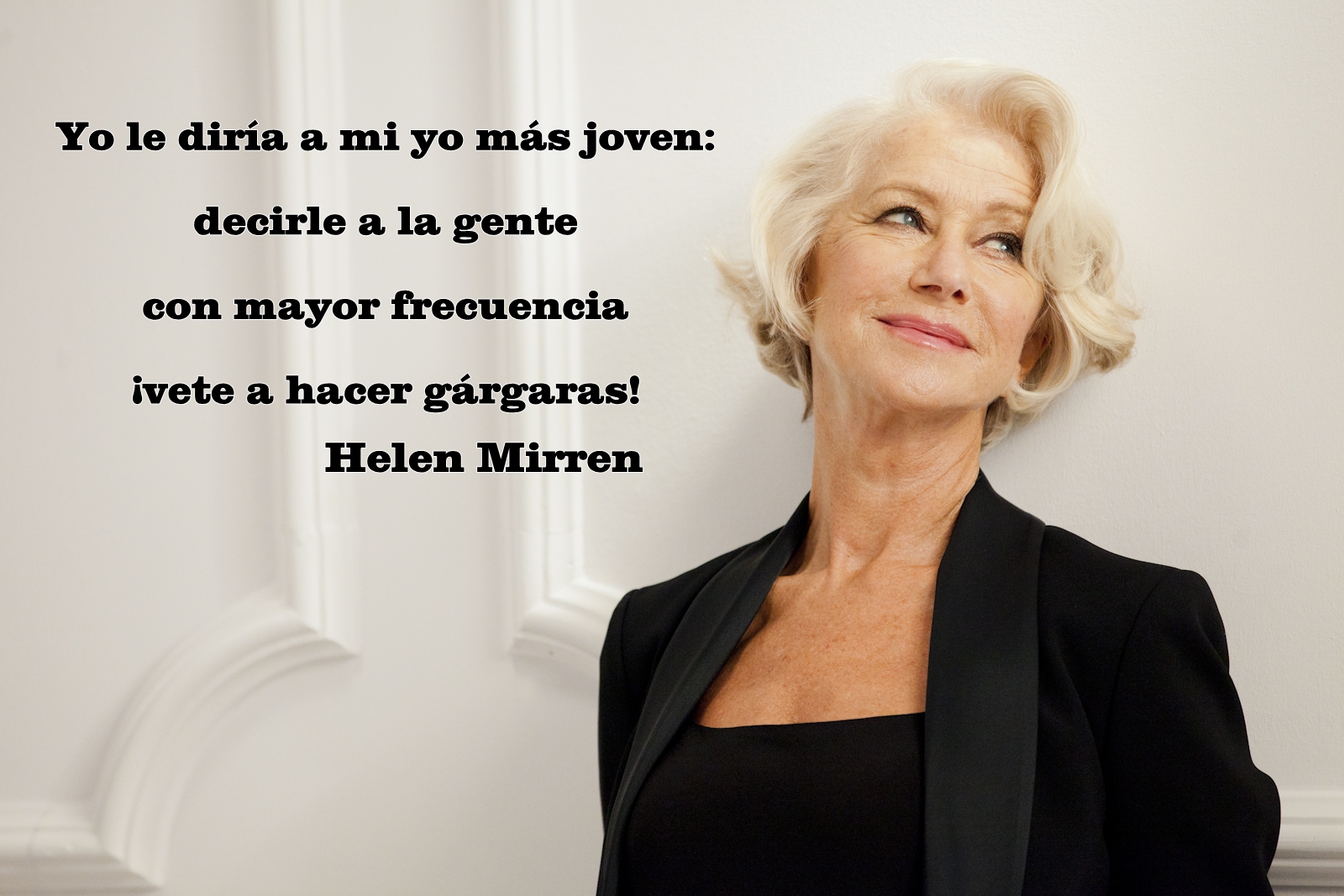
I made this cleaner version of Helen Mirren’s quote in Spanish.
Not because it is elegant. Not because it’s true.
Rather, because I like it.
Loosely translated, it says: “I would tell my younger self to tell people to ‘kiss off’ with greater frequency.”
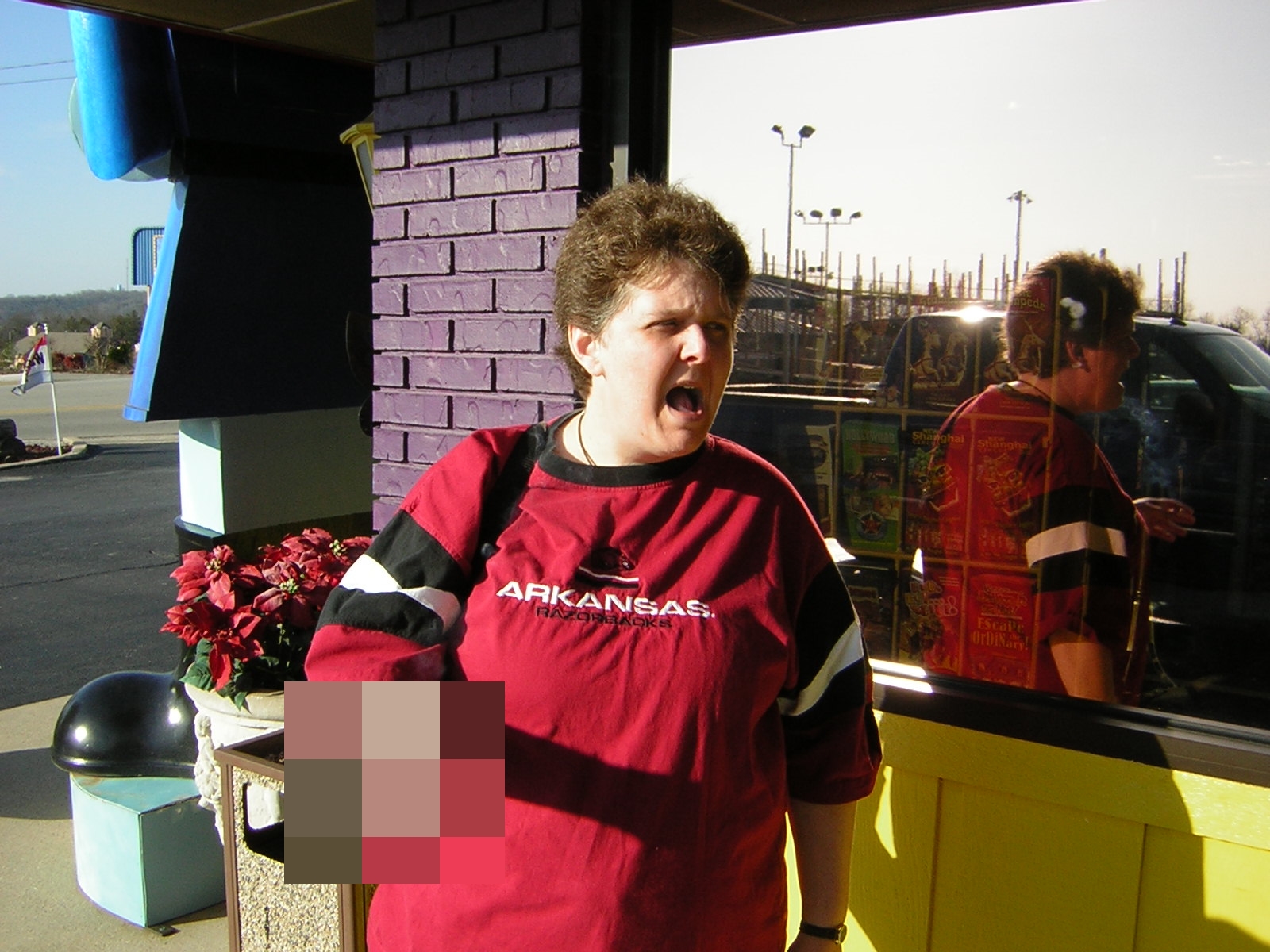
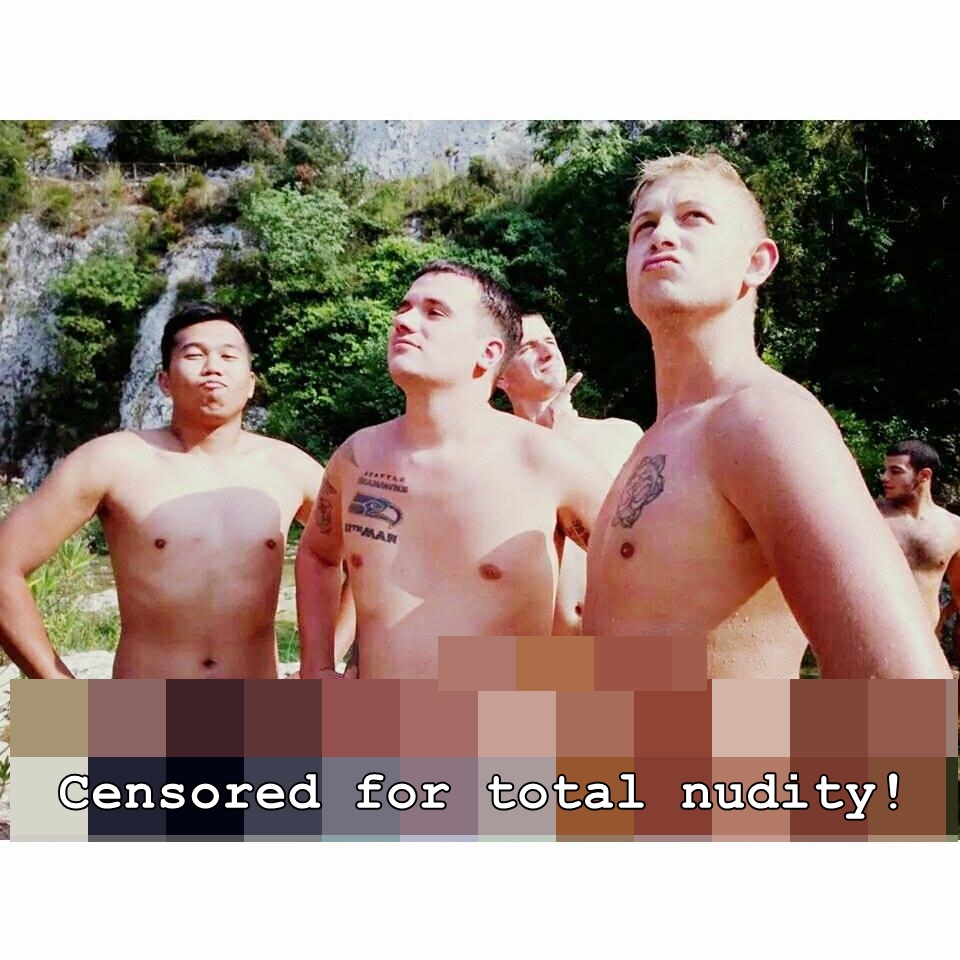
It is amazing how funny and inspiring it can be to add mosaic or censoring effects to a picture. Almost any picture turns from benign to alarmingly graphic.
Whether it looks like friends and family are flipping the bird or standing naked on the beach, this effect can have startling effects.

The world is full of weird. And we are trained to avoid it and to hide it. The absence of its embrace is evident in all of our routines and haunts. I’m sure that we would be happier if the world looked more like five spilled paint cans, after 10 happy dogs and children scampered through it and touched everything in their path with their polychromatic fingers. Or if your neighbors skipped along the sidewalk instead of walking with their heads down, if you rode a unicycle to work, if plaid were mandatory at parties, and all ties were required to be able to squirt water…
 P.S. Parenthetically Speaking