Category Archives: Biographical

A Trivia/Break-In Story

The following is a true-ish account of events that took place in October, 7 years ago at the Hignite household. Although some literary license has been taken, the entirety of this story is true. (All the errors are mine.)

Mike Hignite was sitting in his living room, burning the midnight oil. The lights were dimmed to the point of invisibility, given Mike’s Batman-like ability to see in the dark. In Mike’s hands was the book, “Computational Calculus Meets Divine Interpolation.” (As you all know, Mike only sleeps 55 minutes a night.) Mike could hear the peaceful rhythm of Marjay’s infrequent and melodious snore from the bedroom not too far away. The sound reminded him of slightly upset magpies on an early spring morning.

At about 12:04 a.m. a sharp metallic sound interrupted Mike from his reading. He carefully placed his book on the table to his right, his right hand then feeling alongside his chair until his fingers encountered the miniature replica Babe Ruth baseball bat next to him.

A couple of minutes later, Mike observed a black work boot materialize at the edge of the dimly lit living room, inching its way into his field of vision. After a few seconds, he observed an entire leg follow it around, then an arm and the torso of a black-clad stranger. The intruder then crept along the wall, oblivious to Mike’s presence. Mike slowly stood upright and moved along the gap between the living room and the kitchen. In a few seconds, the intruder would literally run directly into Mike.

Instead of proceeding, the stranger fumbled around in his left pocket and found a small cylindrical object, clicking it. A beam of light shot from the flashlight and reflected on the concrete floor. Mike slowly lifted the replica Babe Ruth bat until it was high above his head. He waited. As the stranger moved the flashlight up, the beam of light shone directly on Mike’s head, bat raised above it.

Half-smiling, Mike whispered, “Boo!” in a soft voice.

At this point, the intruder screamed like a broken, strangled teakettle and froze. Mike reached over and flipped the overhead lights on. The intruder, for reasons not ascertained, screamed again.

“Have a seat over there.” Mike pointed casually at the intruder. After a moment, the intruder moved and carefully sat down in one of the dining room chairs. Mike walked over to the fridge and opened it, getting two bottles of water out. He opened one and handed it to the masked intruder. He knew the law-breaker was going to need to stay hydrated.

The intruder reached up and pulled his ski mask up and off his head, revealing a mass of curly red hair. He looked to be about 17 years old.

“How did you know I wasn’t armed?” asked the surprisingly high-pitched voice of the intruder.

“What makes you think it matters?” Mike replied.

At a loss for coherent words, the intruder simply muttered, “My name is Israel. Are you going to call the police?”

“Nah, I won’t call the police, only because they are already here.” Mike took a big gulp of water from his bottle, as Israel looked at him, confused, then around the kitchen to search for evidence that the police were, in fact, already there.

Mike reached behind his head and from literally nowhere that could be seen with the naked eye, pulled out a badge, showing it to Israel. Israel turned ashen. Mike laid his badge on the table, next to the huge stack of mail and personal items the family insisted on tossing there as they passed by.

“I’m not going to call MORE police, if that’s what you’re afraid of. But I will make you a deal. The same deal I make with everyone who breaks into my house, if you’re interested.”

“A deal?” Israel’s look of confusion only intensified. “What kind of a deal?”

“You can choose to either go to jail tonight. Or you can play a game of trivia. If you win, I let you go and you take all the money I have in the house with you. If you lose, you go to jail.” Mike smiled in that secret way that only he and 6 unidentified CIA officials would understand. This is the point where Israel should have flung himself headfirst through the nearest window to take his chances. But he didn’t, ignorant and oblivious to what would soon face him.

“Okay, I’ll play you,” Israel said with mock confidence.

“Slow down, pardner. You’re not playing me. I’m going to wake my oldest son up. Oh – and don’t thank me. I’m not doing you any favors.” Mike downed the remainder of his water and went to wake up the genius of the house.

So, that’s how it came to pass that at 6:32 a.m. on a Tuesday morning the residents of ______ Avenue in Springdale saw the strangest of sights: a large, red-haired man dressed in black ran crying and screaming from the Hignite household. Some witnesses claim that the unknown person fleeing was whimpering, “Stay in school! Stay in school and make good choices,” as he ran away. At the door of the Hignite house stood Jackson and Mike, howling with laughter.

“Dad, I sure hope someone else breaks in soon. I love these moments!” Jackson turned and looked at his dad and winked. They laughed one last time as they shut the door, going back inside just in time to see Marjay emerge from the kitchen and exclaim, “Not again!”


PS: Mike is a friend of mine who is actually a police officer. Every member of the family is a genius and the scenario I describe above is what I would like to imagine occurs frequently at the Hignite Household.
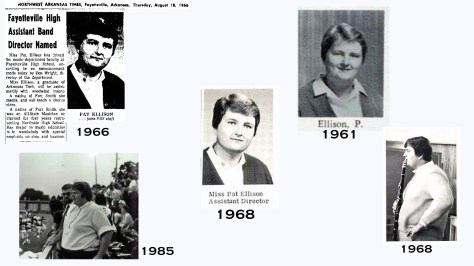
Pat Ellison, A Living Eulogy

PAT COLLAGE.jpg


Perhaps it is a macabre thing to eulogize the living; yet, it’s oddly satisfying. It’s the chance to whisper softly, “Thank you for what you did for me.” As we recognize the truths that others attempt to reveal our eyes and hearts will turn inward, sharing similar memories and thoughts. Recognizing a person through other eyes is a precious joy in life, and I am sure that as other people who shared time with me in band read this, they will be held captive for at least a brief moment, recalling days long past. Trying to pick the words that convey the march of time and emotion is both a chore and an act of respect. All too often, we hear speakers exhort others to plant the words of appreciation and respect into the lives of those who are still living, so that they might feel the soft comfort of being remembered. As much as I have written about a soul named Barb who pointed the way for me, Pat Ellison was her counterpart for me in school.

If we are lucky, we each have a few people who define our nascent ideas of character, intelligence, and charisma. While we might not even recognize them as such at the time, as we grow older, life tends to grab our shoulders and turn us back to them, teaching us, revealing things that should have been manifested earlier in life. Perhaps those students lucky enough to have amplified homes with loving parents will not see the past as I did. After having known so many people who were in the military, I’ve discovered that some elements of my respect for Ms. Pat Ellison are exactly those that allow recruits to grow to love their drill instructors. No matter how irritated she would sometimes be, it was a frustration rooted in things I could understand, which was markedly different from what I might experience outside of school. I know for a fact that she wanted to throw a tuba at me a few times; if she had, I would hope she would have extracted the tuba player from inside it first. She told me that she remembered my sweet smile, and I joked that I remembered the time she was vainly trying to teach me to play a solo for a concert in the park. (Hint: neither one of us was smiling for the first hour.) One year, she picked a marching song with “Malagueña” in the title. That song was more complicated than calculus. The only reason I learned it was so that she would not throw me off the marching observation tower. I’m not sure I’m kidding. Any honest student will tell you that Ms. Ellison had her moments of intense frustration. In her defense, I’m not sure how any teacher confronted with 1 to 200 students might not claim criminal insanity multiple times a year. Let’s not even start considering the lunacy of trying to be a calm, rational person on a bus ride to Washington D.C. with hundreds of kids intent on finding the most fun possible.

I sat and talked to Pat Ellison on a Monday morning last year. Even though I see her from time to time, I haven’t interrupted her regular life to share moments and memories. As is always the case with her, she hugged me and talked as if the intervening years were a figment of our imaginations. She told me she had heart surgery a few years ago and back surgery later; at 71, her pace might be slower, but she is still a force of nature. She uses a flip phone and is not a fan of technology. She loves golf, but I don’t hold that against her. I did my best to convince her that so many of her former students would love to share with her as adults and that she was a huge impact on all of us. She humbly denies that any of my flattery could be true. Even though her eyes still light up when someone makes her laugh, you can tell her humility isn’t false. I can only imagine how full her memory must be from the countless people she’s known or how sore her knees must be from the million hours of marching and standing at the podium exerted upon her.

We have Pat Ellison at a great disadvantage: almost everyone remembers her. She has touched so many lives that her list of students and friends must be at least as long as a metropolitan phone book. Her connection to us and to others is immense and monumental. (For any teachers reading this, you at times have the best shot at immortality, being etched into your student’s minds and words for decades to come. Many of us are merely memory footnotes to others; some teachers are the thesis and anchors in so many kids lives.) Undoubtedly, there must be people who didn’t appreciate her – because I’ve also learned that good people must accumulate those who don’t understand them. Being great necessitates not being appreciated, too. I’m glad that I fell onto the side of right in regards to Ms. Ellison.

I told her that I was at a graduation a few years ago when she gave the “Tag-You’re-It” speech. She admitted to being terrified at the idea of giving such a speech. I would have never suspected her to experience stage fright. She was surprised when I told her that I had seen her speech on a blog a few years later, from someone who only knew her through another band member. While she thought her speech was uninspired, it had, in fact, reached many more people than she had imagined possible. Her legions of students and admirers hadn’t forgotten her. Even if her efforts hadn’t been inspired or creative, her commitment and persistence at showing up and working toward a goal, day in, day out, year after year certainly would’ve earned her recognition. I had also seen her at a British Brass Band concert many years before, and the familiarity of her expressions took me back a couple of decades.

She genuinely is both unaware and humbled at the idea that she sits at the nexus of several thousand people who have such great memories of her. For those who know me well, you know that band is one of the few things that allowed me escape from my home life and opened the world up to me. Without band and without Noel Morris and then Pat Ellison, I am certain that my life would have taken a more sinister turn. I stayed in band through the generosity and kindness of both Noel and Pat. By being in band, I stayed connected to the world at large and remained able to convince myself that I was more than the circumstances of my youth. Unlike the cases of many of my contemporaries, band was almost my sole window to the world. I learned things in band that dwarfed the concept of simple musical notes or technical ability – that is what a good teacher and great human being seems to do naturally.

It was Mrs. Ellison who told me that the only thing keeping me from making All-State band was ‘me’ and to set aside who I was going into the audition room. It worked. “They don’t see through the curtain. Play like you just did for me and you will leave smiling.” She was right. Noel Morris had said, “Practice, you fool!” when I said I’d never even learn how to make a sound emanate from the mouthpiece. (It took me 2 or 3 days just to ‘buzz’ the mouthpiece, a bad omen. I think Mr. Morris thought I might have been soft in the head.) Between the ritual of books and practice, I advanced. Ms. Ellison told me the same thing over and over: practice. When I failed my senior year, it was her I let down. But I had those 2 years of All-State, all because even if Ms. Ellison didn’t really believe I could make it, I believed her when she told me I could. That confidence from her propelled me. Even though I didn’t take advantage of either, it was Ms. Ellison who gave me the option of both a music scholarship in college and a free pass into the U.S. Army Orchestra.

It is one thing to ponder in abstract the moments from over 30 years ago, reminiscing. It’s another to sit and share moments that Monday morning with someone who has lived such a rich, full life. It was a pleasure to share time with her and I think we all might be missing the chance to continue to learn from someone who probably could teach us all a few lessons in compassion and hard work. (All of these things are held in common by great teachers, of course.) Pat Ellison’s impact seems to echo and flourish as I age. The primary lesson I come back to is one of insistence on looking toward the goal and practicing enough to see it move a little closer. So much of what we excel at is due to simple persistence. Ms. Ellison certainly believed in persistence; at times, we played certain bars so many times I felt as if we were in the movie “Groundhog Day.”

When I was younger, there were times I didn’t understand Ms. Ellison. All I wanted to do was the play music, interact with people, and avoid being the center of attention. I didn’t enjoy some of the monotony of group practice, especially marching. (I still believe marching might be the only genuinely demonic force in the universe.) However, band allowed for travel and banter, though, and those things are what melded us into a loose group. I was able to be in a group of people and enjoy a huge slice of life that would have been otherwise mysterious to me. Maybe no one will understand it when I say that a great deal of life would have been hidden behind the curtain if it weren’t for band and Ms. Ellison. I’m certain that she had been exposed to enough of life to suspect how severe my circumstances sometimes were, yet she was also able to not press too closely. That’s another skill that is probably difficult to hone as a teacher and even more unlikely for the average human being.

Ms. Ellison had her own reasons for the things she did, some of which we weren’t invited to be a part of – and with good reason. Times were different and things that are easily accepted now weren’t met with the same casual indifference. Ms. Ellison was a complex person and not understanding those complexities back then diminished my ability to look past any frustrations I might have had. She made choices and did things precisely because of her own life exerting its pressures.

Now that I’m older, I can appreciate her as a music teacher and as a person – and my heart grows a little. For so many of the people in my list of notables; among them, Barb, Willie, Pat, or Nellie, they all share one thing in common: I wish I could live a part of my life again, as their contemporary, to see who they were and what made to be the individuals they became by the time I came along. Pat is now in her early 70s. Just thinking about how many people she grew to know in life since she graduated college in 1966 makes me feel both old and tired.

If she were standing here listening to me read this aloud, she would shift her weight from one foot to another, looking toward the ground and smiling. As I finished, she would deny that she had done anything special, other than work and try to finish what she started. But the flicker in her eyes would belie the notion that she probably does see the incredible line of students standing in single file behind her, all looking back to the times they shared with her. It is the earned legacy of a great teacher.

Thank you, Ms. Ellison.


Friendship, Civility, Weird Lessons

(In the last few years, I’ve read a few hundred similar shunning stories on Reddit and other sites. It must be exceedingly common for friends to inexplicably shun people. I’ve been fascinated with the complex stories people have shared – with quite a few being very close to my story. I’m certain I have read a few thousand of them in the last 7-8 years.)

.

This blog post is actually several years old and I’ve modified it slightly a couple of times, especially as I’ve seen so many people come forward with similar stories.

.
It’s been a few years now since one of the best people I thought I had ever known revealed himself to be indifferent toward me. For the purposes of this essay, I’ll call him John, to ensure his identity is protected. Every couple of years, I revisit this very old blog post and update it. Time changes all stories, that is for certain.

.

Even though I had known John a long time, evidently he had awakened one morning and decided that I was scum – without saying a word to me about it. I had often described him as one of the best people I had ever known, used him for a reference, house-sat for him, defended him more than once even though I was being ridiculed for it, and shared many quiet and powerful moments in my life with him. To say that I had a high opinion of him would be an understatement. He shared the day I got the call my dad died unexpectedly, and he was there for me the morning my wife dropped dead.

.

Despite having many private and available opportunities, he never took a moment to express his resentment toward me, which is what we usually expect from people in our lives. He could have emailed after the first brush off, called and left a message, or any number of methods. But he didn’t. He allowed me to plod on, increasingly curious and surprised by my friend’s brush-off.

.
That I had recently suffered the single biggest and harshest personal blow in my life evidently didn’t matter. That I had always defended him, helped him in any way I could and been a steadfast friend ultimately were ignored. It is important to understand that I had just went through one of the hardest personal tragedies anyone could imagine. He knew that, as he was there for me when it happened. Everything about the surprise of the way he changed toward me and then treated me should be imagined through that perspective. Nothing he alleged to be his reason for shunning me compared even slightly to my story. He did ultimately offer a story about throwing peanuts at a restaurant which caused him personal embarrassment; it’s his life and only he knows whether it mattered in the scheme of things. It would be arrogant for me to presume to know, except for the fact that this is how our minds work. My defense is that my wife had dropped dead unexpectedly. All things considered, I behaved very well on the spectrum of possible behaviors.

.

It was his right to do anything he wanted, even with no motive, or with a motive unexplained to me. That has been the hardest lesson in life – that people are transitory and often inexplicably motivated. Needing an answer for all the travails will not result in a satisfying life if you live it that way.

.

But it was a terrible way to treat a friend – and if he had mentally decided to no longer be my friend there were a million different ways for him to have told me so. I know that confrontation isn’t easy. He could have emailed or texted or sent a note. Knowing that the had made a mental break with me would’ve still been an angry blow, but one tempered by his decision.

.
All of the good memories of him were soured  when he lashed out at me. (Granted, my former friend continues on in his life, hopefully happily. My opinion doesn’t affect him in any way.) It was hard not knowing what prompted his revelation of disdain toward me. To say that there was no advance warning is truthful. His indignation toward me bloomed suddenly, without notice. As I was already deeply wounded by another horrific personal experience, it affected me more strongly than it should have. After I wrote him a personal letter, he finally lashed out with a couple of justifications, but each sounded hollow. Please remember that I’m living my life from inside my window and he is doing the same. Maybe he knew something about me I hadn’t realized?

.

The reason I mention all this is that sometimes lessons come from unexpected places. It’s a reminder to me that sometimes you can’t be sure of anyone, no matter how well you think you know that person. It reminds me that it’s no excuse to be cynical toward everyone else – that all judgments, if possible, should be reserved toward the specific person at hand, which is a tough challenge. We often are unaware of what another person is thinking until they file for divorce, tell us that they’ve secretly hated us for a year, or find us unworthy as people.

.

(People change their lives inside their own minds long before they change their behavior or make changes in their lives. I often say that a change of behavior is always a result of change in one’s thinking. Whether John slowly changed his mind about me and concealed it very, very well or arrived at some horrific conclusion about me, all at once, is for the ages to decide.)

.
John’s hardened heart toward me has contributed to a better environment for a lot of people. His surprise rejection gave me the ability to step back many times and practice: “Never attribute to malice that which can be adequately explained by stupidity.” Or indifference. But in some cases I think it might have hardened some of my edges and led me to lend too much credence to my instincts and avoid someone in my life.

.

One thing it definitely helped me with was deciding that it would be stupid to avoid loving again, regardless of the time which had elapsed after my wife had died. John’s decision to drop me from his life compelled me to acknowledge the stupidity of living for other people or worrying about their opinions of my footsteps. It was painfully obvious that no matter how measured my actions that people were going to attribute motives to each thing I did. Even the people who were close to me. If someone as close as John could throw a bucket of cold water in my life, it seemed plausible to conclude that everyone in my life could do the same. It was John’s example that also allowed me to finally tell my mom to stay out of my life after 40+ years of abuse and disrespect.

.
What I’ve learned without question is that I can more easily gauge people’s veneer of civility. Some people, like my former friend, have a better capacity to conceal their opinions. He was always diplomatic, even when I knew that he didn’t care for the person he was addressing or that he disagreed strongly with something. His background and training molded him into being a social diplomat. In turn, this helped me to learn that you can’t consistently take people’s words at face value. Without being treated so unfairly by my former friend, I don’t think I would have ever had the realization that he could turn that same skill toward me. It was arrogance on my part to not expect it, wasn’t it? When I sometimes find myself thinking I understand a person, good or bad, I see my former friend in my mind’s eye and remind myself that I could easily be under the spell of manipulation or be fooled by civil appearance. (…seeing only what that person wants me to see, hear, or think…) Or worse, that I’m being quietly judged or shunned, unaware of the change.

.
The balance lies in not being horribly cynical or holding the concealment of my former friend against other people. It’s not easy. I had always adhered to being honest with him, as I felt a kinship toward him.

.

While I can’t “prove” it, I think he developed some crazy theory about me that wasn’t rooted in anything realistic. That’s his right, fair or not. Again, the little bit of explanation he did offer sounded illogical and disjointed, especially after what I had just survived. One part of his reasoning was that I had embarrassed him in public, unbeknownst to me. He had to make amends to another mutual friend because of my innocent misbehavior. I don’t remember the incident, but all I can say is that we were having a good time and someone extremely close to me had just died. That’s why I was out with him that day in the first place. I can only surmise he had washed out the memories of the craziness he had put me through a couple of times – I don’t know. My instincts kept telling me he wasn’t being honest about it. Years later, after witnessing so much human interaction, I’m certain that he arrived at some ridiculous conclusion about me, quite possibly as the result of gossip and rumor.But, I could be totally wrong.

.
Would my life have been better had he not turned on me? Probably, because right up until he figuratively hit me in the face with a nail-studded verbal 2 X 4, I thought everything was all peaches. I think his life was better with me in it and that he diminished himself by treating me so poorly. Again, though, it is his right, even without explanation or warning. Coming to terms with it when it happens falls to each of us.

.
It turned out that John was not the person I thought after all, and he had me fooled. I don’t think there was any way at that point in my life I would have seen it coming.

.
I know that 1 huge challenge in life is letting go of things and letting go of people. It’s really hard when the people you are letting go of do it unexpectedly or unfairly. There’s no closure, no “aha!” moment to reconcile. I think that most of the time we know we are not doing the right thing and pride or anger prevents us from coming forward. In this case, there was no precursor or advance warning to let me know what the true motives were.

.

One day I had a great friend and the next, only the cold shoulder and bewilderment. I often wonder what our friendship might have been like and I certainly use his surprise shunning toward me to remind myself to carefully watch how people behave and react to those around them.

My life would have been different – and better – had John stayed in my life. That is what saddens me. I say it without any rancor or bitterness. It’s simply the truth from my perspective.

Father’s Day

Encore-Black-Drapery-Fabric-by-Drape-Kings-FinalImagine a world where all children are wanted and appreciated.

I posted this on my social media, remembering that those without fathers or with fathers who blemished the title seldom participate in the ritual of acknowledgement on said social media.

For some, it is not because they are negatively focusing on the harsh moments; rather, it is because some legacies scar so deeply that even gentle motions pull against the old wounds.

Adrian Peterson Social Media Commentary

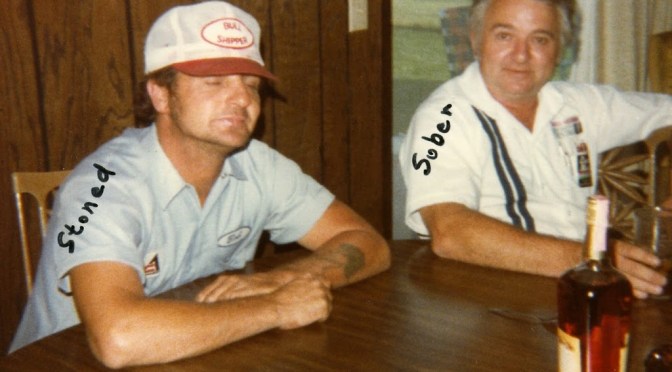
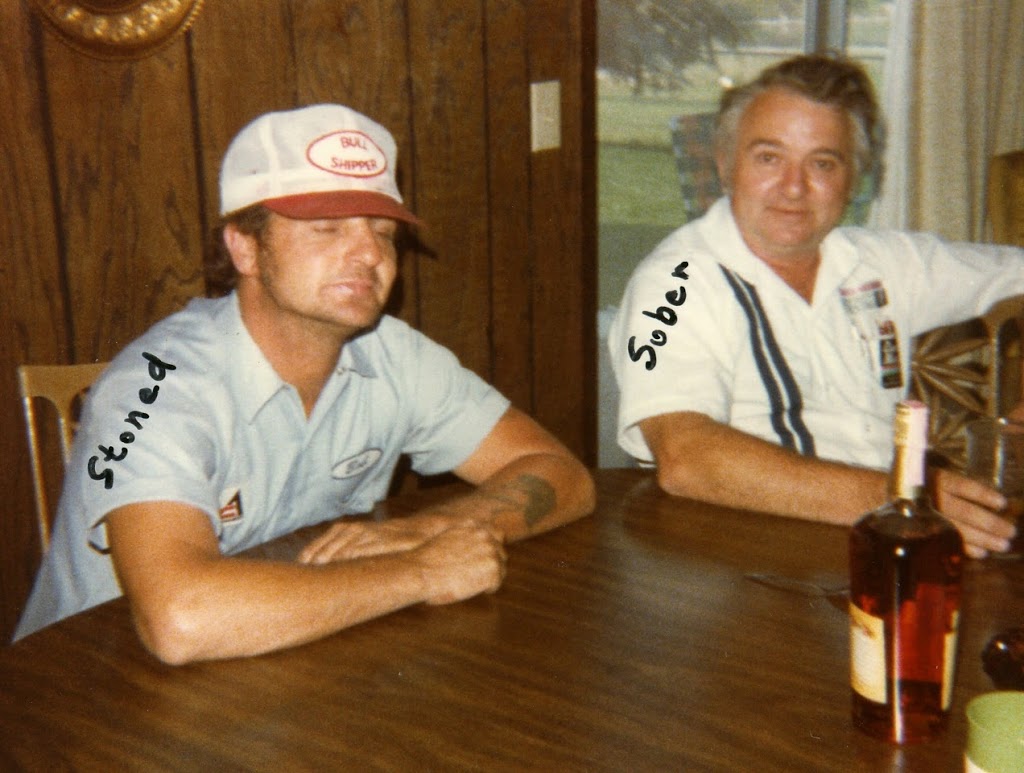
My dad on the left. I didn’t make the notations on the picture.

Recently, I posted a status update on social media. It generated a lot of personal commentary, which is one of the best things that is possible from social media. I’ve written and talked about some of the abuse. It’s not a secret, especially in my regard.

For Adrian Peterson’s case, please keep in mind that I am in no way a sports fan. What triggered such a reaction from me were the words coming out of his mouth in regards to how he behaved. It’s bad enough when a blue-collar works echoes those sentiments, but when a famous multimillionaire does it while cloaking himself in both the Bible and old-fashioned “that’s what they done to me,” it galls me relentlessly. I could use the same idiotic logic and beat my spouse and children, too, almost to the point of death – because that is how some in my family deal with their problems.

“Not to cast aspersions on Adrian Peterson, but commentary: my father thought it would be appropriate to hit me across the back with a wooden rake. I wasn’t looking when he did it – the rake broke across my lower back. I urinated blood for days and didn’t get medical attention. He hit me with his fists, inner tubes, belts, sticks on many other occasions, yet I was somehow made to feel guilty about it – and then face the revisionists who would still insist that it wasn’t that bad. It’s a constant battle to not scream at other adults for failing to distinguish between discipline and abuse. If you are disciplining your child and draw blood or create bruises, you deserve to lose your job, go to jail, and be judged. Get help. If you are hurting your children to that degree, you are raising future adults who are heading into life as damaged victims ready to repeat the cycle.I would give anything to go back to several moments in my life and dole out in equal measure what was given to me. That desire is one of the single biggest impediments to living a joyous life.”

Several people contacted me privately, as they had a lot to say about it. Abuse, whether it is psychological or physical, is more common that people would like to acknowledge. It’s also commonly hidden and actively concealed from others. There are so many reasons that such things aren’t talked about.

Here are a few of the excerpts from social media (public comment, not private content):
 
“The system will work great IF people will talk. When they see it or hear, they should call or better yet go talk to someone to report it. Face-to-face makes the story much more credible. It’s not the police’s fault or social services when really all that needs to be done to vastly improve this is for people to come forward and tell someone.”

 “A lot of people ask why people wait until the are adults before speaking out. As a child you are afraid and ashamed. You believe it is your fault. The guilt combined with the fear is overwhelming. You also believe the threats to harm you or your loved ones are real. If you do tell someone, they don’t believe it, or choose to ignore it because it is too ugly. It takes years to recover to the point of being able to talk about it. When you do, people don’t understand unless they experienced it too.”

ALSO, other members of your family can be very disapproving of your coming forward. They will try to shame you into silence.”

 “…everything you say about abuse is true. People need to speak it instead of hide it, for many reasons. There is so much abuse in the world it’s sickening.”


“I so agree. And you know it’s hard when defenders say…. It’s private. I’m a firm believer in sunshine makes situations better.”

Did you know that Adrian Peterson also stuffed LEAVES into his boy’s mouth to keep him from screaming? He also whipped him in the testicles. I think everyone I respect is going to say that stuffing a kid’s mouth with leaves is evidence of pure crazy.”  (Allegedly?)

Others wrote privately about their own struggles and specifics. Much of it was a total surprise to me. I’m glad I wrote the post, even though it shared “too much” for some people. I noticed several key people in my life didn’t touch the post, even though it was sponsored and all over their news feeds.

It is always odd to me when someone engages in an open and honest way and other people have so much baggage that they are afraid to interact.  We can talk and snipe endlessly about politics and other superficial things but when the focus turns intense and personal, for some people, they simply can’t do it.


09142014 Authentic Abuse

Sometimes, I watch a show or movie and the authenticity of the violence is so spot on that it surprises me. Watching this week’s premiere of “Boardwalk Empire” on HBO served up such a moment.

Even though the father of Nucky Thompson had been previously portrayed as malignant, the flashback added an aura of inevitability to the scene. Factoring in that I had told a couple of “you won’t believe how mean my dad was” stories at work that day added a note of surreal to the tv episode. Seeing Nucky’s father act so casual in advance of the brutality seemed real to me. Maybe the writer had experienced abuse but whatever the past circumstances, the chilling expectation of violence shrouded the scene until it happened.

At work, I wasn’t trying to play the “one up” game on my co-workers. But the first of my stories basically slammed the conversation into a wall.. The second anecdote proceeded to burn down the building that the conversation would have been held in.

Infrequently, I forget that not everyone had exposure to such gratuitous violence growing up. Not everyone even really believes such stories, so alien they are to them. All I can do is shrug my shoulders and go on about my day when I encounter doubt.

I don’t live in that house of violence in my adult life. But I certainly drive by it every once and a while and even though I know I should avoid it, I pull into the driveway of my youth and visit old memories stored there. I visit it only because memories are much of my life. Forgetting them is a disservice, just as using them as a crutch would be.

09052014 Who Put the “Curse” in Cursive Writing?

5555
This is the logo used when I was kid. Dolly Madison is now owned by Hostess Foods. I wrote them many years ago, telling their marketing department that their logo sparked my ability to write words.

For those of who know me, I love the style of cursive writing. Writing “longhand,” as we can archaically call it, is a peaceful, meditative thing – at least for me. I wrote letters long after my contemporaries abandoned the practice.For those who had to attempt to read and comprehend my writing, I apologize! My handwriting resembles the scrawls of a man being forced to write at gunpoint, while receiving random electrical shocks. It’s that bad – regardless of the time I spent trying to do it better.

But (and there is always a “but” in these essays), as a left-handed person, cursive written was indeed a cursed activity in school. I remember the first cursive letter I ever wrote. It was an “L.” I was living with my grandparents at the time and they had a small black and white television, so we gathered around it to be entertained. It was either Friday or Saturday evening and we were watching a show sponsored by Dolly Madison. In rural Central-Eastern Arkansas back in the very early 1970s, being able to get even 3 stations was a miracle. Much of the programming was very tame by today’s standards, too. Putting an antennae up was also a necessity but it increased the chances of a lightning bolt to the house, too.

If you look casually at the logo above you can see that the “L” that my grandma showed me how to draw was essentially the bonnet in the logo. I was so proud of myself.

I learned a lot of letters from my grandparents. What is amusing is how relatively uneducated they both were, but they loved the time they spent showing me words. In fact, the way grandpa taught me to read words caused me considerable trouble in 1st grade. My teacher ultimately assigned me special help. I was regarded as a little simple. I simply didn’t know how to sound out words in the way preferred in the alleged modern teaching method. Grandpa had taught me to recognize an immense list of words. I could pronounce them and use them in sentences correctly, but it set me back compared to other kids my age, as I could not break down words into syllables and sounds distinguished by letters. My favorite thing to use to learn new words: the TV guide. In grandma Nellie’s house, the TV guide had more stature than the bible. As I progressed, learning how to sound out the alphabet in pieces instead of whole words, the truth is that I actually learned how to conceal the fact that I was still learning much, much more by learning entire words than I was by sounding them out. I’m still convinced that I can read so quickly precisely because I learned how to read the wrong way. (If you believe that there is a wrong way to learn.)

Before I forget, I didn’t go to kindergarten. Due to mom and dad moving to Northwest Arkansas between school years, I skipped having to go. I went from reading TV Guide to 1st grade at John Tyson Elementary. It is now considered highly unusual for a kid my age to have skipped kindergarten. Back then, though, there weren’t any stringent truancy laws to exact revenge on parents who didn’t enroll their kids in kindergarten or other programs before elementary school.

Later, in school, I had the terrible misfortune of having to deal with a couple of teachers who stupidly insisted that writing with my left-hand was wrong and needed to be harshly weeded out of me. Naturally, I resisted them. My grandpa had insisted that I learn to write and draw with whichever hand was comfortable. He wasn’t progressive in any sense of the word – but he did make an effort to be sure that I enjoyed writing and drawing, even if I did it poorly. And make no mistake about it, my drawing and penmanship were terrible. Unlike other kids, though, I never learned to loathe writing or to be embarrassed about my notable lack of skill. Even as my left hand left huge smears on the paper as I wrote, I didn’t let it dampen my enthusiasm. Even when those very few teachers were asses to me about writing left-handed, I knew they were wrong. One of them in particular tried vainly to shame me for my horrible penmanship. I didn’t care, as I knew that no matter how hard I worked, my penmanship was never going to be great. Some teachers just couldn’t get it through their heads that, as a left-hander, their methods of instruction were exactly backwards to me. Even in the 6th grade, I had a teacher treat me like an ape over my lack of concern over writing with the “correct” hand. She never missed an opportunity to tell me my handwriting was atrocious. Little did she know that my dad had already provided infinite training in the ability to ignore a lot of harshness being directed at me. She was a child in an adult’s world, at least in my mind. I do wonder sometimes whether she realized how horrible she seemed to me then.

Now, seeing that the tide is turning regarding cursive writing, I would like to weigh in and say that I admire cursive writing. It’s elegant and evokes times past. It does enhance motor control and acuity. But so do many other activities, ones more anchored in our ever-changing world.

But it is still wrong to continue to require it. The arguments being made for continuing to teach it are usually based on not understanding where cursive originated.

The world has moved on and those who would shout to the heavens to require this antiquated way of writing are wrong to insist on their stubbornness to require it. Focus on regular writing and leave cursive writing with calligraphy, which once was an admired and respectable means to write. Like it or not, the world has shifted to block lettering, preferred by computers and keyboards. Try as you might to anchor written communication to the past, it is not going to be successful or even necessary. It is the way of the world to claim remorse over the changing ways we live our lives and to seek to keep elements of our past alive, long after the necessity or even the utility of it has passed. I can understand the appeal toward maintaining old customs, even when they are no longer relevant.

Remember, I love cursive writing, even though it was very difficult for me to learn. Part of it might have been that everything looked backwards to me in my hard-wired left-handed world. As much as I love the idea and essence of cursive writing, it is already an elective art.

It is time for schools to acknowledge the antiquated status of cursive and use the immense time involvement on something much more useful, such as reading. One of my personal prejudices is the belief that reading in and of itself is one of the most redeeming and intellectually valuable pursuits of anyone, at any age.

Sidenotes:

If you are interested, you should google “Writing in Cursive,” or read the link here: Click Here for Cursive Wikipedia Article        Cursive was used for informal writing, while what we might call block lettering was the preferred and more esteemed way to write. Cursive was considered to be more illegible. Interesting? I think so. If you only read the Wikipedia page in the leak, I’m certain that you will discover that the issue is a little more convoluted than those arguing about it would admit to.

Cursive writing also originated from the necessity of compensating for quills and other antiquated writing utensils. Not lifting one’s writing utensil not only provided for greater speed, but also mitigated limitations of the method used to write. Please note that people arguing in favor of mandatory cursive training in school are in fact making an argument based on aesthetics over obsolescence.

08222014 Lucid Dreams and Grandma

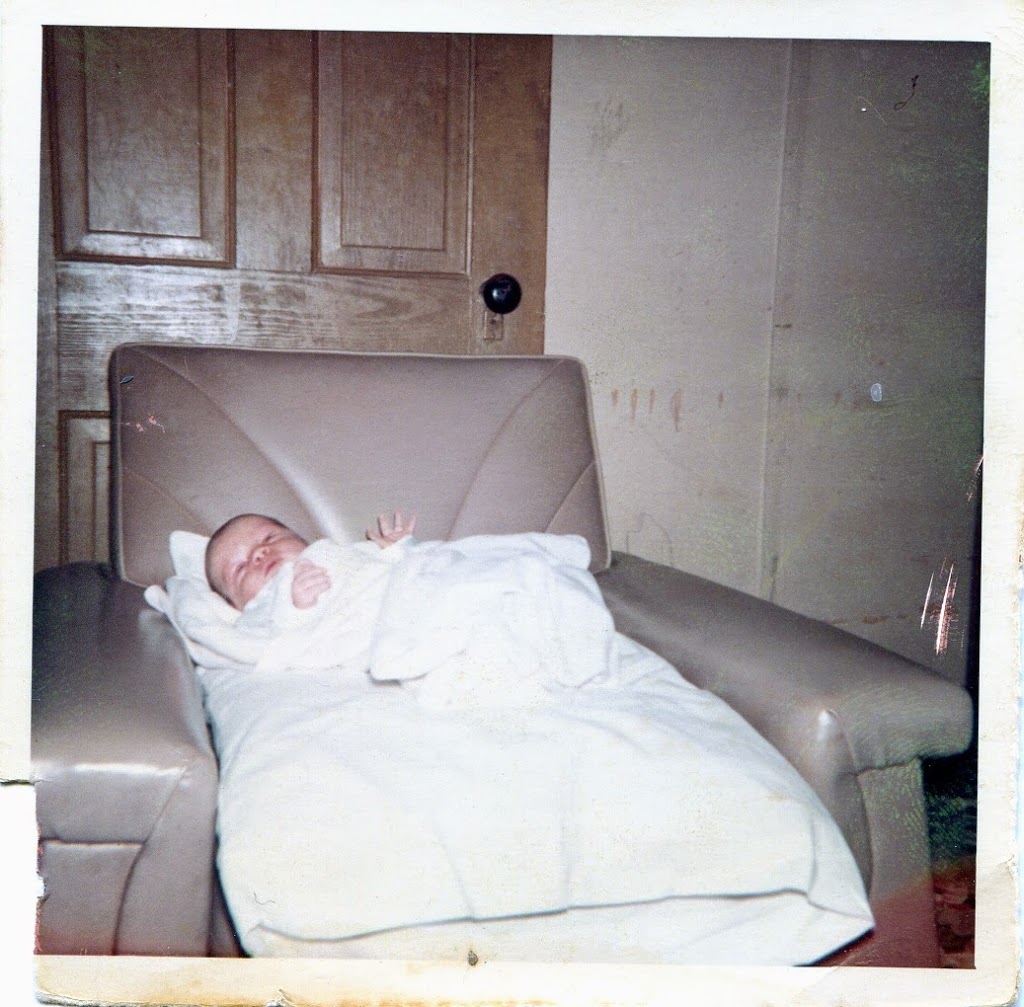
This is me at one day of age. Grandpa’s chair…

I don’t often have lucid dreams. But it seems that when I do, the fatigue of being dragged back out of the dreamworld lingers in my head, making me foggy. It is an alluring pull to feel as if the world imagined while sleeping might be more authentic than the mundane one I’ve awakened to. The dreams of my youth are coming with less frequency now. I wonder sometimes whether it is because age requires the penalty of forgetfulness from us, or perhaps whether it is the nature of life to lose the taste and feel of the simpler pleasures in life, when an entire universe could be housed in a much smaller space than is required of us as adults. When I was younger, I considered the taste of some candy to be as exquisite as fine cuisine. The wardrobe closet my grandparents had in my grandpa’s bedroom might as well been a secret warehouse, given the exaggerations of my imagination. Even though my grandparents world was relatively small, I never felt small or unappreciated there. Any activity could be made to be interesting. Even looking at pictures of family members I didn’t really know held interest and allure. One picture of a cousin of mine made age seem like an impossible barrier, for her graduation picture was always on the walls, even before I had started school. Grandma would tell me tales of when she was young and in my mind she might as well have been describing “Little House on the Prairie” to me. I had no true accounting of time nor of its insistent race to meet me.

I don’t mean to imply that modern life is not better or that times past hold an authenticity no longer possible. Quite the contrary. Life is much better, and among good people, the chances for a great life are better than ever. I don’t share many people’s pessimism toward our modern society. We have more opportunities for education, food, and healthcare. Nothing can trump the presence or absence of someone who loves you abundantly and dearly. In the past, modern contrivances weren’t so readily available to intervene between you and those you cherished. Stuff is no more of a negative now than it was then.It’s up to us whether we value people and experiences more than we do the things we fill our houses with.

Likewise, I know that my grandma and grandpa had many faults, especially when they were younger. But I wasn’t exposed to most of that. Even the mention of a lesser life was just a story bearing no resemblance to them, as they rarely looked at me with anything less than appreciation, even when I wasn’t being a joy for them. I like to think that my grandparents deserve all the credit for any good that blossomed in my personality and that most of the clouds that still darken my days as an adult were from the “other” of my youth. In fact, I know it to be true, even as this acknowledgement might wound those confined to the grouping of “others” in my childhood. My grandparents weren’t educated, but I learned my first letters and reading with them. I learned how to use a hammer without being screamed at for doing it wrong. (To grandpa, it was impossible to do it wrong. You did it until you figured out how to do it right.) I learned to sew and in the doing distinguished that most responsible people would find it to be a great asset in life. I learned that even though it might be 100 degrees on an August night, I wouldn’t melt. Grumbling was encouraged, especially if it were done in a creative way. But once it was time to stop grouching, it was simply time to deal with the situation and go on about your business.

On a recent night, my wife stirred and got up for an eternal minute. Prior to her stirring, my dreams had been evocative of rain, cotton and tree climbing. My dreams turned vivid after she came back to bed and I slowly slid back into a vivid dream. I woke up around 5 a.m. again, still hearing the false echo of rain beating on the tin roof at my grandparents house. Instead of being in my own bed, I expected to open my eyes and find myself looking out the window facing the porch at my grandma’s house, the window screen inches from my face, looking out at the acres of cotton growing around the house and across the road. Until this lucid dream, I had forgotten that the old “house on the hill” had a second door on the front of the house, one leading from near the porch swing to the back bedroom. How had I forgotten that? Grandma never used that door and it certainly didn’t make her feel comfortable. Thinking back on it, it seems strange that she could sleep next to an open window where anyone could reach inside – but a closed, lock door might cause her more concern.

In the dream, grandma had made me a coke special. To assemble it, she would take ice cubes, fold them into a towel, and then hammer the towel to crush the ice, which she would then put into an old snuff glass and pour coca-cola from a 2-quart bottle. She had also popped popcorn, leaving the kernels in the bowl for me. It always concerned her that I enjoyed trying to break my teeth on the unpopped kernels, a habit I still love to this day. (If was a cold day and the living room wood stove was lit, she let me put the unpopped kernels on it to burn them. There’s nothing like the taste of burned kernels!)

I was sitting on the living room floor to the right of the unlit stove, the window air conditioner to my right, enjoying it blowing cold air across the top of my head. It was a cool day for summertime and the air conditioner was off more than on, a rare thing in those mosquito-dominated fields. Grandma was behind me, sitting in her chair, talking to me about General Hospital. The bowl of popcorn containing enough popped corn to feed 5 children, a cluck of chickens and two monkeys and a glass of coke were in front of me, almost forming a food altar. Grandma gave me an appreciation for the use of food as an expression of love. It was a perfect summer afternoon. My only goal was to consume an inhuman amount of popcorn and swill it down with another equally devastating dose of coke.

A weather warning interrupted the intense drama of General Hospital. A storm was moving across the southern part of Arkansas. Grandma didn’t distinguish between a distant storm 100 miles away and one overhead – they were all equally menacing. A fatal storm had ravaged my hometown in the early 1900s when she was a very young girl and countless storms since then had hammered the apprehension of storms to a fine point. Grandpa was outside sitting on the porch, facing the side of the house and the cotton field just a few feet away, ignoring grandma’s hollering for him to get inside. “Wooly! It’s fixing to start. Get on in here.”

(Grandma tended to pronounce his name “Willie” as if it were “wooly.” I didn’t know any better for many, many years.)

Instead of grandpa coming inside, I went outside on the porch (as grandma was fervently listening and watching the weather bulletin on the television). I walked barefoot – always barefoot! – along the length of the front porch to sit next to him, jumping up to sit. He pulled out his plug of Cannonball tobacco, jokingly offering to cut me off a sliver with his ever-present pocket knife. This time, I accepted. He sliced off a shaving so thin that it could have been an eyelash. I took it off the point of his knife and put it in my mouth. The harsh yet pleasant taste of tobacco flooded my mouth. I knew better than to swallow it, though. After a minute I jumped off the swing and leaned over the edge of the porch and attempted to spit it as far toward the edge of the cotton field as I could. I missed by at least ten feet, of course. Grandpa laughed. The wind had picked up and another weather bulletin could be heard, interrupting Grandma’s episode of General Hospital. After a long interval, grandma hollered once again for us to get back inside. Grandpa just slightly shook his head, having no intention of going inside. Even with the approach of an actual funnel cloud, his usual course of action was to stay outside as long as humanly possible or until he feared that grandma was going to have a stroke shouting at him to get his fool neck in the storm shelter. A couple of yellow jackets lazily buzzed around grandpa’s head and then across his hand, which was wrapped around the chain supported the wooden swing. He didn’t even bother to wave them away. His approach to wasps was the same as everything else at that point in his life: if it were going to bother him, he’d wait and let it decide for itself. When we watched “Kung Fu” together on the black-and-white tv, I could tell he got a kick out of the simple lessons being taught to Grasshopper in the show. I think his approach to wasps would have fit nicely into “Kung Fu.” 

By then, the wind had begun to make the galvanized tin sheets comprising the roof to pop with more force. Losing the roof was a real concern. While it might cause damage, replacing one of those tin roofs was a much simpler and inexpensive task than a modern roof, plus they provided a sound that cannot be matched in our modern society: the sound of rain pattering upon a tin roof. Nothing compares to that sound, not even the call for supper when you are hungry or the feel of the first sip of a coke special, handmade by your grandmother. While I’ve never considered it before, I can’t remember a mention of my maternal grandparents ever owning a house, either. Whether he owned the house or not, grandpa would build a storm shelter into the ground using nothing except hand tools. I remember when they moved to the “house on the hill,” watching him use an ax, shovel and saw to carve a place into the ground and build grandma another storm shelter. It was grueling work.

I know that there are a lot of pictures out in the world from the time when Grandma and Grandpa lived in that shotgun house in Rich. It would be a gift indeed if they were all loose in the world. Each contains a moment and a reminder. Perhaps one day everyone with legacy pictures will allow them to be shared. Perhaps. 

P.S. I know that we have metal roofs in abundance now, but they aren’t comparable to the bygone tin roofs of days past. (But much safer!) A shotgun house with a tin roof had a different set of rules governing its comforting acoustic sound of rain upon it. Unlike modern houses, insulation was rare in such houses. The space between you and sky could instantly be made apparent if the roof were peeled back, as nothing but 2 X 4s, tin and plywood usually kept your head indoors.  Were it raining, there was no need to stick one’s head out of the confines of the house – the metal roof telegraphed perfectly the intensity of every weather change. As a bonus, an average man could learn how to fix a tin roof without too much danger or intelligence, something that is no longer true with our houses.

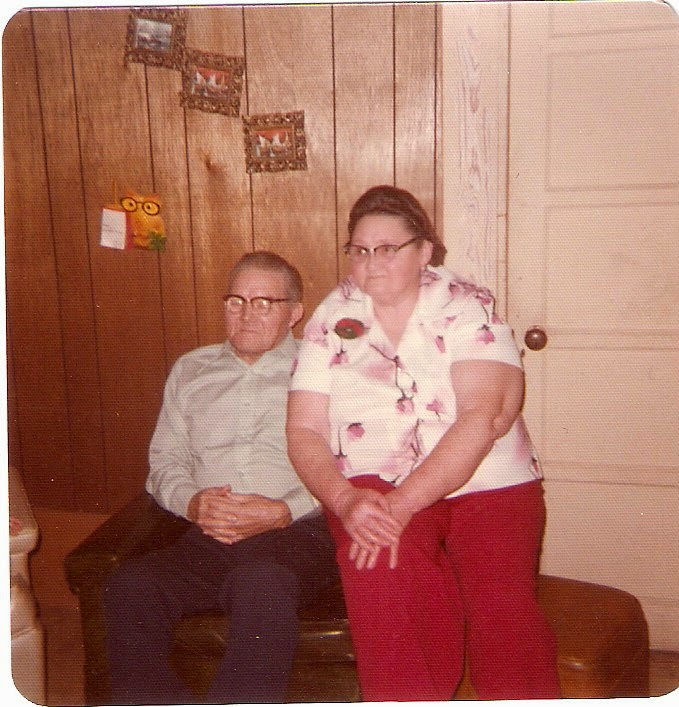
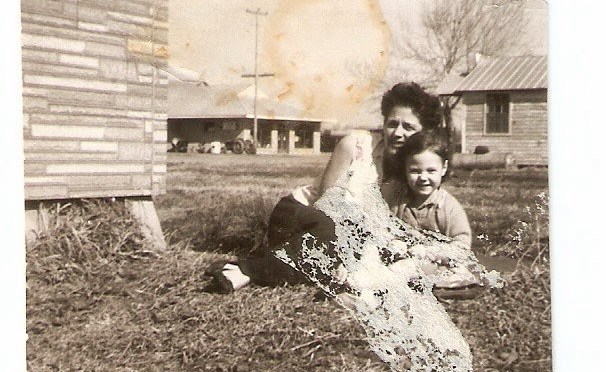
William “Willie” Arthur Cook and Nellie Leona Phillips sitting at the house.

(Looking at this picture reminds me that time either feels fleeting or eternal. This one was probably taken in the very early 1970s, 40 years ago. Each of us, right now, is living a similar moment, unaware that time is looking at us with a wicked grin as it speeds past us, feeding on our ignorance of how precious our time is.)

08212014 A Remembrance…

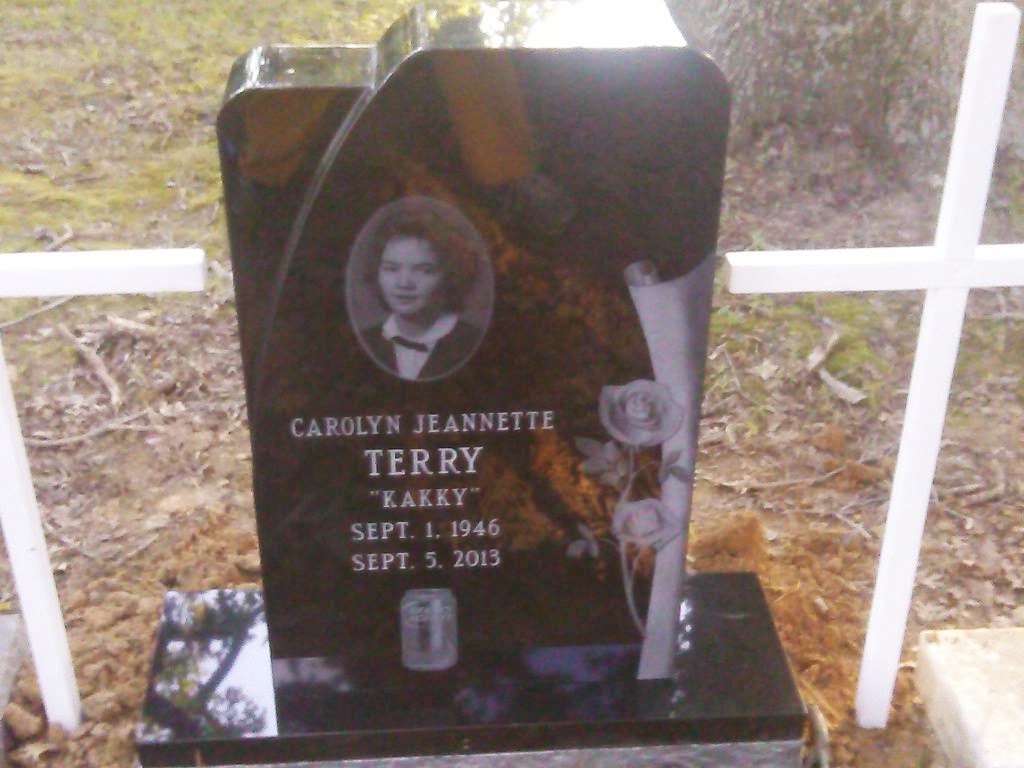
The picture above is of my mother’s tombstone. My sister designed it by herself, paid for it and had it placed at my mother’s grave. The grave is in the Upper Cemetery, in Rich, a small community near Brinkley in Monroe County, Arkansas.

As always, much of this blog is personal and perhaps I should spend more time perfecting my words. Once they are out there, they will be quoted out of context and stretched to include meanings I didn’t intend. I don’t write things to lash out and I don’t write them to demand a response. My opinion is no more meaningful than anyone else’s opinion, not in the real way that the world works.  (Previous Post About Writing ANYTHING  – click here…)  This post is not perfect but I fear the hesitation I have about “finishing” it enough to post it will never subside, so here it is, warts and all.

Before writing and forgetting to mention it, I don’t fully understand why some people need to raise a fuss about the tombstone. The person who stepped up to the plate chose a headstone that was meaningful to her. Her intention was to pay homage to her mother. Granted, it isn’t a traditional headstone. That’s a good thing. It would be very stupid of me to rant and rave about the tradition of expectations regarding tombstones when I favor creativity and originality everywhere else.

(I hate the idea of being buried, but love cemeteries. That’s just my contradictory life. I would not have chosen burial for my mother, nor a headstone, left to my own devices and beliefs. Again, though, that is my definitive opinion.)

When I first realized that this was the design chosen by my sister, I was surprised. I don’t know why I was surprised because craziness runs in my family! It certainly made for a great story to share. And I did share it. But I had to ask myself over and over: what exactly made it a great story? The answer lies in the fact that it was going to totally be in people’s faces about mom and how her daughter was going to remember her. It was the ultimate way of saying “There are no secrets.” Absent a major disaster, the stone is going to survive for generations and be spread on grave websites for decades. People are going to look it and probably be caught in surprise at its brashness. The cemetery where the headstone is located is comprised of mostly nondescript headstones. Creativity and style are not attributes that the family members buried there would seek out. Mom’s life is already lived, the pages of her moments already remembered, categorized and sorted in the minds of everyone who knew her. The stone isn’t going to change anyone’s perceptions of my mother.

A family member told me that she was “sickened” by the tombstone that was erected on my mother’s grave. What a horrible reaction! I can see her point about it not being traditional or what might be expected. But I don’t see it as offensive. In this scenario, the person voicing the opinion is choosing to be offended. For those who fail to make their wishes explicitly clear to those you leave behind, you should expect to not have your wishes followed. Do you really want someone like me stepping in after you’re gone? I would honor your wishes but you can be certain that if things are left up to me there is going to be some weirdness involved. In the case of the family member who was sickened, her opinion in the matter is going to be an unwritten footnote, confined to her circle in life. The longevity of the tombstone is going to drown out and render as forgotten all the negative commentary made about my sister’s choices. I see that my sister chose appropriately and in the way she saw fit. But if I did disagree, my words of reproach would be nothing more than crows screeching outside the window, while my sister’s effort will outlast any criticism. She gets the last word on mom’s tombstone.

(Although I’ve said this many times before, my dad did not want to be buried. Ever. But, he was buried and one of the many revisionist family members claims  to this day that he wanted it that way. He hated the idea of being put in the ground. In many ways, this could be construed to be much more of a problem than the content of someone’s tombstone.)

This headstone is  a true representation of my mom, and it was done with the sincerest intentions. It is an odd thing for me to be writing in defense of anything my sister does. Lord knows that the opposite is usually the case. She is crazier than I am – and that is quite a feat.

The person who steps up and takes responsibility for taking care of the things that other people won’t gets a lot of leeway. In this case, it was my sister. She chose to put a childhood nickname for my mom on the headstone, as well as having a Bud Light can etched in it. I’m convinced she did it for her own sincere reasons. It was an expression of her feelings. But even if she had chosen the stone and its content for no reason whatsoever, I still don’t see the problem.

Maybe that makes me the problem? I can certainly laugh about it. I do “get” that those who are compelled to follow a certain social set of norms might not appreciate it. It’s not what “most” people would choose. But the tombstone isn’t a summation of my mom’s life. That life has already been lived. It is a reminder to each of us that our legacy is being written every moment of every day. We can’t control how it is spun and told once we are gone, if we are remembered much at all. It would have been a valid reaction if at some point all of mom’s children turned their backs on her. One of her children decided to take charge and remember her.

Some of my family might say “That’s not how she should be remembered.” Again, this isn’t really a reasonable thing to say to my sister. Other family members are going to tell her how to remember her own mother? How does that sound in your head when you try to argue it silently? “Listen, I know she was your mom and you were very close to her, but you have no right to remember her in the way you choose.” Hmmm…. My sister had a very tumultuous relationship with with my mom. It was not a stable, consistent relationship, but it belonged to them, both anger and affection intertwined. 

Is a family going to object to mom’s nickname on the tombstone? Why? It was her nickname and not one used in anger or ridicule. Was it her picture? I don’t see why. It was a good picture of mom and it cost my sister a lot of extra money to have it made and applied to the tombstone. Eliminating those two elements leaves only the possibility of the etched Bud Light can on the bottom of the stone. I say it without malice and without the intention to further lessen the memory of my mother in my sister’s eyes, but one thing every living being on this planet must understand and know is that mom was a heavy, heavy drinker. It was a defining characteristic in her life and lead her down many of her darker roads in life. It’s no secret to anyone who knew her. All who knew her would nod their heads in agreement that drinking was one of those things that defined my mother. Denying that this is true doesn’t make it less true. It doesn’t hurt my mother and it doesn’t do any harm to anyone who knew her. Everyone who knew my mom knew her for who and what she was, for good or for ill. Each person related to her in their own way. This is true for me and it is certainly true for my sister. I don’t preach at people about some of the craziness I was put through as a child with the intention of changing the truth of my experience nor to harm anyone. It is my experience and I own it. The same is true for my sister. She was putting an iconic remembrance of her mother on the tombstone, one which to her vividly recognizes its impact in her life. I’m not quite sure how people can take that and make it something dishonorable or claim it be misleading about mom’s life. Please stop and think before lecturing or clucking to yourself about someone like my sister misrepresenting the path that she shared with my mother. We looked on them and their on-again, off-again relationship as outsiders. We didn’t understand them when they were alive and we won’t ever understand now that mom is gone. I don’t think my sister cares about most people’s opinions because we can never penetrate past our unfamiliarity about their relationship to one another. We are outsiders.

Since I’m on the soapbox ranting and preaching, I would argue that it is the tendency to suppress the truth or the things that might put people in a bad light that is the source of much of what made a great deal of our family life simply a tragedy. Kill someone drinking and driving? Don’t talk about it. Beat your wife and kids? Don’t talk about it. Go to prison? Don’t talk about it. Affairs? Shhhh….Not talking about it only led to more of the same stupid nonsense from some of the family. More light on the issues that were really true and harming people might have made people’s lives better. But that’s not how many people were raised. People collectively agreed that silence was the best method to deal with the things that make people’s lives both difficult and interesting. For mom, I’ve written before how completely transformed she was after I graduated high school, dad left her and she went to rehab in Fort Smith. She emerged from treatment as a vital, interesting person. I cannot adequately explain to you the Jekyll-Hyde transformation that took place unless you’ve experienced it firsthand yourself. Mom was a different person and the variable was the removal of the alcohol from her life, coupled with a new realization that there was something for her left in life. Maybe if people had been more open and forthcoming when she younger, maybe her road would have veered into a more vibrant way to live. The beer can etched into my mother’s tombstone isn’t an embarrassment or an accusation, it is an authentic acknowledgement of one of the most powerful things in her life. Her relationship to almost every person she knew was bloodied by her drinking. Having it on her tombstone isn’t a finger of blame pointed at her, but rather one of the truest things that could ever be said about her. It would be shocking to find anyone who knew her that didn’t have a lot of tales to share about the stuff she got into from drinking. Most people who would share those stories now wouldn’t sit and share out of spite. The truth isn’t diminished by sharing – it is only damaged when those who are left behind are pressed to change their memories to suit a better version of someone. With enough time passing, we all lose some luster off of our halos and even the horrible things we’ve said and done can be appreciated to be parts of our lives. Excising them from our stories about people can be a dishonest thing to do their memories.

For those of you with great mothers and fathers, you were given an unimaginable start in life. While I don’t intentionally paint my parents with accusatory brushstrokes of criticism, it is a truth to be echoed in my life that my parents were diminished in many ways. It doesn’t mean that I didn’t want to love them or to experience many of things that I witnessed other people in life get to cherish. But it did mean that I was ill-equipped to respond better to life as I met it. That violence in childhood tainted me and it lessened my chance to have an authentic way of interacting with my parents. It is my story to remember that I finally found my own voice to reject much of what my parents found normal and to not feel guilty about leaving them out of my life. My mom got the last laugh though, in her last year, by trumping my new confidence with her own approaching death. Our relationships with friends and family are reciprocal and defining to us.So, too, is the one I had with mom, even though it was ultimately characterized by our distance to one another at a fundamental level.

Please remember that my sister chose a way to honor her relationship with mom in her own way. She meant it in the most authentic way possible for her. Her choices do make for great story but she will indeed get the last laugh, as all the detractors pass away from the earth, taking their criticisms with them. Her remembrance of mom will stand alone, whispering its message to the nearby swamp around it – to surpass the ages and maybe even everyone who once lived to remember mom.

 (“It is no accident that those who scream the loudest for you to speak only when you have something positive to say are usually the ones with the most interest in keeping you quiet.” -x)

tailoramen@gmail.com

Monroe, Arkansas Mercantile Store

(Update: the above picture is of my cousin Cheryl and my Aunt Betty. In the background is the Monroe Mercantile store. The house to their left is my grandma’s house in Monroe, the one that once was a cafe in that small farming town.)

Warning: this post might well have started out as a meandering recollection of comments about the old mercantile story but will manage to hit every corner of Monroe County, given my proclivity to jump off the beaten path.

One of my failures as a researcher includes being unable to find pictures and histories of the mercantile store that once dominated the little Monroe County community of Monroe, Arkansas.  I know that I will discover some one future day and it will be a revelation. I cannot think of the old mercantile store in Monroe without thinking and even smelling the old places of Arkansas, hearing the voice of my Grandpa Willie, or forget the sight of a row of cackling older men sitting outside, all whittling on pieces of wood with their pocketknives, drinking Coke from a glass bottle, and spitting. It is impossible for me to imagine that someone doesn’t have a gallery of pictures and memories of this place. I’ve got many memories of it, with remnants of how wondrous it seemed to me as a small child. Much of the nostalgia probably results from the fact that many of my first memories were formed in this era, one dominated my being around my grandparents so much. Even when my grandparents lived in Rich, near the old White Church, “going to the store” meant the Monroe Mercantile rather than Clarendon or Brinkley.

(Sidenote: my first memory of a “real” supermarket was at a Piggly Wiggly. Grandpa told me I could have anything I wanted and I bought a brightly-colored yellow bag of Funyons, which my grandpa thought was very funny. To his surprise, I absolutely loved the taste. He did, too! I can’t see or eat Funyons without thinking of my grandpa.)

The shell of the mercantile building is located in Monroe, along Highway 38/Buckhorn Road. It still sits directly across the road from the Baptist Church building on the corner. A little down the road, going straight on Buckhorn, sits a horrific and ghastly tavern, if it can be called that. My mom worked there a couple of times as a barkeep or attendant. She also lived directly next to it for a time in a converted school bus, as unimaginable as that might be. That bar had been the nexus of many small-town dramas for decades. It’s insistence of still existing is a testament to both the lack of any real alternatives and to residents there clinging to the past with clenched fingers. I used to joke that a picture of the inside of the place would have been an ideal snapshot to indicate “Herpes.” Anyone who visited the place knows what I mean. But, I did have a couple of good visits in there, too, I must admit, but as an adult. Not to drink, but to talk to mom and Nolan and see people that I otherwise would not have visited with. The tavern served a role in the community. It was a place where one could not only have a drink, but compare notes and gossip about the comings and goings of the locals.

The above picture is one of my mom when she worked at the tavern, probably when she was married to her other husband, Buddy, in the 90s.

On the left side of the road near the old tavern are the remains of the Dr. Pardo’s old doctors office, which I have written about in another blog entry.

Monroe, Arkansas was once a bustling community, sitting at blacktop crossroads between Clarendon and Brinkley. The highways laced across it perfectly. When cotton was king in the area, no place better represented central Arkansas small towns better than Monroe. When I got older and looked at a map, I was surprised to find so many alternate roads connecting all the highways. It seemed like when I was young it was a place dropped from the sky, frozen in time. Also a surprise was to realize how inextricably linked all these small communities were, especially considering that the interstate opened to nearby Brinkley the year I was born. I didn’t know how different the two eras (pre- and post-interstate) were until I started learning history and economics.

My Aunt Betty lived much of her adult life around the corner from the church and store, her husband Wink worked at the mercantile store as a butcher. (They later had a dance club in the same mercantile building.) Along these dusty streets were where my cousin Micheal Wayne somehow managed to get me to learn to ride a bicycle, something that proved very difficult to me.

My grandmother Nellie Cook lived slightly west of the store, on the same side of the road as the Baptist church. The story is that the house she lived in was once a small cafe that served great food. I believe the story because the living room still had a square access window going into the kitchen.There are many other family connections to this place and era, much of them faded out of graspable memory. But it is a place of long, misty memories and shadows.

Among my most cherished memories as a young boy were those visits to the store. Everything about it evokes nostalgia and warmth. Even back in 1970, the store was well behind the times. Heck, everything about Monroe was behind the times, a trend that holds true even today. I fondly recall spinning the toy rack of cheap toys, each toy more interesting than the last. I could spend hours looking at the rows of 2-quart Cokes, boxes of candy and displays of nails. (As dumb as it sounds, one of my absolute favorite memories were when my grandpa would buy me a sack of nails. I would take these home and drive them into the porch or railroad steps like a boy possessed by demons. As an adult, I now know that sometimes all the incessant hammering I did probably drove my grandma crazy – but she never said anything cross to me about it.)

I recently drove down the once lively road in front of the old mercantile. The building still stands. It will resist the elements until one day, without much fanfare, it will fall in on itself. This is the fate of many buildings in this area of the state. (If not a metaphor for most of our lives!) No one is going to pay for demolition and removal. (A few hundred feet away once stood an old abandoned schoolhouse. It lingered, empty and derelict, for decades until it caved in. To my surprise, a few years ago it was cleaned out and a small playground was erected in the spot.) The mercantile still stands, awaiting its inevitable fate. One day I will visit and see the outline of where the building once stood. A few years after that, I won’t even be able to recognize exactly where the building once stood. This, too, is a common fate of most places in these small communities.

Eventually, all of us who have fond memories of the small county store will be gone and our descendants won’t recall that there ever was a place where so many people gathered not only to buy groceries but also to share news of each others lives.

I would give anything to have a picture of me and my grandpa at the mercantile, going about our business. I’m slowly forgetting what grandpa looked like, wearing his fedora-style hat and button-up shirts.I don’t really remember the conversations grandpa would have with some of the different older men at the store, but he would stop and “jaw” a while. Sometimes, they would tell stories about drinking or the war. I don’t remember any of them, unfortunately. When my grandpa and grandma were older, it was usually my Aunt Betty who would drive them to the store in Monroe. Being able to go with them was the highlight of my week. Grandma would always let me get a little bit of candy and a cheap toy. As cheap as it was, it was as good as any xmas present I would later get.

When I watch movies such as “Fried Green Tomatoes” or “Somewhere in Time,” I catch myself thinking of the old Monroe Mercantile and what it might be like to go back in time and just observe the people going about their lives. It was a vital place in a now-forgotten community. A lot of life happened there and I would love more than anything to discover that someone has made it immortal via pictures or a written history.