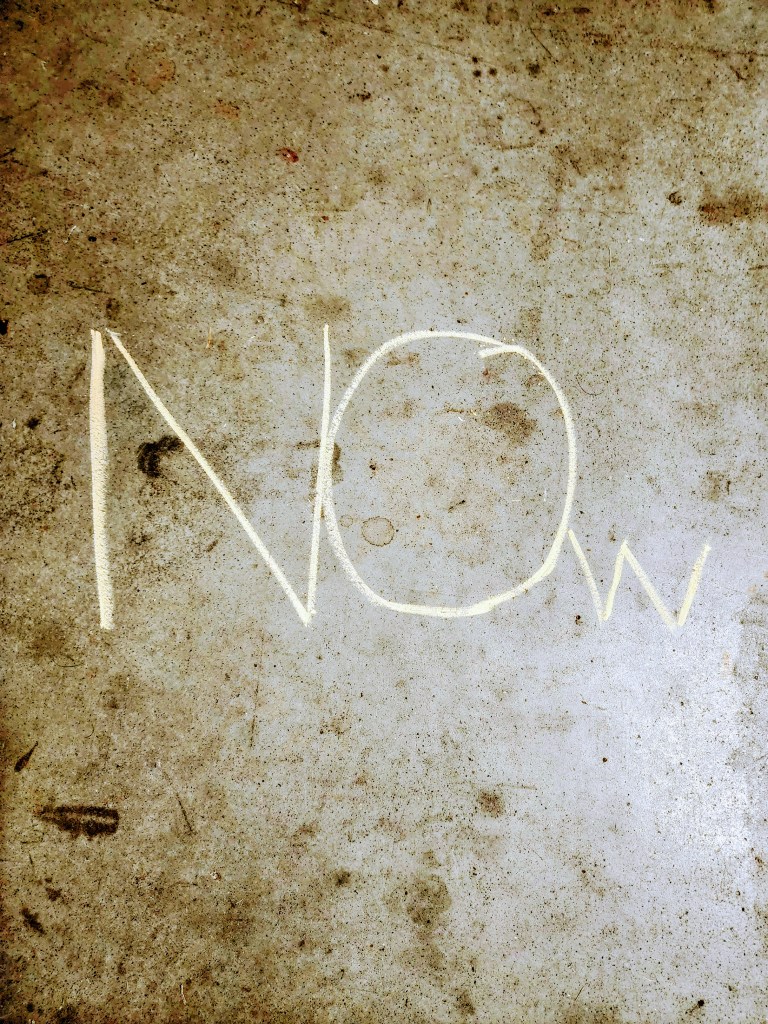
I modified this affirmational meme with just one slash across the letter “L.”
I love attempting to mess with informational memes. After I made this one on a lark, I couldn’t escape the idea that there was another hidden meaning to my humor.
This is exactly how negativity or a negative person can affect the big picture. One small act or word transforms your state of mind, your day, and your ability to focus on what matters.
Negative people are consumed by an external validation that things aren’t okay. Of course they aren’t – in multiple ways. The world is a terror for many people.
But for the rest of us, the obstacles and messes don’t make us lose focus or become embittered.
Studies have repeatedly shown that if you want to improve your life, you should reduce negative thoughts and people more frequently than you tell yourself positive ones. Negativity is stronger than positivity. You can surround yourself with sixteen positive, engaging people; one spoiled one will literally corrupt your bushel.
Anything important or meaningful that you’re putting off right now?
It’s likely to be undone.
You think because you’ve had time until now, that there is still sand waiting to fall.
My enduring September lesson: you can’t sustainably live like there’s no tomorrow. But you also can’t really live until you remember that there might not be one.
What follows is a list of things that people believe despite the evidence.
Starting with the big one: intense investigation confirms that full moons do not correlate to increased madness, births, traffic accidents, or anything else. It is the perfect example of illusory correlation. Centuries of the myth being repeated have cemented this fallacy as truth. People will almost fight you over this one.
Not directly related, but think of how we look at the tides. The earth turns into a bulge, and water reacts accordingly. Yet most people have a hugely oversimplified idea of what tides are, correlated to the Moon. Even saying ‘the sun rose’ is a means to confuse language. It’s pervasive, and we don’t give it a second thought.
The “fact” that menstrual cycles synchronize cannot be substantiated. It’s so pervasive that it’s meaningless to argue with someone who believes it. Science says “no.”
Cracking your knuckles causes arthritis. Completely untrue.
Einstein failed math. He didn’t.
Acne is almost entirely genetic, not a result of environmental factors.
Vikings did not wear horned helmets.
The world is not 6,000 years old.
Edison didn’t invent the light bulb. He made one of the first practical ones.
For the most part, sugar does not make kids hyperactive.
The Pythagorean Theorem was used centuries before Pythagoras. He popularized it with the Greeks.
Napoleon was not short. Due to conversion errors, the myth persists. He was of average height for his time and place.
Stretching before general exercise is not always beneficial. Often, it’s harmful. Repeated studies have proven this. But you can’t convince people because that’s how they were taught.
Iron maidens were never used as medieval torture devices. You can look it up.
Shaving does not make hair grow back thicker. It’s perception. The tips of the regrowing hair are darker.
Bagpipes did not originate in Scotland.
Were there three wise men mentioned in the Bible? Eastern tradition sets the number at 12. Western tradition indicates three. The Bible never states how many.
How many of each animal did Noah take on the proverbial ark? It is not two, a fact that is clearly spelled out in Genesis.
Vaccines don’t cause autism. The flu shot does not give you the flu.
Nowhere in the Bible does it say that Adam and Eve ate an apple. It was some kind of fruit or plant.
Generally speaking, it’s not always harmful to touch baby birds. Or to move them back to their nest.
Yellowstone isn’t overdue for a massive supervolcano eruption.
Waking a sleepwalker results in much less harm to them than letting them continue walking. Some of the belief stems from centuries ago when it was believed that one’s soul departed while sleeping.
Bats are not blind.
As a whole, we’re less violent, more educated, and healthier than we’ve been throughout human history.
The Pilgrims didn’t land at Plymouth. Instead, they landed at Provincetown. Plymouth came weeks later.
Delilah didn’t cut Samson’s hair, no matter which version of the Bible you’re reading.
Bulls are colorblind to red.
Salted water does not make boiling water on the stove more efficient.
There is no legitimate reason to drink eight glasses of water.
Generally speaking, caffeine does not stunt one’s growth.
Your mouth isn’t divided into different regions for each type of taste.
That story about Ben Franklin wanting a turkey on the national seal? It’s not true. He wanted Moses. You can look it up.
The word “Xmas” has been around for 1,000 years and is based on language. Not the perversion of Christmas as so many people still insist on.
Ninjas didn’t wear black. It’s a myth. They wore comfortable clothes and wanted to blend in. Another one you’ll argue about but still a myth perpetuated needlessly.
Peanut butter was eaten by the Aztecs centuries before it was “invented” here.
Microwaving can reduce nutritional value – but much less than most other conventional ways to cook. It’s a myth that never dies.
The term 420 was invented by a group of high school kids in 1971 in California. It was literally the time they went to smoke.
How many witches were burned at the stake during the Salem Witch Trials? Zero.
American Gothic, the famous painting, isn’t supposed to be an artwork of a couple. Rather, it is that of a father and daughter.
The Jonestown Massacre didn’t use Kook-Aid. They used a competitor’s product, Flavor-Aid, instead. So much for “drinking the Kool-Aid.”
Walgreen owes much of its success to Prohibition. Alcohol was commonly prescribed. By the way, Prohibition did not outlaw the consumption of alcohol. Look it up.
Astrology is no better than random guessing. It’s all nonsense.
Tang wasn’t invented for astronauts.
Lemmings don’t run off cliffs. The misconception is older than a Disney documentary that popularized the falsehood.
Alpha wolves in packs? Not true. They function more like families.
Sharks do get cancer. This myth was furthered by a book intended to sell supplements.
Birds are therapod dinosaurs. We use the word “dinosaur” to mean “non-avian” dinosaurs. Humans and non-avian dinosaurs never coexisted. Petroleum and fossil fuels are made almost entirely of plant matter.
Most diamonds are not formed from highly compressed coal. Most diamonds that have been dated formed before coal, and usually formed 80+ miles before the surface.
This is one that drives me nuts: an increase in gross income will NEVER result in lower income due to a high tax bracket. So few people understand what a marginal tax rate is – or that they are only taxed higher for anything above the tax bracket threshold, rather than the total amount. It’s so pervasive that it’s useless to argue with people who say things like, “I don’t want overtime. The government will take more of it and I’ll end up with a smaller paycheck.” It does NOT work that way. Good luck trying to convince people.
Urine is not sterile. Again, this myth is so pervasive that it’s pointless to argue with someone who states it as fact.
Using Q-Tips in your ears has no associated medical benefits. Seriously.
Vitamin C has ZERO effect when taken after a cold has started.
A dog’s mouth has about as much bacteria as a human’s mouth.
Spicy food doesn’t have much of an effect on getting peptic ulcers. It was a major discovery to learn that ulcers are caused by bacteria rather than stress.
There isn’t much variation between people’s resting metabolic rate. Despite what you constantly hear.
It’s no comfort to know this, but if people work to keep you silent, they inadvertently tell you that you have power. Silencing you is an attempt to avoid the consequences of mistreating you or confronting that you’re right about something. (It’s the same in relationships as it is at work.) People without valid points or influence are ignored. People who tell the truth or cause discomfort upset the status quo. Again, it is no consolation. But remember that silencing treatment is a de facto acknowledgment that you’re on the right track. Everything sounds crazy until it becomes the truth. We do not celebrate the people who make us uncomfortable. About our behavior as individuals and certainly not as a group.
While my thoughts aren’t about book banning, the same concept applies. People with the urge to limit content, ideas, and information are admitting that they are afraid of what’s inside. You don’t ban things or ideas that don’t threaten your opinion. It’s usually a nod to the fact that they fully know that much of their opinions and worldview aren’t sustainable under the lens of logic.
No one likes to be wrong.
No one likes having to confront their mistakes.
No one likes being judged for the associations we have: friends, religions, politics, sports, work.
Looking at where we are as people and our lack of focus as a society, the last thing we need is for the outliers to stop pushing our buttons. A therapist once told me that the more we stop hearing criticism, the more in danger we are of being cemented in the past and of playing it safe.
Silencing behavior is the cousin to secrecy. Almost all misbehavior and turmoil derive from secrecy and the lack of transparency. Whether it’s us as a whole or each of us as individuals.
PS I wish it were okay to say, “I think you’re wrong,” without starting a fight. Because we damn well think our friends, family, and coworkers are wrong a LOT. Why isn’t it okay to just admit it? And why can’t we accept this sort of observation for what it is: someone’s opinion. We take everything personally as if we’re surprised that people haven’t had the same lives as us, the same education, the same religion, or the same interpersonal relationships.
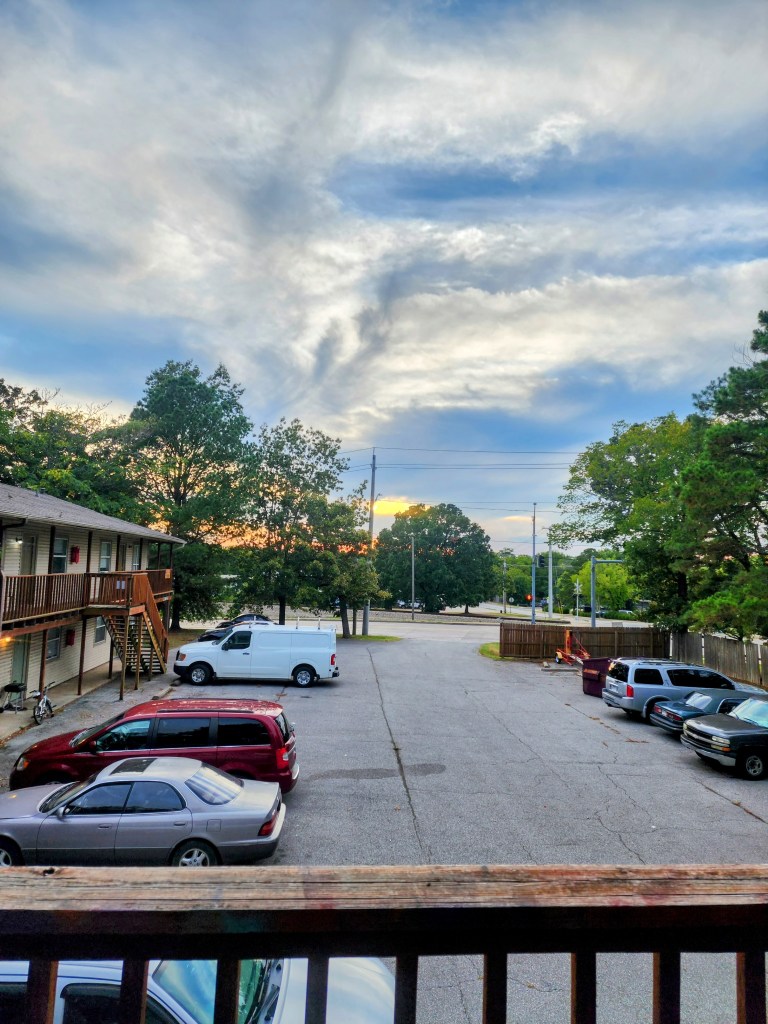
On an early Wednesday afternoon not long ago, a couple of miscreants disguised as wannabe drug dealers arrived at the apartment complex. They were vainly searching for one of the hooligans who previously lived below me. They banged on doors and even turned a couple of doorknobs. Their intentions were murderous. I miss the neighbors who once lived below me. Definitely Crystal Methodists and possessing an abnormal interest in homemade chemistry. Not to mention the drug dealer who lived next to me. It’s easier to write crime stories when you can make popcorn and watch it unfold in real-time. Whatever happened to the good old days when drug dealers demanded some sort of decorum? 🙂 One of the duo shouted and threatened me from the parking lot after banging a second time on my door. He promised he would return to give me an ass-kicking. I’m feeling lonely without him darkening my doorway as promised. I had a very creative surprise waiting for him. It might have even made the nightly news. The mugshot would have been glorious! Since the landlords asked me to do so, I uploaded security video of the gentlemen to the police. It was VERY tempting to add clown shoes and hats to the footage. Yes, I am sure that they are actually dangerous. (Not to books, critical thinking, polysyllabic words, or civilized behavior.) I try to remember that even people so devoid of decency have mothers. Mustachioed moms, I’m certain, the kind whose upper lips look like boiled caterpillars. If I sound carefree in my attitude, it’s due to my broken sense of danger. You can thank my Dad for a big part of that. But the reality is that danger blossoms anywhere – and at any time. The allegedly normal-looking folks tend to be as volatile as those whose appearance can best be described as “the before picture.” The ass-kicker didn’t return to my apartment complex. I’m working through the angst of missing his delightful presence. One of the surprises I had waiting was to add the music to “I Believe I Can Fly” to the footage that would have resulted. There are advantages to living on the second floor. His flight off my landing would be short, and without an in-flight meal.
PS I threw the paint can away, the best part of my pre-arranged surprise had either of the hooligans returned.
Prepare yourself for turbulent oversharing. Some wounds get exposed again, revealing dark, unmanageable emotions. These words are supposed to be about addiction, alcoholism, and generational anger. I apologize in advance to anyone who thinks I am saying too much or to inflict pain.
I don’t want “I am so sorry” or any words of encouragement. Instead, I would much prefer that you read these words. And if they ring true for someone in your life, find a way to act before it’s too far down the road to turn back.
People often forget that I became an unwilling expert in abnormal psychology because I lived in an intermittent crucible inhabited by some of the most versed, angry people. For most of my life, I told people I believed my DNA must be infected. Though others couldn’t recognize it, I did. Though I now call it the “Bobby Dean,” the sinister recognition that my family’s maternal and paternal sides gifted me with the lesser side of humanity plagues me.
Like anyone without children, I sometimes mourn the choice to have none. Since life taught me that intelligence has little to do with the odds of giving in to anger and addiction, I remind myself that it’s possible that I would have given in to the lunacy passed down through my family. At fifty-six, if I had treated my children like others, there would have been little choice other than to end myself. I’ve hurt other people callously. But I at least can swallow my ‘what-ifs’ and know that I didn’t hurt my children and continue the generational trauma that populates the world with damaged adults. Ones who carry invisible wounds, anger, self-doubt, and the handicap of attempting to be happy and prosperous, even though they were mentally beaten into submission.
Nothing new happened recently to rip the bandage off. However, I was forced to learn further details of how nasty the effects of this anger and addiction were to people in my family. Because of geography and shared secrecy, it turns out that the imagined and partially confirmed psychopathy passed to the next generation was much worse than I knew.
Alcoholism amplifies monstrous behavior. It might not create it, but it unleashes it. The whisper of the disinhibiting lover in a drunk’s head becomes a shout. The person you once knew gets trapped and silent inside the shell of the alcoholic. As it worsens, the person you once knew becomes a faint echo. The new version will say and do things that increasingly become impossible to live with. You are tethered to the person who once was. As a result, you attempt to deal rationally with the effects of addiction.
Meanwhile, the person possessed by it will do anything to guard their ability to keep drinking. They’ll gaslight you, lash out, and create clusters of people who assume that the version of the truth they are being told is valid. People with no ill feelings toward one another become manipulated pawns, initially acting out of honest concern. But what results is another level of toxic behavior, all hinged on the central person. It is drama and chaos. Because of the secrecy and generated toxicity, people’s relationships get ruined.
One of the most significant pieces of advice I can give people when they are attempting to coexist in an addict’s world is to talk. Talk to everyone. I guarantee that the addict curates everything you do and say to make you a monster because addiction requires secrecy. Intelligent addicts learn the behaviors of narcissists.
People sometimes ask me what makes me so well-versed in narcissism. (Not the generalized version of it prevalent in social media.) Anyone raised or living around addicts inadvertently learns the behaviors. The hallmarks of narcissism always bubble up with addicts and alcoholics. They must deny reality. They become delusional to the effects of their behavior. They enlist everyone and everything to perpetuate their ability to keep drinking.
Recently, I met someone who triggered my “Bobby Dean” response. I knew immediately upon meeting them that they were evil. I hate to use that word. Nothing outwardly about them gave a clue, not directly. The bells went off in my head. I was right about them, of course. And then you’re left with the impossible task of coexisting with them. Such people thrive on chaos and the emotional distress of people around them. Since most people are genuine, they get stuck in a loop of the foolish desire to mitigate the narcissist. It can’t be done.
In the same way, most of us think we can win over an alcoholic with love, words, and compassion. It’s not true. You’re not dealing with a real person until you can slap the bottle out of their hands. They are an angry parody, possessed by a demon demanding nourishment. Replace the word ‘alcohol’ with ‘heroin’ and you’ll realize that until you get rid of the heroin, you can’t move forward. The addict can’t attempt to be themselves and regain their humanity until they eliminate the invisible straightjacket of addiction. Addicts put you in the position of helpless anger. Anger with yourself and anger with them. We each know that a person trapped in addiction isn’t being themselves. But that knowledge does not give us any comfort. We find ourselves screaming. It’s reactionary abuse.
My goal isn’t to tarnish my brother in this post. He was older than me. I loved him and knew early on that he was among the most intelligent people I’d ever known. We survived our parents. He got the worst of it from Dad. Perversely, it turns out he got the worst from Mom, too. As he got older, I tried to give him the benefit of the doubt. Obviously, the anger he’d inherited from our family poisoned him. I thought it must be me, that I was somehow doing or saying things wrong. Toxic people don’t take the time to doubt whether they are wrong. I became the opposite of my brother in so many ways. And he hated being wrong. It was one of his defining behaviors. Because he was so smart, he was seldom wrong. But when he was wrong? He doubled and tripled down on it. From there, he justified saying and doing anything to keep it that way. The alcohol perverted him into someone who could behave and speak in ways that the younger version of himself could not have imagined.
He was particularly vile to me when I changed my name. At that point in his life, he still pretended to carry the torch of family honor. He’d grown up with the Terry side of the family. They were true experts in horrific secrecy. When I changed my name, I wrote them all letters. There was no way to avoid them knowing that I rejected everything my name held within the letters that formed it. They got their revenge when my dad died. Their secret hatred was so intense that they refused even to list me by my legal name in his obituary. That’s the best example of expressed passive-aggressive behavior that I can cite. When I think of self-righteous hypocrisy, I imagine their example. It does not mean I don’t have good memories of them, too! But the older I get, the more I concentrate on knowing they were well aware of what was happening in our violent private lives. They preferred to stay out of it, even though they knew what was happening. Family honor and secrecy held more value than protecting children who were getting damaged right under their noses. It invalidated every religious idea that they allegedly cherished. I can’t imagine doing that. It makes sense that they hid my sister from me for almost fifty years. That she wasn’t white must have been the biggest threat to their false family honor that they could imagine. I would hate myself if I’d become the secret racists that they were. I’d write more about this, but that part of the story isn’t mine to tell.
I made the mistake of attempting to lovingly help my brother a few years before he died. I was all in. It was the worst possible move. He retaliated by lashing at me and everyone around me. He scorched the Earth to keep his addiction. I was rightfully convinced that he might actually kill me. He spent a great deal of time detailing how he would do it. Had he wanted to, he easily could have. Life had geared him up with the tools to do just about anything. Some of the family pretended they couldn’t imagine he was doing and saying those things, even though they could see the emails, listen to the voicemails, and read the texts. Each of them had spent decades enforcing family silence. Why would it be any different with my brother? Had this not happened with my brother, I might not have decided to cut off ties with my Mom not long after. It was just too much. Two of the world’s best alcoholics take a massive toll on a person’s sanity. It struck me how similar they were, each insistent on maintaining their addiction at any cost.
My brother was lucky. Though he left a trail behind him, even professionally, he was forced to retire and avoid the consequences that would have befallen anyone outside law enforcement. I hope anyone he encountered at work didn’t suffer as much as I imagined. People in that stage of alcoholism behave in ways that they never would absent the addiction. It is no secret that law enforcement suffers more from addiction than the general population. (As they do domestic abuse.)
No one was safe. No one ever is around an end-of-run alcoholic.
My brother had the chance to retire and enjoy a full life. To make amends. To admit his transgressions, to replace spiteful words with love and hugs, and to reject the poison of our DNA. He chose otherwise. It’s a story I have witnessed repeated too many times. It is agony for all of us to prefer to tell the good stories and push back the bad ones. Who wouldn’t want to honor the good times? There were many. My brother could have written several of the best books ever written. I would likely have helped him. Anyone and anything can be forgiven if they are open to it. Alcoholism demands everything. It reduces people to their worst common denominator.
A couple of years ago, I scrapped a lot of my shared history and records of my brother. After his death, I thought I could move on and continue to work to remember the good things about him. Some of it was incredible, an irrefutable dissertation on how crazy his addiction made him. He created entire fantasy worlds, each independent of the other, all designed to alienate people and render them unable to interfere with his addiction. Addiction requires secrecy. And as it progresses, it forces the addict to silence those who challenge it. It is exactly like a demon facing exorcism. It will destroy the world in the pursuit of its existence, even if it kills the host.
I write this because the newest revelations force me to confront that he created a world of pain for people. Those people are left with the immense struggle to be good people. It can be done. The first step is to no longer worry about people knowing. Sunlight gives breath. You have to talk about it, acknowledge it, and work to silence the self-doubt that the toxicity of alcoholism demands.
I damn well know that we all have addicts or alcoholics in our lives right now. The cycle is endless. If you think it is manageable, you’re wrong. It will worsen. You’ll look back and understand that if you could return to when it started, you’d do almost anything to stop it.
If you have an addict or alcoholic in your life, whether you think it is true or not, you must start talking to people first. They need to know you are dealing with an addict. You must rob the alcoholic of their secrecy. It is the critical component that precedes every other consequence and behavior.
I can add anger to my reaction recently. Anger can motivate if channeled. If you’re dealing with an addict or alcoholic, I recommend anger as a defense. Let them experience the consequences of what they’ve created. If you do nothing, you’re going to be angry anyway. It might be more effective than compassion.
I’m telling you this as an unwilling expert.
A piece of my heart will always be broken. To discover that people now gone still creates shockwaves in the hearts and minds of those who are still here. It is a recurring wound, and one opened periodically by reminders by those who remind me of myself when I was young.
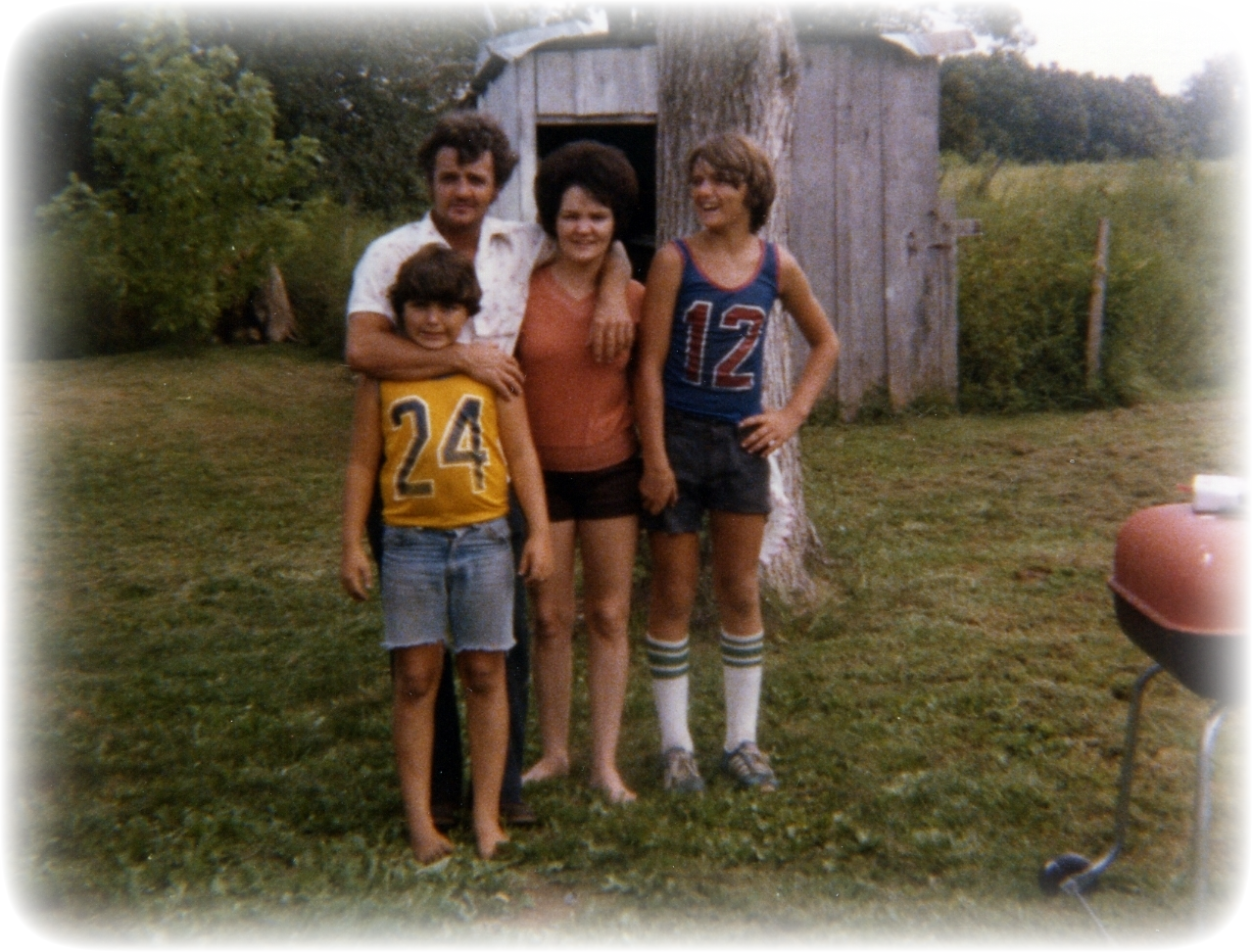
PS Pictures don’t lie. But they do conceal, just as most of us do as we live our daily lives. Just remember, I had many great moments as a kid. And as an adult with my brother. But behind it all…
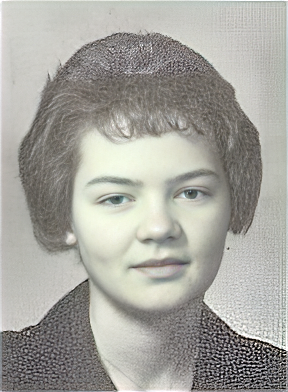
I can’t control how such admissions paint me. I rarely memorialize my mom’s death like I do others. She died ten years ago today. I found a picture of her today, one I might have seen decades ago but haven’t since. I inexpertly sharpened it today. My favorite grandmother died on the 6th, while my wife died on the 4th; different years, different circumstances. I spent a year not talking to my mom. I’d spent decades attempting to bridge the gap of anger and alcoholism with her. Like so many children of such parents, I was convinced that I could talk and behave in a way that would earn me normalcy as if I were the one with the deficiency. Drinking didn’t kill her. But it infected so many parts of her life. The infection of it spread to other people. It wasn’t her intention. She learned the skill from others. Like all other close family members of mine who were alcoholics, she died with an insatiable urge to drink until anger consumed her. Recently, suspected truths of another member of my family blossomed. He’s gone now. No second chances, no new learned behavior, no sitting on the porch as the sunset approaches. The familial infection he acquired in his youth overpowered him, once again proving that addiction has nothing to do with intelligence. Addiction and anger stain the people around those who suffer from it. And he unfortunately passed the ball and burden of consequences to other innocents. I don’t have any superpowers which shield me from the tendency to drink or drown myself in a fog. If I did have them? I would hand them to the people who I recently discovered to be needing them.
When I write things such as this, I trigger people. For much of my life, my brother was the vanguard of family honor, demanding silence. It was a habit he absorbed from the paternal side of my family. I discovered very late in life that their cabal hid many secrets, even people, from me. I’ve yet to find an addict who can move freely in the sunlight; their behavior demands secrecy and closed lips. In most of these cases, some of those lips will be bloodied because addiction inevitably exacts the price of violence, one way or another. Either to oneself or to everyone in the bubble nearest them.
That is exactly the power of addiction, the whispering lover that only the addict or alcoholic hears, blossoms.
I shared a quote by Annie Lemott twice last week: “You own everything that happened to you. Tell your stories. If people wanted you to write warmly about them, they should have behaved better.” I don’t write to inflict further harm. On the other hand, silence is self-inflicted violence. If we are to judge people, it must include their shining moments, too. I have good memories, and I share some of those, too. It’s fascinating to watch people as they listen to my stories; some only selectively note when I say anything they perceive as an accusation or something best not discussed. None of the people who later suffered from the afflictions of addiction and anger were born with the intention to slide into the abyss while terrorizing their friends and family. The filtered truth I share in no way alters history or changes who they were. They had their moment on stage. As it will for all of us, the curtains will close, and our time will end. Your time to live your story fits narrowly inside that timespan.
Secrecy. Silence.
Time is short. Live your life under your own banner and within your own control.
Someone noted that one reason they love theaters is that it’s about the only place left where phone usage is unwelcome. Everyone is expected to relax and enjoy the experience. Violating the usage expectation results in interference with other people being able to enjoy their experience. Irritation at those who ignore the expectation is universal. There are so many other circumstances in which the ubiquitous nature of phones interferes with the simple act of presence or attentive listening. You’re not checking your phone; it’s checking you. The nostalgia for days gone by results from people realizing that lack of constant access to the world meant that you were in the moment with the people and places you chose to be with. Yet, here we are. We’ve normalized interruption. A smart person pointed out that it’s one thing to want things and another to need them. Like all technology, its existence was supposed to make our lives easier, more efficient, and less stressful. Yet, it’s obvious that the opposite is the case for a lot of people. We are technology addicts. If you don’t believe it, try laying it down for four hours. You’ll react with the “…but what if…” argument. It will overwhelm you. I watch so many people let work slide into off-hours thanks to phones. “Let me take a quick look at…” becomes the preface poetry of the modern age. I love technology. And even that phones are so useful. But I can’t help but contemplate the fact that so many people seem to allow their phones to be their master. Love, X
I stood next to the extravagant nickel-cornered casket. A woman I vaguely recognized was attempting to say words that might reach me. “Everything is temporary. One morning you’ll wake up, and it will be different. You just need some time.” I nodded.
I turned to my left as someone cleared their throat. It was an older distinguished man wearing a dark suit. He was probably in his late sixties. A pair of forgotten reading glasses perched on top of his head. His face seemed familiar to me, but his voice was one I’d never heard before. It was a deep baritone.
“She’s right. Everything is temporary. This pain. The breakfast you ate. The tingle you feel when the right person touches you. Even your life. Temporary is a mindset.”
The woman I was talking to turned to him and asked who he was.
He just shook his head, dismissing her.
He nodded again and held his hand out. I didn’t even hesitate as my fingers reached his. He shook my hand briefly, and then his fingers circled my wrist. It didn’t surprise me. Déjà Vu doesn’t cover it. I was certain he’d done it before. When my eyes met his, I was struck by how much like blue skies they looked.
The surge of electricity that passed through him to me didn’t cause me to jerk. Instead, it caused paralysis. My eyes closed. For how long, I’m not certain. When I opened my eyes, the man no longer held my wrist. He now stood by the foot of the casket.
His voice resonated. “X, please help me with the viewing by lifting the other end?”
I moved to help without pausing to wonder about who the man was or why he asked me to help. Oddly, I couldn’t remember who lay inside the casket. The woman who had been talking to me no longer stood nearby.
We each lifted both ends of the coffin lid as the man nodded. Unlike most coffins, this one had no separation in the top. The coffin was empty.
The man watched my eyes. “He was cremated. The urn will come in a few minutes. For now, we’ll place his book here in the coffin. He said it was his only achievement. The man reached behind the coffin and retrieved a hardcover book from a small table behind the casket and held it up. “Time Is Short” was emblazoned on the cover as the title.
“Ironic title, don’t you think?” the man asked me, smiling.
“Yes. It sounds like something I’d say.” I laughed.
The man walked to the middle of the casket and placed the book face up inside the casket. I walked a few steps toward him and stood next to him, facing the room. It was a large, open room, filled with rows of pews and comfortable chairs. We were the only occupants.
“Let’s sit down for a moment so you can collect your thoughts.” The man wasn’t asking so I followed him to the front row pew, all the way to the right.
We sat on the cushioned pew. Oddly, my brain was absent of almost all thought.
“Do you have any questions, X? Ask me anything.”
“Whose funeral is this?”
He laughed. “Aren’t they all so similar? I don’t want to spoil it. Go up and turn the book over. The author’s picture is on the back.”
I stood up and walked over to the casket. While I know several writers, I was having difficulty remembering names and faces.
I looked at the picture behind the “Time Is Short” title running across the face of the book. It was a collage of colors, each coalescing across an auburn field and a solitary tree illuminated by a sunset. “Amen Tailor” was the author’s name. The name evoked an odd familiarity for me. Then I remembered that it was an anagram for “I am not real.” I smiled.
I turned the book over. My fingers went numb as I looked at the face on the back. It was me, but not quite a me that I recognized immediately. I realized it was the man seated behind me. I turned with the book held tightly in my hands. The man stood two feet away from me, staring intently at me with his piercing cloudy eyes.
“Interesting, isn’t it, that you, or we rather, had to use a pseudonym to get people to listen to us? It wasn’t enough to already have a new name.” He laughed, and I smiled.
“How much time is left? 10 years? 20?”
He shook his head. “It doesn’t work that way. This is one possible outcome. Obviously, though, you have enough time to do that.” He pointed to the book in my hands. “When I jolted you, I gave you just enough push to do one thing you’d love to accomplish in life. Now, you get to choose what that might be.”
I extended my left hand to shake his, a habit only left-handers would understand. As his fingers touched mine, I felt a slight shock again.
“You’ll have to leave the book here with me before you go. You can exit out the side door next to the chapel service area behind you.”
I handed him the book, took a long look at the casket, and walked outside. No more than any other day in my life, I didn’t know what the awaiting sunshine might hold.