As my eyesight slowly required reading glasses, I sewed less. Threading a needle is equivalent to playing Operation after drinking 42 cups of coffee while undergoing a prostate exam. A friend wanted me to sew him a custom ripshirt which will necessitate at least 100 threadings. Yes, although it seems unlikely, both of those facts are true: I do have a friend, and he requested that I hand-sew him a custom ripshirt. It seems as unlikely as Bigfoot at the McDonald’s drive-thru, and not just because Squatch prefers Wendy’s for burgers and Sonic for food poisoning. What’s the old cliché? “Truth is stranger than fiction, and typing is better than diction.” Yes, I think that’s it.
The preamble to the story notwithstanding, I find myself using longer and longer threads to avoid threading the needle needlessly. A few minutes ago, I started another thread, one about 18″ long. I knocked my notary stamp off the desk. I’d placed it there to remember to take it with me tomorrow. I leaned over to retrieve it… and though it paints me in a reckless and risky light, the needle in my left hand stuck me in the face, not too far below my left eye. I wouldn’t recommend it to anyone who might be curious about the sensations such a stupid act elicits. (Unless you’re into that sort of thing, in which case: it hurts worse than accidentally sitting on a seatless bicycle.)
I angrily looked at the needle as if it were at fault.
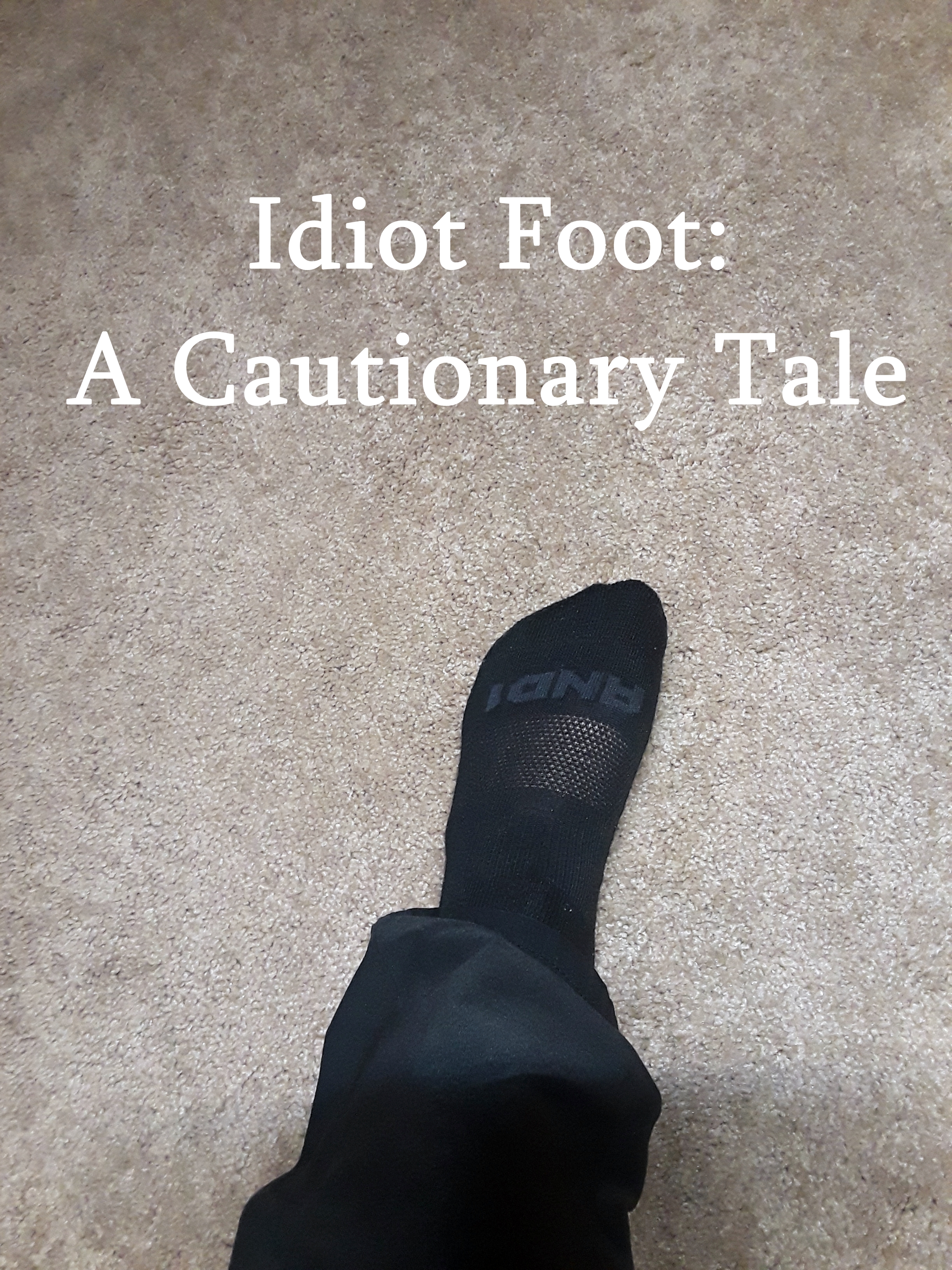
After this exaggerated brush with death, I decided to choose another activity until such time as my good senses return. 2027 will probably be safe. I cut the last run of stitching, tied it, and then set the needle on the desk. Or thought I did. I got up, left the room, and returned. It was then I realized I had dropped the needle on the carpet. Somewhere. I couldn’t find it, even with a directed lamp bright enough to rival a middle-aged bald man’s head in the middle of the summer. At that point, I did what any unreasonable person would do: I used my socked foot to rub the surface of the carpet. In 15-16 swipes, my food did manage to “find” the needle. The stabbing pain that I’d experienced on my left cheek repeated itself on the side of my left foot.
I will need to get a gun safe to store my needles.
Meanwhile, for my next act, I’m going to slice vegetables, blindfolded, after drinking a vodka sour.
I see no issues with this plan. Vodka is a tried-and-true numbing agent in the right volume, and a blindfold will ensure I don’t faint at the sight of blood. Since I can sew, I can stitch up my hand as easily as a shirt.
PS I apologize in advance to all the foot fetishists. My feet did appear in Foot Magazine, Dec 2019 issue.
It was a beautiful moment, one whose aura has not been extinguished, despite the hurt. It was a moment of bliss. He had no way of knowing it would be the last time that he would touch her. Thanks to the picture, he now measured all pleasures and memories by that standard: was it a great movie, especially if it were his last? Would the knowledge of its numeracy trace an additional groove of recognition in his brain? Because he practiced this often, he learned that knowing one’s time to pass would render all moments useless. Nothing could be enjoyed in and of itself. The approaching darkness of a loss would cloak everything in its shadow. If you knew that your next cup of coffee would be your last, he guessed that you might never take a sip of it all.
But he sometimes looks at the picture and can’t help but get trapped in a labyrinth of what might have been. It’s a quintessential human emotion. Not regret precisely. It’s impossible to slice away the happiness that envelops the memory, just as it’s difficult not to take a moment to consider the pain that resulted from it. It’s an endless war with neither side of the emotional scale winning. He nevertheless gets comfortable and takes a minute to think back while looking at the picture. At times, he’s left with a light buoyancy, one derived from lingering happiness that he had the experience at all. At other times, he feels as if someone punched him while he was napping. “We always take away something from our moments,” he thought. “Why must we insist on a polarizing method to evaluate our experiences and memories?” Of course, he didn’t have an answer, so he did what we all do and came up with a temporary distraction, one which would occupy him until the next time he visited the memory.
He could only hope that time might continue to help him clear his mind.
He sat on the couch, his legs folded under him, the picture held between his curled fingers.
It wouldn’t matter if he slipped the picture back inside the book on the discolored end table. The image was graphed in his brain, now complexly tied to the emotions he felt during and after the hug and the picture.
When he dreamed, the picture became fragmented, polychromatic, and elusive. While he could no longer see the picture, he could feel it, like the hug itself, one radiating presence and acceptance. He put the picture aside and laid down on the couch, welcoming the dreams that might come.
A bit of truth to start, followed by a bit of goofy…
I’m not actively trying to lose weight. 160 lbs. was low enough to suit me and almost certainly not sustainable long-term. I felt that strange sensation that something had changed when I put on my pants and belt again after a day of shorts. Getting on the scale, there it was: 156. I’ve been walking a lot and probably eating less. The eating less part is mostly because I’m not hungry, have been occupied with other things, and when I do eat, I’ve been inclined to eat less quantity and simpler food choices. I ate great lunches at restaurants Sunday and Monday, so I’m not starving myself. (Not to mention I ate at Mr. Taco Loco today for lunch.)
.
.
Someone I love very much gave me a lovely gift over the weekend: a thank you card she forgot to mail 24 years ago, one in response to a wedding gift from me and my deceased wife, Deanne. I told my family member, “Not all tears are sad tears.” It touched me deeply, and I saw no reason to conceal or push away the tears. This is one of those instances where being a packrat led to a moment of remembrance and emotion – and a much-needed one, too.
.
.
Since life often jumps on you all at once, another moment that happened last weekend was that I felt forced to let someone down severely. I’m never proud of doing it. I won’t justify it or explain it. Of course, I have a list of valid reasons. Valid though it was, I know my response runs against the universe’s karma rules.
.
.
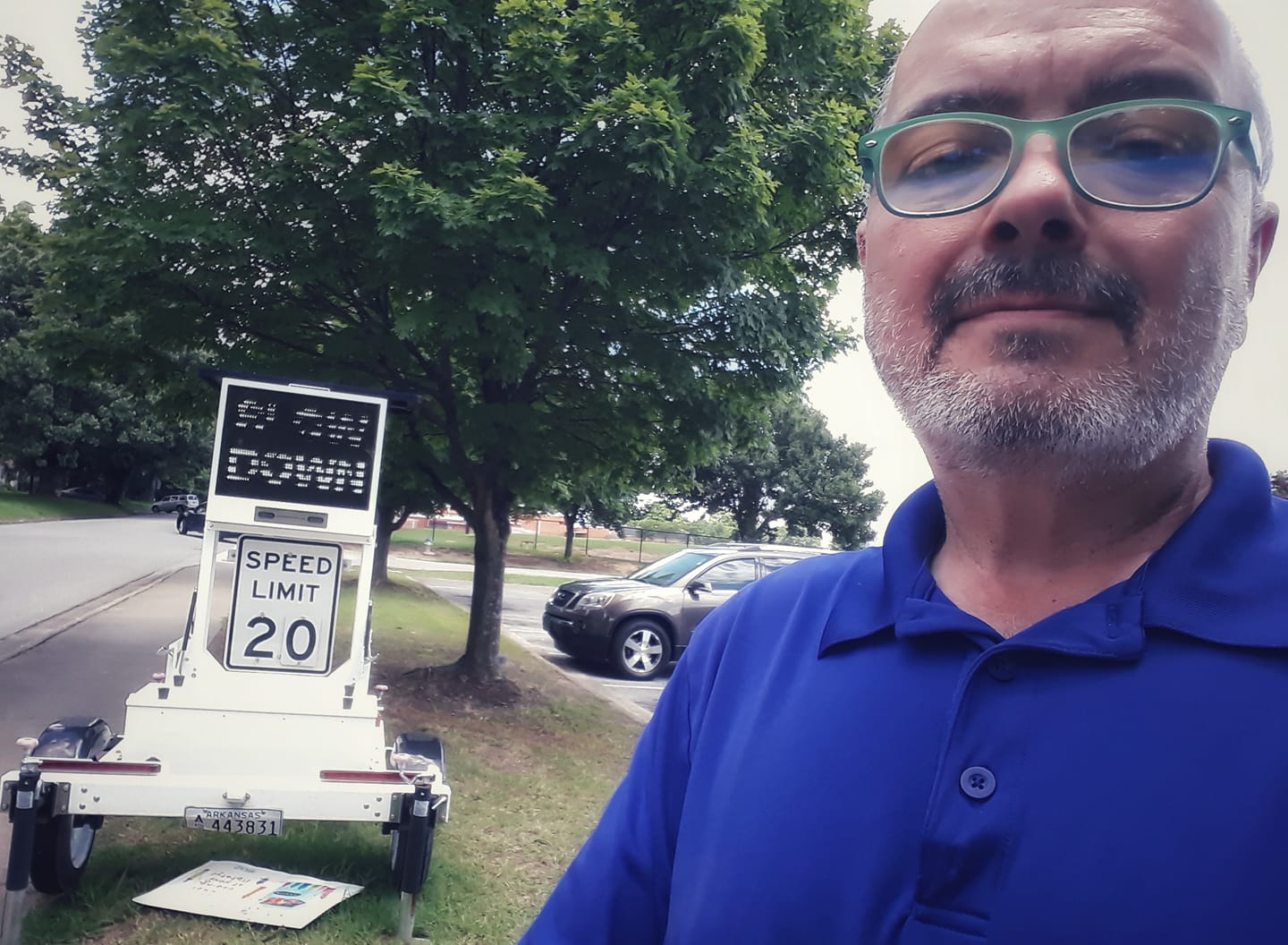
Even the speed trap advisory signs at the library are sending me a very clear message. I can’t run as fast as Michael Scott, obviously!. PS Standing next to the sign dressed like I am with a work badge, and holding a cell phone facing the road… a LOT more people suddenly slow down, as if anyone would ever trust me to be a part of anything with so much tomfoolery potential. Also: even the police who are randomly driving by suddenly realize they can’t very well speed past it like that, not with an idiot standing there with a phone. I propose that a bunch of us meet down here and have some fun with this. Anyone who can beat Michael Scott’s speed (12 -31 mph, depending on whether you count the car run or not) will win a free toaster, or a lunch date with me.
.
.
I’m getting contradictory signals about my index cards, the ones I use for all sorts of tomfoolery <○○> and practical note-taking. My cousin gave me two packs over the weekend and today someone gave me a pack, winked, and told me to engage in an endless series of index card creativity and/or pranks. I feel like this might be a test with no right or wrong answer. . Update: a coworker saw this post while I was still at work and gave me TWO more pads of usable note-craziness! In his defense, he is retiring soon, so he can cause as much mayhem as he would like.
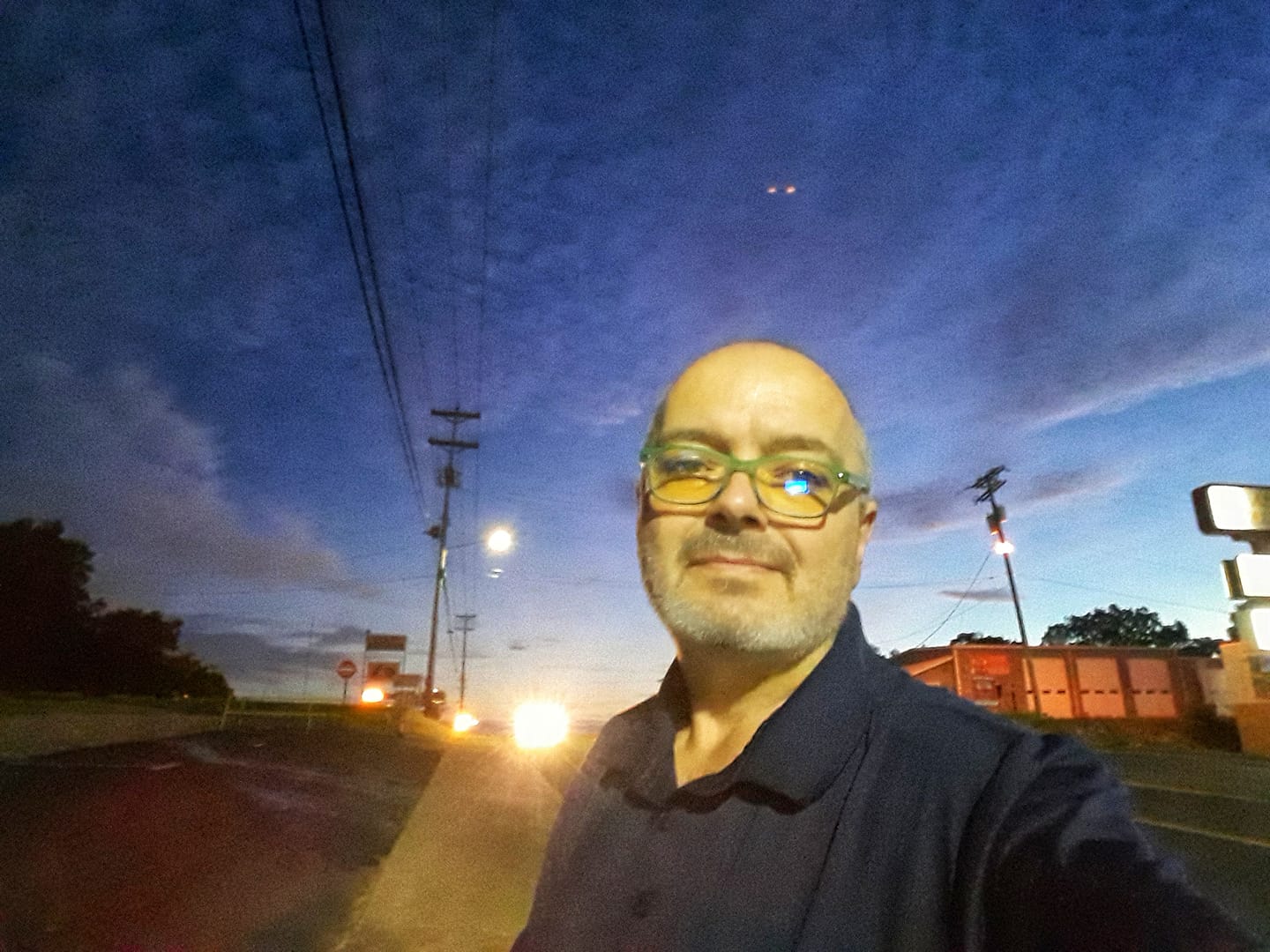
In another town, walking fast up a long hill towards a slowly brightening morning sky, I feel a crescendo of that elusive optimism that seems to scurry out of reach of one’s outstretched and hopeful fingers. The secret is to let the surprise of life find you. Who could possibly have enough superhuman patience to let the world unfold like it should? It’s just a sunrise, it’s just a hill, and I’m a person enjoying all of it. I’m not walking toward, and I’m not walking from. If the lesson is to find enjoyment in the moment, here I am, wherever that may be. I hope that you find your way here too. No matter where here is to you.
.
.
Part II
Early this morning, I walked the unfamiliar streets, observing the city wake up. Passing the gas station on the corner, I watched a young man turn the neon lights on, unlock the door, and start his day. I walked quite a while in the other direction until I reached the point where I either turned around or decided to take an Uber back to where I started. For no real reason in particular, I chose to return. I stopped at the same gas station, went inside and poured myself a small cup of coffee. I pulled the four $1 bills out of my pocket and laid them on the counter. The attendant rang me up and I told him to keep the change. At the time, I had my glasses hanging in my right pocket. When the attendant picked up the bills, he smiled a wide, happy smile. “Have a good Monday morning!” I told him. He smiled even bigger. “You too, man!” Though his enthusiastic demeanor seemed a bit excessive, I smiled and laughed as I left. About halfway back to where I started I reached into my right pocket to make sure I still had the key to get back inside when I finished my walk. It was at that point I realized that my $20 bill was no longer there. I felt my synapses make the connection in my brain. I had indeed given to clerk four bills: three dollars and one $20 bill. It was an accidental excessive gift for the attendant. But I found myself smiling even bigger, knowing my error probably made him feel like this might be the best Monday ever. I hope it was. I hope it is. And if it is not, look up for a moment and find something to connect you to this wild world.
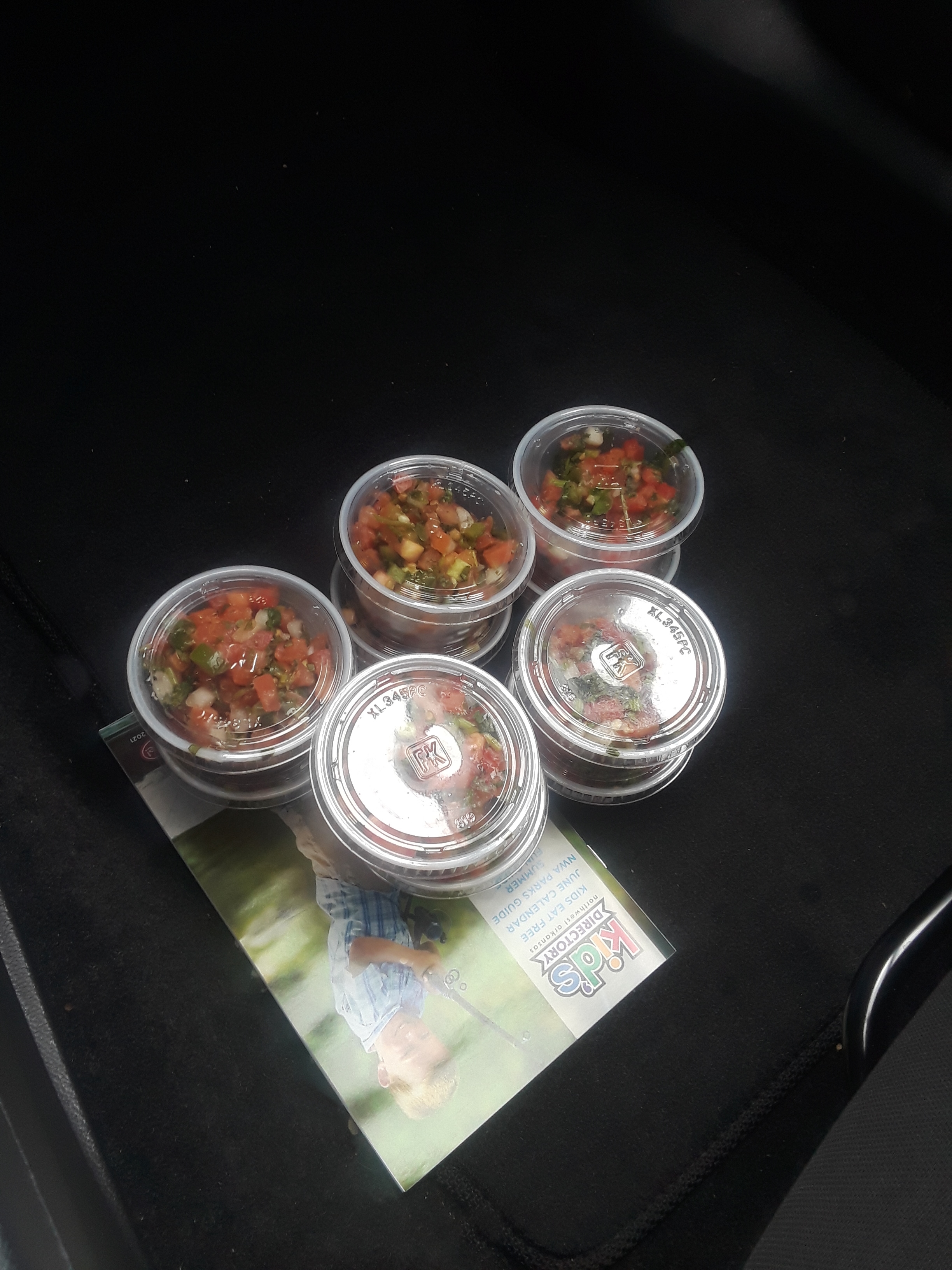
Not that I struggled with eating since October, but meals are somehow generally more purposeful now. I forgot to eat all day at work. Today, I went to Acambaro on College Avenue. “No, I don’t want to sit down. You’ll tie me to the chair. Again,” I told the helpful worker. A waitress from a previous visit nodded at me, undoubtedly remembering how insistent I was that she bring me an inhuman quantity of pico de gallo. “What can I get you, then?” She asked. “Ten orders of pico de gallo,” I confidently said. “Ten? Are you sure you want ten?” I waited, pretending to consider it. “You’re right, I better get eleven.” I smiled. “Okkkkaaaay,” she said. “Wow, that’s seventeen dollars after tax,” she added. “Did I set a new world record here? If not, I have another forty dollars if necessary. Pico de gallo affects national security, so let’s not do anything negligent here.” I smiled. She smiled, saying, “Are you going to eat all that pico?” I nodded. “But for reference, what other uses for pico de gallo do you have in mind?”
I waited by the register, pretending to read one of those promotional magazines that look like they are produced by overimaginative marketers who also suffer from a lack of a sense of humor. The woman who rang up my purchase placed the big sack of pico de gallo in front of me. “They didn’t put them all in one container,” she said and shrugged. I shrugged dramatically, too, and pirouetted, bowed, and turned to walk out the door. She probably thinks I’m on drugs, which is ridiculous; I don’t do drugs when I’m drunk.
(If I triggered anyone with the joke about being high or drunk, I would apologize. But you’re pretty much asking for it by reading what I write.)
I drove down to Evelyn Hills shopping center and parked facing the VA and College Avenue. I sat in the car, watching traffic and a parade of interesting people coming and going. I ate all ten pico de gallo cups, sprinkling Tajin on each container and dipping PopChips into them. It’s exactly what I wanted. The pico was fresh and delicious. My shirt and lap probably looked like they belonged to a third grader by the time I was done. Tomatoes, cilantro, onion, chip pieces, and Tajin seasoning covered me. When I finished, I hopped out of my tiny car and brushed myself off furiously. A man who seemed to have fallen out of the unhappy tree stood by his black Mustang and shook his head in my direction. Because I didn’t know what he disapproved of, I turned to face my car and started doing jumping jacks. When I turned back around, he was in his car and definitely no longer worried about expressing his opinion of whatever he thought I had been doing.
I entered the store, one I’d never before been inside, and walked around. It was interesting and a little unsettling, the mixture of products and clientele, as if a strange retail reality show were being filmed on a very limited budget. I found a dozen mylar balloons and wandered the aisles with them. Because I’m sure I looked a little goofy holding a dozen balloons, twice I pretended that the balloons were pulling me slightly off the ground. I repeated the trick at the register, much to the amusement of the cashier. “Yeah, you guys should be careful. You could lose a customer with this much helium in the balloons,” I told her. “You do know it’s not Father’s Day, right? she asked me, looking at the balloons. “Not in Venezuela, where I’m not from,” I told her. She failed to notice the extra ‘not’ in my reply. “Oh? That’s interesting,” she replied.
I went to my car with the twelve balloons and did the impossible magic dance of getting them inside and tying them firmly – and in a way that wouldn’t unexpectedly blind me while I drove. Not that it matters. Driving on College Avenue in Fayetteville is like sticking your hand in a horse’s mouth. I hopped into the car and exited the shopping center. Immediately and without cause, the balloons became a little loose, so I hooked a quick right into the first parking lot. I went around to the passenger side, opened the door, and pulled the middle of the excessively long balloon strings away from the parking brake. As I did so, all the balloons pulled up way faster than I expected. Seven of them sailed away. Five remained loyal to me and in the clutch of my left hand. I stood and watched the seven escapee balloons fire into the sky. The people on Highway 71 watched too. I saw more than one point at them. I love releasing balloons – I just prefer a controlled release. I’d forgotten the #1 rule of balloons: they are never as tightly tied as you’d presume. (This is one of the principal rules of handcuffs and restraints too, but if you’re reading what I write, you already know that.)
I left the remaining balloons where they needed to be, talismans of unusual composition, to remind those who find them that the world is meant to be enjoyed.
It’s fascinating that an experience can be pale and yet the memory of it prevail. Time flavors all and not always to our benefit.
.
.
.
.
.
Vacations, fabulous meals, and exotic experiences are truly splendid. However, 95% of your life is contained in the other. The surest way to be unhappy is to attempt to derive most of your happiness from the exceptional 5%. -x
.
.
Grammar vs. BotanyI visited Eastern Madison County last month. Walking across one of the protected tracts of forest, I noted a huge grove of conifers. 90%+ of them grew almost horizontally, parallel to the ground. I turned to the guide. “What kind of coniferous trees grow horizontally like that?” I asked him. “Those? Those are supines.”
.
.
What a weird end to my workday! Exiting work and entering the parking garage, I jumped into my car and noticed a huge crack in my windshield. I rolled down my window, leaned out, and told Darian to get the hell off my hood.
.
.
Rule of Specificity: I’m not a real stickler for words; however, there are times it’s important to be specific. For example, if someone working on something for you calls on the radio or texts you, “I need a number 2 ASAP,” don’t be surprised when things go south quickly, and doubly so if the person requesting the item is near a window.
.
.
“There’s always time for what fills your heart. And if not, what’s the point of this mad world?” – X
.
.
If you describe a third person to someone by saying, “…he looks exactly like a disgruntled Russian collections agent,” and the other person knows immediately who you’re talking about, that’s a win.
.
.
.
.
Because I deviated from my routine. I exited the car, hands full of masks, trash, chalk, and yes, my car key. Walking out of the parking garage, I absentmindedly threw all of it into the trash container, which of course was mostly full. Small car key included. Luckily it registered that I had done something forgetful and stupid. (This is not usually the case with me.)I pulled the entire bag out of the can and meticulously went through it, as coworkers drove by, wondering why I was foraging in the trash. Of course I could not find my key. And so, I pulled out the entire bag of trash and brought it inside work. I dumped the bag out and carefully sorted through what can only be described as extremely bad food choices for my coworkers. Time and heat had not improved the remains. Somehow, my small car key had managed to get inside a particularly nasty bag of leftover Taco Bell. Not that I’m a breakfast person, but I found myself mentally scratching off Taco Bell from my list of places to eat – possibly ever.
.
.
Pithy quote for Monday…You’re going to run out of time. Die with memories. Not dreams. A fulfilled life in monochrome surpasses a fantasy in Kodachrome.
.
.
Not my joke, but I love it: I got so fat that people couldn’t even lift me up in prayer.
.
.
I am starting to take these new PPE requirements personally. I can’t quite put my finger on it.
.
.
I have been going to counseling since March. I’m better, thanks. The bad news is that my counselor is now convinced she’s a picnic table.
.
.
At 54, I never thought life would involve so much chalk dust. Also, why can a child carry a bucket of chalk and no one blinks an eye, but an adult with one stick of it looks like a terrorist.
.
.
I guess I misunderstood what pride month is. Six lions in the breakroom caused a bit of a problem.
.
.
Because he was in a bad mood, he hung a “Please Disturb” sign on the door.
.
.
I think I will be fired for using suggestive language at work. I suggested that my boss take a practice high dive off the nearest cliff.
.
.
I like a good burn when it’s creative:”X, why are you dressed like that?”Me: “Duh. We’re shooting a music video later this morning.” “Well, I can only assume you have the role of ‘A$$hole #1, given that you’ve got the part down solidly already.”I laughed.
.
.
I misunderstood. I’m pretty sure it’s okay to hurl a ball at someone and scream, “Dodgeball!” Even at work, and even if you hit them on the nose.These are the rules of Dodgeball.
.
.
There are two undercurrents of truth in life. One guides us on the surface of the superficial. The other, swirling and contradictory, gives us meaning. Rare among us are those where the two currents are indistinguishable. -x
.
.
Humpty Dumpty had a great fall. But you can bet your ass he had a terrible summer.
.
.
One of the powerful secrets I learned through counseling… this one habit will change your life substantially, and probably forever: don’t be an asshole.
.
.
One of the most astonishing things in life is this: if you really clench your jaw, you hear and feel a rumbling. There’s a physiological reason for this. The surprising thing is how few people know it happens, much in the same way that we forget that we actually ‘see’ our nose 100% of the time.
.
.
.
.
Surely, somewhere, there MUST be a werewolf who suffers from male pattern baldness, right?
.
.
I accompanied my friend Susan, who was ordered by the District Court to go to Kleptomaniac Group Therapy. We were going to have coffee, but all the cups were taken.
.
.
.
.
.
Working in healthcare, I decided I would start cleaning myself with an autoclave instead of showering. I didn’t know my voice could go that high.
.
.
My little car has a lot of new technology. Evidently I’m a worse driver than I imagined. My navigation app told me to pull over so it could get out.
.
.
My latest round in the ongoing insult war: “You’re just a mirror away from self-awareness.”
.
.
If a bat started coronavirus, imagine the consequences if someone eats a dingbat.
.
.
“Love Is a Burning Thing.” Please consult your urologist.
.
.
Y’all probably won’t understand how amusing it is to take a can of soda, put it in a paper bag, and sit somewhere in plain sight drinking from it. How long does it take for someone nosey to tell me I can’t drink in public?
.
.
“It is true he was busy moving mountains; unfortunately, he failed to realize that he is his own summit.” – x
.
.
I wonder how y’all do it, the normal people, that delicate and uncertain dance between the sunburst and the thunder. But then I remind myself to look into people’s eyes and behind the layer that we put on, thinking it shields us. I’m not sure this is a status update, but because I’m human, I can’t imagine that other people don’t wonder this sort of thing.
.
.
In honor of today’s dubious Demolition Derby in Springdale, I plan on driving through all my neighbor’s yards at 8 a.m. According to the new rules, I get 12 points for each bird feeder I run over.
.
.
If I say, “I am SO sore from last night’s twerking class,” the proper response isn’t laughter; rather, you should ask, “Oh? As teacher or student?”
.
.
It’s a sign: I invested in myself and now I have buyer’s remorse.
Life is easy with a cup of coffee in your hand and a sunrise on your face. If you have both and find your heart isn’t it peace, stop overthinking and start paying attention to the essential truth: this will be over before you’re ready. – x.
PS Here comes the literal rain, one way or another.
As many successes as I’ve had in the last year, I’ve also had a few defeats. I’m absolutely not the person to conceal any of that from anyone who knows me. Being proud of my successes in no way conceals or denies the failures. At my age, I’ve peeked behind the curtains of so many lives that I understand better than ever that most of us aren’t following the playbook we imagined. More importantly, the shiny lives that you witness all have a stained glass window in their bathroom. If you’re unfamiliar with the phrase, it describes the way that mundane life intersects violently with the things we hold essential in our hearts – and the problems that living present. If you’re human, you’re going to experience the same problems that other humans share, even if we don’t see them. It’s easy to observe the world and people around us and deceive ourselves into not believing that what binds us shares more in common than what separates us. .
PS: Only in East Springdale can you have a crazy neighbor shooting bb pellets at your house (and arrows) while drinking. At 9 a.m. on a Sunday, which is bonus-level typical East Springdale.
Thanks to the Blue Dress Project, I’ve been doing pushups since the beginning of the month. Not continuously, though. The world record for most pushups in a day is 46,001, while the record for non-stop is over 10,000. Keeping that in mind, don’t admonish me too angrily for doing this at my age. The record holder for most in a year was 45 when he completed over 1.5 million in one year. I’ll let you know if I decide to break his record. You can start holding your breath now.
I do them in increments or sets, whether I’m on the way to the bathroom, waiting by an elevator, walking, or going to the kitchen to get a bag of PopChips. I’ve had a few surprises while doing them in unusual places. While I might not drop and do twenty next to the open casket, for example, I don’t see what’s so weird about doing pushups while listening to someone complain about how much they are being overworked. What amuses me most is the idea of having someone in great shape do them continuously near the vending machine area to determine if their subtle presence decreases junk food sales.
I have to be cautious with my shoulder, of course. Technically speaking, the medical term for what I have is “Old & Busted.” I’ve noted that a couple of surgeons seem to be following me around at work while holding scalpels. It could be my imagination. I’ve been told mine is overactive.
There are days when I reach a surprisingly high number of repetitions.
I’m not promising I’ll do them long-term, but I will do them for six weeks, until they become a new habit that I can keep if I wish to. I made a deal with myself that pushups are an exercise I like, cost nothing, and require only time, of which I have an abundance. It’s stupid NOT to experiment. That’s pretty much my take on a lot of things anymore. Including mushrooms. The la-la land variety, not the kind one finds on pizzas. I’ll report back when I’ve tried mushrooms, assuming I’ll still be able to write English or speak in complete sentences at that point.
I don’t have a goal. Other than continuing to not drop dead, of course. It is a great goal, despite all the mortuary owners secretly hoping that a lot of people might have particularly bad days. It’s nothing personal. The odds are in their favor, though. Keep that in mind as you continue to not make changes you’d like to see in your health and life. No matter what you choose, keep it in mind – and not in a superficial way. Every important thing you put off, challenges included, could forever elude you based on today’s choices. It’s nuts, isn’t it? We trick ourselves into thinking we’re making small decisions or foregoing things of no consequence only to discover that we’ve sacrificed an opportunity that is gone forever.
Many days I just stop counting as I do the pushups. If I need to practice counting, I can count the years of my life remaining. For small numbers, I can count the remaining hair on my head.
A friend at work quotes one of his many ridiculous sports heroes by saying, “It doesn’t matter how many you do. You don’t start counting until it hurts.”
My response to him is this: “You’re only as old as the woman you feel.”
I can feel a difference already. Not in my friend. He’s a musclehead.
If I had a sedentary job, I’d do 500 every day. Pushups, I mean. I’m not Wilt Chamberlain if that joke doesn’t fly over.
It’s true that a couple of people have mocked me for doing pushups. That kind of asshole is going to always find something to complain about. It doesn’t matter how I manage my life or what I do – there will be people who roll their eyes or want me to fail. Luckily, most people are great, and even if they don’t understand what the hell my point is, they play along, if only so that we can reciprocally overlook each other’s craziness.
This brings me back to the idea of incrementalism. You might not be able to do a pushup. But if you start slow and with a hint of enthusiasm, you can reach just about any goal you want to. You can learn a language by learning one word a day, walk a mile by focusing on reaching a little farther as your energy permits, or read a book a month by translating your interest into doing so into a plan that’s broken into bite-size increments. (No pun on the bite-size, by the way.)
Likewise, and just as important, if you’re happy with yourself, your life, or things about yourself, don’t get tricked into adapting because you think you should. You should be happy, and anyone who finds satisfaction in themselves has magical power.
PS: I’m rooting for Blue Dress Project to make the weight. I’ve found a renewed enthusiasm for people doing things that they’ve put off, or for finding success, no matter how large or small. If I can do it, anyone can.