An observation about life. Some of us did everything right, went to college, studied hard, and checked the boxes like an efficient grocery list. Others made decisions like they were at a craps table at 2:00 a.m., a cigarette dangling from their lips and their last $5 set on black.
Life has a sense of humor so it equalizes us. We’re all going to end with the same finality regardless of whether we wear a Rolex or a Mickey mouse watch. Both sets of people might be working at the same place. But they experience the same instability of the economy, or employer loyalty. It’s true that those who did everything right are earning more. But in general, they are exchanging bigger chunks of their life for that choice. Without a guarantee or assurance that their jobs might not disappear, or that a single tragedy could wipe them out. Just like those of us who chose to roll the dice.
Studies show that people earning more have the chance to be happier. They also show that they generally are not.
All of this is one thing older people don’t understand about the younger generation. Generally speaking, it’s why there is such a backlash about getting on the treadmill. Because some of those younger people see that the treadmill is a trick, one predicated on circumstances that no longer exist.
Most of us can feel the shift. Not just the fact that our social safety net is disappearing. All of us are subject to the same complicated factors of economy and society that are shifting underneath us.
Some of this is future shock, because we prepare ourselves for a future that might have shifted entirely.
Just remember that for each choice you make, you’re giving something up. More hours on the job means fewer hours with family or less personal time. Watching more sports means less time to read, listen to music, or to sit on the porch with a cup of coffee and smile at your grandchildren.
Collectively, a lot of choices are being made for us, ones which constantly shift our ability to react or cope. I’m assuming that most of the people who know me are experiencing the same uncertainty.
X
.
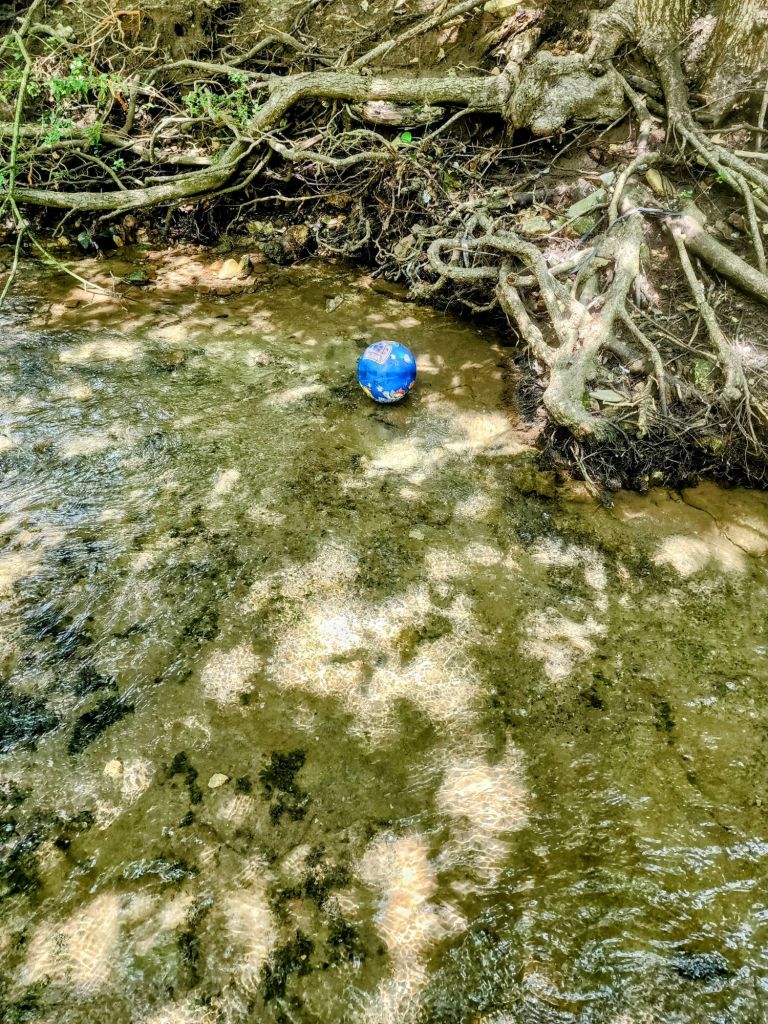
PS The ball in the water is one that I retrieved by climbing through brush I should not have a few days ago. I was by the creek and saw it. There was a family frolicking on the water dam so I thought it would be fun to get the ball and throw it across to them without them knowing where it came from. By the time I emerged mostly unscathed to throw it, the family had moved on.
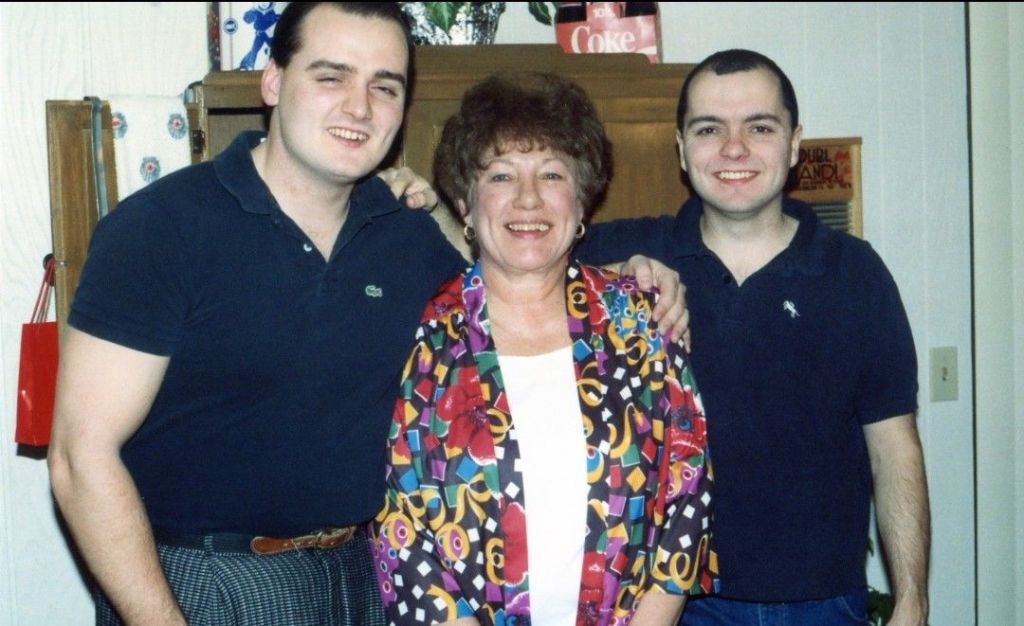
One of the things I have to credit my brother Mike with is that he loved reading. Unlike me, his comprehension was instantaneous. I learned to read the “wrong” way. We both used books to escape, each of us initially preferring different kinds of books. By junior high, a miracle happened. Whatever had blocked me vanished. If Mike were still alive, I would continue to tease him for beating him in the city-wide spelling bee. His ability was natural, whereas mine was repetition and relentlessness. Spelling is the domain of the madman because its rules are conjured from a random assortment of sadistic guidelines that change on demand. If you’ve been married, I’m sure you can understand.
All of this comes to mind because of the recent denigration of education. Over half of the American population reads below a sixth grade reading level. Another 1/5 are functionally illiterate. These statistics are going to get worse.
My brother and I would have both learned to read whether we had attended school or not. We loved the imaginary worlds we found. Whether it was Tolkien, C.S. Lewis, Louis L’Amour, for Stephen King.
As cynical as my brother could sometimes be, it was earned. He sometimes reminded me that we weren’t competing with half of the population because reading at a level that allowed us to dive into other worlds wasn’t something most of the people around us could do for pleasure. And writing anything substantive? “For get about it,” Mike would have said, quoting his doppelganger Tony Soprano.
If I had disagreed, I would have done so from a distance. I laugh about it now, like I do so many other things. Like when I told him that the “Lord Of The Rings” was like reading a 500-page obituary. I read all the Tolkien books because Mike loved them. I don’t even remember what he had me read next, but I do remember loving it enough to read it twice. Mike could read a book and effortlessly recount not only what happened, but what it might mean. That part took me a long time to learn.
As the years race ahead and leave my brother further behind, I catch myself wishing I could recommend a book to him. Especially the ones that might irritate him.
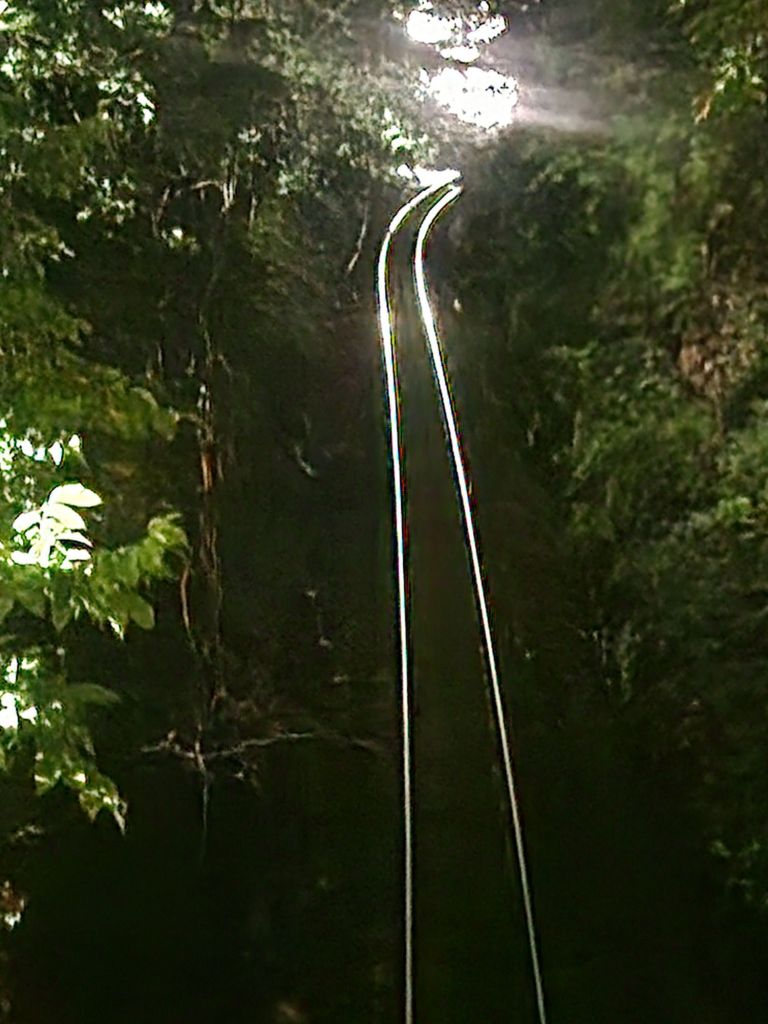
Don’t ask how far over the bridge I had to hang to take this picture in low light without a flash. I snapped it at 3:33 a.m. I’m not sure why I love this picture so much. I’m still on a long walk across Fayetteville. The U of A was gorgeous with both beautiful buildings and homes surrounding it. It’s a different experience at that hour, with strategically placed lights that disappear in the day. The crescent moon watched me as I navigated through places I should not have gone thanks to the road construction on West Maple.
Because I did not plan my route, the series of hills made me breathe harder than an octogenarian watching Dancing With The Stars. When I made my way back north, the breeze was a godsend. I was sweatier than JD Vance at a La-Z-Boy auction.
Another beautiful walk. I’m not home yet because I overestimated the arc of how far south I went. The incessant buzz of insects keeps me company as I wander.
Every new shiny place I passed was originally something else. Sometimes it clicks what those buildings used to be. 10 years ago. 50 years ago. I’m not sure whether these buildings are more historical than I am.
If you read all this expecting a nice bowtie conclusion, you’re in the wrong place. I also wouldn’t fault you if you read it and think I’m under the influence.
On average, if you’re sky diving, it takes about twelve seconds to reach 120 mph. Those twelve seconds are a piano riff of experience, one so fast that you only hear one thunderous notes as your fingers slide down the keys. Try to explain the indescribable sensation to someone who hasn’t experienced it. The same logic applies when you try to explain addiction, abuse, or a hundred other things to someone who has not personally experienced it.
Someone smart said that it’s the definition of a minute: “Put your hand on a hot stove for a minute and it seems like an hour. Sit with a pretty girl for an hour and it seems like a minute.” If asked to describe both experiences, words come quickly to recount the hot stove, whereas the pretty girl scenario provokes a desire to be poetic.
Consider our biological imperative to procreate. In terms of evolution, it is our primary objective. It pervades us as individuals, and touches all aspects of society. Attractiveness is marketing. Most people are not aware of how much time and energy gets directed toward looking better. We clutch our pearls when people seem to be interested in sex, as if it’s not the elephant in the room. We’ve categorized it as one of the most important things in life, yet the one thing that we can’t talk openly about. This post will get fewer of views because I used the word ‘sex.’ Which is strange, because about 70% of the men who are on this app will pretend that the algorithm doesn’t feed them suggested content on the fringes of it, if not a spiral of partially clad women. The algorithm knows us even when we don’t acknowledge it.
Another friend posted about the ridiculousness of telemarketers. If everyone collectively refuses to participate, it goes away. And that’s true for everything. War? Prostitution? Banjo music? They exist because there’s a market.
Friday worship eats our modern life. Futurizing, anticipating, pocketing away the intervening moments just to be able to slide into perceived comfort that allegedly waits for us at the end of most of our workweeks. But Monday sits and waits for us. Take a vacation. You’ll think about it for weeks in advance. The blur of the glorious vacation flies past, leaving us to greet our mundane life when we return. Kodak moments give way to relentlessly washing dishes, paying bills, and surviving an endless series of orchestrated drama that most of us experience at work.
If you can’t embrace the “chop wood, carry water” part of life, the odds of you being happy fall like a vase placed on a table near a cat.
Did you know that the fastest camera in the world can take 156.3 trillion pictures per second? Despite its speed, it is still slower than reality. We look at clocks to see what time it is, as if it means anythimg other than it is our mechanical executioner, demarcating another flash of time that we didn’t dive into.
Think of the famous painting of the Mona Lisa. Millions of people have seen it. Yet few notice that the painting hasn’t had eyebrows in centuries. We focus on the enigmatic smile, yet rarely notice the glaring absence of eyebrows. We do the same for people. Everyone has something noteworthy, yet we constantly filter and categorize people in order to makes sense of the world. But it’s our world, one limited to us. It boggles the mind that we are entirely different people depending on who is interacting with us. Each of them has their own idea of who we are. Even though we claim to be driven by logic, all of us know the agony of realizing that we can never change someone’s first impression, much less having become a totally different person.
People feel lonely despite most of us having complex communication devices that can connect us to almost every person in the world, every idea once expressed, all at once. We hold these devices up in an attempt to capture a moment, even though there isn’t really such a thing as a singular moment. It doesn’t stop us from having thousands of pictures on our phone. Like bibliophiles with a thousand books they never removed from the shelf.
Scientists now know that time seems to fly as we age because we have fewer new experiences, less revelry in different food, and less inclination to switch the radio to another music station. We attempt to become stagnant, limiting ourselves to the comfort of what we know. “New music sucks,” some say. Some new music sucks – just like some of the music that grooved valleys into our emotional memories sucked. “People are all the same,” is another refrain. “I’ve seen it all. Why travel? Everything is the same no matter where you go.” No, it’s not. You’re the same wherever you go. Finding new things becomes too much trouble.
The reason I love stories of people who break things is that whether they are pushed into or choose it, they realize that the long list of things that supposedly define us are all easily discarded if circumstances demand it.
If you don’t think we complicate thingss, think of the Hawaiin language. It has only thirteen letters, yet can voice all the ideas and content that our more complicated language does.
PS The picture is of College Avenue. When I’m out walking in the dead of the night, I love to walk down the middle of the main roads and see how long I can walk without a vehicle passing through to interfere. I’m sorry Chad, that you’re on your way home at 2:00 a.m. after drinking nine craft beers and a cucumber-infused tequila.
I’m innumerate more often than I care to admit. BUT… I was spouting off the effects of inflation to someone who wasn’t buying it, pun intended.
(Generally speaking, for those keyboard correctionists out there. If you’re looking for logic, we broke that door hinge again, possibly forever. If you’re looking for impeccable writing or ironclad mathematics, ask your doctor if Givafocken is right for you.)
If I net $40,000 this year and the inflation rate stays at 2.7%, that means I will “lose” $1,080 in buying power compared to a year ago. Without a change in income or spending, $1,080 will vanish from my wallet. Sure, it will be the same of dollars, but WHAT I can buy with those dollars will decrease by 2.7%. The percentage sounds small, whereas the dollar amount tends to raise eyebrows.
Much like buying things is harder when you calculate how many minutes, hours, or days you have to work to buy it. Especially if your boss is a micromanager, a dude named Steve or Kevin, or says BS like, “you need to circle back and touch base after you drill down and leverage your blue sky thinking.” You’re sacrificing your life segmented into minutes to buy every item you choose to purchase.
That’s before the additional tariff nonsense, which is a tax regardless of how it is defined. The next effect is that higher costs will be passed to you, regardless of whether it is small or large. I assume you’ve noticed that highly profitable corporations tend to love their billions of dollars. They are the modern day dragons that we feared when we were children. They are resting on a reprehensible amount of wealth that should be taxed at a rate comparable to a couple of generations ago. But we’re stuck worrying about Karen maybe getting a few too many dollars that she has to stretch further than a Dollar Store condom.
Conclusion: you’re losing a lot more money than you believe you are. Percentages are misleading because we don’t connect the concept of inflation to disappearing purchasing power.
PS Rich people take a lot longer to feel the effects of economic factors because they do not need to spend all their money once earned, whereas we poor people are spending all of our money in an attempt to avoid a free month’s stay in the tent out back of our brother-in-law’s garage, or to avoid buying canned goods with pictures of animals on them.
Although I make jokes in the telling of my point, I remain cautiously cynical about people who think economics is simple, straighforward, or honest. It’s like expecting your drunk, cheating husband to tell you why he has a pair of panties stuck in the glove box. You’re going to hear a mountain of nonsense. By the end of their excuses, they will have launched a campaign for the US Senate.
Economics is the lie we tell ourselves that we can comprehend a global financial market with a million moving parts, while almost none of the variables are within our control or comprehension.
This concludes my wildly strange TED talk. Please sign the guest register on your way out.
A huge bolt of lightning shook the neighborhood shortly before 1:30 a.m. Even though it’s rare for me, I had miraculously fallen back to sleep after waking up around midnight. I was dreaming so intensely that the lightning strike seemed to have followed me out of the dream. I’m certain that one part of the dream resulted from a conversation I had yesterday when I explained that I track how many days old I am.
It’s rare for me to remember my dreams vividly. Since my sleep pattern switched a few years ago, my brain retreats to a dead place that is more akin to hibernation than sleep.
Today is my first day off work all year. It didn’t occur to me that this was the case until late last week. I decided I would make the final decision as to whether I would work when I woke up this morning. And that if I didn’t go in, I would take a ridiculously long walk. I had to wait for the storm front the mostly move away. For those of you who weren’t up at 1:30, the lightning show was amazing.
I work with several hard workers who don’t get to enjoy the incredible benefit of paid time off. Some of them are losing almost a couple of hundred dollars per pay period because we lose the hours once we are capped out at the maximum. All of us appreciate that we work for an employer with good benefits. But all of us feel the cringe of being put in a situation where we can’t enjoy it because of understaffing. Whether I should say that or not is another issue. But everyone knows that burnout is unsafe for us as individuals and as workers.
Perhaps they grind of work is training for the upcoming economic mess. There is no doubt it is coming and its tendrils will affect all but a few of us. I can picture my grandma saying, “there ain’t no belt tightening when someone has taken your belt.”
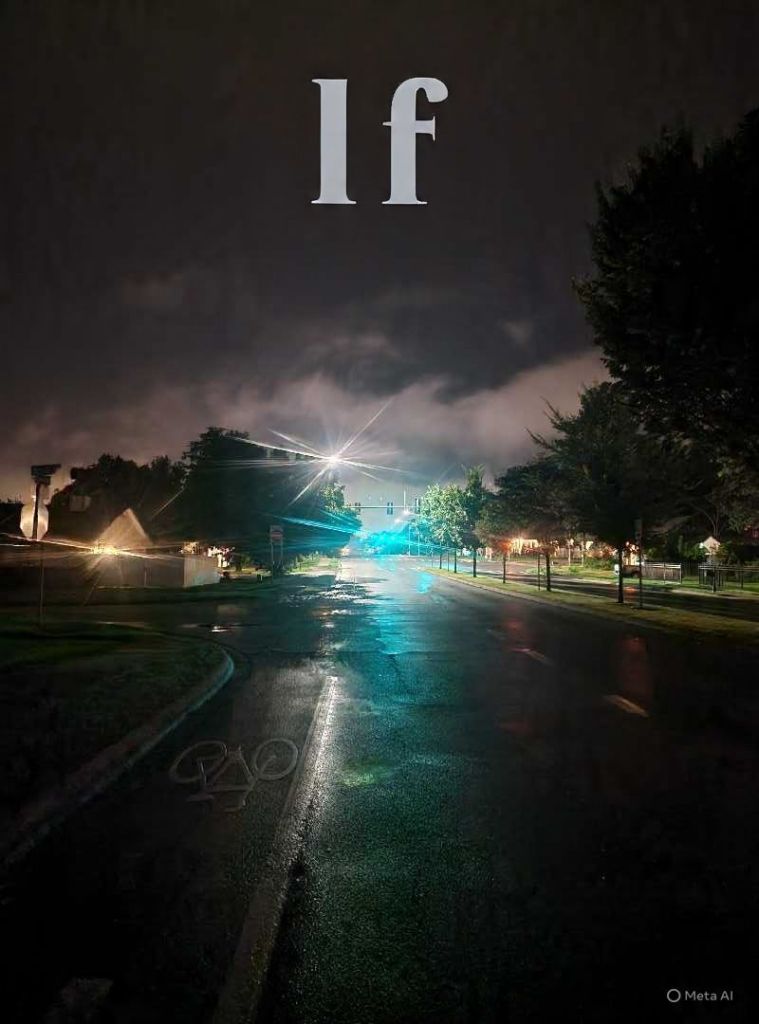
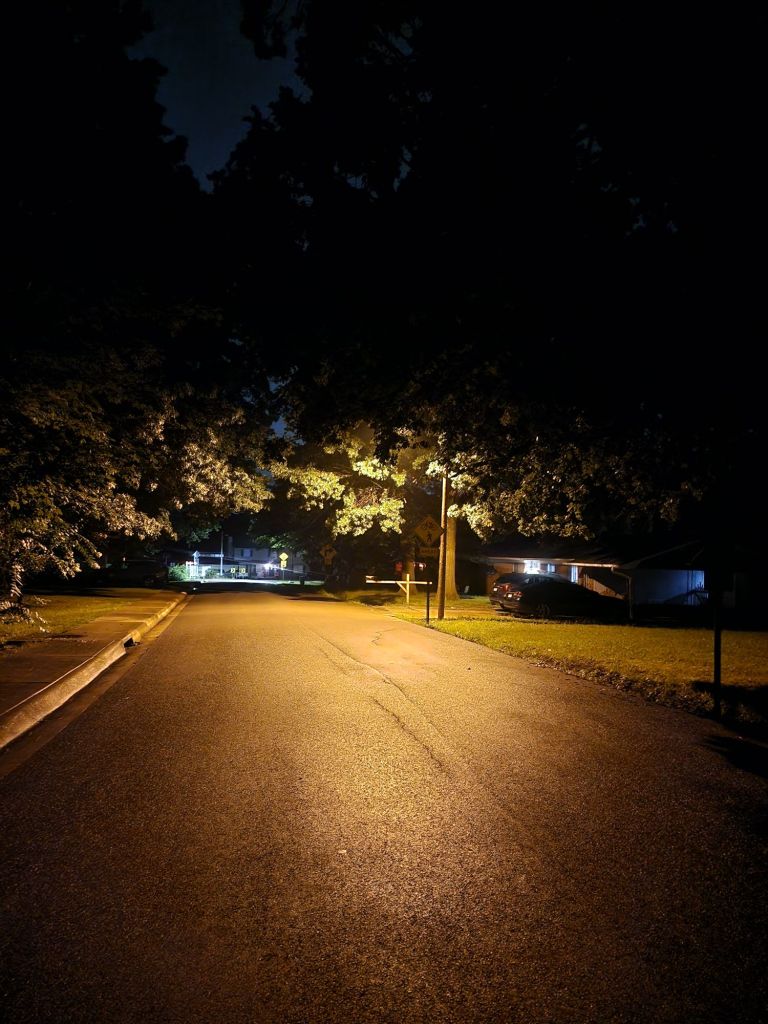
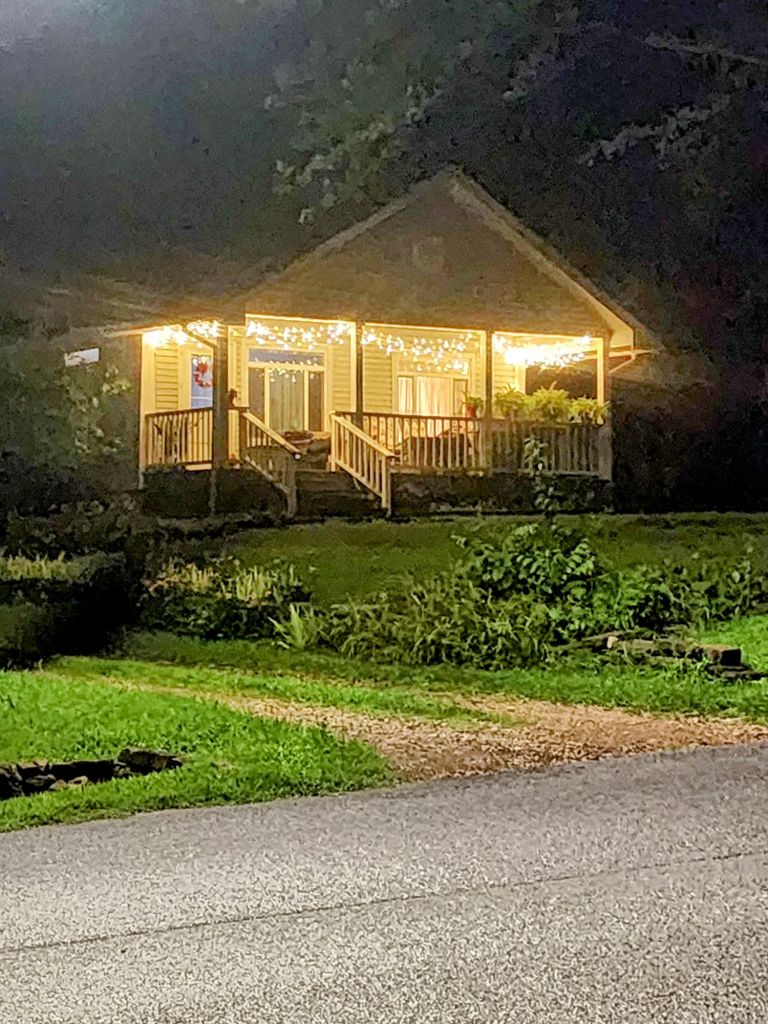
My long walk was beautiful. The strange misty glow of the early morning-late night after rain lights. The smell from the rain and the clingng heat. The empty roads that I walked down the middle of. A family of raccoons that complained as I unknowingly walked by. An unseen young woman on one of the balconies of the beautiful modern apartments flanking Gregg, as she beautifully and melodically sang a song I wasn’t familiar with, and a song probably unwelcome to the ears of the other residents. (But for me, as an accidental audience, it was perfect.) The long stretches of both hill and road. The night time summer sky billowing with retreating white clouds. The occasional person on a scooter; some of them involuntarily participating in the morning.
I hated giving up ownership of the streets. Leaving the unobserved and frozen in time houses with all the residents tucked away inside.
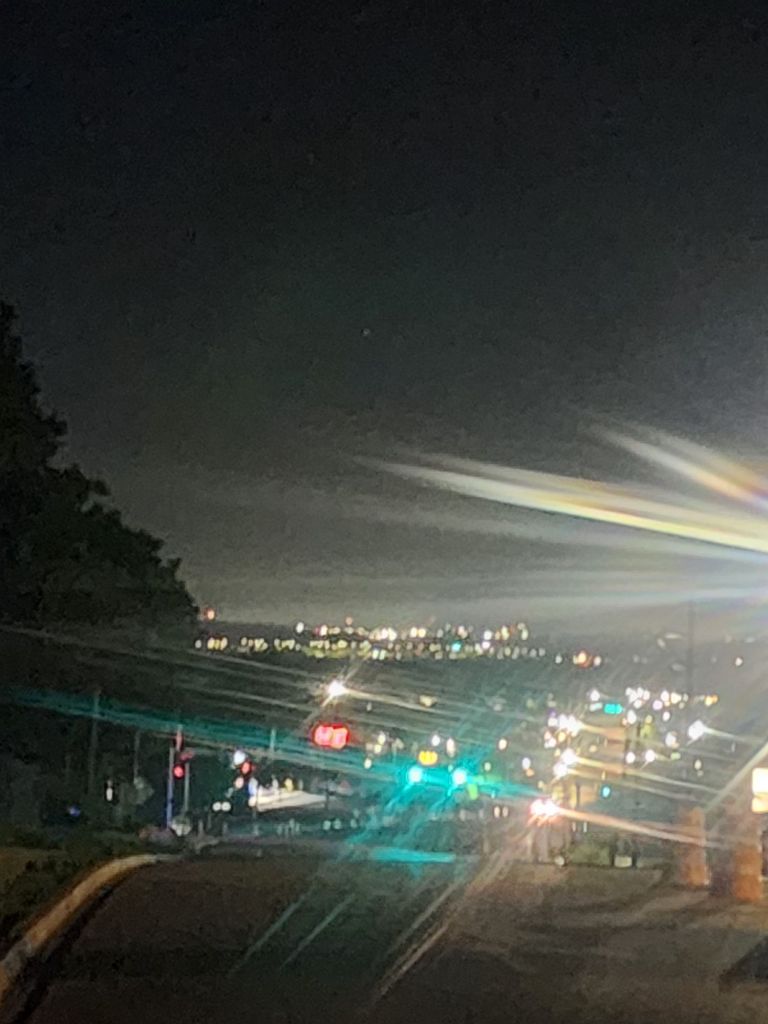
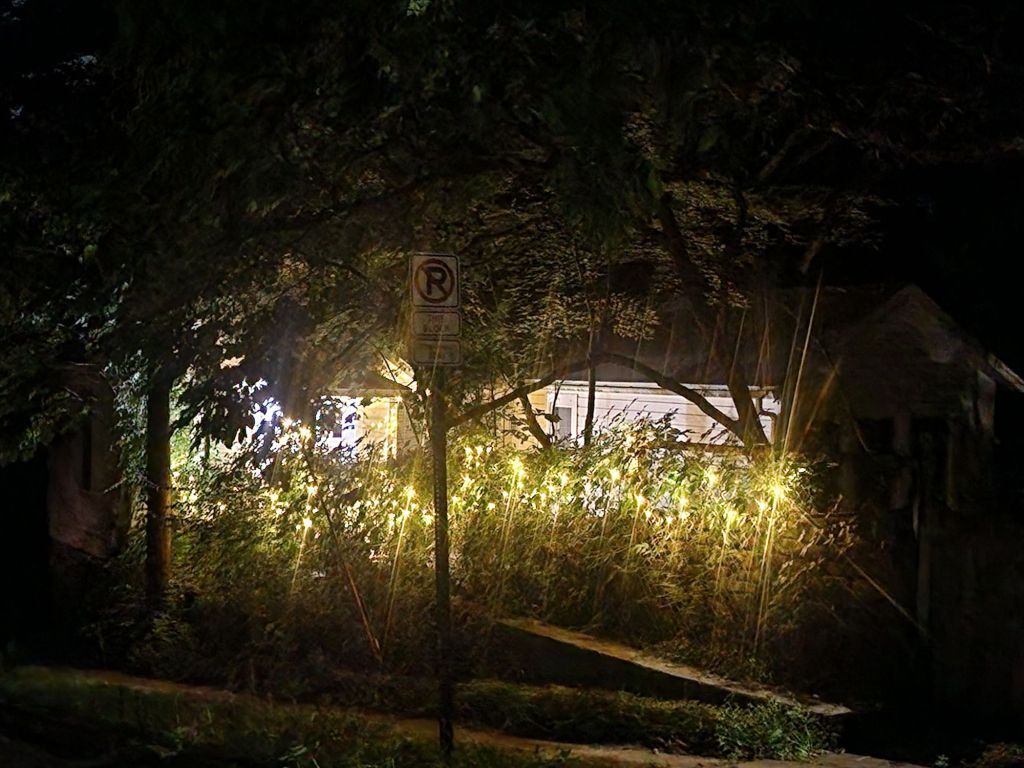
It’s hard to explain how rounding a corner and seeing strange orange glow of a section of road brings on the same feelings that “Something Wicked This Way Comes,” or “Stranger Things ” It’s just a stretch of road illuminated by optical illusions. But you weren’t there when I looked to my left and saw a ground light being temporarily blocked by a cat who was creeping along the edge of the driveway. It was accidental synchronicity and caused the hair on my arms to stand. I stopped to take a picture of the light. But that’s all it is. People sound a little off when they try to express how such little moments are entirely different when they are experienced.
The same is true for most of us when we listen to someone describe their dream. The narrative loses the immersive magic that held the storyteller captive while they were experiencing it.
X
.
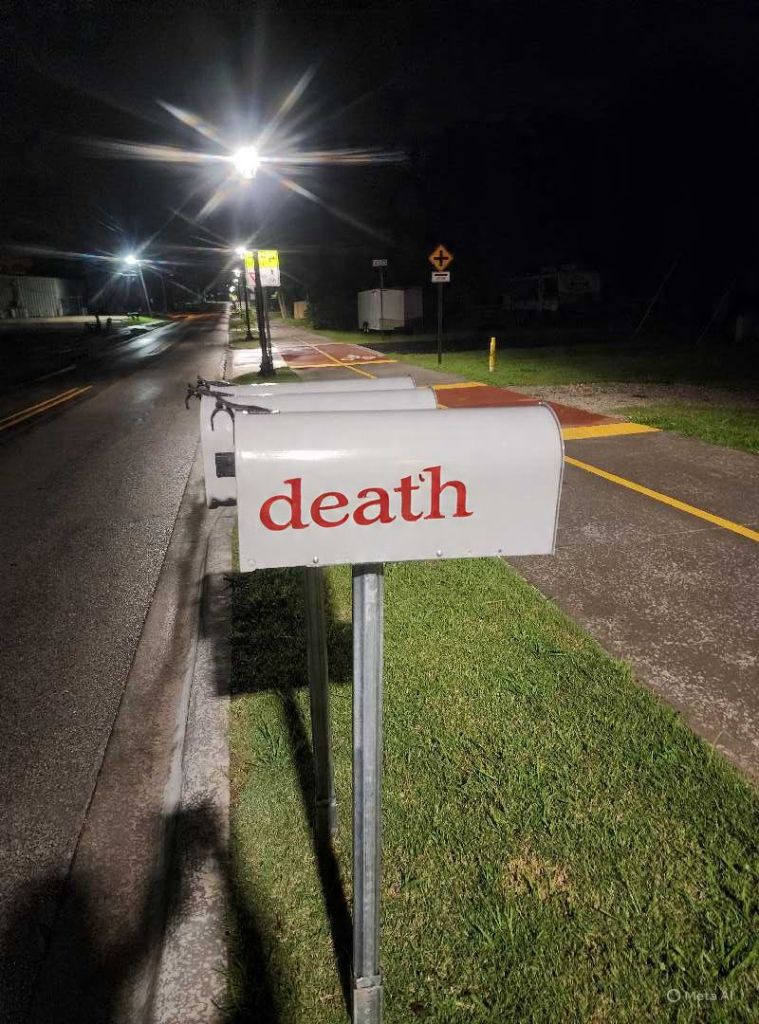
(I added the word death to the mailbox as a joke…)
…
The dream:
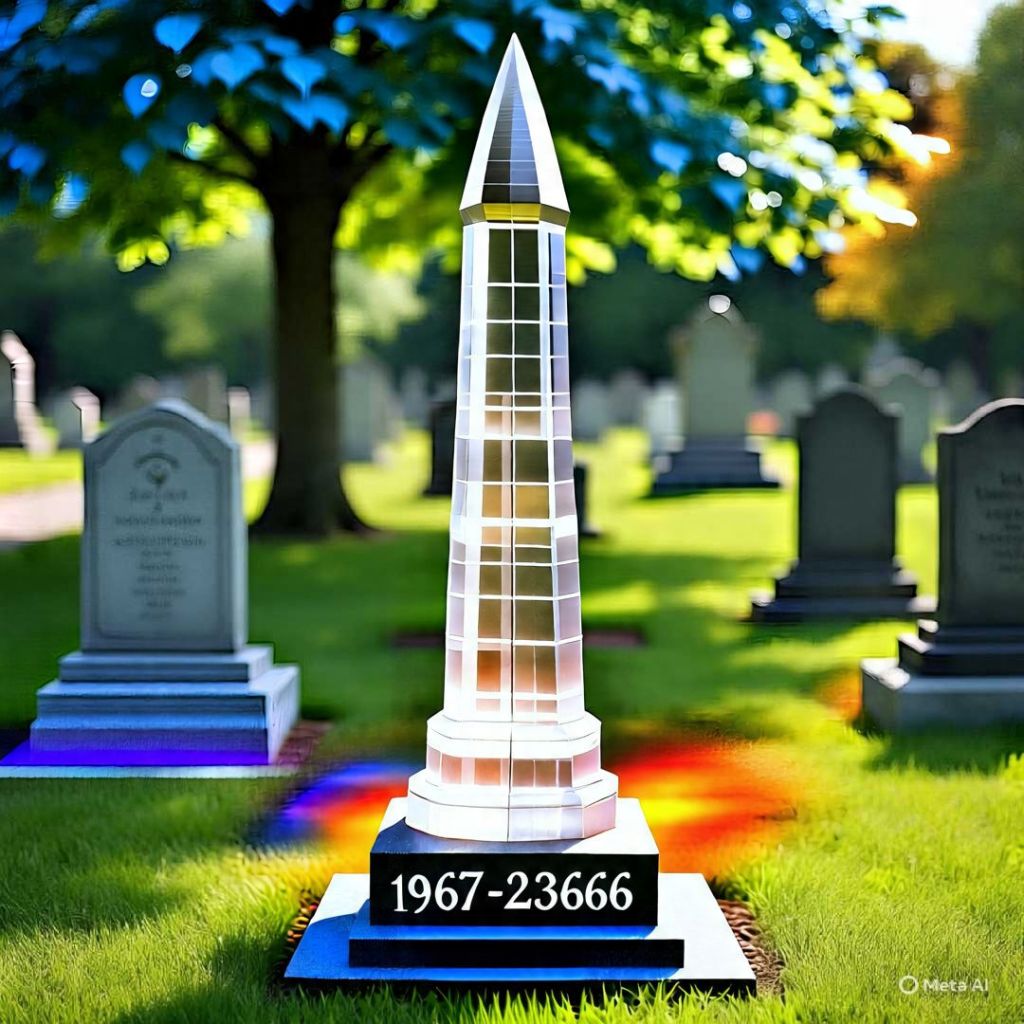
Instead of a tombstone, the grave was marked by a tall crystal spire. Somehow, I knew that it wasn’t an actual grave and that inside whatever what was in the ground was nothing more than a DNA sample.
The sun peeking through the trees was orange red and seemed off in a way I couldn’t precisely explain.
Even the air felt thin and reprocessed.
The dash of the dates didn’t initially make sense: “1967-23,666.” Then I realized whoever designed it knew about my penchant to calculate my age based on the number of days instead of years.
Turning my head, I saw that four people stood behind me. Each of them carried a vial of colored sand. The sand shown brilliantly, like ground diamonds.
They didn’t speak English but I understood them.
“Does anyone have anything they would like to say?” I couldn’t see who voiced the words.
“No. I think he said it all before he left.”
As I turned my head again, the four people moved closer. I didn’t step away. They passed through me as they approached the spire. I felt like I had become mist.
Each of them opened their tiny vials and poured the contents into a almost invisible seam about halfway up the spiral. Flashes of almost every color began washing over the grass around them.
They disappeared as the sky became dark, like a sped up movie traversing time. As I watched the sun slide down the sky, my field of vision collapsed into a single dot of rainbow colored light and then disappeared.
I love when forgotten memories get unlocked by music. Monday afternoon I was scrolling and Sammy Arriaga’s version of Freddy Fender’s “Before The Next Teardrop Falls” came on.
I remembered a specific summer afternoon over the years. But for some reason, this time an enormous amount of details came back. It felt like a door had been unlocked and let me remember things that were locked away. It was July of 1990, back when I was as naive about so many things and an expert at things most people didn’t experience.
I hadn’t thought about that summer afternoon in years. Even though it was my first year at Cargill, I was trying to do something for Uncle Buck who had helped me yet again. Many people don’t know that it was because of him that I was able to do things that I otherwise might not have. Several times in junior high, he stepped in and helped me when my parents drank all their money away. I have to include Aunt Ardith in my thanks.
I mowed Uncle Buck’s yard for him. Because Aunt Ardith went to play bingo, Uncle Buck invited me to join him as he poured himself a “snortee.” Jimmy would have been at his job at Mary Maestri’s, working in the separate building on the large property at the corner of what is now highway 112 and 412. Like almost everything else, it’s an entirely different world out there now.
For once, I accepted a small glass of whiskey with two cubes of ice. Uncle Buck laughed like he did, pointing out that people who preferred to drink their whiskey straight were either sophisticated or about to start a fight.
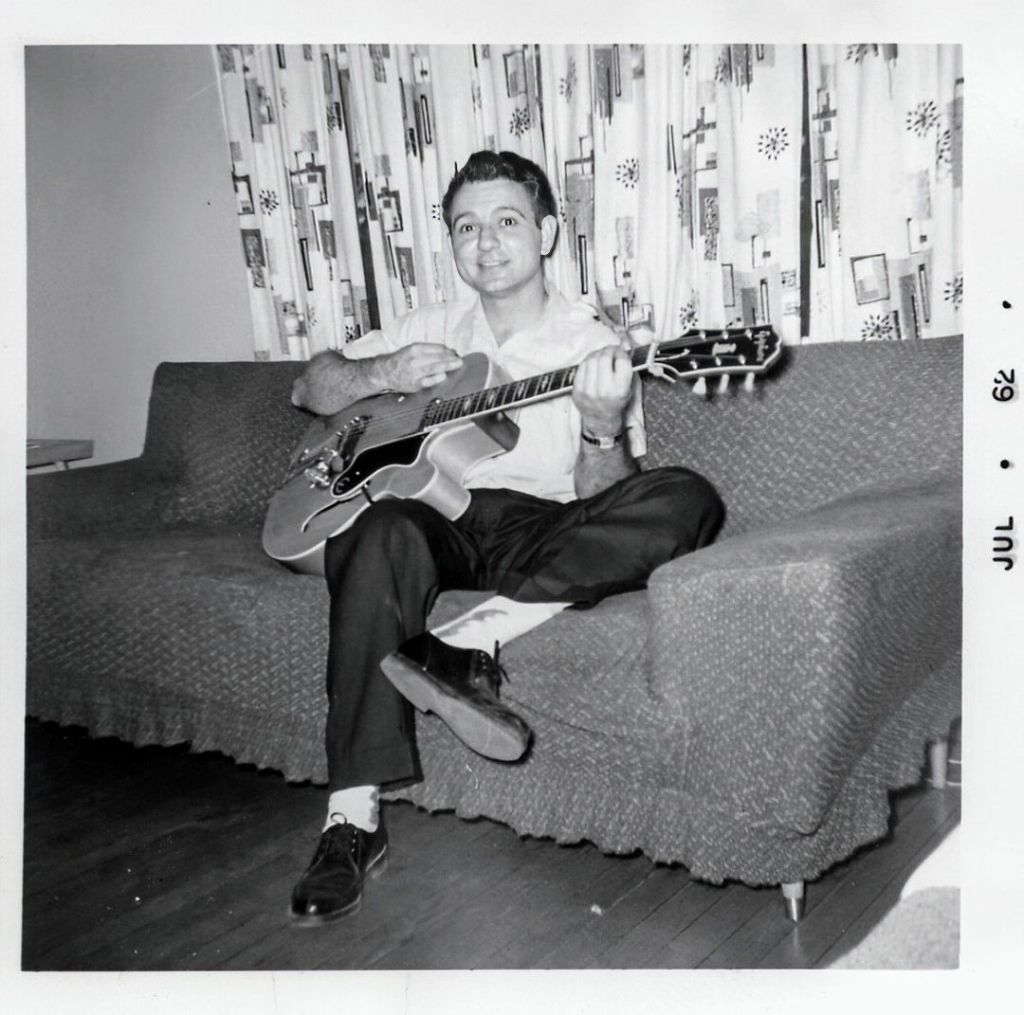
When I was younger, Uncle Buck tried to encourage me to learn to play bass guitar. He liked to tease me about being in band and choosing the French horn. But he was glad that I was into music. Once I graduated, I turned down both a music scholarship and an offer to be in the United States Army Orchestra. Uncle Buck wasn’t someone who repeated himself often, but there were a few times he told me to find a way to get back into music.
Uncle Buck got out one of his records. He chose Freddy Fender’s “Before The Next Teardrop Falls.” He showed me the album cover and laughed at Fender’s enormous head of hair. By that age, I had already adopted my short haircut.
Probably because no one else was at the house, Uncle Buck told me to listen to the song with fresh ears. He said that it was one of the best examples of a perfect country song. Just a stripped down love song that wasn’t cluttered by technique.
I don’t know what Uncle Buck was thinking about when the song played the first time. It’s strange to me to think that he was around 57 years old that afternoon, just a little younger than I am now. Whatever look he had on his face, it was 100% nostalgic.
When he played it the second time, he explained it to me as a musician. While I don’t remember specifically everything he said, he told me that it was the perfect tempo to sing or dance to. That it was standard time, mostly major chords, and that it was the perfect example of a verse-chorus song. Uncle Buck was impressed with the fact that Freddy Fender made a hit out of it both in country and pop. Uncle Buck was also impressed that the song included a steel guitar and an accordion.
As the song played a second time, I almost fell out of my chair when Uncle Buck softly followed the lyrics as Freddy Fender switched to Spanish. Uncle Buck loved teasing me about speaking Spanish, but this time, after the song ended, I asked him about it. He told me that because he learned all music by ear, it was just a question of repetition.
We listened to a couple of other songs before Uncle Buck put on Charlie Pride’s “Kiss An Angel Good Morning ”
I don’t remember exactly how he put it, but he pointed out that it was almost perfect too, because it was the type of song bad singers could do reasonably well.
I wish I could remember what song he played next. That part is lost to me. He got up to pour himself another drink. He stood in front of his well-equipped stereo system, thinking. As an electronics tech for Montgomery Ward, he had nice stereo equipment. Whatever song it was, by the time it ended, he had downed his drink.
If I had it to do all over again, I would find ways to sit with Uncle Buck and have him talk about music. When he was younger, he had the chance to play with some amazing musicians in Memphis. Even though he played in a couple of bands that did well, he chose a good job with benefits over the musician lifestyle when he moved to Springdale. Because I’m older now and can relate to the fact that he was about the age I am now, I understand the nostalgia he probably felt that afternoon.
Nerd Level Elite: I decided to start making videos of my jokes in Morse code. You’re welcome. . PS I’ll post the answer upside down and backward below.
(A man dressed in a black suit stands with his back turned toward the empty auditorium. As he turns to hold the stand mic with his right hand, a soft spotlight highlights his chin, tilted to the ground, obscured by his hat.
As the band hidden offstage begins to play, the man removes his hat and holds it over his heart.
He takes a deep breath as his voice reverberates throughout the auditorium. It’s obvious that his voice is powerful. For this song, however, he holds back, as if alllowing his voice to be free will bring him to his knees.
As he sings, he looks at the stage floor.)
Monday has its Tuesday
The night has the sun
Standing here alone
Feeling undone
Presence is a choice
Time is short for all
I’m losing myself
and becoming small
You shine your light to others
Without a second thought
When I’m here waiting
Slowly losing the plot
(Chorus)
I need your energy
both laughter and desire
smile when you see me
always wanting to know more
I’m losing myself
I feel like a chore
Monday has its Tuesday
The night has the sun
Standing here alone
Feeling undone
(As he sings the last two lines, he raises his head to finish)
I guess I’ll wait
Even though I’m gone
(He bends to place his hat on the floor, flooded by the spotlight. He sighs and shrugs, exiting stage left.)
Everyone is one day or one unexpected moment away from tragedy. One incident distanced from the inevitable humility of needing help. It’s math, statistics, and inevitability. I learned it the hard way multiple times. It’s part of the reason I continue to shake my head at the cruel push to defund any part of our social safety net. Collectively, we are subject to the same uncontrollable forces. Tornados, hurricanes, earthquakes, or war. The day comes when each of us will need help, either as individuals or as a community. If we take away the support, life will become even crueler. The FAFO moment isn’t a question of if, but when.




 P.S. Parenthetically Speaking