Category Archives: Mental Health

Distraction

“You cannot shovel your way to the top of the mountain.” You can thank lyricist Ricardo Arjona for the sentiment. It means different things to different people. And nothing to those who don’t love the nuance of language. I walked in the blazing sunlight of this Vulcan August afternoon. When I descended into the creek bed, the canopy of trees lessened he heat by 20°. Though the water has diminished, the creek still runs and the water is clearer than ever. I wish my head to be as diaphanous and in the moment as the minnows congregating at my feet. I can live happily with very little, much less than most. Don’t get me wrong. I love the embrace of the air created by the air conditioner. And the almost instant cup of bitter coffee that my machine produces upon demand. I love the vibration of music in my ears, the pulse of cleverly constructed and beautiful ideas passing through my little brain. It’s true that I don’t experience boredom. But I do experience the overwhelming sensation at times that I’m facing the wrong direction and that the universe has been tapping me on the shoulder for decades. I stood in the creek and lost track of time again. Watching the minnows with envy. It is beyond strange to me how moments of Zen are often literally at our feet. Distraction, distraction, distraction.

Love, X
.

Reality TV Is Us

This is not a post about reality TV per se. Reality TV fascinates me; not as a watcher, but more for the process of misdirection, drama creation, and constant familiar themes to provoke an emotional or shocked reaction. When I do watch reality TV, I spend an inordinate amount of time looking up the people and places to find out what really happened and how the writers and producers repackaged it for entertainment.

Again, this post isn’t about reality TV per se. It’s about the fact that a great number of people are exactly like reality TV. They aren’t living authentically, they don’t say what’s on their mind, emotional connection feels foreign to them, and honesty tends to be in short supply. We tend to be reactionary by nature. And even with legitimate reasons to react with frustration, anger, or emotion, our tendency is to bite our natural response to whatever is happening around us. We watch one another, evaluating what’s going behind the facade. It’s why memes caution us to remember that each of us has things going on that others don’t know about.

Turn off the TV. Surprise yourself and other people. As a self-admitted hypocrite, I can write these words without feeling like a fraud. I hate the disparity between who I am and how I communicate and behave in a lot of situations. All of this artifice we build up around us is a cage. The strange thing is is that we are our own guards. The key is in our pocket.

Love, X

Boots

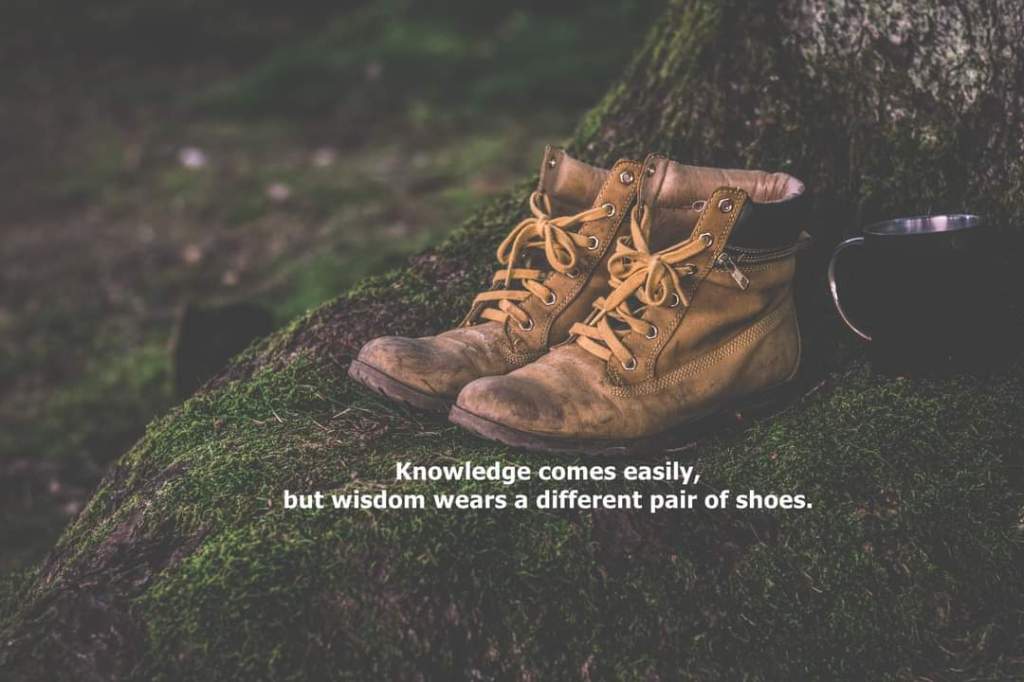
“Knowledge comes easily, but wisdom wears a different pair of shoes.”

We all know that change and new behavior is the only way to move forward. But we are reluctant to put on work boots. Inaction is easier. To reflect, evaluate, prune, and move in another direction. Every important change starts with a new attitude. Followed by action. And if it doesn’t? You move first, and motivation will follow. Almost everyone gets stuck in the familiar; no matter how unhelpful our status quo is, it’s familiar and comfortable despite its consequences. Most of us observe with wonder at how complex our brains are, how filled our world is with surprise, and how powerless we feel when we want to connect with the invisible and intangible power of just being alive. “You’re your own worst enemy” was intended as an insult. I took it as an insight. Knowing you’re an idiot can debilitate or motivate. Everyone says they will do the things that matter, express the words that want to spill, and be a better person. Tomorrow. Later. When the time is right. Your boots are stuck under the bed somewhere, lonely from disuse. Love, X
.

A Morning

This isn’t my story to tell. But I’ll trespass because it blankets the lines of odd convergences of the things we all experience. Regard it as fiction and find whatever value that words can convey.

She seemed to melt against the wall, her head down, with a cell phone pressed against her ear. “Margaret died this morning,” she said, her voice flatter then the plains of Iowa. It was the flatness that conveyed an overwhelming emotion behind her words. Numbness, like a whisper, sometimes telegraphs greater information.

He stopped and was about to ask her what she needed. A woman walked up to her and put her hand on her shoulder as she ended the phone call.

“She’s in a better place,” the late arrival told her. Though he looked indirectly at her, he watched her face wrinkle with conflicting emotions. He could read her mind.

They spoke a few sentences back and forth. The woman returned her verbal volleys with diminished enthusiasm and volume.

As the late arrival walked away, he asked her what she needed. “To be about 200 miles from here. None of these people  knew my Aunt.”

Because it’s what he does, he hugged her. He wasn’t going to add vacuous words.

When he stepped back and away from her, she told him that she didn’t think she could stand listening to people talk about her aunt.

“Then don’t. The person you loved is gone. Your debt is paid.” He didn’t quite say it in so few words because he was surprisingly caught off guard by nervousness. His entire morning was a bout of unidentifiable anxiety. His arms still quivered with the exertion expended to quell what had saved insurmountable at the time.

“I hate it when people say someone’s in a better place.” The irritation in her voice was evident.

“They mean well. None of us know what to say. I put my foot in my mouth a lot. We’re not thinking about where they are. We’re thinking about going on without them. That’s what grief is.”

She looked at him directly. “That’s a really good way to put it.”

“I learned the hard way. When people are grieving, they say and do almost anything.”

She nodded. He walked away, hoping that time would warp for her. Time is one of the few things that helps. But sometimes, it remained fresh forever.

He wondered how the universe sometimes finds a way to overlap lessons that superficially have nothing in common.

X
.


Choked

The premise of the STFU method is sound: not every thought needs to be expressed and many feelings are transitory and not necessarily real. Keeping the lid on is an effective strategy most of the time. At some point though, you’re going to have to open the lid or haul it away.  A wiser person once said, “It stays buried only if it’s dead.”

X

On The Edge

If I had a way to tell every young person in the world one of the best ways to be ahead of most people, it would be to be able to stay calm when everything is going to hell around you. Not in a trauma-response way. When I was growing up, I didn’t realize that I was often reacting to the violence and craziness In such a way that it would imprint a foolish cycle onto my adult life. It’s difficult to remain calm and fearless because we are biologically wired to be adrenaline filled. Our endocrine system is our enemy in this modern world. Much of our anxiety stems from a lack of control, both for the things that swirl around us and our response to it. Letting it flow around us without internalizing it is a superpower. If you’re observant and prone to introspection and overthinking, you will have a bad time. Anyone living in this modern mess has ample fodder to wonder if we’ve all lost our minds. We are supposed to be spirits, yet it’s more likely we’re collectors, feathering our own nests at the expense of whatever passes for the greater whole.

My friend Marjay might tell us to “look for the helpers” when things go to hell. It’s good advice as far as it goes. It also belies the fact that we need to be helpers. When you’re on a plane and trained to use the oxygen masks that fall during an emergency, you’re also told to ensure that your own mask is on first. Otherwise, you’re useless. And so it goes with the mundane yet herculean task of navigating your own day. Be your own helper. It’s not a reassuring feeling to know that after decades of witnessing the casual avalanche of surprises in life, that I’ve failed to be my own helper. I’m not being glib; I’m being honest in the acknowledgment and nod toward my own deficiency. It was easier to look back to my childhood and shift the blame to the people masquerading as adults. It’s not their fault. They were broken. Using them as a template for either blame or guidance is stupidity. I might stretch the comparison to include how we collectively manage our society.

Every few years, I watch the 1993 movie “Fearless.” I watched it Sunday. It always triggers a wild parade of ideas and emotions in me. It used to do so because of my own plane encounter a couple of years prior to the movie. As my life progresses, it increasingly morphs into an analogy about how I’ve responded to crisis as it comes along. The main character survives a plane crash, during which he experiences a zen-like moment of clarity that detaches him from worry. The obverse side of his coin is that while it gives him an almost supernatural ability to detach and help other people, it damn near destroys him in the process. Enlightenment is personal; living is a task that requires immersion into the craziness.

“If you are what you do, when you don’t, you aren’t.” A convoluted way for Wayne Dyer to remind us that we are what we do and think. He also said, “How people treat you is their karma; how you react is yours.”

The “Try That In A Small Town” controversy is fascinating. It seems like people are using it to defend their identities with it, on both sides of the spectrum. That such a song can be true for both polar opposites should remind us of the danger of ideology and certainty. On a side note, I laughed my ass off looking at all the memes on both sides of the argument. People are clever, and many used it to satirically make their point. Satire and snark are two of my favorite nutrients to deal with the world. For me, the song also brought back my childhood and one of my harshest criticisms of it. A small town or parochial lifeview can be a comfort. That same circumstance can also hide a lot of violence and misbehavior. Families, like communities, often rubberstamp things that would be better served with a dose of sunlight and scrutiny. A lot of children walk around in a world where God doesn’t rescue them from senselessness – and family members turn a blind eye or don’t get involved.

How you react to what’s around you is your decision. You either float peacefully on the river, or it sweeps you downstream. It’s the same river regardless. As with the protagonist of “Fearless,” you might find yourself on the edge of the roof, looking a mile below you. The danger remains, whether you’re on the high roof’s edge or standing on the street below. You are your own biggest danger.

Love, X

The Fire

The Fire

When I am feeling disconnected and don’t have enough physical intimacy, the effects permeate my life unexpectedly. Based on my experience, this is true for most people. Except for the outliers. The scarcity rule tells us that we focus on what we’re lacking. No matter how many other things we have or what’s good in life. If you’re hungry, it really doesn’t matter what kind of car you’re sitting in or if your couch is nice. Physical intimacy is free, makes us feel pleasure and connection, and is good for us in so many ways. It’s not a basic need like food. But it definitely sits on the hierarchy once your basic needs have been met. Physical intimacy does so much to reset my mind. It changes my focus and helps me to do the mundane things that fill a large part of my life. It keeps me from dwelling on the absurdity of so many other things. And when it’s missing? It starts as a nag in the back of my mind. And escalates to a general feeling of anxiety. It’s absence invites self-doubt and feelings of diminished self-worth. You start to question whether you’re valued. It’s not a question of time because we fill our days with all manner of distraction. It’s not a question of money because it’s free. And you can’t help but wonder, who doesn’t like pleasure? Who doesn’t want to feel the connection? In some ways it is like a drug because when it’s absent, sometimes it gets to the point that it invades your conscious thoughts and drives out everything else meaningful. I’m wired to focus on the other person. I know that my level of intensity is not always reasonable; but my mind can’t help but to want some form of reciprocity. To have someone who is invested in my happiness. It’s not alwaus about the frequency. But if you have an imbalance in your relationship, one of you is going to always be wanting more. And likely the person who is experiencing scarcity will spiral with guilt. It’s dangerous because it can become indifference. Apathy or learned responses to minimize your wants and needs are far greater foes than anger or irritation. It morphs into surrender. It’s about the enthusiasm and preoccupation with someone else’s wants and needs. Someone who knows you and anticipates what will make you feel happy, appreciated, wanted, and like you’re on an adult playground. It is both time set aside and spontaneity. Time set aside for physical intimacy is a clear sign that everyone understands its importance. Spontaneity demonstrates visceral interest and playfulness, both of which probably need to be present in abundance to be happy.

I see this playing out with many people. And there are an awful lot more who suffer with it but obviously don’t talk about it. It’s taboo, except for stand-up comedians and TikToks. It’s a cliché.

We are biological machines. Our intimacy drive is hardwired into us. It causes so much frustration when not developed. But when it is? It’s one of the most sublime things in the world. And everyone who experiences it knows it to be true. When you’re with someone you love and trust and you have that sort of mutual and reciprocal connection, it is impossible to be dissatisfied with life.

Love, X

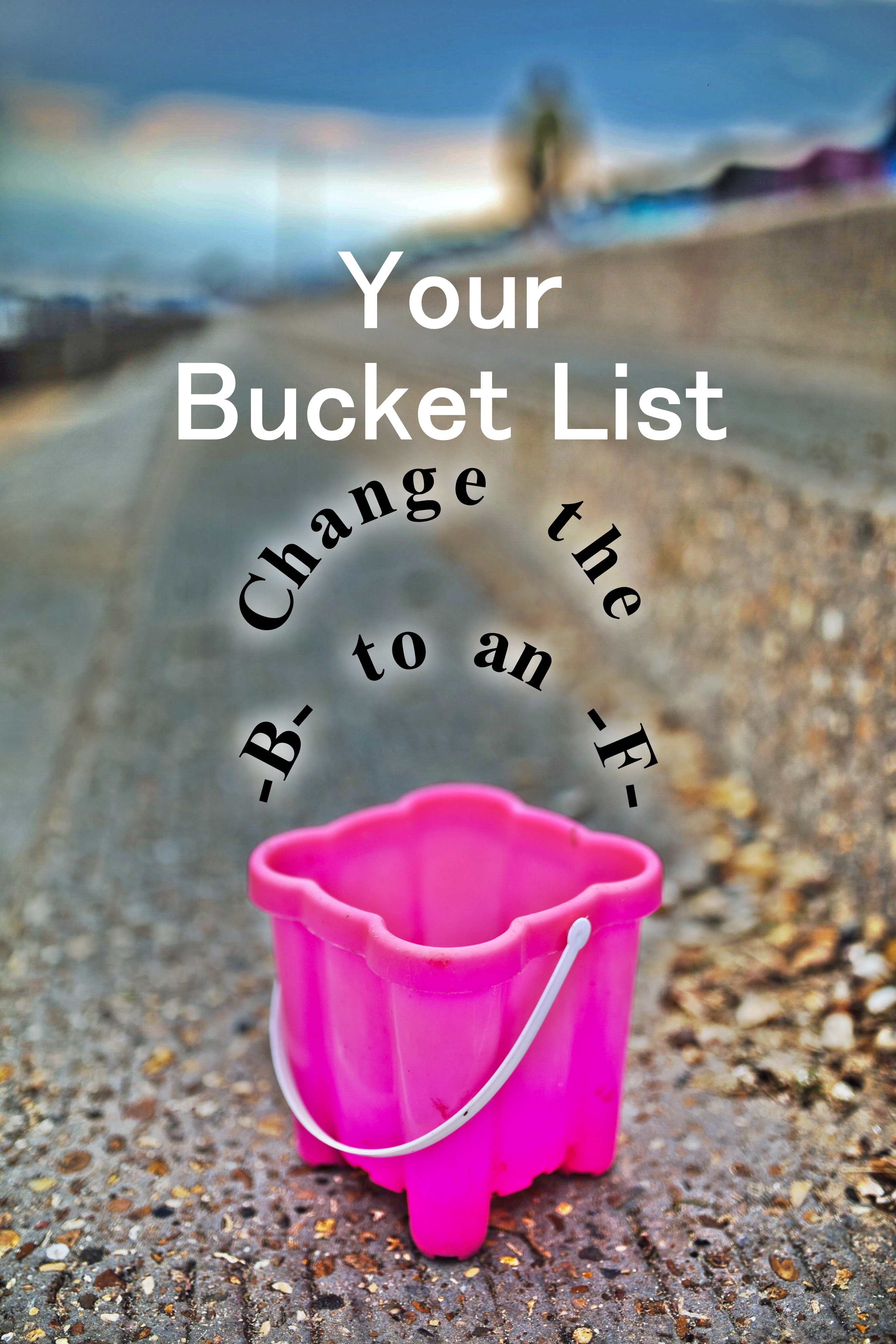
*ucket List

NSFW implications: though none of my friends ever, ever curse… A bucket list is awesome to help you prioritize and motivate yourself to action. There is a corollary idea that is based on non-action, non-attachment, non-participation, and non-response. And usually? It saves you a lot of thinking, drama, and unhappiness. It’s zenlike in its implications.

X

+