Category Archives: Personal

S-Hook, Lime and Sinker

Just off  I-40 in Clarksville, Arkansas, there’s a Tex-Mex restaurant adjacent to the interstate. We’ve eaten there a couple of times. It’s inexpensive and we usually find ourselves pleasantly surprised by the speed, quality, and cost of the meal. Typically, we compensate by over-tipping by a wide margin. This is in no way related to the fact that the workers invariably point a machine gun at us as we pay. I’m just kidding about that last line. I just wanted to ensure that you’re reading closely. The pico de gallo, which all Tex-Mex eateries should be judged by, is delicious.

As we went to the front counter to pay, I heard the older gentleman who seemed to wear several hats of responsibility at the restaurant ask in Spanish, “How’d THIS get here?” I turned to see him holding the ‘S’ hook, inquiring toward our waitress and another waitress from the other half of the restaurant. As we exited the table, I had placed the hot hook on the edge of the large salsa dispenser at the edge of our table so that it wouldn’t be missed.

Toward the end of our meal, my wife had picked it up out of the bowels of the chip basket, not realizing how hot it had become in the warmer. We weren’t disgusted by the discovery of the thick metal hook, just intensely curious. I imagined that it had fallen from something at some point, but couldn’t place what the mysterious piece of machinery or structure might be. Such an ‘S’ hook typically is used to support two chains. Unless you’re at Applebee’s, one wouldn’t expect such random pieces of metal to be in one’s food.

So strange was the look on the older Latino man’s face that I felt compelled to walk the few steps back to our table and explain. In Spanish, I told them it was indeed inside the basket of chips as we ate, that we weren’t upset by its presence, and to have a great day.

“I’ve been looking for this darned hook since yesterday!” the older gentleman told me. “How did it get in the chips?” He wondered aloud.

“Suicidio,” I joked in Spanish and he took a moment to stare at me as if I had just sprouted a large tree from my forehead.

The other two waitresses looked at me quizzically, still confused by the large metal hook and the fact that I was suddenly speaking coherent Spanish to them. I think that the waitress for my table suspected that I spoke a few words in Spanish but it dawned on her that I had probably understood all their shouted conversations during my visit. (Yes, I heard their conversation about North Carolina. I wouldn’t move there, either.)

Mistakes happen and my wife and I weren’t bothered by the metal hook being in the basket of chips. At another restaurant, one staffed by less personable employees, it might have escalated into a full-fledged verbal duel-to-the-cash-register situation.

As it is, though, I find myself still wondering how the hook fell from whatever it was attached to and into the chips. I’ll bet that the older Latino man is wondering, too.


Celery Is The Cure For Happiness – An Autobiographical Anecdote


img721


The beet chip story from a few days ago forces my hand toward another story. It’s not one which ends with a grand moral observation, though, unless it’s a reminder for everyone to avoid being ‘food stupid,’ as I call it.

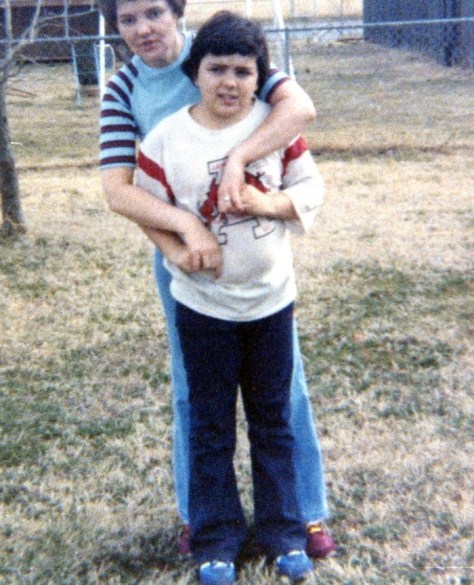
To assist you to better understand my youth, you can observe through the picture that while food scarcity was sometimes a problem for me, starvation was the least of my worries. It wasn’t until the end of my 9th grade year that I managed to break away from my intense infatuation with food. I probably should say ‘temporarily breakup’ given my adulthood. That’s my mom with her arms over my shoulders. She’d been drinking when my Aunt Ardith snapped this picture.

I wish I had been drinking heavily, especially if I had known I’d be writing about the herpes of the vegetable world: raw celery.

I mean no disrespect toward the current food waste programs. Teachers do difficult jobs and those involved in USDA-related food programs emphasize giving students control and also encourage eating what’s taken and taking only what one plans to eat. I went to elementary school 40 years ago, about the time that fire was discovered. What’s true now was definitely not true then.

Today, I listened to a story about food waste in schools. Most of the arguments were well reasoned and supported. They were so proud of the food waste reduction and that kids were now squirreling away leftover food instead of throwing it away at school. I knew immediately that at least one school kid was going to get his revenge on these well-intentioned people as they patted themselves on the back for reducing food waste. We not only don’t learn from history, but we also tend to amplify our egregiousness with even greater folly. I laughed as I imagined that imaginary and gleeful child puking all over the high heels of his well-intentioned teacher.

Thanks to my grandma, I was spoiled by food. Even though her type of cuisine leaned toward the basic, there was nothing as delicious in my mind as elbow macaroni soup, collard and mustard greens, green beans, corn in any form, tomatoes, okra, or potatoes. Unlike my parents, my grandparents were compassionate about food, even though they were children of the Great Depression. Both money and food were always held in high esteem. In my case, they didn’t care what I put on my plate as long as I ate it all. Wasting food was simply not something one could do. On the other hand, they didn’t threaten me for disliking food or force me to eat something for my own good. They weren’t “food stupid” as so many modern people are. They asked me to try everything before deciding whether I liked it or not. And I did, even things such as sardines and salt pork. I never rejected a food without trying it. My grandma knew that overall I was going to get much more than I needed, especially since I was known to eat more vegetables than any other 5 kids combined. I don’t know how harsh grandma was to other grandkids (because I was her favorite) but I do know that she would never have forced me to eat something I clearly indicated I didn’t like. In my defense, it would have never occurred to me to lie to her about it, either. I found out at a young age that I didn’t like beets, which puzzled my grandma.

At home, my parents were tyrants about food. I ate some of the worst, most ill-prepared foods known to man, many times under the guise of not being wasteful. This particular line of logic confused me, given that dollar for dollar, most of their money was spent on alcohol, cigarettes, or replacing broken furniture each time they decided to practice their ever-widening domestic violence reactions. Wherever we lived, most evenings threatened to turn into WWE nights, without referee or ropes. Never mind that because mom chain-smoked her entire life I had never eaten potatoes at home that didn’t look peppered already. Mom also put onions in everything. I mean that literally. I kept expecting to find several peeled onions in her bathwater. Because of dad, mom would often prepare the nastiest meats; large slabs of beef nonsense, barely cooked, smelling of old paper and blood. When she could, mom would buy large volumes of sliced ham, the kind that reminded of what a toilet smells like when seldom flushed. It’s one of the reasons to do this day that I dislike ham, and more so when it is sliced into slivers of hell like deli meat. Mom also made me eat potted meat and Vienna sausages, which as we learned from Karl in “Sling Blade”, is nothing more than brains and beef peckers.

I was content with noodles, soup, or vegetables. I was a simple kid and easily satisfied. Give me a soda, basic food, a book – and stop beating on me, and I could make a good day out it. As I’ve written about before, I also acquired an intense LIKE for over-cooked and burned food.

Even though it seems unlikely, it was because of my parents that I went years without eating much meat voluntarily. I wasn’t sure that meat could be prepared in an appetizing manner, so I’d eat salads, bread, and vegetables – or the tablecloth if it kept me from getting ill or having to force down food better suited to be thrown from a moving car at one’s enemies. Forays to other people’s houses showed me that the food at home versus out in the world were wildly different animals and that I was trapped in a culinary hell from which there would be no escape. It should be noted that no green leafy vegetables, much less lettuce, were kept at my house growing up. It was when I was older and had access to an unlimited amount of salad from a popular eatery in Tontitown and from a distant cousin we lived with that I found a love for lettuce.

Since I grew up in small-town Arkansas, I heard the phrase, “Boy, you don’t know what’s good” with such regularity that it lost all meaning. This phrase was considered to be the height of culinary comparative arguments. On one occasion, my Uncle Harold was chiding me for not wanting to eat any of whatever dead carcass flesh was being offered and proudly yelled, “Boy, you don’t what’s good!” Uncle Harold was one of the good guys, too. My grandma laughed and said, “Harold, why are you sitting there picking on the boy when you know darn well you wouldn’t eat a lot of things growing up?”

As for retaliation, for each gesture of love and kindness from my grandma, my dad would be capable of the most brutal reprisals for not wanting to eat whatever he wanted me to. I took beatings night and day. If I told him I didn’t want fried chicken or a slab of whatever animal carcass of the day he had, I would get hit by a fist, belt, spatula, or item he found nearby. He was like the Wile E. Coyote of food beatings. His creativity toward brutality was endless. To him, eating, especially meat eating was a characteristic of all real men. It incensed him that I had no desire whatsoever to eat what he dictated. Deer, frog legs, snake, gizzards, cow livers, boiled beef tongue, rabbit, and squirrel: all of these were required eating. I hated them all and don’t eat them willingly today. His cruelty expanded to other areas, too. Once, he forced me to try raw forest-gathered mushrooms at my Uncle Buck’s house. They tasted like a deer’s anus. When I started to throw up, he punched me. He then forced more of them into my mouth. Crying, I forced what I could down. He made me agree that I loved them. As soon as possible, I went outside and threw it all up on the next-door neighbor’s side of the house. This same scenario was re-enacted many times in my youth. (I often think I could have painted the house with vomit with sufficient time to do so.)

It is strange looking back, because despite having been in prison and falsely claiming he could eat anything, the truth is that my dad hated a lot of food, especially the healthy stuff. I’m not sure why food granted him such an expansive outlook on cruelty towards me. He never missed a chance, though, and I got it much, much worse than my siblings did. I often daydreamed of sautéing him a skillet full of wild mushrooms and steak – and then bashing him over the head with it.

In school, I learned that people would willingly barter with me, and happily, for my dessert or milk in exchange for whatever concoction of vegetables the school was inflicting on us that day. One of the most common was peas or one of the ten varieties of mixed vegetables that generally got boiled in huge cauldrons on the industrial stoves. Countless times, I would press my tray against that of a schoolmate and swap for something better. At home, I would eat green beans, corn, and tomatoes directly from the can – something I often do even now. While I looked like I traded for desserts, the opposite was usually true.

One day during elementary school, our teacher proudly explained that we would be graded on what we ate. “What fresh hell was this?” I asked myself. I figured there was some kind of error or that all the teachers had lost their minds. Unlike my fellow classmates, my world viewpoint didn’t preclude adults acting as if they had lost their minds at any given moment. At that school, we didn’t choose what we wanted. The school workers plopped, flung and threw whatever the next item was more or less into the segregated concavities of our food trays. There were things I simply couldn’t eat. Make no mistake, unlike most of my schoolmates; I overall REALLY enjoyed school lunches. They simply were miles above the consistency and content of what I could expect at home. Just like at home, I couldn’t always determine what the food was supposed to be. Unlike home, however, I could be reasonably certain it wasn’t poisonous, given the likelihood of dead children all over the concrete block cafeteria if things went terribly awry.

In those days, it was almost impossible to explain to your teachers that you were accustomed to being tortured by your dad if you said you didn’t like something. They didn’t know that if I wet the bed, I’d have stripes across my back and legs for a week if my dad had a hangover or was simply bored. I knew that with time, the school’s ill-advised plan to judge what I chose to eat or didn’t eat would cause a problem.

It was the same week that the food grading system started that I met my lifelong nemesis: Raw Celery. On a dozen previous occasions, I had attempted to eat this abomination without throwing up. I was scoreless against the impulse. It was puzzling, given my love of all things vegetable. If given a choice between licking the under-rim of a bus station bathroom toilet and eating celery, I would unflinchingly opt for the toilet, even if someone was sitting on it at the time. Lest you think I’m exaggerating, I will demonstrate this if ever given the choice between death and celery. If foreign terrorists ever capture me, all they’ll need to do is force me to eat celery in order to get a confession from me.

I don’t remember a lot about the lunch grading starting, honestly, other than dreading it. When I went up to put my tray on the conveyor, the teacher told me to eat my celery or get a reduced grade. As I was fearful of almost all teachers when controversy arose, I told her that I was fine with that. She got mad at me and reversed course. She insisted that I eat it – a reduced grade was no longer at stake. A paddle was in my future. I told her that I would get sick if I tried to eat the celery. She forced me to take a bite anyway and I spit it back out immediately. She let me go, through a clenched jaw. I knew the battle lines were drawn and that just like at home I had no artillery with which to fight back.

A few days later, celery once again made its disgusting appearance on the menu. They must have purchased a truckload of it from the local Satanic Distributor. I traded my celery and dessert for another boy’s mixed vegetables. He ate the celery with glee, as I did his vegetables. Soon enough, the Gestapo teacher doing lunch duty came over and told us we were forbidden to trade food. Therefore, I got another reduced grade, even though I had eaten more vegetables by trading for a serving of mixed vegetables compared to a slice of celery stalk.

How much later it was, I’m not sure, but the day came when celery was once again served. Except another horrific layer was added: they put peanut butter on the stalk. While I was okay with peanut butter, the only thing worse than a celery stalk with peanut butter on it would be if a large diseased bird pooped on it first. The teacher didn’t even wait for my reaction this time. She insisted I eat it, that everyone liked peanut butter and celery. Having forgotten the exact words, I’m sure she ranted off a list of reasons why I was being a little jerk for not wanting to eat the celery. Since I wasn’t getting out alive, she also insisted that I drink my carton of milk, something that I often didn’t touch. However, I held my nose and drank the milk quickly.

“Now eat the celery. You and I both know you are pretending you don’t like it.” The teacher glared at me. Having been shamed and beaten by experts way beyond her level of cruelty, I didn’t really care about getting a paddling. A paddling from someone at school was comparable to a pat on the back from Attila the Hun at home. The teacher, seeing my reluctance, came around next to me, picked up the celery stalk, and put it in my hand, then dragging my hand holding the celery toward my face. I unwillingly took a bite, immediately feeling the urge to vomit. “Keep going. You’ll see it won’t kill you.” The teacher stepped away at the end of the table. I took another bite – and that’s when the universe shifted.

The mix of peanut butter and raw celery triggered something in my mind. It might have been the last time my dad held my face into my plate and forced me to get a mouthful of whatever man-making garbage he wanted me to eat. Whatever it was, it was powerful. From my nose and mouth came a simultaneous torrent of milk and lunch remnants. It went across the table and onto the floor, splashing across to the table on the next aisle of seating. I flooded my plate with it, knocking over my milk carton. I heaved and expelled everything I had eaten for the last 10 meals, or so it seemed. Moreover, I then put my head down into the mess, feeling a massive wave of nausea and dizziness. Keeping my head up wasn’t an option.

This story would be much better if I remembered what sort of shocked reaction the teacher had on her face after seeing me projectile vomit. However, I don’t know. I was too sick.

Another teacher came and helped me to the restroom to clean up. I enjoyed several exceptional teachers. Like so many others growing up, I also had a few who somehow seemed to know that I was an easy victim. My secret shame from my tortured home life must have registered in some instinctive corner of their brains.

We didn’t do lunch grading for very long. I don’t remember why that it ended but I do know that my fantasy is that the teacher who was so intent on being totalitarian in regard to what I ate or didn’t eat was so sickened by my volcanic eruption of vomit that she insisted that the program be abandoned. While I don’t remember exactly which teacher was the mean one, I could figure it out, if I really wanted to. I won’t though because I might be tempted to go to her house with an array or reprehensible food and force her to eat them all, one by one until vomit ejects from her ear canals. I’ll start with beet chips and celery filled with tripe and livers.

She did me one favor, though: unlike so many other foods I grew to like or at least tolerate, raw celery to me is no better than raw sewage – and I’d drink a cup of the latter before I’d ever eat a stalk of celery.


If I every develop super-villain powers just spray me down with raw celery.

A Springdale Morning’s Anecdotes

With the lengthening days, my inability to sleep soundly in the mornings once again dragged me from the bed and out into the morning. I chose to walk a byzantine and unplanned path through the bowels of Springdale’s downtown.

The brightest and most vivid storefront at 4 this morning was that of “Mr. Taco Laco.” I pitied those who would work there later today as the throngs of goofy Americans crowd in, each trying to eat their weight in appreciation of Cinco de Mayo, a dubious excuse to imbibe.

I stopped and admired the neon promise of salvation at the next corner. I was about to snap a photo of it but the inclination passed as I remembered that the worst logo in modern American history was just across the street. As I walked past it, I considered buying a large black sheet to hang over it, one to conceal its hideousness. The Chamber of Commerce is the furthest thing from a comedy club, though, so perhaps I’ll continue to just imagine doing so.

The store near the corner barbershop on Blair Street caught my attention. Despite the hour, its lights were blazing. The mannequins all seemed trapped in mid-step, waiting for me to pass and begin their secret dance. The store was strangely lit, like an aquarium.

As the theme song from “Stranger Things” started, an image of “The Langoliers” came to me. Though I was the sole owner of the morning, I knew that soon the streets would begin to hum with people as they began their days. I think the feeling was amplified by the empty and newly-renovated Tyson hatchery building. Its front was dark and I could see empty tables and chairs awaiting their occupants, each one preoccupied with whatever business they might be engaged in.

As I turned on to Grove Street, I surprised a man standing on the landing of his upper story converted apartment. He was smoking. The converted house he lived at was one I had lived in almost 30 years ago. Knowing the people who would need to live in such a place, I knew that his day was probably not going to be filled with pleasurable pursuits. When I lived on the lower floor of that place, the upstairs neighbor loved blaring “Opposites Attract” by Paula Abdul. He played it a dozen times in a row, day after day. He was one of the meanest and ugliest people I’d met and he certainly didn’t look like a person who would listen to Paula Abdul; his preference, based solely on his looks and personality, should have been a drum track against the backdrop of people screaming. (Not Top 40 material, I would imagine.)

When I passed the creekside behind the Montessori School, the one which began as First Baptist Church and then served as a drug rehab facility for years, the thickening mist on the creek rose to about shoulder height. As I passed the curve behind the fire station, I didn’t see the opossum until my foot was next to him. I did a stupid dance backward and the possum scrambled away. Unfortunately for him, he chose to run forward and was trapped against the black wire fence as it ran up to the underpass of the railroad trestle above it.  I stood for a moment under the train tracks, unable to see where my new friend had hidden.

About 100 feet further along, a skunk was hunkered down on the rise to my left. He didn’t pay me any attention as I whispered, “Here, kitty kitty” to amuse myself. I survived another day without being sprayed by a startled skunk. I’ll tell my wife later that it’s a certainty that I’m going to get sprayed at some point. Walking in the deep dark has its benefits and dangers.

Crossing Johnson Street, I remembered a rainy Friday afternoon long ago when I was driving too fast and failed to stop soon enough at a stop sign. I hit the driver door of a souped-up Honda. The driver had borrowed his roommate’s car without permission and I had rewarded his bravery by hitting him. The owner never filed a claim. The policeman who came to the scene was a little irritated at me. Not because of my excessive speed, but rather due to his dashed hopes. He had spotted what he thought were empty beer cans in the back floorboard. He had excitedly reached for one with an “Aha!” expression about to pass his lips. The cans were non-alcoholic beer cans. I couldn’t help but laugh. And laugh some more. He ticketed me and I didn’t complain because I deserved it. The officer should have received a commendation for not screaming at me as I smiled at his diminished glee of catching me in the act of driving while drinking non-alcoholic beer.

The aura of older homes in the dark streets always appeals to me. The defects are hidden, the owners tucked away in slumber. I pass the houses, seeing only the splendor of the intricate woodwork, covered porches, and elaborate trim inside the living rooms.

You Don’t Bring Me Flours Anymore

6666.jpg

Several days ago, I brought my wife Dawn a nice vase of flowers.

It was, therefore, a surprise when she said, “X, you don’t bring me flowers anymore,” a couple of days ago. (Much like the old Barbara Streisand standard…)

Later that day, as I was reading, it struck me that she was, in fact, using one of her favorite communication tricks: the homophone. I won’t bore you with a redundant reminder of what constitutes a homophone because I’m sure that you all, much like myself, spent a good portion of the weekend reading your “Obscure English Quarterly” magazine.

So, today, I granted her wish. Now, she can no longer say, “X, you don’t bring me flours anymore.”

Quizzical initial looks of consternation aside, I think she enjoyed the surprise.

When I bought this gift today at Richard’s Flourist Shop, he told me to not add water to these flours. Even if I was going to make bread.

Another Nostalgic Surprise

20180329_155731.jpg


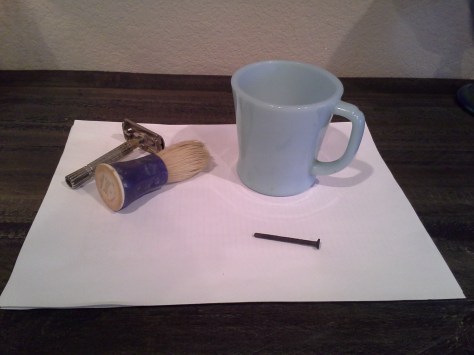
Recently, I wrote a story about finally discovering exactly what type of coffee cup I had used to drink my first cup of coffee with, back when people like my grandpa Willie believed that such things should simply just happen regardless of one’s age. I ordered a jadeite Fire-king cup from Etsy, more as a tribute than a keepsake.

A cousin of mine read my post and reached out to me. It turns out that she had a blue Fire-King cup, a cup my grandpa used to hold his razor and shaving cream brush. He was a minimalist, too, but for totally different reasons than mine.

My grandpa died on a Saturday back in October 1977. The cup he used most days sat dormant, waiting for me to wind my way through decades of intervening years. My cousin graciously offered to send it to me. I received it today. With the piece of ‘art’ I already posted about, this was a day for both something old and something new.

As sentimental as it may sound to say it aloud, holding the cup has already peeled back the foggy curtains of my youth.

The half-broken nail in front of the ‘shaving kit’ is the infamous nail that I wrote about in another blog post. This is the shortened version: A Rusty Nail…

P.S. My post about the jadeite green coffee mug on my blog and public figure Facebook page opened many doors for other people, people whose memories were triggered by the same recollections of family and home.
.

The Perfect Art For the Discerning Bathroom

20180329_131103


Using the excuse of our impending anniversary, I ordered another amazing addition to our decorative theme, most often referred to as “What has he done now?.”

This one is 16X20, on a thick wood panel. I revamped all the picture’s elements, mainly to enhance the colors.

As always, I would like to know what the person who made this for me was thinking when he or she fabricated it.

This artwork is going to look huge hanging in the bathroom. Y-U-G-E, even.

I’m sure it is going to be inspirational for everyone who visits me.

My wife Dawn seemed amused by this one.

I’d like to take a moment to point out that you should try to hide your coveting of this beautiful piece of art.

P.S. I’m not sure which role is for me in the movie “Dumb and Dumber.” I’m leaning towards Dumber. On the other hand, I’m the genius who wisely decided to get one of these lovely reminders of life’s zaniness. The colors in my bathroom are a hint of what I’d like the entire world to look like, one huge and chaotic splash of paint and color.


20180329_135329

This is the artwork once mounted on the bathroom wall. In the background, you can see the beautiful shower curtain, also decorated, as it hangs in reverence toward the artwork.

“The Picture” Lives On…


I originally posted this in 2014.

Enough time has passed since Jimmy died for me to remember the goofiness more than the anguish of cancer that he endured. It’s natural that death works that way, as he was alive and kicking for much longer than he was suffering. There are still those days when I catch myself wondering what Jimmy might make of something or I half-expect him to drive up to the house after getting more stuff for his hoard from a local garage sale.

Fair or not, a lot of Jimmy’s energy was siphoned away by his one family member’s obsession with money and getting what she thought was hers. It was a travesty and I learned a lot from it, whether I wanted to or not. It angered Jimmy that he was being punished with cancer. Had he survived and not relapsed, I think he might have begun to feel pity for his family member again, as she was at the whim of her own addictions and demons – and he could see it.

The above picture is one which my cousin Jimmy insisted I take of him. It was immediately after his first cancer surgery. We were at his mom’s house. (My Aunt Ardith.) As you can see, Jimmy was still smiling and laughing. His mom wasn’t too thrilled with our brand of humor. Our custom was to make the most outrageous, tasteless and macabre statements that we could imagine. Between the two of us, we used to come up with some epic craziness. Aunt Ardith would sit in her perch on the couch next to the sliding glass doors, drinking her whiskey and coke, smoking, and feigning surprise and mirth at some of our goofiness. We had the ability to literally say anything to each other or about each other, directly, without fear of anger.

Jimmy was very confident that he was going to beat cancer. When this picture was taken, I was very hopeful. Realistically hopeful, I thought. Jimmy joked that this picture would make an ideal Christmas card. His mom specifically told me that I had better not make cards with the picture on it. (My reputation for doing that sort of thing was quite well known…) Jimmy then chimed in that it would make an ideal “All I got was this lousy bout of cancer” t-shirt. It’s still funny, although with a slightly different twist to it now.

The plan was going to be to post this picture on Facebook after-the-fact. Jimmy was interested in being able to talk to people about his experiences. As a well-liked employee of Budweiser, he knew a lot of people and would have a lot of opportunities to talk to people. Unfortunately, his cancer came back to take him down.

This picture might as well have been taken in another century. It both seems like both yesterday and ten years ago simultaneously. His mom became ill and died a few short months before him after he relapsed. His mom’s house is sold to strangers and Jimmy’s life is fading in everyone’s collective consciousness.When Jimmy died, I had tried to get people to write anecdotes and stories to share with me. I had made a commitment to share them out in the world in such a way as to attempt to keep those memories alive. I did my best to disseminate his pictures to friends and family, sharing them on public drives and makings disks, printed copies and any other method I could think of. We all have our stories and moments to remember with Jimmy. Some of us have a strong collection of memories, many of which were times that weren’t fun while we were living them but are as much a part of his life as the “good” times. As time slides past us, our stories will slide into the fog with us.

Whether it is wrong to say so or not, Jimmy’s death affected me in countless more ways than my own mother’s death did. I was with Jimmy for much of his final time and was with him when he finally had nothing left with which to fight. He weighed so little that it seemed only his soul remained in him.

Not only were we contemporaries, but we shared a common bond of ridiculous attitude toward many of life’s idiocies. We were both forged in a family where laughter could be replaced by drunken rage without notice. My youth was fuller thanks to Jimmy and his parents, even when the times weren’t so good.

Jimmy’s life was one of potential. His younger years were full of missteps and mistakes. (Isn’t that true of all of us, though?)  It would have been interesting to see what he would have made of his promotion at Budweiser, of his relationship with his girlfriend (and then wife) before his passing, or of his new appreciation for the scarcity of life. Had cancer not kicked him, I think he would have been one of those people who would have flourished with another lease on life. His laugh would have been a beacon to people and his youthful impatience would have dissipated.


(Jimmy is on the far right. Picture from Dogpatch, USA, the 1970s.)
If you’re interested, you can find a few more stories about my cousin Jimmy on this blog by using the “Category” drop-down menu on the right-hand side of the main blog page.
Here’s one: A Reminder…   and An Unfinished Blog Post.

An Imperfect Note Regarding Jimmy Fallon and Redemption

vincent-van-zalinge-396729-unsplash

The meme regarding Jimmy Fallon in his “Man Show” era versus now in his redemption and entertainer role does contain an element of harsh truth to it.

It also contains an oblique admission on your part, though, if you share it.

Jimmy’s former show ended about 15 years ago. That’s approximately 5,500 days of opportunity to transform oneself.

“You’re not the person you used to be,” is one of the best compliments someone can give me.

I hope the same is true for you, too. It’s almost as important as the cliché, “My opinion changes with new information.”

It’s easy to fake a change of heart, especially if ambition, power, money, or politics shape your enlightenment. We fall toward vanity and greed with too much ease at times.

It’s a complicated and fluid process to gauge another person’s transformation and soul. Many religions confer redemption merely by accepting a central tenet of faith. Most adults, however, in their personal lives, require penance, punishment and a long learning period from those seeking redemption.

Skepticism rules in regards to other people, even as most people demand acceptance for their own stories and changes while doubting the changes that others profess.

By outright refusing to concede that it is possible that Jimmy Fallon may indeed be the person he professes to be, you are also indicating that you doubt that personal transformation is possible.

That’s a strange, cynical point of view from where I’m standing.

Keep in mind that I’m not a big Jimmy Fallon fan, nor defending the criticisms toward his previous alter ego.

A few years ago, Tom Cotton, someone who I dislike intensely, suffered a backlash from some regarding his writings when he was much younger and attending Harvard. Many screamed without knowing whether those words reflected who he is today. That denial of possibility is a problem for me.

I think back to my youth and all the indoctrination, fear and shame I had to work through to thrive. All my errors, ignorance and stupidity were indeed mine. To create a timeline which fails to reflect my transformation would be a disservice to me and anyone else who has shed their previous skin. I don’t defend some of the stupidity I said and did.

Even if I attempted a defense of who I once was, I wouldn’t be defending myself.

While my personal views about redemption aren’t religious, I continue to hope that anyone can stop and reboot if self-recognition allows it.

I would hate to think the world wouldn’t encourage anyone to turn away from their past and renew.

It’s okay to be skeptical of those who’ve wronged us or behaved like the Cookie Monster at a bakery convention. As we do, though, we should remind ourselves that some people do in fact change.


Real Man of Genius

20180309_150115


I decided to take advantage of the weather this afternoon. I drove over and parked near the best dog park in Springdale to take a walk.

As enthusiastic as I was, I opted to forego taking a really long walk. It was a stupendous afternoon and I was able to give an older couple on their first visit a tour and explanation of the area. It should make everyone reading this nervous to think that in many ways I am an unofficial ambassador for Springdale.

Arriving back at the car after a decently long walk, I discovered that I didn’t have my car key in my pocket. In a moment of disgust, I realized that I had either locked the car and left the key somewhere in the front or dropped the key somewhere on my long and circuitous route along the trail and back road. I’m sure that bystanders wondered if I had lost my marbles because I checked my pockets at least three times and then inexplicably removed my hat to check it, too. You never know -at my age, it’s possible to put your wallet in the freezer so a car key in my hat wouldn’t be impossible. Besides, if Seuss can put a cat in the hat, a car key seems benign.

Having no choice, I walked the same route again, vainly hoping to spy my key lying somewhere on or near the trail. My plan for a “not so long” walk evaporated. I knew that if I didn’t find the key, I would be calling my German friend named Über to come pick me up.

As is the case in so many stories, the key was at the very end of my original walk, where both sidewalk and pavement ended. I had turned around there, pulling my phone from my pocket to check the time and change the music selection. This spot is very near an infamous hoarder house I’ve written about before.

I saw a little black object in the middle of the sidewalk from quite a distance, hoping that it would be my key and thus save me from dealing with the persnickety car dealer to obtain another one.

While I was glad to see that my temporarily lost key was indeed the object on the sidewalk at the end of the road, I was a little melancholy to know that I would have to walk the route again to get back to my car. These first world problems are such a nuisance.

I forced myself to walk back to my car, as the breeze lifted me, the sun warmed me, and the music accompanied my thoughts, lost in that beautiful March afternoon. My dogs were barking as I neared my car and the dog park. There were several human and canines shouting, barking, laughing, and cavorting. As I stopped to pet one of the dogs which ran toward me along the fence, my own dogs were forgotten, even as I reached over and laughed too, as the dog licked my entire arm in happiness.

I Think His Name Was Johnny

77777777777777.JPG


It is strange how the human mind works.

This is a picture of a neighbor of mine, from years ago. I had a picture of us once. I took it in a moment in which he was feeling spontaneous. Jokingly, he asked to see it one afternoon and so I went inside and found it, handing it to him with a smile, so that he could look at it and make a wisecrack.

“Thanks,” he said, and put it in his pocket. I never saw that picture again.

This picture is one I took when I came out of my place and saw him sitting on the stoop, watching life pass him on the nearby street.


He lived near me and I spoke to him at least 100 times. While I have the ability to newly discover his name, I don’t recall what it is without using the power of the internet. He spoke with his hands, always, as his fingers moved through the air to document how much he had seen in his life.

I think his name was “Johnny,” and even as I tell myself that this is the case, I doubt my memory. I remember how animated he was when another neighbor left their car in the wrong gear. It rolled down the slight hill and smashed his older and meticulously-maintained older car. I also remember asking him for a lit cigarette (I didn’t smoke) and sticking it up one of my nostrils. He laughed so hard I thought he was going to need CPR.

He killed himself with a pistol as he sat mired in his loneliness, near the narrow road in that insufferably small town, where the community pool once existed. The road is no longer so narrow, but my memory remains constricted.

I felt stupid and selfish, watching the thunderstorm of police and bystanders near the road. His wife was there, waiting for the rush to subside. I drank at least 6 cups of coffee, one after another as word spread that he had killed himself. He had lived a fascinating life, one filled with great moments and great turmoil.

I feel like my own unseen and upcoming suffering erased him from my mind.

I see his picture in my photo archives. It picks at me for reasons that I can’t quite place.

I added the hyperrealistic effect to the colors because my memory of who he truly was has made its escape from my grasp.