It’s no comfort to know this, but if people work to keep you silent, they inadvertently tell you that you have power. Silencing you is an attempt to avoid the consequences of mistreating you or confronting that you’re right about something. (It’s the same in relationships as it is at work.) People without valid points or influence are ignored. People who tell the truth or cause discomfort upset the status quo. Again, it is no consolation. But remember that silencing treatment is a de facto acknowledgment that you’re on the right track. Everything sounds crazy until it becomes the truth. We do not celebrate the people who make us uncomfortable. About our behavior as individuals and certainly not as a group.
While my thoughts aren’t about book banning, the same concept applies. People with the urge to limit content, ideas, and information are admitting that they are afraid of what’s inside. You don’t ban things or ideas that don’t threaten your opinion. It’s usually a nod to the fact that they fully know that much of their opinions and worldview aren’t sustainable under the lens of logic.
No one likes to be wrong.
No one likes having to confront their mistakes.
No one likes being judged for the associations we have: friends, religions, politics, sports, work.
Looking at where we are as people and our lack of focus as a society, the last thing we need is for the outliers to stop pushing our buttons. A therapist once told me that the more we stop hearing criticism, the more in danger we are of being cemented in the past and of playing it safe.
Silencing behavior is the cousin to secrecy. Almost all misbehavior and turmoil derive from secrecy and the lack of transparency. Whether it’s us as a whole or each of us as individuals.
PS I wish it were okay to say, “I think you’re wrong,” without starting a fight. Because we damn well think our friends, family, and coworkers are wrong a LOT. Why isn’t it okay to just admit it? And why can’t we accept this sort of observation for what it is: someone’s opinion. We take everything personally as if we’re surprised that people haven’t had the same lives as us, the same education, the same religion, or the same interpersonal relationships.
On an early Wednesday afternoon not long ago, a couple of miscreants disguised as wannabe drug dealers arrived at the apartment complex. They were vainly searching for one of the hooligans who previously lived below me. They banged on doors and even turned a couple of doorknobs. Their intentions were murderous. I miss the neighbors who once lived below me. Definitely Crystal Methodists and possessing an abnormal interest in homemade chemistry. Not to mention the drug dealer who lived next to me. It’s easier to write crime stories when you can make popcorn and watch it unfold in real-time. Whatever happened to the good old days when drug dealers demanded some sort of decorum? 🙂 One of the duo shouted and threatened me from the parking lot after banging a second time on my door. He promised he would return to give me an ass-kicking. I’m feeling lonely without him darkening my doorway as promised. I had a very creative surprise waiting for him. It might have even made the nightly news. The mugshot would have been glorious! Since the landlords asked me to do so, I uploaded security video of the gentlemen to the police. It was VERY tempting to add clown shoes and hats to the footage. Yes, I am sure that they are actually dangerous. (Not to books, critical thinking, polysyllabic words, or civilized behavior.) I try to remember that even people so devoid of decency have mothers. Mustachioed moms, I’m certain, the kind whose upper lips look like boiled caterpillars. If I sound carefree in my attitude, it’s due to my broken sense of danger. You can thank my Dad for a big part of that. But the reality is that danger blossoms anywhere – and at any time. The allegedly normal-looking folks tend to be as volatile as those whose appearance can best be described as “the before picture.” The ass-kicker didn’t return to my apartment complex. I’m working through the angst of missing his delightful presence. One of the surprises I had waiting was to add the music to “I Believe I Can Fly” to the footage that would have resulted. There are advantages to living on the second floor. His flight off my landing would be short, and without an in-flight meal.
PS I threw the paint can away, the best part of my pre-arranged surprise had either of the hooligans returned.
Prepare yourself for turbulent oversharing. Some wounds get exposed again, revealing dark, unmanageable emotions. These words are supposed to be about addiction, alcoholism, and generational anger. I apologize in advance to anyone who thinks I am saying too much or to inflict pain.
I don’t want “I am so sorry” or any words of encouragement. Instead, I would much prefer that you read these words. And if they ring true for someone in your life, find a way to act before it’s too far down the road to turn back.
People often forget that I became an unwilling expert in abnormal psychology because I lived in an intermittent crucible inhabited by some of the most versed, angry people. For most of my life, I told people I believed my DNA must be infected. Though others couldn’t recognize it, I did. Though I now call it the “Bobby Dean,” the sinister recognition that my family’s maternal and paternal sides gifted me with the lesser side of humanity plagues me.
Like anyone without children, I sometimes mourn the choice to have none. Since life taught me that intelligence has little to do with the odds of giving in to anger and addiction, I remind myself that it’s possible that I would have given in to the lunacy passed down through my family. At fifty-six, if I had treated my children like others, there would have been little choice other than to end myself. I’ve hurt other people callously. But I at least can swallow my ‘what-ifs’ and know that I didn’t hurt my children and continue the generational trauma that populates the world with damaged adults. Ones who carry invisible wounds, anger, self-doubt, and the handicap of attempting to be happy and prosperous, even though they were mentally beaten into submission.
Nothing new happened recently to rip the bandage off. However, I was forced to learn further details of how nasty the effects of this anger and addiction were to people in my family. Because of geography and shared secrecy, it turns out that the imagined and partially confirmed psychopathy passed to the next generation was much worse than I knew.
Alcoholism amplifies monstrous behavior. It might not create it, but it unleashes it. The whisper of the disinhibiting lover in a drunk’s head becomes a shout. The person you once knew gets trapped and silent inside the shell of the alcoholic. As it worsens, the person you once knew becomes a faint echo. The new version will say and do things that increasingly become impossible to live with. You are tethered to the person who once was. As a result, you attempt to deal rationally with the effects of addiction.
Meanwhile, the person possessed by it will do anything to guard their ability to keep drinking. They’ll gaslight you, lash out, and create clusters of people who assume that the version of the truth they are being told is valid. People with no ill feelings toward one another become manipulated pawns, initially acting out of honest concern. But what results is another level of toxic behavior, all hinged on the central person. It is drama and chaos. Because of the secrecy and generated toxicity, people’s relationships get ruined.
One of the most significant pieces of advice I can give people when they are attempting to coexist in an addict’s world is to talk. Talk to everyone. I guarantee that the addict curates everything you do and say to make you a monster because addiction requires secrecy. Intelligent addicts learn the behaviors of narcissists.
People sometimes ask me what makes me so well-versed in narcissism. (Not the generalized version of it prevalent in social media.) Anyone raised or living around addicts inadvertently learns the behaviors. The hallmarks of narcissism always bubble up with addicts and alcoholics. They must deny reality. They become delusional to the effects of their behavior. They enlist everyone and everything to perpetuate their ability to keep drinking.
Recently, I met someone who triggered my “Bobby Dean” response. I knew immediately upon meeting them that they were evil. I hate to use that word. Nothing outwardly about them gave a clue, not directly. The bells went off in my head. I was right about them, of course. And then you’re left with the impossible task of coexisting with them. Such people thrive on chaos and the emotional distress of people around them. Since most people are genuine, they get stuck in a loop of the foolish desire to mitigate the narcissist. It can’t be done.
In the same way, most of us think we can win over an alcoholic with love, words, and compassion. It’s not true. You’re not dealing with a real person until you can slap the bottle out of their hands. They are an angry parody, possessed by a demon demanding nourishment. Replace the word ‘alcohol’ with ‘heroin’ and you’ll realize that until you get rid of the heroin, you can’t move forward. The addict can’t attempt to be themselves and regain their humanity until they eliminate the invisible straightjacket of addiction. Addicts put you in the position of helpless anger. Anger with yourself and anger with them. We each know that a person trapped in addiction isn’t being themselves. But that knowledge does not give us any comfort. We find ourselves screaming. It’s reactionary abuse.
My goal isn’t to tarnish my brother in this post. He was older than me. I loved him and knew early on that he was among the most intelligent people I’d ever known. We survived our parents. He got the worst of it from Dad. Perversely, it turns out he got the worst from Mom, too. As he got older, I tried to give him the benefit of the doubt. Obviously, the anger he’d inherited from our family poisoned him. I thought it must be me, that I was somehow doing or saying things wrong. Toxic people don’t take the time to doubt whether they are wrong. I became the opposite of my brother in so many ways. And he hated being wrong. It was one of his defining behaviors. Because he was so smart, he was seldom wrong. But when he was wrong? He doubled and tripled down on it. From there, he justified saying and doing anything to keep it that way. The alcohol perverted him into someone who could behave and speak in ways that the younger version of himself could not have imagined.
He was particularly vile to me when I changed my name. At that point in his life, he still pretended to carry the torch of family honor. He’d grown up with the Terry side of the family. They were true experts in horrific secrecy. When I changed my name, I wrote them all letters. There was no way to avoid them knowing that I rejected everything my name held within the letters that formed it. They got their revenge when my dad died. Their secret hatred was so intense that they refused even to list me by my legal name in his obituary. That’s the best example of expressed passive-aggressive behavior that I can cite. When I think of self-righteous hypocrisy, I imagine their example. It does not mean I don’t have good memories of them, too! But the older I get, the more I concentrate on knowing they were well aware of what was happening in our violent private lives. They preferred to stay out of it, even though they knew what was happening. Family honor and secrecy held more value than protecting children who were getting damaged right under their noses. It invalidated every religious idea that they allegedly cherished. I can’t imagine doing that. It makes sense that they hid my sister from me for almost fifty years. That she wasn’t white must have been the biggest threat to their false family honor that they could imagine. I would hate myself if I’d become the secret racists that they were. I’d write more about this, but that part of the story isn’t mine to tell.
I made the mistake of attempting to lovingly help my brother a few years before he died. I was all in. It was the worst possible move. He retaliated by lashing at me and everyone around me. He scorched the Earth to keep his addiction. I was rightfully convinced that he might actually kill me. He spent a great deal of time detailing how he would do it. Had he wanted to, he easily could have. Life had geared him up with the tools to do just about anything. Some of the family pretended they couldn’t imagine he was doing and saying those things, even though they could see the emails, listen to the voicemails, and read the texts. Each of them had spent decades enforcing family silence. Why would it be any different with my brother? Had this not happened with my brother, I might not have decided to cut off ties with my Mom not long after. It was just too much. Two of the world’s best alcoholics take a massive toll on a person’s sanity. It struck me how similar they were, each insistent on maintaining their addiction at any cost.
My brother was lucky. Though he left a trail behind him, even professionally, he was forced to retire and avoid the consequences that would have befallen anyone outside law enforcement. I hope anyone he encountered at work didn’t suffer as much as I imagined. People in that stage of alcoholism behave in ways that they never would absent the addiction. It is no secret that law enforcement suffers more from addiction than the general population. (As they do domestic abuse.)
No one was safe. No one ever is around an end-of-run alcoholic.
My brother had the chance to retire and enjoy a full life. To make amends. To admit his transgressions, to replace spiteful words with love and hugs, and to reject the poison of our DNA. He chose otherwise. It’s a story I have witnessed repeated too many times. It is agony for all of us to prefer to tell the good stories and push back the bad ones. Who wouldn’t want to honor the good times? There were many. My brother could have written several of the best books ever written. I would likely have helped him. Anyone and anything can be forgiven if they are open to it. Alcoholism demands everything. It reduces people to their worst common denominator.
A couple of years ago, I scrapped a lot of my shared history and records of my brother. After his death, I thought I could move on and continue to work to remember the good things about him. Some of it was incredible, an irrefutable dissertation on how crazy his addiction made him. He created entire fantasy worlds, each independent of the other, all designed to alienate people and render them unable to interfere with his addiction. Addiction requires secrecy. And as it progresses, it forces the addict to silence those who challenge it. It is exactly like a demon facing exorcism. It will destroy the world in the pursuit of its existence, even if it kills the host.
I write this because the newest revelations force me to confront that he created a world of pain for people. Those people are left with the immense struggle to be good people. It can be done. The first step is to no longer worry about people knowing. Sunlight gives breath. You have to talk about it, acknowledge it, and work to silence the self-doubt that the toxicity of alcoholism demands.
I damn well know that we all have addicts or alcoholics in our lives right now. The cycle is endless. If you think it is manageable, you’re wrong. It will worsen. You’ll look back and understand that if you could return to when it started, you’d do almost anything to stop it.
If you have an addict or alcoholic in your life, whether you think it is true or not, you must start talking to people first. They need to know you are dealing with an addict. You must rob the alcoholic of their secrecy. It is the critical component that precedes every other consequence and behavior.
I can add anger to my reaction recently. Anger can motivate if channeled. If you’re dealing with an addict or alcoholic, I recommend anger as a defense. Let them experience the consequences of what they’ve created. If you do nothing, you’re going to be angry anyway. It might be more effective than compassion.
I’m telling you this as an unwilling expert.
A piece of my heart will always be broken. To discover that people now gone still creates shockwaves in the hearts and minds of those who are still here. It is a recurring wound, and one opened periodically by reminders by those who remind me of myself when I was young.
PS Pictures don’t lie. But they do conceal, just as most of us do as we live our daily lives. Just remember, I had many great moments as a kid. And as an adult with my brother. But behind it all…
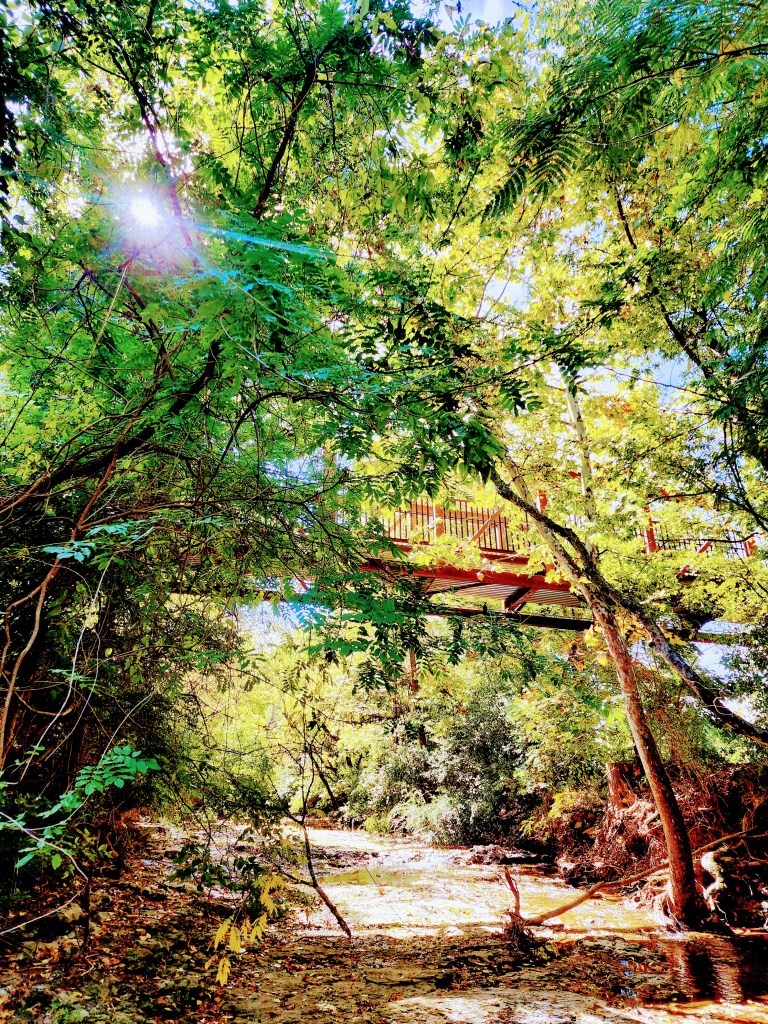
I’m in the brook, a fancier word for creek. To say that the swiftly moving water feels pleasurable on my toes is a trivialization. I left things undone before I came here. (No matter where you find yourself, that statement will be true.)
I chose the tallest big flat rock I could find to place in the middle of the stream. The objective was to sit down and stretch my legs in the water. The rock weighed at least seventy lbs. But once I picked it up, I was committed. Even as I regretted my decision as my feet slipped on the mossy rocks.
I would worry about the potential for unseen reptiles rapidly approaching beneath the sheen of the water. But I see no need. The risk is small. And certainly less than the unfelt one that unleashed on a Monday afternoon after work almost two years ago. Within hours, a skilled surgeon cut me open, doing his version of an extemporaneous fact-finding mission. I assume it was a skilled surgeon. For all I know, it could have been a housekeeper impersonating a surgeon. I would hope he would have charged me less.
I woke up the next morning. Given that almost 7 million Americans are moving around with brain aneurysms, I won’t hold it against a snake or two if they do what comes naturally to them. Not to mention the lunacy of driving around here with rabid sports aficionados driving amok.
The number of days remaining to comfortably stand in the creek up to my knees is rapidly dwindling. Both because of Autumn’s approach and perhaps my own twilight.
I left the apartment behind this afternoon to go to the creek. Isn’t it amazing how inertia sometimes masquerades as relaxation or obligation? There will always be dust. Trash to take out. And other equally important tasks such as rearranging the utensil drawer.
Yesterday, I thought of myself as on the fringe. At least one hundred interesting things to do or see, yet there I was, esconsed in my tiny little box.
When you find yourself literally dreaming ‘time is short,’ maybe it’s a good time to give inertia a hard kick in the ass.
I stood on the landing, capturing the background insect sounds and the lightning above. A solitary skateboarder passed about 50 yards away, the friction of his wheels echoing through the empty streets. Much of the anticipated rain is north. I’m hoping that the creeks will fill. I’ve missed the peacefulness of the cool water. I heard the first scattered and intermittent drops of rain at 3:10 a.m. I hope the clouds open before I head to work. I could really use a September early morning baptism today. X
I can’t control how such admissions paint me. I rarely memorialize my mom’s death like I do others. She died ten years ago today. I found a picture of her today, one I might have seen decades ago but haven’t since. I inexpertly sharpened it today. My favorite grandmother died on the 6th, while my wife died on the 4th; different years, different circumstances. I spent a year not talking to my mom. I’d spent decades attempting to bridge the gap of anger and alcoholism with her. Like so many children of such parents, I was convinced that I could talk and behave in a way that would earn me normalcy as if I were the one with the deficiency. Drinking didn’t kill her. But it infected so many parts of her life. The infection of it spread to other people. It wasn’t her intention. She learned the skill from others. Like all other close family members of mine who were alcoholics, she died with an insatiable urge to drink until anger consumed her. Recently, suspected truths of another member of my family blossomed. He’s gone now. No second chances, no new learned behavior, no sitting on the porch as the sunset approaches. The familial infection he acquired in his youth overpowered him, once again proving that addiction has nothing to do with intelligence. Addiction and anger stain the people around those who suffer from it. And he unfortunately passed the ball and burden of consequences to other innocents. I don’t have any superpowers which shield me from the tendency to drink or drown myself in a fog. If I did have them? I would hand them to the people who I recently discovered to be needing them.
When I write things such as this, I trigger people. For much of my life, my brother was the vanguard of family honor, demanding silence. It was a habit he absorbed from the paternal side of my family. I discovered very late in life that their cabal hid many secrets, even people, from me. I’ve yet to find an addict who can move freely in the sunlight; their behavior demands secrecy and closed lips. In most of these cases, some of those lips will be bloodied because addiction inevitably exacts the price of violence, one way or another. Either to oneself or to everyone in the bubble nearest them.
That is exactly the power of addiction, the whispering lover that only the addict or alcoholic hears, blossoms.
I shared a quote by Annie Lemott twice last week: “You own everything that happened to you. Tell your stories. If people wanted you to write warmly about them, they should have behaved better.” I don’t write to inflict further harm. On the other hand, silence is self-inflicted violence. If we are to judge people, it must include their shining moments, too. I have good memories, and I share some of those, too. It’s fascinating to watch people as they listen to my stories; some only selectively note when I say anything they perceive as an accusation or something best not discussed. None of the people who later suffered from the afflictions of addiction and anger were born with the intention to slide into the abyss while terrorizing their friends and family. The filtered truth I share in no way alters history or changes who they were. They had their moment on stage. As it will for all of us, the curtains will close, and our time will end. Your time to live your story fits narrowly inside that timespan.
Secrecy. Silence.
Time is short. Live your life under your own banner and within your own control.
I stood next to the extravagant nickel-cornered casket. A woman I vaguely recognized was attempting to say words that might reach me. “Everything is temporary. One morning you’ll wake up, and it will be different. You just need some time.” I nodded.
I turned to my left as someone cleared their throat. It was an older distinguished man wearing a dark suit. He was probably in his late sixties. A pair of forgotten reading glasses perched on top of his head. His face seemed familiar to me, but his voice was one I’d never heard before. It was a deep baritone.
“She’s right. Everything is temporary. This pain. The breakfast you ate. The tingle you feel when the right person touches you. Even your life. Temporary is a mindset.”
The woman I was talking to turned to him and asked who he was.
He just shook his head, dismissing her.
He nodded again and held his hand out. I didn’t even hesitate as my fingers reached his. He shook my hand briefly, and then his fingers circled my wrist. It didn’t surprise me. Déjà Vu doesn’t cover it. I was certain he’d done it before. When my eyes met his, I was struck by how much like blue skies they looked.
The surge of electricity that passed through him to me didn’t cause me to jerk. Instead, it caused paralysis. My eyes closed. For how long, I’m not certain. When I opened my eyes, the man no longer held my wrist. He now stood by the foot of the casket.
His voice resonated. “X, please help me with the viewing by lifting the other end?”
I moved to help without pausing to wonder about who the man was or why he asked me to help. Oddly, I couldn’t remember who lay inside the casket. The woman who had been talking to me no longer stood nearby.
We each lifted both ends of the coffin lid as the man nodded. Unlike most coffins, this one had no separation in the top. The coffin was empty.
The man watched my eyes. “He was cremated. The urn will come in a few minutes. For now, we’ll place his book here in the coffin. He said it was his only achievement. The man reached behind the coffin and retrieved a hardcover book from a small table behind the casket and held it up. “Time Is Short” was emblazoned on the cover as the title.
“Ironic title, don’t you think?” the man asked me, smiling.
“Yes. It sounds like something I’d say.” I laughed.
The man walked to the middle of the casket and placed the book face up inside the casket. I walked a few steps toward him and stood next to him, facing the room. It was a large, open room, filled with rows of pews and comfortable chairs. We were the only occupants.
“Let’s sit down for a moment so you can collect your thoughts.” The man wasn’t asking so I followed him to the front row pew, all the way to the right.
We sat on the cushioned pew. Oddly, my brain was absent of almost all thought.
“Do you have any questions, X? Ask me anything.”
“Whose funeral is this?”
He laughed. “Aren’t they all so similar? I don’t want to spoil it. Go up and turn the book over. The author’s picture is on the back.”
I stood up and walked over to the casket. While I know several writers, I was having difficulty remembering names and faces.
I looked at the picture behind the “Time Is Short” title running across the face of the book. It was a collage of colors, each coalescing across an auburn field and a solitary tree illuminated by a sunset. “Amen Tailor” was the author’s name. The name evoked an odd familiarity for me. Then I remembered that it was an anagram for “I am not real.” I smiled.
I turned the book over. My fingers went numb as I looked at the face on the back. It was me, but not quite a me that I recognized immediately. I realized it was the man seated behind me. I turned with the book held tightly in my hands. The man stood two feet away from me, staring intently at me with his piercing cloudy eyes.
“Interesting, isn’t it, that you, or we rather, had to use a pseudonym to get people to listen to us? It wasn’t enough to already have a new name.” He laughed, and I smiled.
“How much time is left? 10 years? 20?”
He shook his head. “It doesn’t work that way. This is one possible outcome. Obviously, though, you have enough time to do that.” He pointed to the book in my hands. “When I jolted you, I gave you just enough push to do one thing you’d love to accomplish in life. Now, you get to choose what that might be.”
I extended my left hand to shake his, a habit only left-handers would understand. As his fingers touched mine, I felt a slight shock again.
“You’ll have to leave the book here with me before you go. You can exit out the side door next to the chapel service area behind you.”
I handed him the book, took a long look at the casket, and walked outside. No more than any other day in my life, I didn’t know what the awaiting sunshine might hold.
“Wandering the world, armed with chalk.” This would probably be a great quote to be atop a police report for suspicious activity. Words and ideas are suspicious enough. Judging by the scarcity of anything other than impersonal superficial observations, it’s no wonder people are reluctant to disclose. We aren’t supposed to say that our souls are fatigued at times. That we might be painfully lonely. Or that when we look at people around us, we sometimes feel like opposing teams of aliens, both communicating via hieroglyphics. Each of us carries around a private world in our skull. We are certain that people will think our marbles might be scattered if we share the contents. It’s because thoughts are private and concealable. I’m sure that if mind reading were reality, after the initial shock and unfamiliarity of unavoidable honesty, we would all feel relief. We share a finite number of emotions. And we definitely like to look at other people like they are the weird ones. We can succeed at doing so only because we can curate what we express.
Some of us have poet’s hearts. Others, a practical chronometer that concerns itself only with getting things done. A few are hedonists, searching for the elusive bacchanalia that might allow them to forget themselves. Walking down Leverett, even before the sun dares to rise, the scent of recreational escape intermittently reaches my nose. It would be easy to judge those who choose it so early in their day. But many of us choose coffee or cigarettes, both of which are cleverly concealed stimulant delivery devices.
During my chalking expedition disguised as a recreational walk this morning, I was pleased to see that the front of the line at the convenience store was occupied by a patron wearing a long blue bathrobe. I made a catty comment and it broke the ice. Because you damn well know everyone in there was secretly thinking about the dude in the robe. Was he wearing it for comfort? Attention? Was it family spa day? The explanation didn’t matter to me. I was just glad to see some weirdness. He at least had the nerve to wear it openly instead of containing it in the camouflage of his thoughts.
I left a trail of chalk thoughts. If anyone retraces my steps, they will laugh. And a couple of them will make them think. Among those possible considerations is whether the author needs to be medicated. I have a theory about that. Most of the people who use drugs should stop. And a great number of people who don’t probably should start.
Though it’s not related, one of the stories I told the clerk this morning is that it’s amazing how many things we do today that are a result of unplanned echoes from history. Even the size of our railroad tracks is largely a result of the ruts in roads from Roman chariots. And that we as people do the same thing. We find ourselves using the grooves of our past routine to subconsciously control the day we’ll have. I know it’s not the normal fodder for convenience store conversation, but it’s a hell of a lot better than talking about the upcoming gladiatorial sports event that seems to have infected everyone.
If by some miracle you are still reading this post, take a moment and imagine that you had the power to say anything you want. To anyone. Take another moment to realize that you already do. The greater the disparity between what you would like to say and what you silence is a determinant in how happy you feel.
I saw him coming up the trail access. The shadows and lighting at 2 a.m. were murky at best. His approach seemed suspicious. I’m not generally concerned about the what-ifs of such people. Someone can just as easily jump onto me from the tree canopy if they’d like. (At times, I almost wish someone would. What a story that would be.) I can run fast, and my appearance tricks people into thinking I’m Gomer. While I am no Bruce Lee, I can snatch someone bald-headed faster than they can say “supercalifragilisticexpialidocious.” I say “hello” or wave to everyone. I’d probably wave “howdy” to the Queen if she came sightseeing.
It had to be a man approaching me or perhaps the Beauty Queen of Madison County. I realize that I am repeating myself with that comparison. My apologies to the residents of Madison County, all of whom stopped reading after the first paragraph due to lip fatigue.
As he grew closer, the light from the streetlight illuminated him more. He had one hand in his pocket, and his pace seemed off.
As he came closer, my comedic instincts took over. “Have you seen my pet llama? He got out of the backyard a few minutes ago.”
“What’s that you said? A llama?” He pronounced it oddly, like he’d grown up learning phonetics from an inebriated bingo caller.
“A llama, yes. He got out.”
He stopped in his tracks, confused. “No. Not even a dog.”
“Dang. Thanks. I can’t own dogs, though. Not after Ohio.”
I could see that the gears weren’t clicking. It was too much odd conversation. He looked back and then at me two or three times.
“Well, have a good morning. I hope my llama is okay.”
“Yeah, me too,” he said, and kept walking, this time with a stable pace. I briefly wondered what he might do if I started running toward HIM. Imagine that police report.
“Gomez, where are you?” I half-shouted, even if the residents are the nearby apartment complex heard me.
My llama Gomez didn’t materialize.
You’re welcome to use the Gomez the Llama self-defense response if you’d like.
Waking up in a strange place, drinking a cup of bitter coffee, walking the unknown pre-sunrise streets, feeling the warm breeze blow across the small man-made lake, standing in a pool watching the sun feebly start its ascent, taking sips of a second cup waiting for me on the pool edge… sublime delights owed to my predilection for less sleep. Lemon moments stolen from the day. Sunday morning, I walked all the streets around the Bentonville airport. Several things reminded me of what James Cameron might include in the moments immediately before an approaching apocalypse. The effect was amplified because of diffused lights, some of which were unusual hues, especially so with violet and soft reds. There were no moving cars during the entirety of my circuits through those streets. The effect was amplified because I had watched an anomalous object in the sky for a few minutes. The flat topography provided an immense view of the sky. I looped around back to highway 71 and walked the middle of the lane. It’s fascinating walking it absent traffic. Monday morning, I walked a longer different route that ended immediately before the sunrise. I stood and watched the open sky, expansive above me, with the reflection of the lake glittering darkly. When the true sunrise started, I continued my custom of hanging a cup in a tree.
This place wasn’t as complicated or eccentric as most. But the simplicity was relaxing and beautiful. It’s hard to complain about life when there is a pool to submerge one’s toes and worries. It was amazing to get up early and instead of focusing all of my energy on work, I was able to just walk with no intentions.