I got reminded of my own words. Ones echoed by Obama years ago. Paraphrased, it’s “Let them speak and reveal their idiocy.”
The infamous monkey video Trump posted demonstrates his lack of character and qualification for the office he holds.
It also serves the dual advantage of revealing to us those who are hiding in plain sight, the ones who are studiously avoiding the revelation that they are admirers of Trump.
Each successive debacle cements the certainty that a lot of us weren’t wrong about him.
It’s outrageous, of course. But take a minute and think about the reaction Obama and his wife must had upon seeing it. Think about Obama’s smile and the way he shakes his head in the face of lesser intellect attempting to insult him.
When he’s gone, we will collectively sigh. But over time, we will forget that another person like him can come along. And many of the people around us will willingly abandon principle to cheer another buffoon into office. People like him don’t get power accidentally. They take the worst elements and amplify them.
Trump’s hateful words and antics fire up reactions. He’s a narcissist who feeds on the limelight and publicity. He is an energy vampire.
The kind of post he made about the Obamas is a self-accusation that he’s too stupid to understand.
“You own everything that happened to you. Tell your stories. If people wanted you to write warmly about them, they should have behaved better.” Amy Lammot
If my ex-wife calls me a jerk, she earned the right.
If the friend I let down thinks poorly of me for failing to step in when I could have, that’s his story to share.
If I tell violent stories about my dad, they’re just as true as humorous stories about him.
If you had a toxic boss who drove you to near insanity, he or she can’t fault you for expressing it.
Every time I share this quote, someone discovers it for the first time. It’s liberating. But it also can be terrifying for people who’ve lived outside the bounds of kindness.
The Golden Rule perfectly encapsulates what we should strive for. Yet, people are surprised when we sometimes appropriately repay unkindness with healthy criticism.
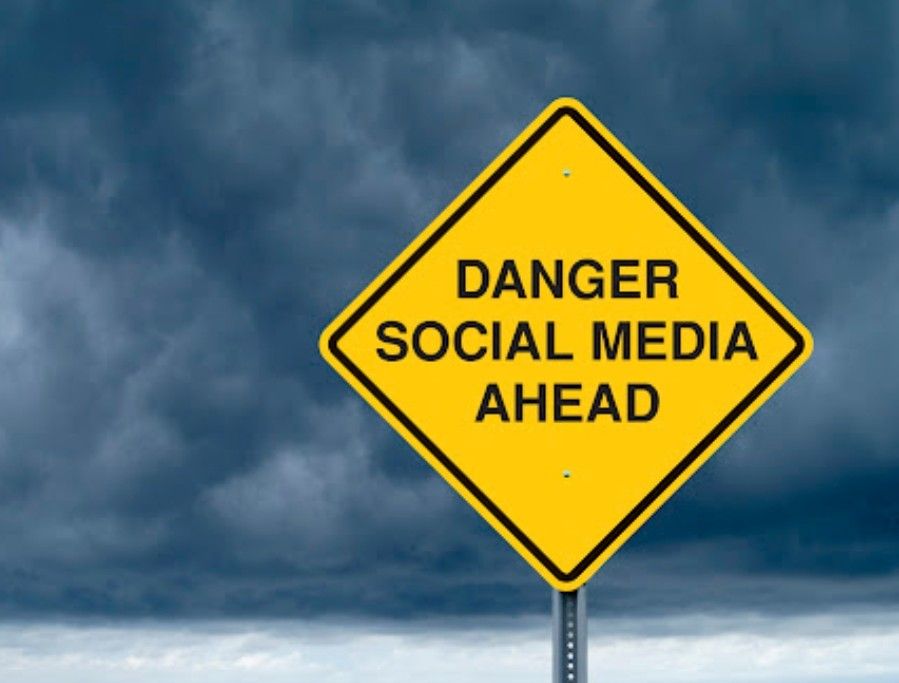
On a recent friend’s post, people seemed to agree with “Social media destroys friendships.”
Do you mean to say, much like telephones did when they were introduced? Or computers?
Blaming technology is a vacuous accusation.
Social media is problematic because people do not use it in the same way that they hold conversations in their living rooms.
Much for the same reason, when people enter vehicles, it adds a layer of impersonal anonymity. That’s why people do and say things that they most likely wouldn’t do in person. It leads to road rage. Cursing. Aggressive behavior.
Social media gives people the power to reveal themselves. It does not create problems out of thin air. It strips back the ignorance we have about the things the people we know believe. It reveals resentment and anger hidden below the surface. It gives access to rudeness and poorly planned responses. That behavior is the responsibility of each person who engages in it. It does not fall on the outlet of expression we use as social media.
Social media is a virtual living room and the modern town square. Personally, I treat mine like my living room. If you go to my pages, you don’t see hostility. That’s because I don’t typically engage in it, and it’s not welcome in my virtual space.
If, however, I visit a page or website that’s not mine, I expect it to look and sound exactly like our society. If you are expecting kumbaya in content outside of your control, you should probably take a dosage of reality pills. People in groups are crass and argumentative. Logic is not the presiding factor. But people are also creative, compassionate, and informative. If you judge one portion of social media without consideration for the other, you’re missing the point.
If you gather a group of people, you’re going to hear a huge variety of opinions, interests, and hobbies. You’ll see people whispering to each other if they’re having conversations about other people. Uncle Larry is going to say something racist. Someone will likely show up drinking – and you know darn well they aren’t going to behave. Others will attempt to hog the conversation or say outrageous things for the reasons that people say and do those things. Social media works the same way.
Social media did not become massively popular by accident. It is the result of our individual choice and vote to use our precious time and energy engaging with it.
Social media does not destroy friendships. People do. One crass comment at a time.
People who focus exclusively on the negative aspects of social media ignore the power and beauty of collective expression. It’s easy to dial in to cynicism and hate. These aspects of social media are exactly what people exploit when they have agendas.
Each of us has tools to limit our exposure to things we don’t want to see. It works exactly like a TV guide. We can ignore platforms, programs, and the stations we choose. I don’t get angry because MTV has cooking shows. I scroll past it. I roll my eyes at what some people say, just as I expect them to roll their eyes or get pissy when they see mine.
If you’re looking at content from your friends, family, and acquaintances that makes you angry, it might be better to take a second look at who they are, how they behave, and what they believe. Act accordingly. They are revealing themselves. And while it might frustrate you, you at least have a means to see what occupies their thoughts and time.
Social media is what you make it. You can’t control collective communication. But you can control your exposure and how you choose to use it.
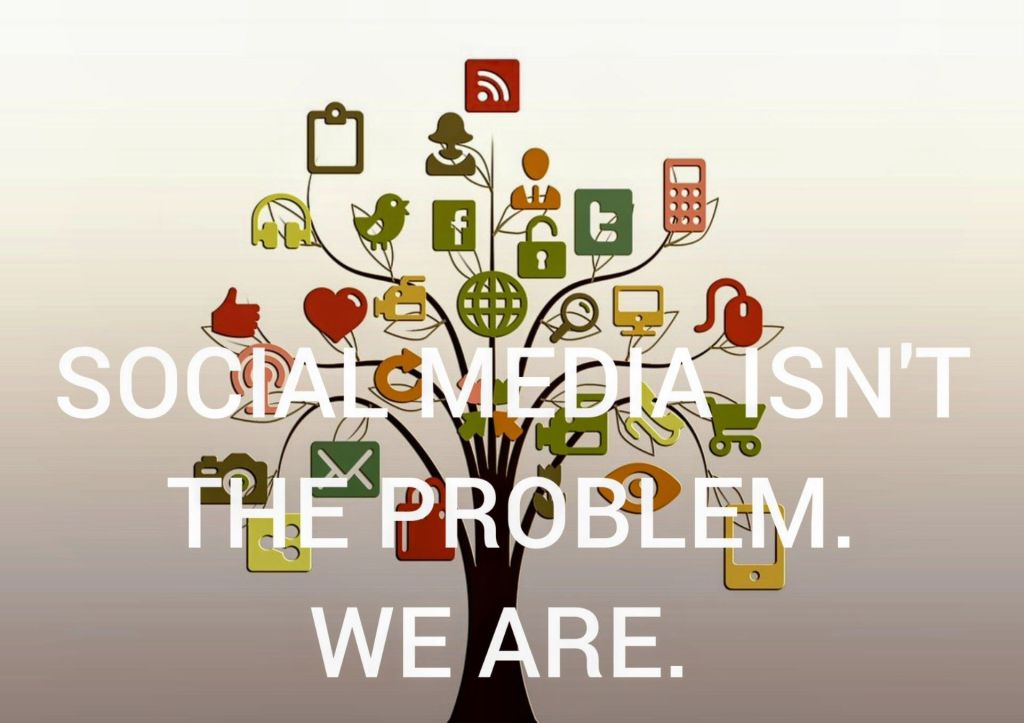
Social media per se is not the problem. It is us. All the defects and things about it that you do not enjoy are a reflection of our society.
Social media is exactly like alcoholism. Alcoholics falsely like to claim that their behavior is the result of drinking. It’s not. Alcohol removes their inhibitions and their control regarding what’s already in their heads. It is not a creator. It is a revelator.
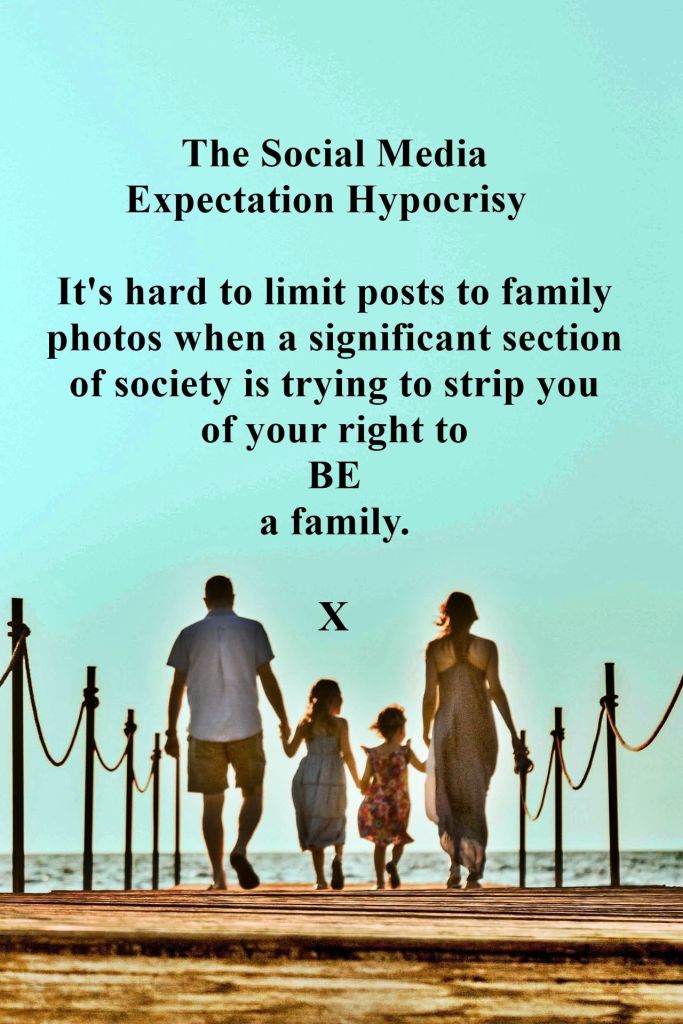
I wrote a powerful rebuttal to something recently. I haven’t posted it. In doing so, I came up with a quote that covers much of problem inherent in what I wrote about. The quote in the picture is a snippet of the words I conjured.
Our society will not function unless the prevailing notion that ‘live and let live’ governs us. Politics is a choice, much like religion, opinion, or what color underwear you choose. X .
Argument Starter 101: (Or, “How To Win The Internet”)
Preface: did you know one of the top ways to trigger algorithm engagement is to make content about tipping? One of the other top ways is to use necessarily cliché, small words and post content about any random popular sports organization, actor, or singer. (Bruce Springsteen and Nicki Minaj are omitted from inclusion due to the fact that they obviously do not sing.)
You can also try discussing the hugely important issue of shopping cart returns, how a specific politician has been in office for thirty years but yet is somehow not to blame, or why your mother-in-law’s hair resembles the ‘before’ picture on a typical hairdresser’s wall.
“If you can’t afford to tip your server, don’t go out to eat.”
“If you can’t afford to pay your server a living wage that isn’t subject to variables outside the employee’s control, don’t open a business.”
I tip well. The trend to ask for a tip at a growing number of places makes me as reluctant as it does when I’m asked to put money in the collection plate after watching the pastor drive up in a brand new Cadillac or fly in on a helicopter.
Tipping is not the predominant custom in the world. But neither is minding your own business or voting like it’s the 21st century. Both of the latter would be immeasurable to our modern society, yet while both are praised, no one seems to be able to do either anymore.
Regarding tipping, it’s important to remember that the average American can only math at a basic level. Asking them to move a decimal point to calculate a tip is the equivalent of milking a cow and expecting string cheese to come out.
In regard to other engagement topics, don’t forget pineapple on pizza, how lazy people are paradoxically stealing our jobs, the weather, and taxes.
If you’re really going for the gut punch, also ridicule Steve, Randy, or anyone who uses an adjective as their nickname.
Saving the best for last: sex. It’s the thing everyone’s thinking about but no one wants to talk about unless they enjoy trips to HR, being put on a registry, or practicong the art of wall-talking with their partner.
Everyone’s had that experience at a party or social gathering. One guy, and it’s almost always a guy with too many opinions, (not to mention an endless supply of drinks) is a domineering a******. You don’t want to be directly rude to the host and tell them why you’re ducking out early or on the invitation itself.
Social media in many ways is similar. Each person gets to gatekeep not only their content, but those who participate as well. It reminds me of attending a party with that one guy who is so negative he might as well be half of a battery terminal. This dude rarely sees himself as negative.
Increasingly, I realize that I’m hitting block a lot more quickly. Not because of disagreements, but because I wouldn’t want that person in my conversation, much less in my living room.
One of my social media friends, one whose opinion I respect, always had a couple of blowhards who didn’t understand the concept of volume, frequency, or disagreeableness. Although it’s unfair, I name those people Mike when I run across them.
I recently learned that one of my friend’s biggest blowhards passed away. I will admit that I initially felt relief upon hearing about it. That doesn’t paint me in the best light – but it’s true. A debilitating case of carpal tunnel would have been enough.
Repeating what I said before, it’s not about disagreements. Rather, it’s about disagreeableness.
As for people insulting me, if it’s creative, I don’t care what their motive is. I love being snarked and insult-burned if it’s done with finesse and intelligence. This is in part true because I steal the good ideas.
It’s very difficult for me to get insulted if the insult comes from people I don’t know or whose opinion I don’t respect.
PSA For people who haven’t used TikTok, it has an invaluable feature that the competitors do not. You can separate your information feed to exclusively show content you specifically follow. Bluesky does the same. TikTok also has a STEM feed if you’re interested in the sciences. Can you imagine the difference your Facebook or Instagram experience would be if you saw only content you chose to follow? Community building is also another feature that’s intrinsic to TikTok. It’s one of the features that threatens the competitors. I’ve been a TikTok fan for years. The advantages of its simple tools are incalculable. Not to mention that it provides a means to earn money for your content. The notion that it is a security risk compared to Google, Meta, Truth Social, or other social media platforms is illogical.
Because I have many acquaintances across the world, I get to observe how they perceive our political and economic systems. We are not held in high regard nor as a standard for governance. The consensus is that our political process is corrupt, possibly beyond repair. Inequitable and corrupt forces aligned to target TikTok. Money wins, of course.
Unfortunately for me, I know a considerable amount about the technology and tracking that allows for some companies to data track us all. It’s why it’s not a concern for me. Even if you choose not to use Facebook or a particular company’s services, these companies still maintain an extensive dossier on you and your interests and activities. Most of our phones default to allowing companies to use our private content to make money.
Five major telecoms were infiltrated last year by hackers. These hacks were not limited to a singular app. I’m surprised by the number of people who are unaware that their private conversations across a variety of apps were compromised.
Finally, I’ll add that the ban currently in effect for TikTok has exemptions for certain government officials. While the app is used predominantly for entertainment for the United States populace, it’s interesting that our government specified an exemption for what could only be described as a propaganda outlet. Which is precisely what our misguided leaders accused TikTok of being guilty of.
Meanwhile, more than 13 million Americans downloaded RedNote. You can’t make this lunacy up.
“I knew what the canned jackass responses from the usual suspects would be.” This quote embodies 90% of the problem with social media commentary.
Be creative.
Be authentic.
Be truthful.
Most importantly, be funny.
Angry negativity compounded with excessive capitals is the communication equivalent of pooping in your own hat and then complaining that something smells.
I’m 57. One of the things I’m grateful for is that I am almost oblivious to self-image issues. Most of the people my age spend way too much time preoccupied with how they think they look. Some will say that my gender affords me a different perspective. I wish I could infect people with my attitude. You can fight the tide of aging as best you can. But if you are lucky, age will gift you with more years. In exchange, you’ll pay the price by seeing a different person in the mirror. Be who you are if you can. Since there is no such thing as a universal standard of beauty, regardless of how you get there, it still won’t satisfy everyone. Almost all fashion and appearance trends are geared toward the external, which is a strange way to focus and spend time and energy. Most say they do certain things to make themselves feel better about how they look. There’s nothing wrong with this approach unless you also disingenuously fail to acknowledge that the way you get there is by feeling like people think you look good. It’s the same problem with social media; the likes and approval feed our need for validation and interaction. There’s an element of control and curation about how we present ourselves. All of which is bizarre to me. People see us and hear us in real time each day, without filters. We are who we are in full display. Rather, we’re supposed to be. Beauty is where you find it. As is entertainment, joy, laughter, and grief.
The same circumstances and appearances cause some to blossom and others to flail. This is proof enough that the entire game is a personal perspective. You can ride the wave or swallow seawater.
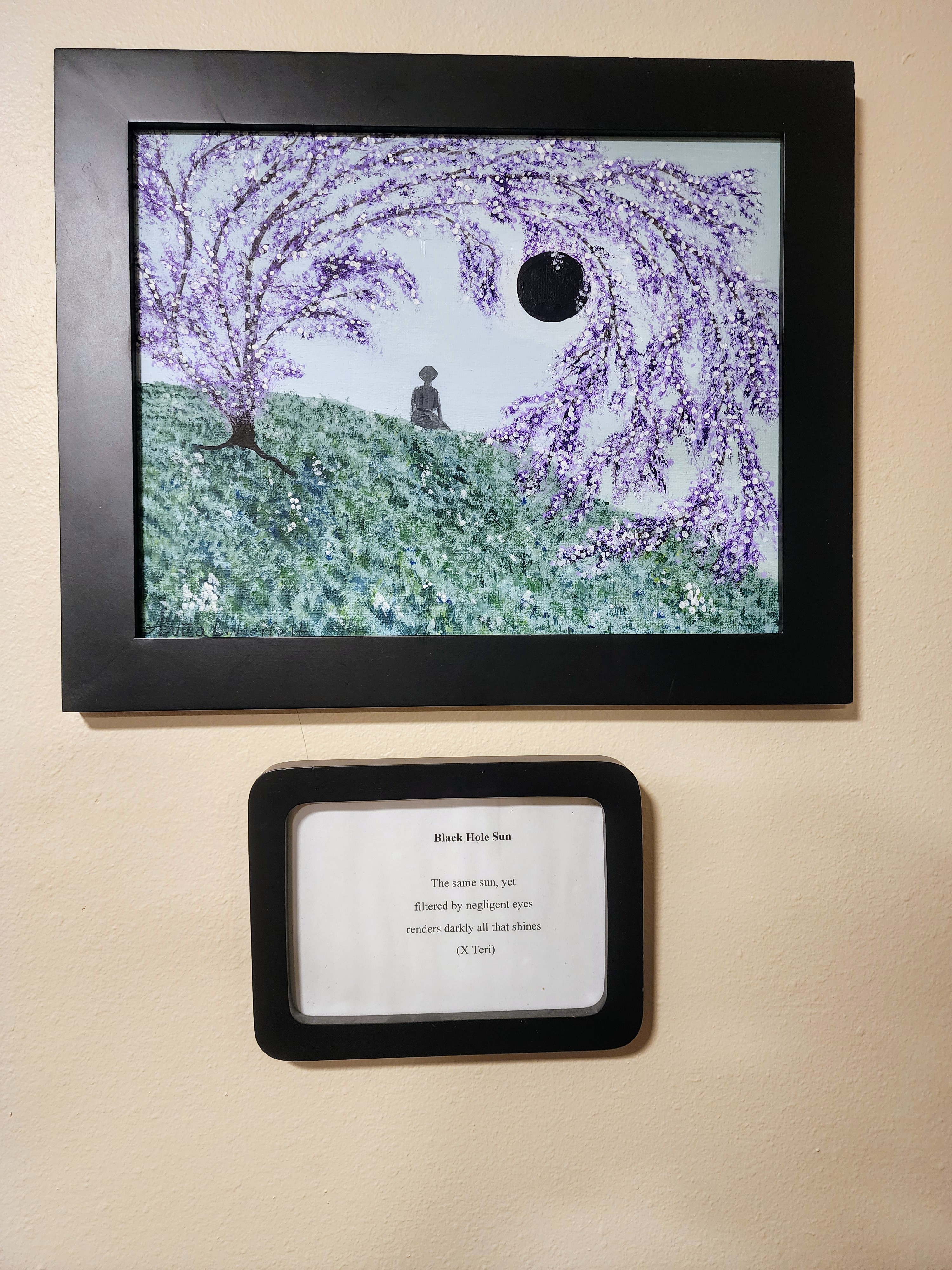
Though I’ve given away many of my sentimental things, I still have one of my friend’s first paintings. She rendered the woman on the beautiful hill and the sun as black.
Below the art is a framed caption I wrote: “Black Hole Sun: The same sun, yet filtered by negligent eyes renders darkly all that shines.”
We are not designed to be immortal or perfectly rendered. We are supposed to strive to do and be our best. We’d be a hell of a lot better off by focusing on our minds and brains, which avoid physical scrutiny and bring satisfaction in ways that function independently of our faltering bodies. What purpose does it serve to be an Adonis or Helena if entropy demands that it cannot be maintained? Everything falters with time.
It’s not depressing. It’s liberating because it requires you to get up, make coffee, and put on your boots. You nod at the wrinkles and instead focus on what makes you satisfied. You can’t get there if you’re fixated on what must fail.
No argument, appeal, or logic can pierce the veil of insistent ignorance. Learning can only occur if the person accepts new information as a new opportunity. Too many people consider their knowledge and opinions to be finished forever. Coupled with the inability to understand that they might be wrong, this tendency toward close-mindedness becomes toxic to both the person and the society around them. It also leads you to wrongly conclude that either Rush or Nicki Minaj sounds great at any volume.
“…but scientific ideas have been proven wrong…”
They are supposed to be. The premise of knowledge is expansion. New information isn’t met with denial. It’s embraced so that the base of understanding can be revised. Being wrong is built into the scientific method. We went from an Earth-centric bubble to one in which we are a minuscule component of a vast universe.
Among examples of this is that it wasn’t until the late 1980s that it was declared unethical to perform surgeries on babies without anesthesia. Another great example is that people thought Led Zeppelin made great music. The man who insisted that ulcers weren’t caused by stress was told he was an idiot – until he proved it by infecting himself. Germs didn’t exist for centuries.
We should strive to live our individual lives with the same mantra: new information leads to new ideas.
“Regarding human affairs, the expectation that you can heal someone’s inability to be open to new information is among the most foolish.” If you think that bombarding someone with information will change their mind, you’re forgetting that you’re talking to a closed door.
“I know what I know and no amount of proof otherwise will sway me.” This quote is from something I wrote four years ago and it perfectly sums up so much of the problem. We expend considerable money and effort to educate people. It’s useless unless all of us are willing to listen, absorb, and change our fundamental understanding of anything and everything.
Study after study has proven that we tend to believe something and then find ways to substantiate it, excluding other possibilities. It’s the problem with politics, religion, and interpersonal relationships.
Knowing you’re ignorant is the essence of humility. Just because I don’t know something doesn’t mean it’s unknowable. If you blind yourself to the likelihood of error, you’re going to be betting on dead horses.
Ignorance is easy to exploit. A questioning mind, though still ignorant, can’t be locked into permanence.



 P.S. Parenthetically Speaking