At 2:02 a.m., I watched a meteorite burn out across the sky to the north. I was sitting by the pool in the dark in a strange place watching the American flag wave across the street. Yesterday’s clouds were gone, leaving an open canopy view of the overhead nigjt sky. The cicadas were keeping me cacophonous company, their shrill ancient sounds providing a background syncopation to my thoughts. I made a wish upon a star. It went right to the heart of my reoccurring theme of abandoning secrecy and living a life of accountability and openness.
We can’t understand ourselves or other people if we continue to insist that we can control and curate the dissonance in our lives resulting from believing that secrecy is beneficial.
Some of my posts are interconnected without seeming to be. A few years ago, I went to one of the local ERs. My family member, who I will call Susan, had an accident. In the course of her treatment, it was discovered she had fallen at home and likely suffered an event triggered by a brain injury. Because I have a background both in medical and secrecy, I was glad to have shown up. Had I not, she would have been administered a medication that likely would have killed her quickly. Another family member had decided to keep Susan’s history of excessive drinking secret. I understand the tendency to not discuss it. Being me, I didn’t hesitate to pull medical staff aside and indicate that alcoholism was an undisclosed factor. The doctor, despite having experience with all manner of such non-disclosure, reacted with surprise and took measures to quickly change how Susan would be treated.
Much later that day, I visited the hospital and discovered that some of the information had not been passed on to the nursing staff. The nursing staff once again immediately changed the medications for the course of treatment for Susan.
I’m not telling the story so that I will somehow look better. People who know me well know the opposite is true. I’m not saying any of this to point the finger at anyone. Most of us do the best we can and hope that we are rationally making the best choices. Family honor, misguided loyalty, and the inability to tell ourselves or the people around us tough truth combine to rob us of a better life.
Part of my truth is that a portion of my identity is tied to the resentment I experience when I deal with people who want to live in secrecy. The stubbornness and resentment has caused me sometimes to stick my foot in icy water and challenge people. My early life is full of such stories. One of those stories resulted in me discovering a sister. Others pushed me into huge fights when I foolishly tilted at windmills and asked people to choose differently. Conversely, the same obstinacy cemented my own feet, resulting in my idiocy morphing words of concern for my choices into accusations. We tend to recognize it later as love or concern. But in the moment? Our defensiveness whispers to us that we are being unfairly attacked.
My life history is littered with people who ruin their lives with alcoholism, addiction, or anger. Every person in my family who drank too much finished their lives still suffering from the little voice in their head that insisted that they continue drinking. It’s one of the reasons I’m proud of my sister. It took her a long time to look back on the arc of her life and tell herself that enough was enough. Each of us usually only takes action when it’s the only other choice. We sometimes talk and nod toward one another, once again agreeing that it has nothing to do with intelligence. We make choices, or adopt maladaptive ways to feel better. And then our strategies turn traitor and entrap us.
All of the preceding words also disclose my volatile resentment regarding secrecy. People can’t develop long-term drinking issues without secrecy. They can’t blow up their marriages without secrecy being perverted into privacy. We can’t become helplessly overweight unless we don’t talk about the elephant in the room or the ostrich in the closet. Depression blossoms because the difference in what people experience inside their private worlds in their heads becomes disproportionately silent. Isolation in thought or action inevitably brings toxicity. Even to otherwise normal behavior that becomes an unhealthy obsession.
If we had to experience the accountability of people around us knowing us in our private moments, it would be difficult to continue the charade of secrecy. Instead of choosing authenticity, we spiral into a cocoon of self-fulfilling prophecy. Image truly becomes the identity we cling to. The people around us flail and overthink because they bear witness to the consequences of our choices. Further out into our personal periphery, the people in our orbit are unaware. Most of the time I think we have this backwards.
A little bit ago, I navigated the dark and put my feet into the pool. After a few minutes, another dimmer meteorite scorched its way into non-existense as it penetrated the atmosphere above me. I didn’t make another wish, even though initially I wished that I wouldn’t overthink. I’m sitting in the late night or early morning of the last day of July. I’ve outlived people who were better than me. Definitely smarter.
For a brief second, the lesson of detachment and gratitude reminded me that it’s to be experienced. And the only way to experience anything meaningfully is to unflinchingly know yourself and live in the reality that you’ve been given rather than the one you attempt to craft.
Secrecy can kiss my ass. It’s no irony that I’m sitting in the dark writing this.
This is a personal post. I avoided fancy vocabulary; it’s all over the place because I write with a shotgun. Expressing my feelings and opinions is what I do. I’m an imperfectionist, so I know I can’t explain everything sufficiently. I’m not happy with how I wrote all of these thoughts. I’m not happy with the slew of contradictions and hypocrisy I’m guilty of.
“Anything attributed to God as a consequence of intervention must also nod toward the responsibility of failing to correct everything else.” – X
Just as you must place commensurate value on both applause and dislike, so too must you place accountability and responsibility not only for singular acts that are favorable but also for those that bring pain and suffering. Choosing not to act is as culpable as acting negligently. If you create rainbows, you also accept ownership of deadly tornadoes ripping through churches – or of people being tortured, starved, or denied basic human necessities.
‘Unidentifiable’ and ‘unidentified’ are not synonymous. Neither are ‘unexplainable’ and ‘unexplained.’ If we survive the onslaught of existential threats, our ability to understand the universe will evolve. We didn’t develop intelligence (or be granted it) to sit in a dark corner of the universe. Truth always welcomes questioning. It is the essence of our advancement and the scientific method. It accepts being wrong by experimentation and adjustment. It is never a finished product. I look at religion and faith in the same way. Static belief holds no quarter for correction. Generally speaking, I observe people stagnating; they stop learning, listening to new music, or accepting that things they hold as true or high value might be wrong.
Whatever notion I have of a creator omits interventionism. We are participating in an escape room. We might have been given all the tools to get out, but we must use our intelligence and resources wisely and collectively. If I am correct about my personal opinions, we’re squandering the opportunity. In our society, we favor creators motivated by ‘do unto others’ and living lives that improve the situation for all of us. With a particular focus on those who need it. Although it might sting, it’s hard to make the argument that we are successfully following the doctrines we say we believe in. Even our economic system undeniably thrives on the perpetuation of interest and in its strictest sense, exploitation of advantage. Most of our religions disavow interest or the love of money, yet we proudly endorse a system that requires that singular pursuit as if it is the only way. Currently, we’re in another cycle wherein some are subverting both politics and religion to make decisions and interfere with our ability to live cooperatively yet independently. It won’t end well. Neither politics nor religion is the problem; the problem stems from the need to control other people.
People accuse me of being contradictory. They are correct. I see magic in things that a lot of people don’t. Equally true is that I see things we haven’t yet comprehended being attributed to miracles. Does the label for such magic matter? I love that people can see miracles. It’s optimism and whether it is rational or irrational, it’s the reality of all of us filtering the world.
History is filled with us committing atrocities toward one another. War. Slavery. Concentration camps. Were we to do those things as individuals, we would be vilified. Groupthink leads to us experiencing the Abilene Paradox in the worst way possible. We end up with a system in which no one is truly satisfied. Even though it stings to hear the bitter truth, abused religion tends to endorse this kind of craziness, as does perverted nationalism. Pride and love of faith and country do not absolve us of our need to constantly self-examine and adjust.
Since I’m already ruffling feathers, our constitution provided a means to modify our guidelines. While others hold our founders in esteem, mine is tempered drastically by the prevailing norms of their day. Their society was not founded on justice and freedom for all. Even our presidential election is perverted due to the necessity of bending to those shrieking that while a certain segment of our population was both owned and voteless, they should be counted as lesser among us. It is the very nature of recognizing defects and changing that merits praise. Our nation came from sedition and treason. That we prevailed is the reason we can attempt to form a more perfect republic absent corruption, special interests, or the subversion of the political and legal systems we enjoy. We don’t owe the people who wrote the constitution loyalty; they left us the roadmap to change course.
Religious nationalism, regardless of the religion or denomination, is immensely dangerous. It is the imperfect crucible that will only demonstrate its failure after splintering us further. Its rise is at the expense of our freedom to choose. When politics and religion intermingle, it inevitably results in increasing favoritism toward the alleged group consolidating power. And as happens with religions, the conflicting forces will fight for dominance. Those who have no religious beliefs or ones differing from the prevailing norm established by such an outcome will be restricted in their ability to choose. That is the opposite of the ideals of what we consider to be America.
In the same way that I don’t believe in ghosts, there are people who I love and respect who do. The same nod applies to their belief in miracles. It’s personal, based on perception. Who wouldn’t want to experience the joy of faith? I love that I know people whose faith is profound. I’m equally likely to grimace observing people using their religion of peace toward goals that are anything but.
I started this post with the quote because it’s one of my fundamental problems with relying on a creator to step in on our behalf. I’ve avoided using complex terminology or arguments for a reason. You can’t praise if you also don’t question why horrible acts done or allowed to happen don’t result in intervention. Using the ‘mysterious ways’ argument doesn’t address the shortcoming. Because I come from violence, I can only picture children with leukemia, being beaten or worse, often at the hands of people who claim to love them or who are supposed to protect them. Failing to intervene is the opposite of any behavior I want to emulate. I don’t need to understand the motivation to see that the consequences of failing to act result in monstrous behavior and conditions.
And yes, I am holding any potential creator to the standard of behavior I expect of myself and other people. It’s not my fault to be granted intelligence. I can’t imagine having the power and ability to protect children and not using it. If we are expected to use our intelligence and solve our problems, it would be zero effort for our creator to intervene.
I’m not picking on one particular denomination or religion. We are all too familiar with the oldest church not only knowing that children were being abused, but that they decided to use their massive wealth and power to protect the abusers. When I catch myself glossing over their actions, I think of a small powerless child, frightened. It personalizes the problem and reminds me viscerally of the horrific sin of those who participated and also those who acted to protect those who engaged in the behavior. Anyone aware of child predators being protected cannot be on my list of moral authorities. Even though I’m sharing my opinion, I’ll add that I could never embrace a religion or denomination that prohibits half the population from occupying positions of moral authority.
Growing up, God was silent. He didn’t whisper to me when I had a literal gun pointed at me or when fists were hitting me. He didn’t intervene against the people hurting me. And he didn’t motivate to action the heart of his pious believers who witnessed it yet didn’t step in. I listened and watched the people around me closely. Their piety and righteousness allowed them to blithely justify what was going on. I no longer judge my dad harshly. Or my mom. But the family members who valued family honor and preached their version of religion? I consider them to be more monstrous due to their inaction. My parents were possessed by addiction and the echo chamber of inescapable trauma themselves. They did not preach the lessons of universal love. They preached their beliefs and demons through behavior, just as the rest of us do. Unlike most people’s version of our creator, they did not possess unlimited knowledge. They didn’t know better. And if they did? They couldn’t do better. It’s hard to judge them when it’s obvious I’m guilty of the same stupidity.
You can’t convince anyone of a spiritual belief using logic. It can’t be done, although many attempt it. Condemning people who don’t share your beliefs sends the message of arrogance. Whether it’s your intention or not, it sends the wrong message about a religion based on love and lovingkindness. That’s the difficulty of having religious writings that are contradictory and cherry-picked to suit individuals or denominations. Were it the literal word of the creator, there would be no division or disagreement. It’s a clear sign that men have cemented their agendas into what we are left with. I don’t attack anyone’s religious texts, although I do restrain myself when they are misinterpreting theirs, choosing which parts matter, or demanding that others defer to them. All the people I admire who have deep faith share an understanding that they must not yield to the temptation to dictate to others. Morality easily exists outside the boundaries of religion. Beware quoting a religious text that contains rules regarding slavery. And beware of a constitution that once needed laws to protect the same evil.
“Factually speaking, everyone is an atheist. It’s just that they choose one particular god to believe in to exclude all others.” This sort of quote upsets believers. It shouldn’t. It’s a recognition of the fact that humanity believes in several creators. Your religion should be your guidepost and beacon. Anyone observing you should be able to see the teachings you believe in come to life. Even when you fail. Secularism is not a declaration of war against religion; it’s a requirement that we meet in the middle with mutual respect.
Or as Dave Barry commented, “People who want to share their religious views with you almost never want you to share yours with them.” That lack of reciprocity inadvertently demonstrates intolerance or an inability to endorse the idea that religion is personal and never mandated.
What ties this all together is that the certainty of things unproven often leads people to collectively force what works for them onto other people. Politics and law are designed to bridge the gap toward collective safety and good. There should be no deference toward a particular group, especially if it is in the majority.
Truth does not need a hammer. If you find yourself willing and able to impose on others, you’ve inadvertently admitted that living your truth by example is failing.
A religion of love does not resort to force.
When politics and religion collide, you are fanning the flames of divisiveness and exclusion. Politics exists to efficiently govern all of us while respecting our freedoms. In its purest form, it is devoid of favoritism toward specific groups. In its worst form, it becomes polluted by one group subverting the rule of governance by substituting zealotry. History demonstrates the consequences of doing so. All of us watch as individuals manipulate religion into a tool for personal gain.
Because people bring their own filters and straw men to these sorts of posts, I want to point out that I don’t dislike religion. I despise dogma and contradiction. And more than that? The certainty some people bring to the table allows them to impose their personal beliefs on others who don’t share it. The best among the faithful to me are the ones who walk the tightrope of faith and intelligence. They live their lives full of hope, peace, and optimism. They reflect the religion they espouse.
I don’t need to know what faith they possess. I can see and witness the consequences. The alignment of ideals results in the behavior you would expect from following the tenets of their particular faith.
If our creator is a creator of love, it follows that we can expect the universe and one another to behave per those ideals.
And because I don’t believe in a creator intervening in our affairs, the outcome of our sporting events is in no way affected by requests for intervention. The same is true for elections. The best prayer possible for me is an appeal to allow us to develop our intelligence. To expand our sense of collective empathy outwardly to everybody in the world. To desist from resorting to violence or dominance. We’re all stuck on this rock squabbling over resources and whether our respective ideologies are better than the rest. Anyone paying attention to history can see that this path has yielded unimaginable results. We do well when we cooperate – and poorly when we don’t. Go figure.
Regardless of how we feel about the words, in a way, it’s a good thing.
We don’t have enough authenticity in the world.
I grew up inundated with prejudice, alcoholism, and violence, but also love and respect. The traumatic parts become the focus because they’re our biggest challenges. It’s hard to admire the sunset when your face is bruised by someone who is supposed to protect you. You can’t love reading if you’re hungry or afraid.
It’s the same now. Our society is safer and smarter, and our arc is generally that of betterment.
You wouldn’t think so – and that’s because the outliers draw our attention. Despite statistics that clearly show that we’re safer and smarter, that’s not the consensus you get when you ask a large group of people whether life is better now than it was. The effect of people thinking in large groups is that we increasingly find it easier to lose sight of doing the right thing.
Tribalism and echo chambers dominate us. It isn’t worse now than it once was. It’s just that we have tools to make information instantaneous.
It should be obvious who among us is motivated by the things that represent what our ideals demand of us. It’s not a question of intelligence, no more than your argument about loading the dishwasher is really about something else. Smart people do dumb things so it is no surprise that when we band together, we behave even more stupidly.
To justify, we vilify. We do this even as we recognize that we’re mostly doing and saying the same things. Names and geography changes – but we largely do not.
“Why can’t we all get along?” The answer is simple. Because we are not logical creatures.
We’re supposed to love our neighbor, but easily justify all manner of destruction. We’re supposed to honor and cherish those we’re with, but all of us see friends and family choose infidelity. Humanity is supposed to drive us forward and yet most of us participate in a capitalist system that takes advantage of the disadvantaged and favors the rich. We choose leaders who openly lie, cheat, and work for special interests and themselves. We claim to collectively despise entertainment that denigrates; yet, statistics demonstrate that we are consuming such content behind closed doors and locked phones. We know that our friends, family, and coworkers are drinking excessively, using mind-altering substances, or choosing the wrong things on a large scale.
Regarding politics, people are nuts. Studies show that we draw our conclusions and then find the evidence to support it. It’s what we do in our personal lives, so it’s no shock that it follows us in our ideologies. The religions we choose often propel us into certainty and dogma. The good ones preach universal love and respect, yet too many of their followers splinter the message and focus on controlling others.
If you’re a good person, you live without harming others. You choose what helps others. You’re going to fail often.
Saying the quiet part aloud helps us. For better or worse, at least you’re letting the rest of us know what percolates in your secret heart and life, the one you don’t want to be exposed. I grew up with a couple of people who were, in my opinion, monstrous. Not because they acted, but because they kept their secrets locked inside a box of righteousness and self-certainty.
Words, words, and more words, a flood of them.
Meanwhile, your life is your sermon.
As for alleged leaders, I want people who have mostly lived their lives with efficiency and honor. If they haven’t managed to control their own lives in agreement with the ideals they quote, it is dissonance and folly to expect them to lead us anywhere other than the wrong place.
Whatever your ideology is, if you’re focused on control or the certainty that you’re right, you will be blinded to other options.
I’m old enough to have become fascinated by people and their lack of self-understanding. I see it in myself so I can say it without sounding like a hypocrite.
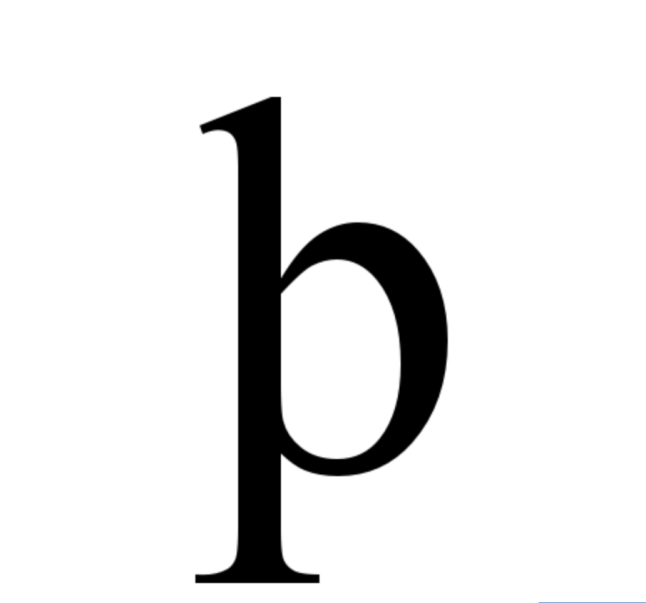
I love that language is messed up. The title of this post is a great example of people openly and mistakenly mispronouncing words. This one is based on the consequences of early printing presses originating from Germany. It’s never been pronounced with a ‘y.’ Mispronounced, though? Yes. Our language had more letters and one of them was the TH symbol which was spelled like a b with a line down the bottom of the left side. Having no easy way to represent the symbol, printers opted to use a’y’ to represent the letter that didn’t exist on their printing presses. And because language is formulated to allow us to decipher visual symbols into ideas and sounds, of course people pronounced it incorrectly.
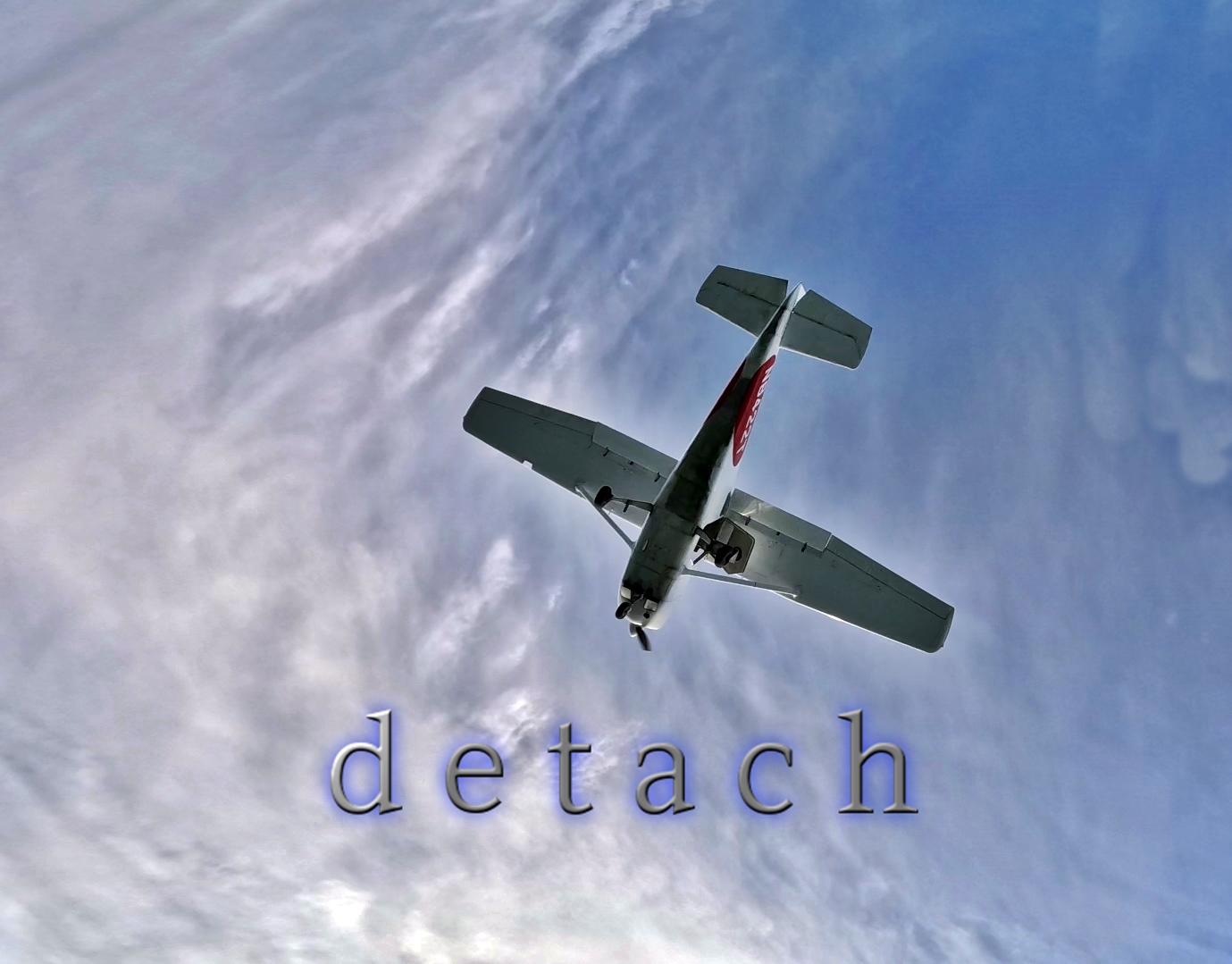
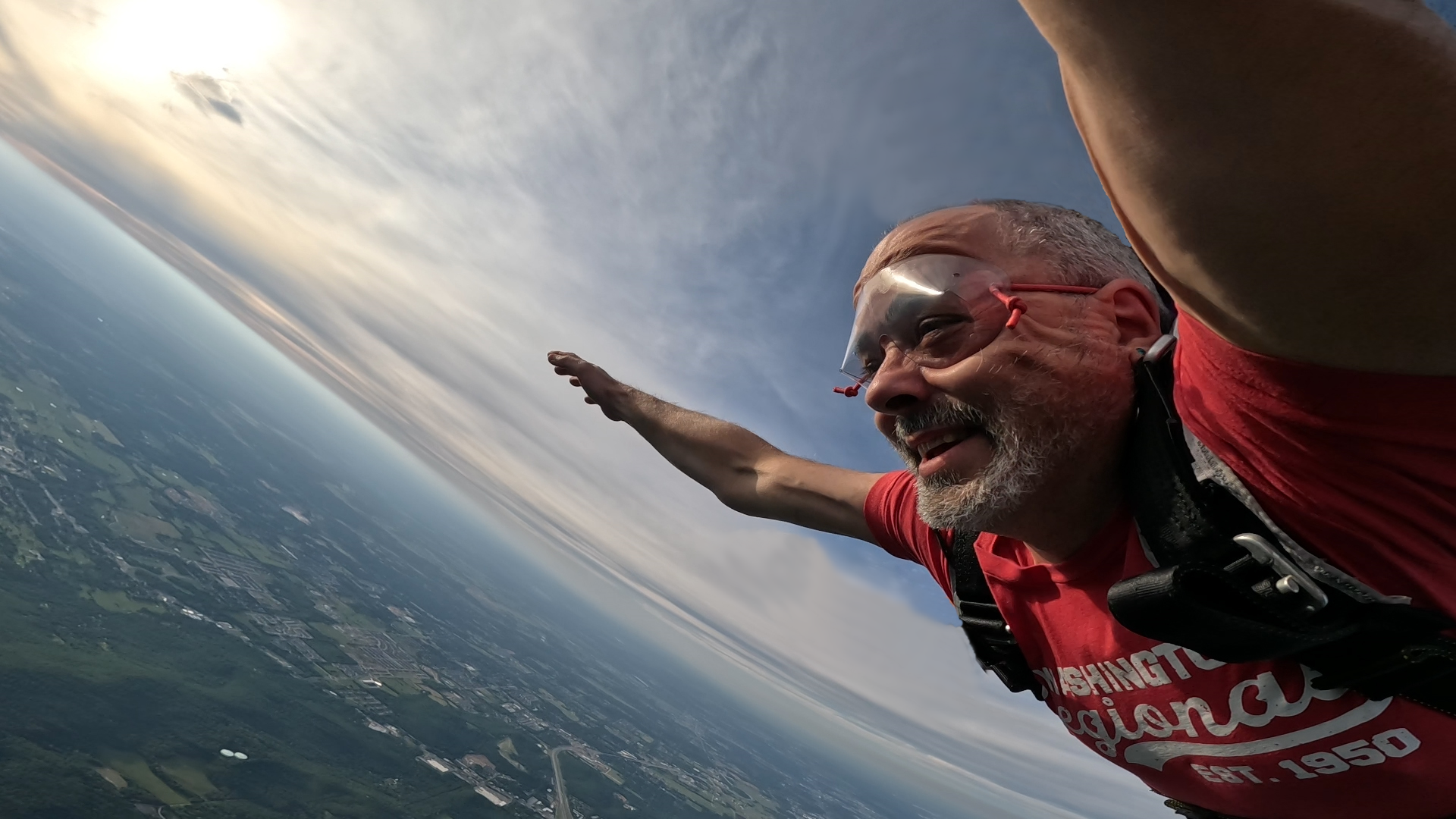
A part of me is still flying in the May afternoon, the sun declining and making me a human prism. No cape required.
What I wanted most from the experience of jumping was to know what it would feel like leaning out knowing I had to surrender and spiral out.
But what it has done over time is paradoxically make things more colorful while simultaneously making other things banal.
I’m trying to decide between bull riding and telling my manager he’s got a bad haircut. Both seem equally dangerous.
Someone quipped to me that once you see the Grand Canyon you can’t look at a simple yet elegant river without comparing it.
Many of our comparisons are subconscious. If you’ve ever experienced acceptance at its most basic level, it’s hard to deal with quibblers. If you’ve experienced unconditional love, anything less than surrendering to it feels like a violation. If you’ve learned something that challenges your core beliefs, it’s hard to believe that you aren’t wrong about a lot of other things, too.
I’m still flying and I’m not certain it’s to my benefit.
It incrementally brought back that feeling of detachment that was such a joy almost 20 years ago. Detachment allows you to have deep singular experiences, but it also paradoxically separates you from the turmoil.
It’s ego that tells me that it’s wrong to say, “People who jump out of airplanes don’t quibble over trivial.” Equally true is that once you lose a piece of your identity because of loss or recognition of how alone you can be when you don’t take care to dive into to mess of life, it’s hard to dial back in.
Someone also told me it’s not wrong to lean in and feel like I did something special, even if thousands do it each year. It’s on people’s bucket lists for a reason. Even if all I did was lean out and let go, allowing gravity to do the rest.
How many of us live life on autopilot anyway? Waiting for whatever happens to happen.
This is especially true for AT&T customers, but it is great advice for everyone.
The AT&T leak was pernicious because all your information, including your social security number, address, phone number, etc might have been exposed.
We often don’t know it happened with other breaches – or we find out much later.
While your password might not have been exposed, the people using this information are doing stacking. They wait and then peek into an account to see if they get access. Usually, it’s long enough after the fact that you will only notice if you have two-factor authentication turned on for everything important. They cross-reference information across multiple accounts, usually because people reuse passwords and don’t update them appropriately. Those engaging in this target the easiest sites and behaviors.
People forget that while using their phones and shopping on sites the risk of someone intercepting their information increases. The risk increases drastically if you’re constantly linked to WiFi instead of your cellphone signal. Advertisers and tracking cookies are a pain in the ass, but most of the issues with information being stolen are more a matter of you giving it to them under the incorrect assumption of safety. Two-factor authentication is a lock to which only you have the key. But locks are only as good as the skill level and persistence of the people trying to break in. Regardless of your phone or account security, anyone sufficiently motivated can gain access.
The other cardinal rule is that if you store anything online or on your phone, you should assume that someone gets it no matter how diligently you protect it. Most of our personal information is already easily obtained.
It’s also a given that you should be checking your credit reports for free at least once a year. Even better if you are using a monitoring service.
As careful as I am, doing so has helped me avoid a few potentially massive headaches.
Don’t answer your phone if it seems to be your bank, credit card company, or retailer. Don’t click on a link in a text or email. Always initiate a reply by calling or emailing the bank directly.
The scams are getting exponentially better.
PS If you have your friends list visible on Facebook, you have the answer as to why your account is being cloned constantly. We are lucky that people with bad intentions pick the easier targets, just as people who steal cars or the contents therein usually walk around pulling door handles. It’s extremely hard to gain access to someone’s Facebook account unless they fail to use two-factor authentication, which is the equivalent of leaving your door unlocked.
A local doctor stole babies from birth mothers, telling them that their children had died. And one case in particular… It took decades for DNA to reveal the story. That happened here in Northwest Arkansas. One of my ideas for a Netflix documentary would be to contact the families of every mother, especially single mothers, who gave birth during a specific time period to perform DNA tests and compare them nationally.
Handsome, charismatic men who portray themselves as humble Christian husbands. Yet engage in a cycle of highly sexual affairs. (A story so common it is literally copy and paste.) Another one with a conservative political career who used his position at his work to take advantage of women. There’s a reason so many sexual harassment complaints arise in the workplace. It has built-in inequality that largely negates people speaking up and setting things right.
More than one doctor who openly had mistresses but yet were considered pillars of the community. Who had children with those mistresses.
People I knew who experienced a wild array of trauma. Everything you can imagine. Even though I had my own mostly unknown traumas, some of these people went through much, much worse than I did.
A dentist who preyed on women. Money can lighten any stain or accusation. Rarely do people choose victims whom they consider their equals.
Cops took advantage of people monetarily or sexually. Some used their positions to ruin their victims instead of admitting what they had done.
Coaches who bullied young kids. Or worse.
Teachers who are inappropriate with their students.
Church leaders behaving inappropriately.
A multitude of lawyer stories. Except they are armed and knowledgeable regarding the process of eluding accountability. Mostly. I’ve told the story many times, but one of them went to prison for fixing cases. My parents were among those who benefited from the arrangement.
Last year I had a bad feeling about someone who owned a plumbing company. I used my skills and uncovered a trail of female victims. One leading me across the country.
I had a similar feeling about a neighbor. He turned out to be a previously convicted sexual predator, along with a nice jacket full of criminal offenses.
All of these things have shadows around them.
Most people are good people.
But one thing you have to understand is that your experience with a particular person does not mean they didn’t have a dark side.
Especially upon their passing, if you lionize them, you have to be willing to listen to anyone who has a contrary opinion or experience with them.
It is in darkness and secrecy that people can be duplicitous and lead secret lives out of sight from observers. At least observers who will speak up.
The above examples are stories I know from here in Northwest Arkansas.
When I got involved in learning about the doctor who was stealing babies, I was expecting a reasonable explanation. Instead, I had to sit in the knowledge that someone was capable of ruining a mother’s life in that way. There was no doubt that he had done it to multiple women.
It’s human nature to avoid accountability, just as it’s also our nature to get mad when someone tries to tarnish a family member or someone we admire. Even a cursory look at Mother Theresa and her charity reveals many detestable secrets.
People have different faces for each aspect of their life.
I don’t have a nice bow with which to tie this post up.
There are certainly false accusers.
But there are also victims or people who know the truth about someone.
Each of these people has the right to tell their truth and story.
History and familiarity with people have repeatedly and demonstrably proven that truth is stranger than fiction.
I have several examples from my life in which the truth didn’t come to light for decades. In one, I found the gift of a beautiful and intelligent sister concealed from me. In another, I found proof of the final crime that sent my dad to prison in Indiana in the 60s.
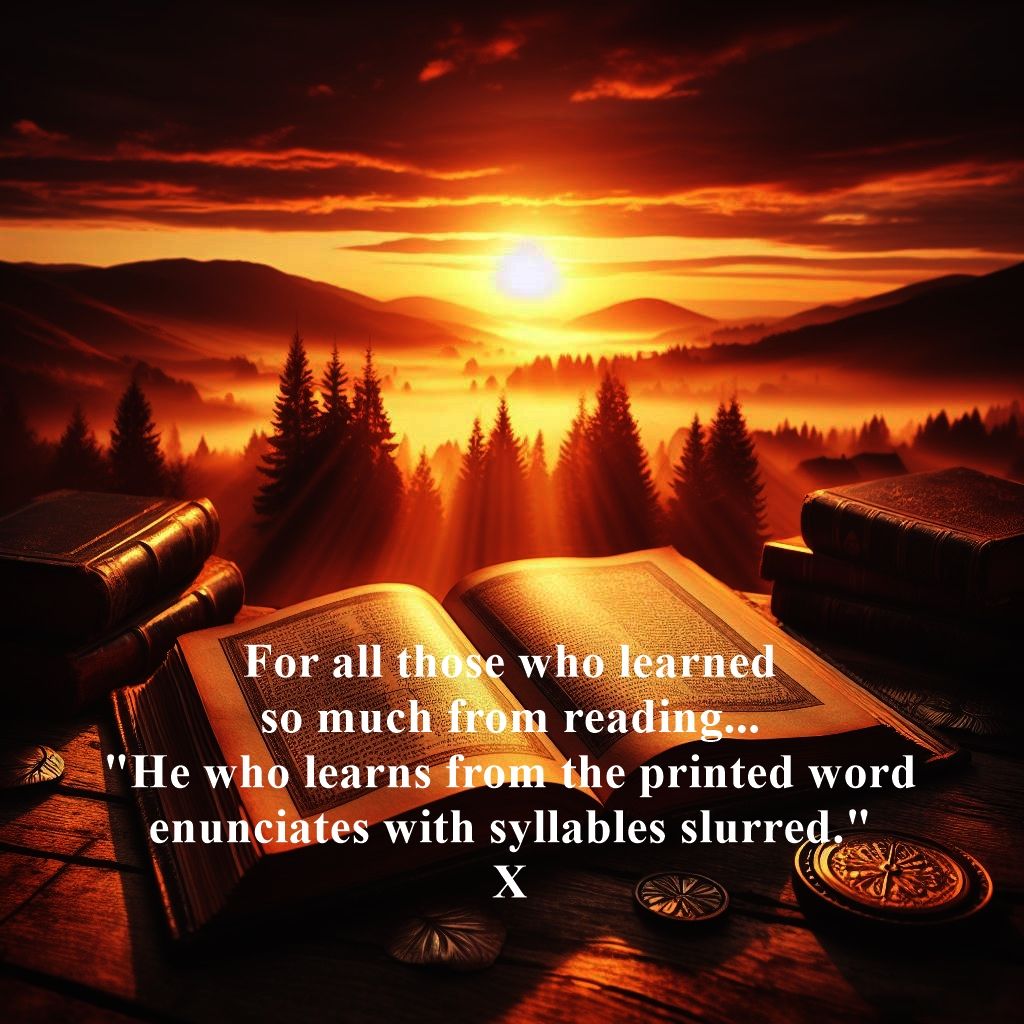
I l-o-v-e hearing words mispronounced. It is usually a sign that someone has learned a word from reading it. I devised this couplet to remind people to encourage language and vocabulary instead of mocking it. English “rules” are arbitrary and devised with no rhyme or reason. We owe it to the stupidity of our language to mess with every aspect of it. Think about the magic of language. We translate little squiggles into ideas in our heads. And then we argue how the imaginary and arbitrary symbols are supposed to look or sound. As I age, my tolerance for supercilious and snarky attitudes has plummeted. Say it wrong. Spell it wrong. This language belongs to all of us. All the rules we claim will one day be meaningless. Since I speak and read more than one language, I am comfortable and fearless in navigating all the errors I make when communicating. Most people are nervous when speaking or writing. There’s no reason to be. No matter how careful you are, you’ll sound or seem a bit ignorant to someone, somewhere. You have permission to break the language. If you run into someone who is a bit of a wet blanket about your right to do so, look them in the eye and say, “I’d like an eXpresso.” And prance away.



 P.S. Parenthetically Speaking