Words from Steve Pavlina

—Everything in quotes below is from Steve Pavlina. I’ve mentioned his site before. While I don’t agree with a lot of what he says, sometimes his words strike a chord with me. I don’t usually quote long passages. There are enough nuggets of interest hidden in the paragraphs below to interest someone else, too, I would htink. 

“My life and my writing are intricately intertwined, such that it’s impossible to separate the two.  When someone reads this web site, they’ll eventually come to know a great deal about me as a person.  Usually this creates a skewed and inaccurate impression of who I am today because I change a lot over time – I’m not the same person I was last year – but it’s close enough.  Getting to know me makes it easier for people to understand the context of what I write, which means that more value can be transferred in less time.

I’ve told many personal stories on this site, including my most painful and difficult experiences.  I don’t do this to be gratuitous but rather because those stories help make a point – that no matter where you find yourself today, you always have the opportunity to grow in some small way, and no matter how small those changes are, they’re going to add up over time to create massive lifelong growth.  That’s a lesson we all need to remember.”

If the stuff I’ve written on this site means I’ll never be able to run for a political office, I can live with that.  I’m willing to write what is true for me, even if it goes against my social conditioning.  Being honest is more important to me than being popular.  But the irony is that because bold honesty is so rare among civilized humans, in the long run this may be the best traffic-building strategy of all.
People often warn me not to write things that might alienate a portion of my visitors.  But somehow I keep doing the opposite and seeing traffic go up, not down.  I don’t treat any subjects as taboo or sacred if they’re relevant to personal growth, and that includes diet and religion.  It’s no secret that I’m a vegan ex-Catholic.  Do I alienate people when I say that torturing and killing defenseless animals for food is wrong?  Perhaps.  But truth is truth.  I happen to think it’s a bad idea to feed cows cement dust and bovine growth hormone, to pack live chickens into warehouses where the ammonia from their feces is strong enough to burn their skin off, and to feed 70% of our grain to livestock while tens of thousands of people die of hunger each day.  I also think it’s a bad idea to pay people to perform these actions on my behalf.  It really doesn’t matter to me that 999 people out of 1000 disagree with me.  Your disagreement with me doesn’t change what went into producing your burger.  It’s still a diseased, tortured, chemical-injected cow, one that was doomed to a very sad life because of a decision you made.  And you’re still responsible for your role in that cow’s suffering whether you like it or not.

That last paragraph is a good example of the kind of stuff I write that makes people want to put me in a cage, inject me with hormones, and feed me cement dust.  It wouldn’t surprise me terribly if that ends up being my fate.

I write what is true for me, regardless of public opinion.  Sometimes I’m in the majority; sometimes I’m not.  I’m fully aware that some of my opinions are unpopular, and I’m absolutely fine with that.  What I’m not fine with is putting truth to a vote.

I take the time to form my own opinions instead of simply regurgitating what I was taught as a child.  And I’m also well aware that there are people spending billions of dollars to make you think that a burger is not a very sad, diseased, tortured, chemical-injected cow.  But I’m going to keep writing to help you remain aware of things like that, even though you may hate me for it.  That defensiveness eventually leads to doubt, which leads to change and growth, so it’s perfectly fine.  I’m good at dealing with defensiveness.

I don’t worry too much about hurting people’s feelings.  Hurt feelings are a step in the right direction for many people.  If I’m able to offend you so easily, to me that means you already recognize some truth in what I’ve written, but you aren’t ready to face it consciously yet.  If you read something from me that provokes an emotional reaction, then a seed has already been planted.  In other words, it’s already too late for you .

My goal isn’t to convince anyone of anything in particular.  I’m not an animal rights activist, and I don’t have a religion to promote.  My goal is to awaken people to living more consciously.  This requires raising people’s awareness across all facets of their lives, so they can make the big decisions for themselves.  It requires breaking social conditioning and replacing it with conscious awareness and intention.  That’s a big job, but someone has to do it.  And if I don’t do it, then I have to admit I’m just part of the problem like all the other hibernating bears.”
02052014 Post Fragment About Religionthink

I love nothing better than interacting with those rare religious people who don’t feel the urge to push their religious ideas on me. I usually learn a lot and can gauge their ideas without feeling like there is a power dynamic. Why it seems difficult to be both religious and laid-back in one’s approach to sharing one’s ideas is an ongoing puzzle. Any element of coercion about one’s beliefs tends to cause an opposing, resisting reaction in others. Yet, many religious people don’t see it. Much more can be accomplished when you let people discover your religious ideas, after observing how you talk and behave. The power of example communicates more effectively than insisting. (I admit my hypocrisy at not being able to shut up on many topics, too, but none of mine have the underlying threat of eternal loss of soul for disagreement!)

“Truth that is “self-evident” doesn’t need a fist in the face to convince anyone.” – x

Where opinions rule, it is best to avoid the temptation to pontificate, insist, or eye-roll. Like it or not, religious beliefs are indeed opinions. I’ve written many, many times about the breadth and complexity of religions and ideas in the world. It is a  presumption to insist that your particular idea is the “one” which is correct above any other. Millions of people spend their lives studying and thinking about all sorts of religions, yet despite all the intelligence being directed toward religion, a startling array of religions, denominations, and ideas remain, many wildly incompatible with the others. Despite this ongoing intellectual disagreement, some people still pound the table with religious condemnation when presented with an opposing opinion. Quite a few others resist being vocal about their dislike of people thinking they are wrong, but this dislike of opposing religious viewpoints quite often fuels indirect behavior with the intention of quashing doubts in other people.This is one of the many reasons secular societies are preferable to religious ones.

(“After decades of thinking about it, basic capitalism and most religions aren’t compatible without considerable strain on the definition of both sides of the comparison.” – x )

The urge to preach and insist on correctness is too strong for a lot of people. This is the kind of religionthink I don’t like. (To have no doubts, and not think twice about having the power to force your particular concepts on everyone else, usually with arguments about undeniable truth or the obviousness of your claims.) To many, it would never occur to them that they could be wrong about many of their ideas or that they were guilty of some of the sins their own religions would accuse them of. Many know that they must affably claim to recognize their own shortcomings but privately know that theirs is the proper course.

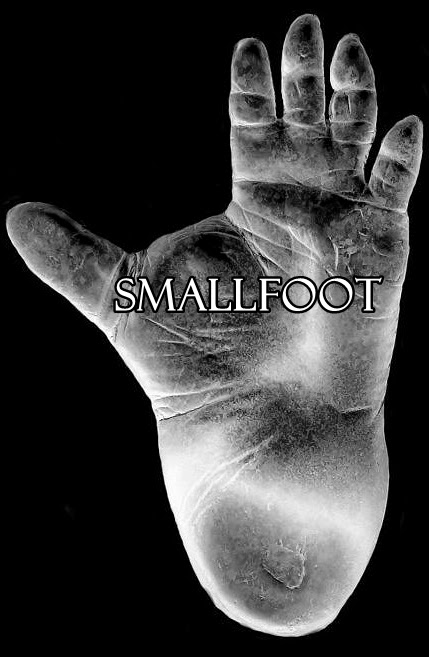
Smallfoot (Tongue-In-Cheek)

smallfoot felix titling

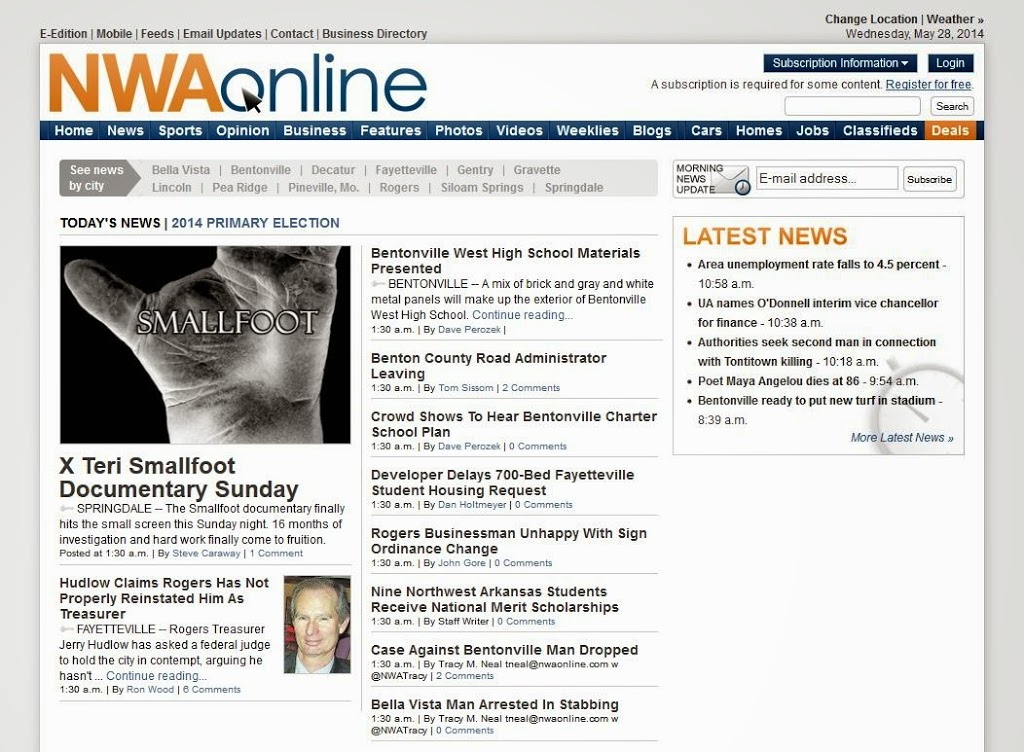
Many of you may soon see me on the news or on A&E. As you’ve probably heard, I’m the 1st person to ever obtain photographic evidence of Smallfoot. (He is a genetic cousin of his larger counterpart Bigfoot but instead of being 7′ tall he is only 3″ in height.)

Instead of “Squatch” we might call him “Squashed.”

I had footage of Smallfoot. Unfortunately, I took it at midnight near a river in West Fork, with the lens cap on evidently. But it’s still further proof. However, the media won’t let me show it to you, for reasons I can’t discuss.

I disbanded the Smallfoot social media community on 12-20-2014.

11102014 Why Dry Counties Are a Waste of Resources

“The assertion that alcohol sales and consumption lead to rampant crime and decay of the moral fiber is no less than a claim that the free citizens of this free nation have neither the moral nor mental capacity to govern themselves and act as responsible members of society without a benign, possibly even theocratic, despotism that seeks to pass judgment….”   (I lost the attribution for this quote. I’m using it anyway and I apologize for not citing its source. – X)  This is a fancy-pants means of saying that you have to trust people to behave responsibly and not interfere with their choices until they misbehave – and not to seek to dictate people’s choices based on your moral grounds.

To ensure clarity in my point: I disagree with attempts to keep counties ‘dry,’ or devoid of the sale of alcoholic beverages. (Given the false pretense that no alcohol is sold in these counties, of course!)

I updated this entry after Amendment #4 failed here in Arkansas. Oddly enough, though, one county voted overall against allowing statewide liquor sales, yet on the same ballot passed a law to allow their own county to be able to sell alcohol. That’s funny on several levels, and a good demonstration of the craziness that characterizes people’s attitude and relationship to alcohol. The liquor stores in wet counties spent millions of dollars to reframe the argument to indicate ones attitude about “local control.” Those arguments are specious and laughable. But they were very, very effective in the vote. In Johnson, one of the most Mayberry RFD little kingdoms in the state, voters passed a law to allow Sunday sale of alcohol, even though it affects almost no businesses and in general the voters there lag significantly behind other areas in attitudes about such things. In the towns where I grew up, both illegal moonshining and bootlegging were very common. Even today, it is rampant.

Arkansas will eventually become totally wet and statewide liquor sales will be the norm. Like all social issues, it will be defeated by slimmer and slimmer margins. Over time, people will see through the ineffectiveness and hassle of having such crazy repressive laws on the books. It’s not a moral issue and continuing to frame it that way is going to lessen the ability to keep the laws unchanged.

First, restricting availability only serves to ensure that those without the means won’t have the same access to alcohol as those with better transportation and disposable income will have. If you argue that people with less money shouldn’t be spending it on alcohol, that is an elitist attitude. It’s true, of course, that money needed to maintain one’s life and health shouldn’t be wasted on alcohol; on the other hand, being rich doesn’t excuse the expenditure, either. We could all find better uses for our money than spending it alcohol. But that’s true of eating out, going to sporting events, trips, or how big our house is. Alcohol is still tainted by the old prohibitionist attitude.

Second, limiting access to otherwise legal activities or substances usually has an underpinning of moral superiority somewhere in the mix. Telling an adult “no” because they might misbehave is terrible public policy.

Third, if you vote down alcohol sales in your own backyard and yet drink elsewhere, where people allow one another to live freely until they do something illegal and/or stupid, you should consider that this sends the wrong message about how steadfast your beliefs might actually be. I would never prohibit an activity in my own backyard and partake of the same the activity just because of a different geographical location. Whether it is alcohol or bow hunting, if I fight it where I live, I’m not going to do it anywhere else, either.

Fourth, please don’t use the presence of children to force abolition on others. If you don’t want alcohol sold in your area, please don’t drink around children. It sends a conflicting message. Of course, you might counter with the claim that any good parent can demonstrate, explain and educate their children on the social downfall or intoxication and misuse – but so too can anyone else ask for the same right in their area and household. If you fight the availability of alcohol where you live based on your children being exposed to it, you should probably not drink in their presence, whether at home or on vacation. Most places don’t limit access to alcohol with laws such as ours. Children are going to be exposed to it. All you can do is be great parents and be a good example. History has shown that not having alcohol in the house doesn’t serve as a good indicator as to whether ones children will drink inappropriately.

Fifth, where alcohol is sold can be regulated easily. Whether your goal is to maintain an appearance such as to avoid gaudy signs or deterioration, you can pass laws to specify those concerns. The same holds true as for hours of operation, proximity to schools, the taxation amount and so forth.

People who drink are going to find ways to drink, especially when it is just a question of geography.

In simple terms, you have to trust me to drink responsibly, to not engage in illegal behavior, to treat my fellow human beings with the courtesy they deserve, to not drive under the influence, to not expose children to activities detrimental to their well-being – all of which is already expected of those who are responsible citizens.

The Perryman Report is a great read for anyone denying that prohibition is anything but negative on a place’s economic strength. The ability to control sale of alcohol has no effect on consumption. Many studies have shown the going “wet” has decreased a region’s per capita accident rate and increased its economic strength.


A Personal Blog, A Personal Note (From My First Blog)

“I can only write from the porch of my narrow world.” -x

Some people try to stretch everything said and done to include people not intended to be in the commentary. If someone tries to get you to believe that I’m talking about you, please stop and look at the person trying to make a claim. If you think I’m writing about you, there is probably nothing I can say to dissuade you from the idea.

Part of the reason I started this blog was to get my words out, even if imperfectly, so that no one could easily set their record in my regard. This isn’t a two-minute dash to angrily lash at people. It’s a long-term commitment to share some parts of me. When I’m gone, it will be hard for people to attempt to change the nature of who I was. They will try, but these thousands of hours of seriousness and farce found here will drown out the attempt. A person doesn’t just sit down one morning and write hundreds of posts without some motivation. (Even if it is misguided motivation.)

Everyone reading this has their hobbies. Whether it is sports, napping, television, long walks, or any other activity, it translates into time spent in the manner they see fit, even if no observable benefit to them or society will result. Each of us wastes our lives to some degree. Whether writing will result in a better life for me isn’t a real question: it will. Whether I will say stupid things or inadvertently hurt people also is a dumb question: I will.

For those who know me personally, you can’t just accidentally find this blog and start reading. If, by a miracle, that is how you found me, you should know that continuing to read it is a choice. Like any account of a person’s life, my words suffer from the present moment, meaning that a person’s mood at a specific moment can color the tenor and meaning of one’s words. I’m prone to the same ecstasies and sorrows as most other people. A careless synonym can sometimes set a reader’s mind far away from the intended purpose. In the same way that the bible admonishes masters not to overhear their servants, you should know as you read that written words are powerful things, capable of provoking emotions that weren’t intended. They can also unintentionally wound people we love.

Revisionists insist on painting their lives with a soft brush. They’ve even given themselves convincing amnesia about their past. I’ve written a lot about the need to remember that my parents were capable of so much good – when they weren’t at the mercy of alcohol or anger. The violence overshadows that potential. But I don’t walk around whimpering about my horrible childhood, and I don’t use it to justify anything I’ve done. Of course, if I am indeed fooling myself, that could also be stupidity on my part. Whatever stupid or bad things I’ve done are at my own feet. People who know me intimately will tell you that it is almost ‘just’ a horrible story to me. I laugh about it quite often. Not that fake laugh-to-cover-unhealed-wounds laughter, but the authentic, healthy “Can you believe it?” laughing.

Much of my goal each day is to avoid cynicism. Like you, I fail.

I write words to appease whatever drives me to do so.

Forgiveness

Becoming Minimalist Blog Link About Forgiveness

I love the Becoming Minimalist  blog. But I loathe the idea that some people aren’t toxic and that sometimes normal people don’t deserve to say “no more.” I do NOT say that forgiveness is not worth striving for. I also do NOT say that forgiveness requires reconciliation with the person who has wronged you.

For this post, I’m not focusing so much on the criminal justice aspect of forgiveness. This mostly refers to interpersonal forgiveness.

Why must “forgiveness” be collectively agreed upon to be a total acceptance of what someone has done to you AND that you allow the person full access to your life and emotions again? This goes against what I see day in and day out, regardless of religious viewpoint or temperament of those involved.

Let us all perhaps agree that if someone has wronged you and you’ve made peace with what happened, that you have arrived at a mental place where you are no longer wasting time or emotional injury on the wrong and don’t wish any ill will toward the person who wronged you, then this counts as “forgiveness.” Is that too much to ask? We shouldn’t treat all wrongs as equal in the eyes of a victim. Being gossiped about is not comparable to being abused, stolen from, or accused of something vile.

The essence of forgiveness is whether the wrong has not only left a scar, but changed the focus of the victim to anything except full pursuit of his or her own life and without further consideration for the wrong done to him or her. – x

“Forgiveness is the intentional and voluntary process by which a victim undergoes a change in feelings and attitude regarding an offense, lets go of negative emotions such as revenge, with an increased ability to wish the offender well.Forgiveness is different from condoning (failing to see the action as wrong and in need of forgiveness), excusing (not holding the offender as responsible for the action), pardoning (granted by a representative of society, such as a judge), forgetting (removing awareness of the offense from consciousness), and reconciliation (restoration of a relationship)….”

Someone I know once said “I might forgive him, but I’m not going to go to lunch with him.” This attitude speaks of an intelligent decision, made with the intention of not spending any more life energy on the person being forgiven, nor judging or interfering in that person’s trajectory, now separate from your own. There’s no reconciliation with the person who wronged you, but neither is there a focus on the ‘wrong’ that happened, nor wasted time or emotions from the victim. I think this is a great baseline for forgiveness.

To forgive isn’t to forget, despite the cliché…

It is easy to preach and recommend that everyone practice forgiveness and acceptance. But what do you say about  people affected by violence, abuse, anger, alcoholism, drug abuse and sheer evil?

For those of you who have lived bountiful lives and have never known just plain evil, toxic people, good for you. I’m no advocate for violence or reprisals – but I’m certainly not for putting yourself back into the reaches of people who violate the world and the people in it. There are enough great people in the world to justify not getting slapped in the face repeatedly by those you have around you due to “forgiveness.” Better to spend your valuable time focusing on the good people and as for the rest, I vote to make it a case-by-case basis.

When you are preaching about forgiveness and acceptance during the holidays, please take a long minute to mention that you understand that many people are suffering under situations that don’t deserve a second attempt. (Or twenty-third try, for that matter.) Knowing that someone is akin to a deadly viper and taking steps to avoid a venomous bite is not a mark against your well-being or mental health!

It is quite possible to write toxic people out of your life without needing to forgive them, if you are using any definition other than the one I proposed. It’s a strange attitude that excludes the ability to be at peace despite having given up on a few people. At times it isn’t rational to try to reach out to someone who has grossly demonstrated their horrible inner self. Decades of careful observation has proven to me that most people don’t truly forgive those who has truly done them evil. It might be an ideal, but one which finds little practice in the world.

I know countless people who say they have forgiven in-laws, ex-friends and co-workers, yet they freely admit that they will never be comfortable with them again. In many cases, they won’t be in the same place with them at the same time, or talk to them ever again. Despite avoiding any contact with those they have forgiven, they would still say that they have truly forgiven the people who grievously wronged them. Which I understand. (I’m not sure this falls under “forgiveness,” though)

Recently, it seems I’ve been inundated with variations on a theme due to people advocating blanket forgiveness and that not doing so equals some defect in those who don’t practice universal and unilateral forgiveness. I think these people need to try to understand what I think a healthy definition of forgiveness is.

————————————-
Odds and ends…

Even the Christian god is believed to reserve the right of condemnation to hell for those who are deemed unworthy. And yet the New Testament preaches that god is about love. I know it’s an argument away from my thesis, but both god’s judgment and god’s love make for strange bedfellows when butted up against any argument in favor of forgiveness.

The weak can never forgive. Forgiveness is the attribute of the strong.” – Mahatma Gandhi

“Forgiveness in no way requires that you trust the one you forgive.”
― Wm. Paul Young, The Shack: Where Tragedy Confronts Eternity

“What was the point of being able to forgive, when deep down, you both had to admit you’d never forget?”
― Jodi Picoult, The Tenth Circle

“Forgiveness means it finally becomes unimportant that you hit back. You’re done. It doesn’t necessarily mean that you want to have lunch with the person. If you keep hitting back, you stay trapped in the nightmare…”
― Anne Lamott, Plan B: Further Thoughts on Faith

“To err is human, to forgive, divine.”
― Alexander Pope, An Essay on Criticism

 “Forgive your enemies, but never forget their names.”
― John F. Kennedy

“To be wronged is nothing, unless you continue to remember it.”
― Confucius

“Resentment is like drinking poison and then hoping it will kill your enemies.”
― Nelson Mandela

“Always forgive your enemies – nothing annoys them so much.” – Oscar Wilde

“It is easier to forgive an enemy than to forgive a friend.” – William Blake


03252014 Privacy? Ha, Ha !

A week doesn’t pass when someone doesn’t seem shocked that much of their “privacy” is available either online or through the government. People who lock down their social media are no more protected than those who post everything publicly. But I can see that it is easier to believe that your privacy is protected. One of the most common errors I find, especially among the more educated, is foregoing Facebook or Twitter but relying on services such as LinkedIn. While Facebook can be locked down and used even jokingly, LinkedIn (as an example) contains your real information. Many users don’t think twice about exposing their résumé on such services, voluntarily, yet don’t feel exposed because it is a ‘better’ service than other social media. The same logic extends toward ALL professional associations and clubs. History teaches us that smart people tend to exploit their environment, too.

Do you own property? Chances are that your name, address, taxes, children’s school district, and even a floor map of your house are a couple of clicks away, online, via your local property records. Most searches allow you to use last name only or for multiple guesses. (The more unusual any of your names are, the more easily you are found. Worse still, these property listings are VERY likely to include your middle names, or legal versions of your name that are otherwise more difficult to ascertain casually) On top of that, if you click on deed links, you can see the full legal signatures of everyone involved. Sometimes, your banking institution is listed, as well as other information you wouldn’t expect to be publicly available, such as the location of your garage, where the doors and windows to your house are and whether you have a basement. Almost always, there is also a “map it” link on the property, so anyone can click it and get a detailed map, including street view, of how exactly to get to your property.

1st Place to Look For Property Records in Arkansas  (Link…)
2nd Place to Look    (Link…)

If you own property, you are tacitly agreeing to forgo much of the illusion of privacy.

(Some lawn care services now simply look up your address to quote a price to maintain your lawn based on your lot size and layout, as they can use google street view and satellite imagery to see everything in and around your yard.)

-Marriage licenses? Public.
-Almost all divorce proceedings? Public.
-Voter Registration information? Public.
-If you sue or get sued, chances are all of it is public, including all the motions and filings.
-A lot of people’s job applications are public (even if you don’t get the job!)
-If you’ve ever been charged with a crime, much less convicted, that information is out there for basically anyone to find.
-If you own a business, your business license, incorporation papers and anything similar is a matter of public record.

Want to check your own voter registration (or that of someone else?) Watch what information pops up…  Check Your Voter Registration Information Here                  (This can be a useful link, regardless of privacy, as you can look over candidate information and sample ballots.) But for anyone who can just GUESS your birthday, they can find you without any real effort. You might think you are safer listing only your day and month of birth in multiple places, but it’s an easy guess as to what year you were born, based on schools and other data.

If you know where someone went to school, many yearbooks are available online, for free. If you don’t mind paying for the information, your options expand exponentially. School pictures are in the public domain and are basically impossible to stop from being disseminated. Using Google or DuckDuckGo search engines unveils another universe of photos. Even if you aren’t sharing on Facebook, chances are that your picture has appeared many times in newspapers, LinkedIn, professional newsletters, etc. Databases usually don’t forget you, regardless of the amount of time that has passed. If you learn to use search engines creatively, you are guaranteed to find pictures of anyone. If you don’t mind physically searching at libraries, courthouses and newspapers, you can access anything. We all have pictures of us floating around in real and cyberspace. Worrying about it is no longer meaningful. If you factor in how many times you’ve been filmed or photographed passively by CCTV or surveillance, the probability of you being identified using facial recognition software is 100%.

I’ve known a few people who have public and professional jobs who think their information is safe. “Safe” is a relative word in today’s world. Much of the information being collected is a result of our own tax dollars being used to create ever-increasing databases of information. Your specialized job doesn’t insulate you from exposure to the crazy world. I have yet to find anyone immune from the limelight of information exposure, no matter how careful they think they are being. Regardless of what any government agency collects, each of us is daily doing our part to add information to our database, whether we do so willingly or not.

Even using the most basic functions on Intelius, Zabasearch, PeopleFinder, Pipl or any other common search option yields a lot of information about people – all without paying. Examples sometimes include your age, address, places you’ve lived, professional associations, schools, etc. If you are willing to pay, the amount of information you have available increases considerably. Using the free services usually yields enough background information to confirm your search and to develop leads originating from the confirmed information.

If you make more money or enjoy a better professional standing, your exposure increases, as you are very likely to have been pictured and mentioned in a dozen different formats. Anyone with professional affiliations such as police, real estate, lawyers, or teachers is almost guaranteed to be found without fuss. (The very people who would be most likely to fuss about privacy are also the most likely to have their particulars splattered all over cyberspace and realspace. You are noteworthy and if it’s being noted, it is being saved for later.)

As for social media, it is amazing how many tools are out there to analyze the who, what, when and where of what you say on Facebook and Twitter, among other services. No matter what your privacy settings, listen to that little voice in your head telling you it is all floating around out there anyway. That little voice is correct. No matter how careful you are, at some point the certainly of all information eventually being exposed becomes unavoidable. Even if companies share just your metadata, the algorithms which monitor everything already “know” you. People who aren’t on Facebook, for example, are still identified. Facebook has a huge repository of information that connects you to family and friends. It “knows” who you are – even if you’ve never had an account. It knows what you look like, then and now. People think I’m making that part up, but it’s true.There are geniuses who can subvert any privacy settings on social media and get past the protocols for privacy.

In many places, once you put your trash on the curb, it is available for anyone to pick up and take. Yes, that includes your five years of tax papers, bank statements, personal letters – all of which you knew you should have shredded, but didn’t.

Since I starting doing genealogy, I have been constantly astonished about what is out there in cyberspace – much of it listed willingly by real people. Having access to some of it has allowed me to genuinely help people. I’ve been able to locate people’s “lost” birth certificates, find their biological relatives, locate people who were once important to them, provide information that has allowed people to substantiate claims for grants and Native American registration and so forth. Some of it has been very rewarding. But the more I learn, the weirder that nagging feeling in the back of my head gets. It’s telling me that privacy is an illusion that we are trying to collectively believe in, despite all the evidence. I’ve found pictures of people who have erroneously claimed to have never been photographed and found information and pictures of those who do jobs that require secrecy. Many times, some of this information that should be protected vigorously is offered by local, state, and federal agencies without consideration for content or identification. (As an example, investigators who have been recognized or rewarded or even been in the news for heroic acts.)

If you aren’t checking at least one of your major credit reports yearly, you are inviting misery into your lives. A copy can be obtained freely from all 3 major credit bureaus. Even if they aren’t a total solution, getting yours should be the minimum, every year. If you aren’t doing it, you might as well be writing your social security number on the wall at the bus station.

As far as I know, I’ve never broken any laws regarding privacy, nor have I used any paid services, even legal ones, much less illegal ones, to obtain information. (Employing a private investigator, for example, is legal and opens up virtually any avenue of inquiry you would want to pursue.) I’ve found that for almost all inquiries, enough is out there already to eliminate the need for complex searching.

And such is our plight – in a world of information overload, each of our lives is spilled out across the world in little pieces, waiting for the wrong crazy puzzle-solver to pick them up. Hiding in seclusion isn’t the answer as it ignores the fact that horse if already galloping out of the barn.

Lifehacker Link To Delete Oneself From the Internet…
It won’t “really” work unless you devote a lot of time to it!


03032014 Quote for the Occasion (By Me)


If you seek the best way to sharpen your ax, ask the person whose hands frequently wields one – not the man selling firewood on the roadside.   –X Teri   
I worked hard to encapsulate something I kept trying to remember to use at work.  

The Right To Choose Who Is In Your Life

This is an edited version of the original post. I still believe in everything I wrote but I also confess that I used a sledgehammer to drive my point home.

This isn’t a story of forgiveness or of my inability to forgive. If a husband beats his wife repeatedly, no one demeans the abused wife for getting out of the situation and protecting herself. No one in his or her right mind, I mean. Family bond or previous relationship do not negate a person’s right to insist that he or she be left alone, to feel safe, or to simply take a “time out” away from anyone or everyone.Those who choose to attempt to force anyone to talk to them are very similar to those charged with stalking. Only the people involved know to what extent any allegations of disrespect, hostility, or rudeness were actually at play. It’s easy to rush to judgement.

I had people who’ve crossed the line. Whether you would say that I over-reacted or not, it is irrelevant. The proverbial line is wherever I decide to draw it, independent of family, friends, pastor, or neighbor. Once someone says “enough,” no one gets to argue the point. It belies a very central flaw in that person’s way of thinking. It isn’t respect or love; rather, it is a refusal to see other people as equals and of equal stature. I don’t want people in my life who operate this way. I would expect someone to react negatively, but the only responsible option is to step back and evaluate the situation. If the other person or people think that I am wrong, no amount of screaming, threatening or demeaning me is going to make me wake up and decide I’m being wrong-headed. It makes me think that you are crazy.

Growing up in a violent, impersonal cauldron of hate and anger has forced me to learn the hard way that dealing with this type of aggressive behavior is no longer an option. It’s not because I’m cured or immune from it; rather, because it became overwhelmingly evident that some people are so infected with the need for anger and drama that nothing I could say or do was going to reach their brains and placate them. I can’t change them but I can control whether they are going to be allowed to further infect my life. 

I ask that anyone being asked to step back stop and seriously consider how you might react. 

(But I Eat it Anyway…)


Most of my life, I have avoided the desire to eat meat. Even while I was eating it, of course.

My family was one of red-blooded Americans vying to get out in the wilderness (but not too far, of course) in order to kill something from a safe distance. And eat it. And blather on about the adventure of it all. Or force people who had no interest in eating it – to eat it.

Much of my life, I would much prefer vegetables to flesh. I still do. A few years ago, I went quite a while deliberately not eating animal flesh. Despite the biggest personal issue of my life going on at the time, I felt better than I had in years – and since.

As I get older, I can more easily say that I wouldn’t miss meat if it disappeared from the world right now. Beef Jerky and Slim Jims are mostly about the texture and spices. Pepperoni is also about texture and spices.

Also as I age, the evidence, at least to me, is fairly clear that we should not be engaging in meat eating. Or that if we do, it should be a much reduced rate. We should be processing meat with much more care and without so many chemicals and contaminates.

Do I understand that I’m a hypocrite? Yes, of course.
When you take a hard look at how beef and poultry are mass produced, in combination with how it affects the planet, it’s a no-brainer.