My response to the “Is It Kind?” demand of those positivity memes. (The ones which strangle me through the eyes.)

My response to the “Is It Kind?” demand of those positivity memes. (The ones which strangle me through the eyes.)
“Regarding human affairs, the expectation that you can heal someone’s inability to be open to new information is among the most foolish.”
.
Recently, I’ve watched and listened as an otherwise intelligent person has descended into obstinate ridiculousness. The specific subject isn’t the issue. (It’s not politics, though.)
It’s important to note that I don’t claim to be devoid of blind spots and outright ignorance. It’s human nature. I sometimes fall short but try to remind myself that opinions can and should change with new information. Facts, if verified, should not bend to opinion.
Because of the hysteria of the issue, my acquaintance has a new series of stories to tell me each day: new videos, facts, and opinions. Fairly early in the development of his obsession and the story, I had doubts as to the legitimacy of many of his claims. Because I’m naturally inquisitive, I noted the videos and claims he mentioned. I realized that simply telling him he was mistaken would not yield any change in his ideas. I listened over several days as he told me stories related to his new obsession. I did so without mocking him or challenging his assertions. (Which damn near killed me.)
Today, I brought a summation of the ‘great debunking.’ I had sources showing that the videos weren’t real – and for those that were, they were misattributions. Some of them were brilliantly done. As for the facts my acquaintance had amassed, none of them were entirely accurate, and most were outright fabrications designed to grab headlines.
After my acquaintance mentioned yet another ‘fact,’ I decided to forego handing him the summation and sources. Instead, I explained in less than thirty seconds that all the initial videos he’d recommended for me to watch were not actually what he thought they were. I briefly told him what the actual circumstance was and that the videos had been misattributed either due to ignorance on the part of the source or willful deceit for gaining viewers, readers, and dollars.
“What? No! You’re wrong, X.” His face had turned red.
“Listen, I’m not trying to put you on the spot. It’s just that this thing is easily explained,” I told him, trying to soften the blow and get him to accept the idea that he might have taken a wrong turn.
“That’s stupid. Of course it’s true,” he replied, getting ready to launch an ad hominem attack.
“Slow down. Look, here’s a link to a source you’ve said you trusted in the past.” I held up my phone and pressed the saved bookmark on the home screen of my phone.
Even by reading the headline on my acquaintance’s trusted news source, it was obvious that the video wasn’t ‘real.’
“See? I’ll send you the link so you can decide for yourself. Don’t stay mad at me. All of us get boxed in sometimes by our presumptions and ideas, me included.” I hoped that would appease him.
“Don’t send me that link. I know what I know and no amount of proof otherwise will sway me.” He looked at me, defensive and upset.
I let his own words hang in the air for a moment.
I know anti-vaxxers, flat-earthers, people who believe horoscopes, weirdos who insist Hillary killed people, and Illuminati. I’ve never given up hope that each person could let a demonstration of each idea reveal a new truth to them.
Today, though, that hope diminished a bit.
Welcome to 2020.
Noted sociologist Isaac (who needs only one name), coined the term ‘raindrama’ two years ago. He noted that the actual or impending presence of rain immediately connotes an intense dramatic feel to all human activity exposed to it. Conversely, his observation also ridicules anyone who hasn’t noticed this tendency in their own personal lives, citing it as evidence of willful obstinance.

This is a personal post. It’s not designed to anger or offend. These are just words, written imperfectly by me without a great deal of redaction, except to protect people’s privacy, even when such protection isn’t warranted. For the gatekeepers who inevitably say, “Don’t put that on social media,” it’s likely that you’ll continue reading, anyway. We’re all voyeurs. Surprisingly, our lives are amazingly similar, no matter what veneer we cast to cover our craziness.
On another note, I’m writing this as myself. It’s my story and one that is mine to tell. Anyone who feels they have the right to question the content or motive of what I share should probably put on a life jacket and then go find a lake to jump into.
It isn’t easy to engage meaningfully with someone if you can’t determine if they are connected to reality or not. With addicts and alcoholics, it can be an exhausting exercise in futility to invest your time and energy communicating with them. I’ve dealt with angry alcoholism all my life. I’m still terrible being myself around it – if that makes sense. It’s one of my most profound faults. I know that the only rational choice is to jump away from this type of addiction due to the short length of time we each have to live. Knowing and doing are opposite sides of the canyon for me. I get irritated with myself when I forget the lesson I’ve learned at least a dozen times.
Like most people, I happily find that my phone rings less often. When it does ring, I find myself dreading to know the identity of the caller. If there’s a voicemail, I don’t even listen to it, all due to one caller. The stupidity of it all is disheartening. I don’t want to dread the call.
While it might be an excuse I differentiate between garden variety alcoholism and angry alcoholism. The impacts of the two kinds yield staggeringly different results. I’ve struggled with an abnormal number of angry alcoholics and rarely had issues with the boring ones. I suspect that most people know exactly what I mean, even if they can’t put it into sensible words.
The truth? I can’t stand angry alcoholics. They give regular alcoholics a bad name. Am I kidding? No, not really. I owe it all to the angry alcoholics of my youth. Each subsequent angry alcoholic stupidly things he or she has magically figured out something new or that he or she has everyone fooled.
If you don’t have a daily connection to the world around an alcoholic, as is the case with many of our friends or relatives who are elsewhere, it’s especially difficult to navigate the pitfalls of maintaining a real connection. We all recognize that we lose touch with the essential part of someone’s life and personality in the best of circumstances. Illness or addiction further erodes our connections. You can forget the idea that you can peacefully navigate someone’s alcoholism AND discuss and address their addiction out in the open. You’re going to get burned.
I’ve learned that anyone who can openly discuss their addiction, previous or current, is probably going to do well in life. Those who demand silence are the worst kind of addict. They’ll ruin your life to avoid dealing with their issue.
The very nature of addiction demands secrecy. Once you see past the curtain that addiction demands, everything you see is infected by that peek.
I’ve found myself in that position. I can’t get past the inability to know if I’m dealing with someone communicating with me authentically.
An alcoholic put me in this position last year. Only by accident did I discover that he’d fabricated an elaborate and false narrative around almost all of his life. He’d lost his job, his health, and his ability to be rational. By accidentally comparing facts with a family member of his, the complex web of falsehoods collapsed. It was a confirmation and revelation, one which still makes me feel guilty; initially, it brought up the anger from a few years ago, when the same alcoholic almost caused me to have a literal nervous breakdown.
Those of us with self-doubt don’t respond well when guilt is thrown into the equation. Because of the malignancy of the alcoholic’s need to maintain the façade of normalcy, I even doubted what was plain to me – and my instincts, which have been honed by a lifetime of exposure to such behavior.
The revelations that erupted from the mess changed the way I looked at the last twenty years. It corrupted my memories of anything that happened since I was a child.
When I tried to force a confrontation to get past it, it went to a very dark place. It’s one that I haven’t pulled myself out of in regard to the alcoholic. I spoke in anger – and righteous anger at that. It sounds unfair to say it, but righteous anger in the face of that kind of behavior is the most human response possible.
After a while, another family member of the alcoholic who was my touchstone for the alcoholic’s reality told me that there was no upside to keeping me informed. While I understood the family member’s fatigue of the melodrama that resulted from the collision between reality and fiction, it robbed me of my ability to distinguish the truth. They stopped bridging the connection between us. The alcoholic used deceit and misdirection to avoid real conversations about the consequences of his addiction.
The result of this, however, is that it’s been almost insurmountable for me to talk to the alcoholic, which makes me feel even guiltier.
My upbringing has damaged my patience in dealing with such behavior. It’s easier to stay sane and balanced by avoiding the spectacle of addiction consequences.
If I talk to the alcoholic, I’ve no way to know which parts aren’t true. Given the huge disparity between this,truth and fiction that I discovered last year, I’m convinced I’m still being “had.” While I can talk to the alcoholic, it almost feels like roleplay – and I’m an actor forced to adopt the role that I’m crazy and that the alcoholic is normal.
It pisses me off.
My guilt with the recognition of the abhorrence I feel toward having fake conversations makes me immobile. I can’t call – and I can’t answer calls from the person.
I would love to write the person in question and have him write in return. That option, though, is not available for reasons that don’t make sense. The alcoholic can read and write as an incident involving my blog proved.
So, I can superficially engage while struggling with my guilt and distress, or I can continue avoiding contact. Given that the family member of the alcoholic probably doesn’t want to expose old wounds again, I’m left with terrible options. All of them diminish me and diminish the alcoholic.
Many people, like me, have lesser lives because we’re forced to exorcise people from our lives to live with any joy in our hearts.
It’s an imperfect world.
I sit. I wait. I dread.
.
.
P.S. “Agreeing to things just to keep the peace is actually a trauma response. When you’re doing this you’re disrespecting your boundaries. No more making yourself uncomfortable for others to feel comfortable. You have control now. Use your voice. Take up space and use your voice.” – I close with these words because someone posted it on their social media around the time I was having the most difficulty with this issue. There’s no doubt that these words would evoke an anger response, for reasons that are complicated to explain.
.

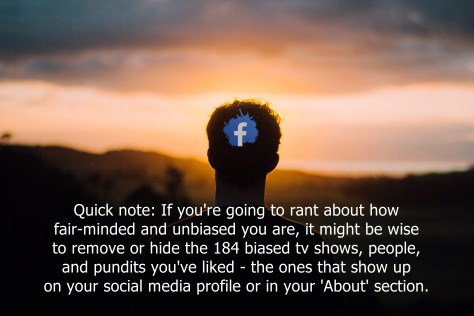

I made this a few years ago. Someone sent it to me, saying they’d seen it out in the wild internet.

I’m in a bit of a strange state.
I arrived home after a Celebration of Life.
I absent-mindedly opened my email, assuming that someone had decided to take me up on the offer of watching a memorial video I made and needed an email link.
Instead, someone close to the defendant in a murder trial from 2016, had written to me today. I wasn’t chosen to sit on the jury. It turns out that the letter I wrote to the defense’s legal team had been turned over to the defendant and his family.
As I wrote back then, the jury selection process in the murder trial being held in Washington County had legal defects, ones which precluded the defendant from receiving due process from the court. I don’t say this lightly.
I did right by the defendant, the prosecution, the court, and the process by sticking my neck out and informing them of what I had observed. While I heard back from the defense back then, I did not hear back from the court or the prosecution. I wrote them all the same truth: things were done improperly.
I’m not surprised by the failure of the prosecution team to respond. It would have been impossible to defend the defects I reported to them. They go directly to the efficacy of the jury process. I understand the need to persist in the illusion that the system does not fail. A good prosecutor and human being could not faithfully convict people if he or she knew that the process is fundamentally flawed.
My wife will tell any of you that because of my exposure to the frailty of the human process, that I don’t believe that justice as we imagine it exists in most places. It permeates my ability to watch, read, or consume any stories about the justice system.
The person reaching out to me alleges that in addition to the glaring problems I documented, that one of the jurors had allegedly threatened another sitting juror on the case. I don’t know if the allegations shared with me are true.
I can say, however, that I tend to believe them, given the disparity between what I personally witnessed and the lofty promises our criminal justice system proposes we accept as true.
To paraphrase my misgivings: “It just ain’t right.” What I witnessed was not an impartial jury, nor one honoring the requirements of eligibility to sit and faithfully serve. Because I reached out to inform them, everyone involved knew at the time that someone involved in the process had serious issues about how it was handled. A dedication to the truth would drive most people to inquire; otherwise, we’re not dispensing justice.
I look forward to hearing more about the allegations that an actual sitting juror had more than simple misgivings and was threatened for it.
I have a feeling this is going to take me down a winding road.
The gavel is hollow – and so am I.

I stood in the living room of the history-packed house, feeling Jackie’s presence around me. It was the first time I’d been in the house without her. She died recently, leaving a trail of family and friends behind after almost eighty years of an adventurous life. Her husband Jerry stood nearby, his eyes full of loss, yet contradicting the slight smile across his face. Both of them possessed a confident air of optimism. They are the sort of people who convince you that you’ve recharged something essential in yourself after you’ve been around them.
On the coffee table near us, in front of Jackie’s favorite perch on the couch, was a big 1000-piece custom puzzle. I had it made for my friends in April of 2018. I worked for hours on the design, incorporating countless family photos of theirs into a patchwork of multi-directional and polychromatic designs, each chosen and placed to accentuate the pictures while also increasing the complexity of the puzzle. We animatedly passed a couple of minutes noting the pictures, comparing favorites, and laughing. On the bottom row of the puzzle was the strange picture of an even stranger man. I included it in the puzzle because I thought his picture was an enigma and out of place. As it turns out, it was. No one knew who it was, or remembered that the picture was in the thousands of photos and albums shared with me to digitize. Now, the stranger remains frozen forever in the family puzzle, immortal, and sharing space with some amazing people. We all laughed about Jerry and Jackie thinking I put the picture there as a prank, a one-off kick in the pants for my friends.
“No, I promise I thought the man was someone you knew. He was, and still is, in one of the albums of photos I scanned. I didn’t include him as a joke. Jackie undoubtedly still thought I was pranking her,” I told Jerry.
“Yes, we thought you were the odd brick, X.” Jerry paused. “When the brickwork and wall were built years ago out back, out of all the thousands of bricks used, the bricklayer used a single yellow brick toward the outer end. I don’t know if it’s true, but they said that the odd color brick used to be placed to break the monotony of the eyeline. Jackie and both were convinced you put that stranger in the puzzle to be the odd brick. You are the odd brick.”
I laughed, thinking that Jackie left the world thinking I designed such a complex and heartfelt puzzle for her, only to prank her with a single discordant note. Though it wasn’t true, I liked the idea. I had purposefully pulled her chain on several occasions. To be perfectly honest, I sometimes held back because Jackie was one of those people whose smile and warmth were contagious, yet simultaneously held the promise of a swift reckoning under the right circumstances. I say that with fondness.
Tomorrow, the house will be overfilled with friends and family. Foregoing a funeral, Jackie instead requested a celebration of life among friends. I came over to share the slideshow I’d made for Jerry, one chronicling the envious life Jackie lived. I stayed longer than I should have, though, perched on another couch opposite Jackie’s favorite seat. I’m clumsy and ill-at-ease when I try to comfort people with words. I learned the hard way that each of us cringes and contains our own version of hell and that wide swaths of unpredictable time are often the only consoling force in the universe. In this case, I could sense that seeing pictures of a life well-lived and shared was a salve for the soul. We watched the entire 44-minute video. Surprisingly, I recalled many of the stories attached to some of the pictures. Jackie was meticulous in sharing with me the memories attached to the pictures.
One of the best photo projects I ever did spanned a few thousand pictures. I came to it accidentally and as a result of being volunteered to help with another project. It was the doorway that allowed me to get to know a couple of fascinating and endearing people. Because of the pictures and the stories that accompanied them, I got to live a little slice of their long and worthwhile lives. It was a privilege, a learning experience, and something I’ll always remember as an honor.
My life didn’t meaningfully intersect with theirs until they were both older and retired. Both had full lives and careers and yet I only knew them as a couple, both engaged and artfully overlapping their stories to my delighted ears. Jerry was a medical doctor in life. It was plainly evident that his best role was that of a husband to Jackie.
I look back on the swath of pictures I was trusted with and get to bear testimony to the extraordinary life Jackie trailed behind her.
It would be an exercise in bravado to ask for a better life.
And so, with the gentlest and most affectionate gaze, I peer backward through her timeline: a laugh, a smile, a masterfully-executed bit of snark, and a twinkle in her eyes.
To be able to view the long curve of her life by way of hundreds of pictures has all but demolished the sadness that would have accompanied the knowledge she’ll never again shake her head at me as I played the fool for her. I can’t imagine the hollow void in the hearts of those who were lucky enough to stand in her aura in her daily life. There were a few moments while making the slideshow that almost capsized me.
I reduced her life from thousands of pictures to 240 and could distill them no further. A life like Jackie’s deserves a herculean accounting. I gave the photos the reverence that they deserved.
And, as it turns out, I am not the odd brick.
Jackie was.
X
Due to the political nonsense from Trump of late, an evangelical commented that no one could say what really happened behind closed doors and that if we were discussing it, we were bearing false witness, because only eyewitnesses can talk.
Someone replied, “Well, that eliminates literally all of the Gospels, then, doesn’t it, duh?”
And I felt like no truer truth that burns had ever been written.
.
.
P.S. This isn’t an anti-religion post. It’s an anti-stupidity post. As an expert on stupidity in the first-person, I’m allowed to discuss these things.
 P.S. Parenthetically Speaking