Fake Plant Moments


I see so much teeth-gnashing about truth and reality.
Even Grammarly, the proofreading AI I use, told me, “Your tone is angry.” If it had such a mechanism, I’d reply, “No, you’re wrong,” to prove this post. I did chose “ignore suggestion,” which does address one aspect of this post. It’s ironic that I pay for this service only to ignore such suggestions.
It doesn’t matter what the specific conspiracy theory or weird belief is. It is not the particular belief that is the problem. People don’t have a system to examine how they got there or how to get out of that particular belief. Politics, vaccines, covid, religion, astrology, or white people’s alleged supremacy are a few examples. We bludgeon our way through our lives, trying the same tactics and responses repeatedly, even as we paint ourselves into constricting circles.
Our biggest problem is that “we know.” Even when we don’t.
As wrong as I was when I was younger, it is still hard for me to accept that I must be wrong about things now too. Having always been wrong about something indicates that I’m currently suffering from an unidentified bit of idiocy.
To get the hypocrisy out of the way, I have my blind spots. I have a system to counteract it. I hold a very few people in esteem enough to let them gleefully bodycheck me if necessary if I’m trapped in a stupidity loop. If they point out that I’ve suddenly fallen victim to believing something stupid, I’ll take a long look. But I don’t include most people in this circle. For example, anyone trying to discuss politics but doesn’t vote, I don’t listen. (But I do believe that non-voters have the right to participate and opine.) If they are working an entry-level job, I disregard anything financial they say unless they are monk-like in their happiness. If someone hasn’t read a book in five years, let’s be honest – they should sit down and be quiet. The tricky part is convincing a good person that you’re interested in frank criticism. It’s a rare offering. Human beings aren’t programmed to make friends by being honest in that way. “Hey, you’re getting kind of chunky, X” would be a good example of something hard to share, no matter how close I am to that person.
One of my favorite go-to comments is that millions of people think the moon landing was fake – and many more millions are ‘undecided’ regarding its validity. I try to say it like a mantra, as it reminds me that no matter how well we explain ourselves, teach science, or rely on the common bond of truth, the lunatic fringe is not only more than just a fringe, but one that we can’t convince to evolve.
Among my list of popular ‘truths’ that are bogus is the Lunar Effect. It addresses the misconception that the moon (and especially a full moon) affects human behavior and especially strange human behavior. Pop culture, our grandmothers, and countless reinforcements have pushed it into people’s brains in such a way that it is just background noise and accepted. Due to the recent full moon, I saw at least two Lunar Effect posts on social media, with multiple comments and anecdotes. I didn’t interfere. The result would have been immediate contradiction and anger if I insisted. A letter from both Jesus and Albert Einstein would not have diverted their certainty.
It’s not true, of course. Like the ongoing and incorrect belief that an ulcer is primarily caused by stress rather than a bacteria, no amount of evidence, study, or direct appeal can convince people that they are completely wrong about the moon’s effects on behavior.
As you would guess, even bringing this up triggers many people’s defensive response. Their brains immediately react with a litany of learned responses. All are wrong. You’ll see a barrage of misstatements, each based on faulty methodology and study – but also cemented into their rigid structures identified as truth.
If you’re reading this and disagree, you’ll invest a great deal of your time and attention to devise a point to ‘prove’ my argument is invalid. Meanwhile, pieces of your life will pass you by, you’ll lose vital energy, and you’ll still be wrong. The only thing you’ve proven is that you’ll waste much of your time and energy trying to convince someone who probably isn’t in your inner circle anyway.
As with the moon landing deniers, no amount of science, data, or facts can dissuade a closed mind.
Don’t try it.
At any given time, about 1/3 of Americans are on the fringe side of any debate, question, or issue.
You can expose people to the truth, but no amount of words or strident argument will ever turn their attention and convince them. People must convince themselves.
Any effort you expend to convince an unwilling dissident will be a piece of your life that you’ve wasted. There is no magic combination of words that will ignite a light of recognition in people’s minds.
When my Facebook author page started getting readers, I had a smart older gentleman start reading all my posts and interacting. One day, I opened Facebook to discover that he’d angrily written at least a half dozen angry comments, each of them detailing the evil of using the word “xmas” instead of “Christmas.” My post was very optimistic. He focused solely on the word “xmas” to the exclusion of all else. Of course, I politely linked him to multiple sources indicating that he should acquaint himself with the historical and religious context of “xmas.” At that point, he flamed out like a cotton bale on the 4th of July.
Over the years, I’ve had multiple instances of grammar experts incorrectly repeating various ‘rules’ that are mostly just generally agreed-upon ways to communicate. Whether it’s the apostrophe, ain’t, you’re/your, couldn’t care less, or any of the other thousand bones of contention, many people want language to be as concise and static as math. It’s not. As a bona fide older person, I’m supposed to become more rigid as I age. I don’t. Quite the opposite. As late as yesterday, I found myself surprised that there is no agreement whether “detectible” or “detectable” is the correct choice.
Without getting into the weeds, I recently had someone challenge me on the validity of something I’d written. I’d mentioned I could prove it. The person in question angrily said I had fabricated the allegation. Naturally, I did my best to stay calm. I wrote an email and attached a copy of the email that proved what I said and an IP index. The reply was hate-filled. The person writing didn’t stop to think that he/she sounded like an angry lunatic. After thinking about it, I wrote back and said, “Ask _. They’ll confirm. That should convince you.” A couple of days later, another reply. This one was worse than the first. They were furious that someone else knew about the incident in question – and worse, that it made the angry person look stupid and hateful – something out of my control. My final reply was an apology for expecting them to respond critically and that I’d keep their correspondence for myself unless they tried to call me a liar again.
A few years ago, I finally hit the end with my mom. I couldn’t do it anymore. I’d been through the cycle of no contact with her several times. Discovering she had Stage 4 cancer forced me to try to navigate the waters with her until her death. I’m not sure I would do it if given an unlikely chance for a do-over. My emotional deficit made it impossible for me to engage logically.
In the last couple of years, I alternated wildly with my brother, despite knowing that I was inconsistent and probably stupid. One of my go-to people told me that I needed to avoid replying, as it would fan the flames and reward the person trying to victimize me. (This person wasn’t my brother.) It took me a bit to see how right it was. It didn’t stop the other person from being a tool to me, but it did leave me out of the equation. When I did get around to addressing it, I was able to be peaceful and calm about it. (Which, of course, made the person even angrier. No one likes being angry while dealing with someone who won’t’ stoop to your level.)
As a liberal, it took me years to understand that not all the immigration arguments were specious. All the shouting obscured much of the meat and bones of the counter-arguments. As a result, I realized one day that while there were a lot of angles and I still generally disagreed substantially with the conservative viewpoint, I saw the truth in some of the objections. More importantly, I noticed that not allowing any flexibility in my stance was causing me dissonance.
More importantly, living a good life is often 80% the act of not engaging. That part is almost a miraculous ability.
If you’ve read this post and wondered what the theme is, accept my apology. I’ve had a version of this sitting in my growing list of drafts long enough to have children.
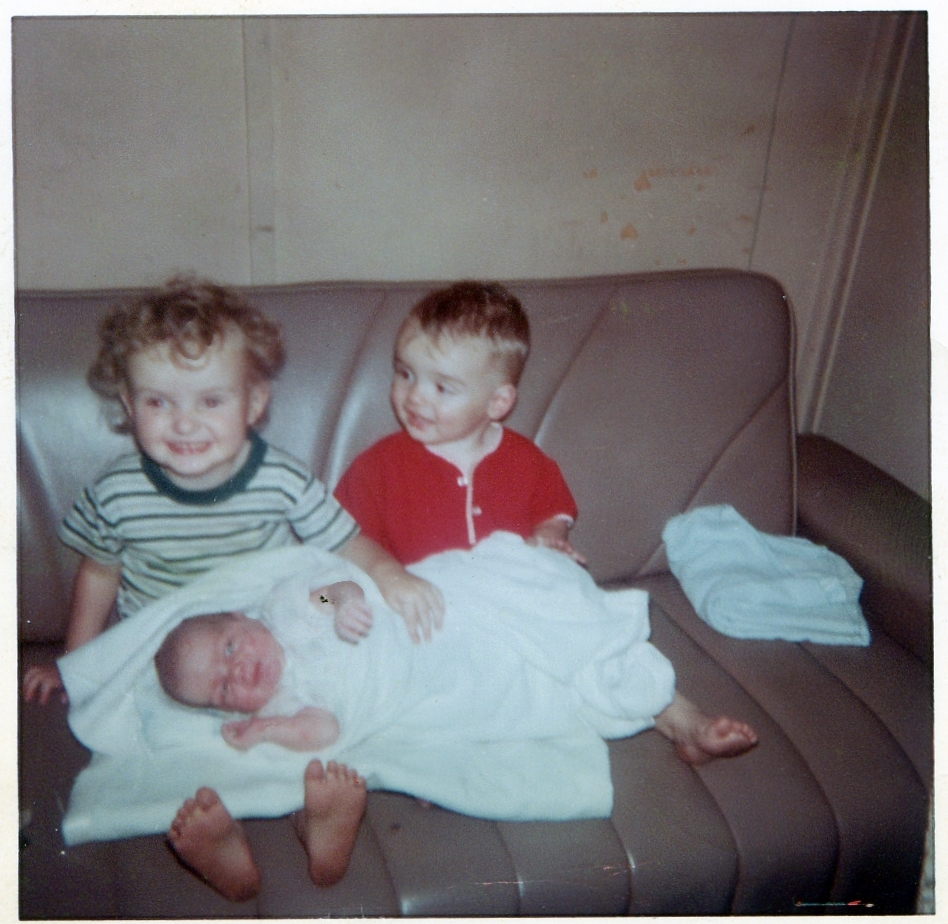
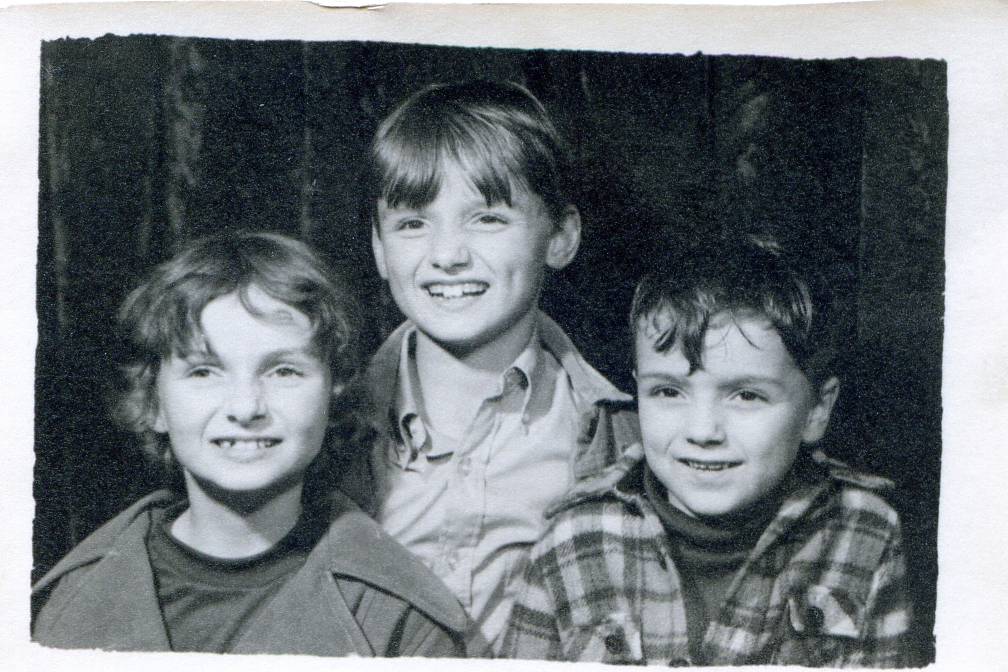
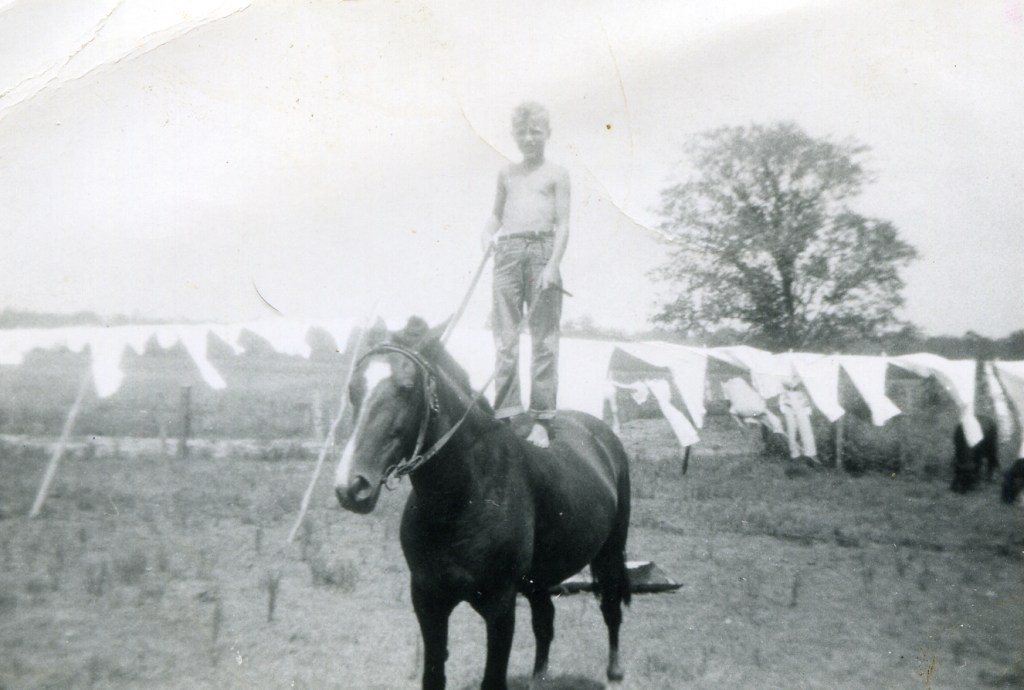
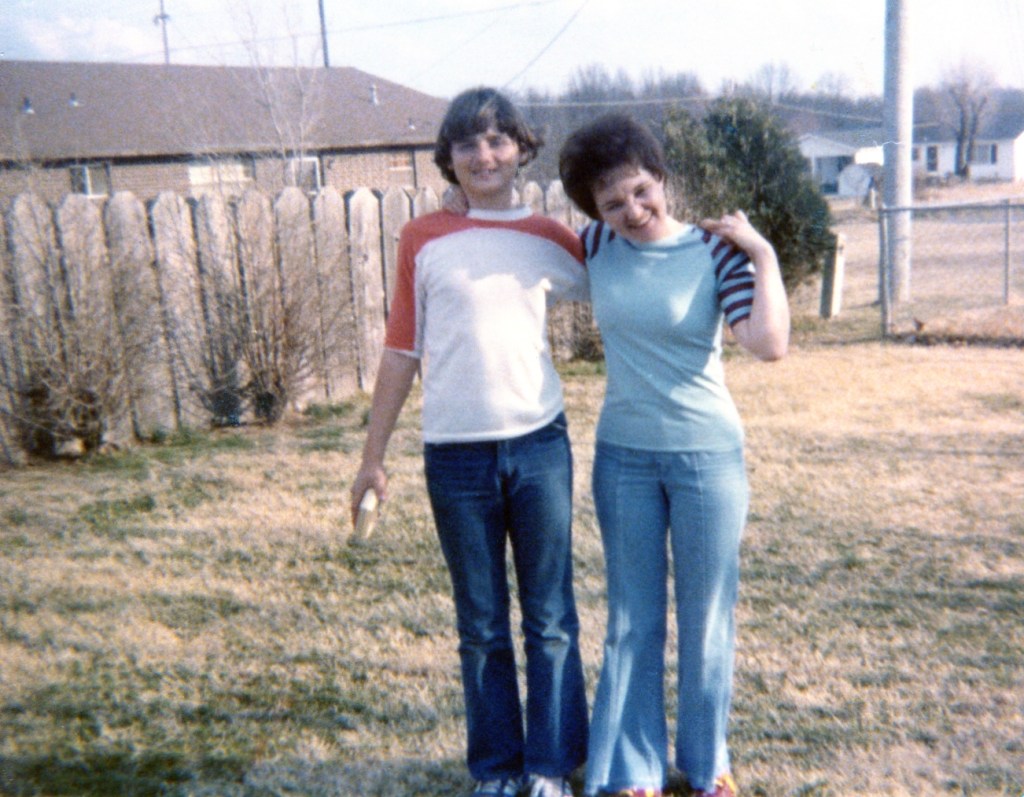
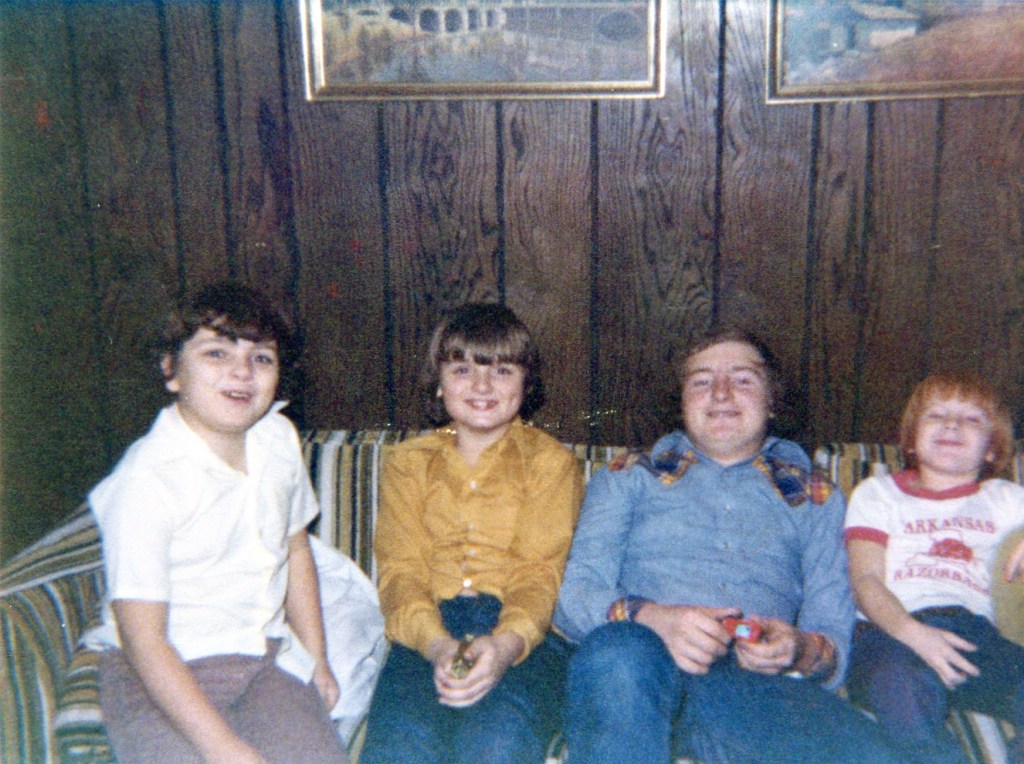
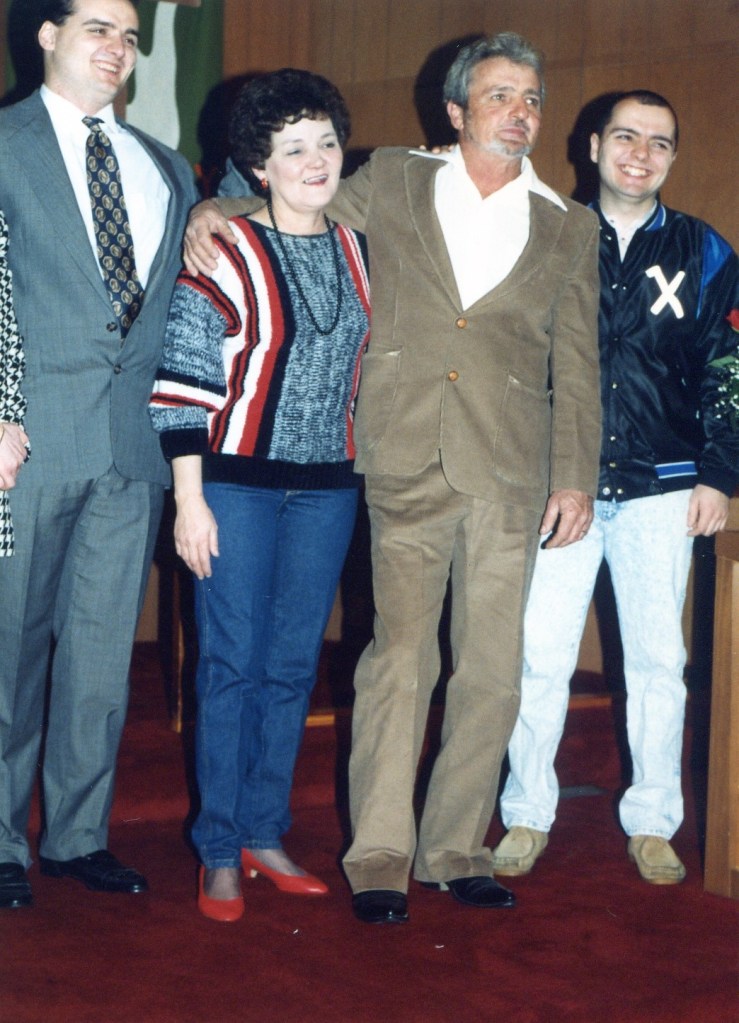
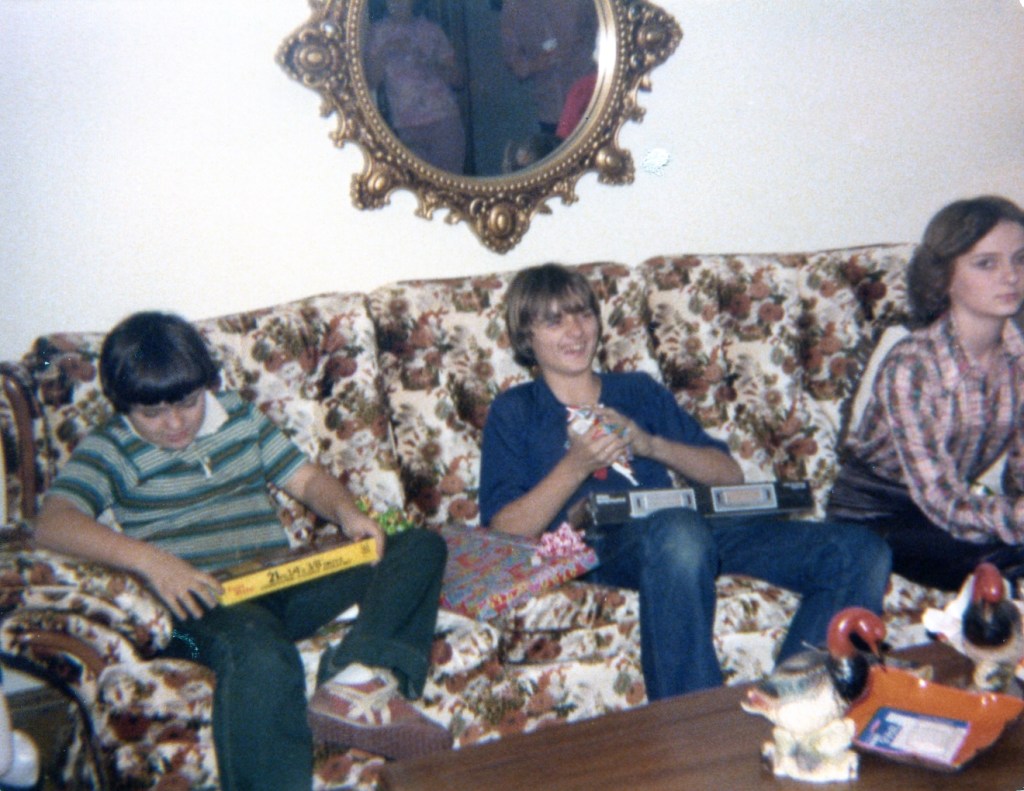
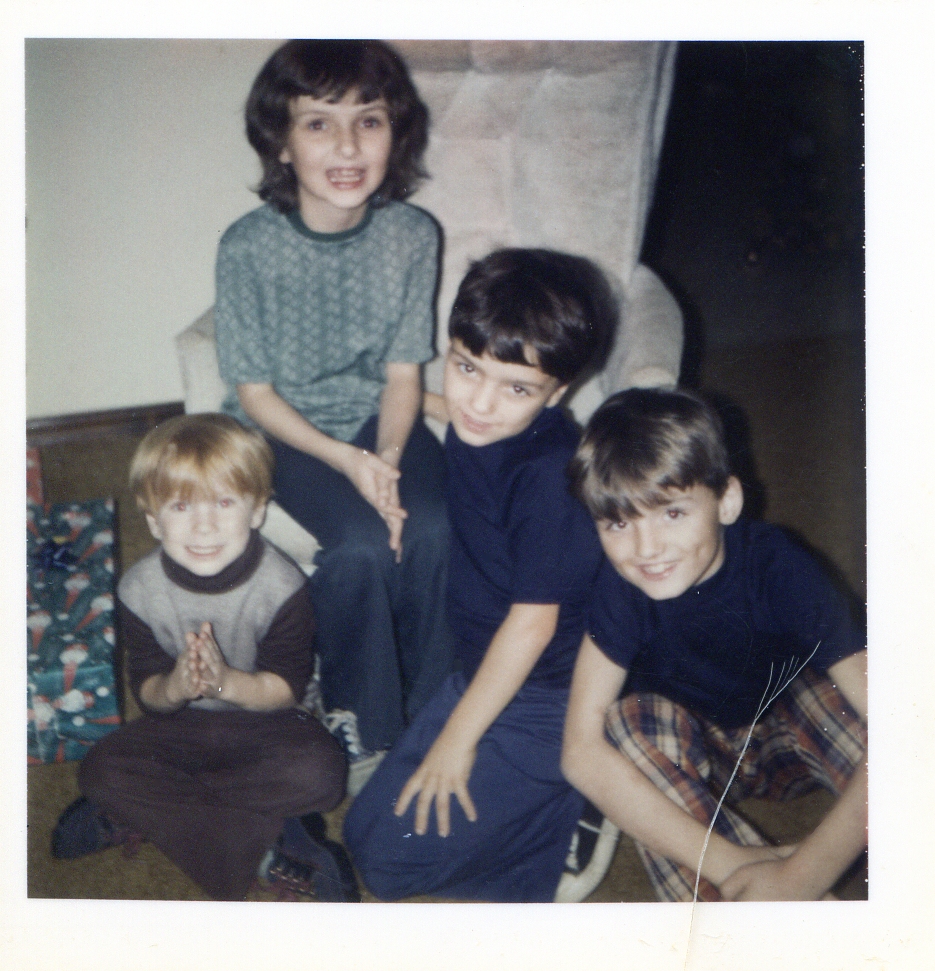
The first picture is my sister, my brother Mike, and me laying like a lump of coal. This picture was taken at Grandpa and Grandpa Cook’s house in Rich, when they lived near White Cemetery. The second was taken when we lived in Springdale for a short time.
*
My brother recently died as he neared 55. Our dad died before he turned 50.
The military was not Mike’s first, second, or third choice. But it’s the choice that got him out of Arkansas and into a career in law enforcement. Whatever else the military does, it spectacularly solves a multitude of problems when people join. It may present others, that’s true, but those are unseen and delayed when you decide to join. No matter how old we get, option fatigue is paralyzing.

Out of high school, my brother recently returned from a very brief stint at Arkansas State University. He convinced me that the military was the worst possible choice for me, even though I was being offered an incredibly cushy spot in the Army music program. As it always does, hindsight paints a panorama of choices and chances for me in the Army.
Mike then turned around unexpectedly and went directly into the Army and off to another life, leaving me with a wtf-face beyond description. He went to Germany while there were still two of them and then to Northern Illinois, where he remained.
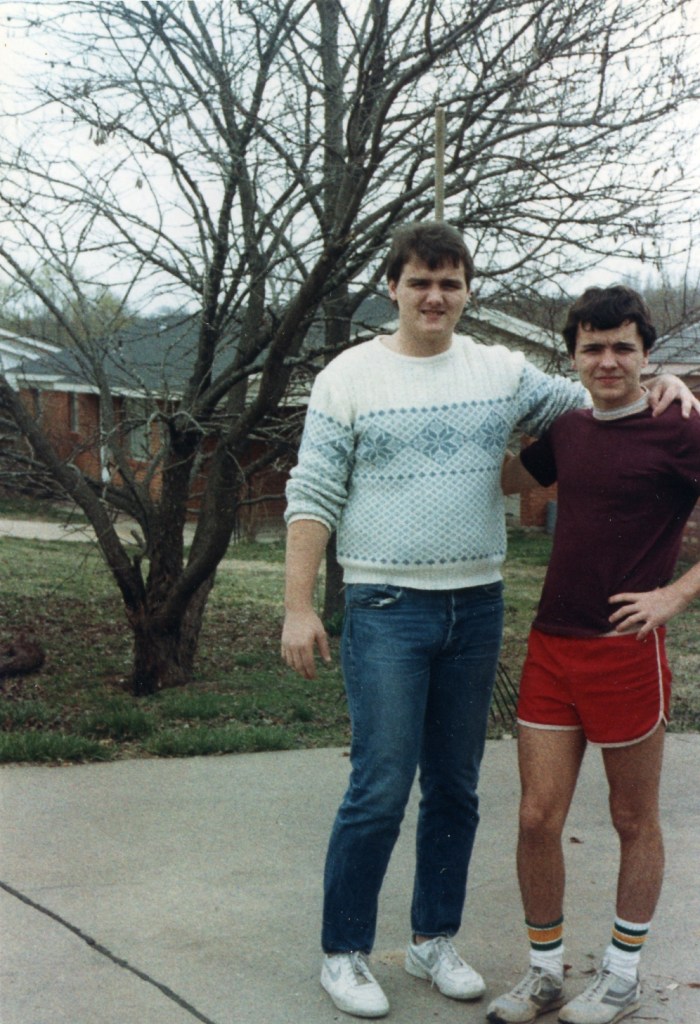
Over a decade later, I seriously considered the option of the military again. I had my physical and background check, and also signed up for delayed entry. He got me out of that idea, too.
Because of our upbringing, I often wonder what would have been the course of our lives if he stayed in Springdale and I had left for the Army as a musician. Would his tendency toward drinking and anger blossom so fiercely. Would mine, had I untethered from family?
In those early years, he publicly held the family honor, even as it continued to vex him. Me? I changed my name and kept my distance. Being poor helped me in this regard. Being ignorant didn’t hurt, either. Mike gave me a lot of grief for my dislike for most of the family’s ideas of politics and how to behave. In my defense and as I increasingly learned, racism often disguised itself as politics. In part because he was the big brother and in part because he thought he was indeed the authority, he fought and lectured me to stop sharing family secrets. I often called him Mike O’Reilly, even though he wanted to break my fingers for it. As time passed, it became evident to anyone paying attention thought although I was the weird kid with the weirder name, I was dead on regarding our biography. Mike favored the Terry family while I loved the Cooks. Both had an equal measure of mishap and heartbreak. The Terry family just had a bigger rug they used to sweep everything under.
As late as last year, I was still uncovering skeletons from our family. People make movies and write books about such strangeness. Had I followed Mike’s insistence to let it go, I would have never picked up genealogy or pursued DNA trails.
Who we once were does not determine who we will be; however, its aim is so undeniably true that those who manage to escape their fate are miracles at work. A lot of smart people know their arcs. Few see themselves in the shadow of their choices. I’m often as guilty as anyone. I’ve never doubted that I inherited the infection of whatever ails my family. I’ve felt its breath to varying degrees for my entire adult life.
Mike was smarter than me. It’s unquestionable. There must be some magical sliding scale and accounting that would prioritize other things over intelligence. I would have cashed in a bucket of compassion and a dose of deafness for a lower IQ. When you are as under-prepared for adult life as we were, it is folly to follow our trajectories and assume success.
Somewhere in those years, that shared biography and its litany of grievances overtook my brother. While I arced into a middle-aged life, he let his guard down to how human he was and how inescapable the dungeon of the lesser can be to us.
While I was still talking to him at length, I asked him at least fifty times to take his time and energy and sit and write his stories. He loved to read and had lived a life stuffed with unusual characters. He told several book that he was excited about the book I was going to write. He didn’t take me up on my enthusiasm. So many stories passed with him.
No matter what anyone else said or will say, one of the things I consider a gift is to often recognize the universality of a good story. Mike had many of them. As I’ve often echoed about my youth, though Mike and I often were at odds, I’d be the first to line up to read a book of stories from his life, whether they were darkly shadowed or humorous.
I’m ready to rush ahead to the magical time when our memories shift and shuffle and lose their harsh edges. Nostalgia is one of those things that’s hard to define yet bangs a gong in all of us.
Though my dad died over twenty-seven years ago, I’m still pondering his choices, his secrets, and his pathology. I still find new revelations.
I suspect it will be the same with my brother.
We fought bitterly a few times in my life. As hard as it was for him to understand, I usually fought for quiet.
Some will exit onto the revisionist road, believing that one’s life and echoes end with death and that those who remain can change the stories of a person’s life. Others will individually have their own stories to tell and questions to ask. It is our way as human beings.
As for me, all judgement laid to rest, all I see is a reservoir of memories and stories. Whether they are told or not is not a valid question. They’ll be told, whether in whispers or shouts.




As we learned in “Like Water For Chocolate,” the emotions experienced while preparing food can significantly affect the culinary experience. (If you haven’t read this book or seen the movie, I will wait while you do so. You can read it in English if you need to.) The book on which the movie was based is separated into twelve sections, much like the months of the year. Each era is associated with particular foods that define the protagonist’s life.
It was important for her to unexpectedly inflict a bit of terror (or at least a sense of dread or apprehension) in someone in her vicinity while cooking. In part, it would explain the tendency for someone to wail, cry, or whimper while we ate supper. You might presume we were whimpering from the flavor otherwise. In mom’s defense, she didn’t need to concern herself with food. We were trained to eat anything without an audible complaint. In my case, I loved macaroni and any vegetable, even if coming directly from a can. Because I trusted my Grandma, I’d eat anything she offered. While there were times I didn’t like something she made, I never questioned whether it SHOULD be eaten. With my mom, this definitely wasn’t the case. There were exceptions. Because of my youth’s craziness, people often overlook the exceptions that were not characterized by the lesser human emotions I experienced growing up.
While it may not come across as funny, dad often did have a humorous way of driving mom bonkers about food. “What’s cooking,” he might shout. Or, “What in f$$$ is that smell?” Mom sometimes would scream back at him – and sometimes be funny in her response. It’s hard to explain how shouting and annoyance are funny, but it was. “Whatever the g####mned f### I want to make is what you’re eating,” she might scream. It probably sounded like WWII from outside. While they were often angry about it when their ability to tease back and forth emerged, it was obscenely sublime.
More than once growing up, we’d wake to the horrid smell of a burned cast iron skillet. A couple of times, mom did it. But it was usually dad who left the skillet on the stove. He’d arrive home drunk and cook a chunk of meat or fried bologna on the stove. There were a dozen times he’d try to cook frozen meat – and eat it anyway. It wasn’t unusual to pass through the kitchen and see an array of meat, grease, and a mess left there. Because mom usually got up insanely early, we knew dad left her a mess because mom would be in the kitchen cursing and banging every metal surface possible with pans, metal spoons, or by slamming the stove repeatedly. I’d generally not recommend this behavior if you have someone with both anger issues and a hangover in the house. By the way, a scorched cast iron skillet leaves a stench in the house for DAYS.
Much of the drama could have been sidestepped if someone had just asked us what we wanted. They could have fed me incredibly cheaply and often without the need for any actual cooking – and no ritual sacrifice of animals. In my world, kids were not asked what they wanted. Such a thought was heretical nonsense to people such as my parents. They didn’t need to tell us about starving kids in other countries; we knew that they wouldn’t be bothered with such an explanation when a good backhand said a thousand words. Note for those who don’t know: a backhand can be rendered at twice the speed as a forward-motion slap. Mom certainly could have handed me a can of tomatoes, corn, or green beans and sent me outside to eat in peace. Sitting at the table brought unseen battles to the front. By the 4th grade, I could expertly tip an opened can and eat the contents without utensils. Or without cutting myself.
We were lucky mom didn’t poison us, even if her target was my dad. Like most women in her class, she had no choice but to work full-time and perform all the other menial but necessary tasks of living for the household. Obviously, a lot of mom’s cooking stress was anger and resentment at being married to a lout. Mom didn’t have ‘signature dishes.’ I don’t remember her being romantic about cooking or the subtle art of gastronomy. To her, cooking was limited to the practical necessity of getting it done. It was a bizarre sight to witness her in the same kitchen with other people cooking. It might as well have been alien races sharing cooking space.
On another note, mom could have easily taught us to make one or two meals each. We would have willingly learned and helped had we been shown the attention—anything to avoid potential stress and drama of a ‘family’ meal. I know I couldn’t have been trusted to prepare any meal with meat. My recipe would have consisted only of tossing the meat carcass directly out the door and into the jaws of our succession of German Shepherd dogs named Duke.
Looking back, I’m still surprised that so many supper meals blur together into one indistinguishable mass in my memory. Few at-home suppers were devoid of distrust, dread, or unease. More importantly, I have no memories of meals wherein we gathered to eat where we shared our day, laughter, or happy moments. This was not part of our DNA. I like to think it must have happened accidentally. If it did, my treasonous brain has erased most of these memories. Exceptions tended to happen if dad arrived home drinking without his surliness or if extraordinary circumstances were at play. Watching sitcom families verbally teasing and laughing during dinner were Twilight Zone episodes for me.
On a typical day, mom had to read the tea leaves and decide when or if dad might come home. She was obligated to prepare some horrid slab of meat, partially cooked on the stove in a frying pan if he did. Dad was one of those absurd men who proudly pretended that the meat he consumed could indeed be eaten half-alive. “How in the hell can anyone eat that smell?” was a thought I often had. Along with the immutable truth that you don’t want to see sausage being made, the other is that no one should witness my dad eating meat. He was proof that our ancestors once jumped on wild walruses and ripped their ears off with their bare hands.
As you would guess, I generally wanted no part in the meat process. Given a choice between the meat prepared and eating live crickets culled from the underside of the trailer, you could find me with a mouthful of insect legs protruding from my mouth. Note: crickets thrive under trailers if you happen to be in the market for a truckload of crickets. If a vegetable were offered, I fought to eat an excessive portion of that and be happy. Truth be told, many of my supper experiences revolved around trying to be small and avoid my dad’s gaze. Though I’ve mentioned it before, his barbaric streak often led him to force me to eat things that should never pass the lips of a human being. If he noted I didn’t want meat, I often found myself chewing the fat off a bloody half-cooked ‘steak’ or the dark meat near the bone of an unidentifiable piece of chicken. (I shudder.) Or worse, the skin of a piece of chicken. I ate chicken skin quite often when I was very young and without dad around. It didn’t occur to me to think of how horrible it was. Later, though, I ate a mile of poorly-cooked or unappetizing skin that ruined me for the rest of my life.
It happened so often that I still have no desire to eat such meat. People underestimate how true this experience was. I was the youngest child; as such, dad felt offended by the lack of overt masculinity. He spent much of his life committed to ensuring that I consumed an array of inedible pieces of animals. His alcoholism is probably the single biggest factor that helped me escape his scrutiny. Unless mom was at his throat, dad’s drinking made him magnanimous at times, and his insistence on forcing me to eat things I didn’t like vanished. Some of the Terry family cooked very well and with love, so I didn’t understand how dad could be so barbaric in his approach, and other members of his family could prepare a wide selection of both meat and vegetables. My Uncle Buck cooked a few things extremely well. He also enjoyed cooking and preparing dishes. Especially gumbo and fish.
While I noted I disliked an increasing number of poorly and inexpertly cooked animal carcasses, it did at least drive home the idea that who and how something is cooked can often be 75% of whether you’ll like something you are about to eat. I felt like a medieval court taster who was anxiously waiting to feel his throat constricting against whatever poison had been inserted into the king’s food.
Despite all the instability in our house, mom spent a sizeable chunk of her money from her SW Bell operator’s paycheck going to the meat shops. It seemed strange to me that her dedication to doing this was so pronounced. Dad often could not discern the difference between a decent cut of meat and something found in the dumpster and fried in a pan for 30 seconds. Dad’s nutrition plan included chunks of meat, cigarettes, whiskey, Dentyne gum, and Brach’s peppermint candy. If I accompanied mom to the meat shop, I stood in amazement that there were more than 2 cuts of meat or 3 types of sandwich meat. It seemed odd that anyone needed something except bologna, salt pork, or bacon for a boy who loved mustard sandwiches. Mom was an impatient customer at such shops. It’s hard to believe that smoking was permitted inside them. And smoke she did, tapping her feet as she moved from one foot to the other, expecting her choice to be hurled toward her in less than 3 seconds. It seems strange that the building that currently holds the Las Margaritas Mexican restaurant in Springdale once was mom’s ‘go-to’ meat shop. I doubted my memory so strongly that I once searched for proof in the old phone books at the library and then matched the addresses against old maps.
Between errands, it seemed like mom was always buying cigarettes and alcohol. Much of my Springdale geography command resulted from the infinite trips to liquor stores and places to buy cigarettes. I could walk from Uncle Buck’s house to the liquor store that once stood at the intersection of Gutensohn and Highway 68/412, but wasn’t sure about the route to one of the grocery stores.
My access to the larger world and food expanded only because of my cousin Jimmy and infrequent visits to other people’s houses. Everything seemed exotic to me. Things like bbq sauce, olives, flavored pickles, and lemon pepper ignited my imagination. At home, we didn’t have these things. If such a store existed, my mom would have gladly shopped at “Bare Minimum Essentials.”
This impacted my brother Mike much more than me. He enjoyed eating meat. He also was a bigger boy, more athletic when we were younger, and had an expansive appetite. This annoyed the hell out of my dad. Unlike me, Mike loved grabbing a handful of dad’s prized sliced deli ham and stuffing it into his mouth as a snack. It was a perilous day to hear my dad holler, “Who ate all the g$$$amned ham!?” In turn, it annoyed Mike that I loved mustard sandwiches and was happy to eat basic food. If I annoyed him, he sometimes would take a piece of ham, roll it menacingly into a ball, and stuff it into my mouth, laughing at my cries of torture. I detested ham so much that I might as well be Jewish. Don’t get me wrong; I’d eat it sometimes but never with any enthusiasm and certainly not as a first choice. Having been in my brother’s ham hock of a hand, I liked it even less.
When the grocery store opened across from Johnson Road, my cousin Jimmy went to get Ron Calcagni’s autograph. Mom later went to the store and scoffed at the incredible selections, after listening to my Aunt Ardith list its array of food. I was mesmerized by the dozen types of bread and the endless row of assorted pasta. I wanted to live inside that store and stuff myself with gallons of marinara and spaghetti. Other kids could be seen getting politely or angrily admonished by their moms as they begged for treats from the candy aisle, special cereals, or ice cream. So dedicated was my mom’s brutality regarding asking, this simply didn’t happen with me. I didn’t touch – and never asked. It was a sin akin to peeing on someone’s head while riding the bus. There were a couple of memorable times I forgot myself and vocalized my desire to have something. Because I was a little strange. one of those times was when I saw Mexicorn, the kernel corn in a can with peppers. I didn’t want sweets or chips. I wanted that exotic can of corn. Not only did mom swat me with the wrath of Khan, but she waited to ensure that dad could put his 5-knuckles-worth into the equation. By the way, I had my first can of Mexicorn at my cousin Jimmy’s. Aunt Ardith bought several cans. She watched in amazement and then horror as I ate all of them, at once. When she put butter in them and stirred it, I felt as if Heaven had descended upon me and wrapped its arms around me. While I don’t know for sure that Aunt Ardith treated me to endless Mexicorn because of how my mom behaved, it seems likely. She smiled at me like Christmas while I ate. “You’re going to be sick,” she kept repeating, her voice growing more amazed as I emptied the cans one by one.
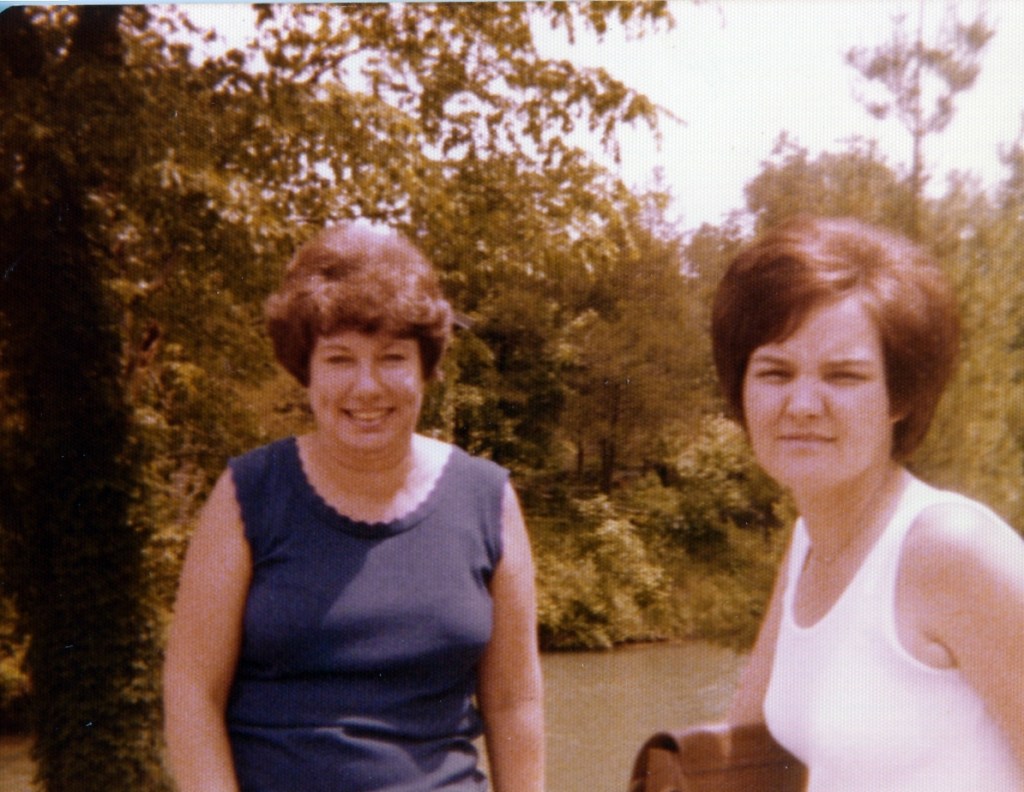
It was sometime in the summer of 1st or 2nd grade that I discovered that canned corn and green beans were delicious. Heating them was a needless step for me. Being able to skip steps to eat was a revelation for me. Soon enough, I learned how to make macaroni and spaghetti. Though I’d seen it made one thousand times, I was stupidly surprised by the fact that cooking it only required boiling water and waiting long enough for it to soften. A monster was born, one that still resides within me. While I could eat noodles plain, if tomatoes or tomato sauce were available, I would dump it into the water and noodles. We didn’t use strainers; we had to risk burns over the sink using the pot’s lid to drain spaghetti. I think the lack of good strainers is one characteristic that most poor kids share in common. Skipping all those steps was a benefit. Regardless of the size of the package of pasta, I cooked it all. And then ate it. Wasting it wasn’t a consideration.
All of which brings me to the Golden Macaroni Era at City View trailer park. Infrequently, mom would recover from the cyclical violence with dad. She’d violently clean the trailer and then later that evening make a pot of macaroni soup. Instead of simply making macaroni and adding tomatoes or sauce, she would cut up potatoes, onions, and a few other things and boil it into submission. Mom and I would sit at the table and eat. She would watch me eat a gallon of it in one sitting. Though it was simple, it was delicious beyond measure. While she made this after City View a couple of times, I’ll never forget the period at City View when she often did it. Usually, only she and I would eat this soup. She must’ve realized from Grandma that this was one of my favorite things in the world. Over one summer, my Grandma made a version of this for me at least every other day. Weirdly, I didn’t mind that mom had magically used at least 2 large onions in the soup. I count these nights eating macaroni soup as one of the few ways and times that mom tried to have a selfless connection with me, even if only through food. One of the other memorable times was her return from alcohol rehab in Fort Smith after I graduated high school. She made a mammoth pot of macaroni soup, and we ate the entire pot. I can’t see this moment as accidental. Mom returned from rehab, a completely different person.
When our trailer burned at City View and we moved to Tontitown’s fringe, this tradition died. My “cousin” Leta, who owned the house in Tontitown, where we moved, worked at the Venesian Inn. Because she could bring home endless food, it was from there I discovered my love of Italian dressing. Even as dad and family and friends had endless drunken cookouts, I found that salads with huge cut-up tomatoes and a bottle of Viva Italian salad dressing were available. I consumed truck loads of rolls and salad.
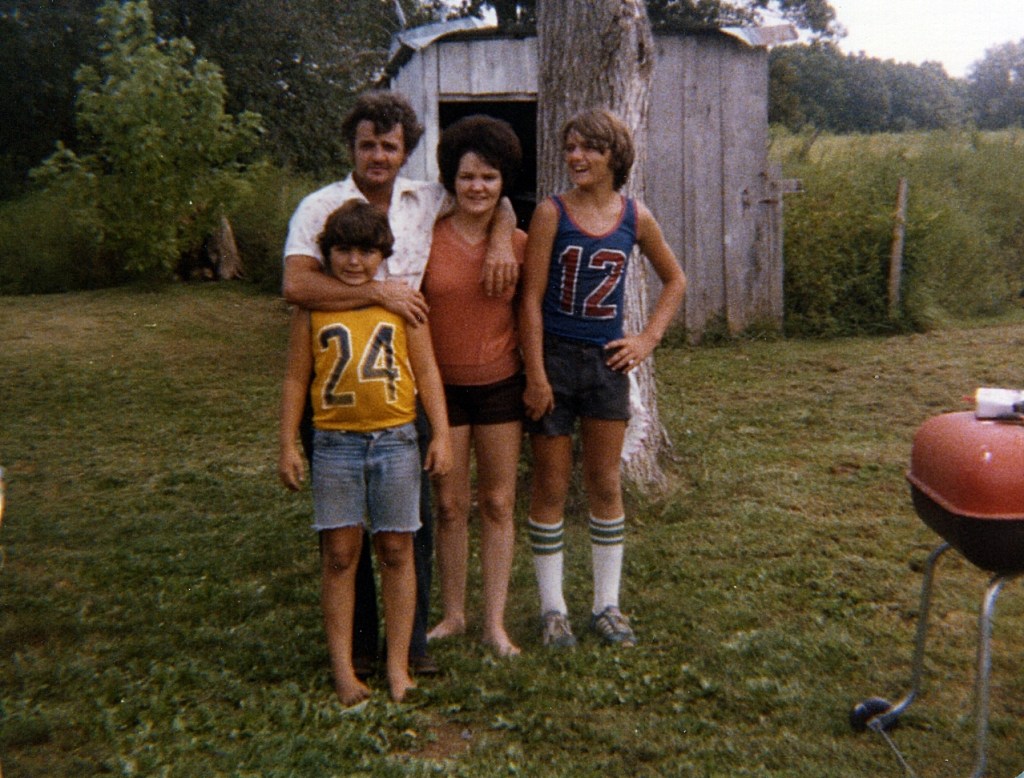
In closing, I’ll finish with mom’s secret Mashed Potatoes recipe. This recipe has been sought after for years, so share it only with trusted friends and family.
You’ll need whatever kind of potatoes are on sale, a bit of milk (canned if you have it), a bit of pepper and salt, and access to non-menthol cigarettes. You’ll need to smoke constantly while boiling, mashing, and mixing the potatoes. Also, don’t knock the ashes from the cigarette as you cook. Allow them to fall freely into the potatoes. If you’re adventurous, coarsely cut a large onion into preposterously large pieces and throw them in the mashed potatoes. If the potatoes are lumpy, don’t notice. Hungry people don’t notice, much less comment, that the potatoes are lumpy. If you get a particularly large chunk of onion, spit it into your hand and keep eating. If anyone notices something that looks like ashes in the potatoes, tell them it’s pepper. Fun fact: it is almost impossible to taste cigarette ashes in mashed potatoes, no matter how much is present if you add pepper and onions to them. It’s for that reason that I mentioned that you shouldn’t smoke menthols – which are easily detectable.
Note: I was pleasantly surprised to learn that no one else puts onions in mashed potatoes. In 2017, I wrote about “Newport Potatoes.” Many people thought I made it up, even after citing the episode of “Master Of None.”
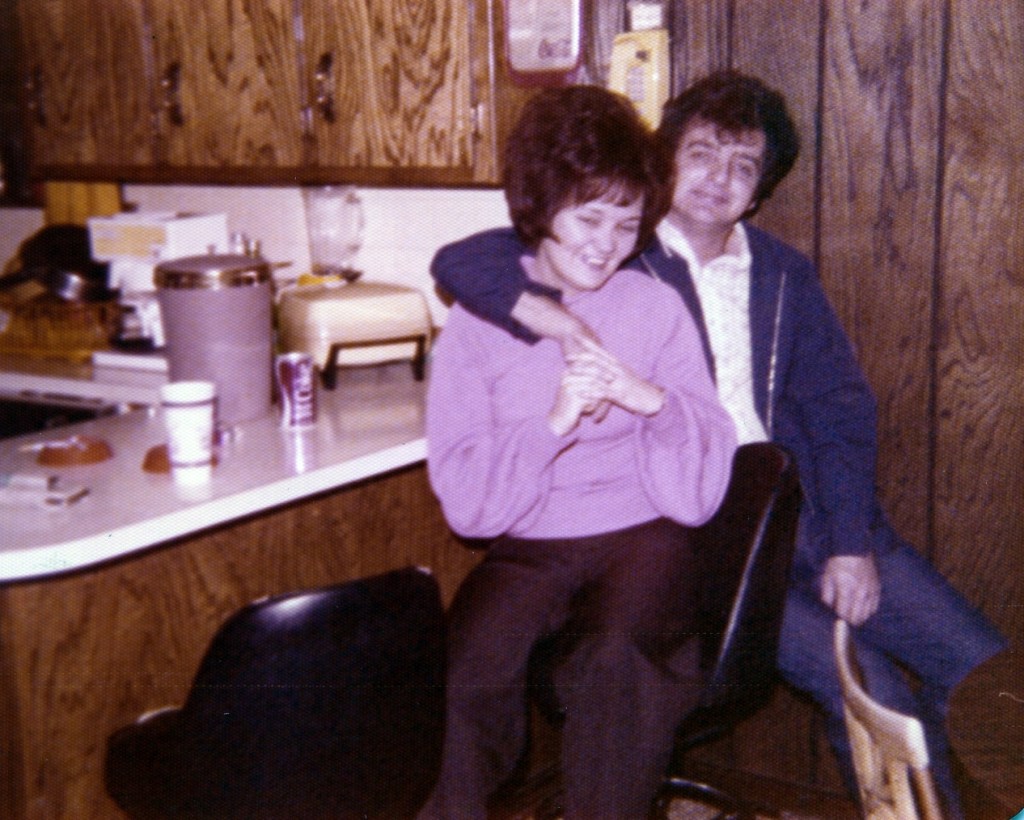
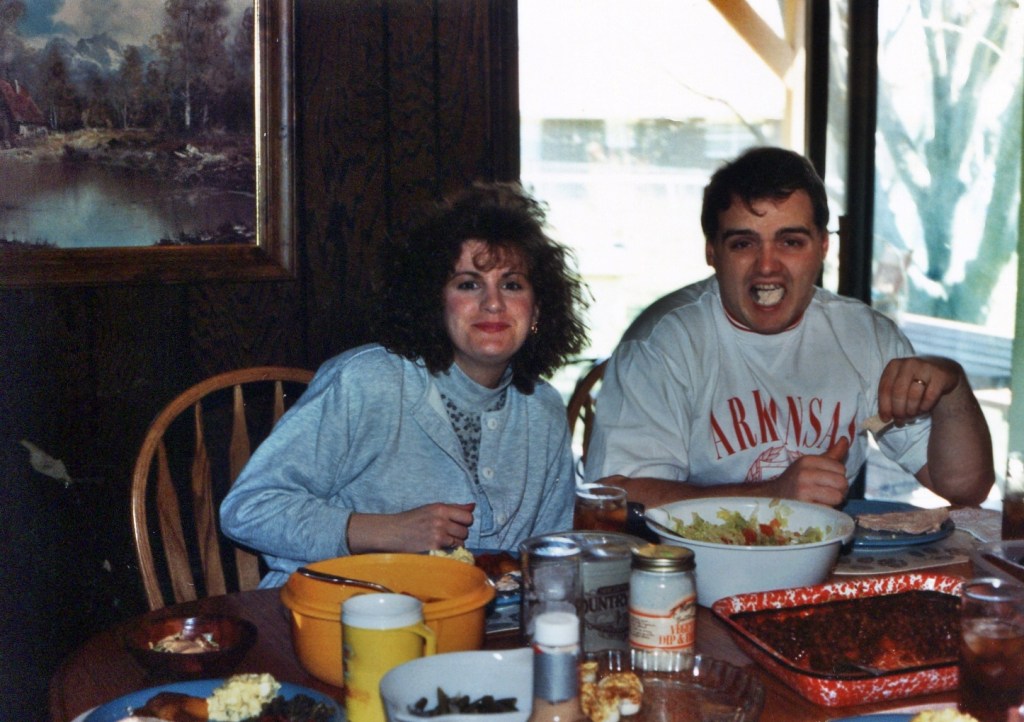
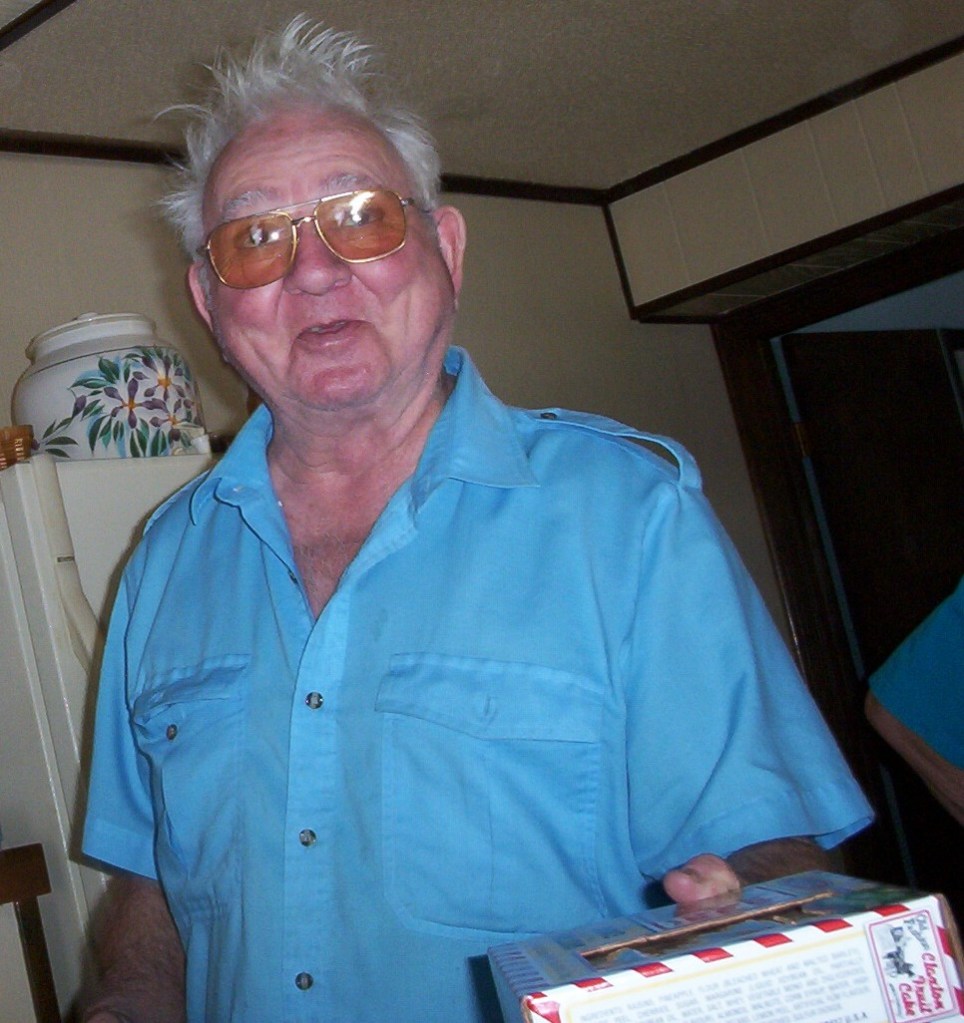

I am of the continued mind that we should drop the pretense of vanity and concealment. We should just offer voluntarily the worst possible perspective, the worst possible picture, and the worst possible interpretation of our motives through life.
If you think about the title of this post, it should project the exact tone, imagery, and point that I’m trying to make. Sunsets are beautiful and most of us agree. The world that brings us back to the center is one of necessity and immediacy.
Each of us is engaged in a varying degree of war with other people’s opinions of us. Someone smarter than me pointed out that every person has a different idea of who we are in their head. Each of those images reveals at best 75% accuracy.
When we are reduced to our visceral essence, much of our ego of pretense abandons us. For all our lofty goals and vain ideology, we are all equally engaged in the grind of survival.
For me, what gets me through these days, is the idea that you’re sitting there with an unpleasant picture in your head and wondering how mere words took you there.
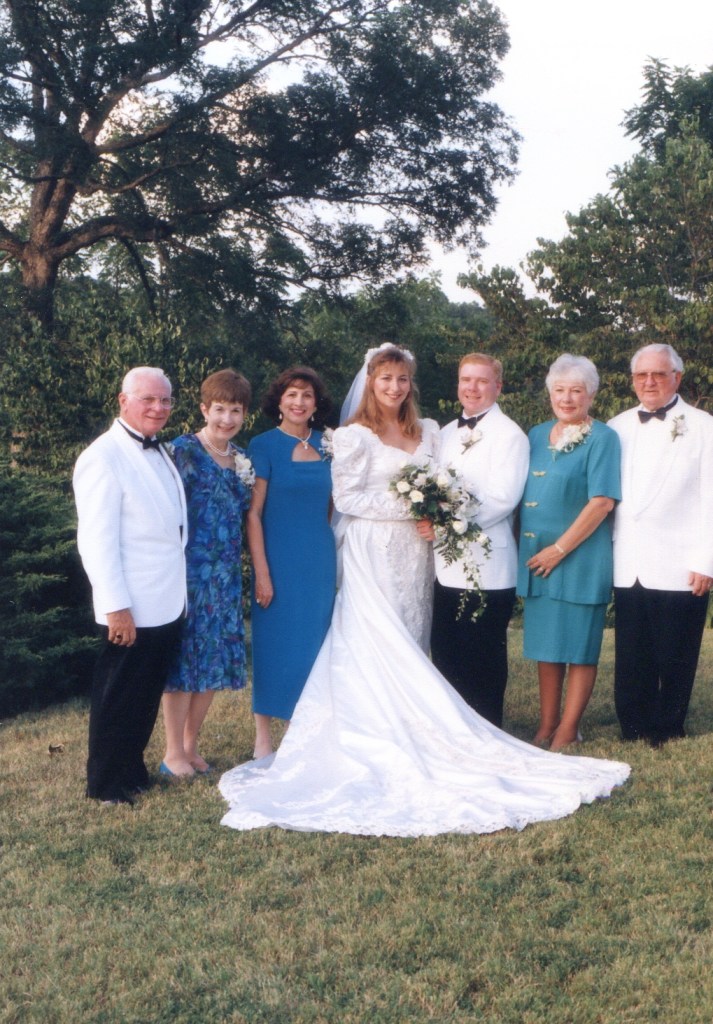
One of my regrets is that I didn’t streak naked around Thorncrown Chapel in Eureka Springs during my cousin Jimmy’s first wedding. His first wedding was in August of 1995 to a woman named Lona Heckle. In 1995, I still had the body to allow me to run fast – and, if caught, not feel too badly about my picture being on the nightly news after my arrest for streaking. Camcorders were common but it was still possible to just be a blur on such cameras. Regular cameras were unwieldy and snapping flash pictures inside a giant glass rectangle tended to yield less-than-stellar photos.
Coincidentally, one of my other regrets is that I did not get to perform Jimmy’s other marriage shortly before his death. I overcame my inertia to become ordained due to the possibility of this marriage. I understand the particulars of why someone else was chosen but still remain a bit uneasy about it. Personally, I can’t understand why more families don’t have someone ordained so that the family member doing the ceremony will forever be part of the memory, too. After all, standing with the two people in love is the best seat in the house, so to speak.
Were Jimmy still alive, he’d join me in laughter if I told him, “Yes, I was going to perform your second marriage naked, Jimmy. No need to streak if I’m standing in front of everyone.”
He’s been dead for more than 7 1/2 years now, which itself seems alien to write.
I wrote much of this post a few days ago, before the other shoe fell and my brother died. I don’t recall why Mike wasn’t at Jimmy’s wedding. Fittingly enough, Jimmy and I didn’t make the trip up to the Chicago Metro area to attend my brother’s wedding. Our excuse wasn’t personal; we were both just young, poor, and unaware that we could reach out and find a way to get there.
My cousin was a bit crazy himself. He was prone to get whiskey courage and do some outrageous things. We inherited the tendency from our ancestors.
For whatever reason, Jimmy was very nervous about the wedding itself. All the family he’d ever known was attending. When I first started teasing Jimmy about potentially streaking during his wedding, he laughed and said, “You’ll never do it. You’ll say you will but you don’t have your dad’s crazy streak.” So I told him, “Exactly. NOT having it gives me the courage to do it precisely because no one will expect it.” As the days passed, I could tell I had got into his head.
For those unfamiliar with the Thorncrown Chapel, it’s made of glass and steel and sits in the middle of an expanse of trees and forest. I’ve witnessed people become overwhelmed by emotion while sitting inside. If you’ve ever had the pleasure of being inside during heavy snow or while the sun is beaming through at an oblique angle, you undoubtedly can imagine it again.
Now add the idea of me running around the place naked with dozens of horrified onlookers trapped on the inside watching me do it.
I made the short video cut of Jimmy standing at the altar. It captures his unease at being the center of attention and spectacle. I took it from a VHS tape I had digitized several years ago. It was one of my few chances to be able to see videos and images from lives overlapping mine. Much of the bulk of such photography was lost to me due to the odd lack of sharing many of the family members seemed to inherit.
And because it’s one of the few relics of me on video, here’s a short one of me the day of Jimmy’s wedding. We were milling around outside the motel waiting for the hurry-and-wait part of the afternoon to commence.
*
*
*

I wanted to post this picture of Jimmy and Lona a couple of years after they were married. I mean no disrespect but I always remember wrong how long they were married.
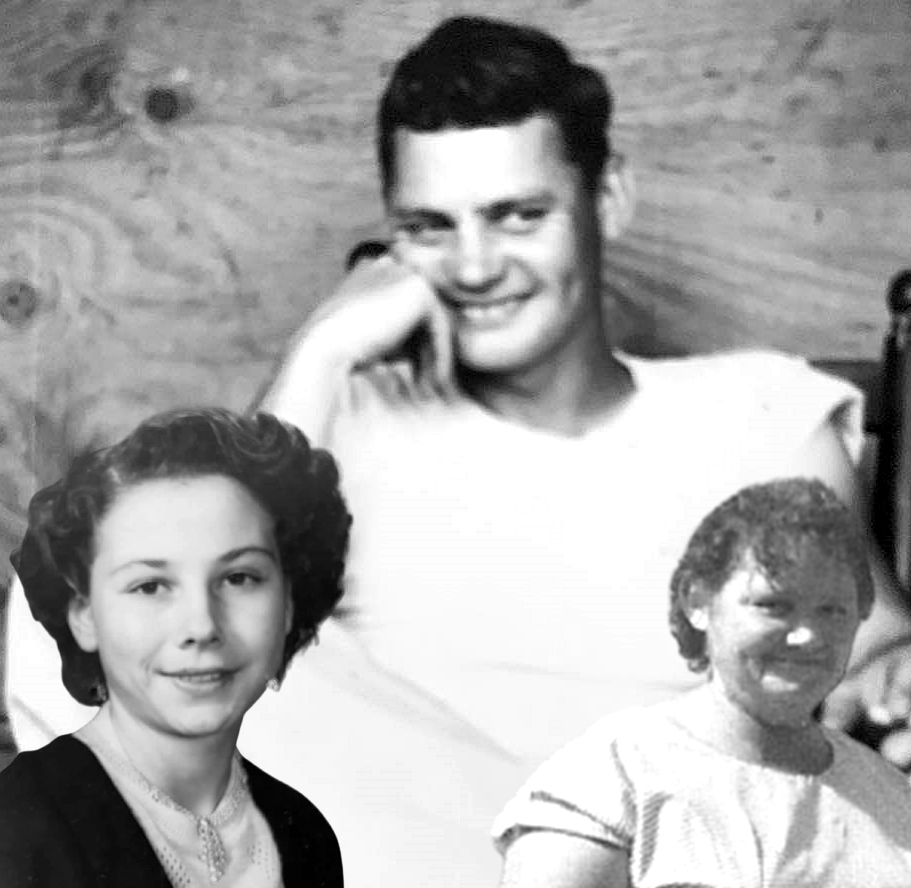
One of my favorite people wrote this story…
Hello Americans!
If you listened to the radio much between 1976 and 2009, at some point, you no doubt heard Paul Harvey’s distinct voice say those words. It was his way of kicking off his segment covering news of the day, personal commentary, and possibly a tidbit of some sort to make your life easier. His syndicated program was heard by millions of Americans every weekday for decades, and he had credibility and influence with his listeners.
How much credibility and influence he had became apparent when I saw him get three teetotalers to consume what I’ll call drunk grapes. To be clear, these folks believed—hands down without a doubt—alcohol is not to be consumed in any form unless you’re taking communion at church. No sip of wine with dinner; no beer while watching a ballgame. One tiny sip of inexpensive communion wine once a month was the only allowable type and amount of alcohol.
On a trip to my hometown in the mid-90s,I pulled into the driveway at my parents’ house one Sunday—-late morning. The folks were still at church, so I headed next door to my grandma’s house.
There I noticed but didn’t think much about, a mason jar on her kitchen table filled with clear liquid and globs of shriveled golden raisins.
Later, in my parents’ home, the same type of jar filled with clear liquid and raisins sat perched on top of the refrigerator. Neither of these jars had been in place the month before during my visit, so I had to ask.
Turns out, that week on his radio show, Mr. Harvey had touted a new remedy for relieving the pain of arthritis. In fact, the recipe might even be the answer to several ailments.
The recipe was simple: Pour a box of golden raisins into a large glass jar and fill it with gin. Let the raisins soak in the gin at room temperature for a week. After that, eat ten raisins each day. In about two weeks, your various pains should be significantly relieved – if not completely cured.
While it sounded a bit odd to me, stranger miracles have happened, so I made a mental note to check back during the next visit home.
First, though, I had to ask how this all came together…
Getting raisins was easy enough; Mom simply added them to that week’s grocery list. But how on earth did these three non-drinkers get the gin?! Mamma didn’t drive, so that option was out. Dad himself wasn’t an option because he wasn’t a fan of the unknown and going into a liquor store alone was far beyond the boundaries of the comfort zone he liked to inhabit. It was, as usual, up to Mom to do the heavy lifting or, in this oddest of cases, picking up the spirits.
One of the small town’s numerous liquor stores was situated on the route my mother took to and from work daily, so it seemed the logical choice. But my mother did not relish the possibility of being seen parking at and walking into such an establishment. A plan eventually was finalized. Mom would watch the pattern of occupancy at the package store, and Dad would drive her there during a day in the week with less auto and foot traffic. He would park at the side of the store in hopes they were less likely to be seen by people they knew (even though the side parking offered two directions from which to be seen just as the front did). Mom would go in to purchase the gin.
The chosen day came, and nerves tingled as Dad eased the large, white car alongside the building being careful not to block the drive-up window.
Mom gets out and purposefully, but quickly, marches to the door. An old-fashioned bell clangs as she pushes the wooden door open and steps inside to an expanse of potent potables.
The clerk behind the well-worn counter looks up to see an unfamiliar face and asks if he can help her find something.
She hesitates briefly but knows it is useless to look for it herself – she will never find what they need if she doesn’t have help. Yes, she says in a voice that fakes confidence in what she is doing. Yes, I need some gin.
Stepping around the end of the counter, the clerk throws a wrench in her business. What kind of gin, he asks. Kind? Her mind freezes for a second. There are different kinds of gin? She throws the wrench back. The kind that’s good for soaking raisins. Her firm answer implies “of course” at the end of her sentence, but she knows as the last word comes out how ridiculous it sounds. It is the clerk’s turn to be surprised. Mom can’t help but smile a half-smile at the situation. The clerk laughs and says “Well, let’s see what we have. You say it’s for soakin’ raisins, right?” Mom laughs and answers “That’s right!” before she adds that Paul Harvey said gin-soaked raisins are a cure—or at least a help—for arthritis pain and several other ailments, and they think it’s worth a try.
By now, they are standing before a selection of gins with a variety of prices. As with many things in life, Mom figures you get what you pay for, so she skips the cheapest and the clerk helps her pick a middle of the road gin. They return to the counter where the clerk totals the purchase, bags the gin, and accepts the cash Mom slides across the counter. Mom thanks him and turns to leave as he waves and wishes her luck with her raisins.
She closes the door behind her and notices the bell’s muffled jangle. She thinks that wasn’t so bad. She rounds the corner and notices Dad scrunching low in the seat looking furtively in every direction.
She marches to the car clutching her once in a lifetime purchase, grabs the handle, and hops into the passenger seat. Simultaneously, she says that didn’t take too long as Dad grumbles what took so long; he thinks someone they know saw him.
The engine roars to life, and Dad pulls as quickly as possible onto the street and drives home the back way.
And now the gin and golden raisins are hanging out together in glass jars waiting to be medical miracles.
A month later, I arrive home for another visit. The mason jar at my grandmother’s is gone. I ask if the raisin and gin “medicine” had worked to banish her aches and pains.
“Not sure bout that,” she said, “but it was really a dose!” The emphasis on “dose” was so heavy, I couldn’t help but laugh before saying it was too bad the taste wasn’t what she had hoped for.
At that point, I decided not to even ask my parents about their treatment as I could already imagine their reactions. The thought of the entire situation, all these years later, still makes me laugh and the line “it was really a dose” has become a fun and regular phrase in my vocabulary.
It’s apparently true after all. Sometimes, the cure really is worse than what ails you.
And, in the words of Paul Harvey, “Now you know the rest of the story… good day!”
*
Yesterday, I exited through the back door of my house to collect the trash blown loose from my villainous neighbors. I went house left to the front.
Note: I am using the term “house left” just like actors would when reading or hearing “stage left.” It’s a handy trick to distinguish which side of the house you’re talking about, mostly when gossiping about your neighbors. If you don’t gossip or speculate about your neighbors, chances are you’re not one of my people.
My Latinx neighbor was outside with another gentleman. A ladder was near the front of the garage. I peered up to see that they were installing security cameras. The neighbor tends to work at nights, leaving his wife nervously at home. I used to tease him that his encompassing fence managed to conceal potential intruders rather than thwart them. Additionally, when working, his lights often pointed annoyingly in my face or a random direction.
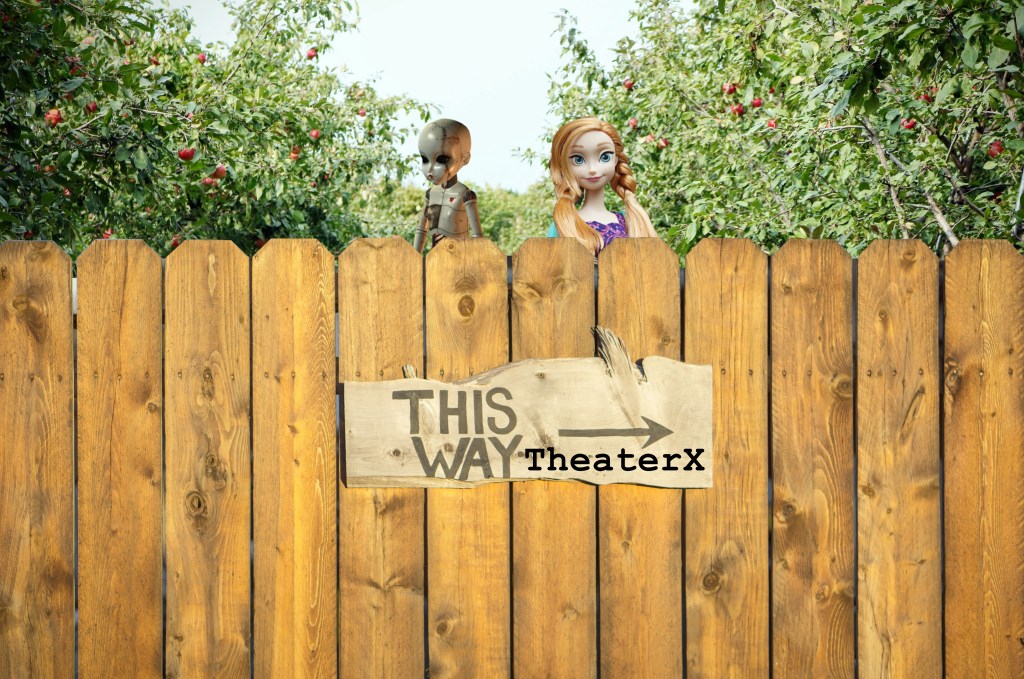
Now that I know he has installed cameras, I can’t get the idea out of my head of doing weird puppet or stick figure shows above the fenceline so that the rear-facing camera on the right side of his house will capture my imagination come to life. I laughed earlier this afternoon when I realized that I was Googling creative and bizarre characters to buy for just such an endeavor. The internet being what it is, there are a lot of websites for this sort of zaniness.
Now that it’s starting to take form, the urge to bring the idea to fruition is almost insurmountably overwhelming me.
The idea of my neighbor’s face reviewing his camera footage to discover that someone has staged a stick or puppet show above his fenceline brings me joy.

The young mom, obviously exasperated at her 5-year-old son, growled at him, “¡Dile perdón, cabrón!”
{Loose translation: “Tell him excuse me, you little turd!”}
The boy had danced and pranced past me, doing a quick pirouette as he passed, missing me by a millimeter. Though I was holding several fragile items, I didn’t budge as he danced around me.
As the mom grouched at him, the precocious little boy didn’t miss a beat.
“¡Perdón, cabrón!” He said.
The mom immediately froze and made eye contact with me.
I smiled and, with the intent of humorously diffusing the situation, told the boy, “Sí, te dijo, ¿no?”
Loose translation: “Yes, she told you to say it, didn’t she?”}
While I don’t know what damage the boy may have suffered at the hands of his mom once out of my eyesight, I laughed at the universal nature of mischievous boyhood.
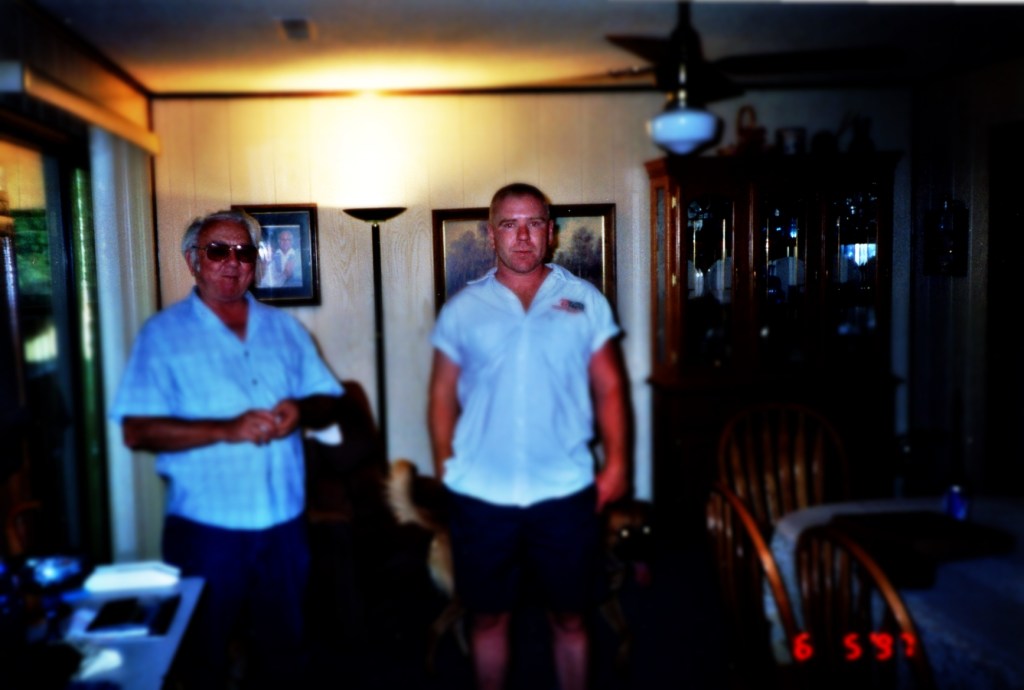
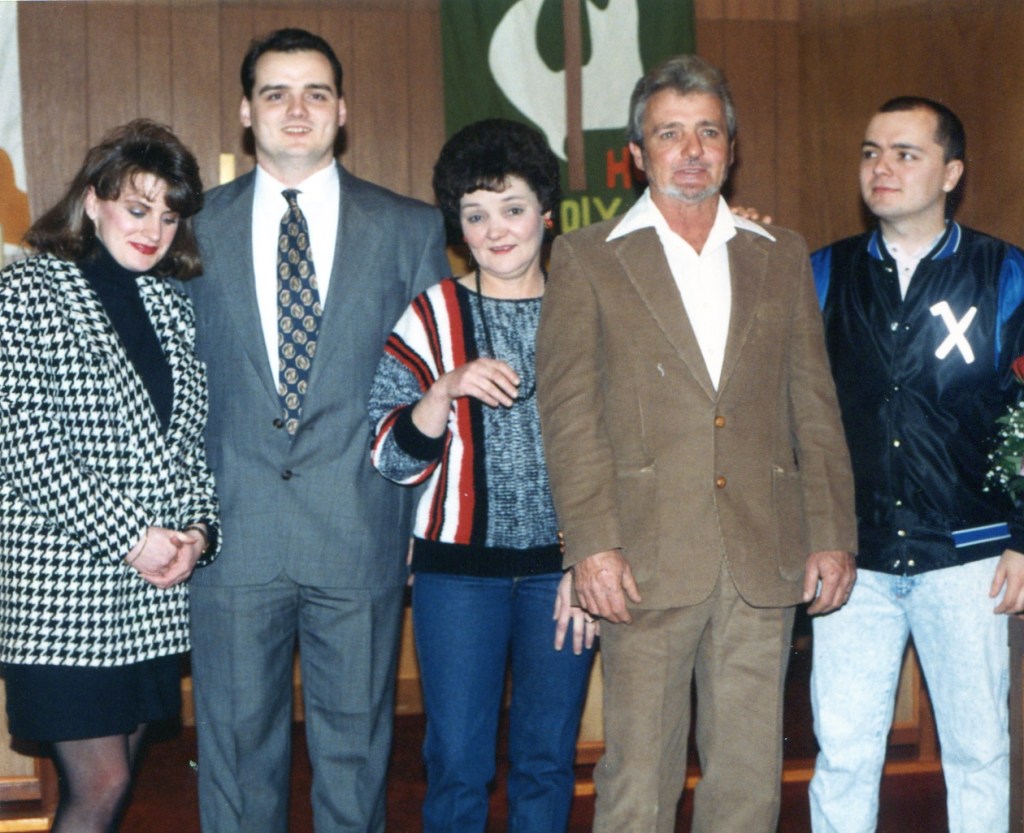
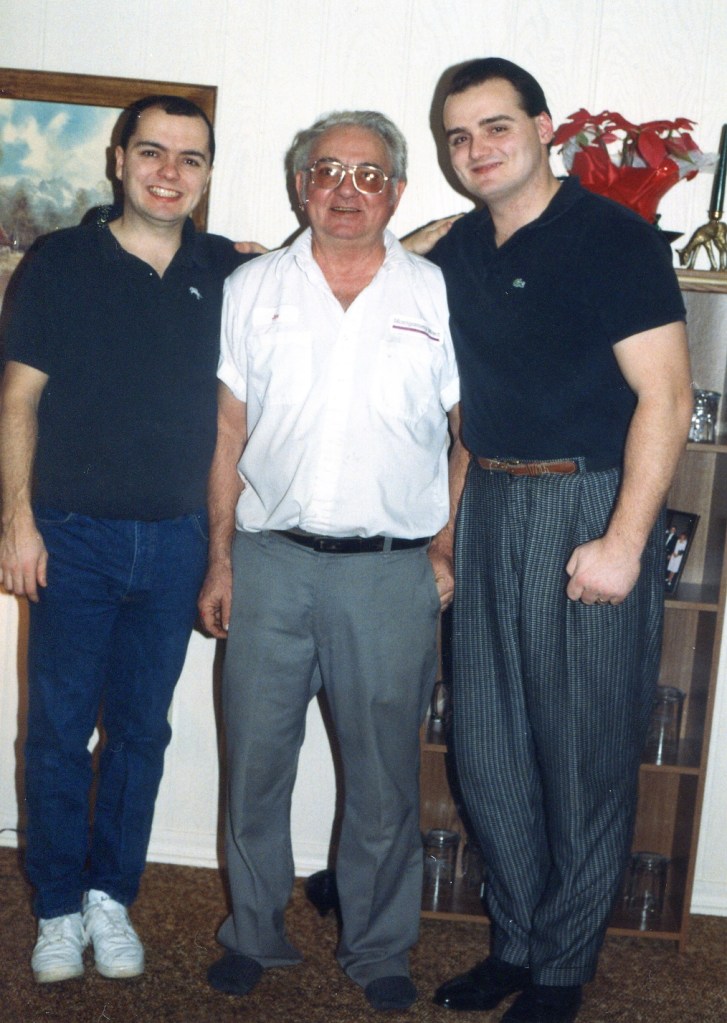
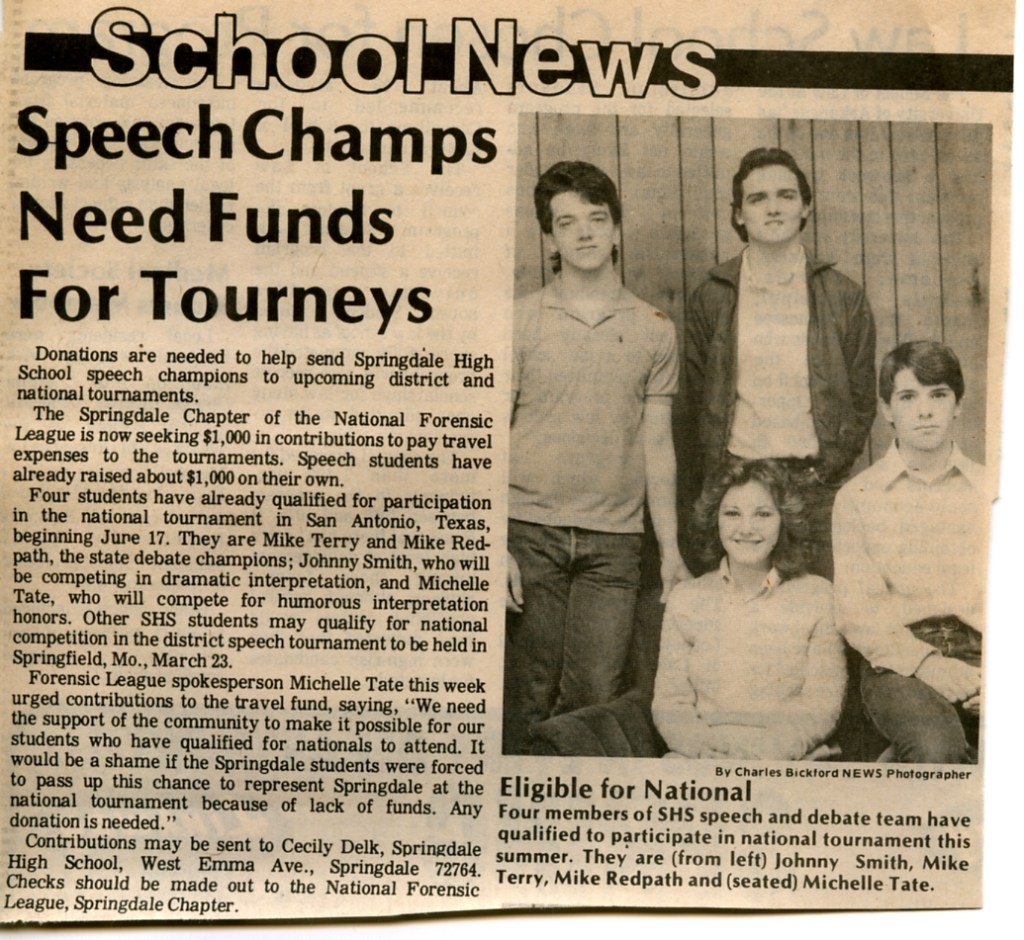
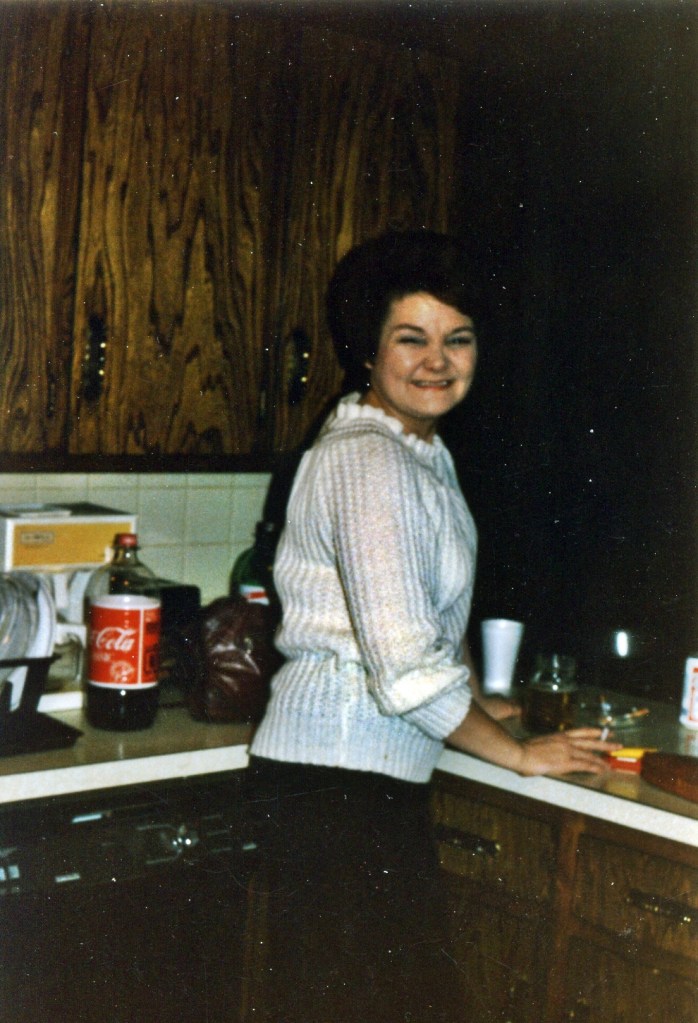
Reaching the age when you are looking through old photos and realizing that you are the only one in the picture still alive.
It truly comes for us all.
Because I’ve maintained my ancestry account for so long, I’ve had at least 20 instances where I realized that I needed to update someone’s life by posting their death. For several, I’ve not only been the first to do so, but the only one. In time, others often see a death marked with a ‘hint’ on their trees and borrow my initiative. I try to gather the enthusiasm as soon as possible to post all the pictures I have of the person who has died. I find it increasingly hard to imagine hoarding pictures from posterity; while I might possess a picture, I’m merely its custodian.
I can imagine what Paul Edgecombe from “The Green Mile” felt when he was cursed with long life. Part of the arrangement was that he had no choice but to witness the passing of everyone who shared his life. While I’m in my early 50s, I can feel the pain of someone who reaches 80.
Getting older presents us with more opportunities to hold the disparate ideas of bittersweet and melancholy simultaneously.
Because I love pictures and genealogy, the two hobbies often coalesce and focus my attention to the passing of people – as well as the infrequent but inescapable realization that the deaths accumulate behind me.
Cursejoy.

