All posts by X Teri

The Genealogy Nullification Rule

As the drive to pass along one’s bloodline and family name increases, so too does the unintended likelihood that many of the ancestors involved were adopted or the result of a union outside the official tree. AKA: The Macho Bloodline Conundrum.

*
Having worked with many family trees, I can say without hesitation that this is more likely to be the rule rather than the exception. Behavior and decisions were much more easily overlooked or concealed in the past; DNA has eliminated many of these variables, especially in the last 4 generations of family. Through the span of history, however, every family tree tends to have many dead limbs and invisible branches.

This Joke Works For Any Profession

Verne and Fern were sitting in the living room talking.

Fern said, “I’d like to win the lottery!”

Verne replied, “Why do you want to win the lottery?

“Well,” Fern said, “I’d like to do nothing all day.”

Verne frowned. “You don’t need to win the lottery to do nothing all day! All you need to do is become a Maintenance Person.”

Granddaddy Lun

A wise woman once told me anyone can be a father, but it takes someone special to be a daddy.

She spoke from experience having been raised from the age of three by a man who wasn’t her biological father but who loved her as if she were his own.

He was a man of the land; a farmer who sweated in the cotton fields of Monroe county and hunted in the area’s woods. He took his family to live for a time in California during the Depression where he worked as a carpenter and where one of his children was born before the family returned to its roots in the soil of the Arkansas Delta.

Before that, he had a wife and  children he loved. When the youngest of them was still a baby, his wife became ill, and the family needed help. A young woman needing work came to the house each day to care for the younger children, cook, clean, and tend chickens while the man worked the fields and cared for his wife. Tuberculosis was common in those days, and it robbed many families of their loved ones. With her passing, the man was left a widower with children. He and the family still needed the young woman’s help, and, to keep things “proper,” they wed so she and her small daughter could move into the house full time. What surely began as a marriage of necessity turned to a marriage where love lived and grew, and they added four more children to the family. The number of grandchildren grew, too, over the years.

For many of them, memories of him included how he rolled his own cigarettes—carefully pulling a thin cigarette paper from its packet and holding it between several fingers of one hand while tapping tobacco from a Prince Albert can with the other. He then rolled the paper, licked to seal it, and twisted the ends. If asked, he allowed whichever grandchild had climbed into his lap to watch the fascinating process lick the paper for him. It was a thrill beyond thrills, and only a granddaddy wouldn’t mind a child’s spit on his cigarette. He loved his grandchildren, and the honest summary of their high energy visits was a simple “I love to see them come, and I love to see them go,” as he smiled.

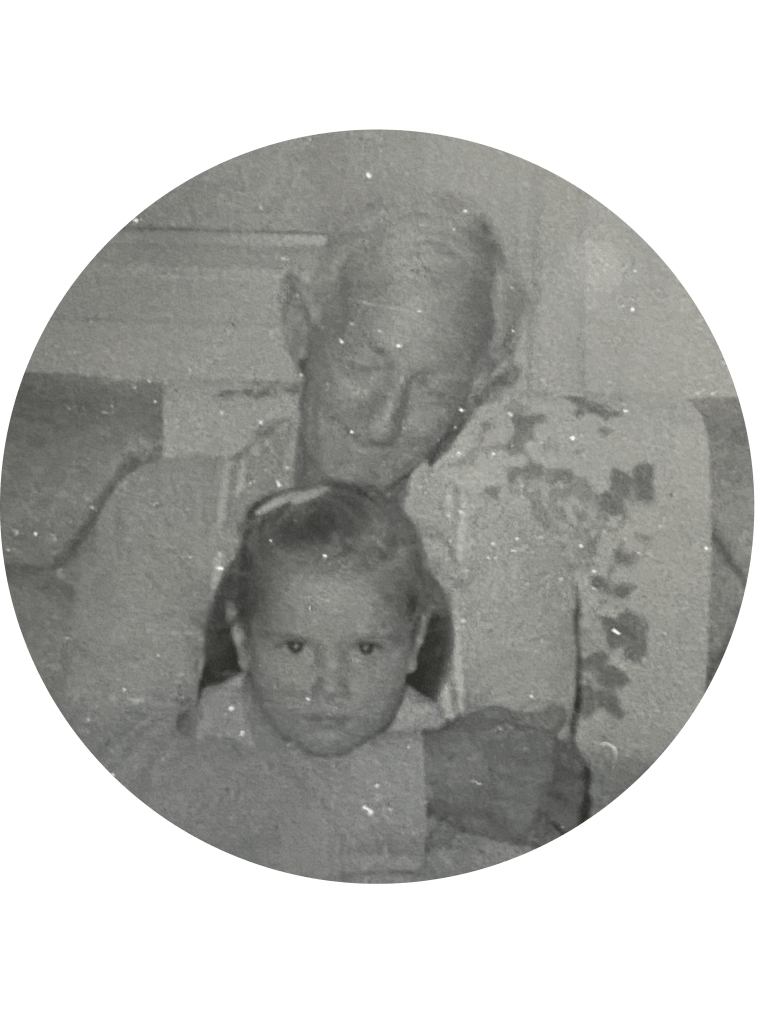
He was a quiet man, but his eyes and facial expressions spoke volumes. You can take my word for it, or you can look at his expression in this photo—the first photo taken by my sister on her first camera. Its value can’t be determined by a number for it is priceless to me as it is the only known photo to exist of this elderly man and young child, and he only lived a few years longer after it was taken.

Most folks called him Lawrence; his wife called him Lun. Turns out the wise woman mentioned at the beginning of this memory was right. Anyone can be a father or grandfather, but it took someone special to be the man I call Granddaddy.

A Week of Days

Earlier in the week, I was driving to work. My kayak was in the shop to have bullet holes repaired, and a nun stole my bicycle Sunday night. At 4 a.m., I typically see a lot of craziness, including what must be a fair share of inebriated drivers. They could be drunk, too. If you’re not keeping up here, you might be 3.2 sheets to the wind yourself. Before the last bend in the street to reach the roundabout, I noted a large commercial truck was coming toward me fast – and on the wrong side of the road. Instead of braking, I absentmindedly moved to the left/wrong lane. The truck passed me on the right, heading away from me. As I rounded the outer fringe of the roundabout, I noticed one of the stop signs was plastered flat again. It wasn’t until that moment that I realized that I had switched to the wrong lane about 30 seconds before. I don’t worry about the police, as they typically are some of the worst drivers I see that early in the morning. I don’t blame them. What do you have to do wrong to get assigned traffic patrol at that hour?

Friday, my tire pressure system went bonkers again. (For my car – not my kayak.) I did the magical reset thing again with the hazard light. (This is true. For my car, you have to hit the hazard light rapidly with the key turned to an unfindable spot in the ignition. Weirdly, you then let a lot of air out of each tire in a clockwise motion as the horn honks for each tire. It sounds like a prank, doesn’t it?) I then drove around the block to normalize the sensor. Exiting the car, I realized that I drove around with my phone on the top of the car. I did the same thing a couple of years ago. Since I can’t remember one of the steps to do the magic pressure reset, I use the internet to look it up. For some reason, I instinctively leave my phone on top of the car, just as my ancestors must have done when crossing the prairies of the West.

My wife and I never use real butter. It’s not because we loathe cows, although we do. The last one we had insisted on standing on the coffee table while we tried to watch tv. The wife wanted to make something called Texas Sh#t Cake. Technically, it’s Texas Sheet Cake. Basically, it is 22 lbs. of what amounts to fudge instead of frosting. Legally, you can’t eat it unless you have full coverage dental insurance. The cake almost killed my mother-in-law, by the way. Strangely, it’s a funny story. I’ll bet she tells the story a bit differently than we do. A couple of days later, I surprised my wife by making baked sweet potatoes for her. I thought real butter would make the skins more palatable. And easier to eat. This doesn’t make sense anyway because she’s one of ‘those’ people who don’t eat the skins. She’d be a terrible cannibal, FYI. Even though I microwaved the butter for only 20 seconds, as soon as I pulled it out at eye level and removed the paper towel, the hunk of butter exploded, spraying butter onto my head, covering my glasses, as well as covering every inch of the available counters, cabinets, and floor as it sprayed. Somewhere, I heard a cow laughing at me. It took me forever to clean the kitchen. Luckily, I was wearing my reading glasses during the mishap.

Earlier in the day, I had to reach something over a pile of inaccessible supplies. Typically, I could be described as “stupidly clumsy.” During a typical day, I find myself climbing like I’m a jungle gym assembly tester. It’s just intrinsic to the insanity of what passes for a career. (Note: kids, stay in school unless it is welding school or rodeo clown school.) I was about 6 feet off the floor. I stepped off the side of a pallet of stuff onto a series of large boxes. As I soon discovered, they were literally large boxes with very little content. Just as happens in the I-fell-through-the-ceiling-from-the-attic fail videos, instead of stepping down a foot onto the top box, I crushed through at least 4 feet of empty space. I’m certain I made a long and quick series of nonsensical faces as I plummeted. I didn’t break anything if you’re worried about property damage. Until I took a shower and discovered that the soap burned, I didn’t know I left a piece of skin somewhere in that large box. Note: the pandemic has greatly worsened the safety of millions of workers. I’ll breathe a sigh of relief when we go back to a large, stifling bureaucracy to protect us. I’m not sure I can survive much longer, having an employer watch out for my best interests.

Thursday afternoon, I went to the store to get a cartful of delicious diet tonic water. Evidently, I’ve crossed the threshold into addiction. Since my mask usage proves my breath already smells like a dead hyena, I’ve decided that the sewage water aftertaste of diet tonic water doesn’t really detract from my overall personality. I did wonder why my wife insisted on a 12-foot long couch, though. As I rounded the aisle, I noted a flu shot table in the middle of the aisles, with an attentive nurse seated there. Near it, an older rough-looking gentleman was provoking his counterpart, seated in a wheelchair, to give his birthday already. He said, “Okay, it’s 1962.” Because I was in a great mood, I shouted, “1962? Jesus that’s old!” as I went by. Everyone looked at me – and then back to the man seated in the wheelchair. We all laughed. The only other option was for someone to shoot me. A few minutes later, as I was loading my cart full of diet tonic water, I saw the man roll by. “1962!” I hollered again. He laughed. When he was done, laughing, he laughed some more. I got him one more time near the registers. I’m certain he told that story later. As I was putting the 80 lbs of delicious diet tonic water in the car, a bag ripped, and one of the bottles rolled under the car. I searched for that bottle, even after backing my car away a bit (at risk of life and limb in that horrible parking lot.) I never found it. I can only imagine that someone picked it up with enthusiasm until they noted it was a bottle of diet tonic water. At that point, they probably cursed and hurled it like an insult at a slow waiter.

On the way out of the store, I stopped at one of those automated Lottery ticket checking devices. Of the 22 entries I had, none paid. Out of the last 34 tickets I’ve purchased, none have been winners. This is the longest losing streak I’ve ever had – unless you count the totality of my adult life. “This is so 2020!” I told myself as I crumpled the tickets and discarded them. “Hindsight is 20/20” is going to lose the publicity race and be replaced by “That is so 2020.” Sorry, Raven.

Also this week, I discovered another thing I could do well by not trying. I also rediscovered simultaneously that many people take themselves way too seriously. Holden Caulfield might call them a phony; I’d call them exasperating.

On a similar note, I played “crazy website snipe” a couple of days this week. Using the social media of a couple of genuinely deranged friends, I hid/blocked a torrent of stupidity forever. I can’t be the only person who notices that some people should have the ‘share’ option ripped from their fingers. Meanwhile, I watched a couple of people suffer from trolls and lesser people. Life’s too short and you’re making your cool friends irritated by tolerating the people you wouldn’t invite over for dinner, anyway.

Here’s a reminder, for those who need to know:

< 

The Social Media Wisdom Observation

Say what you will about social media, but it has destroyed the mistaken urban legend that people get wiser as they get older.

> 

We don’t get wiser; we get more sure, which tends to be a dangerous thing.

If you can’t drink diet tonic water, shout potentially hilarious and/or awkward things at strangers at the market, or drive on the wrong side of the road, my conclusion is that you shouldn’t be ice skating, either.

Totally It

pxfuel.com(1)

.

.

“If love is a burning thing,” I recommend a visit to the doctor.

.

.

I got excited when I was invited to a photoshoot. Surprise ending: despite the name of the event, guns were NOT welcome.

.

.

I thought he was crazy when he told me that all his bees had individual names. Then I realized that there was absolutely no way to confirm this to be true or not.

.

.

My wife’s lipstick and mascara package stated that the makeup hadn’t been tested on animals. Can you imagine how ridiculous squirrels, monkeys, and rabbits would look with makeup?

.

.

For people with snake phobias, don’t google “python climbing coconut tree” unless you want a fresh level of hell in your life. For people who know people with snake phobias, google it on the big screen in the living room.

.

.

“Do you carry both salted and unsalted crayons?” is just weird enough of a question to confound anyone working retail.

.

.

In a ritual only a cousin would understand, I bought a packet of beet seeds at Lowe’s and threw them in the trash.

.

.

Concrete Wall and Cement Floor for Copy Space

The Procrastination Redux
(Also a good rule of thumb…)

.

.

When someone says, “I’m all ears,” I immediately calculate the fact that they have 5.6 lbs of earwax if that were true.

.

.

I’m stealing one of Linda’s ideas from “Better Off Ted.” I’m going to put a piece of tape on my rear end that reads: “If you’re reading this, you’re NOT being PROFESSIONAL.”

.

.

“Let’s begin the charade!” – Evidently not something management encourages us to say at the beginning of each workday like a chanted mantra.

.

.

It’s time to be insulted when you realize that people yelling at you to put a mask on are motivated by issues of beauty rather than public safety.

.

.

The anger management counselor told me to walk a mile in her shoes. Size 7 didn’t teach me anything except I get blistered easily.

.

.

I wrote a book of a compilation of typos. Now, I can’t read the title.

.

.

I kidnapped Jim Gaffigan. I let him call the police. “Nice try, comedian,” they said, laughed, and hung up.

.

.

.

.

When someone says, “I’m all ears,” I immediately calculate the fact that they have 5.6 lbs of earwax if that were true.

.

.

“Sarge, what do we have here? You said it was a hostage situation.” The Lieutenant looked over at him as he spoke, while trying to find her binoculars.

“Yeah, he’s standing next to the window in there with a gun at his head,” Sarge said, as he pointed toward the house as the Lieutenant raised her binoculars.

“I only see one guy. Where are the hostages?”

“It’s just the one guy – but he has multiple personalities – and they didn’t do anything wrong.”

.

.

I’ve always wanted to write a book titled “The Truth About Chickens” and have the marketing team make the book sound really ominous.

.

.

In a peaceful world without violence and war, “Dueling Banjos” would be a song about consensual bro love in the woods.

.

.

“Sling Blade: The Musical” would be awesome – especially if each audience member were given a lawn mower blade upon arrival.

.

.

Worst Disney Movie Ever:

.

.

If you need to subtly reduce the dining visits of your in-laws, one of the best ways is to leave the popular book, “7 Ways To Easily And Inconspicuously Incorporate Insects Into Your Meals” on your coffee table.

.

.

“X, look at this!” My friend Carl was pointing to a turd near the fence. “This is the biggest turd I’ve ever seen! Do you know what this means?”I answered. “Yes, it means that I was wrong. Trump is the SECOND biggest turd in the United States.”

.

.

I took an introductory course for becoming a police sketch artist. We worked with real-life people. I got kicked out because no matter what the victims told me, I drew the Chief of Police.

.

.

Listen folks: if you’re going to kill someone, use a wooden stake. At least your defense attorney can use the “Vampire Defense.”

.

.

I grilled a chicken really hard last night. But it gave me no information.

.

.

I served pork chops and karate chops for supper. It’s a tough crowd at Casa X.

.

.

Denial is the first sign of illness. That, and the fact that the doctor keeps staring at your wallet.

.

.

“Tell me something that is reassuring, X,” he said.”Oh, that’s easy. About 6.5 million people in the United States currently walk around with an unruptured brain aneurysm.””What? That isn’t reassuring at all!” He seemed irritated. “Well, it reassures ME. Also, don’t think of it as 6.5 million people. Think of it as a 1 in 50 chance for you.”

.

.

Fact: Jeffrey Dahmer’s favorite dessert was jerry cobbler.

.

.

Sign Language captioning isn’t what it used to be. I turned it on to watch the news and it consisted only of a small, older lady.giving me the finger.

.

.

Fade

We fade, either in brilliant and unexpected flashes of circumstance or as an imperceptible result of our enthusiasm finding itself outmatched by the daily assault of living.

An Amusing Anecdote

While perusing the local offerings, I found my way to TripAdvisor. Because I often check random details to see how a page is presented, I clicked on the website link on TripAdvisor for San Miguel Grill and Bar in Fayetteville.

Because I’m often dumb, I clicked and closed the webpage 4 or 5 times, as I absent-mindedly thought I had clicked on the wrong link.

I laughed. Either someone paid for a lapsed domain – or someone had hacked the website.

I waited a couple of days to see if anyone noticed. They didn’t. The link connected to a hacked or redirected webpage.

I wrote TripAdvisor and used the poorly-executed ‘report a problem’ interface to let them know a legitimate link went to a porn site.

The link is now gone, so I assume my interaction got attention.

I encounter this sort of thing often enough to wonder how often businesses monitor their social media and websites.

While a business can’t police the internet, TripAdvisor is one of the most critical for restaurants to monitor. Whether it is intentionally designed to allow shenanigans, the truth is that you can’t trust the internet – or the people who use it.

If I owned a restaurant, I would quickly become weary of the review systems and would have to resist pranks.

A Girl Called Incident

I know most of you know that a lot of people reach out to me and share personal stories. Most of them who do so respond to my fling-it-to-the-wall method of personal sharing, I’ve yet to find a single person who doesn’t have a couple of jaw-dropping stories.

In the last year, I would say the strangest and most incredible story someone shared with me was the one shared by a woman about her sister, thought to have died during birth – but was actually stolen by a doctor here in Northwest Arkansas and given to a well-to-do family.

A while back, I wrote a post about not using a clothes iron. (I also don’t own anything that requires dry cleaning, either.) It was a little piece of fun writing. Shortly after, I received a note from someone who told me an interesting story. As with the baby-stealing doctor, I was fascinated but was held to secrecy regarding the people involved. She told me she couldn’t think about irons of any kind without thinking about her grandmother.

Here it is, with some redaction:

My grandmother was born dirt-poor. She didn’t really know what her birthday was because she was born between fields. Her great-aunt told her she was born in 1912. She remembered it was the year that Wilson won the presidency and that it was a leap year. The leap year fact stuck in her head because her uncles kept joking that they had been given an extra day to work. Everyone in her family worked the fields and farms, no matter how old they were. Until WWI, they barely survived. My grandmother Edna remembered her father going to serve along with his two brothers. Only one brother returned alive. His name was Henry, and he was an alcoholic and a violent man. Even though Edna was only 8 or 9, she knew she had to hide from Henry when he was drunk. Her mom Ethel married Henry to survive. Four children were too many to care for.

When she was 12, Edna was working as an adult woman. She spent her days cooking, cleaning, doing laundry, and working in the fields. Her other sister worked with her and neither went to school past the 4th grade. After a late-night of drinking, Henry came home and grabbed Edna. He later claimed he didn’t know it was Edna rather than Ethel. Edna fought and clawed until Henry collapsed on the floor. He broke several of her fingers during the fight. Her mom fixed her fingers on the back porch but offered no consolation or words of compassion for her daughter. Years later, she found out that her mom had been abused by someone for several years. The fact melted her heart and turned most of her anger to bittersweet understanding.

Weeks later, Edna hatched a plan to get rid of Henry. She stoked the stove in the living room with more firewood late in the evening instead of letting it burn down to ashes. She put one of the fire-irons into the red coals and closed the stove door as much as possible. After all the lanterns were extinguished in the two rooms used for sleeping, she lay awake, waiting. Before too long, she could hear Henry’s raucous snoring from the room next to hers and her siblings. She climbed from the sunken bed and walked across the freezing-cold floorboards of the cheaply-constructed shotgun house. She searched in the dark for the clothes she’d arranged under the dresser, tucked out of sight. All the doors creaked like the floor as she passed through.

As she entered the living room, she listened to the crack of the stove and the wind-up clock behind her.

Before losing her nerve, she used three rags to pull the red-hot fire-iron from the stove. Walking quickly, she went into the room where Henry and her mom Ethel slept. Henry’s snoring told her he was asleep. Before she could talk herself out of it, Edna pulled back the thick covers from Henry. She put the fire-iron, tip down, across his stomach and legs, as best as she could manage in the dark. She threw the covers back on top of her stepfather. In a few seconds, the snoring stopped, and then a loud scream erupted from Henry. She couldn’t see him grab the iron, but he screamed again, probably as he grabbed the brutally hot iron with a bare hand. A loud thud hit the wood floor. Her mom Ethel began to shout, asking what was wrong. Back in those days, the bedrooms didn’t have light bulbs, or if they did, they were a single hanging bulb awkwardly danging in the middle of the room in shotgun houses. You had to get up and relight the lantern. Her mom, still hollering, shuffled around and struggled to light one of the long matches next to the oil lantern on the table across from the bed. She managed to light the lantern and turn the wick up. As she turned to see what had happened, she saw her daughter Edna standing by the door with her hand over her mouth. Henry was gasping and clawing at his stomach and lower half. The iron had burned away his underclothes from just below his belly button to his upper right leg. Edna had misjudged the iron a little bit; otherwise, Henry would have been reminded of her each time he went to the bathroom. He looked as if he’d been burned by an absurd branding iron.

As Edna looked at Henry writhing in pain, she knew he’d never abuse anyone again. She also knew she couldn’t stay. She ran out of the house into the cold night. She didn’t go back. A second cousin offered to let her stay with her if she agreed to work with her at the store she and her husband owned a town over.

The sheriff visited Edna a few days after she moved. “Henry isn’t pressing charges. What did he do to you to make you do that to him?” The sheriff seemed as if he suspected. “What did he tell you?” Edna asked.

“He didn’t say much, other than he didn’t ever want to see you again.” The sheriff shook his head and left. “I expect you won’t be causing any more trouble, will you?” Edna shook her head “no.”

Edna’s new family immediately started referring to the incident as “the incident.” Before long, they jokingly referred to her by the nickname “Incident.” A few months later, Edna’s sister moved to live with her. Both sisters were adopted in the family and started attending school again. Though they didn’t go to court, as people often didn’t do in those days, they changed their names to honor their new family.

Both sisters became teachers and lived their lives without further felonious undertakings.

The woman who wrote me told me she discovered the story after doing a DNA test. Luckily for her, some of the surviving family shared all their stories with her, several of which she’s written for everyone to share.

*

As with the stolen baby story that happened here in Arkansas, the fascinating details aren’t mine to share. If it were my story, I would proudly tell it as a story of a woman who figured out that sometimes fire is a better solution than words or hope.

THE OPTIMISM OBSERVATION

I’m not impressed with optimism when I see it in the eyes of a rich man. I’m impressed when I see it in the face of a poor man, working a job that depletes him daily, facing an endless stream of obstacles and problems. Wealth confers optimism to almost all who seek it; struggle reveals optimism in those who already possess it. – X

Dry Counties In Arkansas

wil-stewart-UErWoQEoMrc-unsplash

*This is a truncated version of a social media post I wrote for someone in a dry county a few years ago. It tickled me that after commenting on a post of one of the pages working for a vote in the county in question, the person organizing it asked me to write a post about the basic arguments against dry counties. I removed the arcane historical information that, while interesting, was too cumbersome for many people.

Before launching into my point, I’d like to mention that DUI/DWI and alcohol-related violence has affected my life. I had a family member killed in a DWI incident. Many in my family were affected by violence and many were also affected by alcoholism. It’s a subject that has touched the core of my life. We as humans are immensely gifted at perverting pleasures into afflictions. It is wrong on a moral level to dictate the otherwise free choices of citizens living in a free society. For those who abuse, we should focus on lending a hand without exception.

It’s easy to look at a United States map of wet vs. dry and draw an immediate conclusion: dry counties still exist predominantly in areas in which have a less-developed infrastructure – and residual religious influences at work. Most of us with a rudimentary grasp of history know that the United States attempted to stop all alcohol consumption in the past. It was a failure. Afterward, the federal government left alcohol laws in the hands of states. The South is home to most dry counties.

In Arkansas, many of the counties are dry. The counties with the highest level of economic development and education, interestingly enough, are wet. Studies continue to demonstrate that dry counties are punishing their own economic growth. If you’re interested, the U of A did a study for Independence County in 2016. The conclusions and observations it makes are exactly what one would expect: being dry is a terrible economic indicator. (If you’re not interested in contextual facts – or reading anything contrary to your established opinion, please stop reading now. Reading my opinion will likely cause spontaneous shouts of anger.

To those who say, “But we will gladly lose economic vitality if it means we can restrict alcohol sales in our county,” I’d reply that they are making the decision for everyone else. This attitude tends to come from those who believe that they have the duty to impose a quasi-religious restriction on their fellow citizens. The geographic areas prone to agree with limiting alcohol sales tend to be cloistered and resistant to the idea that other viewpoints have validity. It’s a generalization; as such, it’s generally true in the spirit in which it is cited. Believing that it’s better (or easier) to outlaw alcohol sales instead of addressing any potential problems strikes to the core of an authoritarian mindset.

Some religions ban pork, others caffeine. In a secular society, it is both immoral and ambiguous to allow a specific religious minority to dictate these choices.

I use the term ‘quasi-religious,’ not out of contempt, but rather as an acknowledgment that it would be disingenuous to classify the argument as exclusively religious. To claim it as a religious reason would be in denial of the fact that most people who self-identify as religious have no issue whatsoever with adult consumption of alcohol. That a vocal segment of religion continues to attempt an illogical co-opting of the singular voice for all religious people speaks to the problem inherent in such an ideology. In short, if it were strictly a religious issue, those identifying as religious would overwhelming agree. They don’t.

To further clarify, I have many religious friends who loathe the fact that some religious groups attempt to limit or sanction the choices people of other religions or denominations make. Most people are cautious about using their religious beliefs to justify an imposition of their will on another member of society. This type of circular reasoning leads to some groups dictating behavior to others. When the tables are turned, they shout in protest, alleging persecution or a lack of freedom. It’s troubling to me, as we all walk out our respective doors into a society which we expect to generally leave us in peace unless we are harming other people.

I’m not asking anyone who wishes to not drink to do so. Quite the contrary; I’m asking for those who choose not to, for whatever reason, to respect the adult decisions of those around them. You lead by example, not by pointing angry fingers at those who live their lives differently. For Christians, it’s difficult to reconcile a defiant attitude about alcohol when Jesus himself imbibed.

I am of course not making the argument that alcohol consumption doesn’t come with some serious caveats. Like all human activity, there are undesirable consequences. It’s our job as a society to balance the consequences with our ability to stop encroaching on the lives of our fellow citizens. I’ve learned to distrust anyone who feels competent to judge the acceptability of certain behaviors in others. Once the line is crossed, it becomes all too easy to begin judging many other personal decisions.

“More crime!” some will object. Even if such a scenario is true, the economic gain from alcohol sales c-o-u-l-d overcome the negative impact, especially if we use the motivation and collective intelligence of the people around us to divert money toward enforcement and assistance for problems which may arise. More importantly, though, is that in a nation of laws, it is hypocritical to argue that each of us is responsible for our own actions, yet demand that fellow citizens desist from legal activities because they might misbehave. Abolition of all potential negative behaviors is no way to run a democracy.

We already spend an inordinate amount of our budgets on police and incarceration. I tend to have less interest in the abolitionist mentality of the police for a variety of reasons. Among them is the fact that law enforcement tends to suffer from a greater degree of alcoholism than the general population. Another is that it’s generally unwise to prioritize the complaints of those tasked with enforcing the laws we decide.

“More DWIs,” others will say. It’s as if those saying this believe that adults interested in drinking aren’t already doing so, many after being forced to drive to imbibe in their own homes. Interestingly enough, the argument of a greater frequency of possible DWI incidents echoes that of those who resist any gun control laws, stating that the responsibility for misuse falls on the person misusing them. The same logic, therefore, falls to driving while impaired.

Each of us has the ability to choose to engage in behavior we find rewarding or pleasurable. To participate in a system which gives greater voice to another person’s personal choice, even if based on quasi-religious reasoning, is wrong. If you disagree, I’ll remind you that many people have quasi-religious issues with pork. Imagine if we were to collectively vote to outlaw pork. Bacon is the unofficial salvation of many an Arkansan. Or imagine if we outlawed hunting, citing dangers to hunters and bystanders, or an appeal to ethics toward animals.

Additionally, citizens of today are not obligated to honor the decisions made by their predecessors; laws, like society, change over time. Some proponents of dry counties point to the past as a mistaken indicator of how best to proceed in the future. For anyone interested, take a look at the time frame during which many dry counties measures were passed. Even a casual look back into history immediately reminds us that we’ve made some monstrous decisions, some which we defended despite serious moral foundations. Each generation has the opportunity to examine its laws and to determine their relevancy. To those thwarting the necessary reexamination of past laws, you should remind yourself that no positive social change ever occurs in which people aren’t given a choice.

Even in supposed dry counties, many allow private clubs. This fact provides an anecdote for the contention that many dry counties cater to those with economic clout. The cliché of wealth demanding access to alcohol exists in recognition of the fact that people with political influence will drink regardless of local prohibition laws. Although it is needless to point it out, those who are members of private clubs are generally going to drive away from their private clubs after drinking. Dry counties with private clubs are one of the most perplexing things I’ve encountered.

Dry county laws more adversely impact a person if he or she is on the lower end of the economic spectrum. If you’re about to make an argument in the spirit of “looking after your fellow man,” I’d like you to start by doing so in all aspects of life, not just in those areas in which you feel you have a moral voice to do so.

As for the argument, “I don’t want to pay for other people’s decisions,” I default to my observation that this is exactly what we all do in regards to everyone else. We all pay for issues, programs, or consequences we disagree with. People with no children fund schools their entire lives, those who don’t drive pay for roads, pacifists fund countless wars, and so on.

The reality is that being a dry county simply obscures the fact that a great number of its citizens are still consuming alcohol, whether in private clubs therein or by spending their tax dollars in surrounding communities. Prohibition relies on an illusion, one which most adults recognize as false. Perhaps it helps some people to know that they’ve made another person’s choices much more difficult or that the ‘other’ is the real problem.

I’d like to point out that regardless of whether you’re in agreement or not, it serves no one to needlessly insult the opposition. Most people simply wish to be able to live their lives without needless restrictions. It’s important to be able to passionately engage yet simultaneously avoid the pitfall of shouting in anger or vilifying those who disagree. At a certain point, though, those who feel the boot on their neck are going to stop being so polite or careful in their choice of words. Although it may sound like it, I am not categorizing all those who oppose their counties becoming wet under the same label. There are many reasons people use to justify staying dry; some are reasonable and more logical than others. For me, all of them fall short. To be clear, it’s important that we define who objects to alcohol sales and why. Not all opposition is created equal and not all arguments are worthy of usage in a free society.

If you live in a dry county and wish it were wet, please accept my apology. That feeling of frustration you experience when you consider the idea that other adults feel capable of limiting your personal choices and enjoyment of life can only be avoided by demanding that it be changed.

Further, if you reside in a county in which there is a concerted effort to thwart such an issue reaching the ballot box, you can be certain that those doing so do not have your best interests as a free citizen in their hearts. Such efforts are an obvious nod to the fact that abolitionist views are in the minority. That’s no way to run government and no way to treat citizens.