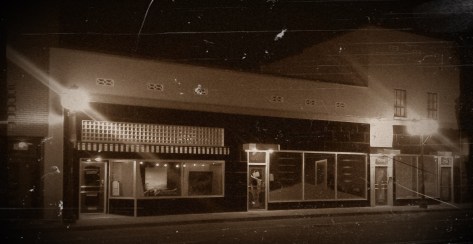
As the second client left the office with a grin of satisfaction, Clive slowly leaned back in the antique office chair, his feet splayed out in front of him, partially hidden by the ornate desk. At age forty-three, he had never expected to realize his dream of becoming a lawyer, even if it finally happened in a small place outside Walmart’s hometown. The modest storefront and all the trappings that accompanied it had cost only $2,300 for six months, not a bad price to start one’s dream. Ms. Elber, a lady between sixty and two hundred years old, offered to have the place cleaned and all the clutter removed, but Clive insisted on doing it all himself. She dropped all her concerns when he counted out twenty-three one hundred-dollar bills. Ms. Elber was accustomed to some strange tenants along main street.
Today, he made over six hundred dollars by agreeing to execute two wills. Tomorrow he would visit the county probate office and match his new clients against existing wills. Clive understood that most wills were needless and predatory. One of the client’s nephews drove his uncle to Clive’s office for the appointment that finished his day. When he asked about a will for himself, Clive handed him a simple will and told him to write it out himself and sign it with witnesses, and save himself a few hundred dollars. “Is that legal,” the younger man asked. Clive grinned. “As legal as my right to practice law. Arkansas allows for holographic wills. There are simple notes on the back of the form. Come back to me when you have an issue that’s more complicated.” Clive could see the look of appreciation on his client’s face.
Two years ago, when the idea that he might actually achieve his dream occurred to him, he had been a gas station attendant at one of the flashy convenience stores off the interstate on the west side of Mississippi. At that job, like all others, people found him to be quick-witted and inevitably tried to motivate him to be in charge or to show ambition. For Clive, none of it mattered to him. An office, a nice car, a huge group of friends; none of these drew his interest. Over the decades, he had amassed over four hundred credit hours of college under three different identities, learned five other languages, and could discuss any subject reasonably well, no matter how arcane it might seem. Clive had once pretended to attend the University of Memphis so he could be a member of the Collegiate TriviaBowl Team. He had to drop out of the team after they defeated the University of Arkansas at Little Rock 52-to-7 in their first TriviaBowl. The Arkansas team was undefeated until that contest. Even the judges at the competition seemed convinced that the Memphis team was cheating. The older judge of the two assigned to the TriviaBowl challenged Clive directly by asking him four rapid-fire questions regarding WWII. To the judge’s surprise and embarrassment, Clive easily answered the questions without hesitating. Clive controlled his urge to answer in more than one language.
Clive’s fellow Mississippians often did a double-take when Clive would answer a question with both humor and brevity. One customer who often stopped at the convenience store where Clive worked was a lawyer named John Bannon. More than once he told Clive, “You should be a lawyer!” Clive inevitably said something clever in return, such as, “Point me to the Ethics Removal office, and I’ll do it.” John always laughed at whatever Clive said in response. John told Clive that he had written a letter of recommendation for him if he ever wished to pursue a law degree.
More than once, Clive had considered moving to Virginia or Washington, both states which allowed someone to take the state bar exam without attending law school. To determine whether he could pass, Clive read several dozen law books from the State of Virginia. Using a questionable contact who worked in ‘security’ at one casino, Clive took the bar in February by posing as a graduate of the University of Virginia School of Law. Much to the joy of the real graduate, Clive passed the bar exam on the first try. He seemed crestfallen when told that the test was easier than expected. Clive couldn’t convince himself to do it on his own and finish with an apprentice program in Virginia. It seemed like a waste of time to possess all the knowledge but yet needlessly be required to work for free under another attorney for three years.
Clive was involved in petty crimes throughout his life. He tried shoplifting just to determine if he could get by with it (yes, he could – over and over), stealing cars and then returning them, hacking into low-level databases, impersonating bank officers, teachers, real estate agents, and undercover detectives. After a few years, he discovered that the reality of life was that anyone could do anything with a little preparation, a dash of confidence, and the right appearance. There were many times when Clive would shake his head in disbelief at how easily people saw what they wanted to and ignored anything that violated their expectations. Not once had he been caught or held accountable, even when he tried something with no preparation.
On a blistering and humid August day two years ago, Clive opened his mail and discovered a jury summons from the Desoto County, Mississippi clerk’s office. Unlike everyone else, he welcomed the opportunity to serve. He had spent many days throughout the years sitting in observation of trials, listening, watching, and learning the vocabulary and movement of the participants. Twelve days later, he was chosen to sit on the jury panel for a homicide case involving ex-police officer Curtis Burrow. Clive made it to the jury by pretending not to know much of anything and by adding a deep accent to his usual speech patterns. Clive noted that people who spoke more slowly and seemed a little dim were astronomically more likely to be picked by the prosecutor. There was no doubt that the police officer had killed his brother; both the evidence and the defendant’s face trumpeted his guilt. Nevertheless, as an experiment, Clive swayed his counterparts on the jury not to convict Curtis Burrow. When the impatient jury first voted, it was 11-to-1 to convict, with Clive being the sole juror voting “not guilty.” By lunch, it was 7-to-5. And by supper, it was 1-to-11, with the jury foreman threatening to boycott any further discussions. The foreman was the manager at a local farm equipment supplier. He felt it was his duty to protect “common sense and decency.”
The next morning, Judge Louis Jordan called the jury back to the humid, musky courtroom to talk to them about the necessity of being unanimous. Clive watched as the red-faced foreman, the last holdout for finding the ex-cop innocent, stood up and said, “We’ve decided your honor.” The judge’s face could not have registered more surprise as he sent the jurors back to register their verdict. 15 minutes later, the courtroom went silent as the foreman stood and announced, “Not guilty.” Even the defendant’s lawyer Everet Stacks seemed to have stepped into an alternate reality that bore no resemblance to the world he had expected that morning. Everet had already wasted ten minutes telling his client to expect a guilty verdict, followed by life in prison. Both client and lawyer stood, mouths open in surprise as the judge’s gavel banged twice at the bench.
“You are free to go after processing, Mr. Burrow,” Judge Jordan told the surprised defendant. “Thank you, jurors, for your time served and your civic service.” As he banged the gavel, everyone could see him shaking his head in disbelief. The prosecutor seemed like he was struggling to find words to voice as he shakily rose from his end of the table. It was his first loss as a prosecutor in a murder case. He had already paid for campaign signs for the next election. The idea of working as a criminal defense lawyer in Desoto County frightened him. Clive approached the tables and shook both the prosecutor’s and the defendant’s hand. The ex-policeman just stared at him when he said, “You owe me one. And don’t look so guilty after you kill the next guy.”
Clive’s secret had been one he had learned over and over as an adult: listen carefully to people and plant small seeds of doubt; water them a little and the predictability of what they would do next was rarely in question. A truth bathed in multiple small lies always met more acceptance. If he could convince a jury to let a murderer walk away, it didn’t seem like much of a stretch to imagine he could become a lawyer by merely deciding to do so. As things become more complicated, most people tune out. Clive owed this cynical lesson to a series of stepfathers his mom dragged home on alternate weekends. Most of them were sociopaths with little to teach him, except for the harsh lesson about gullibility.
As Clive got up to leave his office on his first day of work in Northwest Arkansas, he turned and winked toward the back wall where both purported his law license and a framed picture of Joe Pesci from “My Cousin Vinny” were on display. It seemed too obvious, even to Clive. “Too on the nose” was the common expression. He believed in giving people a fair shot at figuring things out, even despite the risk. People would see what they wanted to, and most people assumed it was a lawyer in-joke to see Joe Pesci’s picture in a lawyer’s office.
Deciding to impersonate a lawyer was the best decision of his life, and he couldn’t wait to discover what day two might hold for him. As he turned off the lights and turned the lock to close his little storefront office, Clive had no way of knowing that he would soon find himself in the middle of a conspiracy. Against the backdrop of the small town he had chosen, it didn’t seem possible. In a year, six people would be dead. He would have a story to tell, if he lived long enough to tell it. If Clive could see the future, he’d wonder whether the headline would indicate he was a lawyer or not. Being dead had never seemed much of an inconvenience to Clive.






 This should be obvious to all the well-meaning people out there.

