I was in a hurry, busily checking minor and mundane necessities off my mental checklist as I hurried through the building. The day was still unborn, and shadows blanketed everything that modern lighting couldn’t touch. To my right, a series of vertical windows rose above me. Ahead of me, someone sat in the shadows, in a small grouping of uncomfortable chairs, the type which serve their function but provide no real invitation to linger. His head was bowed, and his hands were clasped between his legs. His body language seemed to exude defeat. He seemed to be waiting for something unseen, an event to unfold, or for some greater force to expel him from his chair. The soft aura reflecting from the windows cast a curtain of gauze on the interior.
Despite my feet treading quietly on the institutional floor, his head rose, and he looked up. His eyes met mine. I noted a huge yellow, black, and discolored splotch around his right eye. His blond hair lay wildly around his features.
“Are you okay?” I asked, without even realizing I was about to speak.
“No,” he said, his voice cracking. Due to some triggered instinct, I realized that if he said a few more words, he’d likely either start shouting or sobbing.
I raised my left hand as if to stop him from speaking. “It’s okay.” I walked within two feet of where he sat.
“I think I need to leave before I react.” As he spoke, fifteen different scenarios filled the canvas of my mind. None of them were joyous explanations for his demeanor or appearance.
He fell silent in recognition of the fact that I knew what he meant without him saying the words of explanation. Because we’re human, it could only be one of four or five stories.
I removed my phone from my left front pocket. “Where do you need to be, other than away from here? By the way, my name is X.” I asked.
He told me. I typed the destination and found a ride that would be there in less than five minutes. I showed him the screen.
“I’m paying. Don’t stress it. I’ll go wait outside. When the driver shows, I’ll make sure he’s comfortable with it.” The young man nodded and didn’t speak.
As the sun burned the rim of the horizon, the driver pulled up. I handed him a tip and explained that someone needed a hand – and I was that hand. “No problem. He’ll get there.”
The young man slowly walked outside and opened the rear door of the waiting car. He did not look up, for which I’m glad. Seeing the side of his face again would undoubtedly cause me to commit the sin of asking questions.
“Thanks.”
Before he could say more, I said, “Pay it forward. You’ll remember this one day and have the chance to help someone.”
He shut the rear door and the car pulled away.
I don’t even know his name. But he knows mine. And that gives me hope.
An entire life, unknown and unknowable to me.
I fear we have things in common, though. I hope the young man’s journey is dotted with people interested enough to help him push forward.
…
…
P.S. I don’t deserve a pat on the back or words of encouragement. I needed this more than the young man did. Truth be told, my mind was filled anger that morning.
While I will get the words wrong, my recollection is at least correct for tone and content. Many parts of the day I write about are a blur. It was a complex day for more than one reason. Like a few other days, the day sits on the calendar of our minds. I will write around the fringes so as to avoid treading upon the loss which brought us all together. All of our lives are complex. Our memories, reactions, and ability to interact fluctuate with an erratic ebb and flow.
I was in the geography of my childhood, sitting in the church that seems to ‘the’ church in my memories. It sits in silence off a highway between places travelers seldom slow enough to notice, surrounded by the relics which once thrived. Like so many rural places, it fights the bubble of time that envelopes the area. It is the nexus of memories for many people, benchmarking people’s faith and sense of family and togetherness. This church remains, across the highway from the place my dad once ran his gas station. The surrounding field has reclaimed every trace of the station. One day soon enough, it will overtake everything else in the area.
Those who can remember will fade too, leaving dust eddies as they pass through the area and this world. To me, this is a comfort, even as I am unable to exonerate the existential discomfort of the knowledge. We’ll all pass this place, regardless of the velocity of our lives.
In front of me, two older ladies sat, each nervously chattering about the multitude of overlapping recollections in their lives. The further back one went into the wooden upright pews, the louder people felt comfortable talking. Whether it is always fair, funerals serve as a social outlet and gathering place for most people. Oddly, even as we grieve or grapple with loss, we sometimes find our hearts swelling with the smiles and faces of people who were once integral to our identity and lives. Loss ignites our connection to the shadows of our past; the demands of daily life usually blur that enthusiasm soon after.
I’ve stuck my foot in my mouth countless times as I attempt to navigate the mysterious awkwardness of interacting with people, especially ones I either once shared a deep connection to, or strangers who echo an odd familiarity. I later found out that I got roped into a hurtful conversation without being aware of it. I can’t take it back, so I will forever be someone’s anecdote. In a roundabout way, that is also what each of our lives does for everyone else.
“I never attended this church. I only came here for funerals. White Church was the only church for us back in the day,” said the older lady on the left.
“We should get back to the cemetery there. Not today, though. It’s Hell’s furnace out there. The old church was something. I hated to see it go. We lost the community when it left.” The lady on the right half-whispered it with a bit of pain and nostalgia in her voice. “Remeber the potlucks? The summer singing?”
When she said it, I thought of the mosquitoes, the blistering heat, and the discomfort of hot, uncomfortable Sunday-best clothing that churches like the White Church once required of members. I also recalled celery in potato salad, mind-numbingly long sermons sending all to Hades for our indiscretions – and cars with no air conditioning. Nostalgia certainly and capably erases the memories that more accurately convey the complexity of living in the past.
“The last time I was here, it was Carolyn’s funeral. Kak or Kakky they called her. I remember playing with her when she was younger. Their dad was a mean drunk back then. Carolyn took after her papa and married that no-account Bobby Dean. What a mess.”
The lady on the left was unaware that Carolyn was my mother.
The lady on the right nodded her head solemnly. She almost visibly shuddered. “Remember how she looked? That funeral home that got caught stacking bodies in the hallway did her funeral. That place out of up north, wasn’t it?”
I knew what was probably going to be said next. I wasn’t mistaken.
In her best gossipy whisper, the older lady on the left leaned in and said, “That horrible gravestone with the Bud Light can engraved on it is still down there. Can you imagine? Lord knows she was a drunk, but can you picture someone’s daughter thinking a beer car is a good idea for a tombstone?” She laughed.
“That daughter! Remember when she about gave Harold, or was it Howard, a stroke when he tried to adopt those two precious boys?” They both nodded toward one another.
I leaned in and said, “She’s still alive, too. Hasn’t changed one bit.” I told them in case they wanted to know. Neither registered that I might be closer to the people they’d mentioned than they realized.
I was unbothered, however.
Before arriving at the church, I drove the long loop around Rich. The roads were scorched with heat. Though I half-expected it, I choked up a bit as I neared the place where my grandparents once lived, off Highway 39 near Cook Road. I stopped at Upper Cemetery. An older man was outside in the heat, spraying the weeds and ditches. His dust-covered truck blocked the arch entrance, so I left my car along the artery of Highway 49 and walked out over the slight rise to the place where my parents are buried. As I crossed the top of the rise, my lungs filled with a pungent dust cloud, clotting my lungs and rendering my throat raw. I quickly walked down to the edge of the swamp and pondered the place for a moment.
I noted the Bud Light can on my mom’s gravestone and laughed. I think my sister chose well; some of the reasons for my agreement are based on amusement and aptness. The Bud Light can, at least, is an open salute to an essential truth in my mom’s life: more than anything, she lived for a drink. Even now, so many years later, I’m still discovering the mass of hidden lies and secrets in my parent’s lives.
When I got back to the car, my voice was almost gone. A million little pieces of this place remained in my mouth, nose, and lungs.
The cemetery embodies the communities around it. If the traffic becomes still, you can hear the insects, fields, and marshes for miles as they simply pulsate. Time doesn’t interfere in that place. I can hear it now, feel it in my bones, and feel it call me softly across the distance. I suspect you can too if you focus inward toward the places of your youth.
Truth sits outside of us. Every other person on this planet carries his or her own idea of each of us, independent of the facts and circumstances of our lives. It’s a fool’s errand to attempt to amend their mental biographies of us.
I hope that you can find a good life if you don’t have one, embrace the parts that can enlighten and lighten you, and forgive or ignore all of us who may trespass against you. In this world, it is the only way forward.
I’ve used this picture before. It seemed inescapable that I use it with this post, too.
Why does someone share opinions or ideas with anyone? Not just on social media, but in real life, either atop the peaks of success or attainment or in the valley of sorrows? It’s akin to attending a reception where the doorman punches each attendee in the face before entry and then demands $50 and an explanation regarding each attendee’s intentions.
It’s always a risk. There’s always someone fearful of the wrong opinion, a slight to one’s perceived reputation, or of secrets spilling out into the world. No one wants an unfiltered look at their heart laid bare for others to witness, even though the total of our words and actions does precisely that each day that we survive to walk the earth. It’s like a nude selfie after going to a pizza buffet. Our choices are plainly visible to anyone who bothers to examine us.
No matter the depth of gauze you might use to soften your sentiment or words, the truth is that each of us brings our baggage with us – and filters which bend our perception.
A few years back, a local writer who is now deceased saw me use a quote of Anne Lamott’s that I had written about over and over: “You own everything that happened to you. Tell your stories. If people wanted you to write warmly about them, they should have behaved better.” It encapsulated much of the struggle he had endured trying to get his story out without bruising other people’s toes. He read one of my earliest blog posts, one in which I described a discussion I had with a cousin, one who attempted to defend the indefensible regarding my alcoholic and violent father.
The writer fell in love with Lamott’s words precisely because of their simplicity and unassailable truth. He said, “Holy #$%t!” when he read the link I sent him. “There’s no market for that, X.” Maybe not, I told him, but if someone’s writing for themselves, market and reception are distant concerns.
Here’s the excerpt from one of my first, and absurdly long, blog posts:
“…Years ago, a distant cousin in the family (who I will call Tom because his name is Tom) asked me what right did I have to talk about another family member’s misbehavior, especially the things that “ought not to be talked about.” He initially asked me in my Aunt Barbara’s living room. We were standing next to the stuffed mountain lion that stood guard there for as long as I could recall. I asked him where he learned the difference between what should and could not be discussed. He laughed when he realized that he was about to say “from family.” I then pointed out that despite the idea that things shouldn’t be discussed, somehow, through some mysterious force, everyone seemed to know all the deep, dark secrets, just in differing amounts. While probably no one knew everything, everyone knew something. I then went on to say that the things that happened in my life or that were done to me were MY life, too and that perhaps people should stop and think about the things they say and do, or to make amends at the point in their lives when they realized that they might have gone too far. Tom and I talked about dad’s legacy and how he and I had come to the point that dad would have been able to start a new relationship with me, given enough time – we just ran out of road before we could run the race. Tom was surprised that I could talk openly about some of the meanness of my father and still laugh and want to hear stories about the hell-raising, fun-filled dad. I told him that I would have loved for dad to have had a carefree life or to have been able to come to terms with his hateful way of drinking the world away. Mom and dad weren’t huggers, and they didn’t express themselves in tender ways. Had they been merely distant instead of angry at times, that would have been at least a step toward normalcy. I told Tom that it seemed deceptive for the older generation to keep some of the secrets because it kept us from knowing our parents and family fully, whether it be warts and all. I still feel that way. Tom walked away with a new perspective about me and certainly a different one about my dad. It was the first time he talked to me as an adult, and it was the first time that it sank in that the behavior that Tom loved in Dad from a distance also made him a monster to me, his son. I remember asking Tom whether it was a bigger sin for me to talk or write about my dad’s mistakes than it was for him to inflict violence on his family? Tom had no answer for that rhetorical question. (Note: this discussion would have been markedly different if I had truly known the depth of what my Dad had done in his life. I would not have been so kind.)…”
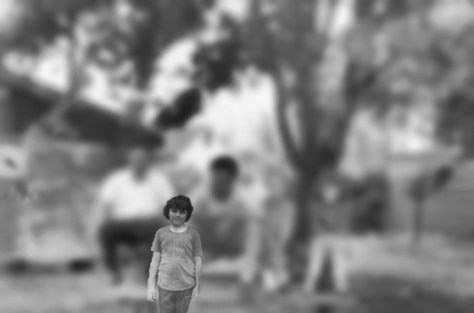
Regarding the above note, I included a picture of me when I was young. I edited it to protect the privacy and identity of another family member. The other family member wasn’t at the point in his life where he felt free to speak openly. Not publicly, anyway. It’s unavoidable to conclude that my carelessness in openly talking about “things that ought not to be talked about” probably saved my life, even if family members threatened, shrieked, and denied.
If you are sharing yourself authentically in the best way you can, I believe that silencing your narrative is a loss for everyone. So what if you don’t get it quite right? Which idiot decided that perfection is the goal of communication? None of us are going to feel exactly what we do today when tomorrow greets us.
It’s easy to pick and choose your criticisms, especially of anyone who shares stories. It’s why most people choose silence. Just as silence does not grant consent, it also does not convey honesty.
I don’t sit and spend hours taking the time to write what I clearly label as my opinion to seek sympathy. The stories, the opinions, and the words are mine to share. Hopefully, it is obvious that I’m not sending them as aimed barbs when I’m not. I am a fairly heavy-handed writer and it’s inescapable when I’m pointing the finger. The parts of my life I share are parts of my life, even if they intersect with the lives of others.
Also, I completely agree that we are all villains in someone else’s narrative. There’s no escape for me in this regard, either.
If my stories sometimes seem harsh, it’s only because the fury or depth of what I experienced is reflected there.
Life is both bloodied lips and serene sunsets.
Anyone who reads my posts knows that I have constantly asked that everyone take the time to write their stories in any way that they can. I put out in the world what I would enjoy hearing from others. We are all repositories of stories. Many are joyous and humorous; others are numbingly horrific. They are all pieces of us.
Each time I’ve shared a piece of myself, someone has reciprocated and reached out to share a bit of their humanity with me. I’m always surprised and humbled. It’s both a reflection of trust and an expression of the need to share with another person. It’s fundamental.
It’s also true that sometimes I’m misunderstood or my motives maligned. I can’t control the unexpected reactions, no more than my writing can alter one second of history. Writing about it, however, changes me. It softens the otherwise fall-without-a-parachute plunge that some days bring me.
Do not read this post if you are easily triggered or don’t want to inhale a topic not customarily laid out in plain view on social media.
Because I’m hoping that one of the people I know will one day get the courage to write a book of the insanity she’s lived with, I’m writing this public service announcement. She will discover that sharing what once was taboo will liberate her. She is not responsible for what happened to her. It’s a lesson I know better than most. You would think my exposure to alcoholics who refuse help would make me callous to the evil they spew into the world. To my surprise, I’m still surprised, though. Alcoholism only thrives in secrecy; everyone who has dealt with addiction knows this. Our most common reaction, though, tends to be protective until it is too late.
Our silence makes us traitors to ourselves on a long enough timeline.
Everyone deserves a chance, a helping hand, and a fresh start. Or two. Or three. Not twenty-three, though. And not at the literal expense of the friends and family around you.
If you’ve ever driven so erratically through a high school parking lot that students use their phones to record you, you’re probably an alcoholic. This is doubly true if you have no children in school, anywhere, especially on a random (and early) Wednesday morning. Triply true if you’re retired. It doesn’t help to throw all your alcoholic beverage containers out the window while you’re being filmed, either. If you top all that off by nearly killing several people, Betty Ford needs to see you. If a group of police comes to your door and you lie to them, even after they show the video that high school teenagers took of you, in your car, as you endangered the lives of several people, you definitely have a drinking problem – and not the kind popularized in the movie “Airplane!” By all means, though, keep lying and insisting that the world is against you. I hope that the students who were endangered upload the video of you careening through the parking area around them to YouTube.
If I sound a bit angry, it’s because I know someone whose career should have made it impossible for him to fight tooth and nail to keep drinking, even after it cost him his career, his health, and the sanity of those around him. His background was similar to mine. His childhood was filled with sociopathic, violent, and angry alcoholics. He continues to get into vehicles to drive, even though he is drunk. As far as anyone knows, he hasn’t killed or injured anyone yet. (Unlike both my parents, who killed and severely maimed people because their love of alcohol made them less than human. Their combined DWI tally is simply too high to be believable.)
As for the person in question, I fought hard to get him the help he needed years ago, even as my sanity slipped. His job protected him from consequences; in part, they are as responsible for his worsening addiction as he is. His career is filled with a markedly high concentration of addicts and alcoholics. Some of the bureaucracy that protected him from consequences suffer from the same addiction. It is ironic that these protectors failed to protect anyone and in fact worsened the addiction by being the ultimate enablers. Not surprisingly, I’ve found this type of concealing behavior to be universal.
I sit and wait for the final word. It will be an inelegant death, and hopefully, one not bordered by the tragedy of others continuing to suffer for his poisonous choices. Since nothing has convinced the addict that he must change, I now hope that those around him pull away and let him find the bottom that he has insisted upon. It’s impossible to swim to shore and save yourself with dead weight on your shoulders. Love both expands and constricts us into choices.
I have no sympathy in my heart for the addict and it is a painful admission. He used his career and his intelligence to assault and beat down anyone who called into question his misbehavior. Literally, anyone.
Recently, I again risked my sanity and tried to convince the alcoholic to get help. He has great insurance, a great retirement plan, and people who have supported him even through years of grievous indignation. He lashed out with some of the angriest, vilest, most personal hatred a human could possibly dish out.
98% of my sympathy lies with the people whose lives this addict has ruined. Their daily struggles, their failed optimism, and hopes, and their inability to live full lives. They are in a holding pattern, waiting for the worst, to testify and witness against a life that is imploding around them. They are victims without an expiration date.
I sit. I wait. I hope that those infected by those with addictions choose freedom over loyalty. Life is too short.
Now, whether you want to or not, you know a little more about me. There’s a good chance that you will recognize people you know in this story. It’s not a new story.
.
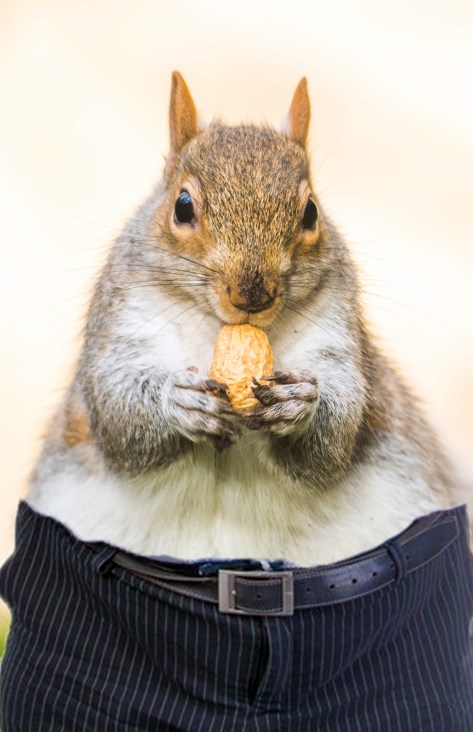
There’s nothing quite like the realization that you might not have any pants to wear. No one wanted to see me prancing around sans pants twenty years ago; the situation hasn’t improved any, especially as pizza became my closest friend. The only time being pantsless is a benefit is when door-to-door salesmen make the mistake of ignoring my “No Soliciting” sign. The neighbors haven’t complained about screaming people fleeing my house. Since I don’t answer the door, I wouldn’t know if they did. It’s a win-win.
As a minimalist, I have the least amount of clothing of any other adult that I know. I tend to keep only a bit more than I need. After my last long-term successful weight loss, I dropped my guard and discarded the pants that looked like MC Hammer had designed my wardrobe. I’m generally relentless about getting rid of clothes I can’t or won’t wear.
Like all idiots, once I lose weight, I assume that I will somehow defy years of forgetting my promise not to get too large again.
I name this tendency/disease Pizzaheimer’s.
Over the last few months, I’ve adopted a more care-free diet, one characterized by total surrender to the joys of excessive stuffing. I tend to wear work pants instead of blue jeans. No matter how bad you think I might look in blue jeans, it’s worse. Imagine Danny DeVito wearing jeans and roller skating.
Because I have to wear slacks at work and my job being very physical, I wear both the relaxed fit and stretchy version of my preferred pants. (Note: I’m not too fond of using the word ‘slacks’ in reference to pants.) These give me the ability to kneel or bend without accidentally hitting a high note – and from splitting my the seat of my pants in an impromptu show of agility and exposed anatomy. The undesirable consequence of this is that I can put on 20 lbs without needing to get a size bigger pants. George brand pants do indeed stretch without complaint. So do I.
Because I may have to dress above my normal sloth-like appearance in a few days, it occurred to me that I might need to try on my normal dress wear pants. As you might expect, none of them fit. Either a magical seamstress has reduced them in my closet, or my battle with fat has been an unnoticed defeat. I’m going with the latter.
As a result, after work today, I had to buy more clothes, ones that don’t expose me to the risk of public nudity if I bend over. The numbers are getting a little large, too. As a general rule, if walking the distance displayed on your pants would wear you out, it’s probably not a good waist size, either.
It’s not my fault, though. I suffer from Pizzaheimer’s.
Near a large metropolitan area in the north, a family sits in stunned hurt and despair as the patriarch surprises them with another fit of rage and accusation. The day, like so many others, now lies in tatters. His addictions seldom yield to a retreat toward family, humility, or humanity. He cannot be reached inside his defensive slide toward loss and oblivion. Though the entire family is in attendance, hurt and pain fill the air, needlessly exacerbating lives populated by trouble. Happiness has fled the building. It’s the price demanded by addiction. These words, the ones you’re reading, are treasonous through the very act of expressing them. Addictions grow in the silences and spaces between the moments of our lives.
In a small town not too far from here, a family gathers to be with their loved one as his body fails him. While the reason for gathering is not joyous, the symbolism of family fills their heavy hearts. A long life can be both celebrated and clung to with fanged fingers. Life is always a treasured embrace, and we rarely wish to exit the dance willingly; the veil of tomorrow beckons us.
I’m connected to both of these happenings. I couldn’t help but observe their overlap, forming a perverse Venn Diagram. They took place at the same hour and minute; neither was aware of the other.
There is no lesson here, no plea to seize the day or bite one’s troubled lips.
I am merely that fish in the bowl, observing, surrounded by an alien wilderness that I’m somehow connected to.
.
*I was hesitant to post this. People tend to jump over subtlety and substance by unforgivingly bringing their own observations to things unsaid.
On a recent Wednesday, in a town which can be found in several states across the South, I entered a local eatery to pass a bit of the time away from the blistering reach of the summer sun. I gladly surrendered in the fight against it. I could tell that the little place was a hub for all manner of necessary human activity: gas, small groceries, food, and tobacco. The place was packed with smiling faces, each focused on satisfying their hunger.
I went inside, ordered a bit of deliciousness, and sat down at one of the dozen rectangular white tables scattered on one side of the convenience store. It wasn’t my intention to get another bite to eat. I’d already had lunch across the street. Overcoming the scent of the food filling in the air, however, was impossible for a man of my age and girth. Bacon and butter are my beloved enemies.
I casually watched through the glass as a young mom ignored her little daughter as she strained to reach over into the ice cream case. Her short arm stretched, and her fingers moved like scurrying spiders in their attempt to reach the unattainable buckets of ice cream. Her brother watched from the opposite end of the case, undoubtedly anticipating that she’d either reach the ice cream or fall into it. They were all behind the ice cream case on the employee’s side. The mom looked up and noticed my gaze. Without hesitation, she turned and struck the little girl forcefully on the back. It seemed like an instinctive reaction to her guilt at being observed. The girl shrieked in a small voice, and the mom grabbed her by the nape of the neck. The scream died. I could tell it was a long-rehearsed dance between them. The young mom then looked to her right, toward a stern older woman with a scream of a ponytail at the other register. It turns out that the young mom was an off-duty employee of the store, there to feed her four children. The old lady with the austere ponytail was undoubtedly the young mom’s boss. I later observed the family huddled around one of the tables, each devouring their pieces of chicken as their fingers became increasingly greasy. Watching little kids lick their fingers in deep appreciation is one of the minor joys in life. The little girl didn’t seem to recall being hit like an approaching tennis ball. I silently hoped that the hits weren’t frequent. I could easily see how much the daughter loved her mom. I hoped she could maintain that love as she grew.
Atop the ice cream case was a placard, one of those telling the world that the owners love their god and country, stand for the flag, and for anyone who felt otherwise, they should use the door as quickly as possible. I had a feeling that many visitors of different customs or appearance had seen the placard through the years and winced, many of them understanding that they weren’t welcomed there and were simply tolerated for the purpose of commerce. There’s no nuance in such signs, even if the owners believe there is. It’s the equivalent of a harsh, angry shout; this world needs more whispers and gentle examples of encouragement.
It wasn’t until I noticed the placard that I questioned much of the content of my experience there. My eyes wandered around the store, finding confederate flags in more than one place. Such flags are not a guarantee of other sinister inclinations; their presence, though, tends to accompany such attitudes. People can fly confederate flags and be good people. I’ve learned that the combination seldom proves the exception, leaving those without prejudice to be lumped in and suffer with those who use the symbols as shortcuts for unforgiving opinions. It’s unfortunate and unfair for all of us. Each of us in our own private lives tends to embrace ambiguity and understand that people are a spectrum of conflicting ideas.
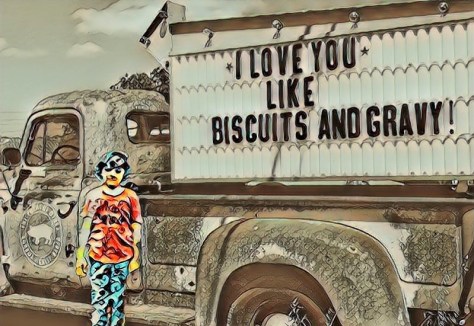
Inside the store, the air was thick with the scent of biscuits, gravy, and fried chicken. While I was inside, there was a constant, impatient line, slowly shuffling forward, and the tables were filled with people, each bubbling with a conversation. Unlike my adopted hometown, there were no faces of other color or snippets of foreign languages. There was no rainbow there and no spectrum of humanity. Once noticed, such absences are hard to unsee. There should have been other faces, though, because despite the small-town population, there were industries and occupations which were comprised of a majority of minorities. I was curious to know where those people enjoyed their lunch. I would describe the mood of everyone as happy and concentrated on their own bit of life.
Because of the recent tragedies, many of the conversations were about guns and violence. I could hear two distinct conversations ridiculing those who wanted things to change. The conversations merged into one, with the participant’s voices rising in volume. We all became involuntary listeners.
At the furthest table, a man in overalls and a plaid shirt leaned back and cocked his head toward the bulk of the tables and said, “Ain’t no one here going to disagree. Not in this town. We love our guns and those who don’t can leave.” Even though I was in a distant place, I laughed, the kind of raucous, loud laugh that makes my wife cringe sometimes. The speaker looked toward me with surprise, probably in an attempt to gauge my allegiance. Externally, I looked like them. Maybe my bright purple laptop case signaled a departure. Nothing else about me raised suspicion that I might differ strikingly from most of them.
The loud-voiced man’s false bravado revealed his temperament, one not accustomed to nuance or differing opinion. It’s a common affliction in places where the realm is small, and the courage to speak up is often swallowed to keep the peace. I doubt he was actually as harsh as the situation implied.
“You think they should take our guns away?” He challenged me. Several people turned their heads to look in my direction. I could see the owner standing next to the food counter, waiting to hear what foolishness would jump from my mouth.
All I could think to say was, “If you drink and can’t stop yourself from driving, you should lose the privilege of driving. But I don’t know who ‘they’ are.”
An older woman wearing a bright red shirt seated with two very young kids said, “That’s right!” as if she were in church and reciting a well-worn and enthusiastic “Amen.”
The original speaker abruptly leaned forward again in his chair as the conversations in the room went momentarily quiet. He wasn’t expecting a response to his oration, especially to encounter disagreement among his own tribe. Each table resumed speaking in subdued voices. I’m confident that several people were wondering how a traitor like me had entered their eating-place without being noticed. Truthfully, it gladdened me a little bit. I couldn’t get the smile of satisfaction off my face. The old lady who had invoked the informal amen smiled back at me and nodded.
Regardless of our individual opinions, each of us continued to eat our delicious food. Differences over guns seldom distract those with fried chicken on their plates.
A little later, I listened as the owner pulled up a chair and sat at a table nearby with one of his customers. He smiled and exuded friendliness. After a few seconds of listening to his conversation, I realized that the smile was a little forced. He had a lot to say about guns and the attitudes recently expressed in his eatery. I tuned him out. It’s unwise to strive to overhear words that you know will only serve to bait you toward a base response. We all vent, sometimes to the point of letting our mouths outrun our honest hearts. I’m afflicted with the tendency too. It would be unwise for me to paint him in a situation where one’s self-defense mechanism might override his ability to express himself honestly.
Not all the signs and symbols for these places are visible. That ideas and differences weren’t welcome somehow pervaded the room, though. The divisive placard on the ice cream case didn’t help much. Each of us loves our lives, our friends, and our families. Most of us appreciate our community. We don’t need code words or exclusion to feel like our lives are full. When I departed the store, I noted vehicles with confederate flags and harsh bumper stickers with rigid, us-vs.-them messages. Strangely, people don’t stop to think that at a certain level, we are all ‘them’ to other people.
The smell of fried chicken and gravy should be a sign of welcome for all those who appreciate a full stomach. Such a thing is a unifier, drawing us to places where each of us brings our differences and yet somehow joins in the spectacle of community.
If I could, I would ask the owners to remove their placard and relics of the confederacy. I’d ask them to instead let their smiles and kind words serve as both example and proof of their living creator flowing through them. The placard and things like it can only serve as whistles of perceived prejudices. Armed with love and fried chicken, it’s difficult to imagine a divided world. We preach our best sermons by example. I think that so many people feel cornered into a defensive position when the world stops seeing that everything is intertwined and complex. Except for love, few ideas worth fighting for can be encapsulated on a bumper sticker, placard, or t-shirt.
It is possible to love your religion and customs while also openly loving other people’s opportunity to do the same. Acknowledging their choices in no way denigrates your ability to live a good life in the way that you see fit. Only when we demand allegiance to our choices does our society suffer.
Let the chicken and gravy be sufficient to unite us.
We live in the United States of America, a place where all of us have an equal voice to be as proud or as ignorant as our own hearts require. There’s room for ignorance and intellect on all sides in this crowded room of togetherness. Let the best argument always prevail, though. Losing respect for the best ideas leads us all away from the truth and fried chicken.
All those in agreement say either “Amen,” or “Fried chicken and gravy.” They both come from the purest of hearts.
.
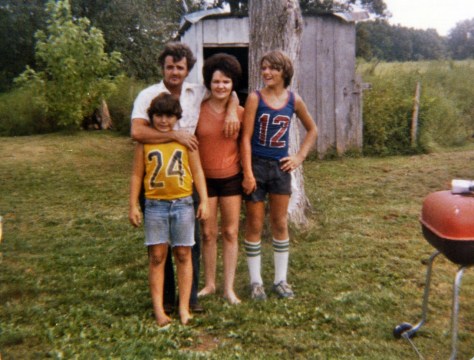
This picture is of my brother, me, mom, and dad. I’ve written before how ambivalent I am about this picture. On the one hand, I’m glad that the picture exists. On the other, it is horribly misleading because it might convince bystanders that we were a happy family.
Before highway 412 modernized us, we intimately knew highway 68. Before its expansion and encroachment all along the yards lining it, it was a typical narrow road passing through NWA. It was a vital artery connecting the small towns that dominated our corner of the state. It’s “Old 68” now, truncated and lost to failed bridges that isolate it from its replacement. I once knew parts of the old 68 with precision. There were many times I would ride back to our home with my drunken dad, praying to the silent god who presumably watched over idiots like him. On the other hand, I knew such hopes were truly childish because Dad had killed a cousin of mine in a DWI accident. This knowledge invalidated the whispers of hope I had. Sometimes I’d pray for a horrible crash to engulf us and put an end to the uncertainty; other times I’d wish to just get home in one piece.
The land over on the far side of Tontitown was simply beautiful. I find myself forgetting this at times. Rolling hills, thick trees, creeks crisscrossing where the land permitted, and open expanses of fields filled the area. For the most part, property owners weren’t aware of kids traversing their land. As long as we respected their property, those that were aware simply chose to ignore us as we did what kids do best. There were times where we’d set off walking and have no idea where we were heading. Chiggers, mosquitoes, and snakes often accompanied us. When you’re young, you assume that such things are a required tariff in order to enjoy life.
Because my family moved more often than a pack of unwanted nomads, I lived in Tontitown more than once in my youth. The first long stretch followed our trailer in City View Trailer Park in Springdale burning down, rendering both at least 100,000 cockroaches and us homeless. We moved to the western fringe of Tontitown, near the bend where the new 412 first veers away from the original 68. When 68 was rerouted and renamed 412, it cut across Road 852. Technically, it wasn’t and isn’t Tontitown – but everyone considered it to be so. It was not too far from the infamous and now-defunct Blue Hole swimming spot, home of the coldest water imaginable. When I was young, I didn’t even realize that Blue Hole Road was a real name.
We moved to Washington County Road 852 to stay with Leta, the widow of a paternal cousin. Dad had a penchant for sleeping with a variety of people, and choosing from the woodpile didn’t deter him. It took me several years to pinpoint precisely how Leta fit in the family tree. Her husband, my dad’s distant cousin, had died a few years prior. Leta had an interesting life, and despite all the other surrounding confusion, I now know that I would be fascinated if I could go back in time and have an adult conversation with her. She wasn’t a warm person; on the other hand, I didn’t understand how much of an interruption we might have been to her life.
I’ve written before about the place being the perfect alignment of isolation, anger, and addiction. Highway 68 ran across the north, leaving the land below it pristine and only accessible through a complex series of dirt roads. I was in 7th grade, and because of the fire, I had lost everything. The house was small, and even the so-called bedrooms were nothing more than imaginary boundaries inside the old house. We all shared one bathroom and a clawfoot bathtub. Ancient box fans provided most of the airflow into the house. The outside of the house was covered in tan brick-theme tar paper, similar to what was commonly found in the area where I was born. While we lived at Leta’s, Dad spent time filling the inside of the house with dark paneling. We shared one console television in the living, very close to the front door, connected to an old tv antenna outside.
My parents often fought, as they were prone to do regardless of the impermanence of their residence. My dad had several affairs, including the notorious relationship with Leta who owned the house. The adults around me drank more per capita than any household in Tontitown. The alcohol-fueled many days and nights of violence and terror. It also sometimes granted us too much freedom. At times, I forget that because Leta worked at the Venetian Inn at night and Mom worked split shifts and unusual hours at Southwestern Bell, our presence at the house overlapped in a crazy Venn diagram.
As much as I vilify the players in the drama in that period of my life, I am the first to admit that there were some spectacular adventures. The geography allowed for us to trek miles in several directions, to explode a ton of fireworks with a total disregard for human safety, fire a variety of pistols, rifles, and shotguns, and to escape the lunacy the adults brought to the table. I could go outside and climb on top of the barn past the gated fence, or if I was really ambitious, crawl up onto the roof of the house or clamber up one of the ten million trees. The house also had a simple covered front porch, bordered on one side by a massive pile of firewood. We dreaded the surprise announcements that we were going to have to help our Dad cut firewood. I have an entire book of stories about some of those mornings. I could sneak away across the barbed wire and read, as long as I could suffer the bugs and snakes inhabiting the area. It was at Leta’s that I found her copy of “Your Erroneous Zones” by self-help guru Wayne Dyer. It was a revelation and seemed to describe an attitude and life that seemed impossible. I could take my french horn down into a dense valley and sound like I was summoning the Valkyries. It was possible to walk and fill oneself with many grapes picked off the vines or find patches of blackberries thick with both briars and berries.
At night, the area seemed to revert to a time centuries ago. Dark was genuinely dark, and animals of all kinds inhabited every nook and cranny of the fields and forests. There was a couple of times that my Dad forced us to walk across the darkened fields and leave proof of our visits inside an abandoned house, once part of a now-forgotten community. My cousin Jimmy was unnaturally afraid of the dark and everything it might contain. We were more afraid of my Dad, though. One of those forced walks in the dark is now one of my most cherished memories. The house stands epically in my memory and its silhouette is still etched in my mind and often used as a comparison to measure foreboding. Had my parents been more normal, it could have been a paradise. My appreciation for the land of that area has only grown as I’ve aged. The land owes me no apology for the people who stained its beauty.
As much as I knew about the area, I knew much less than my brother who had more friends and didn’t hesitate to go out and work in the grapevines or tomato farms. When the trailer burned, it burned my connections to the friends I had at City View. Sometimes, though, old friends, especially my brother’s friends, would visit and the shenanigans would commence. There’s a reason we universally look back and hold dear those memories of such adventures. They encapsulate so much of the joy of being a boy and having the freedom to experience small pieces of the world.
We often had mega-barbeques, fish fries, and feasts. They were raucous affairs, of course, and many ended with fisticuffs, shouts, and blood-soaked shirts. On one occasion, the party ended because my dad threw an entire box of ammunition in the wood fireplace in the living room. I took advantage of those times by eating barrels of salad soaked in Viva Italian dressing, or bag after endless bag of Venetian Inn salad and rolls. Leta worked at the Venetian Inn and brought home a treasure of food from there each day she worked. I, of course, loved pasta. After eating several miles of it, though, I usually opted for endless salads. We would walk the long dirt road home, rain or shine, from the nearest school bus stop up near Mitchell’s service station. (Those walks home after school would dissuade anyone from choosing a large band instrument to learn.) I’d often eat a king’s meal of rolls, salad and sometimes 2 or more chicken breasts. I could make a pot of coffee and drink it all. I sampled a variety of wines, too. Leta didn’t mind. She knew that we were going to be unable to overcome our curiosity. Don’t be too concerned about the bit of wine. I had access to unlimited alcohol and a few drugs, which didn’t interest me.
I’m only reminiscing because one day not too long ago, someone online answered a comment about that area and Brush Creek, which lies not too far away. Another commenter mentioned the massage parlors in the area. It made me laugh, reading the comments of those who claimed they were all fables and made-up urban legends. Where men walk, you can be assured that vice follows.
For those who don’t know, Tontitown once harbored several houses of ill repute, stills for moonshine, and a bit of weed for those wishing to find them. It’s topography made it ideal for concealment while also not being so far out of the way that it was prohibitive to find it. The hills and hollers made intrusion unlikely. Not too far from where I lived out on the dirt road, one of the residents had a decent plot for marijuana growing, with a water well off the road, powered by an illegal electric connection that was off the grid. He resembled the actor Brett Gelman if he never shaved. He also looked exactly like Leta’s son, who was the personification of an ex-Vietnam hippie. Leta’s son struck me as crazy, but he was always kind to me and talked to me like an adult. I remember once when we drove to Timbuktu to visit him, and he was in the front yard, totally naked, taking a shower under a hand-made system of water hoses. It was hilarious.
Even though the accusation will make some people defensive, many of these unsavory places were known to law enforcement. I’m not alleging conspiracy, of course. People do crazy things often enough with the necessity of making outrageous claims. Someone I know very well loves telling the story of her dad, who was a Springdale policeman at the time, giving protection to someone involved. My dad was known to payoff DWIs under the table, not to mention bribing people to look the other way. It was common. I’m not telling the story to paint someone negatively; it was just the way many things were done. Monroe County, the place where I was born, was a significant conduit for all manner of vice, too. Everyone knew it. Dad had a temperament and way of finding the most clever places to get into trouble. “Friends in low places” would describe his circle. Regardless, though involved in the shady businesses never interfered in other people’s business and expected reciprocity in return. Minding your own business granted every mutual safety.
The massage parlor sat near 68, hidden in plain sight in a nondescript tan trailer. There were, of course, no signs or indications that nefarious goings-on could be experienced within. I used to amuse myself by imagining that some industrious and brazen entrepreneur would put up a huge flashing neon sign indicating “Sex Shop” near the place. Google Streetview hasn’t visited the road in over ten years. I know that many people got lost looking for the massage parlor because I remember Leta and others telling stories about the faraway neighbors getting late-night knocks on their doors, demanding to be let in.
Because Dad would drink to excess, he would mouth off, often without realizing he was spilling the beans. One evening, he had driven by the trailer with his bottle of Evan Williams between his knees. “That place will make a man out of you,” he said, as he punched me on the side of the head. I don’t remember why I was in the cab of the truck with him. I would choose the bed of the pickup even during a lava storm to stay away from Dad when his mood could shift.
Sometime after, Dad had pulled in to the small driveway next to the trailer. I was surprised because I was in the back of the truck. Dad’s dog Duke and I remained in the back of the pickup. A little bit later, Dad came out and proudly drank some of his whiskey and coke and drove home. I overheard him talking about the place to more than a couple of people.
It took me a bit to connect the dots. There was a cookout at Leta’s one Sunday, and someone said something about the convenience of having a massage parlor up the road. Mom threw her cigarette at the person joking about it and then hurled her half-finished beer into dad’s face. She shouted her favorite “MoFo” curse repeatedly as she left. (Many get-togethers ended that way.) Dad didn’t rush after her as everyone expected. He drank until the sun descended into the valley before reminding Mom of how dangerous he was. I don’t remember whether I cowered out of sight or managed to escape outside and down the road or through the surrounding landscape.
There were times when Mom would drink and then decide to go hunt for my Dad. She’d drive by the Red Door and all the other usual places that might contain him. I think after finding out about Dad’s presence at the massage parlor that she always took a moment to look over the area around it in hopes of seeing his truck. I’m not sure how many times I was forced to prowl with Mom. I do know that she had no business driving most of the time.
Or being married, now that I think about it.
I’m not sure how long this particular massage parlor stayed in business. (Long enough to increase Dad’s chances of getting his head caved in, though.)
If you missed it in a previous post, we moved after Mom discovered that Dad and Leta had been having an affair for a long time. I found them together one night, which is why I can state with such certainty this isn’t a figment of my mom’s fabled anger and imagination. Weirdly enough, we moved to a place very close to where I now live, to a tiny trailer on the road that would one day become part of the Don Tyson Parkway. That place was indeed a crucible of violence. Mom knew that Dad was unfaithful. Proof of it, though, inevitably started a predetermined sequence of weekend tirades.
Now that I know so much more about Dad’s inability to behave like a normal husband, it would be interesting to know whether Mom would kill my Dad after learning the new information. The breadth of my Dad’s infidelity goes much deeper and further than I suspected – and that’s quite a feat.
I have several stories that I’ve never told. Some of my reluctance arises from the involvement of other people who still walk the earth. While it is my right to share these stories, I’ve not done so because some of the unflattering biographies aren’t entirely in my control.
I don’t have a great record of our time out there on the western edge of Tontitown. I’ve mentioned before that my family simply didn’t own a camera. We relied on others to document our lives. There are pictures of our time there, but very few.
.
.
.
P.S. I wrote this story without stressing the storyline. I didn’t know how to create a central theme, so I didn’t. The story and words stand ‘as is;’ take from it that which you will.
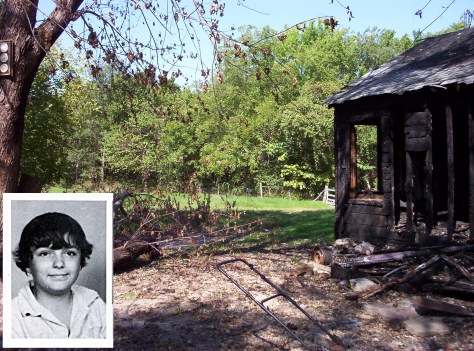
The picture is one I took in 2006 after the house in Tontitown burned. I haven’t lived there for almost 40 years. It’s an unimaginable and detached amount of time. The inset picture is of me from around the time I lived in the house.
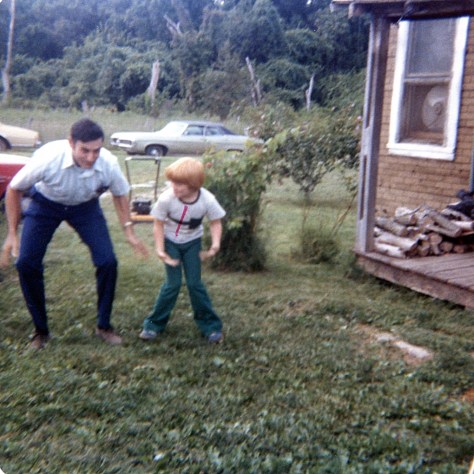
This picture is of Uncle Beb and my cousin Jimmy doing the Hambone dance. This picture shows the corner of the house that’s also in the picture of the house after it burned. You can see the wilderness near the road in the background.
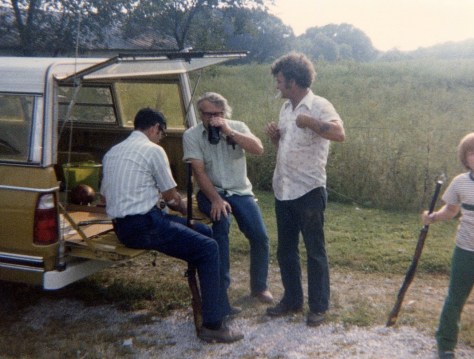
This picture captures a common activity: everyone armed and shooting. My Uncle Bed, Uncle Buck, dad, and my cousin Jimmy. In the right circumstances, these gatherings were joyous.
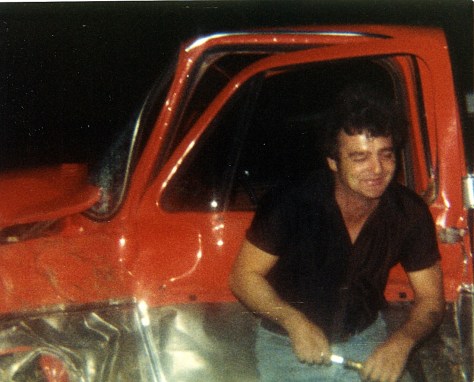
The picture in the first comment is a picture one of my dad. He’s three sheets to the wind. He’d just rolled his beloved truck down into one of the deep hollers near our house late at night. He was oblivious that night. The aftermath and days after were violently unpleasant.
As I drove home, I did my best to expunge the workday from my thoughts. So much of my day had been packed with banal, lifeless exchanges. I listened in fascination as Janet Mock talked about her early life in an interview on NPR. On a whim, I quickly turned into the drive of a convenience store.
I entered the convenience store to fulfill one of modern man’s biggest follies: buy lottery tickets. Ahead of me, a young black man was struggling with a pre-loaded card and a card swipe in an attempt to buy gas. I conducted my business with the pleasant cashier and stepped to the left. Another couple of customers finished their purchases and I stepped over to the other side as I pulled out my wallet to stuff the new ticket into its confines.
“I’m so sorry to waste your time. Thank you,” the young man told the clerk. She smiled and said, “No problem. Have a good day.” The look on his face was one I well recognized. He probably didn’t have enough gas to get much of anywhere.
I watched as he peered through the window at his tall friend outside. He was standing between the pumps and a tan Oldsmobile, waiting for the pump to authorize the gas. The man inside the store stopped as I held up my hand and said, “Wait.” Expecting something even more upsetting, his eyes looked up at mine. I handed him the cash from my wallet and said, “Didn’t you say you need some gas?” He looked at the money, then back at me. “Thanks, sir. Jeez. I don’t know what to say.” Because I’m a master of wit and conversation, I told him, “Have a great afternoon.” He turned back toward the cashier, a smile spreading across his face.
I went outside, got inside my car, and turned on the ignition as a blast of cold air hit my face and the sound of Terry Gross delving back into the life of Janet Mock.
Although I usually don’t stick around to witness the aftermath of my moments, I looked down at my phone until the man inside the store had exited. I then watched him using my mirrors. He excitedly held his hands up and shouted something to his friend at the pumps. While I couldn’t quite discern the words, his glee was apparent.
I drove away, leaving the man’s story behind me.
In return, my heart was lighter, my day forgotten.
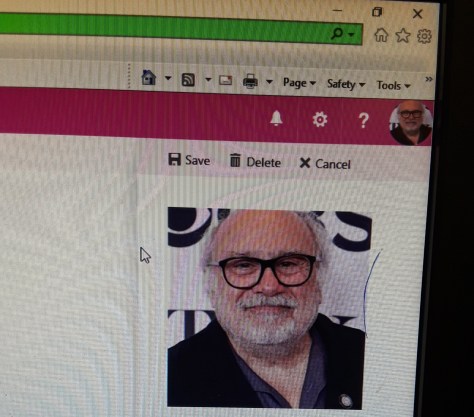
Another true story… in a move my employer will regret, every employee now has company email. The last time I uploaded my picture into Google Images, 10 of the top 20 pictures for similarity contained Danny DeVito. Naturally, it seemed appropriate to use his image as mine on the account.