Everyone’s had that experience at a party or social gathering. One guy, and it’s almost always a guy with too many opinions, (not to mention an endless supply of drinks) is a domineering a******. You don’t want to be directly rude to the host and tell them why you’re ducking out early or on the invitation itself.
Social media in many ways is similar. Each person gets to gatekeep not only their content, but those who participate as well. It reminds me of attending a party with that one guy who is so negative he might as well be half of a battery terminal. This dude rarely sees himself as negative.
Increasingly, I realize that I’m hitting block a lot more quickly. Not because of disagreements, but because I wouldn’t want that person in my conversation, much less in my living room.
One of my social media friends, one whose opinion I respect, always had a couple of blowhards who didn’t understand the concept of volume, frequency, or disagreeableness. Although it’s unfair, I name those people Mike when I run across them.
I recently learned that one of my friend’s biggest blowhards passed away. I will admit that I initially felt relief upon hearing about it. That doesn’t paint me in the best light – but it’s true. A debilitating case of carpal tunnel would have been enough.
Repeating what I said before, it’s not about disagreements. Rather, it’s about disagreeableness.
As for people insulting me, if it’s creative, I don’t care what their motive is. I love being snarked and insult-burned if it’s done with finesse and intelligence. This is in part true because I steal the good ideas.
It’s very difficult for me to get insulted if the insult comes from people I don’t know or whose opinion I don’t respect.
People are discussing the complexity of the human capacity for collective evil. Whether one section of the population likes to acknowledge it or not, Germany’s example constantly pops up.
How can so many people stand by and watch the country descend into madness?
The best way to visualize this capacity is to watch the movie The Stanford Experiment. If you’re even slightly interested in the psychology of collective misbehavior, this is the easiest shortcut to benchmark how things go astray so deeply, even with intelligent and otherwise kind people.
The same effect applies to police, the military, or even people making decisions in business.
Anyone who’s never experienced the environment of a production line might not understand it. Each employee is present to earn a living and mostly do a good job. Those who own the production line want to profit while providing a living for those who work there. An interesting thing often happens, especially in poultry and similar industries.
The need for profit puts those in charge of the environment, the efficiency, and the speed of the production line often blurs the line of humanity by increasing the demands on those working it. It becomes hard to perform the job safely over time. People suffer the indignity of sometimes being able to exit the line long enough to take care of their basic bodily needs. For some, it becomes easier to dehumanize those who perform the jobs in order to be profitable and efficient.
The above can’t be explained to someone who hasn’t experienced it.
The same effect applies throughout our society. We justify less than a living wage, even though we know these jobs are necessary and that our collective decision to fail to pay sufficiently to live even a basic life is causing misery. All of this is based on economic concerns rather than the primary focus of human happiness and dignity. It is a them problem rather than an us problem.
We don’t provide universal health insurance, even though doing so would cost less than our current system. But this does not stop us from passively watching as millions of people suffer from a lack of health care or go bankrupt.
We put on our hats of authority and often forget the results of callousness. It’s our job, we think. Society apparently wants it to be that way, or we would have intervened to change it. We make decisions without consideration for how they impact people, or we are put in a position to be powerless to change things.
We marginalize certain groups. Over time, this gives us a silent yet undeniable tendency to view others as lesser. This justifies our collective behavior that often results in denigration or harm to the people in those groups.
My upbringing gave me an unholy understanding of the possibility of violence inside people. Even the pious in my family found ways to justify turning a blind eye toward what can only be called evil. Family who could observe a child being hurt and find ways in their minds, especially based on the societal norms around them, to fail to act to protect them, were they evil? Or were they just the product of their environment? Several of them held dear their holy books – and did not react well when I grew up and became confrontational about the disparity between their alleged message of love and kindness. That message had justified their deliberate choice to do nothing.
People in history are no different from us, even if we want to think they were. This gives us a pass and carte blanche to continue to behave inhumanely, even if we are technically just doing our job or fulfilling our role as citizens.
It is the office itself that yields the honor and respect, rather than the person temporarily assuming its duties.
The expectation of someone behaving in a presidential manner is one that’s been shattered. For some, this is a welcome change. For others, it’s a chaotic and devastating reality.
We have demonstratively proven that anyone can become president.
Growing up most of us were superficially exposed to the civil war. Almost all we learned was of dates and places and broad themes. We did not then viscerally understand how a nation could become so irreparably shattered.
We go about our lives because that’s what we can do.
Regardless of your political affiliation, those of us paying attention now unfortunately feel it in our bones. Whether you’re excited about the upheaval recently brought to Washington or you’re onvinced that our government is in jeopardy, I don’t think people will generally deny that this is something much different.
We are united on paper much in the same way that Jefferson’s hollow words about all men being equal applied only to white wealthy men.
The intelligent people I trust are saying the same thing. Countries who were once allies are unilaterally warning one another and the world. People have shouted that the sky is falling and cried wolf before. It feels different this time because it is.
This isn’t Clinton refusing to resign even though he should have. Or Bush demonstrating incompetence.
I will be surprised if the end of February has not brought us to cataclysm.
People need stability, as does the economy, and society in general.
The struggle through the generations to create a reality in which all people, regardless of belief, religion, skin color, or their sexual identity could coexist in peace now resembles a dystopian fantasy.
Power and progress are both unstable. The problem with authority and authoritarianism is that they both fall into chaos.
Chaos is inevitable. Entropy governs the universe.
Those who currently seek to redefine America will learn the lesson.
The exuberant blush of the chilly October morning passed. My arms were heavy from relentless push-ups, ones executed to silence my imagination and mind. The fleeting and mercurial chance to venture out and sit among the mountains of scattered fallen leaves passed as the shadows of the morning disappeared. The chance to hold a hot cup of coffee and share the absurdity of humor as the crows called. I grew tired of my mind, wanting only presence. So I sat and watched the gentle breeze move the remaining green limbs of the trees. The accompanying sun attempted to pierce the gauzy Autumn clouds. It was a reverie that inevitably concluded when I put on my practical shoes. The magic of the morning that I love evaporated into the ether. But still my mind wandered in the cavern contained and concealed inside of me. It’s one of the consequences of living in boxes. Swooping high above, there are a million boxes and each one contains a universe of self-contained minds. Sonder strikes differently on fall mornings. It is the interconnectedness of us that makes it worthwhile. If it feels lacking, not much effectively works as a distraction.
And I’m floating.
.
PS I wrote the above words yesterday morning. I listened to Spencer Sutherland wail “Alive.” And though I shared these words, I’m frustrated that I’m experiencing the same disconnectedness this morning. The easy fix evidently stretches too far for some. It’s obvious I don’t lack the words or the ability to communicate. So, I blasted “Alive” again and reminded myself to be grateful for what I do have instead of that which lacks. I remind myself that it’s human nature to fail to appreciate the 80% to chase the 20%. The problem is that the magic tends claim residence in the 20%.
I voted against him for the 6th time in my adult life. It’s amusing that his presence in the political arena pushed such a blatant liberal as me into the conservative primaries.
He’s not even the problem.
The problem is now that many of us realize that no matter how many gains we make, such a person ill-suited for political office can subvert the political process.
It’s not my job to convince anyone that he’s dangerous. If his closest allies and advisors, combined with his encyclopedic list of flaws can’t present the clear and present danger he is to our democracy, there’s certainly nothing I can add.
When I left the voting center, I’m certain I experienced one of the most beautiful views possible.
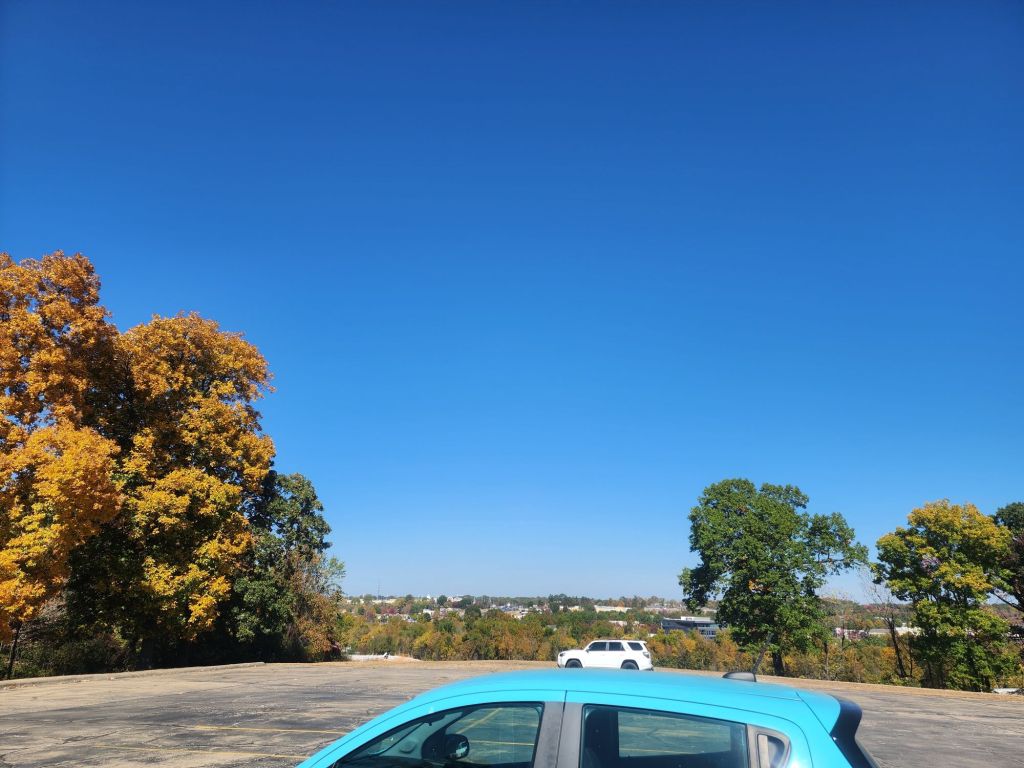
Above me, the blue sky.
Behind me? Hopefully the last populist narcissist.
But I know he can’t be. Because the people who will overlook the kind of character and behavior he represents will still be voting.
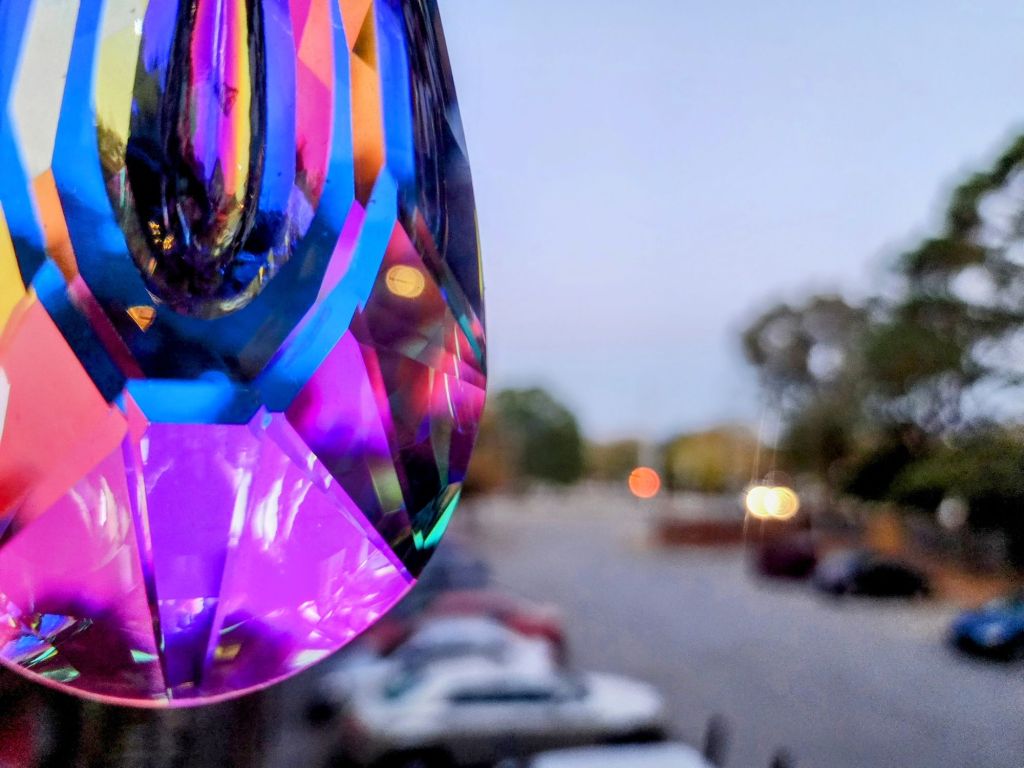
It’s all perspective. The custom painting in my kitchen alcove expresses it well: “Black Hole Sun-The same sun, yet filtered by negligent eyes, renders darkly all that shines.”
I can worry about the moronic changes in my professional life or look at the parking lot below and consider all the recent ill-advised shenanigans from those who traverse it. I can also turn and look through my large screenless windows into the living room and watch my cat shoot across the uneven levels of the massive cat castle like a feline projectile. Güino doesn’t concern himself with the outside world. His perspective is limited. Given the massive amount of information and bustle I experience on a given day, I think he’s winning in a way that I can’t.
I had infinite energy this morning. So I burned it off like useless gas derivatives being lit at the top of oil refineries.
A lot of our lives are like the burned gasses. We spend so much time and energy wanting to control or direct the world around us. We’d be better off focusing on the immediacy of things and people around us.
I felt clever because somebody challenged me to define enthusiasm.
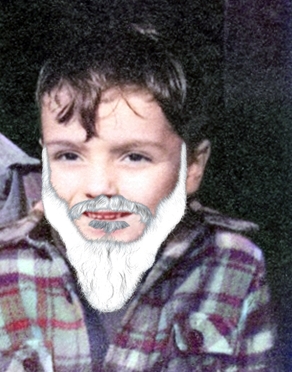
I fake-stroked my beard and answered, “Imagine you’ve asked a friend to come over Friday or Saturday for dinner. If they say, ‘Of course. Let’s talk about what day or time,’ you get a definite feeling. If they say, ‘We’ll see’ or ‘Maybe,’ you get another feeling. The gap between those two is enthusiasm.”
This post is partially personal and also a metaphor. Or analogy. Although I know the difference, I don’t care about grammatical accuracy. If this post is all over the place, you can thank me later for taking you around the world with my shotgun storytelling.
In 2005, I visited my brother north of Chicago. He brought out a giant bag of tortilla chips, one suited for his appetite. Then, he brought out high-quality horseradish and made a two-ingredient dip. Although I’m laughing when I write this, my brother Mike might have held me down with one of his giant paws of a hand and inserted a horseradish-laden tortilla chip into my mouth had I persisted in refusing to try it. I grabbed a chip and loaded it. My brother’s eyes widened, and he laughed like a hyena because he knew I would eat the whole bite. Though it burned, it was delicious!
“See, you dumb bastard? I told you you would like it. This ain’t the horseradish Aunt Ardith kept hidden in a side shelf.”
Although my brother was one of those people who thought he was always right, I had to give him credit for insisting I at least try horseradish. The worst that could have happened is that I still would have hated it.
All these years later, I think about that. He did the same thing with guacamole after I refused to have some freshly made guacamole at what used to be my favorite Mexican restaurant in Springdale. Guacamole was the equivalent of turkish delight from C.S. Lewis’ Narnia tales.
I am now a world class aficionado of pico de gallo. For too many years, I assumed I wouldn’t like it because my mom made me automatically distrust onions. Onions were the second component of her one-two punch of seasoning, which consisted of onions and cigarette ash. It was a story of culinary violence in the South, never knowing if the potato salad or mashed potatoes would have fantasy-level chunks of onions.
The above anecdotes hint at much of our problem. Because I was naive and poor, I was rarely exposed to a wide swath of food, much less quality. My cousin Jimmy’s house was the crucible of exposure to many foods. Because of my dad, Bobby Dean, almost literally making me eat food at gunpoint, some of my first exposures to some things were less than ideal. That’s putting it mildly. Some of the food at my house was the equivalent of the discarded version of what you would find behind a dollar store grocery aisle. That explained my aversion to morel mushrooms.
And also horseradish.
I don’t remember how old I was when I first tried horseradish. I remember the time that soured me on it. It turned out to be old and nasty by any standard. So, it’s no wonder my first exposure was the equivalent of eating a goose-poop-filled donut. I was lucky to have Aunt Ardith and Uncle Buck. Without them, my life would have been much worse in several ways. Visiting my cousin Jimmy always guaranteed that I’d be well-fed and get to try a variety of things. I like to joke about the horseradish because it was one of the few times that Aunt Ardith convinced me to try something exotic (to me). She had the best intentions, unlike my dad. If he got a hint of an idea that I didn’t like something, you can be sure that I’d be eating a bucket of it. Aunt Ardith and Uncle Buck did their best to tell Dad to jump off a cliff when he behaved that way around them.
We have parallel aversions to many things resulting from our initial exposure. Look at most relationships, and you can see that it’s true. You had your heart broken. You repay your future self by carrying the mistake and believing that all relationships will turn sour. Or you think most people grew up without the love and caring everyone needs. You carry your words into the future, and all the potential people you meet indirectly pay for the wound. You either avoid deep relationships or insist the system is rigged and broken. The concept of relationships isn’t the problem; it’s us. You’re letting your version of horseradish tarnish your future with other people.
Life is horseradish and guacamole.
Be open to new things.
Be aware that you may have blinded yourself or made truth from experiences that should not be extrapolated into cynicism or isolation.
Although it is true that people rarely fundamentally change, it is possible both in outlook and preference.
Changing is, in part, acknowledging that the things, habits, and ideas that once defined you no longer do.
Only healthy people change their minds and their lives.
PS During this crazy election, I’ve had a few laughs because of my brother. He’s been gone for four years. In his later life, one of his proclivities was to be a blowhard, much in the ilk of Bill O’Reilly. My job was to be the liberal and sentimental brother that drove him crazy. And as I was fond of telling him, the person left standing gets the last word. Since I bought gallon by the ink, he didn’t have the temperament to keep up with me. If he were still alive, he’d be pissed off at me constantly. But I miss it. Not the anger of the last few years; that period owes its shadows to alcohol and unresolved trauma. I miss the undeniable intelligence of my brother, even when he used it to wither my well-intentioned arguments. I absorb a lot of the election craziness and play a dialog in my head, one in which my brother is the one repeating conspiracy theories and horrible rhetoric. My brother taught me that if you can’t argue the facts, you pound the table. If that fails, flip the table.
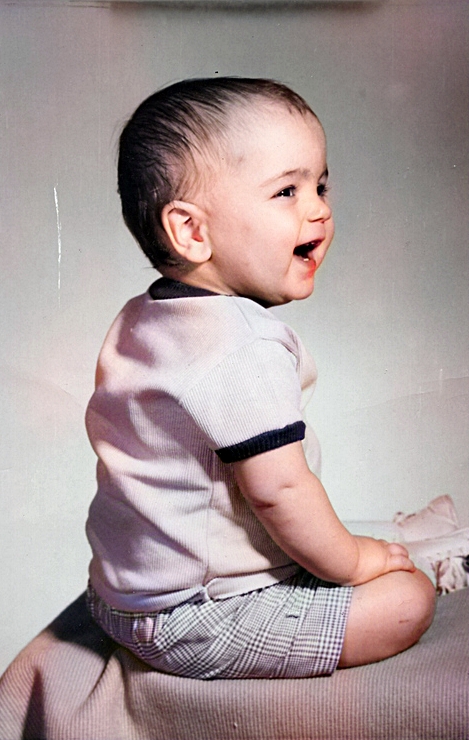
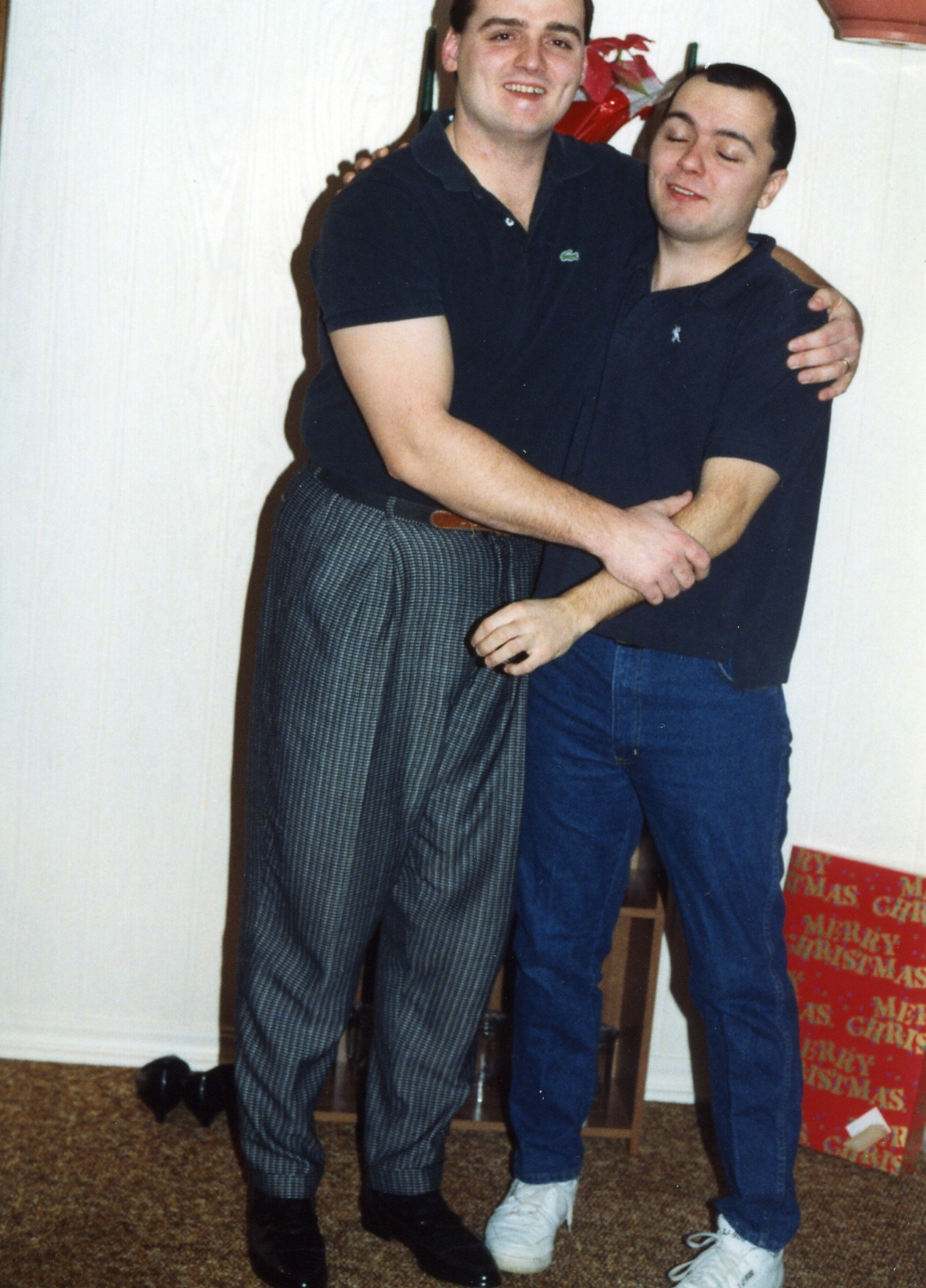
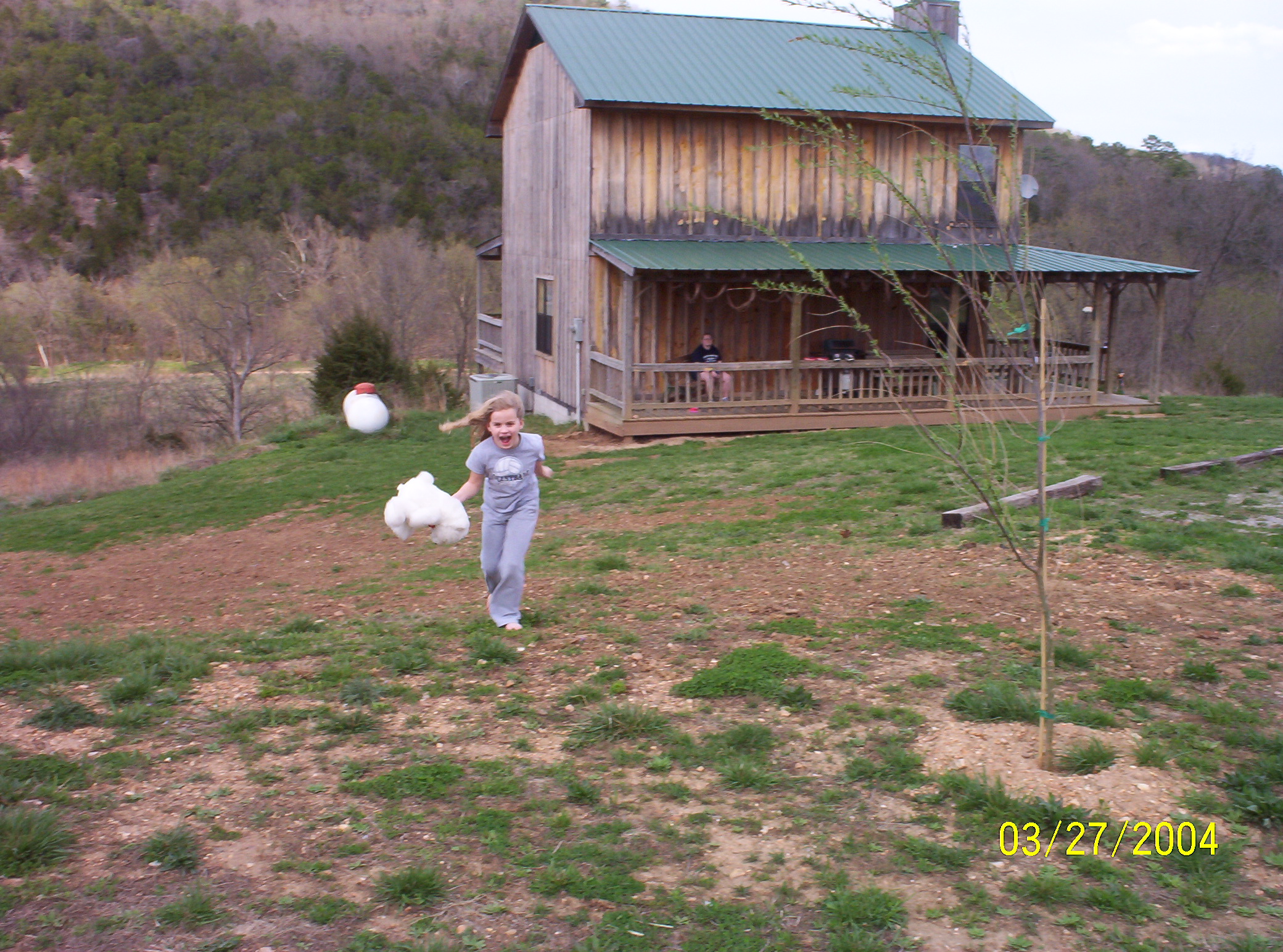
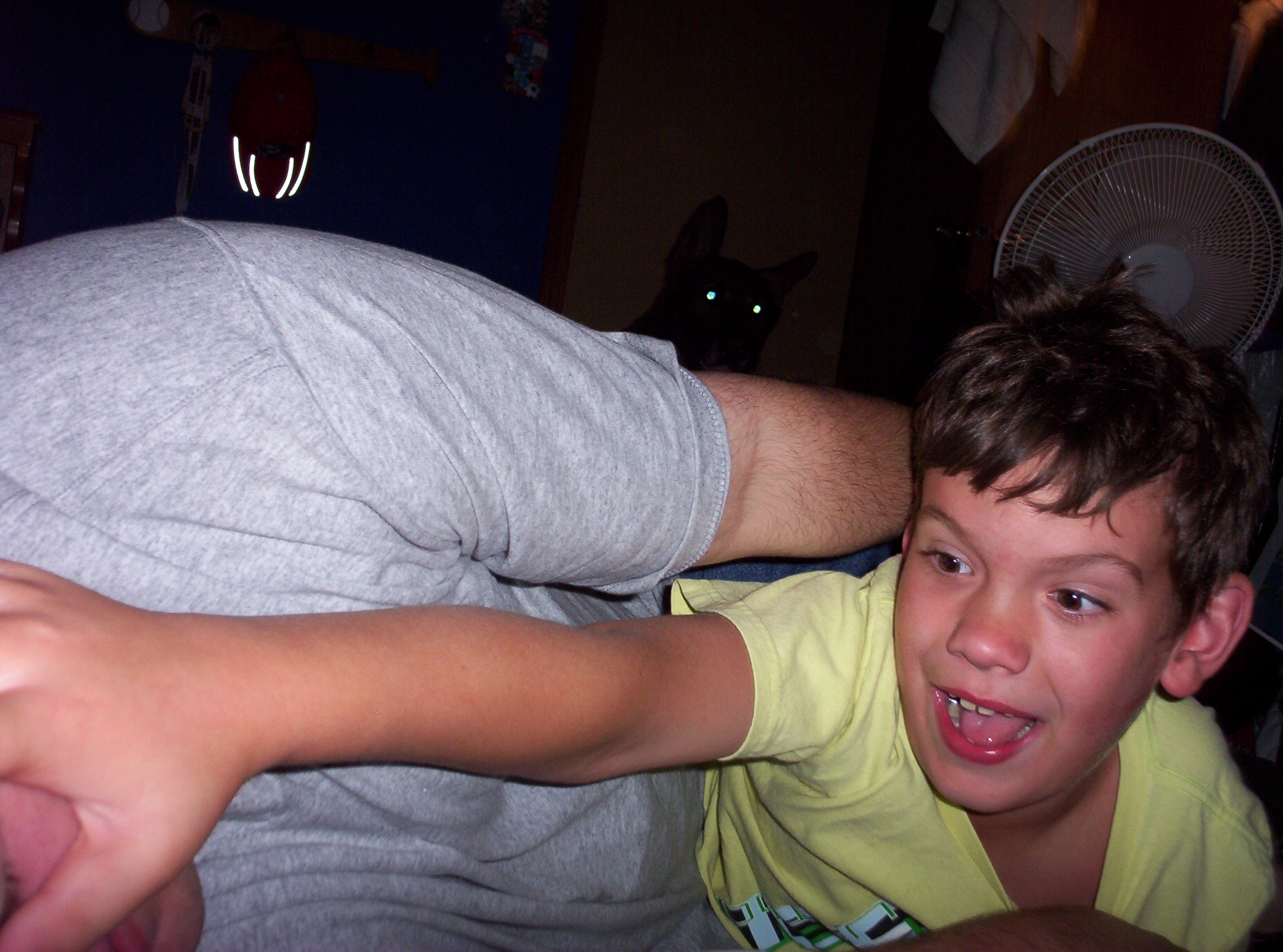
PSS I chose a different picture for this post instead of one of my brother. Both pictures are of joy and of family time. Even though there was a backdrop of unease during both visits, each of the pictures reveals both youth and connection. In one, my niece Brittany charges toward me as I stand by a pond outside a cabin on King’s River. I got deathly ill from food poisoning on that visit, and Mike’s police K-9 got violently snakebit while we were all swimming in the river. Behind Brittany, as she runs, my deceased wife watches happily. The other picture from another visit is of my nephew Quinlan kicking my ass as the three of us wrestle like savages. I’d forgotten that their dog was watching from the doorway. The third picture is of me and my brother. Mike had his wife bought me a plane to ticket to visit them in Illinois. I love the picture despite the goofy look on my face. It documents my brother’s vibrancy in the “before” part of his life. Mike bought me tickets for two such trips, and his doing so proved that he loved me and also missed me. It was before the branching of his life; the picture captures what could have been the case for the rest of his life had he made that choice. My niece is a mother now, and when I think about the fleeting speed of life, I get a glimpse of the idea that nothing stands alone in our lives and that each moment unfolds from the previous one. We don’t see its unfolding or interconnectedness until later.
Communication is key, or so they say. It’s comprehension that’s the objective. People’s minds often don’t speak the same language. If you can see a color that others can’t, it takes incredible simplicity to describe it. The Dunning-Kruger affect adds levels of complexity because the other person is unaware of what they don’t know – and overestimates their grasp of what they think they do. I walk around in the world and observe people not only oversimplify the complex, but double down by erroneously speaking as if they understand. It’s like walking around with glasses that add a yellow tinge to everything. They won’t be open to new information or to the idea that they might be wrong because the first step is to take the glasses off and objectively take a second look. Most of us are stuck because we are damn sure reluctant to realize the limits of our understanding. Our brains are organic filters that have their own self-imposed limits. I still caution people to start with the premise that they might be mistaken. Anyone spending any time around people in the world or on the internet knows the folly of assuming that people will willingly change what they believe to be true. Even against a mountain of evidence or their inability to express what they believe or why they believe it. It’s both fascinating and horrifying at times. It doesn’t matter if it’s politics, religion, humor, or even the best way to load the dishwasher.


 P.S. Parenthetically Speaking