I’m 57. One of the things I’m grateful for is that I am almost oblivious to self-image issues. Most of the people my age spend way too much time preoccupied with how they think they look. Some will say that my gender affords me a different perspective. I wish I could infect people with my attitude. You can fight the tide of aging as best you can. But if you are lucky, age will gift you with more years. In exchange, you’ll pay the price by seeing a different person in the mirror. Be who you are if you can. Since there is no such thing as a universal standard of beauty, regardless of how you get there, it still won’t satisfy everyone. Almost all fashion and appearance trends are geared toward the external, which is a strange way to focus and spend time and energy. Most say they do certain things to make themselves feel better about how they look. There’s nothing wrong with this approach unless you also disingenuously fail to acknowledge that the way you get there is by feeling like people think you look good. It’s the same problem with social media; the likes and approval feed our need for validation and interaction. There’s an element of control and curation about how we present ourselves. All of which is bizarre to me. People see us and hear us in real time each day, without filters. We are who we are in full display. Rather, we’re supposed to be. Beauty is where you find it. As is entertainment, joy, laughter, and grief.
The same circumstances and appearances cause some to blossom and others to flail. This is proof enough that the entire game is a personal perspective. You can ride the wave or swallow seawater.
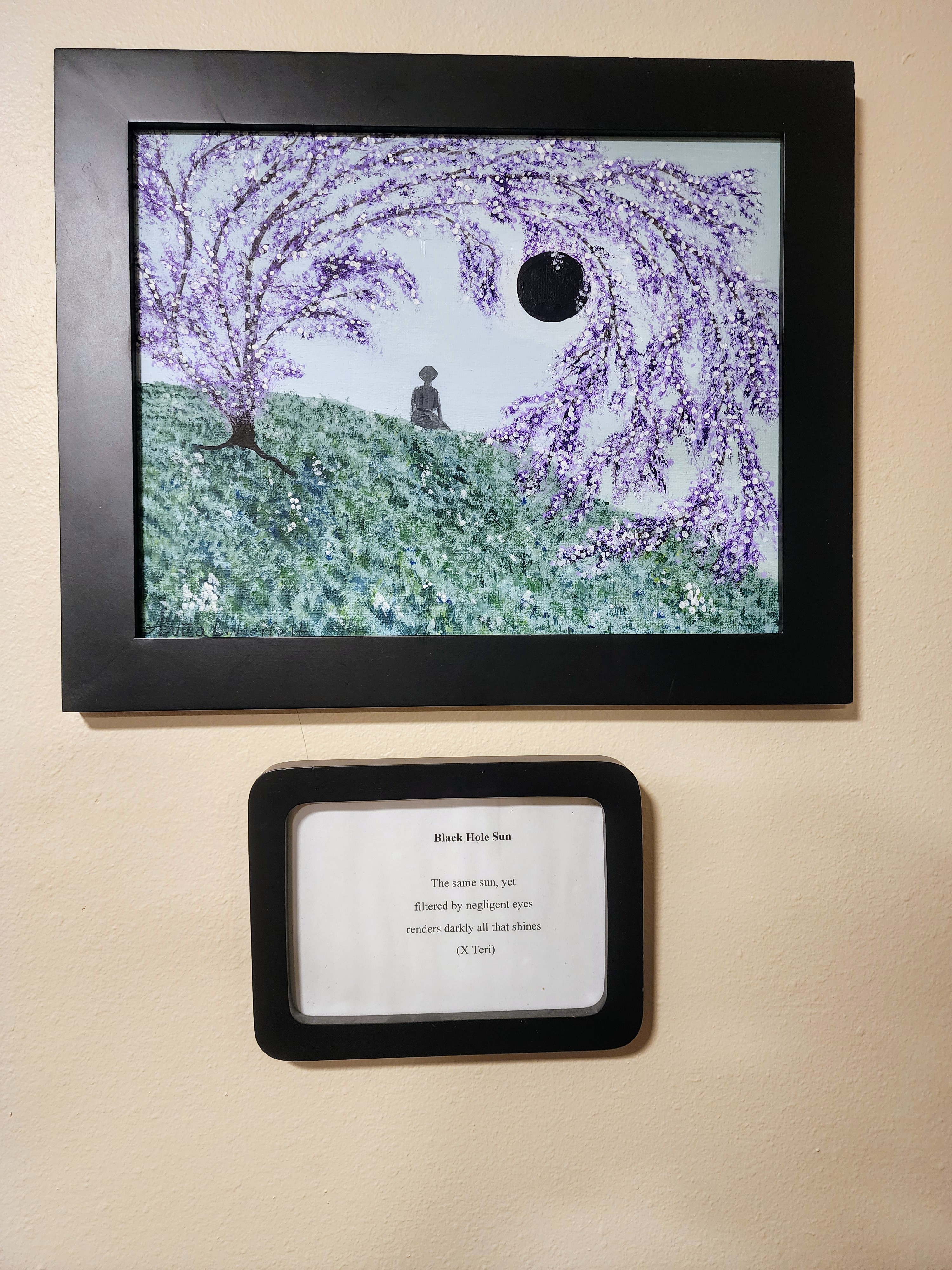
Though I’ve given away many of my sentimental things, I still have one of my friend’s first paintings. She rendered the woman on the beautiful hill and the sun as black.
Below the art is a framed caption I wrote: “Black Hole Sun: The same sun, yet filtered by negligent eyes renders darkly all that shines.”
We are not designed to be immortal or perfectly rendered. We are supposed to strive to do and be our best. We’d be a hell of a lot better off by focusing on our minds and brains, which avoid physical scrutiny and bring satisfaction in ways that function independently of our faltering bodies. What purpose does it serve to be an Adonis or Helena if entropy demands that it cannot be maintained? Everything falters with time.
It’s not depressing. It’s liberating because it requires you to get up, make coffee, and put on your boots. You nod at the wrinkles and instead focus on what makes you satisfied. You can’t get there if you’re fixated on what must fail.
The universe definitely has a perverted sense of humor. Perhaps It is providence that it wants to repeat a lesson or theme until it sinks in. Possibly it is coincidence.
The other morning, I wrote a post sharing myself and my thoughts. As happens, someone reacted very badly to it – and rightfully so from their perspective. But their reaction was based on a misunderstanding, one that punctuates what I was trying to say. I wish I could have given them a hug. It wouldn’t have solved anything, but silent human acknowledgment is often more than we need. She accused me of being self-righteous. It stung and triggered a defensive reaction. Which of course means that she’s right. We only react when something challenges us. I earned myself self-righteousness. It does not serve me well and of course I understand that it makes me unlikeable to some people.
I had so many alcoholics in my periphery that their stories overlapped. It’s because at the heart of it, it is the same story repeated in an endless loop, like trying to ride a unicycle while drinking hot tea.
All of us are out here in the world staying busy, earning a living, and avoiding facing the idea that in so many ways we are small children camouflaged as adults.
By coincidence, someone on my periphery was secretly struggling with the consequences of someone else’s choice to dive into the bottle. Her story overlaps with mine. Although she didn’t say it in that way, I could feel the ambivalent resentment and love reverberate. It’s a feeling I know all too well. It’s why I wrote the Bystander’s Prayer that sometimes comes back around to me on the internet.
There are people around you right now who need hugs and attention. But what they’re getting is the temporary allure of things that distract them. The distraction comes with a price, one paid incrementally and almost always ending the same way.
The things we choose to numb us end up isolating us. If not in person, definitely in our own heads.
Sunlight cures almost all of this. Setting aside secrecy. Embarrassment. Shame. Not changing is a choice. We’re supposed to be honest and open, starting with ourselves. The fact that we can’t be adroitly explains why we cannot be that way with other people.
No argument, appeal, or logic can pierce the veil of insistent ignorance. Learning can only occur if the person accepts new information as a new opportunity. Too many people consider their knowledge and opinions to be finished forever. Coupled with the inability to understand that they might be wrong, this tendency toward close-mindedness becomes toxic to both the person and the society around them. It also leads you to wrongly conclude that either Rush or Nicki Minaj sounds great at any volume.
“…but scientific ideas have been proven wrong…”
They are supposed to be. The premise of knowledge is expansion. New information isn’t met with denial. It’s embraced so that the base of understanding can be revised. Being wrong is built into the scientific method. We went from an Earth-centric bubble to one in which we are a minuscule component of a vast universe.
Among examples of this is that it wasn’t until the late 1980s that it was declared unethical to perform surgeries on babies without anesthesia. Another great example is that people thought Led Zeppelin made great music. The man who insisted that ulcers weren’t caused by stress was told he was an idiot – until he proved it by infecting himself. Germs didn’t exist for centuries.
We should strive to live our individual lives with the same mantra: new information leads to new ideas.
“Regarding human affairs, the expectation that you can heal someone’s inability to be open to new information is among the most foolish.” If you think that bombarding someone with information will change their mind, you’re forgetting that you’re talking to a closed door.
“I know what I know and no amount of proof otherwise will sway me.” This quote is from something I wrote four years ago and it perfectly sums up so much of the problem. We expend considerable money and effort to educate people. It’s useless unless all of us are willing to listen, absorb, and change our fundamental understanding of anything and everything.
Study after study has proven that we tend to believe something and then find ways to substantiate it, excluding other possibilities. It’s the problem with politics, religion, and interpersonal relationships.
Knowing you’re ignorant is the essence of humility. Just because I don’t know something doesn’t mean it’s unknowable. If you blind yourself to the likelihood of error, you’re going to be betting on dead horses.
Ignorance is easy to exploit. A questioning mind, though still ignorant, can’t be locked into permanence.
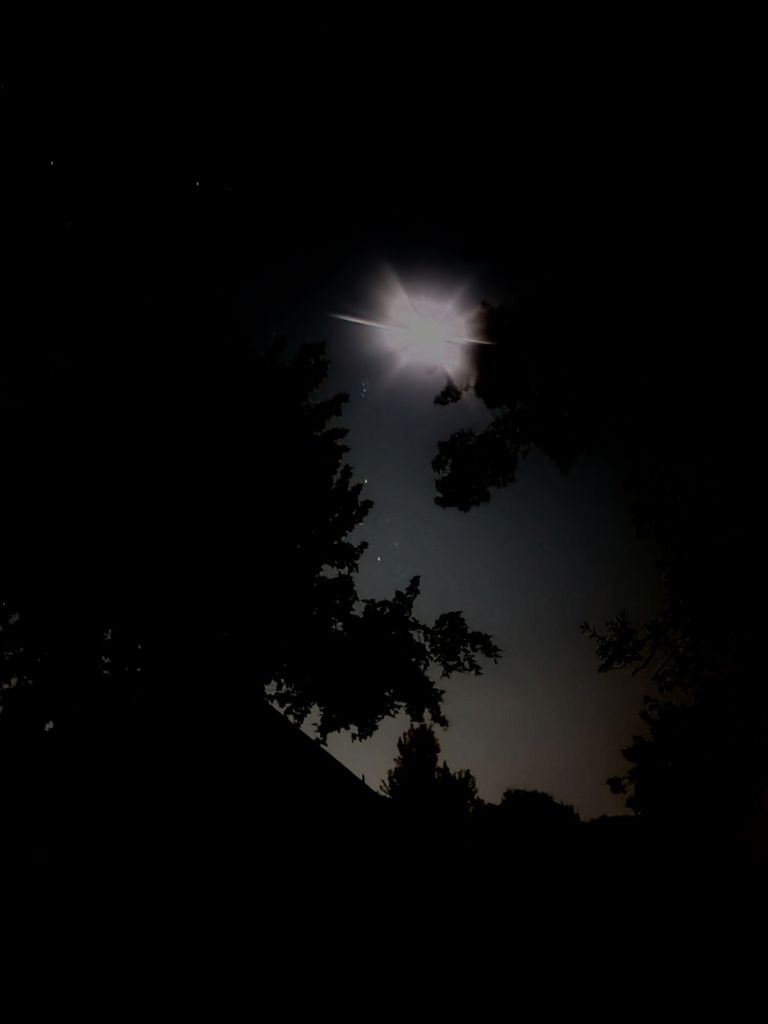
At 2:02 a.m., I watched a meteorite burn out across the sky to the north. I was sitting by the pool in the dark in a strange place watching the American flag wave across the street. Yesterday’s clouds were gone, leaving an open canopy view of the overhead nigjt sky. The cicadas were keeping me cacophonous company, their shrill ancient sounds providing a background syncopation to my thoughts. I made a wish upon a star. It went right to the heart of my reoccurring theme of abandoning secrecy and living a life of accountability and openness.
We can’t understand ourselves or other people if we continue to insist that we can control and curate the dissonance in our lives resulting from believing that secrecy is beneficial.
Some of my posts are interconnected without seeming to be. A few years ago, I went to one of the local ERs. My family member, who I will call Susan, had an accident. In the course of her treatment, it was discovered she had fallen at home and likely suffered an event triggered by a brain injury. Because I have a background both in medical and secrecy, I was glad to have shown up. Had I not, she would have been administered a medication that likely would have killed her quickly. Another family member had decided to keep Susan’s history of excessive drinking secret. I understand the tendency to not discuss it. Being me, I didn’t hesitate to pull medical staff aside and indicate that alcoholism was an undisclosed factor. The doctor, despite having experience with all manner of such non-disclosure, reacted with surprise and took measures to quickly change how Susan would be treated.
Much later that day, I visited the hospital and discovered that some of the information had not been passed on to the nursing staff. The nursing staff once again immediately changed the medications for the course of treatment for Susan.
I’m not telling the story so that I will somehow look better. People who know me well know the opposite is true. I’m not saying any of this to point the finger at anyone. Most of us do the best we can and hope that we are rationally making the best choices. Family honor, misguided loyalty, and the inability to tell ourselves or the people around us tough truth combine to rob us of a better life.
Part of my truth is that a portion of my identity is tied to the resentment I experience when I deal with people who want to live in secrecy. The stubbornness and resentment has caused me sometimes to stick my foot in icy water and challenge people. My early life is full of such stories. One of those stories resulted in me discovering a sister. Others pushed me into huge fights when I foolishly tilted at windmills and asked people to choose differently. Conversely, the same obstinacy cemented my own feet, resulting in my idiocy morphing words of concern for my choices into accusations. We tend to recognize it later as love or concern. But in the moment? Our defensiveness whispers to us that we are being unfairly attacked.
My life history is littered with people who ruin their lives with alcoholism, addiction, or anger. Every person in my family who drank too much finished their lives still suffering from the little voice in their head that insisted that they continue drinking. It’s one of the reasons I’m proud of my sister. It took her a long time to look back on the arc of her life and tell herself that enough was enough. Each of us usually only takes action when it’s the only other choice. We sometimes talk and nod toward one another, once again agreeing that it has nothing to do with intelligence. We make choices, or adopt maladaptive ways to feel better. And then our strategies turn traitor and entrap us.
All of the preceding words also disclose my volatile resentment regarding secrecy. People can’t develop long-term drinking issues without secrecy. They can’t blow up their marriages without secrecy being perverted into privacy. We can’t become helplessly overweight unless we don’t talk about the elephant in the room or the ostrich in the closet. Depression blossoms because the difference in what people experience inside their private worlds in their heads becomes disproportionately silent. Isolation in thought or action inevitably brings toxicity. Even to otherwise normal behavior that becomes an unhealthy obsession.
If we had to experience the accountability of people around us knowing us in our private moments, it would be difficult to continue the charade of secrecy. Instead of choosing authenticity, we spiral into a cocoon of self-fulfilling prophecy. Image truly becomes the identity we cling to. The people around us flail and overthink because they bear witness to the consequences of our choices. Further out into our personal periphery, the people in our orbit are unaware. Most of the time I think we have this backwards.
A little bit ago, I navigated the dark and put my feet into the pool. After a few minutes, another dimmer meteorite scorched its way into non-existense as it penetrated the atmosphere above me. I didn’t make another wish, even though initially I wished that I wouldn’t overthink. I’m sitting in the late night or early morning of the last day of July. I’ve outlived people who were better than me. Definitely smarter.
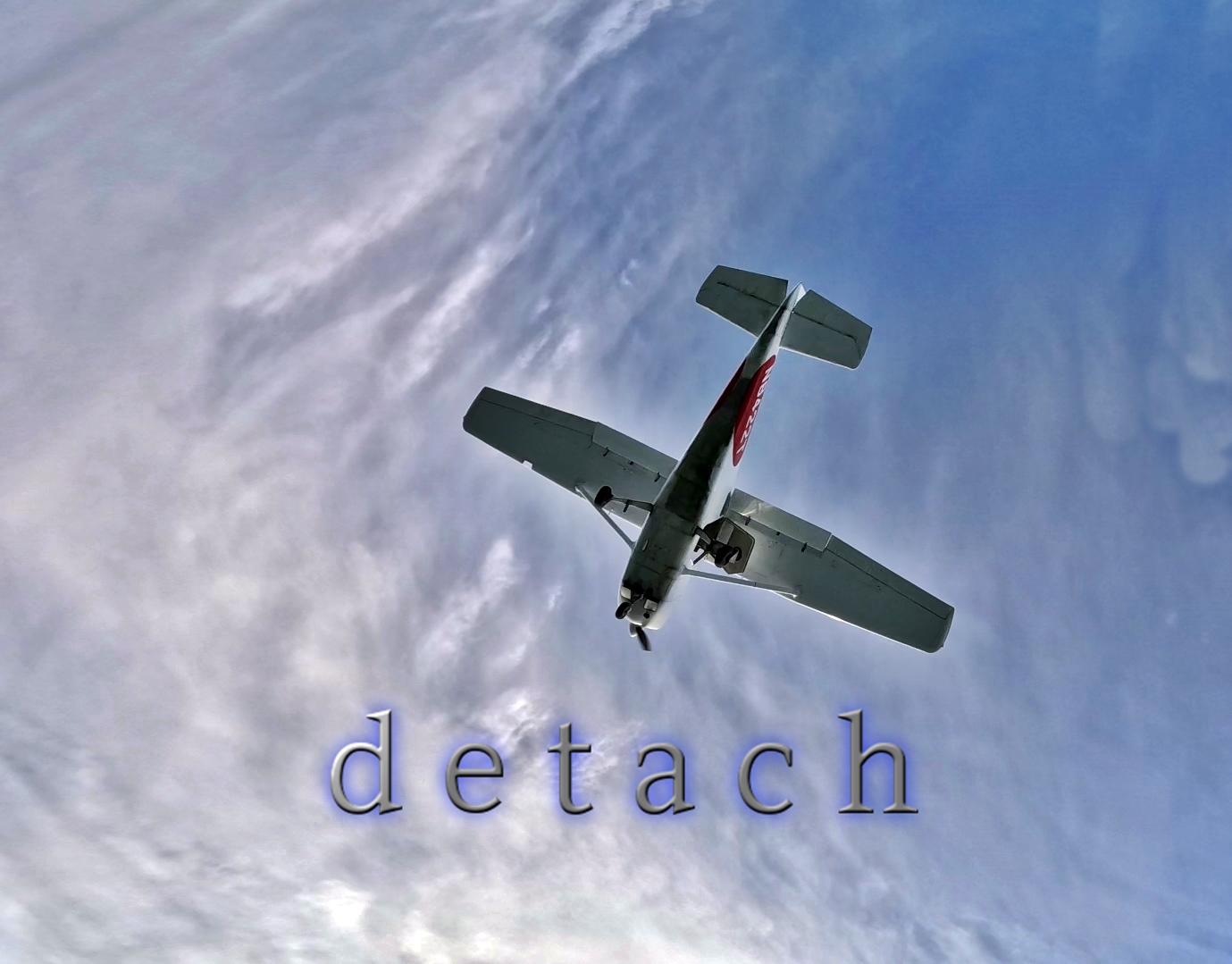
For a brief second, the lesson of detachment and gratitude reminded me that it’s to be experienced. And the only way to experience anything meaningfully is to unflinchingly know yourself and live in the reality that you’ve been given rather than the one you attempt to craft.
Secrecy can kiss my ass. It’s no irony that I’m sitting in the dark writing this.
I’m sitting outside in the dark at 3 a.m. There’s a beautiful breeze, the cicadas are buzzing, and I’m watching the surface of a small beautiful swimming pool. Above me is a crescent moon. Occasionally I can hear the flap of a small American flag across the street snapping in the breeze. Next to me is a delicious cup of bitter coffee. I’m in a conflicted state of Zen. One part of me is experiencing the beauty of the dark, absent other people. The other part of me is thinking and overthinking.
Over the weekend, a friend posted a list of guidelines for living a good life. Superficially, they are great rules. Something about them, though, bothered me.
“Honesty builds trust and integrity. It involves being truthful and consistent…”
“Never pose with alcohol. Maintaining a responsible image is important.”
There is a dissonance to some of these guidelines.
Image over authenticity is dishonesty. It sometimes provokes a wolf in sheep’s clothing and goes to the heart of secrecy.
Feeling obligated to dress well outside the confines of comfort and practicality is foolish. Clothing is artifice, concealment, and misdirection. It does not add respect or enhance either you or the job you do. Underneath those clothes, you are a human being, functioning like all the rest. Fashion is a wasteful misdirection of veneer over authenticity.
Using the example of alcohol, if you choose to drink responsibly, people see you drink and you’re setting a good example of how to do it. If you’re not drinking responsibly, concealing this takes away the accountability of your choices. It also leads people to misjudge whether you need help before it’s too late.
So many of our problems as individuals stem from our apparent need to control what people might think of us. Some are one person on social media and another in private. It’s why we have alcoholism, drug use, depression, and hidden toxicity.
The issue isn’t image or professionalism. Rather, it’s how we live our lives in each moment, openly and honestly. If you choose to drink, smoke, or even enjoy crocheting small turtles, the people around you should know. If you’re in a picture doing any of these things, the picture is a true reflection of your choices.
If you don’t go to church often, it shouldn’t be a secret. In the early centuries of the church, worship was almost exclusively conducted in small groups or at home. If you don’t believe some of the practices of your church or religion, reveal them so that people can understand you. Even if they don’t understand or agree, the truth is that every person I know picks and chooses which parts they find to be meaningful.
If you’re gay, transgender, or enjoy wearing clothing that other people say isn’t inappropriate, live your life anyway. It’s passing quickly and expecting to have the approval of everyone around you is a goose chase over hot coals. I’ve rarely met a person who doesn’t have some secrets.
Why are we afraid for people to see the real us?
Why does secrecy play such a large role in our lives?
The cicadas buzzing all around me don’t have an answer.
I remember my 5th birthday, a plain white cake with white frosting. My grandma made it for me, the one cake that embodied practical love. My cousin Michael Wayne sat excitedly at the table with me. Because I have to reconstruct the tangents of memories, I know he was only three years and two months old at the time.
My mom never made a cake for me, at least not that I can remember. If I had one on subsequent birthdays, it would have involved my Aunt Ardith. So much of my childhood came from her generosity. She spoiled my cousin Jimmy on his birthdays and those cakes were more than enough to satisfy my cravings for cake. I don’t look back with sepia memory about my birthdays, but I also don’t remember with animosity. Mom had her own issues to contend with. That almost all of them were the result of her choices is irrelevant. The realization of my own hypocrisy prevents me from judging her like I once did. Having said that, if I were to hear her say, “I am what I am” one more time, I’d use her hair spray to light her bee bonnet hairdo on fire. My brother Mike grew to turn his hatred for our mom’s mantra of “I am what I am” into a series of brilliant jokes, often rendered in the voice of Popeye.
When I think about my fifth birthday, I also love to frame it in the context of the fact that an entire secret life was already gestating inside a stranger’s body. My birthday is in March. As my cousin and I sat in a shotgun house’s kitchen devouring cake, my sister still had two months to wait before she’d come into the world.
It wasn’t until a few short years ago that she and I reconstructed why my dad broke his vow to never again leave Monroe County. After being in Indiana and prison, he returned to his stomping grounds, insistent that he’d die in his boots in the dirt of his birthplace. Despite his promise, it wasn’t long after that my family suddenly fled to Northwest Arkansas. It wasn’t until New Year’s Day in 2021 that I met my sister for the first time. We accidentally discovered that my dad fled Monroe County to escape his secrets. My sister was at the fulcrum. Dad died in 1993, 28 years before I’d met my sister.
I love that my obstinacy regarding genealogy and DNA gave me answers I KNEW were there – and that the same stubbornness on my part to accept the family’s malevolent veneer of family honor gave my sister answers. I ripped the truth out of their hands.
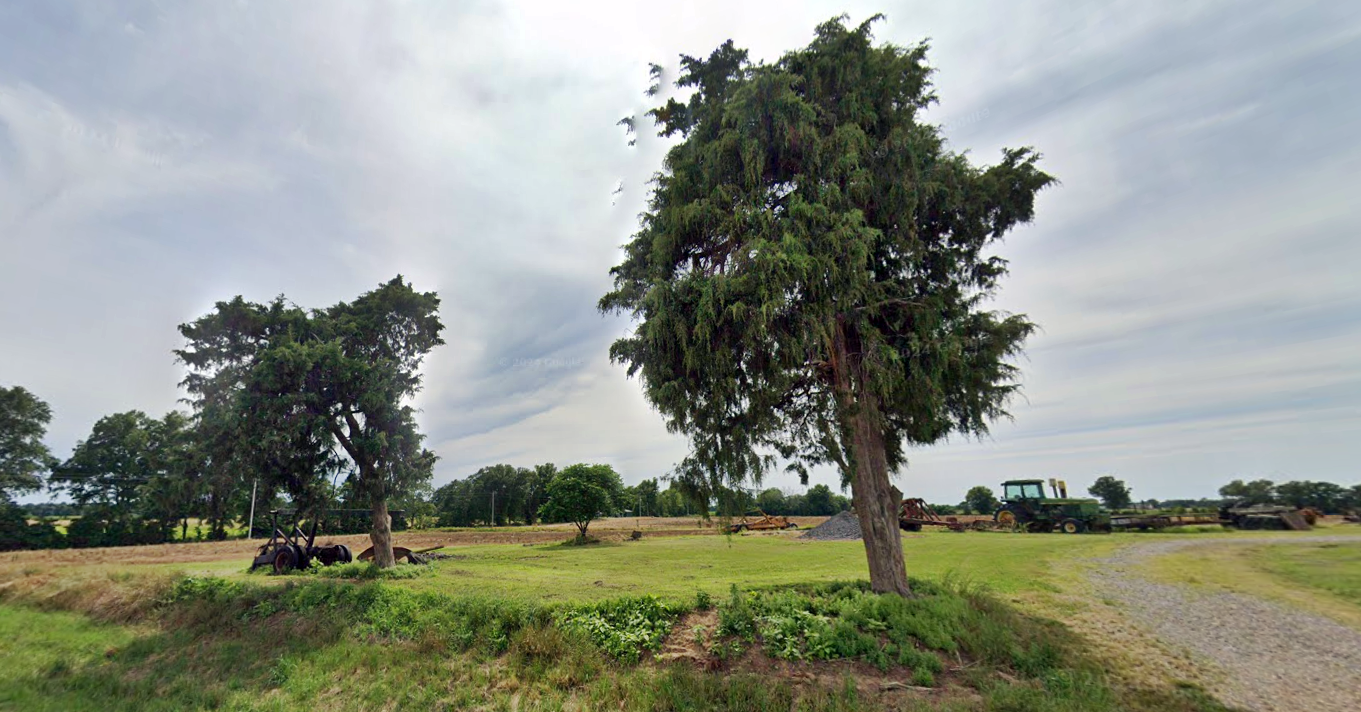
When I dream, I often think of zooming down from the sky, rapidly approaching the tin roof of the little house on the hill that bookmarks my childhood. I end up sitting on the porch. Because of technology, I can “see” the overlay of memory. Though it’s been five decades, the two trees in the front are still standing. This amazes me. The house is long gone, the driveway was expanded for a nearby house, and even the ditch banks gave way to gentle slopes. But under the picture is the template of tar paper, storm cellars, creosote railroad ties, mosquitoes, and screen doors that had better not be slammed. These things are the ghosts that are more real to me than what my eyes see on Google Maps.
Time moves ten times slower there. Even when I sit outside here, listening to the cicadas, I’m hearing them from my childhood, out in the fields. The roar of insects in the middle of expansive fields and heat is something that I wish everyone could experience. It’s the background static of the universe if you live in a place to grow things. The night is truly night in those places.
People wax nostalgic about those times, to return to simplicity. It wasn’t simpler. It’s just that we gloss and filter, remembering the terrible valleys and also the green fields and the people who sat with us when we witnessed them.
My other sister’s birthday is Monday. She will be 21,917 days old. That’s 60 years for those of us mundane enough to celebrate the wrong milestones. We don’t live in years. We wake up to the sunrise with the ability to start over. She started over a few short years ago. And because life is a series of lightning bolts, she recently started over again. When my sister talks, the Monroe County inside her oozes through her with a drawling Southern accent. I think she is wise enough now to see that the birthday isn’t the thing she should be happy about. Birthdays require no nod and come to us relentlessly if we are lucky. I hope she celebrates the 21.917 days instead. Monday will be just another day, one she’s waking up to. I ask her to dive into memory and recall what it felt like to sit in the back of a pickup for endless hours over mountains, seeing the house on the hill finally come into view. Knowing that Grandma would be inside.
For me, I’m going to sit and think about white cake and cicadas. And secrets that should have never been secrets. One of them was a person, an entire universe of life that was kept hidden.
This is a personal post. I avoided fancy vocabulary; it’s all over the place because I write with a shotgun. Expressing my feelings and opinions is what I do. I’m an imperfectionist, so I know I can’t explain everything sufficiently. I’m not happy with how I wrote all of these thoughts. I’m not happy with the slew of contradictions and hypocrisy I’m guilty of.
“Anything attributed to God as a consequence of intervention must also nod toward the responsibility of failing to correct everything else.” – X
Just as you must place commensurate value on both applause and dislike, so too must you place accountability and responsibility not only for singular acts that are favorable but also for those that bring pain and suffering. Choosing not to act is as culpable as acting negligently. If you create rainbows, you also accept ownership of deadly tornadoes ripping through churches – or of people being tortured, starved, or denied basic human necessities.
‘Unidentifiable’ and ‘unidentified’ are not synonymous. Neither are ‘unexplainable’ and ‘unexplained.’ If we survive the onslaught of existential threats, our ability to understand the universe will evolve. We didn’t develop intelligence (or be granted it) to sit in a dark corner of the universe. Truth always welcomes questioning. It is the essence of our advancement and the scientific method. It accepts being wrong by experimentation and adjustment. It is never a finished product. I look at religion and faith in the same way. Static belief holds no quarter for correction. Generally speaking, I observe people stagnating; they stop learning, listening to new music, or accepting that things they hold as true or high value might be wrong.
Whatever notion I have of a creator omits interventionism. We are participating in an escape room. We might have been given all the tools to get out, but we must use our intelligence and resources wisely and collectively. If I am correct about my personal opinions, we’re squandering the opportunity. In our society, we favor creators motivated by ‘do unto others’ and living lives that improve the situation for all of us. With a particular focus on those who need it. Although it might sting, it’s hard to make the argument that we are successfully following the doctrines we say we believe in. Even our economic system undeniably thrives on the perpetuation of interest and in its strictest sense, exploitation of advantage. Most of our religions disavow interest or the love of money, yet we proudly endorse a system that requires that singular pursuit as if it is the only way. Currently, we’re in another cycle wherein some are subverting both politics and religion to make decisions and interfere with our ability to live cooperatively yet independently. It won’t end well. Neither politics nor religion is the problem; the problem stems from the need to control other people.
People accuse me of being contradictory. They are correct. I see magic in things that a lot of people don’t. Equally true is that I see things we haven’t yet comprehended being attributed to miracles. Does the label for such magic matter? I love that people can see miracles. It’s optimism and whether it is rational or irrational, it’s the reality of all of us filtering the world.
History is filled with us committing atrocities toward one another. War. Slavery. Concentration camps. Were we to do those things as individuals, we would be vilified. Groupthink leads to us experiencing the Abilene Paradox in the worst way possible. We end up with a system in which no one is truly satisfied. Even though it stings to hear the bitter truth, abused religion tends to endorse this kind of craziness, as does perverted nationalism. Pride and love of faith and country do not absolve us of our need to constantly self-examine and adjust.
Since I’m already ruffling feathers, our constitution provided a means to modify our guidelines. While others hold our founders in esteem, mine is tempered drastically by the prevailing norms of their day. Their society was not founded on justice and freedom for all. Even our presidential election is perverted due to the necessity of bending to those shrieking that while a certain segment of our population was both owned and voteless, they should be counted as lesser among us. It is the very nature of recognizing defects and changing that merits praise. Our nation came from sedition and treason. That we prevailed is the reason we can attempt to form a more perfect republic absent corruption, special interests, or the subversion of the political and legal systems we enjoy. We don’t owe the people who wrote the constitution loyalty; they left us the roadmap to change course.
Religious nationalism, regardless of the religion or denomination, is immensely dangerous. It is the imperfect crucible that will only demonstrate its failure after splintering us further. Its rise is at the expense of our freedom to choose. When politics and religion intermingle, it inevitably results in increasing favoritism toward the alleged group consolidating power. And as happens with religions, the conflicting forces will fight for dominance. Those who have no religious beliefs or ones differing from the prevailing norm established by such an outcome will be restricted in their ability to choose. That is the opposite of the ideals of what we consider to be America.
In the same way that I don’t believe in ghosts, there are people who I love and respect who do. The same nod applies to their belief in miracles. It’s personal, based on perception. Who wouldn’t want to experience the joy of faith? I love that I know people whose faith is profound. I’m equally likely to grimace observing people using their religion of peace toward goals that are anything but.
I started this post with the quote because it’s one of my fundamental problems with relying on a creator to step in on our behalf. I’ve avoided using complex terminology or arguments for a reason. You can’t praise if you also don’t question why horrible acts done or allowed to happen don’t result in intervention. Using the ‘mysterious ways’ argument doesn’t address the shortcoming. Because I come from violence, I can only picture children with leukemia, being beaten or worse, often at the hands of people who claim to love them or who are supposed to protect them. Failing to intervene is the opposite of any behavior I want to emulate. I don’t need to understand the motivation to see that the consequences of failing to act result in monstrous behavior and conditions.
And yes, I am holding any potential creator to the standard of behavior I expect of myself and other people. It’s not my fault to be granted intelligence. I can’t imagine having the power and ability to protect children and not using it. If we are expected to use our intelligence and solve our problems, it would be zero effort for our creator to intervene.
I’m not picking on one particular denomination or religion. We are all too familiar with the oldest church not only knowing that children were being abused, but that they decided to use their massive wealth and power to protect the abusers. When I catch myself glossing over their actions, I think of a small powerless child, frightened. It personalizes the problem and reminds me viscerally of the horrific sin of those who participated and also those who acted to protect those who engaged in the behavior. Anyone aware of child predators being protected cannot be on my list of moral authorities. Even though I’m sharing my opinion, I’ll add that I could never embrace a religion or denomination that prohibits half the population from occupying positions of moral authority.
Growing up, God was silent. He didn’t whisper to me when I had a literal gun pointed at me or when fists were hitting me. He didn’t intervene against the people hurting me. And he didn’t motivate to action the heart of his pious believers who witnessed it yet didn’t step in. I listened and watched the people around me closely. Their piety and righteousness allowed them to blithely justify what was going on. I no longer judge my dad harshly. Or my mom. But the family members who valued family honor and preached their version of religion? I consider them to be more monstrous due to their inaction. My parents were possessed by addiction and the echo chamber of inescapable trauma themselves. They did not preach the lessons of universal love. They preached their beliefs and demons through behavior, just as the rest of us do. Unlike most people’s version of our creator, they did not possess unlimited knowledge. They didn’t know better. And if they did? They couldn’t do better. It’s hard to judge them when it’s obvious I’m guilty of the same stupidity.
You can’t convince anyone of a spiritual belief using logic. It can’t be done, although many attempt it. Condemning people who don’t share your beliefs sends the message of arrogance. Whether it’s your intention or not, it sends the wrong message about a religion based on love and lovingkindness. That’s the difficulty of having religious writings that are contradictory and cherry-picked to suit individuals or denominations. Were it the literal word of the creator, there would be no division or disagreement. It’s a clear sign that men have cemented their agendas into what we are left with. I don’t attack anyone’s religious texts, although I do restrain myself when they are misinterpreting theirs, choosing which parts matter, or demanding that others defer to them. All the people I admire who have deep faith share an understanding that they must not yield to the temptation to dictate to others. Morality easily exists outside the boundaries of religion. Beware quoting a religious text that contains rules regarding slavery. And beware of a constitution that once needed laws to protect the same evil.
“Factually speaking, everyone is an atheist. It’s just that they choose one particular god to believe in to exclude all others.” This sort of quote upsets believers. It shouldn’t. It’s a recognition of the fact that humanity believes in several creators. Your religion should be your guidepost and beacon. Anyone observing you should be able to see the teachings you believe in come to life. Even when you fail. Secularism is not a declaration of war against religion; it’s a requirement that we meet in the middle with mutual respect.
Or as Dave Barry commented, “People who want to share their religious views with you almost never want you to share yours with them.” That lack of reciprocity inadvertently demonstrates intolerance or an inability to endorse the idea that religion is personal and never mandated.
What ties this all together is that the certainty of things unproven often leads people to collectively force what works for them onto other people. Politics and law are designed to bridge the gap toward collective safety and good. There should be no deference toward a particular group, especially if it is in the majority.
Truth does not need a hammer. If you find yourself willing and able to impose on others, you’ve inadvertently admitted that living your truth by example is failing.
A religion of love does not resort to force.
When politics and religion collide, you are fanning the flames of divisiveness and exclusion. Politics exists to efficiently govern all of us while respecting our freedoms. In its purest form, it is devoid of favoritism toward specific groups. In its worst form, it becomes polluted by one group subverting the rule of governance by substituting zealotry. History demonstrates the consequences of doing so. All of us watch as individuals manipulate religion into a tool for personal gain.
Because people bring their own filters and straw men to these sorts of posts, I want to point out that I don’t dislike religion. I despise dogma and contradiction. And more than that? The certainty some people bring to the table allows them to impose their personal beliefs on others who don’t share it. The best among the faithful to me are the ones who walk the tightrope of faith and intelligence. They live their lives full of hope, peace, and optimism. They reflect the religion they espouse.
I don’t need to know what faith they possess. I can see and witness the consequences. The alignment of ideals results in the behavior you would expect from following the tenets of their particular faith.
If our creator is a creator of love, it follows that we can expect the universe and one another to behave per those ideals.
And because I don’t believe in a creator intervening in our affairs, the outcome of our sporting events is in no way affected by requests for intervention. The same is true for elections. The best prayer possible for me is an appeal to allow us to develop our intelligence. To expand our sense of collective empathy outwardly to everybody in the world. To desist from resorting to violence or dominance. We’re all stuck on this rock squabbling over resources and whether our respective ideologies are better than the rest. Anyone paying attention to history can see that this path has yielded unimaginable results. We do well when we cooperate – and poorly when we don’t. Go figure.
Regardless of how we feel about the words, in a way, it’s a good thing.
We don’t have enough authenticity in the world.
I grew up inundated with prejudice, alcoholism, and violence, but also love and respect. The traumatic parts become the focus because they’re our biggest challenges. It’s hard to admire the sunset when your face is bruised by someone who is supposed to protect you. You can’t love reading if you’re hungry or afraid.
It’s the same now. Our society is safer and smarter, and our arc is generally that of betterment.
You wouldn’t think so – and that’s because the outliers draw our attention. Despite statistics that clearly show that we’re safer and smarter, that’s not the consensus you get when you ask a large group of people whether life is better now than it was. The effect of people thinking in large groups is that we increasingly find it easier to lose sight of doing the right thing.
Tribalism and echo chambers dominate us. It isn’t worse now than it once was. It’s just that we have tools to make information instantaneous.
It should be obvious who among us is motivated by the things that represent what our ideals demand of us. It’s not a question of intelligence, no more than your argument about loading the dishwasher is really about something else. Smart people do dumb things so it is no surprise that when we band together, we behave even more stupidly.
To justify, we vilify. We do this even as we recognize that we’re mostly doing and saying the same things. Names and geography changes – but we largely do not.
“Why can’t we all get along?” The answer is simple. Because we are not logical creatures.
We’re supposed to love our neighbor, but easily justify all manner of destruction. We’re supposed to honor and cherish those we’re with, but all of us see friends and family choose infidelity. Humanity is supposed to drive us forward and yet most of us participate in a capitalist system that takes advantage of the disadvantaged and favors the rich. We choose leaders who openly lie, cheat, and work for special interests and themselves. We claim to collectively despise entertainment that denigrates; yet, statistics demonstrate that we are consuming such content behind closed doors and locked phones. We know that our friends, family, and coworkers are drinking excessively, using mind-altering substances, or choosing the wrong things on a large scale.
Regarding politics, people are nuts. Studies show that we draw our conclusions and then find the evidence to support it. It’s what we do in our personal lives, so it’s no shock that it follows us in our ideologies. The religions we choose often propel us into certainty and dogma. The good ones preach universal love and respect, yet too many of their followers splinter the message and focus on controlling others.
If you’re a good person, you live without harming others. You choose what helps others. You’re going to fail often.
Saying the quiet part aloud helps us. For better or worse, at least you’re letting the rest of us know what percolates in your secret heart and life, the one you don’t want to be exposed. I grew up with a couple of people who were, in my opinion, monstrous. Not because they acted, but because they kept their secrets locked inside a box of righteousness and self-certainty.
Words, words, and more words, a flood of them.
Meanwhile, your life is your sermon.
As for alleged leaders, I want people who have mostly lived their lives with efficiency and honor. If they haven’t managed to control their own lives in agreement with the ideals they quote, it is dissonance and folly to expect them to lead us anywhere other than the wrong place.
Whatever your ideology is, if you’re focused on control or the certainty that you’re right, you will be blinded to other options.
I’m old enough to have become fascinated by people and their lack of self-understanding. I see it in myself so I can say it without sounding like a hypocrite.
Anyone following technology news is probably aware that AT&T had a massive security breach, one that exposed millions of people to identity theft and fraud.
The latest admission is that those same millions of people could potentially have their call and text logs leaked online. AT&T, like most companies, uses another company to store all of its customer data.
While AT&T is claiming that the content of call logs and texts was not stolen, the truth is that they might be engaging in trickle-truth.
Because I know how people are, even if it were just call and text logs, this means that millions of people could potentially wake up one morning to see that everyone they’ve been texting or calling is online for anyone to see. That’s bad enough. But imagine if the content of these calls and texts were disclosed as well.
People who know me have heard me remind them to be cautious about what they store, much less send. If it is sent, it is always possible that it will be revealed. It doesn’t matter how much security you or a company uses to prevent data theft. If you have transmitted it, stored it online, or have it contained on your phone, it is, of course, potentially a risk to your privacy.
Digital information of any kind is a risk. People blithely use technology and forget that what’s transmitted might live forever. It’s exactly like DNA, to be exposed years after the fact.
The cleverest hackers obtain data without leaving footprints as they do so. You’d never know that someone has everything you’ve done sitting in a database somewhere.
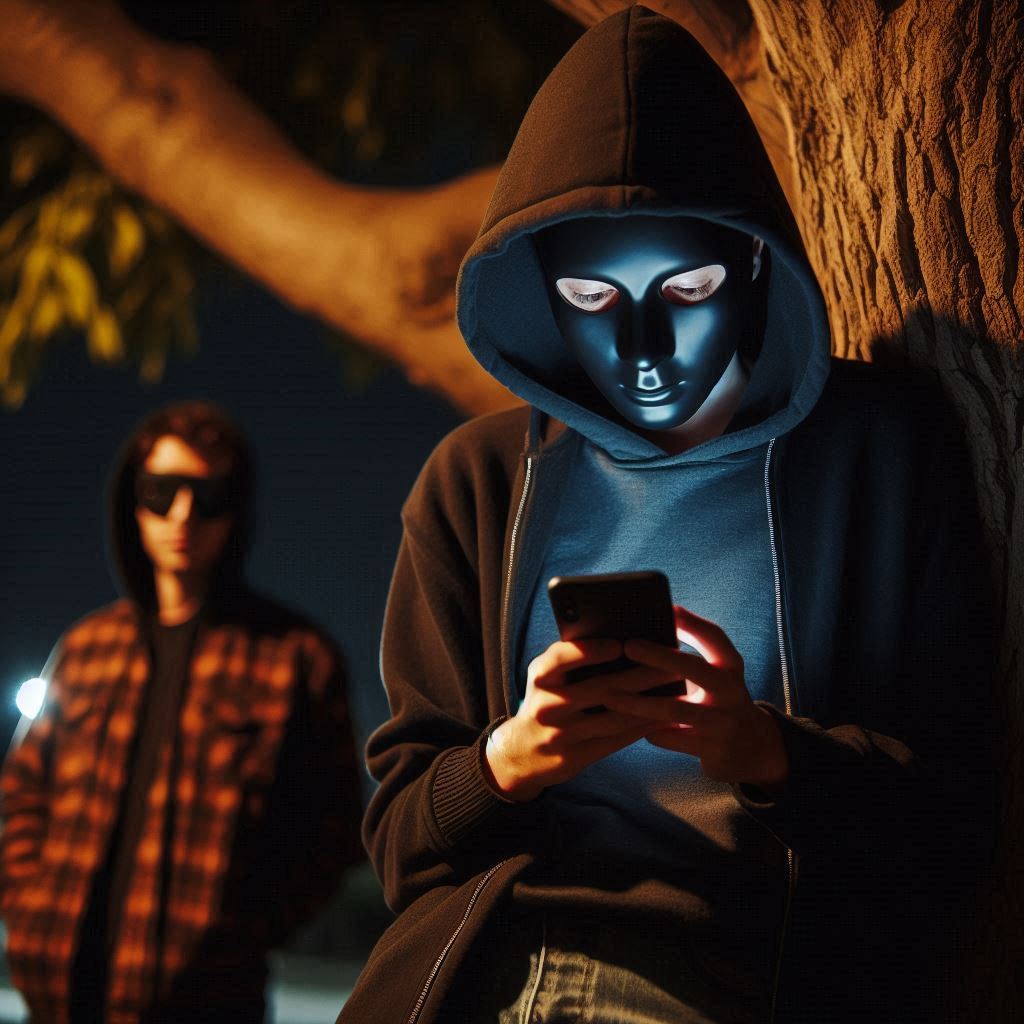
The AT&T mess is another reminder that privacy and secrecy are an illusion. Locks, passwords, and security measures are important. But they can never guarantee that every bit of your personal information might not be accessed, copied, or published.


 P.S. Parenthetically Speaking