Category Archives: Nostalgia

The Gift Of Memories

aaa uncle buck scanned (68)
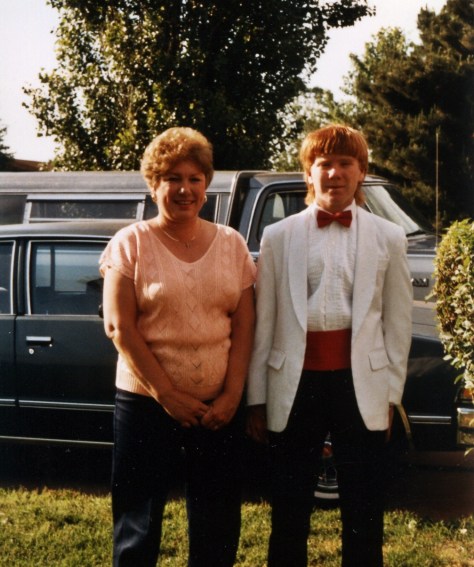
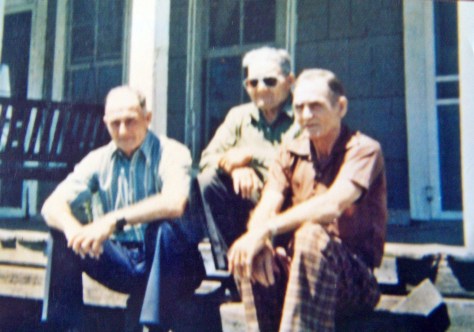
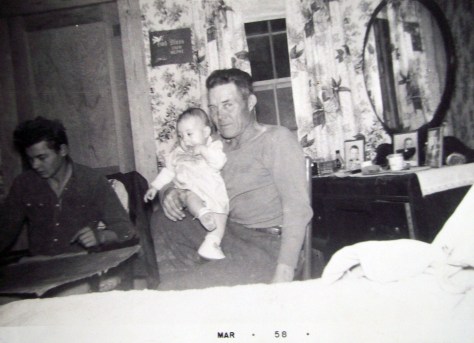
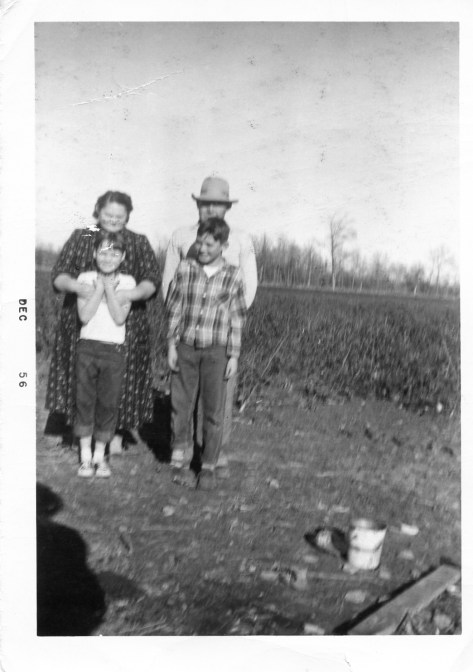
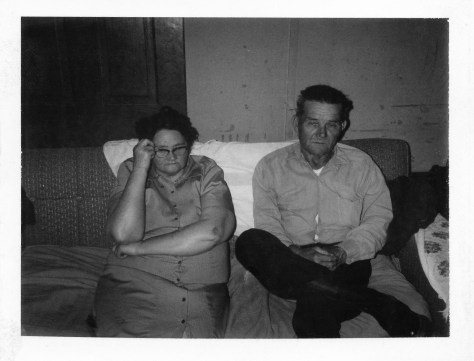
My Aunt Ardith and cousin Jimmy, standing in the front yard of their house on Ann Street.

Once again, I opened my email to discover a message telling me exactly what I needed to hear. A sister of one of my paternal aunts wrote me, telling me she’d noticed I added another 100+ pictures of her sister on Ancestry. These are archived in original resolution. My aunt’s sister told me she’d cried a bit, something she hadn’t expected. I wrote her back and told her I put every usable picture I owned of my aunt on there, in the hopes they might last forever, for anyone to see. I also told her I did the same for my uncle and my cousin Jimmy, both of whom now have hundreds of pictures on their respective pages. If you didn’t guess, putting so many pictures on accounts is a rarity.

It was a labor of love and honor. It’s the least I could do. These pictures are in my possession, but I don’t think I own them. They belong to us all – anyone who shared moments, laughter, or time with those in the pictures.

Yesterday, I wrote a post about high school pictures. I used a horrible picture of myself from many years ago. It was a bit satirical, but the message was one I’ve written about a few dozen times: vanity and hoarding regarding pictures is sinful. I’ve never owned a picture that I haven’t offered to everyone who might have an interest. I don’t get the urge to hoard pictures in a box, under a bed, or in a seldom-used closet.

More than one person got irritated at me for preaching the gospel of sharing. Some people righteously guard their past appearance, as if history isn’t going to kick that door open with time anyway. Others play the role of Gollum and greedily keep their pictures hidden in the crook of their unapproachable arms. The last tendency lessens everyone’s ability to remember and cherish people in our past who’ve passed on to the next life.

When my aunt’s sister reached out yesterday, she didn’t know that it was what I needed to hear. My actions months ago opened her heart again, even if for only for a while yesterday. In those moments, she could see that I had paid homage to her sister, to life, and to people we love.

All those pictures? Some of them have been downloaded dozens of times, each time by someone who discovered my treasure, one freely given. I am merely the guardian.

Love, X

It All Started at Taco Tico

Capture


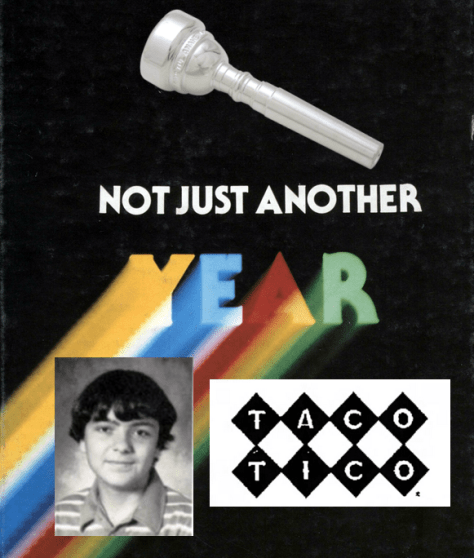
“It all started at Taco Tico,” is perhaps the best opening line for a personal story that’s ever been written.

When I was younger, I was a band geek. It probably saved my life – and not just in the sense it gave me relief from an otherwise certain depression and the ability to get away from my house.
On one occasion, it helped me avoid a beating.

Because my parents were negligent to a degree almost unequalled, I walked more than the average student. Until near the end of 9th grade, you would have undoubtedly failed to believe this, as I was fat, and not in the humorous Weird Al way.

After some event after school, my mom and aunt failed to materialize to pick me up. They were probably worshipping on Budweiser’s altar. I had two choices: invent Uber or start walking. On the way across the practice field, I found someone’s trumpet mouthpiece and put it in my pocket. For those souls denied exposure to band, such a mouthpiece is made of solid metal and a few inches long. I put it in my pocket so I could try to return it to the owner the next day. Unlike me, trumpeters had to pay for their own mouthpieces and instruments.

I walked up to highway 68 (now 412) and westward. By some miracle, I had two dollars in my pocket. I  went to Taco Tico, a restaurant that once was legendary among some of us in the community. The building is across from Susan’s restaurant. Everyone in Northwest Arkansas has stories about events and food at Taco Tico. I could get 4 rice tacos for a dollar. I sat and ate the tacos. This sort of thing was a luxury for me. I left to walk the rest of the way to my cousin’s house on Ann Street.

As I crossed in front of Taco Tico, something whizzed past my head and hit the pavement with a thud. I turned to see some sports car (they were all the same to me) go past, with an arm and upraised middle finger for my inspection. By the time I was crossing Carley Road across from K-Mart and in the area where Walgreens now stands, I heard someone revving an engine loudly. The corner was a gas station for years, a cracker crust pizza place, and a gaming business that seemed to be in trouble constantly.

The same reddish-colored sports car that had greeted me earlier was in the parking lot. Two idiots sat in the front with the windows down, both shouting clever insults at me. Both of them were upperclassmen. I didn’t know their names, but both were football players for Springdale.

It was obvious they weren’t on their way to a Mensa meeting. They looked like a happy couple.
I walked as close to the edge of the lot as I could. The driver gunned his engine and rolled ahead of me to block me. As I started to walk around, the driver jumped out and called me a f*g. If I were in that place and time again, I would undoubtedly tell him it was more likely he and his passenger were, given they drove around randomly at all hours, and that they looked like a happy couple. When I didn’t answer him, he took a couple of steps and punched me in the stomach and then shoved me as hard as he could. I fell backward and to the ground. I had learned through my Dad’s violence that sometimes faking a more severe reaction might save me a punch or twenty. The driver spit in my direction and headed back to his car. Not that it was important at the time, but I wondered why so many males thought that spitting added any machismo to their personality.
I started to grab a rock but instead remembered the mouthpiece in my pocket. I took it out and threw it as hard as I could manage. My terrible aim somehow disappeared in that split second as the mouthpiece left my hand and arced with incredible speed toward the car. It thunked against the small rear passenger window. The glass immediately splintered. Admittedly, I threw the mouthpiece with the intent of hitting the bully driver directly in the face.

The driver froze, and his mouth fell open. “What the…,” he started to say. Without thinking and without hesitation, I ran directly toward him. It surprised him, and as he reached out to grab me, I ducked sideways and darted around the front of the car and kept running. The driver ran after me instead of jumping into the car. I could hear the passenger yelling. Within a few seconds, I was outpacing the football player by a huge distance. I turned, running backward, and told him he should run his legs more and his mouth less.  I knew the area well and ran directly to the barbed wire fence and hurled myself over it.. I turned to see that the driver had abandoned his pursuit. He had to run back to the car before he could pursue me. I ran through the field, angling away from Carley road. It took me quite a while to run back to my aunt’s house, as I couldn’t be sure that the two idiots weren’t going to follow the roads and find me.

Despite me fearing for my life the next day at school, I had no options. Bullies were a big part of school life for students. It was pointless to tell anyone. Football players were mostly untouchable. I’d made the mistake a couple of times in junior high and then during high school of trying to “tell on” football players for some fairly dangerous behavior. It didn’t go well for me. It is part of the reason I don’t hold any of the coaches in high esteem, even those with huge scoreboards or statues with their names emblazoned on them. I don’t care that everyone seems to have other, higher opinions about the people we shared in common.
At the end of the year, the driver of the car pretended to lunge at me in the hallway. Although I flinched, I immediately and regrettably said, “I’m not your type,” as I dodged away. He wasn’t amused. The other droolers with him looked at him in almost shock. I walked away,  certain I was going to be tackled in the hallway.

Open The Door, Richard!

open the door richard


“Open the door, Richard!”

It was the last thing his wife Sara said to him, as she lay on the edge of the bed, the light in her brown eyes fading. Her open copy of “The Last Picture Show” was flat on the quilt next to her. The two paramedics who had just arrived looked at Sara in helplessness, unsure what her last words meant. Pete waved his hand toward the paramedics to indicate that she didn’t want any extraordinary measures to prolong her life. Sara had mentioned more than once that she wanted to live a full life until she could no longer do so independently. Pete and Sara had shared a long life together. Despite his promise not to call 9-1-1 if the time came, he had reflexively panicked for a moment when Sara’s headache painfully blossomed and half of her body went numb.

“Who is Richard, sir?” One paramedic asked Pete as he leaned over to place a hand on Sara’s neck, already certain that she was gone. Behind him, the clock indicated 11:59, a minute short of the new day.

No one would understand that this was their private and intimate joke, representing a short-hand to entire conversations and connected moments. “Open the door, Richard,” Pete whispered.

As he looked down at Sara’s silver hair, Pete suffered a stroke of his own as his thoughts retreated in time. As his mouth contorted, and he became slack, the paramedic motioned for his partner to help him with Pete. It was going to be a long night. They took their time, instinctively giving Pete’s body time to take him elsewhere. Pete never made it back to the home he shared for so long with Sara, nor was he awake or aware of his beloved Sara’s funeral. Since they’d made arrangements years ago, Sara was laid to rest in the cemetery of the church where her father had once preached.

Soon after, Pete began a quiet life in Shady Glen Nursing Home. He moved in the day the facility opened. His picture was on the front page of the local newspaper. He didn’t speak a word after the stroke. He would learn to smile again, and the vast repertoire of facial expressions he demonstrated was evidence that emotionally he was intact. As happens with so many nursing homes, after the grand opening, the staff slowly turned over, moving on to other jobs or to other homes with better pay and benefits. By the time he was eighty-five, none of the staff employed there remembered Pete’s original story, other than he was unable to talk.

Often, he would prop himself up in bed and shuffle through the pages of his journals. Sometimes, staff would find him in his room listening to his shortwave radio in a variety of languages. His ability to freely move returned and he began to bathe himself, eat infrequent meals, and dress. He hadn’t spoken a word in his 15 years at Shady Glen. Residents and family became accustomed to Pete’s presence on the periphery of things. He seemed to drink in every word uttered nearby.

Sometimes, he would sit by the outside door and scribble in his journal, hour after hour, a relentless torrent of nonsensical scrawling. Near his tv stand, you could see his stack of journals, each filled with his handwriting. Several nosy housekeepers, nurses, and CNAs had opened them, trying to make sense of the thousands of pages of writing. They shook their heads in sadness, wondering about Pete and how badly his stroke had hurt him. A rotating cast of staff would occasionally bring him a new journal for him to later fill with his mindless scrawling. It never occurred to a single soul that perhaps Pete’s scribbled writing was something other than gibberish.

People would speak to Pete, often at length. He would sit patiently, head turned to face them. Because he was otherwise in good enough health, the doctors who would visit less and less frequently advised the staff to not pressure him toward a response. Through the years, some of the residents visited him and shared the stories of their lives with him. Often, it appeared as if he were taking notes as they spoke to him.

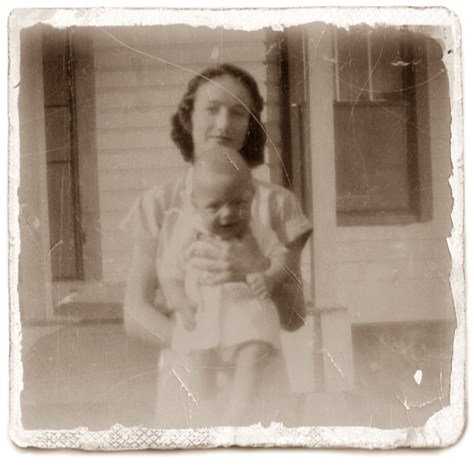
Other than his journals, he had one possession remaining: a picture of a lovely young woman with a sly smile, holding a smiling baby. Everyone who saw the picture stopped to admire her in permanent repose there.

Each day, Pete would take his red pen and make a large “X” across the previous day’s block on the calendar. Each “X” represented another defeated day behind him. His battle was to return to Sara when it was finally his time. The days flew past like startled birds.

A few Saturdays after his 85th birthday, Pete was still in bed after an early supper of beans and cornbread, staring at the sunlight cascading across the ceiling as it marched its way toward the evening. In the distance, he could hear a loud voice almost singing. “Hey, young fellow! Good evening!” The voice seemed to be on the prowl, its greeting changing slightly based on the sex of the listener or apparent temperament. It continued its approach and then went silent.

Knock, knock. A fist bumped against Pete’s door. Silence.

“Open the door, Richard!” the voice boomed.

Stunned, Pete lay there in silence, holding his breath, trying to imagine how a stranger was using his wife’s secret words, so many years after her passing. He hadn’t heard it spoken since the night his Sara passed away, except in a few vintage radio shows. Both the phrase and style of music had all but vanished from the American consciousness. Pete marvelled at the constant ebb and flow of music, language, and culture in the United States.

As if the stranger read his mind, he said, “Don’t make me bring Count Basie in there, sir. Time to get acquainted with your new social director! I’ve been here a month and I’m not taking another ‘No’ for an answer today.” The man’s voice boomed. Pete remained motionless and quiet, hoping this strategy would send the visitor on his way in the same way it had during previous visits. Pete learned many strategies in his long tenure at Shady Glen.

Without waiting for Pete to answer, the stranger opened the door and said, “Hi there. I’m Crosby. We’re going to meet in the main area in 30 minutes, so drag it out of that cocoon you’re in and get down there. I know you can’t talk, so see ya.” He turned and departed. Pete barely had time to notice the young man’s outlandish mustache or the bright blue suit he was wearing.

Pete stayed in bed, aggravated that Crosby would barge in, but also intrigued how such a young man might be familiar with Count Basie. His wife’s memory and their shared catchphrase compelled him to investigate reluctantly. Pete had never taken part in any of the contrived social activities at the nursing home, although he had been an involuntary spectator for many of them. Given the acoustics of the building, he had no choice but to listen to much of their gatherings, too, regardless of where he found himself inside its confines. The previous social director was very old and evidently thought that lifeless bingo and watching the television in the common area was enough socializing. Occasionally, one or two mediocre musicians would visit them. Pete could discern whether the visiting musicians were enthusiastic about their visits; their music conveyed a sense of delight and energy.

Forty-five minutes later, there was a sizable turnout in the common area. As Pete shuffled into the room, he could see Crosby standing near a record player, a reproduction of one of the older models of his youth. Crosby still wore a blue suit and had an unlit cigar in the corner of his mouth. He looked ridiculous, and Pete knew without a doubt that he liked him.

“As many of you know,” Crosby began, “I’m the social director. My mom named me Crosby, after the infamous Bing Crosby, because she was a standards singer when she was younger. She didn’t like Bing, so she decided to give me his surname as a first name. We’re going to start by listening to a song that is often overlooked. This record was one of my mom’s, so let’s get started.” He motioned for everyone to sit or find a comfortable spot. Many were in wheelchairs. Crosby didn’t wait for everyone to be quiet, as he knew from experience it was almost impossible to convince a group of seniors to stop talking completely. Some talked to one another, and some talked to themselves, regardless of setting.

Pete, being near the wide entrance, carefully plopped onto an oversized ottoman. There were six of them along the nearest wall, designed to both seat and catch someone with uncertain stability.

The needle hovering over the record descended and after a hiss, voices began speaking. Within seconds, Pete lost the ability to remember that sixty years had passed since he and Sara had stood in the nightclub, laughing and shouting “Open the door, Richard!” at one another until they had forgotten what was funny to begin with.

2005 faded as 1940-something coalesced in Pete’s imagination.

Sara stood in front of him, close to the gaudy jukebox, the dress her mom made for her shining a bright yellow despite the smoke-infused light in the nightclub.

Just 7 hours earlier, they were married, with Sara’s father Reverend Thomas Burns officiating the ceremony. They had chosen a place near the river by Sara’s childhood home to have the wedding, even though the Reverend’s church was only a quarter-mile from his house. About 15 family and friends attended. Sara insisted on wearing a yellow dress instead of a traditional white one and after some bashful objection, her mother joyfully made it for her. She told Pete that he had to wear black slacks, a white shirt, and a blue tie.

After the wedding ceremony, Pete changed into slacks and white long-sleeved shirt so that Reverend Burns could baptize Pete in the river. Much to Pete’s surprise, both Sara and her mother Lucy had a plan to run and jump into the river after the baptism was finished. Even Reverend Burns had no idea what they were up to until he heard them whoop and jump into the river. As they came out laughing, Mrs. Burns shouted, “You’re never too old for a refresher baptism!”

Reverend Burns tried to act irritated, but even he burst out laughing at the spectacle. “It’s a good thing that you’re an only child, Sara,” he shouted. “Otherwise, it would be the death of me.”

After the wedding and baptism, everyone came to the Reverend’s house to enjoy a communal meal. Pete asked Thelma Pinkins to make enough Lady Baltimore Cake for everyone. Her sisters, all seven of them, cooked enough fried chicken to fill three bathtubs. A friend of the Reverend, someone you’d never find inside his church, managed to provide a sizable assortment of wine, beer, and moonshine. Others brought soda and sweet tea, of course. There was enough food to satisfy a hundred people. It was a celebration unlike any Pete had witnessed in his life. John Hoskins, along with his brothers and cousins, brought their guitars and fiddles and provided the music. Rumors said they’d memorized thousands of songs just by hearing them on the radio. Anyone foolish enough to skip the celebration would undoubtedly hear both the music and the frivolity through their screen windows, anyway. At Reverend Burn’s church, everyone was welcome to be married there and for a meal to be provided. Members of other congregations often chose his church to celebrate. Because of Reverend Burn’s reputation, other pastors seldom became upset about it. Those with jealousy in their hearts knew to keep their criticisms private.

Sara’s parents, though religious, loved to socialize, dance, and share a good drink. They were well known in their small community for having open invitations for people to come to share their supper or sit outside as the fireflies approached. Often, they’d sing songs and share a drink as the night deepened. All were welcome. Reverend Burns was ahead of his time and didn’t overly concern himself with appearances. He worked the fields when needed, helped chop wood, and built furniture for those needing it. He constantly reminded everyone that the world was a short place to stay and to get one’s fill while the good Lord provided. Pete could think of no better way to express his views on life now that he was once again with Sara. “Live now, then live forever,” he’d say as if it were a prayer, exactly like his father-in-law had done. “Praying is done best with dirty hands,” the Reverent often reminded people. “Just like washing your hands removes the dirty, prayer and reflection help us get past the wrongs we’ve done.”

Sara’s parents died in a fire five years later. Over a thousand people came by the Reverend’s church to pay their respects. John Hoskins sang several hymns for the funeral and finished with the Peerless Quartet’s “Let Me Call You Sweetheart,” a song both the pastor and his wife loved.

After the Reverend’s death, Pete sold his managing interest in the lumber company his dad started and operated with a paternal cousin. He became a public school teacher, just as Sara had. Both he and Sara spent their lives in the small school district. No one knew that Pete’s share of the business had become worth a small fortune.

As Pete stood near the wall, laughing almost uncontrollably to the musings of Count Basie being played at the nightclub, he couldn’t imagine how life had brought him back to Sara. War and the wide world had conspired to separate them for a time. He’d survived being shot 4 times and as he bled, he thought only of coming home to Sara. Even among his German captors, he shared stories of his girl back home. Unlike most of his contemporaries, he bore no hatred toward the soldiers themselves; each of them found himself trapped by decisions made by strangers with titles or rank. Pete was discharged forty pounds lighter than when he had enlisted. Unlike many others, however, he spent his time in captivity listening to everyone’s stories, even those the Germans sometimes shared. He learned German, Italian, and a great deal of Spanish while they held him captive.

He knew that several men in the nightclub were stealing glances at Sara, attempting to gauge her beauty and measure her smile, weighing their chances of a dance with her. When she laughed, everyone seemed to forget that life was filled with troubles.

Each time Count Basie or those around them would say, “Open the door, Richard!” Sara would throw her head back and laugh like humor had just been invented for her. The phrase was a fad, one which was everywhere until it disappeared like an early morning mist. For that night, though, it was hers.

For the moment, both Sara and Lucy accepted offers of a dance from eager strangers. They swished and twirled on the dance floor as Pete and his father-in-law watched in wonder as the women in their lives demonstrated their graceful and carefree approach to dancing. As another record dropped to play, both Pete and Reverend Thomas approached their respective wives to claim the next dance.

Sara and Pete spent their honeymoon night under the stars, in a field near the Reverend’s church. After that night, the first of their long marriage, both of them used the phrase “Open the door, Richard!” to signal “hello,” or “goodbye,” or even “I love you,” and all manner of meaning residing between them. Family and friends grew accustomed to hearing the phrase as the years passed. As time took its toll and friends and family departed, almost no one remembered the origin of their catchphrase, much less what had inspired it.

Like all great stories, it was born in intimacy and laughter.

Pete felt himself being shaken. It shattered his connection to the recollections of the past. His head felt both light and foggy at the same time.

“Are you okay, Pete? Pete! Can you hear me? Nod if you can!” He felt hands near his shoulders, shaking him.

He opened his eyes and he could see the faces of a few fellow residents hovering over him, and behind them, the ceiling. It occurred to him that he was on the floor.

Crosby’s face came into focus above him, the absurd cigar now dangling toward him. Crosby seemed concerned. He probably thought Pete had a stroke or had shattered a hip in the fall.

From within Pete’s own throat, an alien sound burst out. For a moment, Pete didn’t understand what had happened.

“Crosby, are you going to help me up, or not?” Pete’s voice sounded perfectly normal, as if he hadn’t been mute for more than a decade.

The cigar fell out of Crosby’s mouth and struck Pete across the forehead. A few of the residents gasped in shock at hearing Pete’s voice. Many were convinced his brain had been scrambled years ago.

After a few moments of conducting an inventory of Pete’s general well-being, Crosby helped him sit up and then shakily stand.

“Let’s go outside,” he told Pete, as he led him outside and away from prying eyes and ears.

A few minutes later, Pete sat outside below the driveway canopy. The sun was finally receding below the distant treeline across the road. Crosby sat next to him, still with a concerned look on his face. His blue suit seemed other-worldly in the remaining sunlight.

“Pete, are you really okay? You were smiling and just fainted dead away.” Crosby patted him on the knee.

As if he had not spent years unable to speak, Pete said, “Yeah, I’m okay. I’m okay now. That song broke something loose inside me, Crosby. It was our song, my dear Sara and mine. I was remembering our wedding day.” Pete shook his head as if something were still loose.

“I love that song, Pete, and Count Basie in particular. It’s a coincidence, that’s for sure.”

Pete and Crosby sat in silence for a minute, neither of them certain it was a coincidence at all.

“Crosby, can I tell you a secret?” Pete whispered the words.

“Yes, of course!” Crosby couldn’t contain his curiosity. He knew the other residents were inside repeating the miraculous first words of Pete’s a few minutes ago.

“Those journals of mine? The ones everyone thinks are full of scribblings? Those are my stories.” Pete laughed.”There are probably 10,000 pages of the stuff. Everything in my life is in there and at least a third of it is about my precious Sara and our life together.”

“Oh?” Crosby asked. He was suddenly at a loss for words, an unusual predicament for him. His mother used to pretend to faint from a lack of oxygen when Crosby would excitedly tell a story.

“The real kicker is that the stroke only affected me for a few weeks. Everyone just assumed that I couldn’t speak. I didn’t want to, though. After a time, I think even I forgot.” Pete laughed at the absurdity of his long prank. Crosby didn’t know what to say. The staff had told him several wild and speculative stories about Pete’s journals and life.

Ten infinite minutes passes as both Crosby and Pete sat with their own thoughts.

“Let’s go back inside and listen to that record again, Crosby, before I think this is all a dream.”

As Crosby reached for the door pull, Pete laughed and said, “Open the door, Richard!” They both laughed like old friends. Like all good friends, they had recognized something essential in each other.

As Crosby readied the record player and prepared the needle, Pete stared at Crosby. Only a couple of the people from the previous playing were still in the common room. Most had gone back to their own rooms, to the expansive dining and activity area nearby.

“I want you to take the journals, Crosby. Do with them what you will.” Pete’s voice was now vibrant and strong.

“I can’t take them…” Crosby began to object but stopped as Pete held up his right hand.

“Okay, okay.” Crosby realized how awkward his voice now sounded. “If it will keep you off the floor, I’ll agree to anything.”

“Ha!” Pete barked. “Now put on the song before I croak.”

Crosby dropped the needle. The song began to play for the second time as he sat down a few feet away from Pete in the darkening room. When the song ended, Crosby rose to turn the record over and play the B-side.

A chill rose up his spine.

As he leaned over to look more closely, he knew with certainty that Pete was dead, well on his way to find his Sara.

“Open the door Richard!” would be their eternal greeting.

Crosby smiled. Witnessing an honest life and death were both a rarity in the world. Of the hundred thousand people who died that day all over the world, Crosby predicted that Pete would linger in his mind for a long time.

After a few minutes of sitting in silence, Crosby made his way to the nursing center to inform them of Pete’s death and to start the machinery tied to someone’s demise. To his further surprise, he found that Pete had all the arrangements made.

Once Crosby deciphered Pete’s handwriting, he spent his waking moments reading the stories of Pete’s life.

A year later, Crosby walked along the edge of a barren cotton field and felt the pull of an early-October wind. The river was nearby, and the smell of earth and water washed over him. After reading all Pete’s journals, he felt compelled to visit the places Pete, Sara, and Mr. and Mrs. Burns called home. To his surprise, the small community still stood, even as so many others faded. People had come and gone, to be sure, but the spirit of the little town was intact. So much of Pete’s journals were meticulously detailed, and each place was mentioned with care. It was difficult to imagine that everything he’d written in them was true.

A hundred yards further, Crosby saw that a white church and its sharp steeple stood against the treeline. On the other side, an expansive cemetery occupied the landscape. The gravel parking lot ran all the way up to the front of the double doors in front of the church. On the front, a small sign indicated, “Perkins Gospel.”

To the right, a marker stood a few feet from the wall of the church. A copper-colored plaque was attached to the upright chunk of shaped rock. “Perkins Gospel, founded 1899. Generously funded in perpetuity by an anonymous donor, in memory of the most humble of God’s servants, Reverend Thomas Burns.”

After Crosby composed himself, he dared to walk the remaining steps and stand in front of the graves of Pete and Sara. An hour passed before he could pull himself away, both from the gravestones and the overlapping memories of this place so lovingly described by Pete.

He would never again hear Count Basie without picturing Sara in her yellow dress and Pete’s admiring eyes following her.

A place, a time, a love, all in equal measure.

Say it with me, friends, even if you don’t know the original song: “Open the door, Richard!”

May a song of your own choosing forever propel you forward, in this life and the next.


It’s Just a Cup

20200218_162500


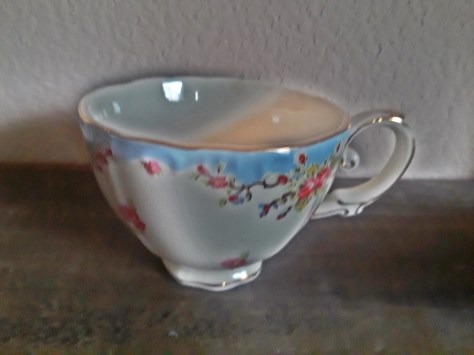
Starting with an admission of a bit of my own hypocrisy, I admit I own a very delicate set of teacups and saucers. My friend Jackie, who passed away recently, was the troublemaker who gave them to me. Since getting the surprise gifts of specialized china, I started using one cup as a coffee cup almost immediately. It alternates with my green Grandpa cup as my cup of choice. It looks alien in my hand.
 
 
On a very recent afternoon, I made a dish that reminded me to use a packet of special lemon and spice seasoning, a flavor bend I tried the first time thanks to Jackie. She was a talented cook. We shared a lot of ideas regarding things culinary. While my ideas were almost exclusively adventurous or weird, Jackie’s were rooted in decades of trial and error. Because I felt a bit of Jackie’s inspiration in me that afternoon, I used two of the saucers to serve pieces of baked chicken on. I think Dawn thought I was a little crazy, even though she knows I loathe the idea of china and of owning things that don’t provide beauty and utility. Hoarding allegedly expensive dishes that are seldom used doesn’t strike me as appealing logic.
 
I’m constantly joking that we should take such dishes outside and use them for skeet shooting. Honestly – I’m not joking. “All dishes are disposable if you’re so inclined.”
 
 
Jackie bought me the teacup set because of our discussions about tea, coffee, and a few other drinks. It didn’t hurt that I had a huge set of custom cups made especially for her and her husband, using pictures of them. She snorted when I told her the best flavor of tea I’d tried in a long time was called “Gunpowder.” That part isn’t a joke, either. Dawn surprised me with it for Christmas one year.  It was as bitter as a mouthful of salty dirt. It was delicious.
 
 
On another front, I have a family member who hasn’t got the memo about china being almost irrelevant. Her hoarding makes a logical discussion very difficult. As a society, we’ve moved away from the idea of preserving china or of storing such dishes in a huge cabinet anywhere in the house. Yet, so many people continue to guard the idea that china is valuable or worth wanting once someone has passed on. Dishes are only valuable to us if there is a memory, moment, or feeling attached to it. Dishes we never use do not find themselves embedded in our nostalgia. Few people want the burden of dishes that shouldn’t be used. As for the family member, most of her dishes had to be discarded a few years after her house became unlivable due to her hoarding. She has a set that she feels to be very valuable. They’re just dishes to those who never used them around a table of friends and family.
 
 
Which brings me back to my hypocrisy.
 
A couple of years ago, I researched to discover what kind of coffee cup was part of my earliest (and most loved) memories with my Grandpa Cook. He served me coffee as if it were no special thing. Even though the cup I bought is not the same cup my Grandpa handed me when I was four years old, it serves as a placeholder. It’s precious to me, like the blue one my cousin sent me, the one holding the razor my Grandpa himself used.
 
The same is true for the teacup I use from Jackie.
 
The teacup is a reminder of friendship, interest, and even of the loss that inevitably befalls us. I’ll accidentally break each of these cups. I have no doubt. My fingers will become more infirm, and my grip more loose. They’ll perish in individual piles of broken china. I won’t mourn them, though. They will have brought back Jackie to me, in small doses, on quiet, somber fall evenings, and during sunlit summer mornings. I don’t resist the recognition of entropy as it works its necessary magic on me and the world.
 
 
Everything that falls between, all the finite minutes, are the real treasure.

The Odd Brick

jackie dorman 06 (216)


I stood in the living room of the history-packed house, feeling Jackie’s presence around me. It was the first time I’d been in the house without her. She died recently, leaving a trail of family and friends behind after almost eighty years of an adventurous life. Her husband Jerry stood nearby, his eyes full of loss, yet contradicting the slight smile across his face. Both of them possessed a confident air of optimism. They are the sort of people who convince you that you’ve recharged something essential in yourself after you’ve been around them.

On the coffee table near us, in front of Jackie’s favorite perch on the couch, was a big 1000-piece custom puzzle. I had it made for my friends in April of 2018. I worked for hours on the design, incorporating countless family photos of theirs into a patchwork of multi-directional and polychromatic designs, each chosen and placed to accentuate the pictures while also increasing the complexity of the puzzle. We animatedly passed a couple of minutes noting the pictures, comparing favorites, and laughing. On the bottom row of the puzzle was the strange picture of an even stranger man. I included it in the puzzle because I  thought his picture was an enigma and out of place. As it turns out, it was. No one knew who it was, or remembered that the picture was in the thousands of photos and albums shared with me to digitize. Now, the stranger remains frozen forever in the family puzzle, immortal, and sharing space with some amazing people. We all laughed about Jerry and Jackie thinking I put the picture there as a prank, a one-off kick in the pants for my friends.

“No, I promise I thought the man was someone you knew. He was, and still is, in one of the albums of photos  I scanned. I didn’t include him as a joke. Jackie undoubtedly still thought I was pranking her,” I told Jerry.

“Yes, we thought you were the odd brick, X.” Jerry paused. “When the brickwork and wall were built years ago out back, out of all the thousands of bricks used, the bricklayer used a single yellow brick toward the outer end. I don’t know if it’s true, but they said that the odd color brick used to be placed to break the monotony of the eyeline. Jackie and both were convinced you put that stranger in the puzzle to be the odd brick. You are the odd brick.”

I laughed, thinking that Jackie left the world thinking I designed such a complex and heartfelt puzzle for her, only to prank her with a single discordant note. Though it wasn’t true, I liked the idea. I had purposefully pulled her chain on several occasions. To be perfectly honest, I sometimes held back because Jackie was one of those people whose smile and warmth were contagious, yet simultaneously held the promise of a swift reckoning under the right circumstances.  I say that with fondness.

Tomorrow, the house will be overfilled with friends and family. Foregoing a funeral, Jackie instead requested a celebration of life among friends. I came over to share the slideshow I’d made for Jerry, one chronicling the envious life Jackie lived. I stayed longer than I should have, though, perched on another couch opposite Jackie’s favorite seat. I’m clumsy and ill-at-ease when I try to comfort people with words. I learned the hard way that each of us cringes and contains our own version of hell and that wide swaths of unpredictable time are often the only consoling force in the universe. In this case, I could sense that seeing pictures of a life well-lived and shared was a salve for the soul. We watched the entire 44-minute video. Surprisingly, I recalled many of the stories attached to some of the pictures. Jackie was meticulous in sharing with me the memories attached to the pictures.

One of the best photo projects I ever did spanned a few thousand pictures. I came to it accidentally and as a result of being volunteered to help with another project. It was the doorway that allowed me to get to know a couple of fascinating and endearing people. Because of the pictures and the stories that accompanied them, I got to live a little slice of their long and worthwhile lives. It was a privilege, a learning experience, and something I’ll always remember as an honor.

My life didn’t meaningfully intersect with theirs until they were both older and retired. Both had full lives and careers and yet I only knew them as a couple, both engaged and artfully overlapping their stories to my delighted ears. Jerry was a medical doctor in life. It was plainly evident that his best role was that of a husband to Jackie.

I look back on the swath of pictures I was trusted with and get to bear testimony to the extraordinary life Jackie trailed behind her.

It would be an exercise in bravado to ask for a better life.

And so, with the gentlest and most affectionate gaze, I peer backward through her timeline: a laugh, a smile, a masterfully-executed bit of snark, and a twinkle in her eyes.

To be able to view the long curve of her life by way of hundreds of pictures has all but demolished the sadness that would have accompanied the knowledge she’ll never again shake her head at me as I played the fool for her. I can’t imagine the hollow void in the hearts of those who were lucky enough to stand in her aura in her daily life. There were a few moments while making the slideshow that almost capsized me.

I reduced her life from thousands of pictures to 240 and could distill them no further. A life like Jackie’s deserves a herculean accounting. I gave the photos the reverence that they deserved.

And, as it turns out, I am not the odd brick.

Jackie was.

X


Only 8 Pictures

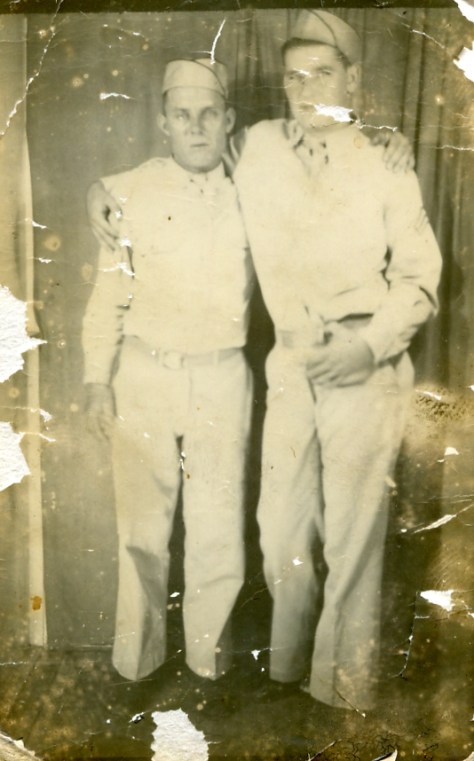
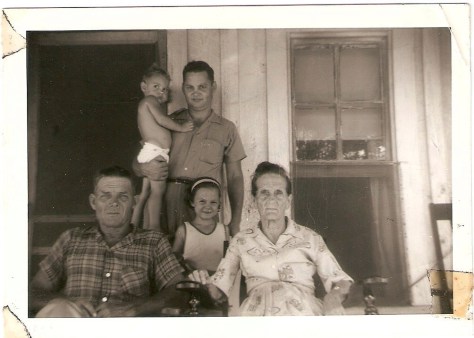
101108 lynette house and misc (55)101108 lynette house and misc (60)101208 lynette pix of pix (4)101208 lynette pix of pix (8)Harold Cook Carolyn Cook William and Nellie Cook 1956William Arthur and Nellie Leona Phillips CookWilliam Arthur CookWillie Cook and mother Nancy Malone

I have only 8 authentic images of my grandpa Cook. About half are pictures of pictures, taken at opportune moments. I’m lucky to have any. Many people escape their childhoods with no pictures. Given the number of times my family moved, in conjunction with my mother’s proclivity to burn residences to the ground, it’s a miracle any pictures fell into my hands.

My life only overlapped with my grandpa’s life for ten years, seven months, and one day.

Every picture I have of grandpa is on Ancestry to view and keep for anyone who wants them. Evidently, a lot of people have. Likewise, almost every picture I have of my dad and mom is on there, too. I’ve never once shared pictures without someone finding value in them – even people I’ve never met, and especially people who discover they are related.

For many of the family members who’ve departed, I have hundreds of pictures online, so that they can be experienced easily, and probably preserved for several lifetimes. It might be overkill, but experience has taught me that someone will find real joy when they see the photos.

I routinely get a private message along the lines of “Holy cow! I’ve never seen such a complete variety before. Do you have others?” I politely write back, saying, “Sorry, I’ve put every image I have of him or her on here. There are others, locked away in books, in basements, or in dusty boxes – but I don’t have access to them.”

This was recently true after I uploaded hundreds of pictures to an aunt, uncle, and cousin who passed away in the last decade. The response was overwhelming. It was a bit of an effort to organize and upload them all, but I know that my pictures will, at times, be the only pictures of these people that will be passed on and survive.

At times, I get messages from people who have locked down their accounts so that all pictures are private and secretly unviewable. Sometimes, these same people ‘borrow’ mine and lock their copies away from everyone else. Shame. I try to remind myself that someone at least saw the pictures and found them valuable enough to swipe. For the same reason, I leave all my family discoveries open to those who are related. There’s no real point in forcing people to do the same work over and over.

I don’t understand the inclination to put a picture in a box, closet, or hidden place. They are no more accessible than those who ‘borrow’ mine and lock them away digitally. They might as well be on the moon.

Countless times, people have reached out to me to tell me their families assumed no pictures existed of their loved ones. More than once, someone has told me that they’d never seen a picture of their family until they found my pictures. I can’t imagine that bittersweet moment. I work to ensure that I’m not part of the problem.

I don’t own a picture that I don’t have digitized, shared, and available for everyone to enjoy. Not only so that they can never be truly lost forever when calamity strikes, but so that they can be shared, even with unknown future generations, as they look back in the past.

A picture in a box, album, or closet is lost forever.

You just don’t know it.

Top Gun, Otis Redding, And a Coincidence

e0ed89d460c4496ab614a91490d00d7b

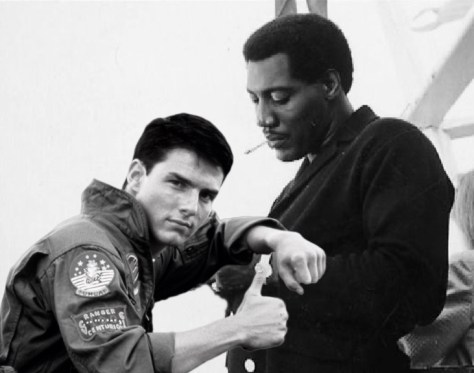
In the movie Top Gun, when Maverick (Tom Cruise) goes to Charlie’s House, most people remember the iconic song “Take My Breath Away.” For me, though, the song that stole the moment was Otis Redding’s “Sittin’ On the Dock of The Bay.” Toto originally was supposed to do the “Danger Zone” song, as well as another that would have been the song used instead of “Take My Breath Away.” Judas Priest was going to do a song for the soundtrack too but thought the movie would flop, as did many critics. Tom Cruise declined to do the movie repeatedly.

Most people with harsh criticisms of the movie tended to knock “the talking scenes” such as the one following the love scene at Charlie’s beach house. We all endured the testosterone-laden antics of our male friends in the late 80s as a result of this movie. For most of us who survived the 80s, each of us has at least one guilty pleasure in a song from the movie. I don’t think any of us miss the aviator sunglasses that seemed to be everywhere. None of us fully escaped the energy of Kenny Loggins as he sang “Danger Zone,” the fourth or fifth choice to sing the song.

What most people don’t consider is the unintentional coincidence of Otis’ biggest hit being in the scenes at the beach house. Maverick was about to go on the biggest mission of his life in one of the most modern airplanes in history, where death followed at every high-G spin.

Otis Redding recorded “Sittin’ On the Dock of The Bay” two times in 1967, with the second time being shortly before he died in December. The song was never officially finished. Otis is heard whistling in the song because he forgot the riffs he intended to fill in and started whistling to preserve the session. After Otis died, the beach sounds were added to this famous song by Steve Cropper, who helped Otis co-write the song.

I forgot to mention: Otis died in a plane crash.


A Snapshot of Memory

75252873_10156885297468931_1405832985999048704_n

*Guest Post

In this day of phones, digital cameras & easy(easier) photography the world is full of portraits & life-changing memories artfully posed, beautiful for sure yet simpler to catch. Engagements, births, holidays, moments in time long ago not as spontaneous if caught on film.

Back in my childhood photos of the ilk were less common unless you sat in a photographer’s studio- not as accessible to the working folk. You snapped a pic, waiting for the roll of film to be finished, brought it in to be developed, and usually, you got an envelope full of crossed eyes, blurry shots, laughable seconds. Few and far between were photos remarkable.

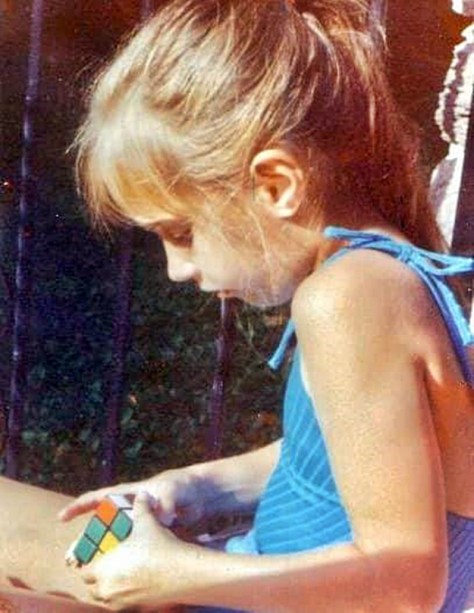
While we were not the kind to sit in a studio for a portrait, have on the walls framed photos of our time vacationing or spending a holiday, this one moment in time my father took of me is as artfully placed to be one.

Summer, on my front porch, resplendent in my bathing suit ready for running through the sprinklers. That, as I recall, was quite a looked forward to part of any sun-shiny moment then. Playing with my Rubik’s Cube- must’ve been 1980 or so.

I don’t remember much of this day, but I do remember (hindsight, mind you- as a kid I couldn’t register this) my dad got this sort of inspired look on his face and asked me to sit on the steps, against the column of the porch, and try to solve it. So I did. And he took this picture.

No digital cameras, no immediate pics to edit. Just a simple photograph on a camera with film he had to wait to develop to see if it turned out.

I think of this as my “portrait” to this day. It was a good moment. I’m thankful for that second in time captured. I think it still resembles me, captures the person I am inside. Sometimes the spontaneous becomes immutable…


65383380_622477088278788_2957919933528276992_n