Whether or not feeling well warped my sense of self or feeling something inside me well up intolerably, I went out into the world for what I thought was the shortest of intervals today. Though you might doubt me, those moments stretched into a length that flowed without end.
Most people use the word ‘rueful’ in an exaggerated negative sense. I prefer the term to mean “expressing sorrow or regret, tinged with humor.” Those are the sublime connotations that often fuel me. Humor is what shields me; bittersweet fringes give me pause to ponder at the simultaneous complexity and simplicity of life. Swimming in the valley between them is a blessing interspersed with the unknown horizon.
My limited interactions while out in the world today reminded me of life’s sublime ability to be filled with our exclusive perceptions. Today’s moments were wrapped in the lightest of gauze and applied with gentle attention. To walk in a world so gossamer each day would be my undoing.
Such attention to the essential ruins us in our endless and needless desire to see the things around us instead of our interconnections.
During the first encounter, the female clerk ran across the recently-mopped floor, risking life and limb simply because she thought a customer might have waited too long. She made eye contact with me, and I said, “Please don’t worry. Nothing at hand deserves any stress.” While she wore a mask, I could see her eyes widen in curiosity. Her eyes then darted behind me as she noted another customer behind me tapping his foot and shifting his weight.
It’s when the shift I felt toppled inside me and made me lopsided.
As she handed me back the change, I tapped it and said, “This is for you, if you can accept it. And if not, let it be for someone who will soon approach who needs it.” Her eyes widened and became tear-laden. She nodded, unable to say anything. Not from awkwardness or loss of words, because whatever became momentarily off-kilter inside me became the same for her. It was tangible.
I walked away. The next two interactions were similar, even though it would be easy to dismiss them as figments of my feverish mind. *
“With careful toes, I pranced through my life, to awaken no one. And in so doing, the ones who should have noted my passing failed to look up and witness me.”
“Just call me a cartographer – because this post will be all over the map.” – X
Everyone is going to have their ‘last funeral’ story. Perhaps not the last of each person’s life, but the last one not impacted by covid. While my last precovid funeral wasn’t traditional, it happened in January before the country felt the virus’s hammer.
Jackie wanted a gathering of friends as a commemoration. It happened at her home in Springdale. I knew a few of the people at the gathering but most shared nothing in common with me. It was a fact that Jackie would have laughed about. One of the most complicated puzzles I had ever made with pictures was prominently displayed on the coffee table in the intimacy of their living room. The puzzle contained innumerable pictures detailing their lives. I made it with care and attention. It was an affirmation to know that it touched them enough to find a place at Jackie’s last gathering. The video and music I crafted played on loop on the large monitor nearby. Having learned the hard lesson of no backup plan, I had the video on dvd and flash drive and an executable folder of music and pictures if the other two methods failed.
Though I unexpectedly liked a couple of Post Malone’s songs before, I included a piano version of two of his songs. When I have my guard down, I sometimes hear the melodies and remember the absurdity of including it in Jackie’s memory video. I can’t imagine Jackie liking Post Malone; I know that this piano version would have struck her heartstrings with unerring certainty. In part, that expresses how I got to know her – often indirectly and through a constant barrage of banter and conversation. I also included three songs I wrote, one of which I know Jackie loved.
I said my goodbyes in the same way I got to know her: through pictures. The family asked me to do the montage of photos and choose the music. It’s a rare thing for people to trust me so intimately. I’ve known some people all my life who skipped past me for weddings (even one who I originally became ordained for) or overlooked the few things I can do well. In a way that is not immediately easy for me to write, Jackie and her husband seemed at ease with me, even despite our marked differences. I’m sure that some of my pranks were a bit too much for them – but that my intent always found favor with them.
I was volunteered into their circle by my mother-in-law, who worked with Jackie and her husband at the hospital, as did my wife and sister-in-law. What started as a simple project ultimately gave me access to their entire lives of private pictures and images. While I began by scanning hundreds of hospital pictures, I was soon compiling decades of family history.
I frequently see the thousands of pictures I carefully scanned and indexed in my photo archives, and my heart both swells and painfully beats. It was a project that I hoped would never find its end.
Even though this sort of thing is both a love and hobby of mine, it still strikes me to know that people close to me failed to take advantage of my willingness to ensure that everyone’s memories could be reproduced, protected, and shared; such endeavors leave no one without access. It’s true that on a long enough timeline, we all fade – along with everything we can touch, where we stand, and even the planet itself. Pictures have their most value while someone is alive who remembers the people in the picture.
I still see people in agony over lost videos and pictures. It’s work to keep track of our lives. It’s more work to organize it for everyone coming after us. They’ll want to see our memories. The truth is that most people, even ones who seem to appreciate the frailty of such memories, don’t take the care necessary to share them openly and widely. It’s the only way to ensure the survival of the pictures we find to be cherished.
Jackie and her husband were undoubtedly part of the backbone of the community. Both were well-known and respected. Apart from teasing back and forth about me doing something ridiculous with their treasure chest of pictures and albums, they never doubted my love for the project or that I might somehow misuse their photographs.
Because I maintained an archive of all the thousands of pictures Jackie shared with me, it was no stretch to know that I could manage a retrospective of her life when she died. That I hadn’t shared much of her life was immaterial. Anyone could see that I had an affection for her that defied our vast age difference. I continue to regret that I didn’t know her for longer. It is possible that we would not have aligned so well earlier in my life. Having thought about it in the last few months, I’m convinced it’s true.
Part of my regret of not knowing her longer is that many of her stories passed with her. I discovered quickly that both Jackie and her husband were living repositories of fascinating stories. I intended to ask her to share several hours with me with the hopes of getting her story written in a way that would bear her signature wit and charm. She became ill before that come could to fruition.
But I still have this hoard of pictures, often waiting for me to open them and peer inside. I know that I honored Jackie by taking a piece of my life and preserving hers. I made sure that everyone had copies and access; no one was left in the rain. We don’t own pictures, though we foolishly think otherwise. We are custodians, with transitory possession of these lives and this world.
The day of her death races away from me, sliding into the past, as all deaths do.
Life marches forward with callous step and indifferent regard.
As Jackie’s life fades from human memory, I watch the world and wonder about the depth of visual memory and story being lost. But it is not because of me. I’ve tipped the balance in my favor and find myself unable to stop asking people to drop their pretenses and share who and what they are with the world.
In continued memory of Jackie Lou and with a renewed dedication to the joy of pictures, X.
A few months ago, as most people experienced weight gain purportedly due to the pandemic, the same circumstances made it initially easy for me to eat healthier. For no reason, I started eating healthier on Feb. 1st. I made it through April without too much difficulty. More surprisingly, I was optimistic about continuing the process for months to come. I have my list of excuses, not the least of which was doing more work in less time at work, making my back, shoulder, and ultimately my foot hurt more. Also, the stress of the pandemic impacted me more than I realized. More importantly, another kind of stress crept into my life out of left field. It’s the kind of stress resulting from peeking into corners you don’t dust or illuminate; it bears a resemblance to hope, no matter how contradictory that sounds. Knowing I haven’t paid the price to be who I should be affects me. The chasm between knowing it and taking action to get there is positively scary. I see others trapped in a holding pattern similar to mine. We’re all going to climb out of these holes. Some of us have a greater distance to get there, but the vitality of the commitment to do differently and experience different lives will get us there.
Not that it’s a negative, but when the pandemic started, my in-laws thankfully moved to town after years of living in BFE. We created an informal tradition of meeting on Saturday evening for communal supper. Those occasions are not filled with healthy choices. Having an unhealthy meal ahead of me mentally derailed me and gave me the excuse to eat with abandon since I would jump into the fat puddle on Saturday evening anyway. It’s a poor excuse, but one I know affects me.
Sitting on the fringe is also the knowledge that I’m less a fan of meat still. I eat it because of convenience or because others do. It’s hard to get back to eating very little meat when the world around me spins a different way. Meat consumption triggers me to eat other unhealthy things. I’m oversimplifying – but it is a certainty that I’ve long recognized: eating very little meat always coincides with much healthier eating, and my weight drops alongside the change. I’d go so far as to say that it becomes easy to drop weight without meat. Finding a way to overcome the demands of those around me to consume it is a challenge. I do most of the cooking, so taking a different route requires more time and energy and tends to come across as selfish behavior.
When my brother died, I recognized that I had the chance to use it as a marker and reminder. I would recall it frequently for a while; that recollection could be a mental rubber band for me. Likely, other people’s brains don’t work quite that way.
In a way, the comments about eating meat align with those about my brother. “I don’t really eat meat,” running through my head reminds me that I don’t feel happy doing the other things either. Because of my brother’s long decline, I relearned many lessons that should serve me going forward. All of them involve recognizing risk and choosing people and lives that make satisfaction in life an attainable goal.
Because I didn’t want to get on the scale and weigh myself, I did so immediately instead of dreading it. It was worse than I expected: 225. Ouch.
I’ve written about the fact before that our tendency to conceal our weight is a bit of folly. A good eye can accurately guess our weight anyway, especially if we’ve added a spare tire or our shirts look like they were dried on extremely high heat for an hour.
Rather than focus on weight, I started giving myself a grade each day. Yes, it is subjective. Though, I “know” how my healthy eating for the day went. If someone buys a bag of pretzel sticks and I participate in their consumption in the evening, it’s a worse grade. Or, if there’s pizza with a thick crust and real cheese.
It’s amusing to me that I love vegetables. It’s hard to get this overweight eating vegetables.
It’s folly to commit to healthier eating with the long slog of the holiday months approaching. I guess I’m wired for folly. The yo-yo of my stupidity is supremely stupid.
Meanwhile, another friend I once knew well chose surgery to help her weight loss. She dropped an incredible amount of weight. She’s almost unrecognizable. The smile on her face is one of radiant satisfaction. Whether she needed surgical help or not, she committed to the choice of making it happen.
I can’t see over the horizon. But I know that I have a lot of upheaval coming – and not just because that’s the way life is. I suspect that every pound I keep needlessly will throw a right hook if I don’t drop it. I’m looking more and more to a different future and see the path to get there. In none of those futures of hope do I weigh more than 180. I think of how I felt when I was last that weight, and though it is still ‘heavy’ by actuarial measures, I felt genuinely light.
Every pound is a result of my choices, no matter what preceded them. It’s analogous to the choices or laziness that’s lead me to this point.
Writing this sort of thing down is a motivator for me. Not because someone can use my bravado against me. I can pivot back to these days and remember when I looked ahead to a different way and a ‘me’ living the life the way I should.
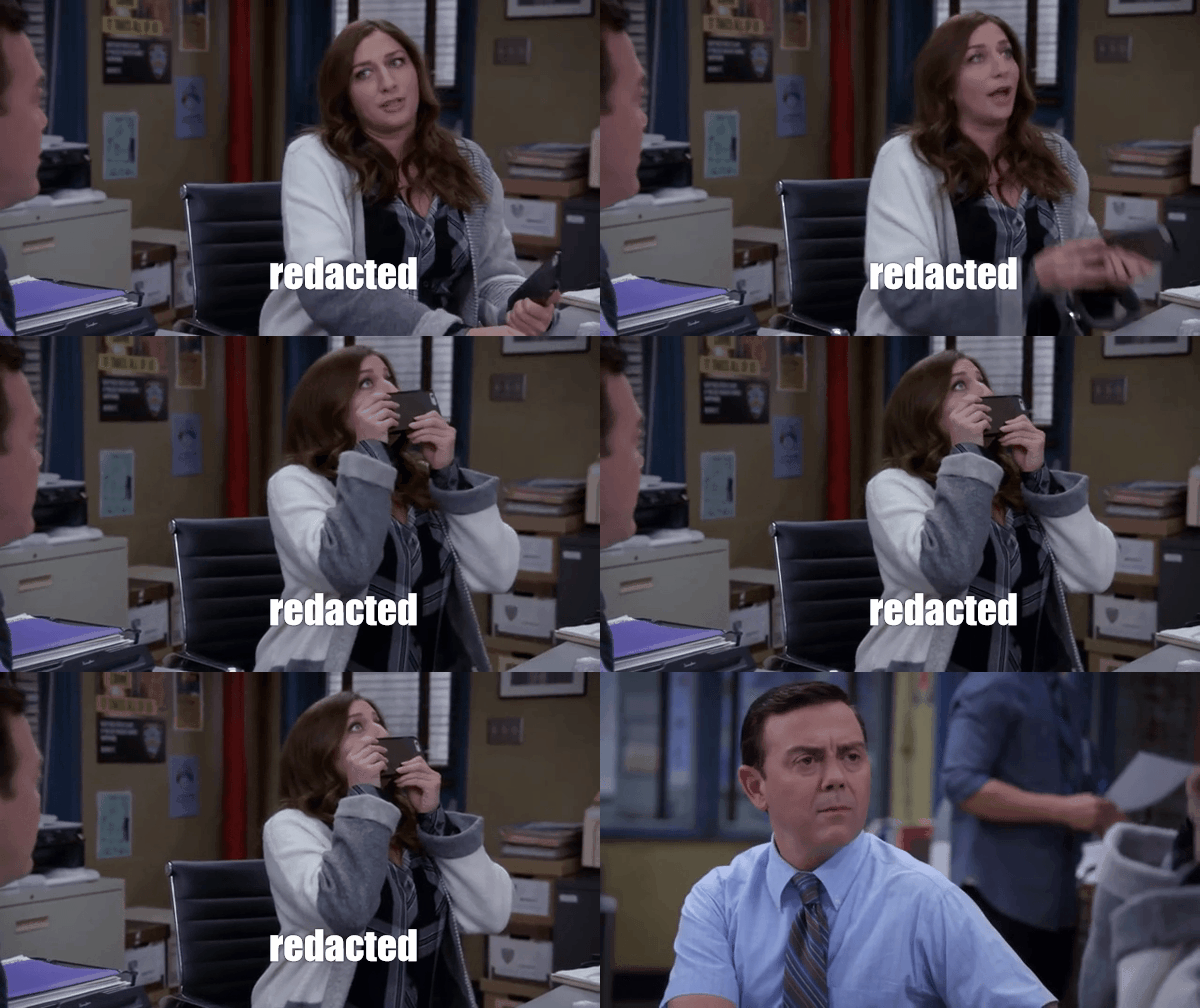
Although similar thoughts have passed through my porous brain over the years, I admit that the “Brooklyn 99” episode with Gina forced me to laugh out loud. I’ve said “blank” or “unintelligible mumble” in the past. Gina’s use of “redacted” was funnier, perhaps in part to the fact that not everyone would use the word in everyday conversation.
Have something you’d like to say but not say it? Want to curse but can’t? Have something potentially offensive? “Redacted” is your word.
In much the same way that saying “Karl” (from “Sling Blade”) denotes sharing a deep feeling for me, I find “redacted” increasingly serving in that capacity, too.
I made a gif to commemorate the word’s increased usage in my private vocabulary.
Recently, a friend posted about kayaking on Lake Elmdale. He also mentioned that many people seem to be unaware of its existence. (The lake, not kayaking – although I do wonder if such people who kayak really exist.) I tend to agree with him. Lake Elmdale is an artificial lake built in 1953. It derives its name from a mix of the names for Elm Springs and Springdale communities. I think they missed their chance by not naming it something extraordinary, like “Devil’s Tooth Lake,” or even “Drowning Hole.” Arkansas already boasts Nimrod Lake, named after Noah’s grandson. (Sorry, but the word “Nimrod” was forever redefined by Looney Tunes.)
Since I have your attention, in 1950, Springdale had a bit over 5,000 people. Ten years later, the population doubled. Elm Springs started at 217 and, by 1960, added a whopping 21 additional people.
I have dozens of stories from my youth involving this body of water. Many from my early childhood are fishing stories involving my Dad and Uncle Buck or a rotating series of misfits called friends. Other stories are from the time when I lived in Elm Springs in the mid-80s.
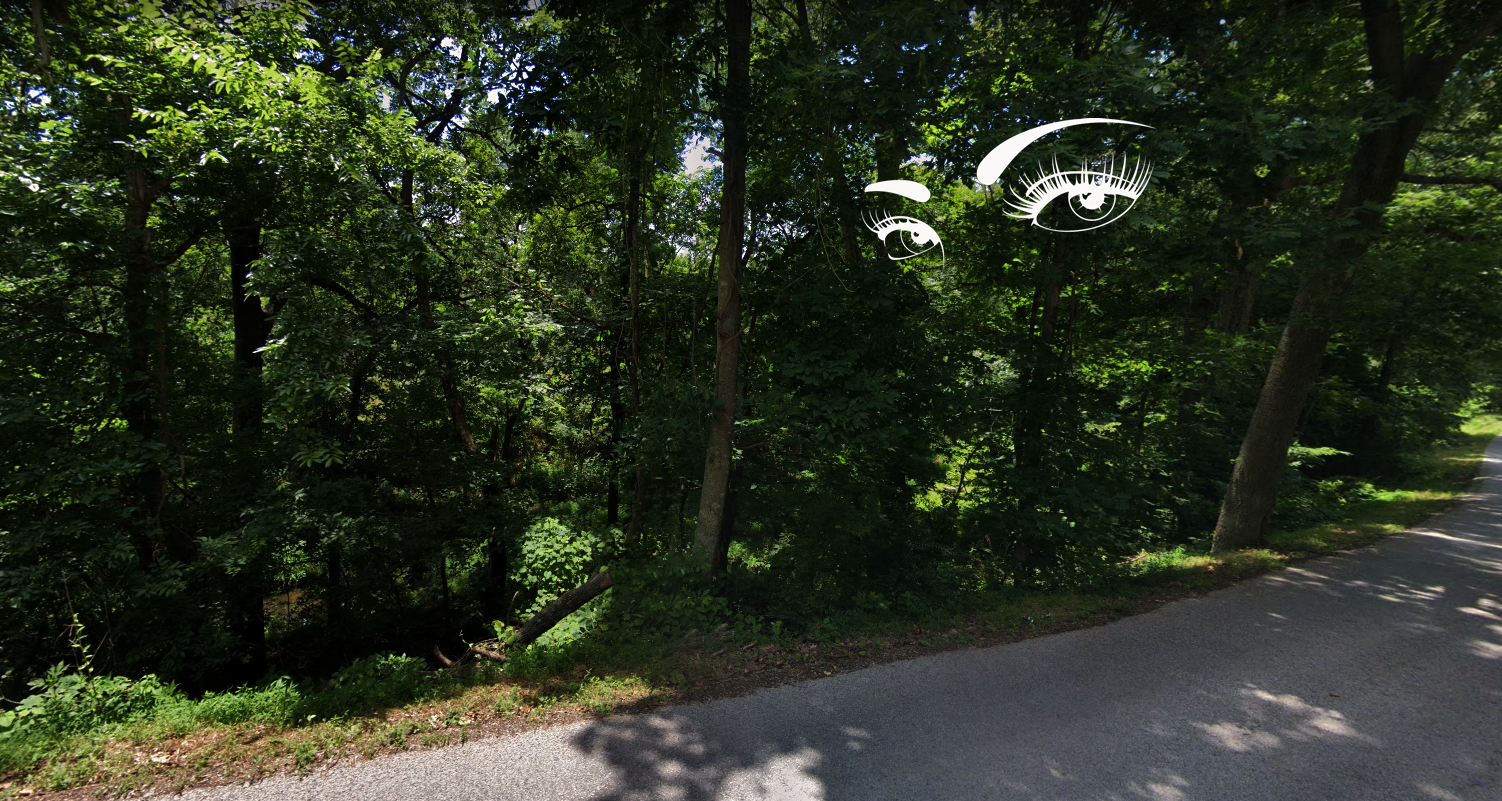
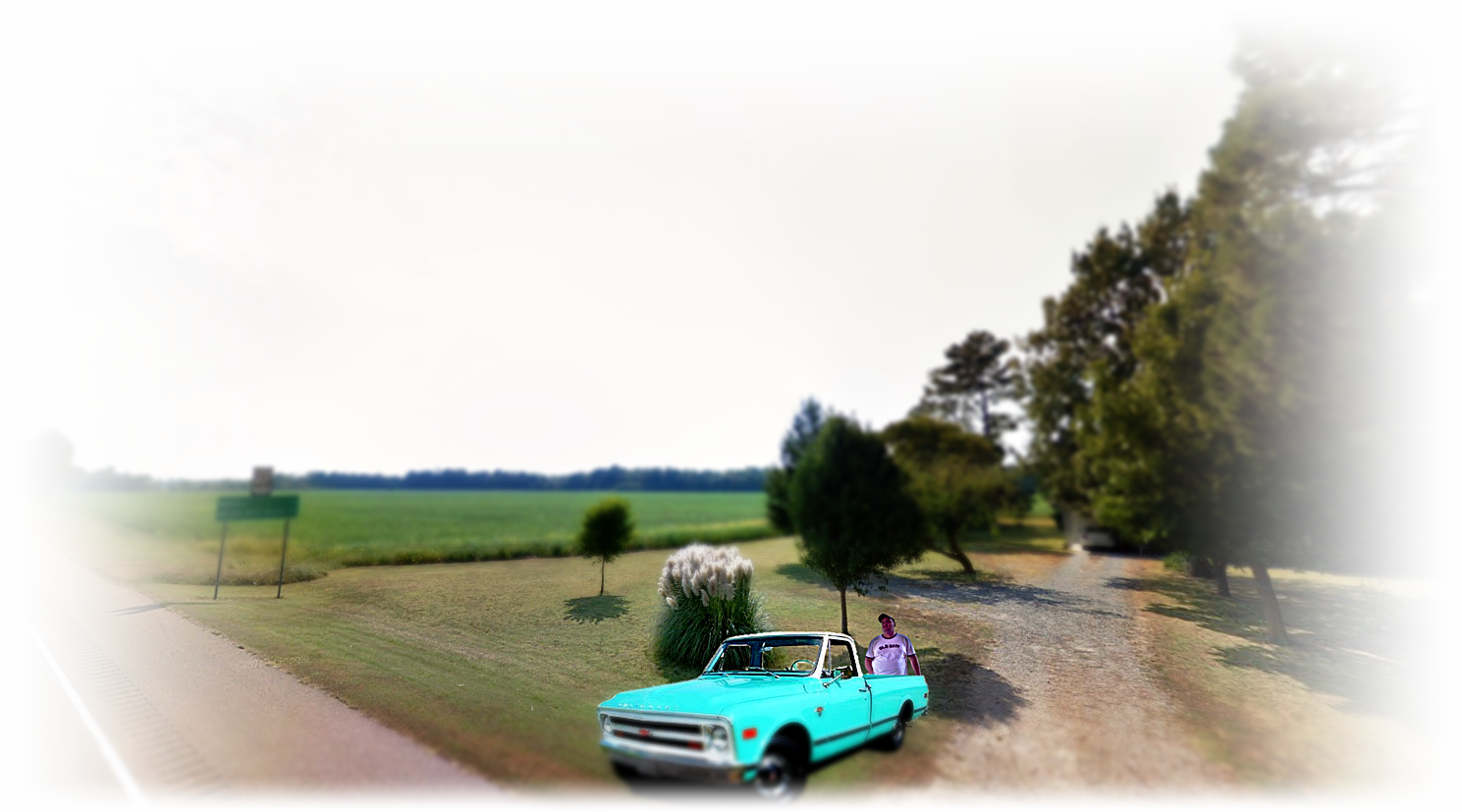
If you look at the picture, you can see one of the lake access roads on the right, about halfway up. Just a short drive beyond, and you can take a left on Lakeview and quickly reach Elm Springs road. Continuing on the circuitous route past the lake entrance, and you’ll emerge on Elm Springs Road further east and headed to what is now I-40. This story is really about the roadway’s right side, where the lake access ramp road intersects with E. Lake Road.
(36°12’02.6″N 94°12’56.8″W
36.200713, -94.215790
(GPS coordinates if such things interest you.)
My Dad loved a good scare while driving. Whether it involved turning off the headlights at any random moment, cutting unexpectedly through a field (fence or not), jumping out of the vehicle if it were going slowly enough, leaving the wheel to whoever might be both inside and paying attention, shooting a pistol or shotgun from inside the cab, playing chicken with unsuspecting people dumb enough to be on the road at the same time, driving on railroad tracks (sometimes suspended) over creeks, marshes, and rivers, or hitting things for no discernible reason, my Dad often had no limits.
I know that the last sentence is intolerably long. I wanted to pile it all out there to give you an idea of the level of crazy that might Dad exhibited. Sometimes, it was scary. Looming death tends to be that way. Other times, it was fun – but after the fact. Surviving such ‘fun’ colors the ability to laugh about it.
My apologies for taking so long to get to the point. Before this picture was taken, the road was less maintained. Edges weren’t graded appropriately, and erosion and run-off worsened already bumpy or uneven roads. This specific spot was no exception.
While I don’t remember the first time Dad revved his truck to 50+ mph and fly across the edge of this entrance as he passed, I remember coming off the cab’s seat and floating for the briefest instant. Whether the vehicle had a solid axle or good suspension had a say in managing the landing. If you’re thinking of the Dukes of Hazzard reading this, you’re not far off the mark. Though you might think I am exaggerating, Dad once convinced me and my brother Mike that he would do it at 80 mph. He did, after telling us he was going to for a long approach. Our butts were clenched until the point we realized that Dad wasn’t bluffing. Afterward, I felt that Dad would have regretted doing it had he not been three sheets to the wind. When I tell the story, I usually say, “I could see Kansas from up there.” It’s a joke. It was decently dark when Dad took that last quarter of a mile stretch before hitting the bump at 80 mph. After keeping the truck in the road, he hit the brakes and skidded to a full stop. He took the Camel cigarette out of his mouth with a flourish, looked at Mike and me cowering against the other door panel, and said, “Which one of you wants to drive and do it again?” Dad took the same jump, albeit slower than 80 mph, while we were in the back of the truck in the bed, too. We failed to determine whether clutching the truck’s side was safer or to lay against the tailgate.
At times, Dad doing this sort of thing would involve Mom being in the car or truck with him. Mom’s reaction to being scared like this can best be described as “murderous rage” or by one of her signature phrases, “Go# Da## It, Bobby Dean!” shouted at ear-piercing levels. If it lands me in hell for saying so, I’ll admit that hearing her squawk like that was amusing as long as we weren’t witnessing the oft-overlooked attempted murder aspect of many of our weekends.
If you are wondering if Dad ever wrecked, broke an axle, or blew out a tire doing these things, the answer is “yes.” Likewise, if you wonder if any of us ever suddenly experienced bladder control issues, you’d be right for questioning.
On one occasion, Dad drove with his boss back to his house in Elm Springs. The truck was a Cheyenne or Chevrolet truck of some sort, one of their favorites to restore. In those days, rednecks often stated with confidence, “I have to blow the cobwebs out.” Being young, I didn’t understand the cliché but did know that it roughly translated to mean, “I’m going to go incredibly fast and possibly die in this vehicle.” Dad wasn’t drinking. I was in the bed of the truck with Duke, Dad’s german shepherd. Charles sat upfront up with Dad. He had a cigar in his mouth as he often did. Charles was also married to one of Dad’s cousins. I didn’t figure that out until years later.
We drove down Highway 112 and turned on E. Lake Road leading to the lake. About halfway between Highway 112 and the lake, Dad slowed and shouted to me out the window, “White lightning!” I immediately realized that it was a “go” for Operation Scare the Boss Shi$less.” The phrase could refer to the hell-raising 1973 movie starring Burt Reynolds or to moonshine – and sometimes both.
About 100 yards from the side road to the lake, Dad pushed the gas hard and shifted gears. As we hit the bump and sailed off the ground, I laughed. I heard Charles scream in surprise and then scream at Dad, asking if he’d lost his ever-loving mind. By the time we reached Charles’ house, he was laughing and jokingly cursing at Dad.
One more note. Thanks to Dad, I learned how to drive through barbed-wire fences, closed gates, front lawns, flooding creeks, and just about anything else. Here’s the secret: you have to not give a damn about what happens when you do it. Once you master that skill, sober or inebriated, you too can be an amateur stuntman. I wish that I had experienced that version of my Dad freed from alcohol. There’s no doubt he would have still managed to convince me I might die at a given moment.
When my brother Mike came home from leave in the Army, I didn’t get to spend much time with him. Life’s demands and the constraints of his limited time conspired against us. We did drive the road leading to Lake Elmdale, though. I knew Mike was going to ask before we ever approached the jump zone. “Should we?” he asked me, laughing. We were in my car. He was driving. “How can we not?!” I shouted. We hit the bump going 50 mph. As soon as we started to lift, Mike regretted testing his courage. After the adrenaline subsided, we drove for another hour along what once were quieter roads. 33 or 34 years have passed.
In the years since, in the spirit of full disclosure, I too have excessively sped toward that same bump without warning the occupants of the car. Though the ridge is considerably flatter than it once was while I am much fatter, it never fails to fill me with nostalgia for both the times that were and those which weren’t.
Back in the 80s, a popular photographer roamed the hills and valleys of NWA. One of his spots was a spot off E. Lake Road in Elm Springs, not too far from the post office and cemetery entrance. Because I know better than to trust my memory, I can’t be sure his tradename is as I remember it, but it was close. He was popular for senior pictures. One of the spots he used wasn’t too far from the road, in part because of the dense trees, foliage, and sloping once you stepped off the side of the road. It used to have a short section of lateral fencing there. Many seniors, especially girls, found themselves at this spot posing. The people I’m going to mention had nothing to do with this photographer, at least as far as I know. I mention him only because of what happened. The photographer I crossed paths with did use one of the senior photographer’s go-to spots, though.
I lived next to the Willis Shaw lot, near what is now the Police Department on Jayroe Avenue, on the other side of Highway 112. Many days, you could find me running, sometimes biking, and often walking the miles of roads in the area. It was a beautiful place to be able to do so. Those familiar with the area need no convincing.
One summer evening, I walked several miles and was coming back home on E. Lake Road after walking to Springdale. It was about 8. I can’t be sure because we didn’t have cellphones and I certainly had no watch. The sunlight was fading, and the valley there was dense and beautiful in a backroads way. Even though I was wearing a cheap radio, the batteries went dead a few miles into the walk. I’m sure I listened to KCIZ FM-105 for most of my walk. The insects were deafening. Over them, I could hear voices shouting and laughing. Their voices carried surprisingly well. I walked at least a couple of more minutes without being able to see them. I realized that their voices had shifted and that I had probably passed them. Even though I was exhausted, I turned around and walked a few feet down a horribly-maintained side driveway. The laughter that I heard was raucous and fun. I didn’t see a vehicle. As for my curiosity, youth usually overrides caution.
I stopped in my tracks. About twenty feet from me stood a naked man holding what appeared to be a large, expensive camera. In front of him and to the right was a naked woman. To get this out of the way, the woman was beautiful. She had black hair down to her shoulders. Although no one remembers her now, I’d say she looked like Phyllis Davis. She was teasing the photographer about taking too long with the shot. She stopped talking momentarily when she saw me. And then waved and smiled, as if I were expected at any moment. The photographer turned and laughed. “Hey bud!” he said, smiling.
It seemed like I just stood stupefied for a few seconds. “Hello,” I said, much too loudly.
Then, I turned and sprinted away from the driveway and up the road, all the way to the highway. I could hear the two of them laughing with strange merriment as I bolted away from them.
I ran past that spot at least five hundred more times. While I didn’t run past to see the woman, I did look to see if she was there. She never reappeared, though I did see a lot of unexpected people and things on those backroads. Walking quietly at any hour of the night often yielded people in places where they were expecting privacy. The cemetery there in Elm Springs certainly gave me a list of stories I could share.
Thirty-five plus years later, I sometimes wonder what the story was with Phyllis Davis’ doppelganger. She had the looks to be a model, and she didn’t seem surprised by seeing me magically appear from the roadside.
P.S. She is the only reason I remember Phyllis Davis or her name.
“As sorry as I was to hear of my brother’s passing, I’ll bet the news bothered him a LOT more.” – X
There’s a considerable risk in people misunderstanding you on a good day. Many of us tend to judge others with the worst possible filter. I’ve found that good people can understand and appreciate contradictory and sublime behavior. Those who don’t just aren’t my people. Old age and experience, if we’re lucky, gives us more latitude in recognizing this.
The greater danger is people hearing what you actually said, and you having no defensible context to mitigate it. So much of life is context, and much of that isn’t immediately explainable. “You’re damned if you do, and damned if you don’t” is a cliché for a reason.
The joke that started this post? I’m sure people can and will get angry if they choose to. They’ll claim I wrote it as an insult to Mike. It’s not. He would laugh his ass off reading that joke. About one hundred times over the years, I threw one of Woody Allen’s jokes at him: “I’m not afraid to die, I just don’t want to be there when it happens.” Years later, I threw in another one: “My relationship with death remains the same,” he said. “I’m strongly against it.” When Mike and I were young, we both read “Death Knocks,” a story (turned play) by Woody Allen. It was a sometimes topic of hilarity, even though Mike did not like Woody Allen as he grew older. Mike and I both made many bargains with imaginary devils and deities when we were young.
Only those who can imagine hiding in the space between the bed and the wall in the dark and waiting for a parent to come for them in a drunken rage might be able to understand the connection between bargaining and gallows humor. I have a list of stories about these incidents, and some of them surprise me by being funny. If you’ve read my blog, you can see that I’ve largely refrained from identifying some of my family by name. Despite this, I still infrequently find myself at the receiving end of hateful criticism.
When we lived at City View Trailer Park in Springdale, Mike swallowed an incredible amount of tobacco juice. Several of us had played and fought down at the retched pond that once stood at the end of City View. Mike spent much of his time between punches proudly with a mouthful of tobacco. He puked violently on the floor for what seemed like a full minute. That black juice stained the purple carpet deeply. No amount of cleaning could remove it. We’ll talk later about how someone thought purple carpet in a tinderbox trailer might look attractive. When the trailer burned, the stain obstinately remained. The carpet was dark, of course, but the underlying stain plainly stood out. Years later, when Mike and I spent the night at Mom and Dad’s house on Highway 49, Mike compared that stain to dealing with being helpless all those years, or nearly so. That was the same night we discovered that a nest of yellow jackets inhabited the other bedroom’s west-facing window. That’s a story for another day. As for the tobacco, despite attempts to make Mike stop, he dipped most of his adult life. I have at least three dozen pictures of him spitting into a bottle, cup, or a family member’s potted plant to prove it.
After Dad died, my cousin jimmy recommended that I watch a particular Billy Bob Thorton movie. Most people have never heard of “Daddy And Them.” You’ll be shocked if you take a look at how many stars joined this movie. Because it was set in Arkansas, it accurately grabs the absurdity of white trash living and wraps it in comedy. (A difficult feat.) After Jimmy twisted my arm and made me watch it, I did the same to Mike. In it was one of the jokes my brother and I shared as hilarious. Here’s the joke:
“Hey! Do you know what Dad would say if he were alive today?” One of us would reply, “No, what?” Dramatic pause. “Let me out!” With the last line, we scratch the air in front of us with both hands as if we were clawing our way out of the coffin. Last year, an Irish veteran stole the joke and shocked funeral attendees by having a pre-recorded tape of his voice shouting to be let out played during his service. Mike thought it was hilarious and an excellent way to separate the humorless from the good people in a crowd. “Can you imagine how tightly wound up Aunt Elsie’s panties would get if someone did that?” was part of his reply.
I have to say, though, that despite the immense teeth-gnashing my brother and I often shared, our deplorable and macabre sense of humor was unrivaled. Marines and serial killers alike cringed if they accidentally overheard our nonsense.
No matter what you’ve read and heard on sitcoms or dramas about the impossibility of confining an involuntary laugh at a funeral, my brother and I separately were a disaster; in combination, we probably deserved the death penalty. Some of the fault lies with my Dad. Even when he wasn’t drinking, he could say some of the most outrageous things devised by a human being. He once called the preacher a “co$$su$$er” in front of about 50 people just to get a leg up on him. In a twist of fate I’ve written about before, Dad and the preacher somehow became friends.
My brother Mike once unknowingly used an open mic at a funeral home in Brinkley to improvise a bit of comedy regarding our Grandma’s teeth. The funeral director sheepishly ran into the outer area to grab the mic from my brother and tell him that it was a ‘hot mic.’ It’s essential that you know that my Grandma was one of the two closest people I ever loved. Despite that, I laughed. I cannot think about that incident without losing a little bit of my soul to laughter. I’m convinced each chuckle puts me a foot further into purgatory.
There’s no greater or sublime pleasure having someone who is both smart and willing to go the extra mile for a laugh, joke, or smile – even if it burns down a few villages on the way there. I give Mike the win, though, because he could tell jokes that I wouldn’t. That’s saying a lot.
Not too many months ago, I sent my brother a collection of hand-written postcards, each with a joke from comedians we both loved. As with index cards in my back pocket, I’m also a fan of prestamped postcards for quick notes. Even while we were uneasily bickering, I wanted him to know that humor was still a big part of my life. (Even if I’m old, boring, wear a lot of black socks as leisurewear, and get too excited by an early buffet.)
Mike would see these words as a compliment.
Because of our relationship, I tend to expect someone to emerge with poison in their hearts to attempt to silence me for joking. Those who know me also know I’ve written multiple times about the fact that they have my permission to mock me to the end of the world when I’m gone, especially if it is funny or creative. Mike was not someone to pull back from a bastardly comment. The same quick and violent tongue he sometimes used to wound me also created some world-class humor. For everyone who knew Mike and watched him in action on solemn occasions, the Bobby Dean in him could not be confined or controlled. Trying to do so was just catnip for his enthusiasm to up the ante.
It’s not reasonable to accuse me of glossing over or attempting to sugarcoat Mike’s life. Equally so, I have to tip my hat when it is merited. Both of us emerged from childhood with a scorched-earth comedic streak. It probably saved us as many times as it caused us grief.
As it turns out, Mike was indeed there when death came for him. His birthday would have been November 1st, the day after Halloween. For some, it is All Souls Day. When I sat to finish Mike’s ancestry record, I noticed that his two children are the same age I was when our Dad died. Mike was 20,062 days old, the mentioning of which would irritate him due to my occasional reminder that I still keep a tab of how many days old I am.
My job is to remember the Mike who put a fish under the driver’s seat of my 1984 Oldsmobile in the middle of summer during a visit to Aunt Barbara’s. (Without telling me.) Or the Mike who read “Lord of The Rings” in almost one sitting back in the early 80s.
Please don’t fault me for taking refuge in contradictory stories about Mike. But if you do, I’ll accept that charge. Given the arc of my origins, I find this potential sin to be minuscule.
P.S. The word “acolate” is mine, one devised to denote eulogic remembrance, perhaps a day too late.
Even though my right foot was still painful from extensor tendonitis (which sounds imaginary), I put on shoes and walked outside. Though it was October, the day was warm, even though a patchwork of billowing clouds covered the bright blue sky. Along the east, the hills bordering this place already presented a palette of colors.
Turning right, a younger girl who probably wasn’t supposed to be smoking cut along the sidewalk. I imagined that my presence was unexpected, and she repeatedly turned to see if I was overtaking her. She puffed on her cigarette as if it would be snatched from her at any moment.
Nearing one of the two main entrances of the subdivision, the smell of marijuana hit me. I’d smelled it before in that stretch. The surprised me again, given that a police officer lives in that area.
As many people have noted, music can be chaotic after you’ve experienced a loss. It sometimes magically rips the curtain away, the one that beguiles you into dropping your guard. Nevertheless, I marched along as best as possible while trying to avoid scrunching my foot protectively as I walked. Most people claim to find walking and sentimentality mutually exclusive; you can’t trust that sort of folk.
I live in one of those efficient neighborhoods with community mailboxes. This roughly translates to mean that everyone is annoyed. It certainly doesn’t help the mail person put the mail in the correct boxes. If I’m feeling nice, I pick up the mail slotted incorrectly and tossed carelessly on the long horizontal top of the run of boxes and deliver it personally to each house. The last time I did so, someone had a credit card, and another person’s unemployment paper was there.
Though anticipating nothing, I delightfully discovered that a solitary friend sent me a sublimely personal card, one anchored on the ridiculous sort of note that fits me perfectly.
I laughed, smiled, and walked with a pronounced enthusiasm for the remainder of the day. Thank you.
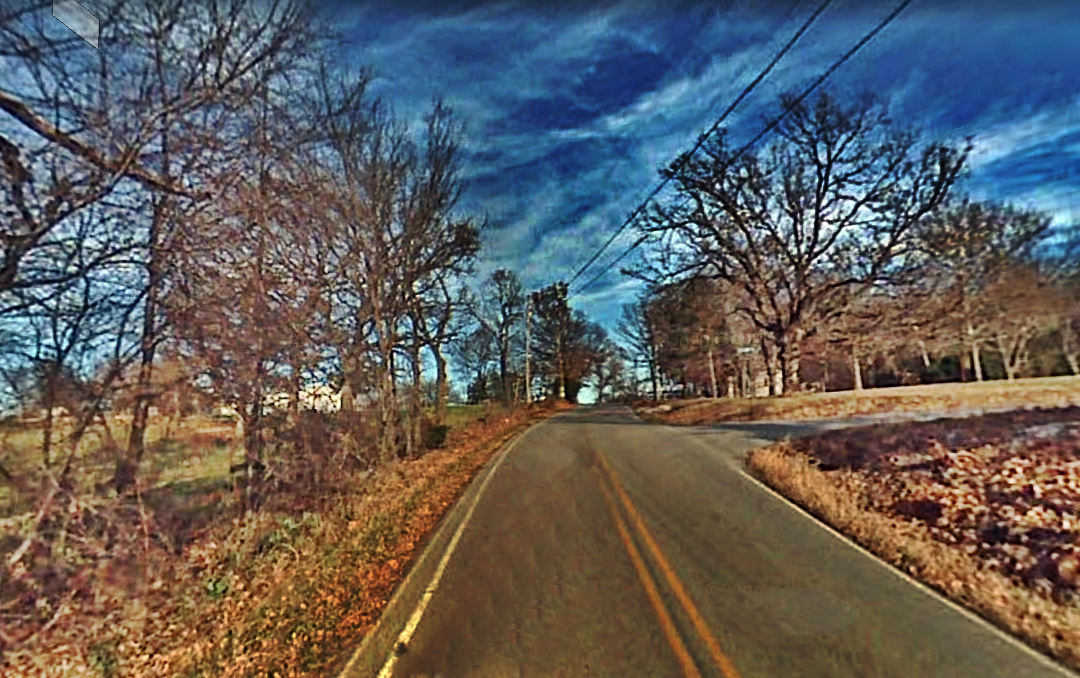
P.S. I chose the picture because it is one of the opposite side of the road, bordering the town’s limits. It is the embodiment of entropy and decay. It has just as much of a claim to be representative of fall as the colorful foliage always mentioned.
This post is a portmanteau of lives. One was a dedicated writer, and one was a policeman; both failed to adequately recognize their afflictions.
My wife’s eyes sometimes glaze over when I hear tales of “writer’s block.” I don’t know what that is. I can’t help myself: I always say, “What’s that?” half-jokingly. It’s the same way with me regarding boredom. Reading, writing, genealogy, humor, photography, and just scrolling the window of the internet could entertain me for fifty consecutive years. I’d be ideally suited to be a vampire.
This time, we were watching “I’ll Be Gone In The Dark” on HBO. Michelle McNamara had her deadline pushed forward a month and struggled to realize her ambition of finishing her book. It was her lifelong dream. She died before DNA solved the case of The Golden State Killer. Michelle and I share many attributes regarding writing. I don’t put myself on her level, though, so there’s no need to remind me snarkily. But I don’t understand the inability to plow through. She resorted to drugs to keep her up and allow sleep when necessary. The thing she relied on to help her achieve her ambition also undid her life.
I can’t walk the street, work, or sit and listen to music without wanting to research a hundred different ideas. Things breeze into my mind at a velocity that I cherish. The satisfaction of an overactive mind isn’t diminished by the value or result of the ideas. I’m able to divorce content from needing a goal. This allows me to produce dozens of things that never see the light of day or end up in the ‘delete’ file simply due to happenstance.
Had Michelle raised her hand and admitted she was overwhelmed, Patton Oswald and their mutual daughter would still have her in their lives. Instead, her book and ambition fell to uncertain others to complete, and Michelle lost a presumable thirty or forty years with family.
While I wrote the first part of this a few weeks ago, it still is on my mind. Not just because it was a great show, or a peek into a writer’s life, but also because a piece of it parallels the life of my brother. He was ridiculously smart. He could have worked to be a writer. As I do with anyone I recognize as innately great at writing, I repeatedly tried to convince him to spend a portion of his life writing his stories. I do not doubt that he easily had several books of material in him. Much of his writing might have derived from his professional career as a policeman and detective. Even his Army career was as an MP.
Michelle McNamara’s life revolved around crime and its intricate tendrils. My brother Mike spent his career investigating and collaring criminals. While Michelle’s ambition always included being a writer, Mike could have done the same, and just as expertly.
The contradiction is that his job itself was one of his biggest impediments. It put a wedge between his personal life and his ability to live it. The schedule, the demands, and the danger of having a job that perilously exaggerated his tendency toward authoritarianism. People often ask whether the job makes the man or the man gravitates toward it. I’m not sure. As much difficulty as my brother had coming out of his youth, the job exacerbated his personality defects. It’s no secret that police are more likely to be abusive and susceptible to addiction. My brother chose alcohol to appease his conflict. Michell McNamara chose prescription medications. Anyone who gets angry at me for saying so doesn’t understand me. In Michelle’s case, her husband Patton capably framed her turmoil in a very public and touching television show.
My brother’s intentions to retire as a detective after a full career collided with his inability to stop drinking. He was forced to retire. Even still, he could have turned that blow into a blossoming retirement. Had he stopped drinking, he might have lived to be seventy instead of dying before his fifty-fifth birthday. Because he was smart enough to work in the north, his pension was protected by a formidable police union. He had the option to pursue any interest he desired.
I was envious of that and his ability to work a job that allowed it. It’s a fantasy for most of us to round fifty and shift to do whatever interests us.
In the last couple of years, I sent Mike books, starting with “The Accidental Salvation of Gracie Lee.” I knew it would ignite his interest and recognition of what writing about the South could do. It was my hope he’d begin to leave the alcohol to the side, even if it cost him herculean effort to do so. He’d be able to careen into another career writing feverishly. Whatever else Mike did or didn’t do, he also loved books and libraries. That’s something that can’t be said about many police.
Mike’s death not only closed the door on his gift of writing, but it also cost him a couple of decades with his family. They’ll each struggle with the legacy of his big personality and choices. As Mike declined, I couldn’t help but get irritated at him for the waste of his life. Instead of pivoting to change his course and take advantage of the privilege of a chosen life, he furiously wasted his and his family’s energies to dedicate himself to drink. As bad it was, we were all lucky a few of the circumstances didn’t cause greater harm to others.
Now, silence. What could have been a rejuvenated family and life is now a complicated and unenviable path to an uncertain future for all of them.
As in my mother’s case, I know that much of the harsh words I shared with my brother were a result of alcoholism. Knowing it helps more now that they are passed than it ever did while they lived. He recognized the danger, just as I always did, but relied on his devious inner voice to convince himself he could overcome it. The same personality that made him loud and larger than life also participated in his fall. Many of our family and ancestors did the same. None of our ancestors who knew they were alcoholics successfully pulled out of it. It’s a sobering thought. I’ve written about the infection of my family. While I cannot adequately describe it, the trajectory of those around me gives proof that my theory must have some validity.
Mike loved that I wrote stories. Some of them caused him grief, especially before he could come to terms with the magnitude of the shadow that our dad and others left behind us. He vested energy in secrecy while I opted to throw open the windows. I was often a terrible brother. The only safe harbor I had at my disposal was separation. Mike had trouble seeing that my life was not one punctuated by drama. He also hated that I told him more than once that were I in his shoes, I would do anything and everything to break my addiction. It wasn’t because I felt superior to him in that regard, but that I never fooled myself into believing that any of us have magical skills that preclude us from behaving stupidly. Behavior that is obviously hard-wired into our DNA is that much more insurmountable.
The shelf that could have held Mike’s books will be forever empty.
The lives he could have intersected with for the next twenty years will now bounce obliquely off someone else.
The silences and subsequent shouts of confused recrimination will echo in his vacant place.
I see so much teeth-gnashing about truth and reality.
Even Grammarly, the proofreading AI I use, told me, “Your tone is angry.” If it had such a mechanism, I’d reply, “No, you’re wrong,” to prove this post. I did chose “ignore suggestion,” which does address one aspect of this post. It’s ironic that I pay for this service only to ignore such suggestions.
It doesn’t matter what the specific conspiracy theory or weird belief is. It is not the particular belief that is the problem. People don’t have a system to examine how they got there or how to get out of that particular belief. Politics, vaccines, covid, religion, astrology, or white people’s alleged supremacy are a few examples. We bludgeon our way through our lives, trying the same tactics and responses repeatedly, even as we paint ourselves into constricting circles.
Our biggest problem is that “we know.” Even when we don’t.
As wrong as I was when I was younger, it is still hard for me to accept that I must be wrong about things now too. Having always been wrong about something indicates that I’m currently suffering from an unidentified bit of idiocy.
To get the hypocrisy out of the way, I have my blind spots. I have a system to counteract it. I hold a very few people in esteem enough to let them gleefully bodycheck me if necessary if I’m trapped in a stupidity loop. If they point out that I’ve suddenly fallen victim to believing something stupid, I’ll take a long look. But I don’t include most people in this circle. For example, anyone trying to discuss politics but doesn’t vote, I don’t listen. (But I do believe that non-voters have the right to participate and opine.) If they are working an entry-level job, I disregard anything financial they say unless they are monk-like in their happiness. If someone hasn’t read a book in five years, let’s be honest – they should sit down and be quiet. The tricky part is convincing a good person that you’re interested in frank criticism. It’s a rare offering. Human beings aren’t programmed to make friends by being honest in that way. “Hey, you’re getting kind of chunky, X” would be a good example of something hard to share, no matter how close I am to that person.
One of my favorite go-to comments is that millions of people think the moon landing was fake – and many more millions are ‘undecided’ regarding its validity. I try to say it like a mantra, as it reminds me that no matter how well we explain ourselves, teach science, or rely on the common bond of truth, the lunatic fringe is not only more than just a fringe, but one that we can’t convince to evolve.
Among my list of popular ‘truths’ that are bogus is the Lunar Effect. It addresses the misconception that the moon (and especially a full moon) affects human behavior and especially strange human behavior. Pop culture, our grandmothers, and countless reinforcements have pushed it into people’s brains in such a way that it is just background noise and accepted. Due to the recent full moon, I saw at least two Lunar Effect posts on social media, with multiple comments and anecdotes. I didn’t interfere. The result would have been immediate contradiction and anger if I insisted. A letter from both Jesus and Albert Einstein would not have diverted their certainty.
It’s not true, of course. Like the ongoing and incorrect belief that an ulcer is primarily caused by stress rather than a bacteria, no amount of evidence, study, or direct appeal can convince people that they are completely wrong about the moon’s effects on behavior.
As you would guess, even bringing this up triggers many people’s defensive response. Their brains immediately react with a litany of learned responses. All are wrong. You’ll see a barrage of misstatements, each based on faulty methodology and study – but also cemented into their rigid structures identified as truth.
If you’re reading this and disagree, you’ll invest a great deal of your time and attention to devise a point to ‘prove’ my argument is invalid. Meanwhile, pieces of your life will pass you by, you’ll lose vital energy, and you’ll still be wrong. The only thing you’ve proven is that you’ll waste much of your time and energy trying to convince someone who probably isn’t in your inner circle anyway.
As with the moon landing deniers, no amount of science, data, or facts can dissuade a closed mind.
Don’t try it.
At any given time, about 1/3 of Americans are on the fringe side of any debate, question, or issue.
You can expose people to the truth, but no amount of words or strident argument will ever turn their attention and convince them. People must convince themselves.
Any effort you expend to convince an unwilling dissident will be a piece of your life that you’ve wasted. There is no magic combination of words that will ignite a light of recognition in people’s minds.
When my Facebook author page started getting readers, I had a smart older gentleman start reading all my posts and interacting. One day, I opened Facebook to discover that he’d angrily written at least a half dozen angry comments, each of them detailing the evil of using the word “xmas” instead of “Christmas.” My post was very optimistic. He focused solely on the word “xmas” to the exclusion of all else. Of course, I politely linked him to multiple sources indicating that he should acquaint himself with the historical and religious context of “xmas.” At that point, he flamed out like a cotton bale on the 4th of July.
Over the years, I’ve had multiple instances of grammar experts incorrectly repeating various ‘rules’ that are mostly just generally agreed-upon ways to communicate. Whether it’s the apostrophe, ain’t, you’re/your, couldn’t care less, or any of the other thousand bones of contention, many people want language to be as concise and static as math. It’s not. As a bona fide older person, I’m supposed to become more rigid as I age. I don’t. Quite the opposite. As late as yesterday, I found myself surprised that there is no agreement whether “detectible” or “detectable” is the correct choice.
Without getting into the weeds, I recently had someone challenge me on the validity of something I’d written. I’d mentioned I could prove it. The person in question angrily said I had fabricated the allegation. Naturally, I did my best to stay calm. I wrote an email and attached a copy of the email that proved what I said and an IP index. The reply was hate-filled. The person writing didn’t stop to think that he/she sounded like an angry lunatic. After thinking about it, I wrote back and said, “Ask _. They’ll confirm. That should convince you.” A couple of days later, another reply. This one was worse than the first. They were furious that someone else knew about the incident in question – and worse, that it made the angry person look stupid and hateful – something out of my control. My final reply was an apology for expecting them to respond critically and that I’d keep their correspondence for myself unless they tried to call me a liar again.
A few years ago, I finally hit the end with my mom. I couldn’t do it anymore. I’d been through the cycle of no contact with her several times. Discovering she had Stage 4 cancer forced me to try to navigate the waters with her until her death. I’m not sure I would do it if given an unlikely chance for a do-over. My emotional deficit made it impossible for me to engage logically.
In the last couple of years, I alternated wildly with my brother, despite knowing that I was inconsistent and probably stupid. One of my go-to people told me that I needed to avoid replying, as it would fan the flames and reward the person trying to victimize me. (This person wasn’t my brother.) It took me a bit to see how right it was. It didn’t stop the other person from being a tool to me, but it did leave me out of the equation. When I did get around to addressing it, I was able to be peaceful and calm about it. (Which, of course, made the person even angrier. No one likes being angry while dealing with someone who won’t’ stoop to your level.)
As a liberal, it took me years to understand that not all the immigration arguments were specious. All the shouting obscured much of the meat and bones of the counter-arguments. As a result, I realized one day that while there were a lot of angles and I still generally disagreed substantially with the conservative viewpoint, I saw the truth in some of the objections. More importantly, I noticed that not allowing any flexibility in my stance was causing me dissonance.
More importantly, living a good life is often 80% the act of not engaging. That part is almost a miraculous ability.
If you’ve read this post and wondered what the theme is, accept my apology. I’ve had a version of this sitting in my growing list of drafts long enough to have children.




 P.S. Parenthetically Speaking