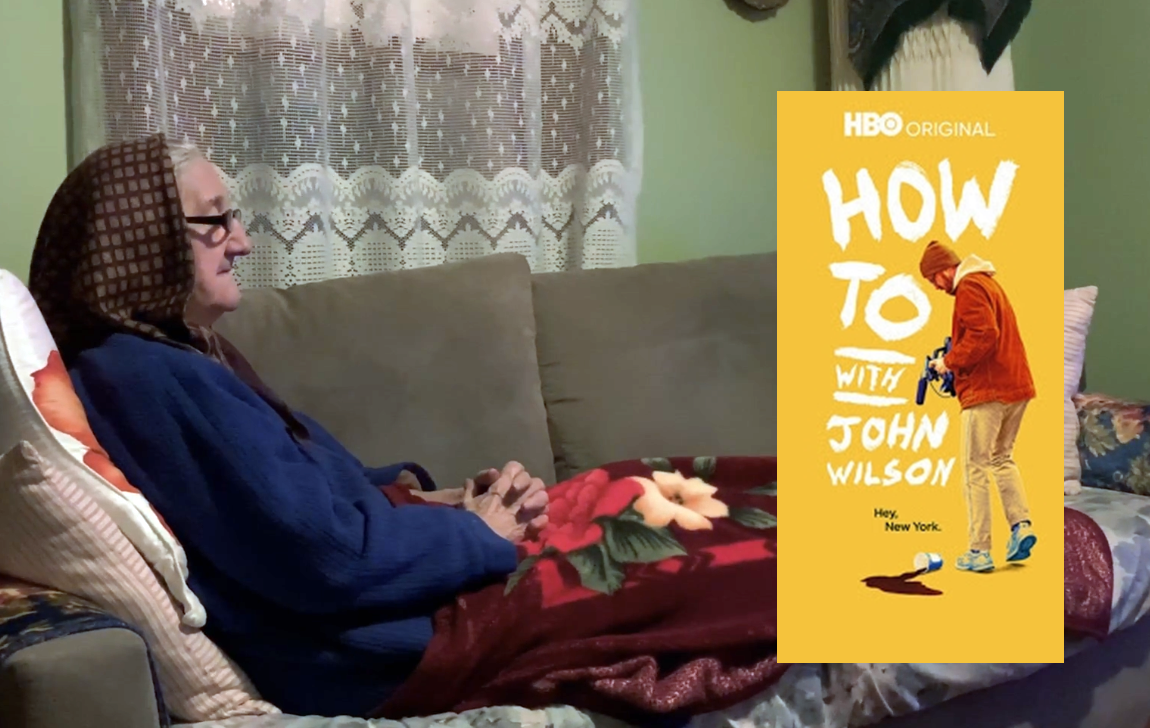
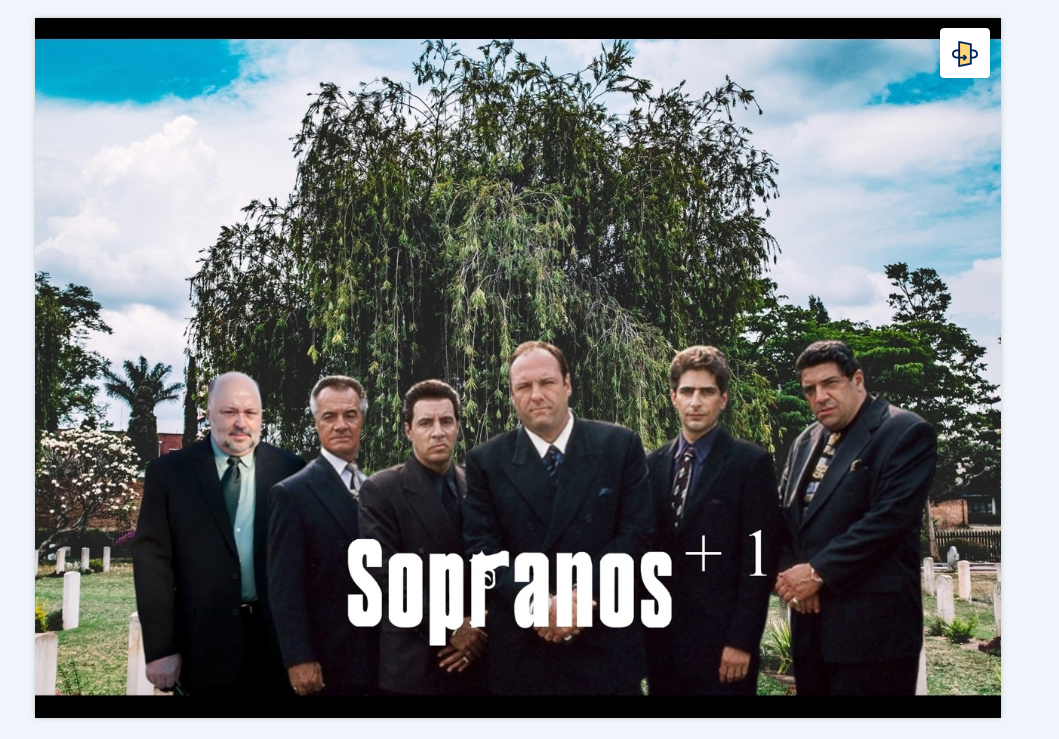
If you are looking for a deep, profane, and funny show that takes a single life and amplifies it to include everyone and everything, “How To With John Wilson” will be a show you need to try. I used the word “profane” so that those who have a problem with a full range of language and visual storytelling will know they will have to grimace a few times. As for me, the juxtaposition of the possibility of everything and anything being said or seen is precisely one of the reasons why I love this show.
While it is rooted in New York City, the delight of this show is in the random connections. I laughed at several strange moments.
Each short episode is allegedly centered on a single topic, but only inasmuch as John Wilson wishes it to be. The fringes are what make the show sublime. The last episode, the one decidedly at the beginning of the epidemic, feels like ancient history and yesterday.
You’ll learn something interesting. You’ll also learn something about yourself.
In a nutshell, it is a show worth watching because it slams the boring pieces of life against a curious eye. We live in a boring, mundane, fascinating, and complicated world.
P.J. O’Rourke said, “Don’t send funny greeting cards on birthdays or at Christmas. Save them for funerals, when their cheery effect is needed.”
* Instead of “Hello,” or “How are you?” why not ask this question instead: “Are you happy?” If someone calls you out for it, tell them you recently adjusted your medications. Only brave souls and people who would be awesome at parties will linger after that justification.
The obvious “is happiness the goal of life” nonsense aside, anything that catches a person’s ear beats the usual boring salutation. (Even yodeling, if you like that sort of thing. Just don’t take lessons if the instructor accepts coupons for his tutelage.)
Those who know me hear me say “Terrible!” frequently when someone asks, “How are you?” I often get a genuine laugh from it, especially if I ham it up in tone or volume. Hell, to be honest, I usually laugh first. It’s a spoiler alert at that point. Indeed, many people don’t notice the content of my response. That’s okay. It’s unreasonable to expect most people to notice anything unusual in the scope of an otherwise fill-in-the-blank moment. There’s probably a generalized indictment of society in there somewhere – but you won’t see me making it. (And not just because I detest the word “indictment.” Put the ‘dite’ in there, already.) We’re busy people, on the way to do essential things and argue on the internet about things that don’t affect us in any meaningful way.
By way of experiment, you should try it for yourself. “Terrible!” should be your response. Make it exaggerated. Enough people will laugh for you to be able to say, “I made you laugh.”
Only a real asshole resents a laugh. Lucky for us, most of them work retail.
(I wrote the above quote as a marketing ploy. It seems to be accurate, much in the same way that no matter how many times you nibble on someone’s ear, it is always one time too few.)
Also, if my day, year, or life is temporarily or permanently terrible, it’s unwise to unload that fact onto others needlessly. You’re supposed to save those moments to inflict on your close personal friends and family. That’s what they get for staying inside your orbit. If you read that without realizing it was peckishly funny, you need to switch to decaffeinated coffee.
If you’re feeling adventurous, use “Not hello” in place of “Goodbye” and “Not goodbye” for “Hello.” Other languages have words that mean both “goodbye” and “hello.” If you’re a fan of the phrase, “Good day” can mean both in modern English, even if no one will immediately understand it in both contexts.
If none of those methods suit you, I propose that all your salutations use ONLY consonants. (Sorry, Finland.) If you think that would be hard to do, imagine the inhabitants of Papua New Guinea, which has 820 living languages.
If you don’t believe words can work magic and light your mind with fire, consider this: “The problem with sex in the movies is that the popcorn usually spills.”
Since I always work this joke into these conversations, you can also adopt one I stole from a comedian. He says, “DiGiorno,” like the pizza brand, to say both “hello” and “goodbye.” Though the joke is old now, I still laugh most of the time when I use it. I said “DiGiorno” to a doctor this morning, much to my amusement. I’m not sure what he thought I said, but he replied, “Same to you!” with a grin. I’m hoping that it worked itself into his subconscious, and he later opted for pizza for lunch.
One of the things on my bucket list is to be on a ship that’s sinking. I’m going to run up to the Captain and ask him which lifeboat is the non-smoking one.
Back to the “Are you happy?” premise.
I think if you make eye contact and use it enough, you’ll eventually get an answer that is so honest that it surprises you. You might learn something about another person. For example, you might also learn that the person is nuts. But that’s something.
So, I ask you: Are you happy?
I’ll stop and listen either way. I’m hoping you are, and that ridiculous things like the one you’re reading can trigger a smile in your heart. That’s where you spend most of your day, anyway, listening to the narrative of your internal voice. Say “Not hello” to that voice and say something creative and ridiculous to those around you.
It’s 2020. Normal was evicted and displaced by whatever we choose to put there.
P.S. “The last thing I want to do is insult you. But it IS on the list.” – Anonymous
If you want to try a show that I think should be universally loved, this is the one. Each of us will discover something about what we think we know as we watch.
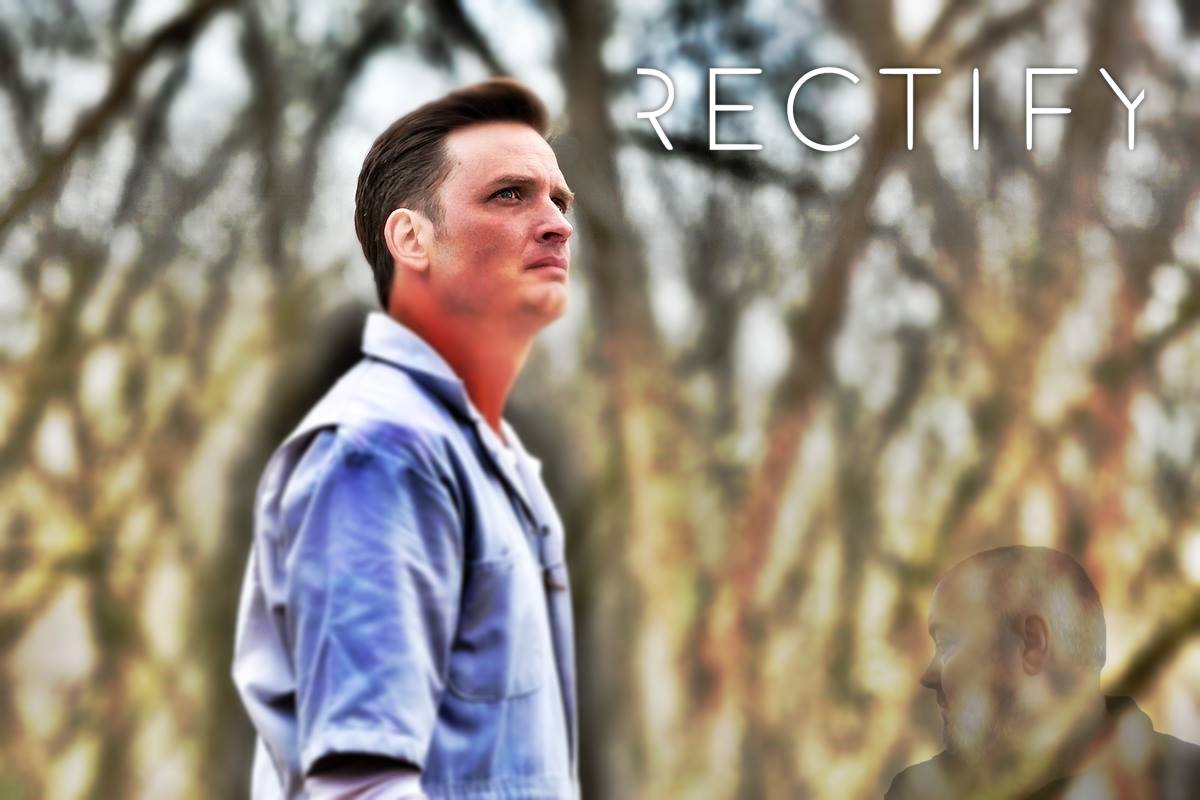
A few years ago, I watched a show that defied me to dislike it: Rectify. It’s still available on Netflix. As many said, it was the best tv show that no one was watching when it first aired.
“It’s the beauty, not the ugly, that hurts the most.” As wounding as this quote was, I laughed when I heard it again this week. Laughter emanates from the recognition of at least a kernel of truth. Though I was prepared for The Stranger scene in Rectify, the wallop it hit me with caught me off guard. If this quote seems strange to you, it is because you didn’t visit the emotional world created in this tv series.
When Daniel violently taught Teddy a lesson about his ignorance of assault, I laughed at that too, even though the lesson was graphic.
Like other shows such as Six Feet Under, Rectify tore through me like a tornado. It uses language and emotion so close to my own inner monologue that I felt like someone strip-mined me a bit to create this show. I learned more from SFU during the second viewing. Rewatching Season 1 of Rectify both amplified and soothed my past life for me. For those not exposed to brutality, it may seem counterintuitive to find redemption in seeing someone else suffer to find it.
Along with books like “The Prince of Tides” or “A Prayer For Owen Meany,” I add “Rectify” to the list of great works that line the perimeter of the sublime for me. If you watch “Rectify” with a keen eye, you will see bits of me hidden in there.
Watching the show again, I must admit that a couple of the scenes almost led me to burst into tears. I think it’s because I recognized the beauty in the struggle. We’re never the same person twice.
Here’s a link from something I wrote a few years ago:
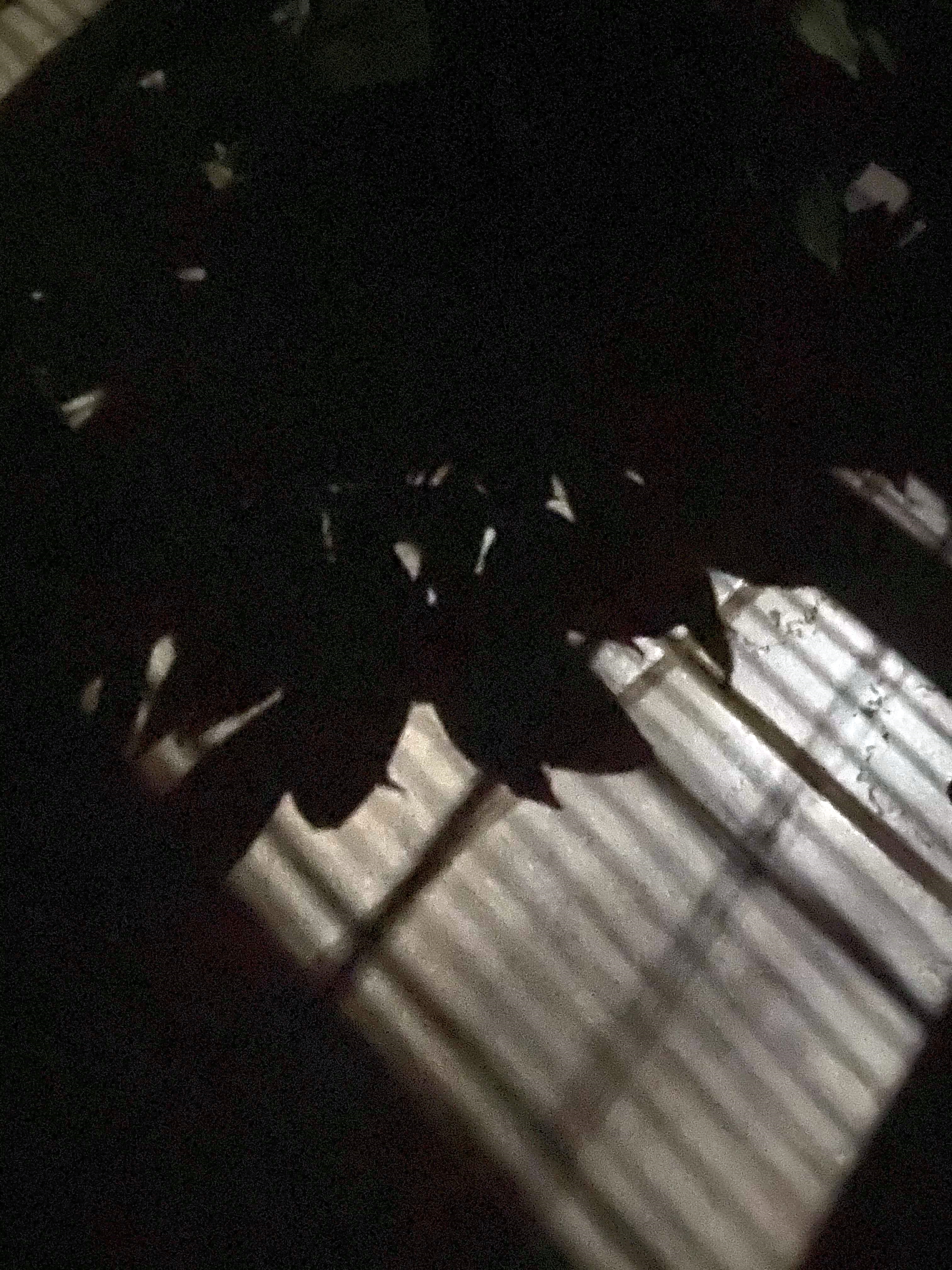
A December moon at 4 a.m. is so substantially dissimilar and divergent from all others in part because we, as beholders at that hour, see ourselves differently. Our approaching day waits without burden, even if we’ve borrowed our troubles from the previous day and packed them inside today’s purse. This year, more than most, brought unwelcome problems and made somnambulists of us. Oddly, it also brought a duality for some of us, ushering in a fierce determination to be the person inside our own heads.
Someone possessed with an uncanny soul took the picture and shared it with me. That she was up at that hour surprised me. It was her first message to me for the day.
She stood in the kitchen and recognized something ethereal, authentic, and beautiful in the shadows that formed on the floor under her. Most might snap a picture of the moon itself; I think you might agree with me that the echoes and reflections of beauty in our lives often outshine the source. It is a gift to glimpse something previously unseen in the midst of the familiar. I’ve known a few people whose lives sparkle with the ability. They all radiate the same force that hides in the moonlight. Such radiance is difficult to discern by looking directly; we have to turn our heads and observe the consequences of their presence.
Whether she sometimes tries to control the radio or stomp the floorboards too often, she radiates.
She, of course, doesn’t see it.
I whisper words of grace for her, ones petitioning a clear mind and the kind of sleep that few of us find at our easy disposal. Meanwhile, I return these slivers of moonlight to her.
This post is part recipe, part observation, and the result of intense thought, none of which was used in the making of said post.
I opened the oven, temporarily forgetting that the wall of hot, moist poisonous gas was about to hit me.
For a second, I felt myself start to faint. I wondered what it would sound like if I fell headfirst into a hot oven.
{Did you know that a lot of adults don’t know that chipotles are just smoke-dried jalapeño peppers?}
You’d think I was making a batch of meth, which is ridiculous. It’s cheaper to buy. Also, if you don’t know whether I’m being serious or not, assume I’m not. The police are tired of hearing my name and definitely tired of my picture.
It’s been YEARS since I made oven-roasted/dried jalapeño slices. Part of the reason is that I’m not a big fan of ‘hot.’ Given the amount of Sriracha and various crazy hot things I’ve eaten in the last couple of years, I might be mistaken. I don’t seek out heat. I’m too old to be playing Russian Roulette and too smart to ingest that kind of heat on purpose. Or so I thought.
{What did the jalapeño dress up as for Halloween? A Ghost Pepper.}
Using fresh jalapeño slices sounds better, but most of the time, the kind already in a jar turns out better. Feel free to cut up fresh peppers and remove the seeds. Don’t get wrong – they are delicious that way—just a bit more work. At Walmart right now, I can buy a 64 oz. jar of Mt. Olive sliced jalapeños for less than $4. That’s crazy.
I drain the juice off of the slices and put them on a piece of aluminum foil. While I can jazz it up, I rarely do. I put the foil sheet on the bottom rack and set the oven anywhere from 325 to 500. And then I wait. Depending on the temperature, it might take 15-25 minutes to dry the slices out or watch them darken.
That brings me to a warning: don’t open the oven without preparing yourself for a wall of fumes that will make you see Jesus on a skateboard. If you’ve ever got a whiff of chlorine gas or accidentally attended a political rally, it gets you close to the feeling that scorched jalapeño slices bring.
If you watch the slices as they dry and darken, you’ll figure out exactly what temperature and time work best for you. I was shocked to find out how much I loved the slices when they turn dark. It’s no surprise, though, given that I love burned food.
Why I stopped making these is a mystery. They ignite my taste buds and are very healthy. If harsh breath is a concern for you, you’ll have to take precautions. Even dogs curl away from roasted jalapeño smells, so I can imagine that your significant other won’t want to kiss you for a while, either.
Notes: {1} Zebras are black with white stripes. If you doubt me, go shave your zebra. If you don’t own a zebra, you’ve obviously made bad choices. {2.} I will never forget the first time I handled hot peppers without considering what and where I might be touching. That’s wisdom right there. {3} Most people don’t stop to think that New Year’s Day comes before New Year’s Eve each year. {4} A day on the planet Venus is longer than its year. {5} Bite your tongue and then imagine words with an “S” in them. You’ll find that the voice in your head has a lisp, too. {6} It’s almost impossible to hum while holding your nose closed. {7} Many baseball fans know that some pitchers have used jalapeños on their nostrils to produce the ‘slippery’ needed for curveballs. I thought you should know. {8} Most people breathe primarily from one nostril; more interestingly, most people don’t know that your nose has a 4-hour(ish) cycle. It’s complicated, and almost no one realizes it, much in the same way that we forget that we see our nose all the time – but that our brain processes it ‘out’ of our vision. {9} I googled “make meth in an oven” without thinking about the consequences. Tell the police I was joking. On the plus side, I think I could now make meth in a 2-liter soda bottle – which evidently is a ‘thing.’ {10} The perpetual contrast effect is a cognitive bias that distorts our perception of something when we compare it to something else by enhancing the differences between them. The easiest example for this is to mention that cold coffee and warm soda are at the same temperature. It is so obvious that you might have to read it twice. {11} The dot over a lower-case i and j is called a tittle. {12} Although it is no secret that the unicorn is Scotland’s national animal, people don’t believe me when I tell them. (13) Pringles are NOT potato chips. They are made from dehydrated potato flakes. Look on the can. They aren’t called chips, either. {14} Lemons have a staggering number of uses and health benefits. I won’t list them all because I like the element of surprise on this one! {15} The majority of laughter doesn’t happen as a result of jokes; instead, it follows social cues and bonding. {16} Newborns and kids have TWICE the number of tastebuds as adults.
Jake pushed the piece of apple pie across the diner table. He sighed. Two interminable years had passed since Jessie died. For reasons only someone left behind could understand, he continued to visit their favorite diner. The smells of toast, hash browns, and grilled onions whispered “home” to him in a way that even his own house couldn’t. It didn’t matter what else was on the limited menu there. Everything smelled of onions and breakfast food. His own house smelled of creeping loneliness and the distant moldy smell of someone living alone.
Two or three times a week after work, Jake distractedly drove the two miles out of the way. He climbed out of his car with his favorite book tucked under his right arm and went inside Joe’s. Everyone knew him there, even as the cast of employees and characters rotated with fresh faces from the local school and tired, worn-out faces of those who needed a job anywhere they could get it. If it was available, he walked to the farthest booth. Every couple of Saturdays, Jake found himself leaving the house and driving to Joe’s, even before he had his first cup of coffee. At 5:30 a.m., he was already sitting in the far booth cradling a cup of coffee.
The joke was on him, all this time later. Neither Jessie nor Jake really liked the food at the diner. He was sure that not many people did. No matter what they ordered, they knew that the apple pie for dessert would fill them.
The first time Jake went to Joe’s, Jessie talked him into it. “It’s so bad! You have to try it, Jake.” He said no until she took his left hand into hers and pushed it against her chest, and smiled. He couldn’t say no to that trick. When they were married, that’s how Jessie recited her simple vows.
At Joe’s, they laughed about the soggy toast and buttery hashbrowns, which were both overcooked and partially uncooked. That sort of result took either talent or blatant disregard for food. The owner didn’t seem to mind being ribbed about it. She was a small woman who moved there from Alaska.
Jake disliked the food so much that they started eating at Joe’s at least once a week. It’s the sort of inside joke that only close friends or lovers would appreciate. While they seldom left with full stomachs, they left with a belly full of apple pie and an hour of conversation. Joe’s was the place where they connected. For four years, they were as happy as any couple could be.
In June, almost three years ago, Jessie started coughing one Wednesday morning and didn’t stop. Within a week, Jake sat with her in the oncologist’s office to hear the doctor tell Jessie, “It is too far advanced for treatment. Here’s the name of another doctor for a second opinion. Go as soon as possible.” They went to Joe’s after the appointment with the oncologist. It was the first time they sat silently across from one another. The fear in Jessie’s eyes was a mortal wound for Jake. He knew a single word would shatter them both.
Four months later, Jessie died at home.
Since her death, Jake ordered two pieces of apple pie during each visit to Joe’s. He left both untouched after every meal. It was wasteful, but he couldn’t bring himself to stop. He didn’t know if it was superstition, grief, or another long con he was playing against himself.
Today, a new waitress came over to take his order. Jake couldn’t guess her age. Her hair was hidden inside a ballcap, but her face was crowded with wrinkle lines. When she took his order, she looked at him directly without diverting her gaze. Her eyes were alive with interest. Jessie did the same thing when they met. It was one of the things that convinced him that she was for him. People often said they wanted to be heard. For Jake, being seen was blatantly magical.
After he pushed away his mostly untouched plate, the waitress returned and asked him if he wanted any pie. “Yes, two pieces of apple pie. Thank you.” Jake looked at her name tag. “Alicia,” it indicated.
In a moment, Alicia returned. She put a slice of lemon pie in front of him and another on the other side of the table.
“Do you mind?” she asked him, pointing at the empty side of the booth across from him. “I’m on break for twenty minutes.” Before Jake could answer, she smoothly slid into the booth to sit across from him.
As she adjusted the pie of pie in front of her, she looked at him directly again.
“I don’t eat lemon pie, Alicia. Just apple.” It sounded lame to him as he said it.
“Jake, that’s not true. You don’t eat apple pie either. That’s okay.” Alicia winked at him.
Jake blushed. Through no dishonor to Jessie, the world around him suddenly diminished to Alicia’s face as she looked at him.
“I don’t know what to say, Alicia.”
“You don’t have to say anything, Jake. Just sit and be with me and enjoy the pie. Everything else will follow.” She winked again.
He smiled at Alicia and took his first bite of pie in two years. His new favorite was lemon. She met his gaze as they began to talk. *
“Time seldom approaches with a wild machete. It creeps from behind with a small, concealed knife.” – X
But Mel Brooks said, “Tragedy is when I cut my finger. Comedy is when you fall into an open sewer and die.”
Someone more creative than me pointed out that the sand in an hourglass imprisons itself, as glass is made from sand. Don’t you wonder if we aren’t the same, becoming our own prisoners? There’s no emotion or problem that we can’t complicate, escalate, or initiate.
Noted philosopher Coco Chanel said, “Don’t spend time beating on a wall, hoping to transform it into a door.” She obviously never worked a real job or dealt with people who have few laughs in their hearts.
My scars insist that time is real, but in the quiet moments, I wonder. I used to assume that most people had these thoughts. It was disappointing to discover that many people can’t imagine that Aslan or tesseracts are real – or walk in an imagined world where they might be the figments of a greater creature’s imagination.
“There’s never enough time to do all the nothing you want.” – Bill Watterson. I was equally surprised in later life to find people who deny that sitting in a quiet room can sometimes be better than a vacation. All good lives start with a quiet room. Add your preferred levels of crazy for a great life. Subtract what takes you further from the quiet room. It might be that simple for many of us.
“Why is that I never heard these words: ‘Let’s gather by the river, drink moonshine, and tell jokes and the stories of our lives.’ But I always hear stories of obligation and things that don’t linger in the minds of others.” – X
If you’ve never read “The Time Traveller’s Wife,” you missed this quote by Audrey Niffenegger: “It’s dark now and I am very tired. I love you, always. Time is nothing.”
Haruki Murakami said, either comically or seriously, “For a while” is a phrase whose length can’t be measured. At least by the person who’s waiting.”
Hippocrates (assuming it was the father of medicine and not the hockey player of the same name), said: “Healing is a matter of time, but it is sometimes also a matter of opportunity.”
We all wonder about 2020, which ends in about a month. We look forward. Where were we a month ago? The difference between comparing now to then is a question of knowing what lies in the interim. It requires no faith. With what lies ahead, our imaginations seize us. Whether that imagination is fueled by the dread of what will come or the expectation that we will find a way to be who we need to be is our choice.
This is my New Year’s post, written a month early.
If you can’t feel time slipping up behind you with that knife, that is okay. There is no defense against it except to live a good life. You only win by yielding.
One last wise quote: “Time is a great healer, but a poor beautician.” -Lucille S. Harper
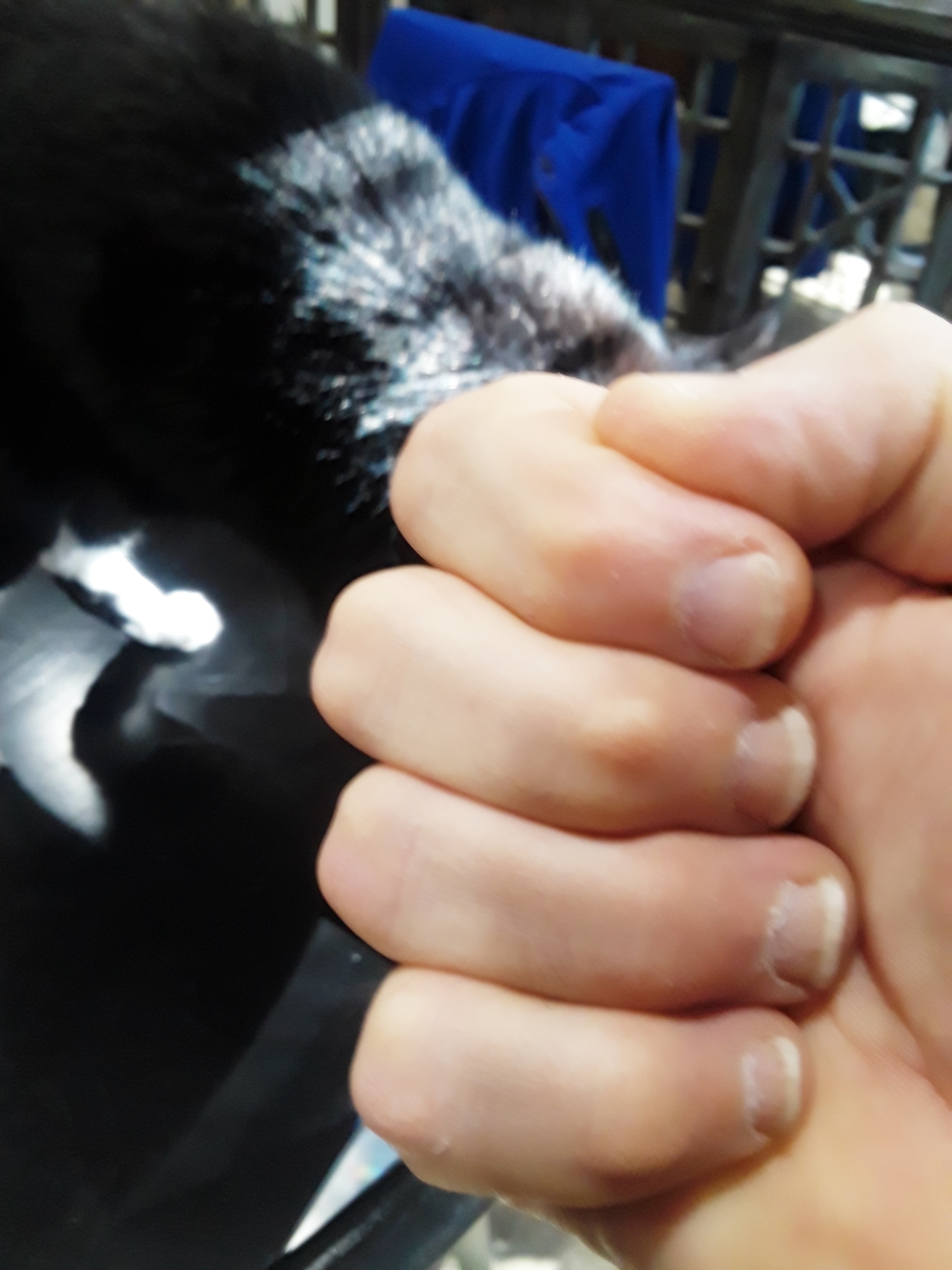
After six weeks+ of not biting my nails, I can say that my fingers feel alien to me in a way that a normal person would not find credible. I’ve not gone a week without biting my nails. For my entire life.
Several weeks ago, when I turned the switch off mentally about food, I just decided that I no longer bite my nails. Despite nothing else ever having worked for my nail-biting, not even public shaming or a global pandemic, I just knew I could do it. While my cuticles look odd, I don’t recognize my fingers. I’ve had to adjust a lot in my life for something so simple as suddenly having fingernails. From not using my hands to stir mud and potting soil to avoiding scratching ANYTHING and EVERYTHING. At night, I find myself touching my fingernails with my front teeth. Until you bite your fingernails for fifty years, I don’t think you’d believe me if I accurately describe how odd it is – as if someone put thimbles on each of my fingers and asked me to play the piano.
It occurred to me that if I were sufficiently crazy enough to do so, I could get a manicure. It’s important to note that I don’t know what proper nail care looks like, having gnawed on my talons like The Bachelorette bites the neck on her first date of the season. (Note: I’ve never watched the show. I put that bit in to trick the manicure-crowd into believing I might have.) I have promised my fans I’m going to learn to paint nails properly, though. I’ll let y’all know when I have my first nail-painting party.
I’m not looking for an attaboy. I should not be complimented for no longer doing something that is honestly pretty stupid to begin with, especially after 50 years of it. Much in the same way, it would be imprudent to congratulate me on no longer shooting black tar heroin into my eyeballs. It’s just a bad sign I started to begin with.
That’s my cat in the background. He’s nervous I might start scratching him.
P.S. There’s a link to a post in below, one I made several years ago. It’s stupid – and that’s why I think about it more than I should.
For many, the tradition of holiday cards is a dying custom. I don’t envy people for their interests or habits. It’s not a good recipe for living to feel obligated to follow the old ways. For me, though, there are times when the opportunity to send cards brings out the part of me that lives in a vast world full of billions of souls, each wanting a little bit of spectacle and magic. Oddly, even those who’ve scorned social media are as likely to have given up writing letters or sending a holiday card to friends and family. It’s a dying custom.
It’s hard for me to send a simple card. I have to make it complicated and personal!
I don’t send out cards in expectation of reciprocity. That, too, is a poor way to live one’s life. There are times when I put in a little bit of effort and then am surprised when I hear nothing in response, though. That’s part of the bittersweetness of sending unsolicited bits of fun and zaniness out in the world. People don’t have the time – or always make it – to let you know they liked it or hated it. Static sometimes fills the air. It’s a gift to be able to tune it out when you put out some creativity in the world. A good response is to keep sending them cards regardless of their interaction.
A couple of years ago, I created a complex and custom birthday card online and sent it to an acquaintance. I made the card from social media pictures. It was a work of art, if I do say so myself. I used another return address to conceal my identity further. Since the company which printed and mailed my creation sent it, there was no postal marking to identify its origin. My acquaintance was genuinely perplexed and spent DAYS vainly trying to discern who might have created the artwork cards. So great was her interest that she finally posted on her social media page to beg for help figuring out ‘who.’ I was surprised that no one immediately connected the dots to me, given the work’s detail.
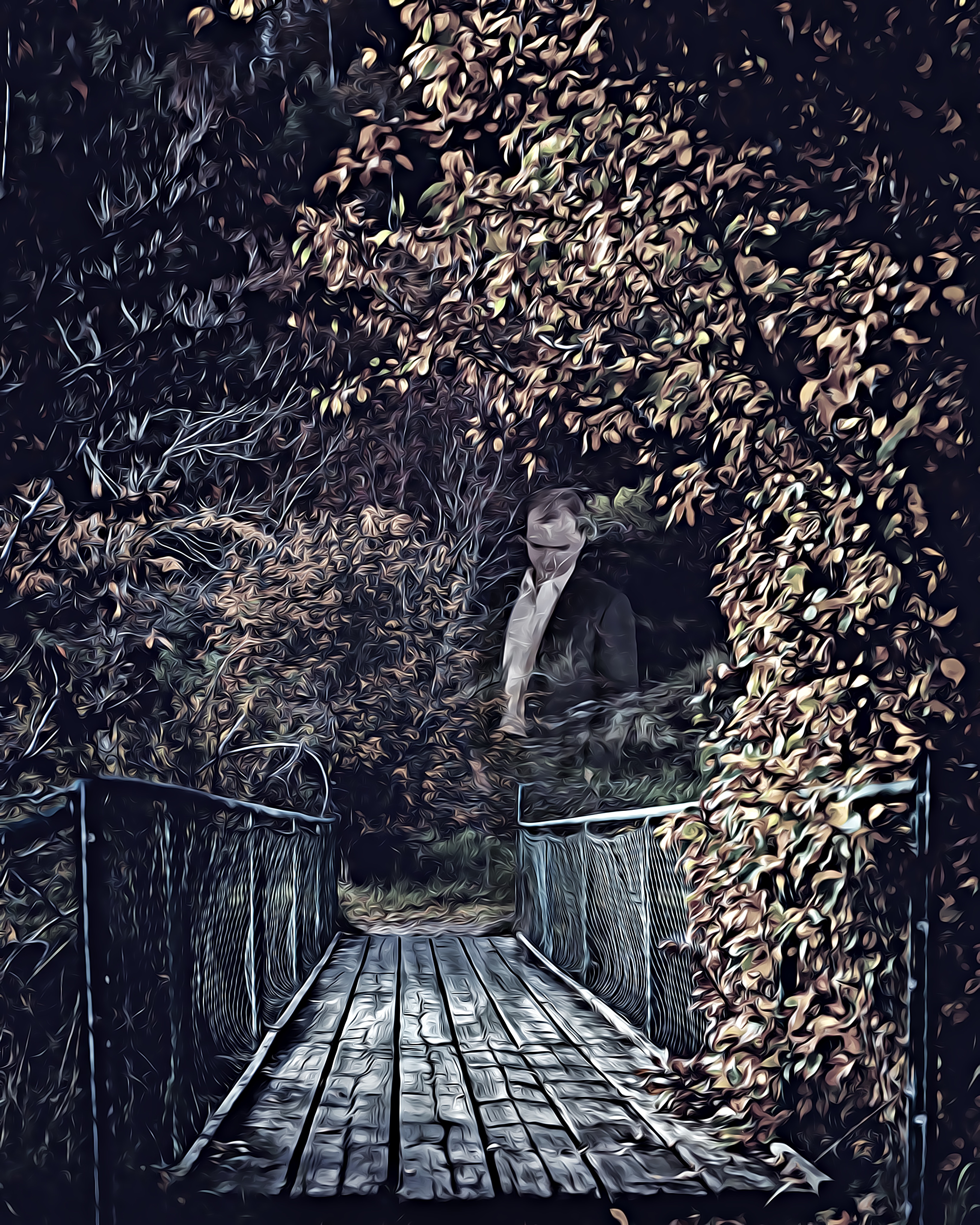
In a tradition I don’t always follow or do in the same manner, I send several personalized Christmas cards to people and families that I’ll never meet. In a few cases, I found pictures of LinkedIn, yearbooks from long ago, or social media. I downloaded them, and in some instances, photoshopped them before creating the custom cards that went to each of them. I chose a person at random from a yearbook for one of the lucky recipients I’d never seen before and researched them sufficiently to discover their new life. I also used ancestry to find a distant cousin and pieced together clues to figure out their real identity from the anonymous one used on the ancestry website. Using an inmate website, I found a person’s name and I.D. number and then sent him a glorious card and words of encouragement.
Though it might paint me as a bit of a weirdo, I find it challenging to explain to others how much fun I derive from sending total strangers a holiday card, especially when I personalize each with their pictures.
In each of these cases, I enjoyed each recipient’s imagined scenarios in my head, as they puzzled the personalized card from someone they didn’t know. In some cases, I used fake identities and addresses. In others, I used my real name, which might not necessarily allay concerns. “X” seems more like an accusation in some cases.
Of course, I also sent a few cards to people I do know, without using my real name and address, hoping to give them a bit of yuletide joy as they vainly attempted to figure out who had sent them a card. All those cards were customized and were a pleasure to create. I also sent a few to people using other friends and family members as the sender. I love living in a world wherein it is possible to convince people that someone else sent them a card, no matter how they might deny it.
Likely, I’ll never hear any of the stories that resulted from most of these custom cards. That’s how it works, though. Not knowing is often more rewarding than discovering the mundane answers.
Many people received Xmas cards over the years without knowing the person they thought sent it had nothing to do with it. Also? People don’t always look closely at the pictures. You wouldn’t believe the people and things I’ve edited into images without anyone noticing.
I can imagine several of the recipients scratching their heads in bewilderment, wondering who, what, when, and where – all without an answer. They may half-expect a repeat this year. Because I used an online address book for most of them, I could go back and send them another card this year. That would get them thinking.
Because much of our modern lives are now redirected by technology, the old ways provide another road to have a bit of fun.
P.S. If you are not familiar with Postable, it’s a great way to have some of the fun without needing to do the actual creation by hand. Postable – Create and Send Custom Cards You can upload pictures and design custom cards. They’ll also put it in an envelope and mail it for you – using any return address you might dream up. If you want to do Christmas or holiday cards, I highly recommend that you give Postable a try.
Note: no one in their right mind should take nutrition advice from me. However, I do know what really works well for some people. Sometimes.
If you’re going to eat tuna, I recommend that you ditch the mayo entirely. Lite sour cream, if such a thing is needed, works admirably in place of mayo. Two tablespoons of lite sour cream equal 40 calories, whereas light mayo is about twice that. Regular mayo is 100 calories per tablespoon. If you are craving the lovely sheen of fat when you eat, this won’t help you. You might as well take a bite of Crisco and get it over with. Growing up, several of my family members did just that.
Ditching the creamy additives saves you time, calories, money, and fridge space. It also lessens the amount of dairy you consume.
While I don’t count calories, I’m unavoidably aware of the benchmarks for many foods. When you’re trying to eat healthy, unless you are treating yourself, it is weird for me to justify eating something that is so much higher in calories. For that reason, I stopped using anything creamy in my tuna. Unlike most people, I much prefer to eat my tuna as dry as I can get it. If I add anything, it might be the miracle of lemon juice.
As for tuna, one of the best fillers you can use is dill relish. It’s one of the few things that is inexpensive yet adds bulk and texture. Dill relish is zero calories, too. Combined with shredded lettuce and the spice(s) of your choice, tuna can be made to be filling and savory. It’s hard to beat lemon pepper on tuna – although I enjoy at least a dozen different seasonings and spices on mine in varying degrees.
For the record, green olives are, in fact, delicious in tuna. They are only about eight calories each. My problem is that I need at least forty to be satisfied, especially compared to dill relish or something similar. A lot of people think the idea of green olives with tuna isn’t appealing. Most of those people have never tried it.
Another sore spot for me is the delicious taste of a well-made olive tapenade! If you want to fight, I’ll argue that green olives are indescribably delicious as a pizza topping – and more so than the dreaded counterpart of black olives.
If you are in tune with your body at all, it is easy to hold yourself to 1,000 calories a day if you need to. I know that isn’t sustainable, so don’t preach at me.
But if you eat two cans of tuna, add half a jar of dill pickle relish, a mound of shredded lettuce (mixed with lemon pepper), and two flavored bags of Pop Chips instead of crackers or bread, you’ve only eaten around 400-500 calories. It’s hard to complain about being hungry by that quantity of food.
P.S. If you are a Sriracha fan, you’re going to think I’m crazy. But. Sugar-free whipped cream drizzled with Sriracha is a surprising treat for the taste buds, much in the way jellied jalapeños are on vanilla ice cream. I’m not a huge fan of overly hot foods. But Sriracha came out of the left field for me a couple of years ago and took a place in my heart for flavor.