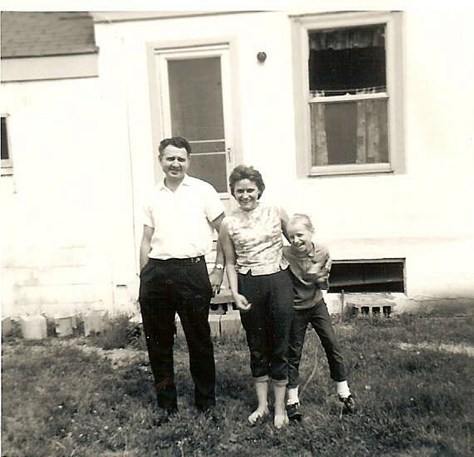
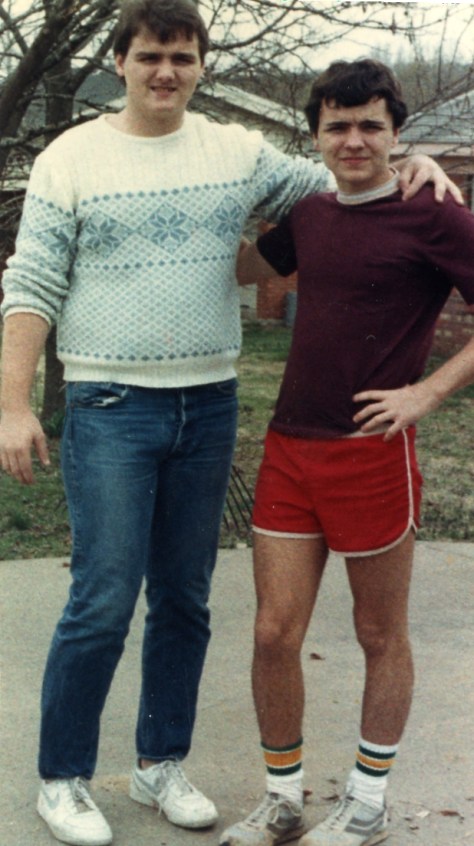
This is my Uncle Buck, with his first wife. The picture is from 1965.
You must either post or perish. The road between reassuring affirmation and privacy is indeed narrow. If you fail to share the complex and multi-faceted path that got you here, people will not understand your sudden departure from the thing you declared to be angel’s elbows and dancing unicorns.
Corollary: If you don’t share a multi-faceted explanation for the arc of what you’ve experienced, people will judge you on single-issue concerns. We’re all voyeurs and we all tend toward oversimplification.
If you’re going to use social media, you must do so while bowing to the truth, even if it is not immediately glittering.
Don’t imply your life is perfection while you are eating hotdogs over the sink or looking out your window with teary eyes. We only share our humanity when we share it all. No matter what you’re going through, we’ve probably experienced it or helped someone else as they did.
Almost everyone agrees that sunlight is best. Yet, most shroud their goings-on with a bent elbow.
We not only judge when we have incomplete information, but also when we have all the information. It’s a no-win situation. But if you opt for secrecy when you claim everything is perfect, I’m going to look at you cross-eyed when you want to know why everyone is so curious.
You can’t have both affirmation and privacy: they are mutually exclusive.
P.S. I wrote this rule while in observance of someone whose marriage disintegrated. It’s a trajectory I’ve often seen: joy, distrust, implications, none-of-your-business posts, followed by resignation and a push toward the next phase of life. Repeat. But it applies to so many other areas too.
A friend (and writer, though she fights the label) sent me a picture from her childhood. She snapped a picture of the old orange photo with her phone. I removed the orange tint from it, knowing that greater revealed detail might cause surprising observations. The hand originally seen holding the picture as she quickly snapped it is almost 40 years older than the innocent face smiling at us in the picture.
As I looked at the picture, for a brief second, I felt disembodied and as if I’d traveled back in time to City View Trailer Park and glanced briefly through the cheap window of the trailer. My eyes crawled across the scene; my friend in the background was smiling because she was asked to by her mom, the photographer, while her stepfather wrestled with a sibling on the bed.
In that instant, the moment became frozen forever, also disembodied and ethereal. My friend’s smile could be authentic happiness or adopted camouflage. It’s easy to take pictures and memories out of context. Due to the convergence of so many aspects of my friend’s life and mine, I can look at such pictures and interpret them in the harsh shorthand we learned separately. Such preconceptions can be wrong.
Her life has arced away from the world contained in the picture. Such victories are unheralded. She is excavating her truth from all the stories inventoried in her head. Despite what we’re told, memories are fluid, often refusing to take solid form. Who we are at the moment drives our focus toward the conflicting elements in our memories and pictures.
Because I shared most elements of family in common with my friend, I too can hear the cacophony of anger and control, even as I feel my heart swell with some moments which escaped the discoloring of the lesser parts of my life.
She’s looking through a long series of windows, trying to balance the tapestry of fact against emotion and her loyalty to those who shared her path when she was younger. It’s a delicate tiptoe and seldom leads everyone to agree.
It’s possible to be momentarily happy and yet inexplicably ruined. We don’t understand our lives until they’ve made an aged trajectory. Even then, our glimpses into the window make us feel traitorous to our own lives. It is as if we owe ourselves an explanation, even though we know we’re blameless for choices we didn’t make.
So, in turn, I peer into my own childhood. I feel the cheap paneling against my back as I lean against the wall in the narrow closets. I hear the shouts from other rooms. And sometimes, I recall the joy of stolen moments, ones which do not fit comfortably with the mythology of my recalled violence.
In those same closets, I opened books and dreamed of other lives – and momentarily forgot that my life was diminished and small.
I look at this picture through my window and see the smile as a captured moment, fragmented away from those in the photograph.
My Aunt Ardith and cousin Jimmy, standing in the front yard of their house on Ann Street.
Once again, I opened my email to discover a message telling me exactly what I needed to hear. A sister of one of my paternal aunts wrote me, telling me she’d noticed I added another 100+ pictures of her sister on Ancestry. These are archived in original resolution. My aunt’s sister told me she’d cried a bit, something she hadn’t expected. I wrote her back and told her I put every usable picture I owned of my aunt on there, in the hopes they might last forever, for anyone to see. I also told her I did the same for my uncle and my cousin Jimmy, both of whom now have hundreds of pictures on their respective pages. If you didn’t guess, putting so many pictures on accounts is a rarity.
It was a labor of love and honor. It’s the least I could do. These pictures are in my possession, but I don’t think I own them. They belong to us all – anyone who shared moments, laughter, or time with those in the pictures.
Yesterday, I wrote a post about high school pictures. I used a horrible picture of myself from many years ago. It was a bit satirical, but the message was one I’ve written about a few dozen times: vanity and hoarding regarding pictures is sinful. I’ve never owned a picture that I haven’t offered to everyone who might have an interest. I don’t get the urge to hoard pictures in a box, under a bed, or in a seldom-used closet.
More than one person got irritated at me for preaching the gospel of sharing. Some people righteously guard their past appearance, as if history isn’t going to kick that door open with time anyway. Others play the role of Gollum and greedily keep their pictures hidden in the crook of their unapproachable arms. The last tendency lessens everyone’s ability to remember and cherish people in our past who’ve passed on to the next life.
When my aunt’s sister reached out yesterday, she didn’t know that it was what I needed to hear. My actions months ago opened her heart again, even if for only for a while yesterday. In those moments, she could see that I had paid homage to her sister, to life, and to people we love.
All those pictures? Some of them have been downloaded dozens of times, each time by someone who discovered my treasure, one freely given. I am merely the guardian.
Do I have your attention with this horrible picture? Is it completely real or photoshopped? Who knows! Who cares? It’s more or less me back in 2005. I’ve posted it before. It makes me laugh, precisely because it makes me look like the “before” picture for both the South Beach Diet and John’s Guide To D-I-Y plastic surgery.
I enjoy the posts about people complaining (gatekeeping) about people posting their high school pictures. It’s true that it doesn’t “help” current seniors. Let’s be honest, though. High school pictures don’t seem to help anyone. Except comedians. We all love a crazy high school yearbook picture. We can’t help it.
They do, however, remind us that our idea of hairstyle and fashion was never as great as we’d imagined. This is the case of every graduating class in the history of… well, history.
I know it’s not an ironclad rule, but I distrust anyone who is truly upset about anyone seeing their high school pictures. Not only are almost all of them available online, but they are precisely the pictures more likely to survive the next 300 years because they are public and otherwise in the hands of so many other people. They are copied, indexed, and even included in genealogy websites.
What am I saying? You’re screwed if you don’t want people to see your pictures from school.
Years ago, I scanned and archived several years of Springdale High School’s yearbooks. I also uploaded them to all the relevant SHS FB class pages, for everyone to share and enjoy. It look me 100+ hours. It was a huge way for all of us to get acquainted again, whether we liked it or not!
By the way, a huge number of yearbooks are available on classmates. Get a free account and start looking. Other websites carry college yearbooks, too.
.
The Picture Rule: If you’re complaining about the existence of your high school pictures, you’re probably at the mercy of either an exaggerated vanity or a profound scarcity of a sense of humor.
P.S. I have almost never been stymied finding EVERYONE’S yearbook picture, not to mention the address you lived at when you were 7. Your life is an open book, no matter how badly you want to stick it under the bed where no one will ever find it. The more you want to hide your pictures, the more likely your brother-in-law is passing it around secretly via text, email, or DM.
P.S. Redux: If you are desperate to find someone – or a picture of them – let me know and I’ll get enough details to sleuth them out in the interest of both lovingkindness and transparency.
I didn’t know it then, but I learned much more than I thought back when I changed my birth name.
In regard to my struggle with addicts, anger, and sociopaths in my life, I look back and now wonder how I didn’t see the bright neon light flashing above my head.
I struggled, even as the answer flashed repeatedly. My instincts knew. I can see them in action as I re-read some of my posts about my struggles with my name change.
Let’s face it: my ‘struggle’ completely derived from other people’s reactions, all of which were choices they made.
Here’s what I learned: ALL the assholes from my earlier life self-identified when I changed my name. They raised their hands. They showed me who they were, each one. All those who had already demonstrated violence, anger, and addiction in my youth showed me that their true colors and outlook about the world hadn’t changed. The only people who refused to immediately attempt to respect my crazy choice to change my name were already less-than-good people.
Some of my family and friends didn’t understand (or agree) with my decision. But the good people among them, the ones I could count on, all unilaterally tried to get used to the idea that the person whose identity I was born with was no longer a person. Did they forget sometimes? Yes, but not with malice. It bears repeating that some had concerns I’d lost my mind. Willingness to change shows the ability to love without agreement or even understanding.
Rigidity in attitude, though? Pathology.
The rest? All of them fall into my list of people who didn’t respect me as a person in the first place, or could only see me in terms of their own narrow and dark view of the world. There was a spectrum of disrespect. Not all were raging sociopaths. Some were. I’ve documented the variety of disrespect I endured from some. I’m not painting them all with the same brush of anger or lunacy.
I now see that their disrespect was just another symptom of their disease: simply put, they weren’t good people to begin with, not people I would have chosen to be in my life absent from the confines of exposure due to geography or family ties.
If I could go back and choose, I think it’s obvious that my choices would be quite different.
I still would choose to change my name.
This time, though, as the assholes came forward, I’d open the door for them and slam it behind each one of them.
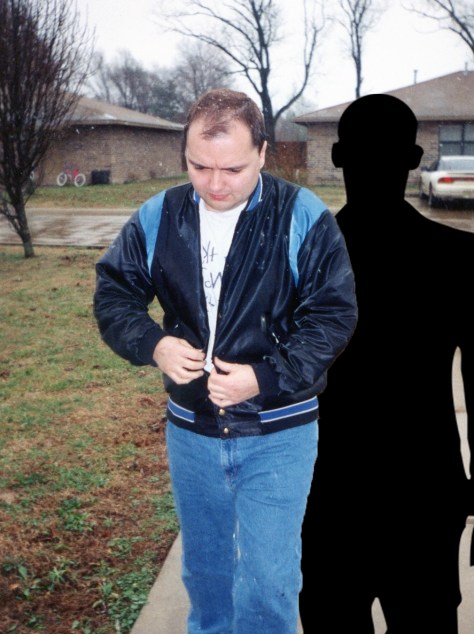
That’s me in the jacket, 1997ish. The shadow is the lurking presence of what I brought with me from my childhood.
One of the tactics of addicts or sociopaths is that they time their harshest manipulations around major life events: big trips, funerals, weddings, birthday parties. Any gathering or otherwise stressful social interaction will suffice for them. Their anger at you festers. They bide their time, bite their tongues. And wait.
Your wish to get through the happy day increases your stress level. Addicts and sociopaths secretly wish for your suffering. They lay the groundwork, seeding insecurity. If you’re normal, you won’t understand how much pleasure and joy sociopaths can derive from the suffering of others. There are more of them in the world than you’d think.
Near the day in question, they’ll unleash a fresh hell upon you.
You’ll flounder and attempt to deal with the symptoms, rather than the disease.
If you’re looking back at your shared trajectory with someone you believe might be a sociopath, examine how many outbursts coincided with life events. It’s another sign.
My mother was an absolute tyrant in this regard. Another close family member followed her lead into adult life. He/she became blind to the fact his/her life slowly devolved into a miserable cycle of anger and control. As people fled in hurt, their departure should have signaled that something was wrong. Sociopaths, though, paint themselves as victims to other people’s search for normalcy. One thing they cannot abide is for another person to demand control and freedom from them. Departure is the ultimate treason.
The sociopath is the disease. Excising it is the only viable option, one we should run to with greater velocity.
We all make the same mistake: we attempt to navigate their well-placed mines instead of simply walking the other way.
You have to learn to cut ties more quickly. If you can develop this skill when you’re younger, you’ll be able to live a much happier life.
A lot of my adult life was diminished by my own stupidity. I tried to continue relationships with sociopaths and addicts. Some of it is because of family loyalty; we need a primer to teach us to demand change (or silence) especially from those closest to us. Family affiliation does not grant either access or proximity. It is one of the sociopath’s worst tools. They say things such as “We’re family.” Or, “You only have one family.” Worst: “You only have one sister/brother/mother/father.”
If you’re otherwise a good person, trust your instincts. If someone’s presence, words, or behavior triggers feelings of insecurity, something’s wrong. Figure out if the rupture lies within or without. Ask yourself if your life is better or worse by the other person’s involvement. Do you tolerate such behavior from strangers? If not, use it as a signal that something’s wrong.
Don’t open their emails, don’t answer their phone calls, and certainly don’t show up in the same place they’ll be. If it is your occasion, forbid their presence. As they recruit people to their cause through manipulation, ignore those impassioned and angry pleas. It’s a short-term gain. Take the long view.
Use a display of outward calm to communicate your dedication to taking back control of your own life. Don’t veer into the unwinnable territory of explanation. No matter how many words you’ll spew, not only will those words be used against you in the worst way possible (and out of context), you will be wasting your energy. In turn, that leaves you with less ability to live a good life.
Let your “No” be a whisper and leave your shouted “No” only for those times you’ve lost all inhibition against unleashing your anger.
The No Rule: let your “No” be a whisper. If someone demands an explanation for your “No,” start with the assumption you’re being manipulated.
Sociopaths love driving you past the point of control and then using your entirely normal response as an accusation against you. Observers won’t see the gaslighting. All they will see is you screaming in anger at your family member or friend.
When I was younger, I tried hard to distance myself. I had no real sense of self-worth. I knew where I was trying to go. Because of the pathology of many members of my family, I came into adulthood ignorantly. Interpersonal skills? Not much. I should have declared my independence and stuck to it unilaterally. I would have moved past some of my future obstacles much more quickly. Would my life have been lesser? Maybe. I don’t know. But, I do wonder who I would have substituted into my life absent some of my addict and sociopathic family. Something would have filled the void. Would it have been better? Again, I can’t know – and that’s on me.
If I had it to do over again, I would cut anyone angry or addicted from my life when I changed my name. I would abandon any attempt to bridge the infinite divide between me and people who were fundamentally different from me. Everyone would have been put against the backdrop of my poor grasp of normalcy.
As I got older, my ability to tolerate sociopaths waned. As my life moved toward a larger understanding of self, my joy in living a life free of drama became self-evident. That kind of tranquility gave me greater latitude in saying “No” to the screeching urgency of the sociopaths demanding access to my life.
It is with this post that I give my final “No” to the sociopath who won’t take “No” as an answer.
This is true commentary. Some of it isn’t mine to share. I do no disservice to anyone by hitting the high notes of shame and secrecy. When I open up and share, sometimes people share stories with me. Some of them are stunning. Others are evil. A few are joyous. In a bit, I’ll share the general truth of one such story. I’ll do so by telling it anonymously. Whether it happened in Rogers, Arkansas, or Topeka, Kansas, it is a true story.
Throughout my life, I’ve been on the cusp of several discoveries. Some of have been personal, while others have been the sudden surge in my perception of the world. Given the outright ignorance that was mine to claim when I was young, I find myself surprised by who I am. My early life was cloistered and smelled of copper, whiskey, and sweat. Its soundtrack was a cacophony of shouts. I don’t think some of you truly take me at my word: my life was small for the first part of my life. I understood very little and my ability to grow to understand it was limited by the pathology of who I came from. Nature vs. Nurture lost a fight in my head.
An inquisitive mind took me places. DNA broke down doors. I was 52 before discovering I had another sister, one fathered by my racist Dad. While it was an accident, it would have not happened had I not insisted on following family questions over a long road. Revisionists shouted at me my entire adult life. Most wanted allegiance; when not given, they demanded silence. Failing that, they resorted to sustained anger. Their voices are fading though, leaving me to write the history of all the lives I intersected with. I was stunned to know that my suspicions about my Dad were right. DNA collectively slapped my naysayers in the mouth.
When my Dad fathered my sister, he didn’t know about DNA. He didn’t have an idea that it would expose his behavior 40+ years later. Unlike the news stories I found detailing Dad’s misadventures with crime and his DWI fatality, DNA lurked behind the scenes. I won’t share the details of my Dad’s case because they’re not mine to share.
DNA opens doors that people forget existed.
Which leads me to this inept segue…
Many years ago, a doctor told a young woman that her child died during or shortly after childbirth. The woman went home, heart-broken, and barely managed to move ahead with her life. She later delivered another child with the same doctor. That child lived to adulthood.
In secret, the doctor ‘gave’ the baby to a family who wanted children. The baby hadn’t died after all. This family ended up with two such ‘adopted’ babies. They were aware of the circumstances under which the baby was taken illegally from the mother and that the ‘adoption’ papers were forgeries. The stolen baby grew up with her new family.
When the doctor started his nefarious endeavor, DNA wasn’t a calculation. Paperwork could be falsified, lies told, and an impenetrable cloud of confusion could conceal what he’d done.
The doctor? He wasn’t an average doctor. He was respected, known, and had access.
He earned a rich living, had children of his own, and probably excused away his monstrous behavior by convincing himself that the stolen children would have a better life.
This isn’t a new story. It still happens. DNA makes it more difficult to conceal.
I wonder how many of you knew this doctor, or unknowingly knew the mother robbed of her child? Or went to school with the doctor’s children? What would the doctor’s children think of him if his crime were shared with the world? If you’re reading this, it’s possible you’re related to the doctor or know someone else who had their baby stolen from them. It’s one of the reasons I repeatedly tell people to get DNA tests.
Human behavior covers a wide swatch of possibilities. Doctors, midwives, and churches have all taken turns robbing young women of their children.
Because I’ve run across many variations of human deceit, I know statistically that many people out there aren’t related to the people they think they are. Some, although in increasingly smaller numbers, live a life absent a startling truth, one which DNA can help expose.
In this case, the adopted baby girl grew up used DNA testing to find her biological family. She reached out to her birth mom, the one who’d been told she was dead. I try to imagine the shock and horror of getting such a call – one from the adult daughter you’d mourned. I imagine the further horror of realizing that she’d risked having another baby girl stolen her by having her second daughter delivered by the same doctor.
The adopted baby, now an adult, and the mother who suffered a stolen baby attempted to confront the doctor, who still practiced. They confronted him decades after the fact.
How many times can you imagine the doctor stole babies from young mothers?
Did I mention that this is a real story?
The doctor never discovered the agony of being charged with a crime. He didn’t face public shame by looking out the window and seeing a news crew pull up in the parking lot, knowing his crime had been exposed and his face shown on the nightly news.
I wrote a long post about it but didn’t have permission to tell it to the world. I did enough research to discover that the salient points were easily substantiated.
So, I leave you with this doubt: are you SURE you know who your parents are? I’ll say it again. Because of my personal involvement with other cases, I say with full confidence that some of you are living without the truth.
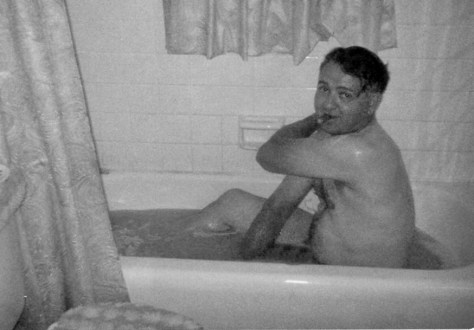
My Uncle Buck, taking a bath and smoking a cigar. This photo makes me laugh. As many issues as he might have had, he was a better man by far than my Dad.
This is another one of my unpublished stories, one I’ve had for over 6 years. I stripped much of the specifics because of the unflinching harshness. It’s still harsh. I don’t really like this post. The stripped version misses all the personal stories.
One of my first blog posts was about the screech of revisionists: those people who will defy truth and appearances by shouting “Lies!” Or, spend an incredible amount of time attempting to rewrite history, even history that is substantiated by detail, fact, and others sharing the same lifeline or timeline. Many of them brood and obsess over tactics to gaslight or silence people who aren’t particularly concerned about privacy, family shame, or admitting their own failures.
I don’t know who this lady is. She was hilarious and nice. She spoke to me like I was a real human being. The picture is at my Uncle Buck’s house. I remember nothing about her, though. It reminds me of the fickle nature of memory. Her warmness remains; her identity escapes me.
I specifically wrote that one of my goals of blogging was to drown my urge toward secrecy and keep the revisionists at bay. I admitted I wasn’t going to get everything perfect – and that memory is a fickle thing. I promised to try to keep the tone right, though, including the undercurrent of both joy and hateful violence.
In spite of my commitment to share my life, I have dozens of personal stories I’ve not published. Some of them are dark revelations about people who are still living. For other stories, though they are mine to share as I see fit, I still have a pang of reluctance. The stories would fall on some heads like anvils. (I deleted 5 stories in this section.)
Unlike many, if I learn something new or that I was wrong, I won’t stress too much about changing both my previous idea and what I’ve previously written. I won’t be that relative who to this day still repeats the long-squashed mistaken idea that any of our last five generations were Native American.
Personal stories sustain me. Not just mine, but those of others. I’ve done my part to encourage everyone to share their lives as best they can. Our stories won’t interest everyone. The truth in them, though? It will annoy some people just enough to make it all worthwhile.
Years ago, I predicted the overall arc of revisionists in my life. Many have died. Most have learned to practice blindness and disregard for the presence of my storytelling. The sheer volume, not to mention content, of my years of writing usually drown the attempts to gaslight me. Most people don’t possess the free time, much less willpower, to divulge their lives, especially if their focus is to derail the thousands of stories I’ve shared. It just doesn’t add up. They sound bitter. One of my common refrains has always been, “Get your own soapbox.” The complainers almost never do. They critique, complain, and waste their lives trying to get everyone to conform to their misguided opinions.
I still have a couple of revisionists in my life. They’re on the far fringes because the lesson of keeping my distance from them surfaces from time to time to hit me in the face. They seethe, boil, and fantasize about some future point in which they’ll finally be able to infect me with their falsehoods and craziness. Usually, they do all the work for me. The surrounding people might take a circuitous route in realizing their deceit, but the conclusion is inevitable.
Some revisionists, upon realizing they have failed to silence someone who shares their truth, will change tactics and lie. Some lies are obviously and demonstrably false, but they’ll forge ahead, compounding their initial lie. During my life, I’ve had 4 or 5 harsh attempts to discredit me with cruel lies and untruths. The truth always came out, but it costs me a piece of my soul each time. It motivates the psychopaths to inflict pain. At this point in my life, as the few surviving revisionists lash out, I calmly point out that their version of truth is suspiciously late to the game. The tardiness of their response isn’t a guarantee that it’s untrue, but it puts a hole in their motivation and credibility. I’ve consistently shared my life throughout the years, even when it paints me as behaving cruelly or stupidly.
It’s a unsettling feeling to know that a person out in the world hates the fact that I bear no shame for my youth or for the stupidity I’m guilty of in my life. He carries the weight of personal failure and shame, one that I don’t share. While my younger life was markedly less professional and stellar than his, the time on this end, the one toward the ending of each of us, has been punctuated by personal fulfillment, happiness, and a solid connection to myself and the world. His? Addiction and a fantastical, maniacal pathology that drives him away from the people who should be his foundation in later life. He may have seemingly sprinted ahead at the outset, even as I ran by him years ago and veered away from our shared infection of addiction and anger. He reacts angrily to the fact that his presence in the lives of those around him is a detriment to them. Truthfully, when I am not exposed to his craziness, it fades to the background.
(No matter who I’m talking about in this post, I am sure that someone will be singing Carly Simon: “You’re so vain, I bet you think this song is about you.”) They recognize the tactics because they tend to be echoed by narcissists and angry people at every turn.
I certainly don’t find my meaning through addiction. My head isn’t stuffed with anger. It could have easily been my path.
With each constricting spiral of anger, I push back and away – as I should have done all my life. People tell us who they really are, day after day, year after year. We endure them and convince ourselves their pathology isn’t really that bad.
Even when I was quite young, he (my principal revisionist) mistook my push away from the pathology of some of my family as a rejection of family in general. It isn’t true. It’s a fantasy he often repeats though. He has a vast mythology created in his mind that paints him as a savior and hero to my connection to the family. It’s completely wrong. He’ll never admit it, though. The soundtrack of this fantasy has placed deep grooves in his ability to see the world as it was and his. I never lost my connection to family. I just lost my connection to him and some others who weren’t good people. It’s no secret that my family contained its share of violence, addiction, shame, and secrecy. When I changed my name, I wrote everyone in the family a letter. For others, I called them or talked them to face to face. I gave them an unflinching explanation as to my allegiance, or lack thereof, to any of them who saw me as anything but an adult they’d never understand. I didn’t need him to kidnap me and forge a new connection to family. Even when I was very young, I instinctively knew which people were ‘my’ people. As a result, I avoided much of one half of my family. It’s a lesson that I should have carried through life, but didn’t. My revisionist insists his version is accurate.
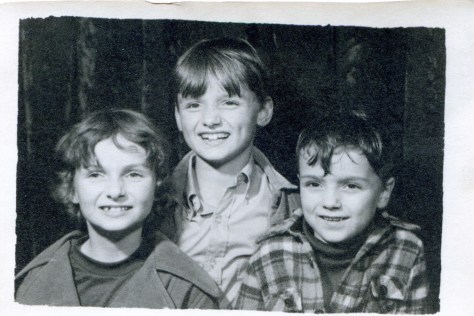
One of the very few pictures of me with both my siblings, the ones I knew about until I was 52.
Allegiance to biological connections is one of the most sinister cons perpetuated on those of us with pathology hidden in the family closets. One of my worst revisionists spent a great deal of effort to pummel me into submission by insisting that family honor demanded my silence. He denies that now, too. In his mind, he was the champion of truth. The reality? He fought me tooth and nail about my right to tell my story, especially those parts consumed by violence, addiction, and poor choices. My resentment ebbed and flowed throughout my life.
The perversion of family and honor infected the idea of love, too, that unconditional demand that angry people place on everyone around them to require loyalty, obedience, and silence, even those things overlap very little with the concept of mature love. Addicts are especially prone to this tactic.
Despite my early life, I didn’t flee the country, or move to another state. I stayed here and worked to eliminate the stain of my DNA. I knew that the things that I had rejected in the family would torture me anywhere I went. There’s no escaping the ‘us’ inside us.
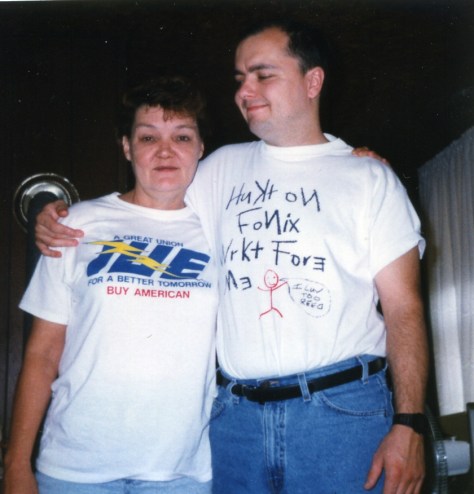
A picture of me with my mom, taken at my Grandma Nellie’s house in Brinkley.
Some of the those secrets I’ve uncovered through diligent study and research, not to mention DNA. I endured a lot of shouting as my skill at uncovering the truth and asking the right questions improved. It’s getting quieter, though. The revisionists continue to fade, to lose all credibility, and to evaporate into history. They’re still gnashing their teeth at me, though. Those people look – and sound- crazy.
I deleted a section here that became obsolete due to the discovery of an unknown sister in 2019. Her existence nullified all the anger the revisionists inflicted on me about the family tree. I’d always insisted that given the number of times dad cheated, children must have resulted. I persisted in my march toward filling in the holes and answering the questions about our ancestry, even when people maneuvered with anger to stop me. I was proven right about the family tree and about my factual conclusions about my Dad. In case I wasn’t clear, Dad wasn’t the only one who cheated. Even the pious ones had scandalous affairs, one-night stands, and secret addictions. It’s in part because of this that I automatically assume anyone saying, “Why are you asking questions,” or “Stop asking questions,” is guilty or hiding the truth for someone else.
A picture of my parents at my Uncle Buck’s house.
I also found records and newspaper accounts of some of my Dad’s criminal behavior, some of it from the early 1960s. He wasn’t simply a young man with behavior issues. He was at times a bad person. That statement alone would have earned me a chance to get accidentally shot in the deer woods years ago. Family did not permit me to idly discuss what was self-evident.
This memorial was placed in the newspaper near my Dad’s hometown. No mention is made of his impact through his horrible behavior. We all become saints upon our death. Many in my family are counting on this.
It scares the revisionists to know that someone like me could be the final word, the last word in their epitaph regarding legacy and truth.
x
With my brother, in front of the house on Cottonwood in Springdale, before he left for the Army.