“Open the door, Richard!”
It was the last thing his wife Sara said to him, as she lay on the edge of the bed, the light in her brown eyes fading. Her open copy of “The Last Picture Show” was flat on the quilt next to her. The two paramedics who had just arrived looked at Sara in helplessness, unsure what her last words meant. Pete waved his hand toward the paramedics to indicate that she didn’t want any extraordinary measures to prolong her life. Sara had mentioned more than once that she wanted to live a full life until she could no longer do so independently. Pete and Sara had shared a long life together. Despite his promise not to call 9-1-1 if the time came, he had reflexively panicked for a moment when Sara’s headache painfully blossomed and half of her body went numb.
“Who is Richard, sir?” One paramedic asked Pete as he leaned over to place a hand on Sara’s neck, already certain that she was gone. Behind him, the clock indicated 11:59, a minute short of the new day.
No one would understand that this was their private and intimate joke, representing a short-hand to entire conversations and connected moments. “Open the door, Richard,” Pete whispered.
As he looked down at Sara’s silver hair, Pete suffered a stroke of his own as his thoughts retreated in time. As his mouth contorted, and he became slack, the paramedic motioned for his partner to help him with Pete. It was going to be a long night. They took their time, instinctively giving Pete’s body time to take him elsewhere. Pete never made it back to the home he shared for so long with Sara, nor was he awake or aware of his beloved Sara’s funeral. Since they’d made arrangements years ago, Sara was laid to rest in the cemetery of the church where her father had once preached.
…
Soon after, Pete began a quiet life in Shady Glen Nursing Home. He moved in the day the facility opened. His picture was on the front page of the local newspaper. He didn’t speak a word after the stroke. He would learn to smile again, and the vast repertoire of facial expressions he demonstrated was evidence that emotionally he was intact. As happens with so many nursing homes, after the grand opening, the staff slowly turned over, moving on to other jobs or to other homes with better pay and benefits. By the time he was eighty-five, none of the staff employed there remembered Pete’s original story, other than he was unable to talk.
Often, he would prop himself up in bed and shuffle through the pages of his journals. Sometimes, staff would find him in his room listening to his shortwave radio in a variety of languages. His ability to freely move returned and he began to bathe himself, eat infrequent meals, and dress. He hadn’t spoken a word in his 15 years at Shady Glen. Residents and family became accustomed to Pete’s presence on the periphery of things. He seemed to drink in every word uttered nearby.
Sometimes, he would sit by the outside door and scribble in his journal, hour after hour, a relentless torrent of nonsensical scrawling. Near his tv stand, you could see his stack of journals, each filled with his handwriting. Several nosy housekeepers, nurses, and CNAs had opened them, trying to make sense of the thousands of pages of writing. They shook their heads in sadness, wondering about Pete and how badly his stroke had hurt him. A rotating cast of staff would occasionally bring him a new journal for him to later fill with his mindless scrawling. It never occurred to a single soul that perhaps Pete’s scribbled writing was something other than gibberish.
People would speak to Pete, often at length. He would sit patiently, head turned to face them. Because he was otherwise in good enough health, the doctors who would visit less and less frequently advised the staff to not pressure him toward a response. Through the years, some of the residents visited him and shared the stories of their lives with him. Often, it appeared as if he were taking notes as they spoke to him.
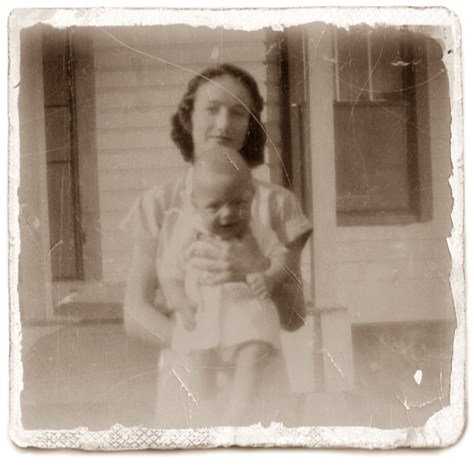
Other than his journals, he had one possession remaining: a picture of a lovely young woman with a sly smile, holding a smiling baby. Everyone who saw the picture stopped to admire her in permanent repose there.
Each day, Pete would take his red pen and make a large “X” across the previous day’s block on the calendar. Each “X” represented another defeated day behind him. His battle was to return to Sara when it was finally his time. The days flew past like startled birds.
A few Saturdays after his 85th birthday, Pete was still in bed after an early supper of beans and cornbread, staring at the sunlight cascading across the ceiling as it marched its way toward the evening. In the distance, he could hear a loud voice almost singing. “Hey, young fellow! Good evening!” The voice seemed to be on the prowl, its greeting changing slightly based on the sex of the listener or apparent temperament. It continued its approach and then went silent.
Knock, knock. A fist bumped against Pete’s door. Silence.
“Open the door, Richard!” the voice boomed.
Stunned, Pete lay there in silence, holding his breath, trying to imagine how a stranger was using his wife’s secret words, so many years after her passing. He hadn’t heard it spoken since the night his Sara passed away, except in a few vintage radio shows. Both the phrase and style of music had all but vanished from the American consciousness. Pete marvelled at the constant ebb and flow of music, language, and culture in the United States.
As if the stranger read his mind, he said, “Don’t make me bring Count Basie in there, sir. Time to get acquainted with your new social director! I’ve been here a month and I’m not taking another ‘No’ for an answer today.” The man’s voice boomed. Pete remained motionless and quiet, hoping this strategy would send the visitor on his way in the same way it had during previous visits. Pete learned many strategies in his long tenure at Shady Glen.
Without waiting for Pete to answer, the stranger opened the door and said, “Hi there. I’m Crosby. We’re going to meet in the main area in 30 minutes, so drag it out of that cocoon you’re in and get down there. I know you can’t talk, so see ya.” He turned and departed. Pete barely had time to notice the young man’s outlandish mustache or the bright blue suit he was wearing.
Pete stayed in bed, aggravated that Crosby would barge in, but also intrigued how such a young man might be familiar with Count Basie. His wife’s memory and their shared catchphrase compelled him to investigate reluctantly. Pete had never taken part in any of the contrived social activities at the nursing home, although he had been an involuntary spectator for many of them. Given the acoustics of the building, he had no choice but to listen to much of their gatherings, too, regardless of where he found himself inside its confines. The previous social director was very old and evidently thought that lifeless bingo and watching the television in the common area was enough socializing. Occasionally, one or two mediocre musicians would visit them. Pete could discern whether the visiting musicians were enthusiastic about their visits; their music conveyed a sense of delight and energy.
Forty-five minutes later, there was a sizable turnout in the common area. As Pete shuffled into the room, he could see Crosby standing near a record player, a reproduction of one of the older models of his youth. Crosby still wore a blue suit and had an unlit cigar in the corner of his mouth. He looked ridiculous, and Pete knew without a doubt that he liked him.
“As many of you know,” Crosby began, “I’m the social director. My mom named me Crosby, after the infamous Bing Crosby, because she was a standards singer when she was younger. She didn’t like Bing, so she decided to give me his surname as a first name. We’re going to start by listening to a song that is often overlooked. This record was one of my mom’s, so let’s get started.” He motioned for everyone to sit or find a comfortable spot. Many were in wheelchairs. Crosby didn’t wait for everyone to be quiet, as he knew from experience it was almost impossible to convince a group of seniors to stop talking completely. Some talked to one another, and some talked to themselves, regardless of setting.
Pete, being near the wide entrance, carefully plopped onto an oversized ottoman. There were six of them along the nearest wall, designed to both seat and catch someone with uncertain stability.
The needle hovering over the record descended and after a hiss, voices began speaking. Within seconds, Pete lost the ability to remember that sixty years had passed since he and Sara had stood in the nightclub, laughing and shouting “Open the door, Richard!” at one another until they had forgotten what was funny to begin with.
2005 faded as 1940-something coalesced in Pete’s imagination.
…
Sara stood in front of him, close to the gaudy jukebox, the dress her mom made for her shining a bright yellow despite the smoke-infused light in the nightclub.
Just 7 hours earlier, they were married, with Sara’s father Reverend Thomas Burns officiating the ceremony. They had chosen a place near the river by Sara’s childhood home to have the wedding, even though the Reverend’s church was only a quarter-mile from his house. About 15 family and friends attended. Sara insisted on wearing a yellow dress instead of a traditional white one and after some bashful objection, her mother joyfully made it for her. She told Pete that he had to wear black slacks, a white shirt, and a blue tie.
After the wedding ceremony, Pete changed into slacks and white long-sleeved shirt so that Reverend Burns could baptize Pete in the river. Much to Pete’s surprise, both Sara and her mother Lucy had a plan to run and jump into the river after the baptism was finished. Even Reverend Burns had no idea what they were up to until he heard them whoop and jump into the river. As they came out laughing, Mrs. Burns shouted, “You’re never too old for a refresher baptism!”
Reverend Burns tried to act irritated, but even he burst out laughing at the spectacle. “It’s a good thing that you’re an only child, Sara,” he shouted. “Otherwise, it would be the death of me.”
After the wedding and baptism, everyone came to the Reverend’s house to enjoy a communal meal. Pete asked Thelma Pinkins to make enough Lady Baltimore Cake for everyone. Her sisters, all seven of them, cooked enough fried chicken to fill three bathtubs. A friend of the Reverend, someone you’d never find inside his church, managed to provide a sizable assortment of wine, beer, and moonshine. Others brought soda and sweet tea, of course. There was enough food to satisfy a hundred people. It was a celebration unlike any Pete had witnessed in his life. John Hoskins, along with his brothers and cousins, brought their guitars and fiddles and provided the music. Rumors said they’d memorized thousands of songs just by hearing them on the radio. Anyone foolish enough to skip the celebration would undoubtedly hear both the music and the frivolity through their screen windows, anyway. At Reverend Burn’s church, everyone was welcome to be married there and for a meal to be provided. Members of other congregations often chose his church to celebrate. Because of Reverend Burn’s reputation, other pastors seldom became upset about it. Those with jealousy in their hearts knew to keep their criticisms private.
Sara’s parents, though religious, loved to socialize, dance, and share a good drink. They were well known in their small community for having open invitations for people to come to share their supper or sit outside as the fireflies approached. Often, they’d sing songs and share a drink as the night deepened. All were welcome. Reverend Burns was ahead of his time and didn’t overly concern himself with appearances. He worked the fields when needed, helped chop wood, and built furniture for those needing it. He constantly reminded everyone that the world was a short place to stay and to get one’s fill while the good Lord provided. Pete could think of no better way to express his views on life now that he was once again with Sara. “Live now, then live forever,” he’d say as if it were a prayer, exactly like his father-in-law had done. “Praying is done best with dirty hands,” the Reverent often reminded people. “Just like washing your hands removes the dirty, prayer and reflection help us get past the wrongs we’ve done.”
Sara’s parents died in a fire five years later. Over a thousand people came by the Reverend’s church to pay their respects. John Hoskins sang several hymns for the funeral and finished with the Peerless Quartet’s “Let Me Call You Sweetheart,” a song both the pastor and his wife loved.
After the Reverend’s death, Pete sold his managing interest in the lumber company his dad started and operated with a paternal cousin. He became a public school teacher, just as Sara had. Both he and Sara spent their lives in the small school district. No one knew that Pete’s share of the business had become worth a small fortune.
As Pete stood near the wall, laughing almost uncontrollably to the musings of Count Basie being played at the nightclub, he couldn’t imagine how life had brought him back to Sara. War and the wide world had conspired to separate them for a time. He’d survived being shot 4 times and as he bled, he thought only of coming home to Sara. Even among his German captors, he shared stories of his girl back home. Unlike most of his contemporaries, he bore no hatred toward the soldiers themselves; each of them found himself trapped by decisions made by strangers with titles or rank. Pete was discharged forty pounds lighter than when he had enlisted. Unlike many others, however, he spent his time in captivity listening to everyone’s stories, even those the Germans sometimes shared. He learned German, Italian, and a great deal of Spanish while they held him captive.
He knew that several men in the nightclub were stealing glances at Sara, attempting to gauge her beauty and measure her smile, weighing their chances of a dance with her. When she laughed, everyone seemed to forget that life was filled with troubles.
Each time Count Basie or those around them would say, “Open the door, Richard!” Sara would throw her head back and laugh like humor had just been invented for her. The phrase was a fad, one which was everywhere until it disappeared like an early morning mist. For that night, though, it was hers.
For the moment, both Sara and Lucy accepted offers of a dance from eager strangers. They swished and twirled on the dance floor as Pete and his father-in-law watched in wonder as the women in their lives demonstrated their graceful and carefree approach to dancing. As another record dropped to play, both Pete and Reverend Thomas approached their respective wives to claim the next dance.
Sara and Pete spent their honeymoon night under the stars, in a field near the Reverend’s church. After that night, the first of their long marriage, both of them used the phrase “Open the door, Richard!” to signal “hello,” or “goodbye,” or even “I love you,” and all manner of meaning residing between them. Family and friends grew accustomed to hearing the phrase as the years passed. As time took its toll and friends and family departed, almost no one remembered the origin of their catchphrase, much less what had inspired it.
Like all great stories, it was born in intimacy and laughter.
…
Pete felt himself being shaken. It shattered his connection to the recollections of the past. His head felt both light and foggy at the same time.
“Are you okay, Pete? Pete! Can you hear me? Nod if you can!” He felt hands near his shoulders, shaking him.
He opened his eyes and he could see the faces of a few fellow residents hovering over him, and behind them, the ceiling. It occurred to him that he was on the floor.
Crosby’s face came into focus above him, the absurd cigar now dangling toward him. Crosby seemed concerned. He probably thought Pete had a stroke or had shattered a hip in the fall.
From within Pete’s own throat, an alien sound burst out. For a moment, Pete didn’t understand what had happened.
“Crosby, are you going to help me up, or not?” Pete’s voice sounded perfectly normal, as if he hadn’t been mute for more than a decade.
The cigar fell out of Crosby’s mouth and struck Pete across the forehead. A few of the residents gasped in shock at hearing Pete’s voice. Many were convinced his brain had been scrambled years ago.
After a few moments of conducting an inventory of Pete’s general well-being, Crosby helped him sit up and then shakily stand.
“Let’s go outside,” he told Pete, as he led him outside and away from prying eyes and ears.
…
A few minutes later, Pete sat outside below the driveway canopy. The sun was finally receding below the distant treeline across the road. Crosby sat next to him, still with a concerned look on his face. His blue suit seemed other-worldly in the remaining sunlight.
“Pete, are you really okay? You were smiling and just fainted dead away.” Crosby patted him on the knee.
As if he had not spent years unable to speak, Pete said, “Yeah, I’m okay. I’m okay now. That song broke something loose inside me, Crosby. It was our song, my dear Sara and mine. I was remembering our wedding day.” Pete shook his head as if something were still loose.
“I love that song, Pete, and Count Basie in particular. It’s a coincidence, that’s for sure.”
Pete and Crosby sat in silence for a minute, neither of them certain it was a coincidence at all.
“Crosby, can I tell you a secret?” Pete whispered the words.
“Yes, of course!” Crosby couldn’t contain his curiosity. He knew the other residents were inside repeating the miraculous first words of Pete’s a few minutes ago.
“Those journals of mine? The ones everyone thinks are full of scribblings? Those are my stories.” Pete laughed.”There are probably 10,000 pages of the stuff. Everything in my life is in there and at least a third of it is about my precious Sara and our life together.”
“Oh?” Crosby asked. He was suddenly at a loss for words, an unusual predicament for him. His mother used to pretend to faint from a lack of oxygen when Crosby would excitedly tell a story.
“The real kicker is that the stroke only affected me for a few weeks. Everyone just assumed that I couldn’t speak. I didn’t want to, though. After a time, I think even I forgot.” Pete laughed at the absurdity of his long prank. Crosby didn’t know what to say. The staff had told him several wild and speculative stories about Pete’s journals and life.
Ten infinite minutes passes as both Crosby and Pete sat with their own thoughts.
“Let’s go back inside and listen to that record again, Crosby, before I think this is all a dream.”
As Crosby reached for the door pull, Pete laughed and said, “Open the door, Richard!” They both laughed like old friends. Like all good friends, they had recognized something essential in each other.
…
As Crosby readied the record player and prepared the needle, Pete stared at Crosby. Only a couple of the people from the previous playing were still in the common room. Most had gone back to their own rooms, to the expansive dining and activity area nearby.
“I want you to take the journals, Crosby. Do with them what you will.” Pete’s voice was now vibrant and strong.
“I can’t take them…” Crosby began to object but stopped as Pete held up his right hand.
“Okay, okay.” Crosby realized how awkward his voice now sounded. “If it will keep you off the floor, I’ll agree to anything.”
“Ha!” Pete barked. “Now put on the song before I croak.”
Crosby dropped the needle. The song began to play for the second time as he sat down a few feet away from Pete in the darkening room. When the song ended, Crosby rose to turn the record over and play the B-side.
A chill rose up his spine.
As he leaned over to look more closely, he knew with certainty that Pete was dead, well on his way to find his Sara.
“Open the door Richard!” would be their eternal greeting.
Crosby smiled. Witnessing an honest life and death were both a rarity in the world. Of the hundred thousand people who died that day all over the world, Crosby predicted that Pete would linger in his mind for a long time.
After a few minutes of sitting in silence, Crosby made his way to the nursing center to inform them of Pete’s death and to start the machinery tied to someone’s demise. To his further surprise, he found that Pete had all the arrangements made.
Once Crosby deciphered Pete’s handwriting, he spent his waking moments reading the stories of Pete’s life.
…
A year later, Crosby walked along the edge of a barren cotton field and felt the pull of an early-October wind. The river was nearby, and the smell of earth and water washed over him. After reading all Pete’s journals, he felt compelled to visit the places Pete, Sara, and Mr. and Mrs. Burns called home. To his surprise, the small community still stood, even as so many others faded. People had come and gone, to be sure, but the spirit of the little town was intact. So much of Pete’s journals were meticulously detailed, and each place was mentioned with care. It was difficult to imagine that everything he’d written in them was true.
A hundred yards further, Crosby saw that a white church and its sharp steeple stood against the treeline. On the other side, an expansive cemetery occupied the landscape. The gravel parking lot ran all the way up to the front of the double doors in front of the church. On the front, a small sign indicated, “Perkins Gospel.”
To the right, a marker stood a few feet from the wall of the church. A copper-colored plaque was attached to the upright chunk of shaped rock. “Perkins Gospel, founded 1899. Generously funded in perpetuity by an anonymous donor, in memory of the most humble of God’s servants, Reverend Thomas Burns.”
After Crosby composed himself, he dared to walk the remaining steps and stand in front of the graves of Pete and Sara. An hour passed before he could pull himself away, both from the gravestones and the overlapping memories of this place so lovingly described by Pete.
He would never again hear Count Basie without picturing Sara in her yellow dress and Pete’s admiring eyes following her.
A place, a time, a love, all in equal measure.
…
Say it with me, friends, even if you don’t know the original song: “Open the door, Richard!”
May a song of your own choosing forever propel you forward, in this life and the next.
…


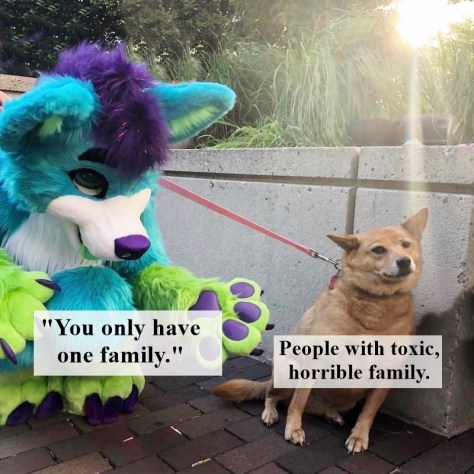 This should be obvious to all the well-meaning people out there.