P.S. It’s All P.S.

phone_communication_call_select_museum_antique_nostalgic_talk-884224.jpg!d

People sometimes ask me why I named my original blog “P.S. Parenthetically Speaking.” It currently resides at my own website, xteri.me

First, if you’re reading the written language, it’s safe to skip over anything contained inside parentheses. (Weirdly enough, if you’re doing math, the portion inside the parentheses is vitally important.) My blog was designed as a ‘take it or leave it’ valve for my life. I’m not curing disease or mapping the most efficient economic system in my posts.

Second, ‘P.S.’ is an afterthought and also able to be skipped without too much harm to the content. When letters were the rage, a ‘P.S.’ in a personal letter usually contained fond sentiments or a personal note to close the letter.

Third, most adults can’t spell the words parenthetically, parentheses, or daiquiri. (The last word, in particular, and especially if one’s been imbibing.)

Finally, I liked the idea of someone attempting to speak parenthetically. I’m not sure if this would entail them making wide arm brackets as they spoke. One of my fascinations with language is the disparity and complexity of the written language versus the spoken one. We spend much more of our lives speaking than we do reading or writing; yet, we’ve allowed our language to be our master.

P.S. Language doesn’t need to be difficult.

Years And Years (TV Show)

Painnt_Creation_2019-07-22_043528

For anyone interested, I recommend the HBO import show “Years and Years.” It’s dystopian from necessity, yet feels like a time traveler may have gone forward and returned to camouflage a possible timeline waiting for all of us.

Without flinching, the show throws you into a tailspin as Trump detonates a nuclear bomb near China as his second term expires. Technology, medicine, immigration, politics, money, and other issues swirl and coalesce as time frenziedly hurls forward, whether we’re ready or not.

Although it’s based in England, the storylines overlap with world events we’re already witnessing. The story focuses on a particular family as it spins in and out of control. The family could be any of us. Forces we’ve set in motion conspire against us.

Anne Reid, who plays the matriarch Muriel in the show (and who was phenomenal in “Last Tango in Halifax”), gets credit for the best line of the show: “It’s a terrible, terrible world, but I want to see every second of it.” She gets credit for the second-best lines in the show – and perhaps one of the best lines in a TV show, ever, when she points that each and every one of us is to blame for almost all the problems we see externally in the world. It’s impossible to watch it without wincing in recognition.

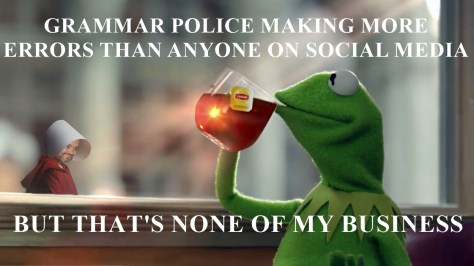
It’s easy to compare “Years and Years” to “Handmaid’s Tale.” This show, however, connects in a more recognizable way. You’ll feel some strange emotions as you watch the show unfold. Among them are dread, fascination, wonder, loss, a bit of terror, and hope. All of them fight for dominance, often simultaneously. Like the Hulu show, I find myself thinking about the implications of some of the ideas days afterward.

For anyone wishing to find something that is limited in length but infinite in the ideas it will provoke, I give this show a huge recommendation.

When time shifts forward in the show, the eerie melody that accompanies the shift might make your hair stand on end. You’ll be thinking, though.

And you might be thinking, “Is it REALLY us?”

Yes, it could be.

“Years and Years” is one of the best shows I’ve watched in quite a while.

The Unsettling Solace Of the Ruins

67054123_922407414762731_8400116236020613120_n.jpg


This is a guest post.

Each of us has a hometown. Returning brings the blessing of memories and the bitterness of entropy enveloping what we remember.

….

Trips to my hometown are usually quick and for a particular purpose. Occasionally during these trips, an investment of a few minutes is made to drive past the small house that was home to me for well over half my life. 

One of my earliest memories, if not the earliest, is of the day we moved in. I was not yet four years old. We lived next door, and my main contribution to the move was carrying my baby doll’s high chair down the front steps of that two-bedroom house (where a sheet divided one bedroom down the middle to accommodate my brother on one side and my sister and me on the other) to the larger (barely) three-bedroom.

This was home for the next 28 years–until my mother died—when it became a house-home mixture of sorts. It was never the same for any of us with her missing, but my father owned it for several more years before selling it and moving to a new town. 

In the bottom right corner of the photo is the front window to my bedroom. It often held a box fan in the summer and was covered with plastic on the inside during the winter to help block the cold draft. During my early teenage years, it held a view to and thoughts of a much bigger world beyond. 

The crepe myrtle outside this window was always one of my favorite things about the house. It provided a wonderful canopy for day or evening, and its delicate flowers and flaky bark were a constant enticement to touch. This crepe myrtle has never been subjected to the yearly scalping performed on many crepe myrtles, and so it has grown from the 10-foot (or less) height of my youth to the 30-40 foot beauty you see here. Knowing this tree as a friend from day one makes it feel as though the roots of this tree are deeply intertwined with the “roots of me.”

The photo is from the street in front of the house-taken today during one of those quick trips.  

Not all here was beautiful, though. Today brought the unsettling (and a bit devastating, being totally honest with myself) discovery of an abandoned home with a broken kitchen window and No Trespassing/Keep Out signs posted in various places on the property. Barring an unforeseen and unlikely miracle, this house will probably not exist within a few years. Based on the condition the structure and its outlying storage buildings are in, I hope it doesn’t. It would be far less painful to see a clean slate than to see the neglected and abused ruins of a home that held life and dreams for so many decades. Maybe I will drive past again during the next fast dash to the area; maybe I won’t. Maybe instead, I will ask friends who still live nearby to let me know when it is gone. I know this is not a situation unique to me, and maybe it makes no sense to many others who often moved in their growing up years; but, for today, I am sad about what is and miss what was. 

In Memoriam Of The Truth


1xfamilyscan (143)
Deanne at her confirmation…


This post needs a preface. My last wife died suddenly over a decade ago. I was ten years older than she was. She came from a large family, one like so many others; dysfunctional and complicated. Deanne was the youngest of many siblings. Like so many of us, she made some terrible choices when she was younger. Her family mostly failed to adapt to the fact that she grew out of much of her youth. The church and religion were two separate entities in her mind. One, rooted in the practical and loving faith of her paternal grandmother in South Dakota, and the other, insistent on concealment and manipulation. Because of something that happened when she was young, Deanne’s appraisal of the church as a whole was marked by suspicion and lack of trust.

I posted this to Deanne’s ancestry records so that her truth would be preserved – and possibly outlive the revisionists who will read the words and be unable to resist lashing out against the truth I’ve shared. It’s uncomfortable hearing someone revise history or mischaracterize someone’s life. The purpose of my addition to Deanne’s posthumous biography isn’t to harm. The truth never harms unless those who hear it don’t wish to accept it.


Deanne Cordell was baptized in the Catholic church in Sioux Falls, South Dakota, on Nov. 28th, 1976, when she was two days old. Much of both sides of her family were Catholic. As she often joked, “I didn’t have a say in whether I was baptized, but I have a say about going to church.” Deanne loved her paternal grandparents, especially her grandmother Jessie Gosmire Cordell. She admired her faith and the way she lived it. Deanne often talked about how much she wished that people could have an open, honest, and compassionate faith like her grandmother. As for most other people, she had an intense impatience with their hypocrisy and lack of compassion toward those in need or those making mistakes. She’d look back at their life and see all the craziness and wonder how they didn’t recognize themselves in the lives of others, even as they criticized them. It caused friction with many people in her life.


I have no way of knowing what she was referring to or whether it was about her own life, but she knew a girl who had experienced some kind of abuse at the hands of clergy. She said that the girl had told her mother about it and had been punished repeatedly for lying about the church. It had a substantial impact on her views about the church. I tried to circumspectly discover the identity of the girl in question over the years. “It’s not a part of my life now, so it doesn’t matter,” she’d say. I knew it mattered, though.


By the time Deanne was an adult, she had grown to dislike the church intensely. She was unhappy with church politics, its policies, and also the way it concerned itself more with public relations than honesty. As an adult, she only attended church when mass was part of a Catholic wedding or funeral. Otherwise, she preferred to live a secular life. A great deal of her dissatisfaction with the church was the way so many had responded to her choices in life, some of them with great anger and disapproval. She found no holiness in their attitudes.


Oddly enough, had she remained in South Dakota or moved back as an adult, to be nearer her grandmother, I know she would have attended church with her. Her grandmother was her connection to faith, while her own mother was the wedge that distanced her from it. Her grandmother never held religion as a weapon and certainly didn’t sharpen it at people’s expense. Deanne admired that relentlessly.


Before she died, she talked about how ridiculous some of her family member’s ideas regarding religion were. One in particular was regarding cremation. She was fond of pointing out that those with the strongest views about cremation seldom managed to pay for their choice before departing, leaving other family members to bicker about the issue. When my Uncle Raymond died about a month before Deanne, it allowed us to talk about her own choices. She thought her mom’s antiquated ideas about cremation and Catholicism were ridiculous. She was adamant that she wanted to be cremated and not buried or memorialized in a Catholic church or cemetery. She was equally adamant that her middle name not be used. Given that I had legally changed my name, it was one of her wishes that she eventually change hers, too, and rid herself of the name. We joked a lot about choosing an entirely different name for herself, as I had done. Given enough time, I’m certain that she would have and I think she would have chosen “D” or “DeDe” as her first name. I had made and placed hand-painted “D” letters in a couple of places in the place we lived.


In my commentary, I’ve held back from the overt negativity Deanne had toward the church. She struggled to come to terms with her own beliefs, as most of do. She also struggled with her mom’s attitudes about religion, as they seemed to trigger her distaste for religion like nothing else. I’d laugh and talk her down from being angry about it. It’s part of the reason I still sometimes wonder whether Deanne was the girl she knew who had the story to tell about clergy.


Deanne has living family who would vainly attempt to revise my recounting of her attitudes. I was closer to Deanne than any other person in her life. No one knew her as an adult as I did. I married her when she was 20 years old. She died at 31. Many thought of her as the “kid” of the large group of siblings and half-siblings. They carried their prejudices about her youth into her adulthood and often discounted her opinions about life, whereas I only began to know her when her adulthood was starting. I had no preconceptions.


In the last year of her life, I attended a variety of different churches, trying to find one which might be worthwhile, despite my agnosticism. Deanne wasn’t interested in joining me. She was, however, interested in what I had to say about religion and the things I learned. Much to the surprise of many of her family members, she knew a great deal more than they realized. Many were simply too busy ignorantly trying to correct her instead of listening.


I write this in part because a few people have remarked that she was Catholic. She most certainly was not Catholic, despite the revisionist wishful thinking of some of those who knew her. Whether it is fair or note, Deanne would have much preferred a world without the church, or organized religion at all. One thing is certain: she believed that anyone involved in a sex scandal at church should not only be exposed and punished, but anyone protecting those who did so should be doubly punished.


I have no agenda to hide the truth or tarnish her image. Truth is its own reward, even as it leaves a bitter taste in some mouths.


X Teri


The Grudge Conclusion

kelly-sikkema-_whs7FPfkwQ-unsplash


The Grudge Conclusion:

If you consume social media, you’ll get tired of simpletons saying that all grudges are synonymous. If someone doesn’t want to talk to you because you significantly abused or harmed them, it isn’t a grudge: it’s wisdom disguised as self-protection. If the simpletons persist in wrongly classifying your decision, they are clearly indicating to you that they hold a low opinion of you – or a disproportionate opinion of themselves.

Privilege, Improvement, Hypocrisy

brandon-wentland-VYLrXrI-Rwk-unsplash


Now that enough time has elapsed, I can post this. A former resident of Springdale had taken considerable pains to challenge a bit of civic improvement. He has a family member still living in Springdale. After investigating the details, I agreed that the city had awkwardly presented its plan. Most of the intended change, however, greatly benefited the city as a whole. Unfortunately for my friend, the improvements would slightly infringe on the previous way of life a bit.

This is just me talking without an appeal for my words to set in stone or to be taken as words of certainty. They are in their totality a walk through some of the thoughts which come to mind when I read or hear words other people have spoken.  I don’t have all the answers, but I do have many questions.

First, appeals to the past are strange to me because the people making them inevitably and arbitrarily choose a specific time amenable to their own arguments, rather than the broader scope of history.

At risk of being ostracized from polite company again, I cringe when I see someone say, “My family has owned that land since…” as a defense against change or incursion. I can only imagine what those who preceded them might think about such a narrow view of ownership. The European arrival, for example, dislocated and eradicated millions of indigenous people. Also, this world is predicated on the illusion of permanence, even though we are floating on gigantic and active tectonic plates, swirling in a complicated vastness which will one day extinguish itself.

Yes, I know that we didn’t personally participate in the distant past; we just benefit from it. I’m not immune to being tone deaf myself. It’s strange to see other people failing to realize they also are making errors of both logic and consistency.

One of the people criticizing the previous Springdale resident for jumping into the discussion harshly framed the argument: a rich, white outsider using the process to thwart what the majority saw as a benefit for the community. He used more profane words, but the message was striking.

Springdale is the 4th-largest city in Arkansas. For several reasons, there have been significant changes which have moved it away from its parochial past. The people who’ve stepped up to make the changes have overall done a spectacular job of managing resources, finances, and issues. Yes, I have problems with the way some of it has been done, but it is the price I pay for being a part of a living and thriving community. Change is constant. At my age, I’m not supposed to be enthusiastic about the march forward. It’s supposed to be my job to be reluctant. I disagree, though. We’re moving forward, and it’s as much on me as the rest of the community to take the long view.

It’s also odd to see people who fight change because it impacts them disproportionately. It’s difficult to accept change, despite enjoying the fruits and benefits of the community. By belonging to a city, you agree to a compromise of interests. If your property is affected or impacted, you can at least take solace in the fact that you will have a chance at fair compensation – a chance the indigenous people who lived here before were never afforded.

Those fighting against change for self-interest rarely see themselves in the way I’m describing – or realize that they are fighting the tide of time and impermanence.

New roads, street widening, public amenities, parks, rezoning, public condemnation proceedings, expansion- all of these are presented as improvements, for the common good. All of them happen because communities or their leaders have decided that things must change.

Yes, sometimes boneheaded decisions are made, precisely because human beings are involved. In those cases, it’s wise to use the processes in place to cause absolute hell. Absent those circumstances, though, it is an argument from privilege to rail against the public interest, generally speaking. Poor people don’t generally get to make such arguments.

P.S. I realize that there’s hypocrisy in my argument. That’s part of the point.


This Is The World’s Best Post

tina-dawson-b_X4aBtHndE-unsplash.jpg


“The World’s Best” anything is nonsensical.

If you look closely, you’ll see that the woman in the picture is eating raw meat. On the table, she has a cut tomato, black licorice, and maynnaise. On the further counter, there’s a fruitcake and plate of sushi. Chances are, one of those things gives you the urge to hurl your lunch.

It seems like a good cliché for a headline or when used as an easy marketing hook. When I see it, though, I wince. In the past, I was blasted by a critic who screamed at me for using the cliché, as well the one comparing anything to crack. I pointed out that criticizing me was acknowledging that my opinion held value. (Because who goes out of their way to attack a meaningless opinion?)

Tastes vary wildly. One man’s poison is another man’s passion. Perversely, some people love eating or ingesting actual poison – and I’m not referring to people who enjoy eating at Hardee’s.

Whether it’s raisins, black licorice, mayonnaise, fruitcake, whiskey, celery, beets, meats cooked rare, meats cooked well-done, eggs over easy, or dried crickets, there is no universal standard for food.

When I was growing up, a lot of Southerners would foolishly say, “You don’t know what’s good!” They’d smack their lips in condemnation at my refusal to eat some of the things they identified as ‘food.’ Some of these same people loved eating raw hamburger meat, spoonfuls of Crisco or lard, and half-cooked chicken gizzards, usually as they cooked over their stoves with a cigarette dangling from their lips. They also invariably had a tub of warm mayonnaise always open and sitting on the counter.

“The World’s Best” is a meaningless title, much in the same way all awards based on subjective taste are without foundation.

I like bitter, smoky coffee. My wife hates it. I like burned, dry food of all kinds, unlike literally everyone else. Hash browns? Burned. (But I do love standard hash browns too.) Some people hate shaved parmesan because it smells like foot odor. A ripe tomato is like a mouthful of phlegm for some and a delicacy for others. Milk, which is literally nutrition for only baby cows, gives many people the urge to vomit.

The two words, “I like,” are the critical component. If you like it, it’s good.

X’s Food Opinion Edict states: “All food is opinion.”

We can overlap on taste, of course, but it’s a rarity to find any two people whose opinion regarding taste is congruent.

Stop pretending that a universal standard for taste exists.

Like Buddy the Elf, he thought he’d found the world’s best cup of coffee, simply because the sign outside said so.

On the other hand, this is the world’s best post, right?

The Punctuality Reciprocity Observation

jeremy-beadle-qnU-UR0o5X8-unsplash

The Punctuality Reciprocity Observation: The obligation for honoring one’s appointments is reciprocal between customer and business. An individual’s time is worth as much as that of a business or business owner.

It’s a struggle to see posts about “no-shows” in a profession. It’s a common theme in social media, especially with family and friends as they deal with smaller businesses.

I tend to want to write on the posts and gently say, “Move on to another business,” as everyone involved is participating voluntarily and the world is full of other opportunities. This is doubly true when I see friends and family squabbling over ongoing discourtesy with appointments and obligations.

Although our opinions vary regarding the importance of punctuality, we all can agree that where business is concerned, it is discourteous to have a track record of being late, forgetful, or inattentive.

It’s true that a person’s livelihood depends on reliability from the customer.

The obligation is reciprocal, however.

Any customer is likely to have a busy schedule, too, perhaps with a business of their own. It’s incredibly short-sighted for business owners to complain that they shouldn’t be held accountable for punctuality. Their customers are in the same boat, rowing through life with a multitude of obligations and responsibilities. In your role as a business owner, it is entirely on you to design your life, business, and tools in a such a way as to eliminate the chance that a customer will be relegated to the ‘lesser’ priority.

As a customer, it is your responsibility to honor your commitments to the business – and willingly pay the penalty for not holding up your end of the agreement.

I practice what I preach.

Small business owners are people, too, of course. This means that while they tend to judge themselves through the lens of good intentions, they also tend to assume worse motivations for other people, especially customers, as they arrive late, forget appointments, don’t tip as expected, etc.

We forgive ourselves and blame others to a varying degree.

If you are doing business with a friend, it’s more important than ever to proceed cautiously. You have to decide whether the friendship is worth the risk of becoming frustrated with someone who seemingly doesn’t appreciate one’s time or loyalty.

To be clear, I’m not referring to one-off instances of letting someone down. Most of us understand that there is a difference between sustained discourteousness and a one-time problem. We can overlook any excuse, reason or craziness once, twice, and sometimes three times – and probably laugh about it later. Each situation is different, however, and even this general exception can be ignored in some circumstances.

I once gave up and sold a house after countless upgrades and renovations: windows, siding, doors, electrical, plumbing, and trees. I simply couldn’t get a contractor to return, even if we agreed to exorbitant pricing. We had already been the victims of contractor fraud – for several thousand dollars and had multiple instances of people simply not showing up, calling, or following up.

For my part, I work hard to have a “default” position. If I agree to an appointment, I have no problem paying a penalty if I no-show. This is especially true if the business is unable to replace my absence with another customer. In my case, I see the necessity of it. My wife laughs at me about this sometimes. That’s okay. When I do have a problem I like to think it gives me a slight advantage. If I’m willing to pay for being late for forgetting a business appointment, I can more easily expect the same from a business. I often overtip for the same reason, even if the service was atrocious. As with lateness, I can almost always laugh it off. Sometimes, though, it is beyond vexing and in those instances, I want the ability to freely criticize.
There are too many modern conveniences to help us manage our calendars and obligations. A business owner has no valid reason to excuse away a customer’s needs. Things happen to all of us. A business owner has an extra level of required diligence, however, as she or she is the one advertising to others that outside responsibilities and negligence won’t affect the product or service they provide.

In my experience, I’ve learned that a business which forgets or ignores an appointment even once is a red flag. It’s easy to forgive and forget most nuisances regarding a business or person failing to show up or waste your time. As these instances accumulate, however, you learn that it’s better to move on to someone with an untried record. It’s true that the next choice might be no better, but at least hard feelings won’t pile up beyond those involved.

I think most of us will agree that people who are late or no-shows tend to continue to exhibit the same behavior; the only thing which changes is our accumulated frustration with it.

For small business owners: release customers if they aren’t reliable with appointments or payment, even if they are friends or family.

For customers, reward attentiveness with your presence and money. In lieu of resentment, though, move on to another business, one which needs and values your time and dollars.

If you do business with a friend, try to separate your connection from the necessity of moving along before your connection becomes strained by resentment.

The truth is that most people avoid confrontation at any cost. They simply walk away without explanation. It’s awkward for everyone involved.

“I Might Need It One Day”

eugene-triguba-Cm5zI68Wdew-unsplash.jpg


I recently purged a mass of digital craziness from my life. Much of it was a collection of things which reached across the span of years, some of it revolving around angry emails, voicemails, and snippets of unresolved anger. I deleted over three dozen family trees I’d done for people. (I still retain a few dozen others, though.) I have a new computer and a newly-discovered commitment to use a dumping system that allows me to toss it in a virtual closet if I don’t delete it outright.

Gone were mountains of mp3 audio and snippets from my mom and a couple of other family members. I’ve learned not to accumulate many emails either, but even so, I cleaned the drains in this respect too. It’s strange to read “I’ll slit your throat” in an email, knowing that the person was so angry that he or she didn’t stop to consider consequences. That kind of anger is buried so deeply inside a person that almost nothing can reach it. Being forged in a household requiring blood sacrifice, I can understand it. Echoes of its payment still echo in me at rare moments. It’s impossible for me to explain to some of those whose lives overlapped with my younger years that I look at that sort of behavior with a much different perspective than they do. In every case in which the person is still simmering in hate, he or she has only flourished when those around them allow it, excuse it, or fail to recognize it. I see the stain spreading around them; that sort of hate is a seeping poison which pays dividends for at least two generations.  Keeping a distance from its contamination is sometimes the only means to remain uninfected.

Having a digital history of anger somehow ensures that the infection isn’t entirely gone.

Note: it is likely that someone who was poisoned with the venom of anger when younger never left it behind. Instead, he or she learned the social trappings of concealment. Beware that you don’t wander into the invisible net.

Indeed, you might not know when you’d need such reminders from your past at some unknown future date. ‘Need’ might not the exact word, but it serves its purpose here. Why I might not need an email chain detailing a family member threatening to kill me and my rational response to it is for anyone to guess. It was, nevertheless, difficult to discard. Part of me wanted to keep it just in case similar circumstances flared up again. I could point to it and say, “See? I’m not making this stuff up.” The truth, though, is that having it won’t pull the wool off anyone’s eyes in the future, either, no more than it did having it the first time. Just as facts so often fail to matter, neither does evidence for your apparently unjustified beliefs about other people.

Part of being a minimalist is the attitude of less. If it doesn’t add to your life, subtract it and move on. Over the years I accumulated a folder of work-related detritus, too. Some of it was quite important – and probably still is. But it’s gone now as if a hurricane rolled in from the coastline and ripped it free.

Update: the draft of this post existed since at least three years ago. I didn’t publish it because I didn’t want to sanitize it. I’m publishing it now because some of the things I deleted would be useful now. It’s the excuse of every hoarder: “I might need it.” I did sanitize it, though. Very few of us are free enough to say what we want without regard to content.

Education Comes With A Needless Cost

aaron-burden-6jYoil2GhVk-unsplash

It’s strange to hear people say, “Most people don’t need college for work.”

Most people don’t need pants, either, but you won’t see millions of people heading to work tomorrow sans pants. Even if it happens, you still wouldn’t want to see such a sight, based on my wild imagination of what that might look like.

Is economic motive our best barometer for achievement? If we pursue economic interests above those of humanity, it’s my opinion that we’ve surrendered much of what grants our collective future any hope. Capitalism as we know it hasn’t been around for most of our human history. Whatever happens shortly, it’s a certainty that the economic system we currently experience will not be the one which dominates in the future.

Most people don’t need high school for a portion of the jobs that exist; trade or occupational training could replace it, but at what cost to our humanity? Implementing such a system demonstrates that we have lesser motives coursing through our veins. Whether you agree with me or not, I see our enthusiasm for education for all as an indicator of the health of our society.

If only the wealthy can easily take advantage of higher education, we’re going to see a decline in our progressive nature. As the number of jobs declines, we’re going to need to shift our perceptions of work.

We already demand that everyone fund the current educational system, even those who choose to have no children. It’s no stretch to ask everyone to pay for local college for anyone who wishes to attend. I can’t convince those with hardened hearts that an educated populace is a better populace, just as I can’t reach those who believe that we shouldn’t pay for universal healthcare.

Yes, we know it’s not free. Everything is redistribution.

If we can maintain a military capable of eradicating most life on earth, I think we can manage a way to ensure everyone who desires it can get a higher level of education (or training). It’s a strange world to me that so many passively fund an irrational arsenal of destruction, yet balk at improving our intelligence and reasoning.

We are not protected from external threats if we become a threat to ourselves. Stupidity is its own reward. Just ask a Congressman.

Whether a person ultimately becomes a plumber, nurse, or teacher, higher education is an invaluable benchmark for our commitment to society. A plumber with an educated mind is a much more valuable resource to our society. A member of society interacts on many more levels than simple business and commerce.

An argument that strives to provide only the required education to perform a job is one premised on ideals that are unbecoming to us as human beings. The amplitude and depth of our minds is one of the most valuable assets we have.

There’s no reason that we cannot establish an affordable network of responsible public colleges and universities – and pay for everyone to attend. We’re smart people. Most of us know that it’s possible to get an excellent education for a much smaller cost than our current per capita average. Eliminating the elitist demand that people attend colleges based on reputation is the first step. Private colleges could, of course, continue to overcharge for the same education that a public college can provide. The objective is supposed to be education and training for all – at a reasonable price. It’s lunacy to fund a system which doesn’t demand that education itself be the goal, rather than the path or the building in which it was obtained.

Likewise, “college” isn’t a fixed concept. We can re-design curriculum, courses, and content in such a way to eliminate fluff or graduation requirements which often only serve the education machine rather than the degree sought. We can fund community colleges which allow students to live in their communities. We can design course schedules which will enable adults to both work and attend school. We can demand that students be allowed to demonstrate knowledge without attending traditional classes and thereby sidestep the necessity of wasting time and resources by forcing them to go through the motions of the bureaucracy. There are better ways. We didn’t plan our current system; it’s a patchwork of implementations that are devoid of a cohesive objective.

We’re sending too many adults into the world with crippling debt. There’s a better way and a more natural way. We all know that college or vocational training can be done at a much lower cost to students and to society.

Whether we absolve the debt of those who preceded our proposed changes to our higher education system, it’s vital that we amend our system to course correct now that we’ve recognized the size of the problem. We can adjust accordingly as we learn more.

Much of our problem is that many are distracted by the demand for a perfect solution that doesn’t exist and isn’t directly attainable. We must be willing to listen and adapt the system as we go – which is precisely the foundation of education.

Using the benchmarks of the past to determine our path to the future is short-sighted and unbecoming.

Most of us also recognize that educated minds are more necessary now than ever. The perils of ignorance have already brought us sorrow.

I know I’m ignorant of many things. I had some experiences in school that perplexed me. One of my most significant issues was that colleges forgot they are running a business and that as a student, I’m a customer. The goal is knowledge or certification of the same for a reasonable price. As you can imagine, administrators, advisers, and professors had their ears burned by the revolutionary idea of mine that my role was not subordinate to theirs.

We can re-imagine college to mold it to meets its objective: knowledge and ability. We can do so by significantly reducing the time it takes, as well as the cost. And we can do it so that adults don’t have debt as a result of something so vital for our well-being.

It’s the least we can: demonstrate the importance of education without it being an empty platitude.