Category Archives: Diuturnal

A Funny Burial Anecdote

666666.jpg


This is a truish story and names have been changed to confuse the guilty.

A famous writer, an author of at least 20 books, died in Springdale a few days ago. He was well-known for his sense of humor and dry wit. At my recommendation, his family went to a funeral home of which I speak highly. Although he usually doesn’t do so, the funeral director Scott offered to view potential cemetery plots with the family, even though he hadn’t yet met them and didn’t know the recently deceased. His dedication to customer service is quite legendary. I doubt he would have helped me had he not owed me a huge favor – but that’s a story for another day.

The family chose to visit Bluff Cemetery in Springdale. The place is known for its beauty and proximity to the creek running through downtown. Scott pulled in behind the new Cadillac the family of the deceased arrived in. The Springdale Parks worker had already arrived in a white pickup, his camera and clipboard in hand.

After the family exited the car and straightened their respective ties and dresses, Scott accompanied them to the periphery of the cemetery, situated below the overhanging trees. It was certainly a beautiful spot.

To make small talk, Scott nervously asked the family about the deceased. “What did your loved one do for a living?” he asked.

The youngest son answered, “Our dad was a famous writer. You’ve never heard of him?” He seemed surprised. “In fact, all of us are writers.”

“No, I’m so sorry, I didn’t know him or know of him. I read a lot, though.” Scott wasn’t sure what else to say.

The parks employee pointed out the available spots and mentioned that the price was adjusted, based on the reduced size of the plots. “We can dig with much more accuracy than we once could,” he added.

After a moment of silence, the youngest daughter looked along the edge of the cemetery where there were remaining spots available, seemingly measuring their size by her careful steps. She immediately started shaking her head.

“This simply won’t do. Not at all. Dad was too important of a writer to tolerate this kind of mistake.” She seemed agitated.

“How so?” Scott immediately asked.

“The plot’s too thin!” The daughter said, and then laughed loudly.

.
.
PS Writers always get the last laugh.
The Gift of “Rectify”

6666666666666666666666666666666

“It’s the beauty that hurts the most, not the ugly.” – Daniel

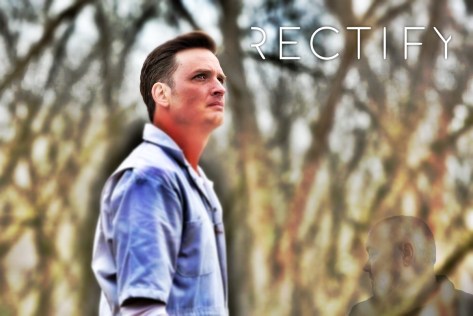
As a reader and lover of language, I sit in satisfied wonder after watching “Rectify.” It’s been said by many that it was the best show that no one was watching. Rarely do characters come so vivaciously to life, murmuring and whispering with such glib eloquence. Listening to the people in this show move through complicated lives in this show is the closest I’ve ever come to experiencing visuals as if they were a novel. Several times in the past, I’ve read of the love and admiration of this show and renewed my self-promise to immerse myself. Not until the show was finishing its run, however, did I stop gazing at it on my to-do list and start down the intricate road it travels. I regret not having been a part of it since it first aired but I will make amends by recommending it to anyone with a discerning taste for depth.

If you have the opportunity, please visit Netflix and give this treasure of a show an open door in your life. You won’t regret it, even if the pace seems to be too languid for you at the beginning. Oddly, if you describe yourself as an avid reader, I’m convinced that this show will be an immediate friend to your life.

The intelligence of this show astounds me. The people inhabiting the world it paints for us trip and fall, even as they see the obstacles in front of them. Countless times I watched the inevitable pain surprise them, only to see a parallel to my own life. The mirror it smashes into my face catches all the sublime idiocy of the steps we all take, regardless of the severity of circumstance.

From the show’s beginning, Daniel emerges from prison and instead of railing against the injustice, he perplexes everyone with a deeply insightful commentary on the world. I’ve had trouble explaining to people exactly what about the show was so captivating. “It’s about a man who is released from prison after almost 2 decades.” If that’s the case, “Sling Blade” is just a movie about an eccentric older man being let out of psychiatric care in the South. The particulars aren’t what brings forth the revelations: it’s the humanity inherent in so many scenes of this show.

It’s difficult for me to pull back from my enthusiasm for this show; it’s likely I’ve over-sold it people. Something about it forcefully reminds me of the wild emotion I felt the first time I finished “The Prince of Tides” and heard the words, “Lowenstein, Lowenstein, Lowenstein” reverberate in my mind.

If you need a gift for yourself, I recommend that you find a quiet moment to step away from your real life, sit down, and give “Rectify” the chance it deserves to unfold the way television should be revealed. It avoids the mega-dose of plot twists that doom so many potentially great tv shows or movies. Don’t let the initial premise of a condemned man’s unexpected release from prison trick you into thinking you understand what this show is about. The story is about us, individually and collectively, careening around the backdrop of what it means to be human.

The show itself is a crescendo of discovery as the seasons reveal themselves. By the end of season 4, you will find yourself under the gossamer veil of nostalgia, for a world you would love to live in. As the show ends, you will find yourself feeling restless for unknown highways and side roads, all hopefully leading to places where people like Daniel Holden might feel at home. (And allow us a moment to sit in their presence.)

If you are lucky, it will reveal glimpses of your own self that you’ve kept hidden slightly around the corner.

“Finding peace in the not knowing seems strangely more righteous than the peace that comes from knowing.” – Daniel


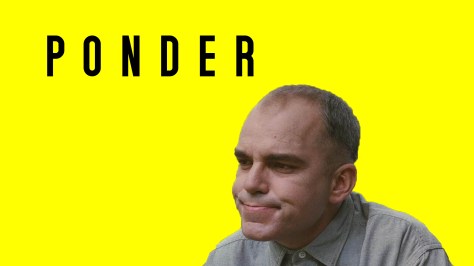
Ponder: The Lesson of Karl

karl


I think we should adopt the word “Karl” as a code word to indicate that we love someone deeply, even as we live flawed lives. Whether we like to admit it or not, even when we are comfortable with people, ‘love’ is a catch in our throats, often reluctant to escape.

“Sling Blade” is an iconic movie. Each time I watch it, I see it from a different point of view, and not only because I am not quite the same person as the last time I watched it. As tragic as it is, it is evocative of a life of connections that I would cherish.


After Doyle kicks Karl out of the house, Linda drives up as Karl is shuffling away. “You light him up in his eyes, I’ve seen it. He wouldn’t know what to do without ye….” Karl tells Linda, referring to her son Frank. Linda calls out, “Karl?” as he leaves.

When Karl leaves Frank his books, the sum total of everything he holds to be valuable in life; inside is a bookmark with the words “You will be happy” written on it. As Karl walks away, Frank turns to the trees and shouts, “Karl?”

Karl knocks on Vaughan’s door and hands him all the money he has in the world when the door opens. He tells Vaughan that he would be a good daddy to Frank and that he won’t be judged for who he is. “That boy lives inside of his own heart. It’s an awful big place….” Karl says and ambles away. Vaughan calls out, “Karl?”

Of course, Doyle looks up off-screen at Karl as he raises the sharpened lawnmower blade to kill him: “Karl?” Doyle asks, after talking calmly with Karl about being killed by him.

The last spoken word in the movie by Doyle, Vaughan, Frank, and Linda is the same: “Karl…?”

As broken as Karl’s life was, he managed to touch each of those people’s souls by his words and presence. In response, each one was powerless to respond at the same level with Karl.

I think we should agree to use “Karl?” as a code word in our daily lives. Using it would be a signal that conveys our deep understanding of who and what the person with whom we are speaking means to us.

Some words are like knives passing our lips, even when coated with the warmest regard and sincerity.

Honesty is a sharp weapon and truth is a hard master. Even in love.

“Karl,” I whisper to you all.

A Personal Blog, A Personal Note (From My First Blog)

“I can only write from the porch of my narrow world.” -x

Some people try to stretch everything said and done to include people not intended to be in the commentary. If someone tries to get you to believe that I’m talking about you, please stop and look at the person trying to make a claim. If you think I’m writing about you, there is probably nothing I can say to dissuade you from the idea.

Part of the reason I started this blog was to get my words out, even if imperfectly, so that no one could easily set their record in my regard. This isn’t a two-minute dash to angrily lash at people. It’s a long-term commitment to share some parts of me. When I’m gone, it will be hard for people to attempt to change the nature of who I was. They will try, but these thousands of hours of seriousness and farce found here will drown out the attempt. A person doesn’t just sit down one morning and write hundreds of posts without some motivation. (Even if it is misguided motivation.)

Everyone reading this has their hobbies. Whether it is sports, napping, television, long walks, or any other activity, it translates into time spent in the manner they see fit, even if no observable benefit to them or society will result. Each of us wastes our lives to some degree. Whether writing will result in a better life for me isn’t a real question: it will. Whether I will say stupid things or inadvertently hurt people also is a dumb question: I will.

For those who know me personally, you can’t just accidentally find this blog and start reading. If, by a miracle, that is how you found me, you should know that continuing to read it is a choice. Like any account of a person’s life, my words suffer from the present moment, meaning that a person’s mood at a specific moment can color the tenor and meaning of one’s words. I’m prone to the same ecstasies and sorrows as most other people. A careless synonym can sometimes set a reader’s mind far away from the intended purpose. In the same way that the bible admonishes masters not to overhear their servants, you should know as you read that written words are powerful things, capable of provoking emotions that weren’t intended. They can also unintentionally wound people we love.

Revisionists insist on painting their lives with a soft brush. They’ve even given themselves convincing amnesia about their past. I’ve written a lot about the need to remember that my parents were capable of so much good – when they weren’t at the mercy of alcohol or anger. The violence overshadows that potential. But I don’t walk around whimpering about my horrible childhood, and I don’t use it to justify anything I’ve done. Of course, if I am indeed fooling myself, that could also be stupidity on my part. Whatever stupid or bad things I’ve done are at my own feet. People who know me intimately will tell you that it is almost ‘just’ a horrible story to me. I laugh about it quite often. Not that fake laugh-to-cover-unhealed-wounds laughter, but the authentic, healthy “Can you believe it?” laughing.

Much of my goal each day is to avoid cynicism. Like you, I fail.

I write words to appease whatever drives me to do so.

A List of Warnings About Writing Anything (Previous Post From Very First Blog)

jonatan-becerra-frdj333dsuy-unsplash

This post will be edited and reposted infrequently, both as a reminder to anyone reading and as a warning to myself. Especially for those of you who might have family, friends, or enemies. (These three categories are often fluid.)

We are all subject to fatigue, brain farts (medical terminology – sorry), inattention, sloppy thinking, etc. Mistakes will happen, words will escape our grasp, and meanings will be implied that weren’t supposed to be.

Sometimes, even when you are willing to write perfectly, you lose the initiative and get lazy. This type of writing often turns out to be the simplest possible method of expressing yourself, but you won’t recognize lazy writing until you start to revise it.

Even the best writers sometimes fail at adequately expressing ideas.
Everything written can and will be taken out of context. And when you least expect it. And in the worst possible way of interpreting it. If you write a few words about why you dislike licorice, your words will be later applied to indicate that you hate small children and drink your own urine.

Sometimes, what we write is used in context and still wrongly interpreted either through the reader’s malice or through lousy writing.

Every reader has active filters, affecting the meaning of words. Not all such filters can be avoided by stellar writing. (A crazy person can pick up your words and falsely believe that you are threatening their lives. An argument to the contrary doesn’t appease the crazy person – it only serves to amplify the belief.)

Continuing to explain an idea after a reader or listener has expressed hostility or less-than-gentlemanly response is a waste of time. You can’t “win” once this occurs. Stop trying.

Being right is an illusion. When you were younger, you falsely believed your ideas and actions to be correct; you aged and discovered that many of your thoughts, actions, and beliefs were probably just dumb. This process is still going on – but you can’t see it. That’s part of the human condition.

Even on a particular subject, people who have studied the subject exclusively their entire lives cannot agree. This is true with hard sciences, and it is doubly true for “soft” or subjective ideas. Someone is wrong – and usually, everyone is wrong to a certain degree, including me. And you, too.

Since everyone knows that I preach that it’s okay to change your mind if you’ve learned something new or experience something honest or new in your life, be prepared for the infinite shelf life of the modern written word. You might have espoused horrible ideas when young and later recognized the error of your ways. However, when you’re 35, don’t be surprised when a self-serving revisionist uses what you once believed as current evidence of your stupidity, vileness, etc. They’ll quote you at your worst possible moment. That you no longer think it will be irrelevant.

Waiting until you are perfectly able to express yourself usually means you’ll never get around to it.