The universe definitely has a perverted sense of humor. Perhaps It is providence that it wants to repeat a lesson or theme until it sinks in. Possibly it is coincidence.
The other morning, I wrote a post sharing myself and my thoughts. As happens, someone reacted very badly to it – and rightfully so from their perspective. But their reaction was based on a misunderstanding, one that punctuates what I was trying to say. I wish I could have given them a hug. It wouldn’t have solved anything, but silent human acknowledgment is often more than we need. She accused me of being self-righteous. It stung and triggered a defensive reaction. Which of course means that she’s right. We only react when something challenges us. I earned myself self-righteousness. It does not serve me well and of course I understand that it makes me unlikeable to some people.
I had so many alcoholics in my periphery that their stories overlapped. It’s because at the heart of it, it is the same story repeated in an endless loop, like trying to ride a unicycle while drinking hot tea.
All of us are out here in the world staying busy, earning a living, and avoiding facing the idea that in so many ways we are small children camouflaged as adults.
By coincidence, someone on my periphery was secretly struggling with the consequences of someone else’s choice to dive into the bottle. Her story overlaps with mine. Although she didn’t say it in that way, I could feel the ambivalent resentment and love reverberate. It’s a feeling I know all too well. It’s why I wrote the Bystander’s Prayer that sometimes comes back around to me on the internet.
There are people around you right now who need hugs and attention. But what they’re getting is the temporary allure of things that distract them. The distraction comes with a price, one paid incrementally and almost always ending the same way.
The things we choose to numb us end up isolating us. If not in person, definitely in our own heads.
Sunlight cures almost all of this. Setting aside secrecy. Embarrassment. Shame. Not changing is a choice. We’re supposed to be honest and open, starting with ourselves. The fact that we can’t be adroitly explains why we cannot be that way with other people.
At 2:02 a.m., I watched a meteorite burn out across the sky to the north. I was sitting by the pool in the dark in a strange place watching the American flag wave across the street. Yesterday’s clouds were gone, leaving an open canopy view of the overhead nigjt sky. The cicadas were keeping me cacophonous company, their shrill ancient sounds providing a background syncopation to my thoughts. I made a wish upon a star. It went right to the heart of my reoccurring theme of abandoning secrecy and living a life of accountability and openness.
We can’t understand ourselves or other people if we continue to insist that we can control and curate the dissonance in our lives resulting from believing that secrecy is beneficial.
Some of my posts are interconnected without seeming to be. A few years ago, I went to one of the local ERs. My family member, who I will call Susan, had an accident. In the course of her treatment, it was discovered she had fallen at home and likely suffered an event triggered by a brain injury. Because I have a background both in medical and secrecy, I was glad to have shown up. Had I not, she would have been administered a medication that likely would have killed her quickly. Another family member had decided to keep Susan’s history of excessive drinking secret. I understand the tendency to not discuss it. Being me, I didn’t hesitate to pull medical staff aside and indicate that alcoholism was an undisclosed factor. The doctor, despite having experience with all manner of such non-disclosure, reacted with surprise and took measures to quickly change how Susan would be treated.
Much later that day, I visited the hospital and discovered that some of the information had not been passed on to the nursing staff. The nursing staff once again immediately changed the medications for the course of treatment for Susan.
I’m not telling the story so that I will somehow look better. People who know me well know the opposite is true. I’m not saying any of this to point the finger at anyone. Most of us do the best we can and hope that we are rationally making the best choices. Family honor, misguided loyalty, and the inability to tell ourselves or the people around us tough truth combine to rob us of a better life.
Part of my truth is that a portion of my identity is tied to the resentment I experience when I deal with people who want to live in secrecy. The stubbornness and resentment has caused me sometimes to stick my foot in icy water and challenge people. My early life is full of such stories. One of those stories resulted in me discovering a sister. Others pushed me into huge fights when I foolishly tilted at windmills and asked people to choose differently. Conversely, the same obstinacy cemented my own feet, resulting in my idiocy morphing words of concern for my choices into accusations. We tend to recognize it later as love or concern. But in the moment? Our defensiveness whispers to us that we are being unfairly attacked.
My life history is littered with people who ruin their lives with alcoholism, addiction, or anger. Every person in my family who drank too much finished their lives still suffering from the little voice in their head that insisted that they continue drinking. It’s one of the reasons I’m proud of my sister. It took her a long time to look back on the arc of her life and tell herself that enough was enough. Each of us usually only takes action when it’s the only other choice. We sometimes talk and nod toward one another, once again agreeing that it has nothing to do with intelligence. We make choices, or adopt maladaptive ways to feel better. And then our strategies turn traitor and entrap us.
All of the preceding words also disclose my volatile resentment regarding secrecy. People can’t develop long-term drinking issues without secrecy. They can’t blow up their marriages without secrecy being perverted into privacy. We can’t become helplessly overweight unless we don’t talk about the elephant in the room or the ostrich in the closet. Depression blossoms because the difference in what people experience inside their private worlds in their heads becomes disproportionately silent. Isolation in thought or action inevitably brings toxicity. Even to otherwise normal behavior that becomes an unhealthy obsession.
If we had to experience the accountability of people around us knowing us in our private moments, it would be difficult to continue the charade of secrecy. Instead of choosing authenticity, we spiral into a cocoon of self-fulfilling prophecy. Image truly becomes the identity we cling to. The people around us flail and overthink because they bear witness to the consequences of our choices. Further out into our personal periphery, the people in our orbit are unaware. Most of the time I think we have this backwards.
A little bit ago, I navigated the dark and put my feet into the pool. After a few minutes, another dimmer meteorite scorched its way into non-existense as it penetrated the atmosphere above me. I didn’t make another wish, even though initially I wished that I wouldn’t overthink. I’m sitting in the late night or early morning of the last day of July. I’ve outlived people who were better than me. Definitely smarter.
For a brief second, the lesson of detachment and gratitude reminded me that it’s to be experienced. And the only way to experience anything meaningfully is to unflinchingly know yourself and live in the reality that you’ve been given rather than the one you attempt to craft.
Secrecy can kiss my ass. It’s no irony that I’m sitting in the dark writing this.
Prepare yourself for turbulent oversharing. Some wounds get exposed again, revealing dark, unmanageable emotions. These words are supposed to be about addiction, alcoholism, and generational anger. I apologize in advance to anyone who thinks I am saying too much or to inflict pain.
I don’t want “I am so sorry” or any words of encouragement. Instead, I would much prefer that you read these words. And if they ring true for someone in your life, find a way to act before it’s too far down the road to turn back.
People often forget that I became an unwilling expert in abnormal psychology because I lived in an intermittent crucible inhabited by some of the most versed, angry people. For most of my life, I told people I believed my DNA must be infected. Though others couldn’t recognize it, I did. Though I now call it the “Bobby Dean,” the sinister recognition that my family’s maternal and paternal sides gifted me with the lesser side of humanity plagues me.
Like anyone without children, I sometimes mourn the choice to have none. Since life taught me that intelligence has little to do with the odds of giving in to anger and addiction, I remind myself that it’s possible that I would have given in to the lunacy passed down through my family. At fifty-six, if I had treated my children like others, there would have been little choice other than to end myself. I’ve hurt other people callously. But I at least can swallow my ‘what-ifs’ and know that I didn’t hurt my children and continue the generational trauma that populates the world with damaged adults. Ones who carry invisible wounds, anger, self-doubt, and the handicap of attempting to be happy and prosperous, even though they were mentally beaten into submission.
Nothing new happened recently to rip the bandage off. However, I was forced to learn further details of how nasty the effects of this anger and addiction were to people in my family. Because of geography and shared secrecy, it turns out that the imagined and partially confirmed psychopathy passed to the next generation was much worse than I knew.
Alcoholism amplifies monstrous behavior. It might not create it, but it unleashes it. The whisper of the disinhibiting lover in a drunk’s head becomes a shout. The person you once knew gets trapped and silent inside the shell of the alcoholic. As it worsens, the person you once knew becomes a faint echo. The new version will say and do things that increasingly become impossible to live with. You are tethered to the person who once was. As a result, you attempt to deal rationally with the effects of addiction.
Meanwhile, the person possessed by it will do anything to guard their ability to keep drinking. They’ll gaslight you, lash out, and create clusters of people who assume that the version of the truth they are being told is valid. People with no ill feelings toward one another become manipulated pawns, initially acting out of honest concern. But what results is another level of toxic behavior, all hinged on the central person. It is drama and chaos. Because of the secrecy and generated toxicity, people’s relationships get ruined.
One of the most significant pieces of advice I can give people when they are attempting to coexist in an addict’s world is to talk. Talk to everyone. I guarantee that the addict curates everything you do and say to make you a monster because addiction requires secrecy. Intelligent addicts learn the behaviors of narcissists.
People sometimes ask me what makes me so well-versed in narcissism. (Not the generalized version of it prevalent in social media.) Anyone raised or living around addicts inadvertently learns the behaviors. The hallmarks of narcissism always bubble up with addicts and alcoholics. They must deny reality. They become delusional to the effects of their behavior. They enlist everyone and everything to perpetuate their ability to keep drinking.
Recently, I met someone who triggered my “Bobby Dean” response. I knew immediately upon meeting them that they were evil. I hate to use that word. Nothing outwardly about them gave a clue, not directly. The bells went off in my head. I was right about them, of course. And then you’re left with the impossible task of coexisting with them. Such people thrive on chaos and the emotional distress of people around them. Since most people are genuine, they get stuck in a loop of the foolish desire to mitigate the narcissist. It can’t be done.
In the same way, most of us think we can win over an alcoholic with love, words, and compassion. It’s not true. You’re not dealing with a real person until you can slap the bottle out of their hands. They are an angry parody, possessed by a demon demanding nourishment. Replace the word ‘alcohol’ with ‘heroin’ and you’ll realize that until you get rid of the heroin, you can’t move forward. The addict can’t attempt to be themselves and regain their humanity until they eliminate the invisible straightjacket of addiction. Addicts put you in the position of helpless anger. Anger with yourself and anger with them. We each know that a person trapped in addiction isn’t being themselves. But that knowledge does not give us any comfort. We find ourselves screaming. It’s reactionary abuse.
My goal isn’t to tarnish my brother in this post. He was older than me. I loved him and knew early on that he was among the most intelligent people I’d ever known. We survived our parents. He got the worst of it from Dad. Perversely, it turns out he got the worst from Mom, too. As he got older, I tried to give him the benefit of the doubt. Obviously, the anger he’d inherited from our family poisoned him. I thought it must be me, that I was somehow doing or saying things wrong. Toxic people don’t take the time to doubt whether they are wrong. I became the opposite of my brother in so many ways. And he hated being wrong. It was one of his defining behaviors. Because he was so smart, he was seldom wrong. But when he was wrong? He doubled and tripled down on it. From there, he justified saying and doing anything to keep it that way. The alcohol perverted him into someone who could behave and speak in ways that the younger version of himself could not have imagined.
He was particularly vile to me when I changed my name. At that point in his life, he still pretended to carry the torch of family honor. He’d grown up with the Terry side of the family. They were true experts in horrific secrecy. When I changed my name, I wrote them all letters. There was no way to avoid them knowing that I rejected everything my name held within the letters that formed it. They got their revenge when my dad died. Their secret hatred was so intense that they refused even to list me by my legal name in his obituary. That’s the best example of expressed passive-aggressive behavior that I can cite. When I think of self-righteous hypocrisy, I imagine their example. It does not mean I don’t have good memories of them, too! But the older I get, the more I concentrate on knowing they were well aware of what was happening in our violent private lives. They preferred to stay out of it, even though they knew what was happening. Family honor and secrecy held more value than protecting children who were getting damaged right under their noses. It invalidated every religious idea that they allegedly cherished. I can’t imagine doing that. It makes sense that they hid my sister from me for almost fifty years. That she wasn’t white must have been the biggest threat to their false family honor that they could imagine. I would hate myself if I’d become the secret racists that they were. I’d write more about this, but that part of the story isn’t mine to tell.
I made the mistake of attempting to lovingly help my brother a few years before he died. I was all in. It was the worst possible move. He retaliated by lashing at me and everyone around me. He scorched the Earth to keep his addiction. I was rightfully convinced that he might actually kill me. He spent a great deal of time detailing how he would do it. Had he wanted to, he easily could have. Life had geared him up with the tools to do just about anything. Some of the family pretended they couldn’t imagine he was doing and saying those things, even though they could see the emails, listen to the voicemails, and read the texts. Each of them had spent decades enforcing family silence. Why would it be any different with my brother? Had this not happened with my brother, I might not have decided to cut off ties with my Mom not long after. It was just too much. Two of the world’s best alcoholics take a massive toll on a person’s sanity. It struck me how similar they were, each insistent on maintaining their addiction at any cost.
My brother was lucky. Though he left a trail behind him, even professionally, he was forced to retire and avoid the consequences that would have befallen anyone outside law enforcement. I hope anyone he encountered at work didn’t suffer as much as I imagined. People in that stage of alcoholism behave in ways that they never would absent the addiction. It is no secret that law enforcement suffers more from addiction than the general population. (As they do domestic abuse.)
No one was safe. No one ever is around an end-of-run alcoholic.
My brother had the chance to retire and enjoy a full life. To make amends. To admit his transgressions, to replace spiteful words with love and hugs, and to reject the poison of our DNA. He chose otherwise. It’s a story I have witnessed repeated too many times. It is agony for all of us to prefer to tell the good stories and push back the bad ones. Who wouldn’t want to honor the good times? There were many. My brother could have written several of the best books ever written. I would likely have helped him. Anyone and anything can be forgiven if they are open to it. Alcoholism demands everything. It reduces people to their worst common denominator.
A couple of years ago, I scrapped a lot of my shared history and records of my brother. After his death, I thought I could move on and continue to work to remember the good things about him. Some of it was incredible, an irrefutable dissertation on how crazy his addiction made him. He created entire fantasy worlds, each independent of the other, all designed to alienate people and render them unable to interfere with his addiction. Addiction requires secrecy. And as it progresses, it forces the addict to silence those who challenge it. It is exactly like a demon facing exorcism. It will destroy the world in the pursuit of its existence, even if it kills the host.
I write this because the newest revelations force me to confront that he created a world of pain for people. Those people are left with the immense struggle to be good people. It can be done. The first step is to no longer worry about people knowing. Sunlight gives breath. You have to talk about it, acknowledge it, and work to silence the self-doubt that the toxicity of alcoholism demands.
I damn well know that we all have addicts or alcoholics in our lives right now. The cycle is endless. If you think it is manageable, you’re wrong. It will worsen. You’ll look back and understand that if you could return to when it started, you’d do almost anything to stop it.
If you have an addict or alcoholic in your life, whether you think it is true or not, you must start talking to people first. They need to know you are dealing with an addict. You must rob the alcoholic of their secrecy. It is the critical component that precedes every other consequence and behavior.
I can add anger to my reaction recently. Anger can motivate if channeled. If you’re dealing with an addict or alcoholic, I recommend anger as a defense. Let them experience the consequences of what they’ve created. If you do nothing, you’re going to be angry anyway. It might be more effective than compassion.
I’m telling you this as an unwilling expert.
A piece of my heart will always be broken. To discover that people now gone still creates shockwaves in the hearts and minds of those who are still here. It is a recurring wound, and one opened periodically by reminders by those who remind me of myself when I was young.
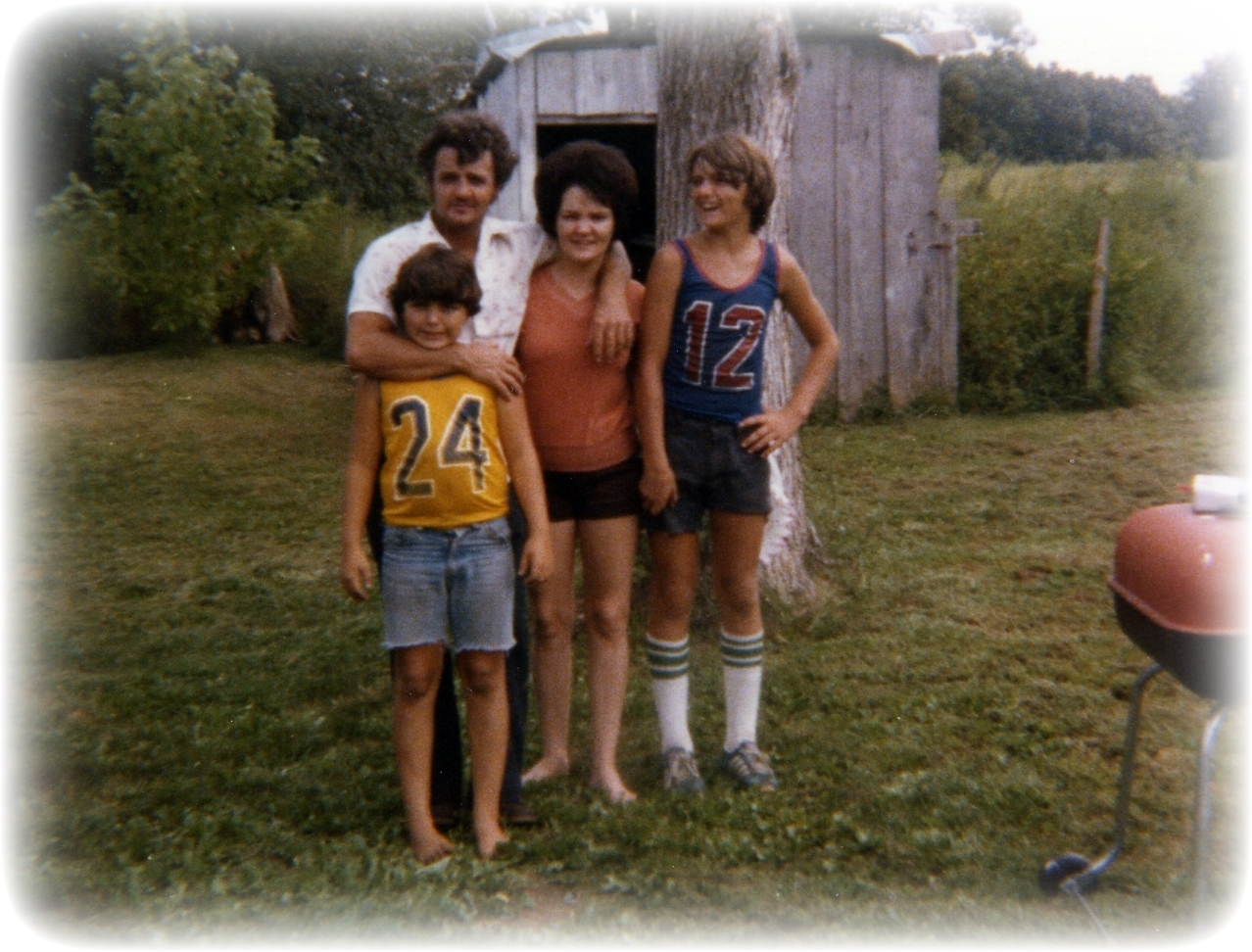
PS Pictures don’t lie. But they do conceal, just as most of us do as we live our daily lives. Just remember, I had many great moments as a kid. And as an adult with my brother. But behind it all…
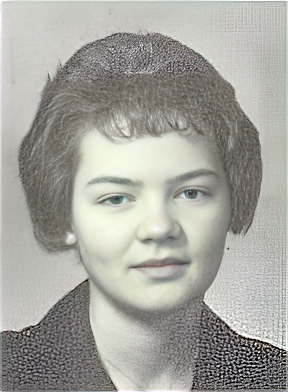
I can’t control how such admissions paint me. I rarely memorialize my mom’s death like I do others. She died ten years ago today. I found a picture of her today, one I might have seen decades ago but haven’t since. I inexpertly sharpened it today. My favorite grandmother died on the 6th, while my wife died on the 4th; different years, different circumstances. I spent a year not talking to my mom. I’d spent decades attempting to bridge the gap of anger and alcoholism with her. Like so many children of such parents, I was convinced that I could talk and behave in a way that would earn me normalcy as if I were the one with the deficiency. Drinking didn’t kill her. But it infected so many parts of her life. The infection of it spread to other people. It wasn’t her intention. She learned the skill from others. Like all other close family members of mine who were alcoholics, she died with an insatiable urge to drink until anger consumed her. Recently, suspected truths of another member of my family blossomed. He’s gone now. No second chances, no new learned behavior, no sitting on the porch as the sunset approaches. The familial infection he acquired in his youth overpowered him, once again proving that addiction has nothing to do with intelligence. Addiction and anger stain the people around those who suffer from it. And he unfortunately passed the ball and burden of consequences to other innocents. I don’t have any superpowers which shield me from the tendency to drink or drown myself in a fog. If I did have them? I would hand them to the people who I recently discovered to be needing them.
When I write things such as this, I trigger people. For much of my life, my brother was the vanguard of family honor, demanding silence. It was a habit he absorbed from the paternal side of my family. I discovered very late in life that their cabal hid many secrets, even people, from me. I’ve yet to find an addict who can move freely in the sunlight; their behavior demands secrecy and closed lips. In most of these cases, some of those lips will be bloodied because addiction inevitably exacts the price of violence, one way or another. Either to oneself or to everyone in the bubble nearest them.
That is exactly the power of addiction, the whispering lover that only the addict or alcoholic hears, blossoms.
I shared a quote by Annie Lemott twice last week: “You own everything that happened to you. Tell your stories. If people wanted you to write warmly about them, they should have behaved better.” I don’t write to inflict further harm. On the other hand, silence is self-inflicted violence. If we are to judge people, it must include their shining moments, too. I have good memories, and I share some of those, too. It’s fascinating to watch people as they listen to my stories; some only selectively note when I say anything they perceive as an accusation or something best not discussed. None of the people who later suffered from the afflictions of addiction and anger were born with the intention to slide into the abyss while terrorizing their friends and family. The filtered truth I share in no way alters history or changes who they were. They had their moment on stage. As it will for all of us, the curtains will close, and our time will end. Your time to live your story fits narrowly inside that timespan.
Secrecy. Silence.
Time is short. Live your life under your own banner and within your own control.
Someone noted that one reason they love theaters is that it’s about the only place left where phone usage is unwelcome. Everyone is expected to relax and enjoy the experience. Violating the usage expectation results in interference with other people being able to enjoy their experience. Irritation at those who ignore the expectation is universal. There are so many other circumstances in which the ubiquitous nature of phones interferes with the simple act of presence or attentive listening. You’re not checking your phone; it’s checking you. The nostalgia for days gone by results from people realizing that lack of constant access to the world meant that you were in the moment with the people and places you chose to be with. Yet, here we are. We’ve normalized interruption. A smart person pointed out that it’s one thing to want things and another to need them. Like all technology, its existence was supposed to make our lives easier, more efficient, and less stressful. Yet, it’s obvious that the opposite is the case for a lot of people. We are technology addicts. If you don’t believe it, try laying it down for four hours. You’ll react with the “…but what if…” argument. It will overwhelm you. I watch so many people let work slide into off-hours thanks to phones. “Let me take a quick look at…” becomes the preface poetry of the modern age. I love technology. And even that phones are so useful. But I can’t help but contemplate the fact that so many people seem to allow their phones to be their master. Love, X
“In sickness and health” is a beautiful standard. It reminds us that life isn’t easy.
I’ll leave it to someone whose opinion I cherish to briefly sum up one of the caveats that eluded me: “A cancer diagnosis falls under “in sickness and in health.” Choosing obesity does not.”
It’s also true for alcoholism or anything that is behavior-driven. Overcoming any of these problems is a lot of work. Of course it is!
This doesn’t imply that some people don’t have physical or emotional struggles that make it harder. I’m not discussing the outliers. I’m talking about most of us, the ones who fall into drinking and slowly drive our loved ones mad with concern and consequences. Or those who gain weight and instead of honestly addressing the issue, learn to accommodate the effects of their choices. Their partners might be the most loving people in the world. They might encourage, they might support, and they might also quietly watch the person they love lose sight of their health. But the partner with the behavioral issue is making the decision for both partners.
I’m reluctant to talk about weight for a lot of reasons, one of which is that it impacted me personally, both as the person guilty of it and then the person attempting to get my partner to see that the consequences of choosing to let it get worse were damaging our quality of life on multiple levels. The other thing that makes me hesitant is that we have such a huge taboo against openly and honestly talking about weight. It’s a global problem.
Love is a feeling. It is also action. And reciprocal and mutual action when it affects your partner. When the consequences of your choices rob both of you of the enjoyment of life and each other, it’s no shame for your partner to ask you to do something different. They wouldn’t ask if they didn’t love you.
I only equate alcoholism and obesity because of the complexities of both behaviors. They both require a realization on the part of the person affected by them. And both bring consequences to both partners attempting to lead a good, healthy life.
It shouldn’t be taboo to talk about either one. And if anger results from either conversation, you have a bigger problem. But the anger also acknowledges the severity of the underlying conversation.


 P.S. Parenthetically Speaking