Category Archives: COVID

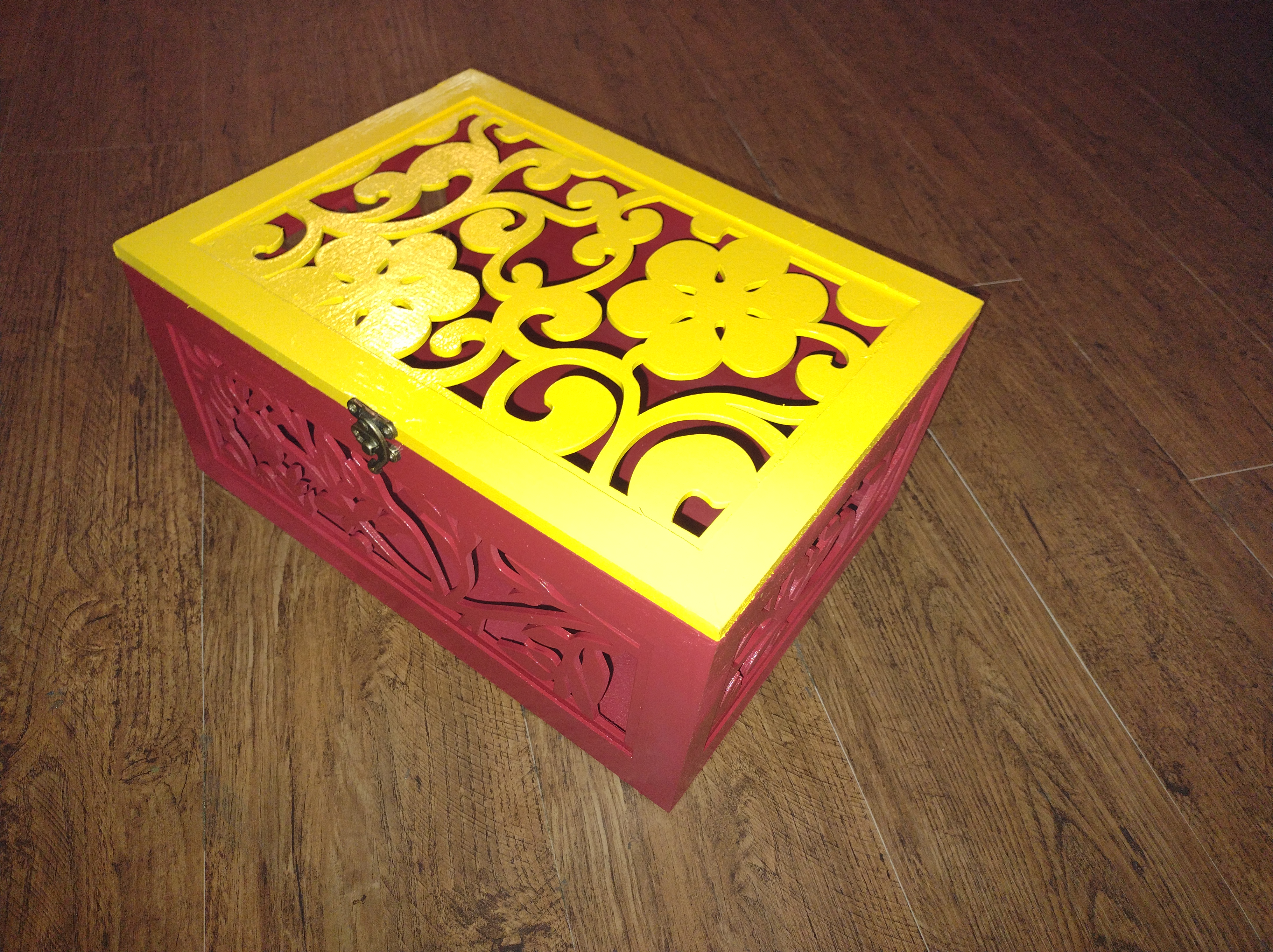
A Deceptive Photo For This Post

I spent another afternoon painting everything. Well, not everything. The neighbor’s dog escaped. My quest to fill my life with color is proceeding like the General Lee across an unexpected levee. If that reference is too old for you, try this one: …like an NFL linebacker making his way to the pizza… or a housewife driving into a Target parking lot.

The Covid debate raged around me everywhere. I wish everyone could visit a full ICU-Covid unit and see how incredibly difficult this virus has made everyone’s lives. It’s easy for me to forget that not everyone shares my vantage point. For many people, it’s like imagining a war fought overseas; distant, disconnected. The truth is I find myself doing my part while simultaneously glancing away. Each day that passes, I hope that no one I know or love will need emergency care. The waits are incredible, and the misery is real for everyone, patients and family members. I have my opinion about BB&BBQ, Arkansas football games, and other social gatherings. But no one cares about my earned opinion. Instead of throwing my two cents in, I hope everyone can avoid Covid if possible. And if not, that it does not cut you or your family too profoundly as it lays its fickle finger across your life.

So that you know, I still go out in public. I wear a mask and try to avoid licking my fingers at random times. For me, my most significant exposure to Covid has been inside my allegedly safe bubble at work. Repeatedly. Even if I do everything right, I must work. It doesn’t stress me. It’s not because I fail to understand the risks. It’s because I’m at the mercy of everyone around me. The truth? I always have been. We all are. The sooner we realize it and act like our actions affect everyone around us will be a good day. While we’re at it, let’s make fundamental changes to our social policy and healthcare system so that no one will worry about medical care.

Until then, I’m going to get back to painting.

But I’ll be thinking about y’all and hoping we’ll all be safe. We won’t be. But I’m hoping.

Love, X

Go Home Covid, You’re Drunk

A quick note about our friend Covid, the one who keeps coming home late and drunk.

No matter what anyone tells you, at any given time, someone in your extended circle ‘has’ the virus, even if they are asymptomatic. There is no doubt about this, even if you think you’ve become a hermit. It’s comforting to know that most don’t develop worsening symptoms if they are vaccinated. But you need to know that up to 10% of those vaccinated will get the Delta variant – and a lot more of those unvaccinated will find themselves with it.

You can get inexpensive at-home test kits at your local pharmacy. They are a little less accurate – but that’s why most come in two-packs, so that you can re-test the next day.

I don’t talk about work directly. There’s a reason for that.

Among them: even in the medical field, we’re experiencing a high rate of infection. Not just with the unvaccinated, either. Two people in my inner circle tested positive very recently. I won’t characterize the impact on them personally or on our work circle. Vaccinated people appear to be infectious for a much shorter period than the unvaccinated. Regardless, this virus is akin to a strange version of Russian Roulette. The gun is going off all around me, among vaccinated and unvaccinated alike. Since we’re not testing random samples, we only test those whose symptoms draw attention to the possibility they have it; we’re using a threshold that is too high, in my opinion.

So much of this pandemic hinges on other people’s behavior. Much of it cannot be mitigated without destroying how we live.

IF you have a bout of allergies, or a cold, fatigue, or a prolonged headache, I’m going to say something most won’t: it’s likely as not you have the virus. I personally know a LOT of people who’ve initially shrugged it off as “the sniffles,” or a cold, etc.

Likewise, a lot of us won’t have any symptoms at all.

Welcome to our new reality.

Be safe, be kind, and remember that no matter what people say or write on social media, all of us are full of sh!t about being consistent in our beliefs and behavior. At our core, we want our loved ones to be healthy. We’ll avoid trans-fat or bacon and then smoke, or say no to caffeine and then drink moonshine like it’s lemonade. That’s what we do: we excel at contradiction, hypocrisy, and stupidity.

I of course wish everyone would be vaccinated. I do not envy the government or businesses these hard choices as they look toward the overall public health. One of my favorite people in the world is juggling whether to give up a job she’s had for 22 years. I’m not commenting logically – I’m commenting emotionally.

With this virus, though?

Even if you do everything perfectly, it will likely still affect you in the long run.
Vaccinated or not, we are all at each other’s mercy.

I ask each of you to dial back and try to see others as human – and yes, even if we’re looking at each other and mentally calling one another “dumbass.” I can live with that. I want you to live – and live with that, too.

We all wait.

Love, X

Another Morning

I heard it at first, unseen, a diminished thunder, a helicopter performing a growing crescendo. After a few moments, I watched its glimmering lights rise above the horizon. It was a thing of beauty against the background of a deep blue purple sky, one growing lighter by the minute by the arrival of the sunrise. Then, a sliver of realistic thought: that same helicopter was carrying a person, or leaving to retrieve one. When you’re in the nexus of so much human activity, it becomes mundane and easy to forget the countless dramas and personal stories unfolding around you. As the helicopter shrank against the horizon, I couldn’t help but wonder when we might get a reprieve..

Jackie

“Just call me a cartographer – because this post will be all over the map.” – X

Everyone is going to have their ‘last funeral’ story. Perhaps not the last of each person’s life, but the last one not impacted by covid. While my last precovid funeral wasn’t traditional, it happened in January before the country felt the virus’s hammer.

Jackie wanted a gathering of friends as a commemoration. It happened at her home in Springdale. I knew a few of the people at the gathering but most shared nothing in common with me. It was a fact that Jackie would have laughed about. One of the most complicated puzzles I had ever made with pictures was prominently displayed on the coffee table in the intimacy of their living room. The puzzle contained innumerable pictures detailing their lives. I made it with care and attention. It was an affirmation to know that it touched them enough to find a place at Jackie’s last gathering. The video and music I crafted played on loop on the large monitor nearby. Having learned the hard lesson of no backup plan, I had the video on dvd and flash drive and an executable folder of music and pictures if the other two methods failed.

Though I unexpectedly liked a couple of Post Malone’s songs before, I included a piano version of two of his songs. When I have my guard down, I sometimes hear the melodies and remember the absurdity of including it in Jackie’s memory video. I can’t imagine Jackie liking Post Malone; I know that this piano version would have struck her heartstrings with unerring certainty. In part, that expresses how I got to know her – often indirectly and through a constant barrage of banter and conversation. I also included three songs I wrote, one of which I know Jackie loved.

I said my goodbyes in the same way I got to know her: through pictures. The family asked me to do the montage of photos and choose the music. It’s a rare thing for people to trust me so intimately. I’ve known some people all my life who skipped past me for weddings (even one who I originally became ordained for) or overlooked the few things I can do well. In a way that is not immediately easy for me to write, Jackie and her husband seemed at ease with me, even despite our marked differences. I’m sure that some of my pranks were a bit too much for them – but that my intent always found favor with them.

I was volunteered into their circle by my mother-in-law, who worked with Jackie and her husband at the hospital, as did my wife and sister-in-law. What started as a simple project ultimately gave me access to their entire lives of private pictures and images. While I began by scanning hundreds of hospital pictures, I was soon compiling decades of family history.

I frequently see the thousands of pictures I carefully scanned and indexed in my photo archives, and my heart both swells and painfully beats. It was a project that I hoped would never find its end.

Even though this sort of thing is both a love and hobby of mine, it still strikes me to know that people close to me failed to take advantage of my willingness to ensure that everyone’s memories could be reproduced, protected, and shared; such endeavors leave no one without access. It’s true that on a long enough timeline, we all fade – along with everything we can touch, where we stand, and even the planet itself. Pictures have their most value while someone is alive who remembers the people in the picture.

I still see people in agony over lost videos and pictures. It’s work to keep track of our lives. It’s more work to organize it for everyone coming after us. They’ll want to see our memories. The truth is that most people, even ones who seem to appreciate the frailty of such memories, don’t take the care necessary to share them openly and widely. It’s the only way to ensure the survival of the pictures we find to be cherished.

Jackie and her husband were undoubtedly part of the backbone of the community. Both were well-known and respected. Apart from teasing back and forth about me doing something ridiculous with their treasure chest of pictures and albums, they never doubted my love for the project or that I might somehow misuse their photographs.

Because I maintained an archive of all the thousands of pictures Jackie shared with me, it was no stretch to know that I could manage a retrospective of her life when she died. That I hadn’t shared much of her life was immaterial. Anyone could see that I had an affection for her that defied our vast age difference. I continue to regret that I didn’t know her for longer. It is possible that we would not have aligned so well earlier in my life. Having thought about it in the last few months, I’m convinced it’s true.

Part of my regret of not knowing her longer is that many of her stories passed with her. I discovered quickly that both Jackie and her husband were living repositories of fascinating stories. I intended to ask her to share several hours with me with the hopes of getting her story written in a way that would bear her signature wit and charm. She became ill before that come could to fruition.

But I still have this hoard of pictures, often waiting for me to open them and peer inside. I know that I honored Jackie by taking a piece of my life and preserving hers. I made sure that everyone had copies and access; no one was left in the rain. We don’t own pictures, though we foolishly think otherwise. We are custodians, with transitory possession of these lives and this world.

The day of her death races away from me, sliding into the past, as all deaths do.

Life marches forward with callous step and indifferent regard.

As Jackie’s life fades from human memory, I watch the world and wonder about the depth of visual memory and story being lost. But it is not because of me. I’ve tipped the balance in my favor and find myself unable to stop asking people to drop their pretenses and share who and what they are with the world.

In continued memory of Jackie Lou and with a renewed dedication to the joy of pictures, X.

Run Past

pxfuel.com


I sprinted past the moment, though it didn’t truly exist in the way that things do.

I had looked forward with such intensity and anticipation that it had condensed into an impossibly small point in time.

Because I’m older, I now see that this is how most of us manage the span of our entire lives: increments, milestones, and anticipated moments.

There are labels for this sort of thing. “Futurizing” is one of my favorites.

Though covid fleetingly slows us from careening as carelessly as we once did, even its lesson of mortality will soon enough become a vague memory.

Each of us will step back into the tide of normalcy, whatever that might be, and pace forward.

Birthdays, anniversaries, vacations, achievements, all seemingly without terminus – although undeniably connected by an invisible strand.

I predict we’ll be more feverish postcovid. We’ll collectively feel the pause button click free and begin our mad dash to collect what we thought we missed while the world held its breath. People do not like to feel like they are missing out, even if what they have fills their lives.

Weirdly, I feel that we should take a breath and slow down. Sit and stare. Read and contemplate. Look within and around. We were not prepared, despite having history’s best medicine, technology, and logistics.

Our failure wasn’t external, however.

It lies within us where, in reality, each of us lives.

How Long Is A Piece Of String?

pxfuel.com

A lot of thought and solutions are ridiculous. I sometimes get caught up in either the details or see the issue from too far away, so much so that complexity becomes obvious simplicity. In my case, though, I’m not in charge and not being paid to weigh the complexities of moving social issues.

It’s possible to give a completely accurate answer to a question – and sometimes such an answer follows a logical route. It might still avoid addressing the fundamental question, though.

During this pandemic, I encounter several such scenarios on a daily basis. When well-meaning people are involved, it isn’t difficult to point out that the objective and the solution aren’t compatible. With authoritarian or toxic people, we get bogged down into sublimely ridiculous situations, like a Seinfeld episode written by sociopaths.

This pandemic has consistently beaten into my head that adults are not in charge and the ones who make many of the decisions are winging it, often for personal gain.

Completely random and incompatible directives and rules are issued. We collectively scratch our heads, trying to figure out the objective to determine whether the rule is a 10mph speed limit sign on a 6-lane highway at noon on a summer day. Eventually, someone will insist on clarification. Inevitably, we regret it because we’ll get an inscrutable non-answer that helps no one. This leads many people to choose malicious compliance or to continue to do whatever they want to.

Years ago, someone hit me with the riddle of “How long is a rope?”

Given no more information, I surrendered and said insufficient information was provided.

I knew it was going to be a trick answer. The smug look of victory on the guy’s face asking me was evidence of it.

“It’s twice the length from the middle,” he replied. “Gotcha!” He proclaimed.

“Does a fart smell or stink?” I asked him, as I walked away. Because I gave him the same condescending and smug look as he gave me, the question tortured him for a day.

Which leads me to the look of confusion on an expert’s face today. He gave me a stupid non-answer. I immediately reverted to my tried-and-true, “Does a fart smell or does it stink?” I bowed and walked away.

I Have A Question

camylla-battani-AoqgGAqrLpU-unsplash

I’m still waiting for a reasonable, honest answer to this question: why did the State of Arkansas fail to require a Covid test for all healthcare workers?

You’ll note that the Governor goes out of his way to classify correctional carriers and other sectors. Notably absent? Healthcare workers – one of the single most important possible classifications to track.

It has always been in the public’s best interest to ensure that all healthcare workers are tested, yet proposals to do so have been unceremoniously shown the door like a drunken Uncle on New Year’s Eve.

We’re required to get flu shots each year, among other things.

We mandated that non-emergency patients be tested, yet did not conduct a baseline safety test to benchmark how many of the healthcare workers helping them might be carrying the virus.

Knowing how many healthcare workers have the virus would give us insight into the behavior leading to getting it. After all, healthcare workers are presumed to be the most cautious and educated about this sort of public health hazard. Their infection rate leads to immediate recognition of how well what we’re doing is working.

When I point this out to people, they get that recognizable and confused, puzzled look on their faces, the one that immediately indicates that they assumed that sort of thing had happened.

It hasn’t.

This kind of question falls under “public safety and worker safety” guidelines, so I of course am unconcerned about asking such a reasonable question publicly. I’ve asked it at least 500 times in the last two months.

I’m still asking.

It’s the right thing to do, even at this late date.
– X

Maskholes Everywhere

pxfuel.com
This picture has nothing to do with the post. 🙂

As I entered Harps, I saw two men milling around without masks or their faces covered. Like most guys at the store, they seemed as if they’d never ventured into a grocery store before.

They looked exactly like you imagine they would. My path intersected a couple of times with them. The younger of the two, a man wearing a black stocking cap, seemed to be aware that his lack of a mask was drawing attention from passersby.

I pulled a plastic sheath of 5 masks from my left back pocket and opened it.

“Would you guys like a mask? No charge.” I stepped closer. I was wearing a mask and social distance didn’t seem to be a factor in their lives. Truth be told, my workplace is much more dangerous than the grocery store, even with people milling around without masks.

The younger guy in the stocking cap stepped and said, “Yeah, thanks!” As he took one from the sheath, it must have dawned on him that his friend didn’t want one.

“Don’t want one, don’t need one,” his older friend said as the other guy took one.

“Mark, you’ve always been a dick, haven’t you?” The younger man said it exactly as a friend would.

“Okay, give me a mask. ” He took one. “Can I have another to shove down my brother’s throat? He never shuts up.”

“You two are brothers? If you don’t mind me saying so, I don’t see the resemblance.” I wasn’t thinking this might sound rude coming out of my mouth.

“Thanks!” the younger man said and we all laughed, even as the older brother punched the younger man’s shoulder.

I handed the younger man the sheath with the other three masks in it.

$5 Is The Price For Happiness

allef-vinicius-v-W5jleF0HE-unsplash

Hey, Mr. Impersonal Retailer: today, I erased the damage you did to one of your customers.

On the way home, I listened with interest to the NPR story regarding the necessity of human contact, especially in contrast to the demands of the pandemic. Without much thought as to whether I needed to go inside, I pulled into a store. The story was still very much on my mind as I made my meandering way about the store. I wandered like one of Trump’s sentences.

Mr. Magoo helped me at the self-checkout. I had an item that needed approval. I was focused on being kind to him, as Mr. Magoo and I have a storied history. In the past, he upset Dawn a couple of times. He is a fervent follower of the anti-customer credo: “He’s not happy until the customer isn’t happy.” Because of my history with him, I try to remind myself to be as neutral as possible when interacting with him. Without going into specifics, I’ve repaid my debt to him by way of several pranks.

On the opposite self-checkout belt, less than 3 feet across from me, I saw a dark-haired woman quickly step back from her cart. Another cashier, one I often refer to as Mrs. Molasses, had left her customer to approach the dark-haired female customer. If people had floating icons above them, the cashier’s would be a languidly flashing “E for Empty” icon. From the other side, another worker approached, trapping the customer near the belt and between the two employees, both of whom were very close to the customer.

As I’d made a couple of passes through the store, I noted that no one seemed to feel any urgency. I’m not blaming them; I’m just commenting on the overall atmosphere of the store. For whatever reason, I had two employees who seemed to have suddenly acquired an unnatural interest in the female customer across from me. I assumed she was trying to steal something.

They were inside her personal space, despite the coronavirus, despite the floor markings and signs, and despite the fact that they were too close even for precovid society. Regardless of their motivation to be so close, they were ignoring the bigger issue of what prompted the fluid rules regarding purchases in the first place. Whatever triggered their sudden enthusiasm, it caused them to ignore all the social distancing protocols.

The customer had already stepped back. Her body language told me she was upset. To my surprise, Mrs. Molasses admonished the woman for having two cans of Lysol in her cart. The other employee, on the other side of the cart, berated the customer for ignoring the ‘one per customer’ signage. She had two 6-packs of toilet paper. Their tone suggested she had killed a puppy on Aisle 7.

“I’m so sorry, there’s so much toilet paper, even huge packs of 36 rolls. And the Lysol was all on clearance. I didn’t think it mattered,” she said, looking back and forth between the two employees. Her eyes were teary, and her voice sounded alarmed.

I won’t say precisely what one employee said as she grabbed one of the 6-packs from the customer’s cart to put it out of her reach. The other employee grabbed the Lysol from the customer’s cart. The customer cringed and flinched as they did so.

The Lysol can was huge, I’ll admit. It had a clearance tag on it and was marked down to slightly under $5. The 6-pack of toilet paper was much smaller than the 12, 18, or -36 roll packs still on the shelf. I made a pass through the toilet paper aisle during today’s retail adventure.

Regardless, the employees were enforcing the ‘1-per-customer’ rule literally. That the Lysol was marked for clearance or that the woman could have said, “Please exchange my two 6-packs for one 36-pack,” was completely ignored.

It wasn’t what each employee said that mattered, not really. It was their body language and tone. They saw an opportunity to express their authority. I don’t know what prompted them to be so needlessly harsh.

Because the employee grabbed the toilet paper so quickly, I didn’t have time to react to what prompted the tirades. I did, however, have time to say, “Miss, might I have that can of Lysol?” She looked up at me and at the can in her hand. She was weighing telling me “No.” I couldn’t imagine what might be her reason. Instead, she said, “I can’t give it to you. You’ll have to pay for it.”

I bit my tongue, as four or five clever things to say sprang to mind.

“Uh, okay, given the nature of commercial transactions, I’ll offer money in exchange for the can of Lysol.” The employee only grew more confused.I had to spell it out. “Yes, that’s fine.”

It provided the female customer a brief moment to collect herself.

I waited inside the double entrance. I saw Mr. Magoo looking over at me a couple of times, even though I was about fifty feet away. I think he knew what I was up to.

In a couple of minutes, the female customer who’d been accosted approached.

“Ma’am, I bought this fine large can of Lysol and suddenly realized I no longer need it. I’d like to give it to you as a gift, if you don’t mind.” I probably sounded crazy, especially since I was wearing my mask.

The woman reached out and took it. “Why, thank you. This means a lot.” She trailed off, uncertain of what to say.

I jumped in. “I apologize for the way those employees treated you. If they’re so interested in safety, they’d require everyone to wear masks. And everyone noticed how they invaded your personal space at the register. That was uncalled for. They are officially on my prank list.”

The woman’s eyes teared up. She was about to cry.

“I can’t thank you enough. I don’t know what to say,” she told me.

“Then say nothing and have a good day. Put those assholes out of your mind and focus on the people doing it right.”

Way behind the customer, I could see Mr. Magoo gesticulating in dismay to one of the employees. It was obvious he was communicating that I bought the female customer the can of Lysol. I waved and smiled. Perversely, I hoped that Mr. Magoo would make the mistake of trying to approach me and reprimand me for doing the horribly unjust thing of buying a can of Lysol for another person. He’s learned the hard way that I am very unpredictable.

The female customer and I left the store, both now happier than when we’d entered.

It cost me $5.

I’m not sure how close to edge the female customer was before I intervened.

When she left, I knew she was happier and that what I’d done had lightened her mood drastically.

Let’s face it: that’s often a difficult feat.

X

Nothing To See Here, Just Commentary

The absurdity of some people is astonishing. Earlier in the day, I entered a popular non-essential store. Not a single person wore facial protection. Most didn’t pretend to observe safe distancing. My post isn’t about that, though. At best, such stores have shown a compliance rate of 1 in 5.

It’s about the huge store packed with people. Outside, a disinterested man stood stoically and tapped his tablet as each person entered and exited. The stacks of carts were marked “Disinfected,” even though I could see that they hadn’t been. Human boredom and lack of interest had caught up with the process. It’s only natural. The guy collecting empty carts was doing so without any PPE, and pushing the dirty carts into the holding area. I watched as he started a new line and pushed it all the way through to where the customers could grab them. The zombie hitting his tablet observed him doing it, but said nothing. Customers would assume that the signs saying “Disinfected” were in fact clean. They weren’t. I said nothing because this store does not welcome commentary.

Inside, signs were everywhere, warning of the necessity of maintaining social distancing and practicing safety first. About 1 in 4 or 5 wore facial protection, including employees. A customer stood 2 feet away from the deli attendant, leaning over to within a foot. Neither flinched as they engaged in an animated conversation. Along the back, where the slaughtered animals lay packed in small packages, a woman with a small girl in her cart passed, coughing openly and without a facial covering – and without bothering to cover her mouth.

At one of the registers, the clerk wore gloves. She used the same pair of gloves across customers, touching their groceries, coupons handed to her, as well as reaching over to handle their cards and press buttons on the self-pay kiosk at the station. She handled cash, handing it across without sanitizing her hands. The customers were mostly doing the same.

Waiting for my wife, I watched the behavior of both employees and customers. Other than the number of signs, it was no stretch to imagine we were back to normal. I could make a list of no-nos. You get the idea, though.

Waiting in line, I noted the blue tape on the floors, spaced 4 feet apart. (Not 6) Of the customers ahead of us, 1 wore a mask. None of the others did. I watched our cashier handle things handed to her by the the customer. The cashier handed one back and then put her fingers inside her mask and pulled it down, then run the back of her left arm across her face and nose. She reached back up and pulled the mask up as the customer handed her more items. A manager was called as the light flashed above. The cashier pulled her mask down again, hooking her fingers inside her mask. She wiped her hand across her face again. The manager pulled her mask down and handled the same items handed over by the customer. She leaned in and repeated herself a few times. Her face was 2 feet from the customer and even closer to the cashier, whose mask was down. They finally figured out the coupons and how to ring up the items separately. She pulled her mask back up and left.

I began to load my things on the conveyor. The cashier didn’t throw a separator on the belt. I moved around within the 4 foot sections of tape. “Sir, can you move back?” the cashier hissed at me. “Yes, of course,” I replied as I retrieved the separator and moved back around, shaking my head at the stupidity of her focus.

In the next line back, a woman with a small boy was simultaneously hollered at by the cashier. I had seen them twice earlier in the store. At one point, the woman carefully reminded the boy to keep his distance to avoid touching things.

The people currently at the cashier weren’t wearing facial protection. The cashier pulled her mask down by putting her gloved fingers inside her mask and hollered, “Move back!” The woman apologized. The man behind her, fed up with the charade the store offered, cursed and said, “Just check the f%%% out already. No one is covering their face and you’re sticking your fingers inside your mask and using the same gloves on everyone, so what exactly are you doing correctly?” Stunned, that cashier went back to work. The woman with the small boy, although embarrassed, nodded in appreciation to the man. Note: when the man reached the register where the other cashier had hollered, he politely asked her to use sanitizer on her gloves before handling his groceries. She reluctantly complied.

My cashier kept looking over her shoulder, trying to get a good look at the man who had admonished the other cashier, even as she checked out my items. I had no doubt she was going to say something mean to him. I made eye contact with her to let her know it would be wise for her to say nothing. Had she done so, I was going to say something that would have really angered her. While she checked us out, I observed her reach inside her mask twice and scratch her face. I knew she had barked at me because she was unhappy that someone required her to wear a mask. It’s easy to bark at customers. It’s a mistake to bark at those of us who’ve made the extra effort.

The entire store is a testament to the folly of viral safety. Though there practices and protocols in place, the people who are supposed to enforce them don’t. I observed employees without masks, employees failing to wipe carts (as promised), stick their fingers in their masks, constantly pull them down, stand much to close to both one another and customers, wear gloves across multiple people, fail to use sanitizer on hands/gloves, and handle items across the customer-employee barrier.

Two weeks ago, I (correctly) predicted there would be an increasing rush to back away from isolation protocols.

I’ve witnessed the push grow. Stores here in Arkansas are great places to observe customers and see whether they think the protective measures should be followed. Lowes, Home Depot, furniture stores, Dollar Tree, Dollar General, and many grocery stores have driven home the observation that our compliance rate was always low.

I’m out in the world everyday and have been since the virus started. My job requires me to be out in it.

Even before the virus, I had many problems with people in my profession failing to practice basic contact precautions. Even with the virus, I’ve continued to witness what can only be called ongoing stupidity.

I’m not making a case for whether our protocols are warranted, or even that I know the answers. I’ve many instances of perplexity in confusion as I watched employers and public institutions wing it as the virus made its demands.

I am saying, though, that our single biggest problem is that we’re more committed to the idea of safety theater than actual safely. Human sloppiness will always derail our efforts to protect the public safety.

It’s always been that way. And always will.

Proper safety costs money. It costs effort. And most of all, it requires consistency.