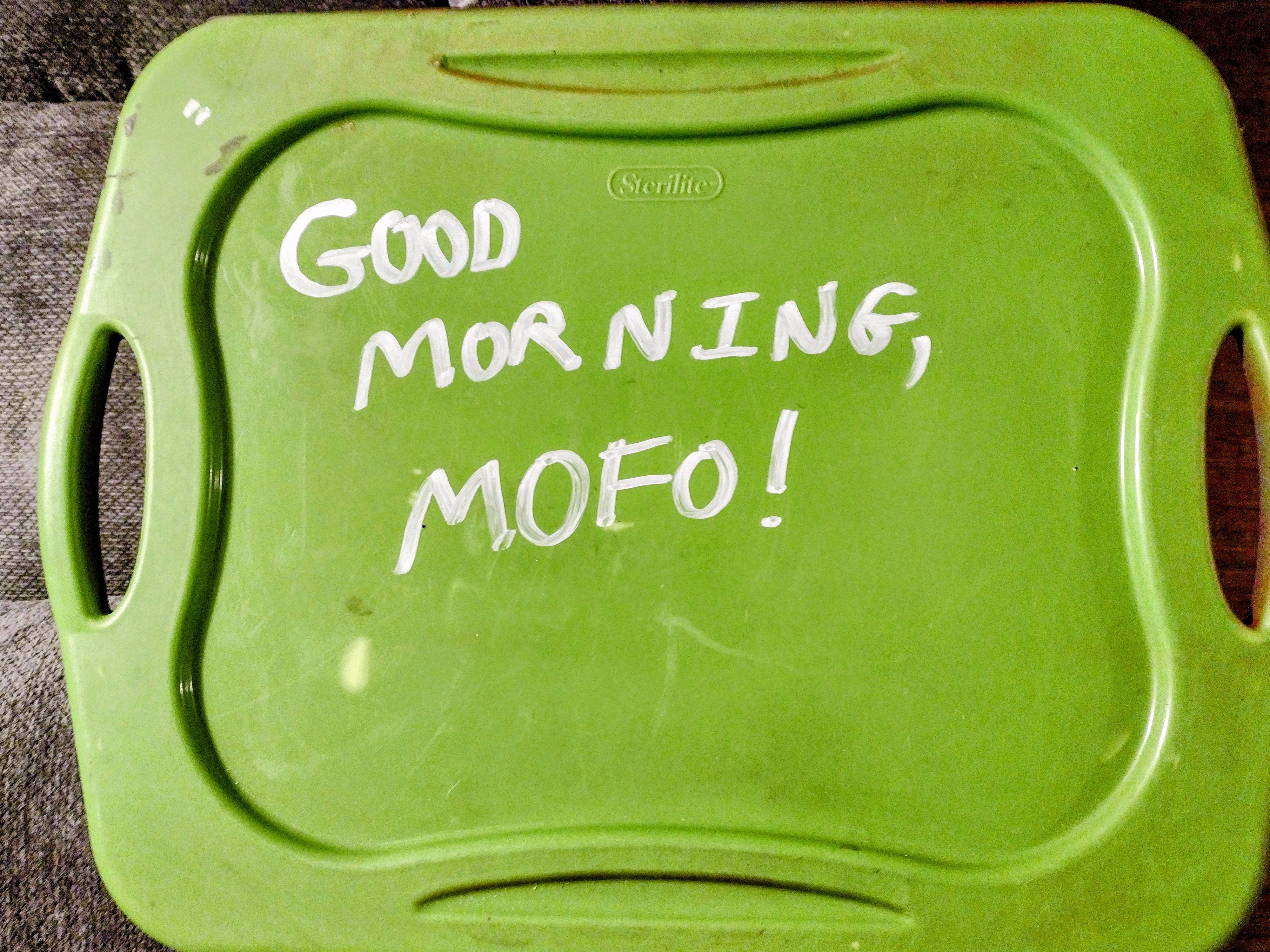
A special message for today, written on a 2′ x 3′ container lid.
Yes, the word “mofo” still amuses me.
As I amused myself with this sign, I listened to my downstairs neighbor rage and scream for several minutes. I went out to the landing and stairs and recorded a little bit of it. I hope he is not screaming at his very young daughter again. That kind of behavior at 4 a.m. signals that he is out of control. It wouldn’t be better to listen to it at 2 p.m. but it somehow is much worse at this hour. He’s the one some of us call “Shirtless Guy,” because he goes shirtless when all evidence clearly indicates that he should not, at least from the standpoint of “things people want to see.”
I hear the train whistle in the distance. It will soon approach, roaring past. As loud as it is, it’s one of the things that is endearing about living in this area. As for the volume, it’s no louder than my mom, whose voice cut could through the apocalypse. Trains connect me to my childhood past, parts that are worth remembering. My grandpa used to tell me stories about jumping trains, even as my grandma Nellie would holler at him: “Woolie, stop telling him those stories!” I wish grandpa had lived a few more years to tell me stories I could remember. As for the train tracks, if you touch the rails, you’re connected to 140,000+ miles of them across the United States. I love that idea.
The train horn grows loud.
The day grows near.
The neighbor is silent.
Good morning, mofos. I wish you could experience how it makes me feel to recall sitting on the wooden porch swing next to grandpa.
This is a post in two parts. I didn’t know how to separate them…
She reached out to me in November, her heart dreading what I might tell her. Sheena and Deanne, my wife who died, were once inseparable comrades in friendship and a little mischief. The early 90s were their heyday. Both Sheena and Deanne were outgoing and beautiful young women.
They’d lost touch. I don’t remember that Deanne told me why other than she often told stories about her friends and the shenanigans and moments she lived before meeting me. As anyone knows, the first few months of getting to know someone is a sublime pleasure filled with stories and insights. We immerse ourselves into the unknown universe of someone else’s life as we get to know them. Deanne was almost ten years younger than me. Despite that, she had a lot of stories to tell and a large family to fill the spaces of her life. I already knew her brother Mark thanks to our jobs at Cargill.
Sheena said she’d seen Deanne once in April of 2001 when Sheena was giving birth to her daughter. Deanne worked at the hospital and surprised Sheena with an impromptu visit. Evidently, it was one filled with smiles and quick words. Sheena did not see her again. But she always wanted to and wondered where Deanne was in the world.
As so often happens when we get older, we think about the people who once touched us. Some of them drift away purposefully; others drift for other reasons. The truth is that some people have a room in our hearts even when we no longer see them. It’s one of life’s bittersweet lessons.
Sheena found an obituary for Deanne. I’d dutifully left a trail of her life and some of her stories on Ancestry and other places. People need to be remembered. Sheena told me that she cried reading it, knowing that her hopes of reconnecting were gone forever. I felt an immense pang of regret on her behalf. Deanne would have lovingly hugged Sheena had she had the chance. She loved a good grudge, but she loved connections more. One of Deanne’s foibles was how quickly she could get irritated. It was a blessing to her in some ways, too, though. As I grew to know her, her ire often made me laugh. She’d punch me in the arm and laugh, too, once the ridiculousness of the situation became apparent.
Sheena ultimately revealed that their friendship probably ruptured because she had told Deanne that we were not compatible. Deanne made up her mind about me very early on. I’m not sure I was consulted!
Sheena reached out to me on Ancestry, and I shared my entire picture collection with her, thousands of pictures – and every picture I owned of Deanne. She was able to sort through Deanne’s short life, as told in pictures. Later, I shared a few stories with her, ones some people have never read or heard.
More importantly, I gave Sheena peace. I let her know that she should feel happy that Deanne and I found each other and stayed together, even when it wasn’t easy. We all do and say things when we’re younger – and often continue the same when we’re older. And if she said the things she said to Deanne with an authentic heart, she should not be accountable for sharing her opinion or truth. That’s the risk of being genuine with other people.
The truth is that Deanne and I weren’t compatible at first glance. Or probably second glance. In that sense, Sheena was definitely not wrong. Deanne was an outgoing, buxom, active soul, almost ten years younger than me. I had no clue she was interested in me. Until she insisted I come over for a homemade meal. Believe me, I was not the one wearing the pants at the beginning of the relationship. Call me oblivious.
Sheena got to see Deanne’s life because I am committed to sharing every picture I own with anyone interested. I’m just the custodian. I love pictures, and I love knowing that people always come full circle with wanting to see every picture of someone they love or loved. Avoiding the soapbox, I will limit myself to saying that unappreciated or unseen pictures do no one any good.
I still feel a bit of remorse for both Deanne and Sheena. They could have reconnected. Had I been aware, I would have asked Deanne to look past any past words and find Sheena again. I did the same with Deanne’s dad. Deanne doubted she could forge a new beginning with him. Through the years, though, I encouraged her to try from a new foundation. And she did. I still count it as one of the best things I’ve ever accomplished. More so because she died so young.
I hope Sheena found a way to fill her life with new souls. She seems like the kind of person who deserves it. Her words to Deanne so many years ago would have been received differently had I known at the time. * *
After Deanne died, I didn’t have a big interval of time before I met Dawn, my ex-wife. Whether you can understand or not, I made the choice to plow through life and not let myself get overwhelmed with the loss. When we first got together, I had her meet Deanne’s brother and his wife. I wanted them to know that me getting on with life didn’t negate Deanne. Quite the contrary. I had to make a choice, one that wasn’t really a choice at all. Things could have ended very badly for me. If you’ve lived a life with loss, you can imagine what some of those endings might look like for me. There’s no shame in acknowledging them.
It’s not a choice a lot of people might make. I make no apologies, though. Dawn and I were together when we were very young. She’d had an intervening marriage, one that fizzled and ground down into apathy. We were happy to find each other again.
Deanne never was between Dawn and me. At least not for me. She wasn’t a ghost, but she was a catalyst and reminder for me, something that people misunderstand. When life snatches your optimism through mortality, there are a lot of impossible feelings. This amplifies when you consider how capricious life can be; anyone or anything can disappear at any moment. Deanne deserved more years to continue her journey. She was substantially different from the time when we first met. And that was a great thing to witness. I try to remember to be grateful for the years I had with her. The song always ends, leaving us with a melody we can replay in our heads through memories.
At the risk of repeating myself, one of my biggest mistakes in life has been to occasionally forget the lesson that Deanne’s death dealt me: life is for the living, obstacles will always punch, and love is never wasted, no matter how it ends.
It’s true I shared fewer stories about Deanne than I should have. I did make the mistake of not writing all the stories of adventure and mischief I had with Deanne. And also some about our hard times. We definitely had them. As Dawn and I disintegrated, she seemed to switch the narrative on me about how it was with Deanne. Whether that’s true or not is in the eye of the beholder. I made a choice – as did she. I’d make the same choice again because a choice to live and love is a positive choice; fearing another loss and avoiding taking the risk is a negative choice.
Someone reminded me this morning not to veer. Since she’s a disguised writer, I’m obligated to heed her warning.
Every love is forged with expansiveness and optimism. That we can’t navigate the treachery of daily living and one another’s messes isn’t a knock to love or vulnerability, though. The problem lies within us. Familiarity breeds contempt. We assign motive to actions or words, usually based on our faulty filters. It’s hilariously evident that most of us want the same things.
When love has drawn its last breath, it is easy to focus on the things that were wrong.
When a person draws their last breath, all the doors are shut forever.
Whether you are 31 or 71, the door is always about to shut. We just don’t see it coming. That helps us to forget how precarious our lives are. That same forgetfulness affords us the ability to live our daily lives but it also has the reciprocal defect of failing to focus on what lights us up.
For Sheena, for Deanne, and for anyone who no longer walks the Earth, we can do our best by choosing optimism over despair, deliberate risk over comfort, and for being ourselves, even as the world madly surprises us.
Deanne would tell us that all these years she’s been gone that she would hope we were squeezing the absolute hell out of whatever life has to offer – and shame on us if we aren’t.
She would have loved to be alive and make a lot of mistakes. We should be too. She’d be the first to call me out for being an idiot. And she’d mean it.
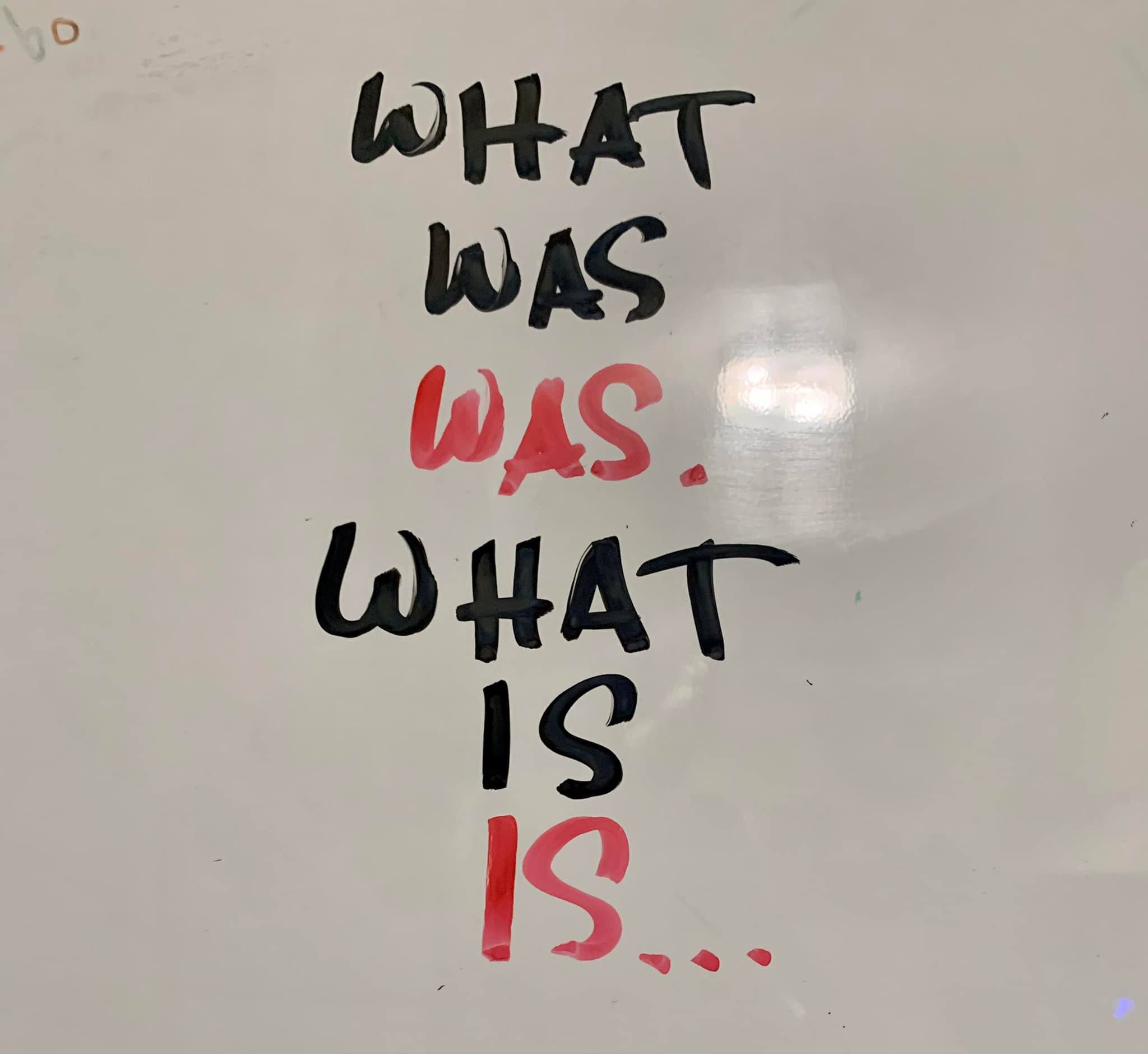
Every once in a while I erase the whiteboard in the kitchen and write the first thing that comes to mind. Today’s is a simple set of statements, but ones very hard to reconcile in the scheme of life. We often find ourselves looking back, thinking about the heydays and moments we were at the point we thought as best. With regrets, what~ifs, despondency. Hoping we may one day find those moments again.
What we need to take away from those minutes though is that the past is the past, and whether we think things were somehow better before we need to see the now with a fresh set of eyes and appreciation. There are lovely things, amazing seconds, right here and now.
We all have a “gilded” age full of sparkle and shine, it will always not be now. But if you can’t appreciate all the beauty of the day just now happening because of it… that is doing this one a disservice. There is so much to be grateful for right this moment, focusing on the past only causes you to gloss over it.
He’s been gone 28 years today. He died at 3:33 in the morning. I was awake at that time this morning and took my first drink of coffee as I watched the minute click over. Nothing noteworthy happened unless you factor in the gratitude that I felt for still being here.
He violently tried to mold me into the man he thought he was. In doing so, he achieved the opposite result. And I’m grateful. His legacy is one of addiction, fists, and one of the wildest senses of humor I’ve ever experienced. He was in prison in Pendleton, Indiana, when he was in his 20s, and accumulated countless DUIs, fights, arrests, and violent confrontations. He also found his humanity from time to time and helped other people. I remind myself of those times as often as I can because they were just as much a part of him as the times he lashed out.
I think back to his funeral, with Jimmy and Mike sitting near me. Both of them are gone now. Both of them, unfortunately, absorbed much of the Terry inclination for self-destruction. Though I couldn’t apply the realization properly, I recognized at a young age that I was susceptible to much of the same sort of demons that possessed so many of my family. I learned to dance around them.
I was Bobby Dean’s accidental namesake. Not too many years before he died, I killed off that part of me, both in name and spirit.
It probably saved my life. Walking around with the people close to me calling me X was a constant reminder that I could choose my own way. While I have stumbled with the best of them, I’ve managed to keep my sanity all these years.
But through the arc of time, I still feel stirrings of Bobby Dean inside of me. Some of that is hard steel. Some of it is limitless humor. He taught me to take hard, unexpected punches and to swallow the blood, even if I did so through tears. At 54, things look entirely different to me. I don’t judge him as harshly as I once did. Being human has taught me that although I will never eclipse the stupidity and violence of some of my dad’s actions, I have that part of Bobby Dean inside of me. It is strangely comforting, even as I strive to be his opposite.
Were he alive, I would love to sit and have a coffee with him while he smoked a camel. And to talk to him about the sister I didn’t know I had. As reprehensible as the behavior was that led to her creation, it’s hard to fault the universe for the result. She’s a kind human being and proof that Bobby Dean could contribute to the creation of a stellar human being. If we met again, I don’t know whether we would hug or trade punches. Or both. But I do know that I would be overwhelmed. I can now see him as a person apart from being my dad. There was so much I could have learned from him; he was a mechanic, electrician, tiler, carpenter, painter, welder, gunsmith, outdoorsman, and farmer. If only he had acquired the skills to be loving, his life would have been ideal.
He, of course, hasn’t changed. He made his choices and left his footprints. He had his chance and walked the Earth. My understanding of him has changed. He would laugh at me and tell me to put my boots on and go out and get the punch in the face. He would also call me his favorite curse word: _ _ _ _ s u c k e r. Then offer me one of those horrible peppermint Brach candies that he loved.
Out of all the lessons I learned from him, one he didn’t even know he was teaching, is that we all need people and love. To find a way to get past what we’ve done and who we think we are. If we’re alive, we can use the steel and even the heartache to turn away from the things that make us lesser.
To Bobby Dean. Dad. Troubled human being.
Love, X . P.S. Below are more pictures, some of which I amateurishly colorized. All of the images used in this post were originally in black and white.
.
.
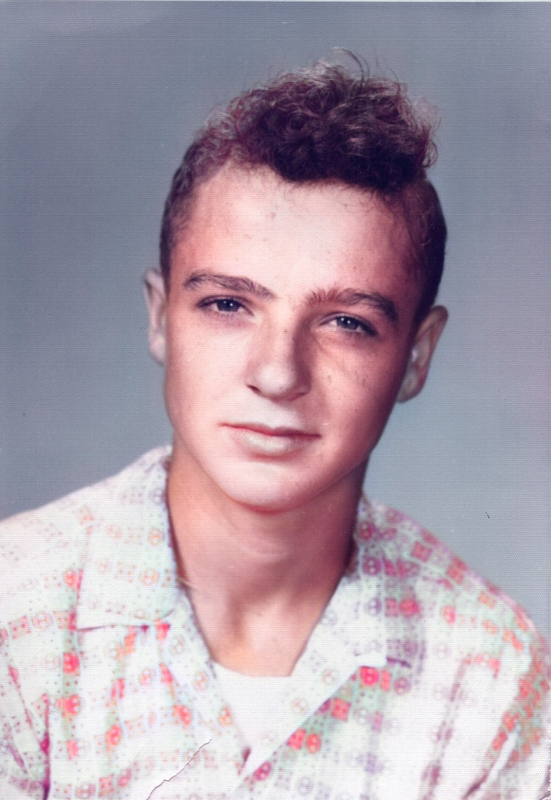
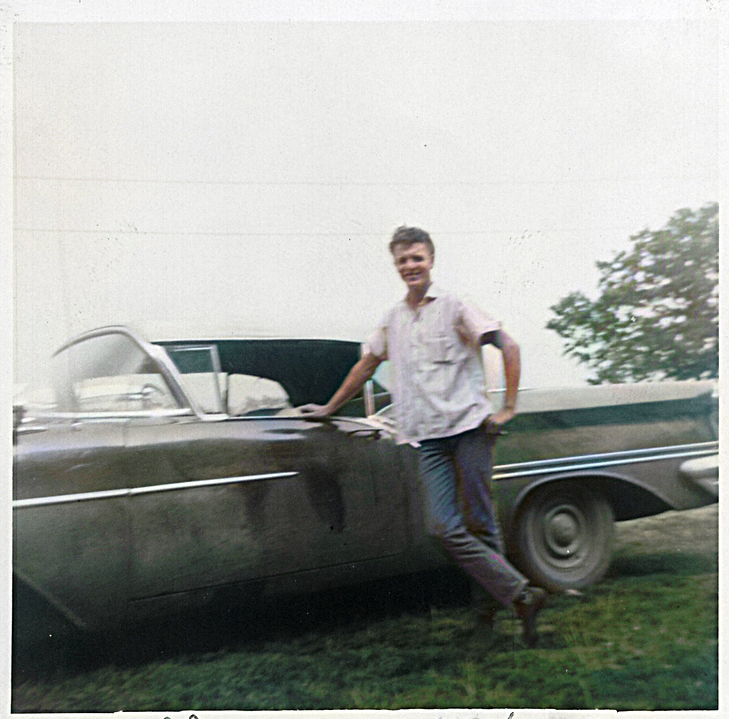
Dad in 1963. He was about 19.
.
.
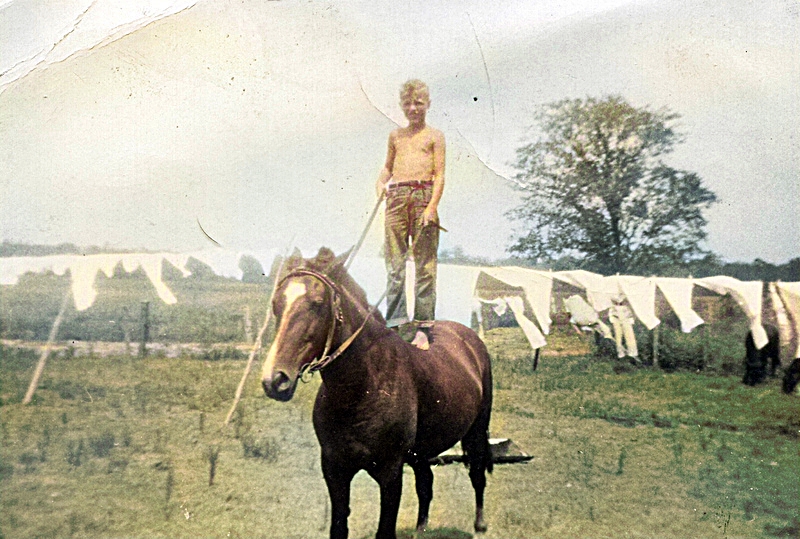
Dad standing on a horse, of course.
.
.
Dad with Goldie, somewhere around 1974-75. He was 31, which blows my mind to consider.
.
.
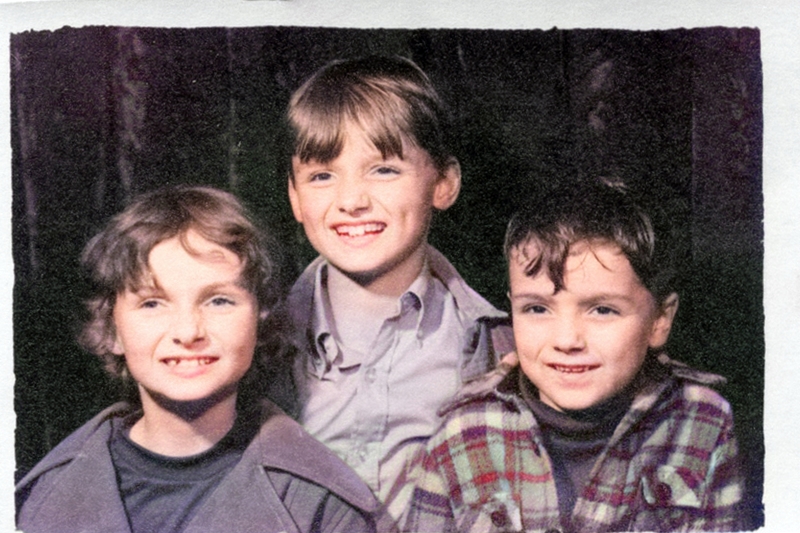
My sister Marsha, brother Mike, me. Seeing it in color changes everything.
.
.
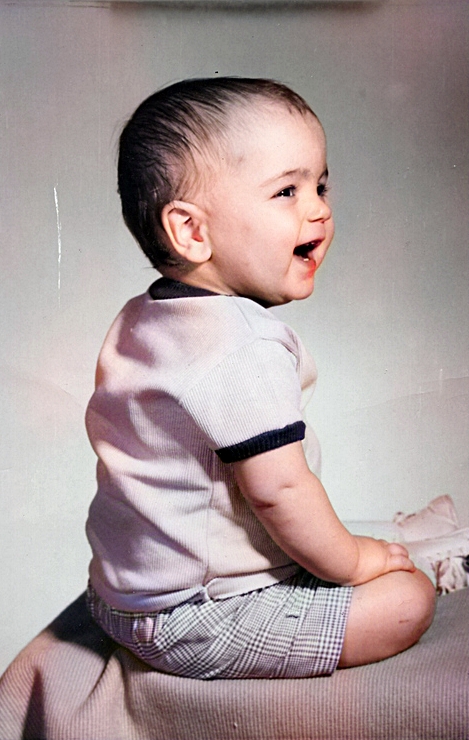
Me as a toddler. The picture looks strikingly different in color!
Among the things I once did a LONG time ago was to find and gift used vintage holiday cards. Not only is the artwork a surprise and delight, but it brings me nostalgia for times I never knew.
This Xmas card is postmarked on Dec. 21, 1909.
Now, years later, I love using my genealogy ability to find either the receiver or sender and look back at their life. If I wanted, I could find one of the descendants of William Early. William, to whom the postcard was sent. I could unravel the entire biography for the sender, Bessie McGivern of Galesburg, Illinois. She aged into a beautiful woman. I found several pictures of her.
I don’t know the sender’s and receiver’s connection.
But I love that I COULD find out if I wanted – to crack open a spider’s web of connections throughout history, time, and geography.
So, when I see used vintage cards, I don’t see relics or dusty, useless reminders.
When I give them, I’m giving something of myself; the admiration of life shared. You might not know it by looking at me, but I feel a kinship to some of the old ways. Of writing, of postcards, of delayed communication. If you get one from me, I’m also reminding you that life is fleeting and that one day our lives will be footnotes, memories, and details.
I see art.
I see life.
I see footprints of those who preceded us, much in the same way we’ll precede those who follow.
Time. Love. Connection.
Love, X .
P.S. *You’ll note that back then, “Xmas” was completely acceptable, before disinformation spread to lessen its beauty.
I sat on the steps of the porch, feeling the boards against my back. I was barefoot and wearing cutoff shorts, the official uniform of Southern boys. The porch was a stack of large railroad ties. Each section had at least two hundred nails driven in it. If the summer sun were shining on them, the nails became unbearably hot against your legs. The narrow highway was about thirty feet away, its tan hue rendered black in the early morning. No car was parked in the driveway because my grandparents didn’t drive, a fact that still surprises me. Later in the day, Aunt Betty or Aunt Marylou would come, and we would go to the store, probably to the Mercantile in Monroe. Grandma would let me pick out one of the cheap toys hanging on a rickety metal carousel. In a few minutes, one of the robins that preferred the protection of the cedar tree by the ditch would begin to call.
The days of the summer of 1973 filled with Watergate, and one of my favorite books, “Jonathan Livingston Seagull,” was a best-seller. Both of these facts might as well have been part of another world, one only remotely attached to Monroe County. I came back for the summer. My parents had precipitously decided to move to Northwest Arkansas the year before. I skipped kindergarten and went to first grade. Coming back to be with Grandma and Grandpa probably saved my life that summer. I didn’t know until I was over fifty years old that my Dad fled his hometown because he had another secret, one which was unacceptable to many people in that part of the state. He could kill someone and pay no price, but he couldn’t escape the pressure of violating an unwritten social norm. Mom and Dad spent many of their nights beating one another into reality. I was a couple of hundred miles away that summer before the interstate crept into Springdale. Because school used to start later, I had about three weeks to enjoy the summer. Three weeks at that age might as well have been a year. And time in the rural areas of the South slowed to a pace that most modern people couldn’t accept easily.
Because it was early August, Grandpa would come outside sooner than usual. He might cut a plug of tobacco but would probably wait until after breakfast. Grandma’s Saturday menu invariably included sausage or salt pork and toast with butter. Years later, I thought it strange that everyone didn’t have extra biscuits or toast leftover in a pan on the stove or table.
Sitting on the porch, I knew that just a few minutes separated night and day for everyone in the house. All the windows were up because the night was hot and dense. Being outside, I could hear the fans whisper against sheets and mosquitoes. As the day lengthened, I knew Grandma would be in the living room, asking herself what time she could seal up the small area, turn on the window air conditioner, and feel the chill of a small victory against hot summers. Much of my day would be spent digging in the ditch along the road or sitting on the floor near Grandma, cradling an infinite glass of Coke and crushed ice Grandma often made for me, using a hammer and hand towel. It’s a recipe you won’t find on The Food Network. It’ll never taste the same anyway because its alchemy includes water from old ground and love from one’s Grandma.
I knew I wasn’t there again, even as I smelled the dark earth of the surrounding fields fade from me. Monroe County receded and dissipated, leaving me to awaken in 2021, imagining August 3rd, 1973.
In a minute, I’ll get up, peer through the blinds at the backyard, and wonder about the intervening forty-eight years. I’ll make a strong pot of coffee, and as I take the first sip from my green Pyrite cup, I will invoke the misty morning I left behind.
I don’t dream of my summers before Grandpa died with much frequency anymore. When I do, though, I find it takes me a few minutes to shake away the idea that some part of me still sits on the edge of the porch.
This story zigzags like my life. I apologize for having no consistency.
I generally have a rip-shirt in the closet. The current one is somewhere between 15-20 years old. The vivid color of the shirt has faded, and the fabric is stretched past its intended shape. But I keep fixing the rips and frayed edges because that is what life is. I’ve done every activity you can imagine in that shirt. (Don’t overthink that.)
Because I have always sewed, I sometimes dabble with a variety of things that require it. My Grandma Cook taught me to do a stitch when I was very young. I loved sitting at her feet on the rough floor and sewing anything she handed to me. And often, my fingertips. Thimbles were available but made poor guides for novice sewers.
My Dad and brother loved mercilessly teasing me about my penchant for making non-bunching pillows many years ago; my favorite kind involved going to a fabric store or department and choosing something appropriate for the intended v̵i̵c̵t̵i̵m̵s̵ recipients. Sewing has always been meditative for me. I’m not GOOD at it, of course, but you know what I’m going to say: I don’t care. No one in their right mind would ever invite me to a quilting circle for my sewing skills unless they needed comic relief.
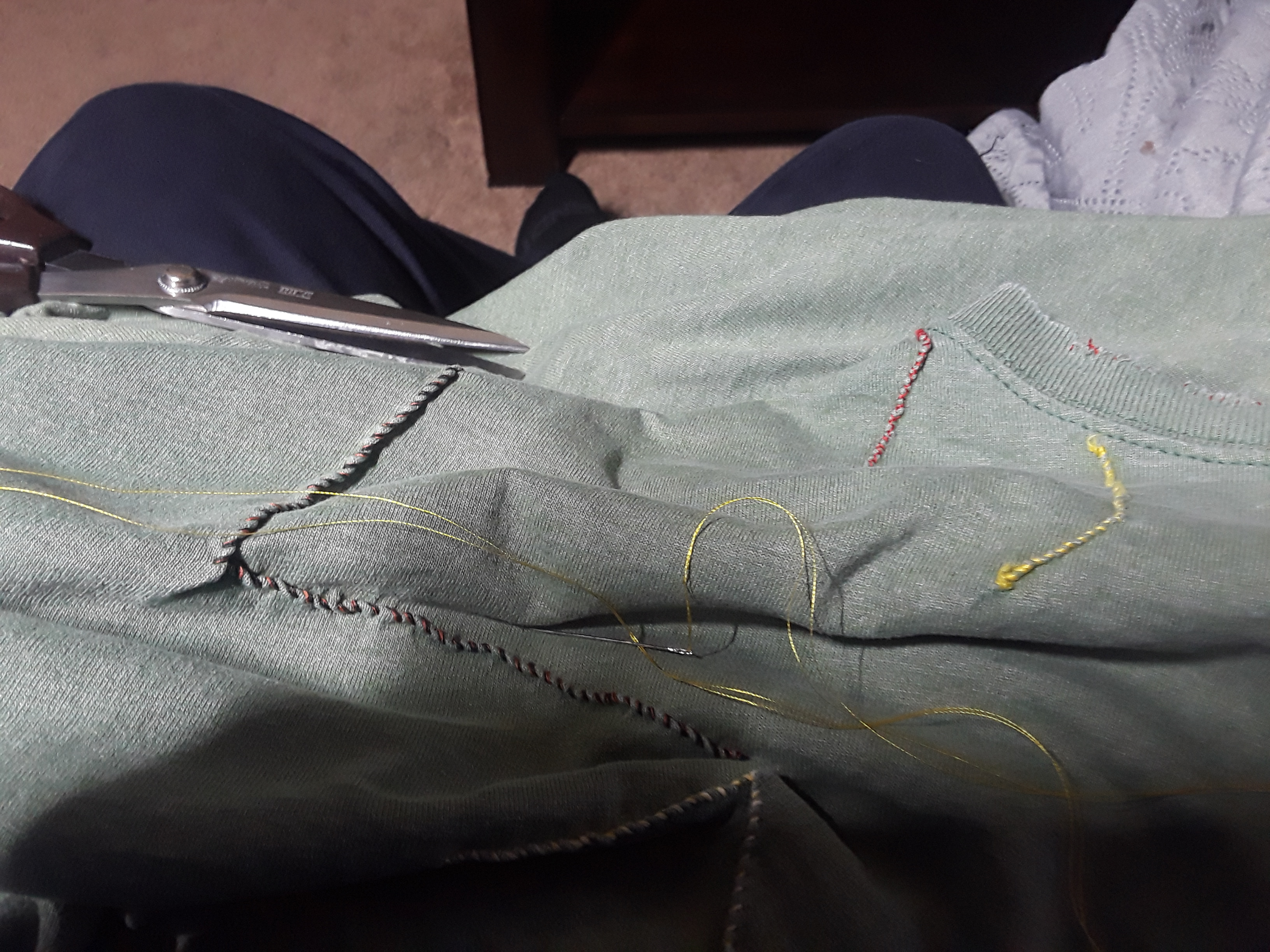
In my early 20s, I started doing what I call rip-shirts. Some of them took me 100 hours to make. Simply put, I choose a shirt, usually of a distinctive color, then spend hours sewing stitch patterns all over it. Part of the fun is using a wide variety of threads, especially of different colors. It’s supposed to be garish. It’s possible to do intricate monograms this way, too, which I’ve done. I gave away many of these for years. One of the key advantages of such a shirt is that it becomes almost impossible to distinguish if it should be discarded, as all subsequent rips, tears, and issues can be restitched and become part of the resulting pattern. One of my shirts had over 500 hand-stitched lines on it. For another, I sewed a difficult-to-see curse word cleverly hidden in the stitch lines. That one amused me greatly.
Later, I discovered Kintsugi’s idea, where breaks and defects in bowls and cups are repaired using lacquer and gold dust. Theoretically, such repaired bowls can be fixed repeatedly and still be both useful and beautiful.
Rip-shirts fulfill the same purpose for me. They are each unique.
As the fabric wears, it becomes softer and more comfortable. If you rip the shirt, you can just sew it back. Unless you tell someone, they’ll assume all the stitches were purposefully placed.
When I was 30, I made a shirt for someone I initially thought was mocking me. He pulled me aside to correct me and told me that the idea was perfection to him. Because he was a large black man, I chose a very large shirt. I monogrammed his nickname along one sleeve and put hundreds of stitch lines on it. It was the only time that I worked hard to get the stitches perfectly aligned. When I handed him the shirt, he teared up. “Wow. I bet this took twenty hours to make, X!” I shook my head. “No, it took fifty.” He couldn’t believe that I spent so much time making him the shirt. He died much too young a few years later. What breaks my heart when I think too long about it? I told him I could teach him to do basic stitching in less than 15 minutes. So it came to pass that I sat in an industrial office in a vast poultry plant patiently showing another grown man how to stitch. It occurred to me how strange the idea would have been to my Grandma.
I indeed caught a fair bit of mockery for wearing these shirts. Likewise, I also wore my clothes inside out for fun, too, or made exotic and ridiculous headbands, sewed on a long-sleeve to a t-shirt, and a wild variety of stupidity. I went inside what is now First Security on Emma. The plant manager for the company I worked for had a wife who worked there. I went to the next teller, and it was the plant manager’s wife. I’ll never forget the look on her face when she realized that my t-shirt had the sleeve of a long-sleeve button-down dress shirt sewed on it instead of a standard t-shirt sleeve. She laughed so hard that a bubble came out of her nose. The look of mortification on her face was etched in marble. And then she laughed more. The person in charge of the tellers walked over to see what the problem was. The plant manager’s wife was crying from laughter and trying to tell her what the joke was. Looking at the floor manager in the eye, I said, “I got robbed, and they did THIS to me!” – and I pointed at my sleeve. The plant manager’s wife and I both laughed for another full minute. The floor manager walked away, shaking her head.
I made several rip-shirts for younger kids, who were fascinated by the concoction of stories I created to go along with them. Kids take a bit longer to lose their sense of adventure or categorically reject something interesting.
Somewhere around 2000, I was at the store wearing a rip-shirt, and a gentleman asked me where I bought the shirt. I think I was at Hastings Records. “I didn’t buy it. I made it.” He seemed genuinely interested. That particular shirt had a lot of neon threads in it. I grabbed the hem of my shirt, pulled the shirt up and off, and handed it to him. “Here,” I told him as I stood there shirtless near the main entrance. He didn’t argue or hesitate. “Thanks, Man!” You would have thought I handed him my wallet. At least fifty times that year, I bragged that I was willing to give someone the shirt off my back.
As my eyesight naturally worsened, I began to sew less often. That was a mistake.
I wonder where some of the rip-shirts ended up or if they still exist. Each of them was made by my imperfect hand. Each one of them is a literal tapestry of the moments I spent making them. They are not for everyone.
I hope you find it in your heart to forgive me for writing stories in related batches. Like any storyteller with a labyrinth of brain cells, I find myself wandering between branches of the same story. At times, what seems interesting to others is evident to me. In others? I’m clueless.
As I attempted to finish this, I thought of the innumerable times I’ve wondered about how I acted and what I was trying to say with this story. I’m not sure. It’s an apology at heart, though inexpertly written. It’s a wildly imperfect recounting, too. And that’s good enough for me. The day is too long to slow the urge to share. One of these days, as I write, it will be the last time I do so, though I won’t know it. As with the millions of stories everyone holds close to their secret hearts, they will vanish and with no witnesses to bring life to them.
As my senior year in high school ended, I moved to Elm Springs. I’ve written a few stories about it, both the violent end of my parent’s marriage and others about the whimsical encounters of life I experienced there. Nostalgia paints it in a way that evades mundane description.
This one is an apology. Though it is likely that the person I needlessly harmed doesn’t recall, I do. I’ve done so many things that are much worse than this. Trying to explain why my brain zeroes in on this relatively small story and goes back to my choice to be cruel offers no explanation.
A friend I didn’t initially know very well named Don Braden occasionally came over in the summer. I can’t even remember how it started for him to visit. For anyone to come over to my house was an anomaly. Only a couple of people in my childhood knew the shorthand of dread that I experienced at the idea of others knowing the content of what passed as a homelife for me. Many of us experienced this, and it is a strange common ground upon which to stand with human beings. A couple of childhood friends knew: Troy Duncan, Mike Hignite, and others to a much lesser degree. It is no accident that, despite the intervening distance, the fondness I feel for them is distilled nostalgia. I can’t explain why there were some people I could just say, “My parents are violent and drink too much. It might not be safe at my house. Also, I don’t know what the heck I’m doing.” I have no gauge or measure to explain what allowed or compelled me to be forthcoming to some and guiltily silent with others.
Don would sometimes ride my terrible bicycle (or his, too maybe? – please pardon my lack of recall) as I ran several miles around the long circuit of the lake’s roads. He was an awkward guy – but certainly not to my level. I’m confident I misjudged how smart he turned out to be. He had a quick wit and smiled relentlessly. While I ran, having him talk to me was a welcome way to relax and melt the miles away.
One of the things Don didn’t know was how uncertain the storm of my Dad’s anger could be. I don’t recall Dad exploding in anger in front of Don, but I remember snarled mumbles and veiled complaints. Due to my limited ability to warn people, I didn’t know how to navigate the implications of just yelling out, “It might not be safe here.” Don gave no indication (that I remember) that he had any idea of what a terrible family life might be like. As I grow older, I am still astonished to discover that people precisely like me were hidden in plain sight. Some make my stories of vulgar violence seem meaningless. I think and hope that Don’s childhood is what shaped his effortless ability to laugh. And that he still possesses the superpower of humor.
If I did yell out a warning about my parents and didn’t remember doing it, I know that I wasn’t entirely honest. There were a couple of times before Dad ran off to Monroe County to start a new life that Don barely missed an outburst, both coming and going.
I liked running and riding with Don. But the fear of ‘something’ happening convinced me to be a lesser human being to him.
One early afternoon, Don drove over. He knocked. Instead of answering the door, I hid in the back. The console tv in the living room, visible from the front windows, blared. He waited. Finally, he retrieved a large watermelon from his vehicle. He broke it on the concrete porch in front of the house, creating a delicious mound of watermelon pieces and running juice. Instead of coming out and admitting I was at home, I went out the back door and waited. How long I waited, I don’t remember. Don ate handfuls of the watermelon. At some point, he decided that no one was at home or coming out. He cleaned his hands with the water spigot outside and left.
It was a dumb thing to do. In my defense, I was an idiot. I don’t know if it would have helped him to know that my stupidity and lack of understanding of how to deal with people was the problem – not him. I don’t understand how letting him stand outside with a broken watermelon could have saved him from any potential craziness had my Dad came home, much less violently. That seems to highlight precisely how muted my ability to be logical regarding my situation was.
I didn’t keep up with Don. I didn’t keep with most people. Don went to the Air Force, someone told me. And I was glad for him.
Though I found Don on social media. I didn’t reach out to him. He is smiling and apparently living a good life. I wouldn’t want him to remember that I was a jerk, nor to disturb his life. If Don miraculously ever reads this, I, of course, later figured out that Don could have been a great friend, especially if I could have been honest so he could see that I was just an idiot. It’s easier to be friends with an idiot than a bad person.
Not that my blip of hideous behavior could deflect someone from the trajectory of a great life, but it is increasingly evident that we have no idea whatsoever what the smallest thing can do to affect another person’s life. Given the terrible things I’ve said and done in this life, I haven’t been able to put this one aside. I can’t explain my reluctance to share other stories of pure craziness and yet find this one stuck in my throat.
Whether or not feeling well warped my sense of self or feeling something inside me well up intolerably, I went out into the world for what I thought was the shortest of intervals today. Though you might doubt me, those moments stretched into a length that flowed without end.
Most people use the word ‘rueful’ in an exaggerated negative sense. I prefer the term to mean “expressing sorrow or regret, tinged with humor.” Those are the sublime connotations that often fuel me. Humor is what shields me; bittersweet fringes give me pause to ponder at the simultaneous complexity and simplicity of life. Swimming in the valley between them is a blessing interspersed with the unknown horizon.
My limited interactions while out in the world today reminded me of life’s sublime ability to be filled with our exclusive perceptions. Today’s moments were wrapped in the lightest of gauze and applied with gentle attention. To walk in a world so gossamer each day would be my undoing.
Such attention to the essential ruins us in our endless and needless desire to see the things around us instead of our interconnections.
During the first encounter, the female clerk ran across the recently-mopped floor, risking life and limb simply because she thought a customer might have waited too long. She made eye contact with me, and I said, “Please don’t worry. Nothing at hand deserves any stress.” While she wore a mask, I could see her eyes widen in curiosity. Her eyes then darted behind me as she noted another customer behind me tapping his foot and shifting his weight.
It’s when the shift I felt toppled inside me and made me lopsided.
As she handed me back the change, I tapped it and said, “This is for you, if you can accept it. And if not, let it be for someone who will soon approach who needs it.” Her eyes widened and became tear-laden. She nodded, unable to say anything. Not from awkwardness or loss of words, because whatever became momentarily off-kilter inside me became the same for her. It was tangible.
I walked away. The next two interactions were similar, even though it would be easy to dismiss them as figments of my feverish mind. *
“With careful toes, I pranced through my life, to awaken no one. And in so doing, the ones who should have noted my passing failed to look up and witness me.”