Category Archives: Uncategorized

Lucille And The Witness Tree

white (2)


It was July 1976. Much of the country feverishly celebrated the bicentennial. In the small town of Pleasure Heights, Arkansas, Thomas Deerfield was anything but happy. He wasn’t unhappy because of the near-100 temperature or the fact that his neighbor’s dog stole one of his boots off the porch again. His Lucille died in February of an exotic cancer that erupted from nothing the week after Xmas. They were married for forty years, the day she died. Lucille expected 1976 to be a great year. She’d made plans to drag Thomas to see the American Freedom Train at least once. Thomas had no interest in seeing the train. He’d rather have put his feet up under the shade at his brother’s cabin by the pond a few miles east of town. Lucille loved fireworks, parades, rodeos, and the sing-alongs by the creek near downtown.

“It’s time to see the world, Thomas. We’re retired and the world ain’t coming to us.” Lucille had a way of telling her husband nicely what he was going to do.

“I can see  my entire world right here,” Thomas told Lucille as he grabbed her hand and winked provocatively at her across the table. “If I want to see the world, I’ll climb the Elm tree by the square,” he said, using one of his favorite and tired jokes. Lucille laughed and pretended to do a fake shot of whiskey as she rolled her eyes at him.

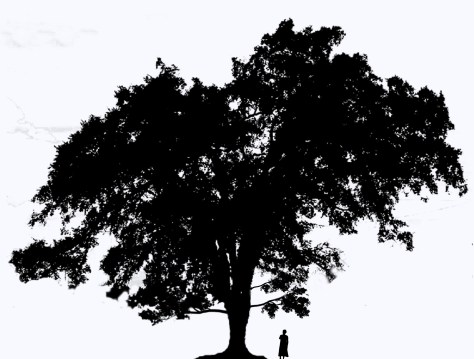
On July 4th, most of the town’s seven hundred and forty-one inhabitants stood on the square silently watching in awe as 72-year-old Thomas climbed one of the oldest elm trees in the state. It was a witness tree, and fifty-five feet tall. Unlike some other largest trees in the state, its circumference was twenty feet. Like so many other people in Pleasure Heights, Thomas had proposed to Lucille under the huge canopy of the elm tree. It had witnessed over two hundred years of different names and faces marching past it and sitting under its majestic foliage.

Most of the townspeople came to the square to eat hot dogs, watch the small parade featuring a mix of children and adults as they played their musical instruments and strode awkwardly around the expansive square. Afterward, the person voted “Most Civic-Minded” would take his or her place on the base of the absent Robert E. Lee statue. In 1958, someone had stolen the entire statue, a theft that everyone within a hundred miles still discusses heatedly. Some theories were wild, such as the one that Postmaster Evans often told. It involved both aliens and communists. No one could figure out how he’d combined those two unlikely groups. It was impossible to go to the diner for lunch without hearing the Postmaster Evans bring up his theory.

No one noticed anything unusual about Thomas as he walked across Main Street and toward the giant elm. I saw him as he walked, but thought nothing of his arrival. Everyone knew him, and many offered their hellos as he walked past them. Fire Chief Raymond used a ladder to stand on as he addressed the commencement of the parade. Thankfully, he didn’t sing his announcement this year. The Chief was one of the immensely likeable people who loved singing, but was tone deaf. He seldom noticed the pained expressions on people’s faces as he treated them to his latest rendition from the radio.

Thomas picked up the ladder, folded it, and continued walking until he was under the tree and about one third of the width of the overhead canopy away from the massive trunk. He propped the ladder and sat on the second rung. He removed his work boots and socks and laid them neatly at the bottom of the ladder. He removed his hat and stuck it on top of his boots.

Without fanfare, he grabbed the ladder and climbed it. As I watched from the edge of the street, his head disappeared into the leaves above him. I watched as one leg went up and then the other. I looked around to see if anyone else was watching. Most people were eating and talking a mile a minute as the kids of the town ran amok, filled with soda, hot dogs, and popcorn. Thomas slowly moved his way back and forth across the horizontal limbs. As he found a spot that supported his weight and allowed him to boost himself up, he climbed to the next limb up. As he climbed, he moved closer and closer to the middle of the tree. At that juncture, the largest limb went slightly to my left and became precarious.

As Thomas reached about halfway, Jim Peters saw me craning my neck and asked me, “Watcha’ watching? A movie?” I shook my head ‘no,’ and pointed. After a few seconds of staring up where my finger pointed, Jim excitedly said, “Who is that?” He said it loud enough for several people to take notice. Within a minute, about a quarter of everyone in that large cluster of people were looking up into the elm tree.

There was a collective chorus of “Who is it?” from multiple angles.

“It’s Thomas Deerfield,” I said, loudly.

“Bull! He’s at least 70,” argued Phillip Douglas. Phillip owned the tire shop and loved saying ‘bull’ or its more vulgar counterpart at least once a minute. “Yes, he’s 72,” I told him. I could hear the name Thomas being echoed across the growing crowd. There were a few gasps from the older ladies as they tried to imagine someone that age climbing a tree. They’d never be able to scold another rambunctious boy for climbing again, not after that day.

I gave up my vantage point and moved back. Instinctively, so did a lot of others observing the tree climb.

“We love you, Thomas!” someone half-jokingly shouted from behind me.

In a testament to the town’s spirit, it didn’t occur to a single resident that Thomas might be on a quest to hurt himself – or that he might fall, even though the likelihood of that outcome was obvious to anyone who’d dare climb any tree taller than thirty feet high.

Like a wave, the chant started from nowhere and subtly grew. “Thomas! Thomas! Thomas!” In a few moments, even the smaller children were chanting.

We all stood in awe as Thomas continued to climb the branch he chose to get as close to the sky as possible. When he could go no further, he stopped and braced himself against the bark of the elm tree.

“I can see the whole world from up here, Lucille,” Thomas shouted over and over. “I can see it! And ain’t none of it got you in it!”

It was a moment of pure collective joy, and most of us laughed.

We stood, watching, holding our breaths for something we couldn’t identify.

“I’m coming down!” Thomas shouted.

To my surprise, most of us below applauded, our hands thunderously giving our approval to the spectacle. It took Thomas thirty minutes to get down low enough to find footing on the ladder again. Several male townspeople were there to help him the last few inches. When Thomas stepped off the ladder, we all applauded again.

Pleasure Heights didn’t just celebrate the bicentennial of the country. It celebrated a life on that 4th of July. Even though we didn’t vote on it, we all started calling the elm tree “Lucille,” a name it still carries today, even in the book someone wrote describing all the old trees in the state.

Thomas lived to be 92. He spent the 20 years after Lucille died immersed in the social life of the small town his wife had loved. He sang, led the town’s parade a few times, and often sat outside the diner saying hello to everyone who passed. He died on Independence Day in 1996. My son June found him sitting under the Elm tree near the square, his hat pulled under his eyes, his back against the tree he stood under as he proposed to the love of his life all those decades ago.

I got a call from the new Chief of Police around 9 a.m. He told me June was at the square with his bicycle and needed me to come as soon as possible.

An hour later, after they’d taken Thomas’ body to the funeral home off Highway 37, June asked me what happened to Thomas. Since June was old enough to know the story, I put my hand on his shoulder and said, “June, love finally caught up to him. He went to the see the world.” Although June didn’t understand what I meant, he hugged me. We both smiled as we walked to stand a moment under the witness tree’s canopy. The heat was almost unbearable without a breeze. I looked up, and told June, “You wouldn’t believe it, but I was here when Thomas climbed almost to the top of this elm tree…”

For Lucille.

For love.
On The Tip Of Your Tongue, You Said?

1xfamilyscan (237)


Although modern vehicles still retain the round 12-v holes in which to plug in adapters for power, people of a certain age all recall the magic of the spring-loaded cigarette lighters of yesteryear. Back in the day, everyone smoked, even people using oxygen, priests, the doctor who delivered you (while delivering you, no less), and the irritated waitress bringing you overcooked hash browns at the Waffle Hut. (There were no food returns, only “Get the hell out!” requests if you complained about your food, or ashes in your grits.)

Adults, however, could not be without a cigarette lighter for over ten minutes. Before we removed the clause from the Declaration of Independence, all adults were required to smoke at least a pack of cigarettes a day. My mom, for example, showed her patriotism by sometimes smoking a literal carton a day. It seems impossible. She often rose from the bed with a lit cigarette, bathed with a cigarette, and smoked all day as she sat in the operator’s chair for Southwestern Bell. There were times when our house on wheels looked like the polluted skies over an industrial factory. If we were in the car, the windshield seemed opaque from all the smoke. Having the windows down was a bit of a relief, but we all remember the clotted gasp of discovering that a butt thrown out the window had reentered to find itself in our mouths and throats. My mom didn’t believe that throwing a lit cigarette out of the car was a problem. If Smokey The Bear had been standing beside the road, she would have flicked it directly into the pocket of his shirt in an attempt to catch him on fire.

Adults who smoked treated the car cigarette lighter as if it were a religious relic, one to be admired, worshipped, and never touched by the undeserving hands of a child. (Unless we were told to light the cigarette for the adult, who undoubtedly was struggling already to pop the beer can open, the one cradled in the cheap koozie used to hold it.)

Unrelated to the story: the word ‘koozie’ is one of the ugliest words in the English language.

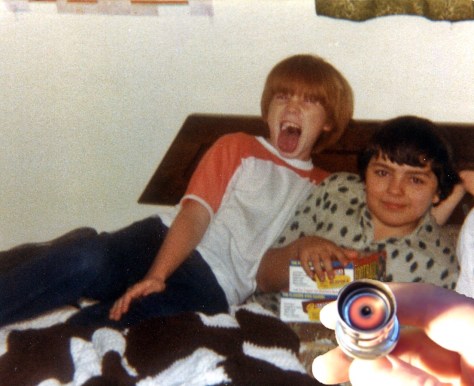
I don’t know how old I was for certain. My cousin Jimmy and I were in one of my dad’s and his cousin Tom’s jalopies for sale. Jimmy was spoiled, but sometimes lit up with mischief and humor. We sat in the front seat of some aged old car, honking the horn and ducking below the dash to avoid being seen. I’d get a beating if caught. Jimmy would have received a smile. Jimmy kept pressing the cigarette lighter in, waiting for it to startle him as it popped out, its insides glowing red. He acted like he was going to touch it with the tip of one of his fingers. “Don’t!” I yelled, despite my extensive Shakespearean training in the vocal arts. Jimmy laughed.

“Oh, it won’t hurt so bad.” He seemed sure. I was 100% certain he was wrong, having been stupid enough to do it myself. More than once and probably fifty times up to that point. I noted that my burned fingertips didn’t smell like pepperoni, either.

“I’ll give you 5 bucks if you touch it to the tip of your tongue,” he told me, smiling. 5 bucks was the equivalent of a fortune for me.

I considered it. I pulled the lighter from the sheath and watched it as it glowed red and hot. When I got it closer to my mouth, I could of course feel the heat radiating off it it.

“Get it hot again,” Jimmy insisted, so I popped it back in the ashtray that contained the plug in.

In a few moments, it popped back out. Jimmy grabbed it and handed it to me.

I unwisely brought it up to my face and stuck out the tip of my tongue. The heat was too much. At that precise moment, Jimmy slapped my left hand unexpectedly and the hot coil hit the tip of my tongue. Luckily, it came away immediately as I reacted and pulled it away. A bit of my skin came away with it. I could smell it burn and hear a slight hiss and sizzle as it cooked my disconnected skin.

I didn’t scream, but I did whimper as I coiled my tongue into my cheek. I could feel it burning. I think it was saying “Idiot” to me in the only way it knew how. Jimmy was doubled over and laughing. His eyes were teary as he peeked to look at the horrified expression on my face.

Because I was poor and my mom refused to let us use the excellent insurance she had through her work, my concern was the possibility of needing medical care. Dad would have opted to slice off the tip of my tongue with one of his hunting knives, or push me into an open septic tank.

Sidenote: the house I lived in, one off of Powell and near Hatfield Street, and opposite the old City View trailer park, had a secret. There was a round garage on the property that Dad used for his mechanic business. The property had a well and a septic tank instead of city water and sewer. We had been bathing in – and drinking – water contaminated with sewer waste from a faulty septic tank for over a year. We kept complaining that everything tasted like sh*t. We weren’t wrong.

This is a true story.

Without going into the details, it’s why to this day I have to concentrate to take the first bite of ramen noodles.

Jimmy finally stopped laughing. My eyes cleared up enough for me to tell Jimmy I was going to sneak up on him while he was sleeping in his waterbed and put a snake under the covers with him. The idea of snakes on him while sleeping terrified him. He begged and pleaded for forgiveness.

My tongue hurt for several days. I had to play the French Horn. Each time my tongue punctuated a note against my lips or the mouthpiece, I’d cringe a little. I felt like a little poodle on the verge of wetting myself.

I never put a snake in the bed with Jimmy. But I thought about it. A million times.

Sketchy ________

sexy mf

NSFW warning: this story is true. It contains references that will make curse words materialize in your head. (Not that watching the news doesn’t cause the same reaction, regardless of which camp you root for.) If you know the song, there’s no use pretending you’re offended. This story, however, reminds people of the fact that I’m not one to be offended at profanity per se; the sentiment underlying the language is the only offending force at work when profanity makes its appearance.

For real, though? You’re still reading? Stop reading. You will get offended or be put in the position that obligates you to pretend you’re offended. (A common affliction we all seem to suffer from more and more.)
.
.
.
.
Most of us have our profane “in-jokes,” ones which defy meticulous explanation.

One of mine is “Sketchy _____________.”

If someone passes by who looks like he just jumped out of bed after a long night in a beer-filled ditch, I laugh and sing a line from a Prince song. Its radio title was “Sexy M.F.” You can google it if you need to.

Likewise, if someone looks like a rejected extra from “Silence of The Lambs,” the dicey parts, I’ll croon the line in an even creepier falsetto. If they look like a failed professional bowler wearing stuff from his mom’s closet, he gets the “Sexy M.F.” Prince song. The only requirement is that I change “sexy” to “sketchy.”

Shortly after the new road bypassing Old Wire in North Springdale was finished, we were waiting at the light at 264. One of the weirdest people I’ve ever seen in my life was waiting on the opposite side of the intersection. He looked like Axe Body Spray had mated with Domino’s Pizza and produced a child. I suspect that even his birth certificate had been stamped “Suspicious.”

I sang the lyric wrong without thinking. Comedy gold was born.

If you’re ever around me and we see someone really wickedly strange, just nod and I’ll do the thing. There are few joys greater than hearing me sing in a falsetto, especially in regard to an obscure Prince song.

In closing, don’t be a “Sketchy ____________.”

Or I’ll sing at you as you pass by.

A Dumb Joke For You

As I passed the old art supply shop, I noticed an open trash can at the edge of the curb. I drove a little further and made a U-turn. There was no traffic at all when I did so. I drove very close to the curb, hung my arm out the window and slammed the small bag of trash I had into the top of the trash can.

Immediately, I saw blue lights come on ahead of me. I pulled over and waited for the policeman to come up to the window.

“What’s the problem,” I asked him.

“I’m going to have to give you a ticket for Dunk Driving.”

A Lesson I Revisited Today

john-mark-arnold-15578

It’s strange the things you find out later in life. When we’re young, we don’t understand that our older family members are adults, working jobs with the same stresses we’ve grown accustomed to as adults. We see them as caring or not, attentive or distant. A precious family member of mine died what seems like forty years ago. It’s no cliché to say that she died too early; we all lost a bit of our luster when she passed.

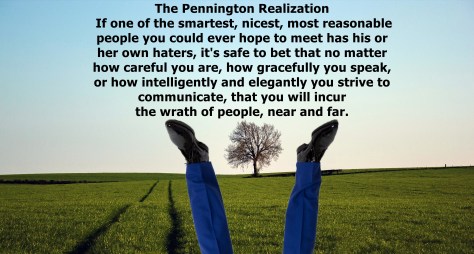
I found out today that this beautiful human being suffered the presence of a horrid bully at work. It’s difficult for me to imagine her in such a scenario, despite the Pennington Realization affecting everyone. The bully drove her to curse, something she never did. You know you’ve achieved negative success when one of the nicest people in the world not only curses as a result of your presence in their life but that they recall your mean-spiritedness vividly until the day they leave the earth. Even her children remember the bullying and the fact this person waged a war of hatred on their mother. There was no ‘why.’ The bully simply needed an outlet on which to pour her wrath. We all know someone like her.

Her bully died this week. She died after slowly and methodically losing her mind.

I didn’t know the bully. Only her actions. Someone told me that she was monstrously mean to their loved one, someone I knew as a bright soul.

She lessened the world for a few people, my family member included.

I read her obituary again. My opinion doesn’t stain her legacy. Though it reflects poorly on me, I have no uplifting words to lessen her harm to her small world, no neat bow to tie up these words.

.

P.S. The Pennington Realization is an older rule I created in recognition of observing another gentle soul being crushed under the weight of an unrelenting pathology.

For You, Though You Know It Not

alireza-badiee-MMu7JLEiopY-unsplash


My tuxedo cat lay on the couch, his nose buried in the embracing and welcoming fleece of a blanket adorned with pictures. What dreams bid him hello I can’t fathom. I stopped writing for a few seconds and looked outside. The sky concealed itself with the overcast moisture of a cold February day, the hills to the east and north shrouded in silvery-white mist. Though it may sound strange, a brief urge to run outside and lie down against the numbing cold of the concrete overtook me. Not too far away, a passing garbage truck echoed between the nondescript houses, its scrambling workers continuously emptying the mass of our discarded lives into the metal coffin to be compressed into a lesser burden. I could sense the workers’ haste as their day shortened in front of them. Would they hasten as enthusiastically if they could see the measured minutes in front of them? Earlier today, I read of a life lost at 24,883 days; my life had only briefly intersected with hers. I imagined I could hear the burdensome regrets of those left behind. Each of their clocks had suddenly reset by their friend’s unannounced exit. I couldn’t help but feel a bit of relief to know that the tide had rolled into another’s life today. Not because I’m found more worthy. Not because the rhyme and reason of it all are even discernible to me. I looked away from the windows and back toward the limitless content of the internet. A friend had shared a precious and profane sliver of her life, one artfully disguised as a story. In it, I recognized the universality of both promise and pain. That equation can never find balance. Despite the words of the wise and the protestations of many, we are swimming in a zero-sum game, precisely because we fool ourselves into thinking we are living outside the reach of the confines of our own minds. I took the last sip of bitter coffee from my cup and turned back toward the distractions and wondered what surprises might yet greet me. Be of good cheer; all else is dark folly.

Avoidance, Part Two

nina-lindgren-aODm_GmSSvY-unsplash

As with the post two days ago, this is personal. Don’t gatekeep me or question my motives. It’s my story to tell. Although it happens with less frequency now, I remind anyone with gatekeeping tendencies that such criticism reflects on those doing it rather than those accused by them. (Gatekeeping arises either from silencing behavior or apparent superiority, neither of which reflects well on those doing it.)

I wrote a post about my personal take on struggling with someone prone to alcoholism. Anticipating tsk-tsking, I expected a bit of passive-aggressive blowback, along with a few people surprising me by sharing something personal. It surprised me to see that several people shared their own personal stories in the ways they did. Some wrote in the comments, while some shared with me in other ways. Those who commented on the post itself would be astonished to read the range and emotion of those who wrote me privately. Alcoholism and addiction have ruined a lot of lives, most families, and destroyed the possibility of relationships among those around them. Alcoholics and addicts are ghosts who haunt us, whether they are dead or alive.

We’re wasting a lot of our time with this issue. Time wasted on those who won’t help themselves or each other is time we can’t recoup. In an ideal world, this is easy: if you need help, you get it until you’re better. Anything else tells us you’re not in control of your mind or life. Any of us can succumb to addiction. No matter who we are, we all need to get help, whether we are the addict or the person standing next to them. In my ideal world, society gives such help freely and for as long as needed.

No one escapes this. You can fool yourself if you want to. It’s your right. But the lingering effects of addiction stay inside those around the addict.

Conversely, it’s why we are so joyous when someone gets help and leaves addiction in the past. It reminds us of our frailty and also of our ability to live better lives. I could have easily drowned in addiction. No good person turns their nose up at someone who had the ability to rise above.

For every such post I write, I’m amazed at the depth of things all of us seem to share. One person surprised me with the depth of what she told me. Though I wasn’t seeking affirmation, she gave it to me and reciprocated by telling me that what I wrote needed to be written. The pathology of secrecy seems to have angered her as much as anything else. She identified with the crazy-making of being expected to pretend that her life wasn’t affected by a deep undercurrent of pathology. She’s like me; she needs to understand it and talk about it. Not everyone in her orbit sees it that way. That disparity angers her. We can talk about the weather if we need to fill the minutes of our lives. Doing so to exclude the more important and difficult conversations leaves only damaged people in its wake.

Another person who reached out failed to engage meaningfully with the gist of the post. It’s easy for me to judge why that happened. I’d probably be wrong. It’s not wrong for me to admit it disappointed me and rang a broken gong in me to have it sidestepped. She has the power to reach out and heal herself and many people. It’s her story to tell – or not, though. I don’t know how she manages. I would have lost my mind already. I’m hypocritical about my opinions on this. It’s not cut-and-dry.

Most people interacting with me, especially those who did so privately, insist that the only way to live a good life in the shadow of angry alcoholism is to save oneself when they angrily fight the world to continue their addiction. All universally insist that the pathology of such alcoholism ruins everyone who tries to mitigate the effects instead of fleeing it. One woman compared it to domestic abuse and with the same consequences. Most males who are angry alcoholics are guilty of abuse. It’s no secret.

Interestingly, I think most saw the difference between an angry alcoholic and a garden-variety alcoholic or addict. While it might not be easy to put in words, it’s easy to recognize when you’re dealing with one.

A couple of people told me that they had to abandon everyone around the alcoholic too, even when they were close to them. They said that the enablers felt cornered and inevitably lashed out, too, in defense of their choices and their allegiance to the alcoholic, whether based on love, secrecy, shame, or necessity. One person told me she had to learn a new set of skills to deal with the manipulations, accusations, and fallout. Only talking to a therapist made her realize that she couldn’t rescue the alcoholic or those around him – and that she’d lose everything positive in her life and herself if she tried. She still misses someone she once shared much of her life with. Her old friend is still alive. She’s ruined and bitter, but still alive. She blames the world for her choices.

I’m hard-wired to cut out the danger of staying in the sphere of people who have demons they refuse to address. It’s a dance I’ve done several times, in large, looping cycles with different family members during my life. It took me most of my life to hit the wall with my mom. I’ve dealt with the backlash of other family members telling me the same tired “it’s your family” nonsense for my entire life. There’s no obligation to allow biology to demand allegiance that strangles me. It’s possible for everyone to live their own lives if they can release the pathological need to require obedience to family. (The same family that damaged you.)

When I was younger, I was fooled often by the demands toward family allegiance. I fought it. It is that very kind of groupthink, though, that enables families poisoned by shame or secrecy to perpetuate it. If we demanded authenticity and open discussion of everyone in our lives, family included, none of this nonsense would survive very long. Our excuses would be outed immediately. Those who needed both intervention and accusation to get help would be forced into the sunlight quickly. We don’t do that. We whisper in the shadows and tolerate otherwise unacceptable abuse.

I’ve read hundreds of stories of people who’ve successfully burned their bridges. All of them say that the only way to succeed is to burn the bridge and stop looking at its remnants once it is gone. People will judge you in the best of circumstances.

I’m guilty of ignoring the necessity of consistency. As we get older, our lives become narrower and the number of people we’ve shared our lives with shrinks. I don’t know how others deal with knowing they’ve chosen to reduce their lives when people show they can’t behave like we need them to. It’s hard to excise a family member, no matter how other people might characterize your decision.

Until someone can be honest and bridge the gap between reality and fiction for me and I can stop being forced to roleplay, I will stay away again. I’ll work on my guilt. I’m not abandoning the alcoholic. Rather, it stops me from lashing out in anger because of the crazy-making. People had the ability to bridge the gap but chose not to. They’re just dealing with their lives in their own way. Those are their choices. I wish they chose otherwise. To me, it seems as if the alcoholic is still controlling all of us who don’t put our foot down, abandon secrecy, and live for those who aren’t reducing us.

I don’t want to be reduced anymore, or dreading a phone call or random, strange texts at all hours. That’s not joy. That’s disability. I’m messed up enough without feeling obligated to do this dance.

If I can’t tell reality from fiction, I’m out.

Continuing to let the shadow steal the minutes from my life is pure absurdity.

Wordless Eulogy

jackie dorman 06 (345).jpg

I would not dare utter a single syllable in a vain attempt to express the breadth, depth, or width of a life well-lived. If you were lucky enough to have shared her presence, look inward, to find that memory, and embrace it. Our days are numbered, our friends but few.


Jackie Lou Dorman