I stood at the edge of the rural road, looking north. Because I knew another road once met the edge of the one I stood on, I could see the subtle difference in the ground and the trees’ varying thickness ahead that the forgotten dirt road left behind. Up until 1965, the road led to the Chowderwick house, once home to a prosperous family. It had likely fallen in now and was probably a pile of boards and tin cups somewhere back in the dense trees. It was likely that no one would remember that a house once proudly stood back there in a generation. Such places litter the South.
From the confines of my mind, I saw an image of Lilly Chowderwick when she was 6. In 1964, the Esper community went into shock when they heard Lilly had been abducted and likely murdered. Sheriff Brimley found blood along the floorboards near the wood stove in the front room and along the porch that comprised the entire length of the front of the house. Dogs lost the scent at the edge of the porch. To him, such things indicated that whoever did the crime had planned on not being caught.
Sheriff Brimley conducted as thorough an investigation as was possible in the South in those days. He concluded that Lilly was likely dead and that someone would slip up and say something incriminating one day. Or, more likely, someone would stumble upon a hidden set of bones somewhere within the rural boundaries of Maylean County.
Lilly’s dad Jeffrey inherited a good fortune. It included a store along Main Street as well as some mining interests across two counties. He didn’t inherit the savvy or patience that Lilly’s grandfather used to build a small fortune. By the early 1960s, the Chowderwicks had retreated to the acreage along the road on which I stood. Jeffrey was rumored to beat his once beautiful wife, Lilian. Lilian often disappeared from public view for days on end. Esper, like all small towns, whispered and gossiped each time. After Lilly’s murder, Lilian fell into a trance and seldom spoke. It seemed like she was waiting for her turn.
Sheriff Brimley brought in Jeffrey for questioning. Jeffrey insisted he had nothing to do with Lilly’s disappearance. Although the Sheriff believed his story, he arranged a trunk interrogation a week later. Two of his deputies grabbed Jeffrey as he walked on the edge of the town drunk. They deposited him in the trunk of one of their cars and drove him a few miles to a barn. After convincing Jeffrey he would likely die in that barn that night, they decided he hadn’t abducted or killed his daughter. He was capable of it, though. He confessed to beating his wife repeatedly.
In 1965, Jeffrey died when he drank too much and walked out onto the main road on a cold Wednesday night. A truck loaded with lumber crushed him as he stumbled out onto the road. The driver said he never saw Jeffrey. The accident happened where the swamp and creek encroached on the farmland adjacent to it. The trees often leaned and overhung the road.
Within months, Lilian left without saying goodbye. Everyone assumed she moved out west where distant cousins once lived. No one knew for sure.
I had promised to tell no one the secrets of Esper or Lilian and Lilly Chowderwick. Fifty-five years later, I knew that DNA would out their family secret. I knew what no one else did: that little girl had not been abducted or killed. Lilian murdered her husband. She endured countless beatings after the burial of the empty coffin that should have held her daughter. When the time was right, she killed Jeffrey and put his body on the road. I helped.
Despite my promise, I can finally say that I know all this because I’m the one who drove little Lily out of town in May of 1964. If she had stayed, her father would have continued to abuse her or worse.
My confession must include that I am an accessory to several crimes.
I’m not sorry, and I don’t apologize.
In a few minutes, Lillian would drive down this road and meet me in the place she swore she’d never see again. And with her would be Lilly, now 61 years old, a grandmother in her own right, with a full life that remained a mystery to me. At that age, we decided that she should know that we killed her father.
Though the air was filled with dust, the tears on my face came from a place of nostalgia.
There are hidden roads everywhere if you know where to look.
The day grew long legs while I was busy frittering away the hours. I was so accustomed to hurling myself from the bed at an early hour that I wasn’t sure my enthusiasm for a long walk would meet me outside so late in the day. I was wrong, though. Even though it was Nov 19, it was warm enough for a brisk walk, even at 4 p.m. The sun was slowly dropping toward the horizon. Its orange glow made me squint as I hurried along the leaf-strewn trail. I felt as if I could walk for ten miles and that the receding sun was being converted directly into propellant for my feet. The recognition of my initial reluctance to take a walk reminded me that once started, few walks fail to yield positive moments.
As I passed the house I had christened “hoarder house,” its yard still seemed like an abandoned junkyard. I’ve written about the hoarder house once before. Its existence had surprised me, so close to the modern new homes and bright recently-built park. I counted no fewer than five boats, eleven vehicles, and at least forty appliances scattered through the unkempt yard. Even the grass seemed to have given up, trading its light brown hue for a dingy, decaying gray. The pile had grown so unmanageable that I couldn’t see much of the front of the house as I approached it from the city limits. Last summer, I could smell the contents of the yard as I strolled past. I used street view maps to look back in time and found myself staring at a mostly empty yard. That the yard became so cluttered so quickly was a surprise.
Reaching the sign that indicated “NO turnaround, private property” a few hundred feet past the hoarder house, I turned and began my trek back. The road dead-ended a little further along, and despite its proximity to the city limits, something primal in the back of my mind stopped me from walking to the end of the gravel road. As I approached the hoarder house on my return, I noticed smoke slowly escaping the dilapidated chimney at the end of the house closest to me. I didn’t see smoke when I had passed the house the first time. At this point, it was just a few minutes shy of sundown, which was going to occur a little after five that afternoon. The orange tint to the air had deepened, and the air’s chill was beginning to feel like the inside of a refrigerator door when first opened. While I prefer the early morning sun’s desolate greeting, some sunsets evoke a deep, peaceful feeling in me. The evening walk felt like a slice of stolen time, and I realized that I hadn’t once thought about how far I had walked.
I approached the cluttered driveway of the house. I saw what I thought was a cat jumping up and down in a bare spot in the grass near the front steps and probably hunting mice in the debris. After a few more seconds, I realized it might be a human arm rising from a prone position. My pulse quickened. As I passed the rusted barrels obstructing a clear view of the house, I could see an elderly lady. She had fallen off the steps, her legs tangled under her, and her messy silver hair scattered around her face like shorn feathers. Her right arm moved up and down while her left arm remained immobile. I ran toward the porch, dodging debris and trash as I neared the fallen woman. I felt a sharp pain in my right forearm as a sliver of metal pierced my skin and cut me deeply. The metal shard was protruding from the edge of a small boat. I knew I was bleeding. For the time being, I ignored it and ran the few steps remaining to the porch.
Kneeling, I put my hand on the woman’s exposed left arm. Her flesh was cold. Had I not seen her moving, I would have been sure that she was dead. I pushed the hair away from her face, expecting some unseen injury. “Ma’am! Are you okay?” I shook her more harshly than I had intended.
I looked up toward the closed door above both me and then the small porch steps. When I looked back, the woman was staring at me, both eyes open. I almost screamed. Her eyes were clouded and silvery. Her lips began to move, although no words escaped her mouth.
“Hold on. I’ll call an ambulance.” I looked directly into the woman’s unsettling silvery eyes as I said it, to comfort her.
Her right arm came up, and her fingers encircled my left wrist. “No,” she croaked, her voice barely discernible. “Please. Help. In the house.”
Lifting her and getting her in the house was momentarily overshadowed by the idea of going inside this house at all. I had thought many times about how terrible it must be inside there. The place seemed to be the embodiment of decay. On previous walks, I could smell the presence of the house and yard from the road. I hesitated and considered calling an ambulance anyway. As I looked at the woman’s face, though, I knew that I wouldn’t call. It seemed like this wasn’t her first serious fall. I wondered what might have happened to her had I not wandered by on an impromptu walk.
Without her telling me, I knew her left arm was almost useless to her. I crouched and put my right arm under hers and pulled. She feebly pushed with one of her legs, and she wobbled up. Oddly, she smelled of vanilla and cinnamon.
We took the three steps up the porch one at a time, without any hurry. I grabbed the broken door handle with my left arm even though I knew my right arm, which supported her, was probably leaving a bloody trail across the fallen woman’s back as the cut on my arm continued to pulse in pain.
I couldn’t get the door to open, even as I pushed hard.
“Hard. Push!” croaked the woman. I leaned in and pushed with more force than I intended. The door popped open, and before I could stop us, we both fell inside. I felt the crunch and fold of paper as I tumbled in.
I resisted the urge to scramble upright, hoping our unintentionally gymnastic entrance didn’t further injure the woman. I rolled her over to her back. Her hair looked like a silver mop blown by a malicious wind. I leaned over and pulled her up. As I looked around the room, I was surprised by how few furnishings were in the living room. The floors were covered with newspapers. I shuddered to imagine what was beneath the multiple layers. A couch sat on the far left, and at least six armchairs were on the right. None of them matched one another. I moved toward the chair furthest from the door as I carefully pulled the woman along with me. Cups, saucers, and papers surrounded the chair. I knew from experience that almost all hoarders tend to make a nest in the spot where they spend the most personal time.
I helped the woman turn and let her go a bit too soon. As she fell into the chair, I heard a ‘whoosh,’ followed by a high-pitched squeal which turned out to be a startled tortoise-shell cat fleeing in surprise. It ran through the doorway near the fireplace. I noted no fire in the fireplace but didn’t understand why that seemed to bother me. While I couldn’t see into the next room, I could hear things moving, though, and I wasn’t certain whether the sounds were from mice, cats, or some strange thing better left unbothered.
Not wanting to leave the woman until I knew she was safe, I reached under the lampshade and attempted to turn on the lamp next to her chair. My hand ran across a mass of cobwebs. I quickly snatched my hand back. The old woman cackled as she reached across and brushed her hand on the lamp. It turned on immediately.
“Son, you can call me Dolores.” Her voice sounded like a broken drawl, one accustomed to fatigue.
“Nice to meet you, Dolores, and sorry about the circumstances.” I moved to sit on one of the other five chairs, trying to pose myself as little as possible across its front cushion. As I sat, I could smell the dust and years of neglect rise out of the fabric.
For several minutes we sat in silence. My mind was asking several questions, none of which did I dare utter. I wasn’t sure how much of her condition was chronic and how much might have been exacerbated this afternoon in her latest fall. I remembered the cut on my arm. It was now just bloody and drying across my forearm, although it still throbbed. It didn’t occur to me that I should leave, so I sat, in silence, waiting for some sign of what to do.
“Fetch me that album off the shelf there. The one with the purple tassel,” Delores said. Her voice had substantially cleared up. I stood up and carefully placed one foot in front of the other as I crossed the room. As I pulled it from the edge of the shelf, I realized it was a photo album. A purple tassel dangled from within its pages.
I handed it to her and lowered it slowly so that the weight of it wouldn’t surprise her. She placed it on her lap. Instead of opening it, she asked me to pull a worn stool over from near the door. Though it was well-used, it was dark black and had a faint carving in the top; whether it was a wolf or a dog, I couldn’t tell. Someone had undoubtedly made it with their own hands. I picked it up and placed it near her, and sat on it. It was strange that I didn’t hesitate to sit close to her.
She opened the album. Inside the first page was a large photograph of a mostly smiling family. Across the top, it read, “Fising Family 1922.” She pointed at a young girl in the front, probably five years old. “That’s me, sonny. I was a happy girl.” I did the math. The little girl in the black and white photo was smiling as she gripped the left leg of the man standing next to her. Dolores was somewhere around 100 years old now.
As if reading my thoughts, she said, “Today is my birthday! Nov 19.” I was finding it hard to believe that she would be alone at that age. Dolores turned to the next page, reciting names. “My sister Georgie. My brother George. My mom, Georgie Mae Nador. My dad, George Wilson Fising. He was born in Romania but was adopted by someone coming to America. His real family was wealthy and sent him here.” She continued to turn the pages. I found myself looking intently at all the strangers in her album, imagining the one hundred years they documented.
She paused. “My son George. My only child who survived childbirth. He had seventeen kids. Can you believe it?” The next picture was of George, probably taken in the 1970s. Kids were sitting, standing, and crouching in every direction. “He had 47 grandchildren. What a wonderful life.”
“Where does he live now?” I whispered.
“He died in a fire on Christmas night many years ago. A good life, no regrets. He was the spitting image of my husband. My husband ran off the day George was born. He couldn’t take watching another child die. We lost nine kids before George was born and survived. I know how he felt, so I never begrudged him leaving like that. It was a relief, actually.” She sighed, undoubtedly picturing her husband in her thoughts.
We sat, slowly looking at every picture. Dolores occasionally commented. As she turned to the last picture, I could see that it was a snapshot of a very old man. He had a high hat in one hand and a cane in the other. He was smiling outrageously at the camera. Underneath the picture, someone had scribbled, “Yikes!”
“That’s my dad, George. That’s the day he died. He died on his 100th birthday, as spry as someone forty years younger. All his life, he joked that the Fising family in Romania was so wealthy because they all lived to be over 100 years old. He loved saying “Yikes” every time we turned around. We would often tell each other “Yikes” instead of “I love you.” It was a way of reminding us that life was just as many sparks and dismay as having a good time. But lord, we lived extraordinary lives.” Dolores wiped at her eyes with her right arm. It struck me that Dolores had, indeed, lived a proud life.
We sat and let the light diminish around us. As Dolores shared stories, I felt as if history itself were sitting in the room with us, cleverly hiding its presence. I pulled my cellphone out and was surprised to see that it was 7:30 and that we had been looking at pictures for over 2 hours. I didn’t want to pry, so I asked her if there was anything she needed. “No, I’m going to sit here a spell, sonny, and let the dark catch my thoughts.” The way she said it told me that she learned the phrase decades ago.
“Dolores,” I said, “Would it be okay with you if I come back tomorrow afternoon and look at another photo album with you?”
“Oh yes, that would be divine.” Dolores crookedly smiled. “Can you bring snack cakes,” she asked, her voice trailing.
I reached out and touched her hand as I stood, grabbing the stool to move it back where I had found it.
“Tomorrow it is, and yes, for the treats,” I said, trying to get outside before I started crying.
As soon as I opened the door, I realized it was dark. Pulling out my phone, I used its glow to slowly step around the obstacles in the yard and make my way back to the road. Once I reached it, I looked back and could see no lights on inside. Whether Delores used the time it took me to traverse the obstacles of her yard to cover the crevices or her windows or turned off all the lights, the idea of her seated in the living room alone bothered me.
The next afternoon, I finished work, and instead of parking at the park nearby to walk over, I drove and left my car a few hundred feet from Dolores’ hoarder house. I brought out a package of snack cakes and walked up to the house. After navigating the yard, I knocked loudly on the door several times. Finally, I heard a voice say, “Come on in.” I pushed the door hard to knock it loose, and it popped open.
“Sonny!” Delores said with energy. “I didn’t think you’d make it back.” Delores was wearing the same thin floral dress she had on the day before. She was seated in the same chair. Had I not know it was impossible, I would have believed she had remained in the same position since last night.
I handed her the bag of desserts, and as she clumsily looked inside, she laughed. “For some reason, I thought you’d bring me a fruitcake.” She looked up at me.
“I love fruitcakes, Dolores,” I said.
“I had a thought you might, sonny. I haven’t had one in what seems like a long spell.” I made a mental note to bring her a fruitcake. Or five. She placed the bag of cakes on the floor next to her.
Dolores asked me to bring her over another photo album, so I fumbled with the shelf’s contents until I pulled down an album with a green tassel. “My grandkids,” Dolores commented.
I pulled up the stool and sat. Delores once again began flipping the pages carefully, adding an anecdote or story about each one. Time stood still in that hoarded living room. Unlike yesterday, Delores seemed energetic and intensely created a whispered narrative of dozens of unfamiliar faces. I envied her life, though, the one cataloged in that album.
Her voice seemed to mimic a minor-key melody played on only black keys of an old piano. When she spoke of some of her family and the memories, I could discern a lilting pattern and uplift to her voice.
After she finished and closed the album, she told me some of the stories her father shared with her, many of them from Romania. Her love of fruitcake and minciunele were born from inside jokes she and her father had shared. “Never eat minciunele or fruitcake when you’re sad!” he would tell me.” For a moment, I could smell baking pastry dough pulled from a hot oven.
We both sat, staring into the past. As was the case yesterday, I was unaware of how much time had passed. I looked at my cellphone. Four hours had passed.
I stood and took the green tassel photo album from Dolores, and I placed it back on the shelf.
“Dolores, Thanksgiving is a couple of days away, the 23rd. I can’t come by tomorrow, but I’d love to come to see you on the holiday if you don’t mind. I’ll bring you a fruitcake and some fixings, if you’d like.” I couldn’t imagine her not being with family, but I was committed to avoid the sin of prying.
“Ooh, I’d love that, sonny.” She smiled.
An overwhelming urge to hug her possessed me, so I leaned in and wrapped my arms around her. She smelled like cinnamon again. “I forgot what it feels like to be hugged,” she said as I squeezed. I managed to get outside before my eyes filled with tears. Over one hundred years of life under her belt and dozens of family members in the world, and yet I was the one connecting with her. I stopped at the market on the way home and bought two small fruitcakes for my Thanksgiving visit. One for her and one for me. Or both for her, if she insisted.
Three days later, I again parked on the roadside a distance away. As I came up to the infamously cluttered driveway, I noted a newer Escalade was parked with its bumper up against the debris littering the front of the yard.
“Family is here after all,” I thought to myself. Though I was glad to know she had company, I felt a little put off by their presence.
I walked through the yard, and as I was about to knock on the door, it opened in front of me.
An older lady stood at the door, a mask hanging at her neck. Beneath it, I noted an ornate cross with a diamond inset.
“Yes. Can I help you?” She asked.
“I’m here to see Delores. We made arrangements to have fruitcake today.” I smiled.
“When might you have made those arrangements, sir?” She looked angry.
“Two days ago. Is she here? Is she okay?” I was getting an uneasy feeling.
“No, she’s not okay – and neither are you. I don’t know what game you’re playing. I’m Dolores’ granddaughter. She died a year ago on Nov 19.” Suddenly, I felt dizzy.
The next thing I was aware of, someone was shaking me and shouting.
“Hey, are you okay? What the hell? You passed out.” The lady who had answered the door was leaning over me. I felt the cold ground under me.
I rolled to prop myself up and sit upright on the ground. There were pieces of tools scattered all around me, all rusted. I had narrowly missed hitting a pile of pipes when I fell off the porch. It occurred to me that I had fallen almost in the very spot where Dolores had dropped a few days ago.
After a minute, I shakily stood up.
Delores’ granddaughter must have felt responsible for my fainting as she motioned for me to wobble my way up the stairs and inside. Without thinking, I grabbed the wolf stool by the door and sat on it.
The woman handed me a bottle of water. I opened it and drank almost all of it in one continuous gulp.
“I’m Georgie. Who are you?” Her voice was softer now, although I could tell she was a little concerned that I might be crazy.
“My name is X. I live a couple of miles away.” Realizing that my name probably didn’t help, I added, “And I met Dolores for the first time a couple of evenings ago. She told me a lot of stories.” I didn’t know what to say, in part because I had never fainted as an adult.
“I’m sorry. Dolores died Nov 19, 2016… X. There’s no way you saw her a couple of days ago.”
Before she could continue, I interrupted. “Delores Fising, born Nov 19, 1917, to Georgie Mae Nador and George Wilson Fising, born in Romania. Dolores was married and had nine miscarriages until her only child, George, was born. He had seventeen kids and forty-seven grandchildren, of which you are one.”
Georgie’s face slowly took on a shocked and confused look. “I don’t know how you know all of that, X, but it doesn’t change the fact that she’s been dead over a year. I’m here to hand the place over to someone who wants the property. Today was the only day I could drive here.” She waited for me to reply.
“Get the purple tassel photo album off the shelf, and I’ll tell you a few stories.” I was floating in a cloud of confused bewilderment.
As Georgie retrieved the album, she handed it to me and sat on one of the chairs nearby. I opened the book and pointed. “This is Dolores, a happy child. Her father, mother, and family. I turned the page and loosely shared the same anecdotes Delores told me. Before turning the last page, I looked at Georgie and said, “Yikes!” “and then turned the page. This pictured is your grandfather George on his 100th birthday, the day he passed away. He taught the entire family to say “Yikes!” as an endearment.”
Georgie’s face blanched as I finished, and she stood up and retrieved the green tassel photo album and handed it to me. I opened it and recited a dozen family stories.
“Your father George died in a fire on Christmas day. Dolores said those sad times will always be held in check because your family was afflicted with happiness. I think that’s how she put it.” I closed the second photo album and sat in silence. “Afflicted with happiness.”
“Wow. I don’t know what to say. You don’t sound crazy. But there’s no way your story is true, X.” She shook her head, trying to escape the feeling of underlying magic in that dirty living room.
“I’m going to need to think about this. Is that okay?” Before letting me answer, she stood up and found a short pencil and a scrap of paper. “This is where Dolores is buried. Go see her.” She handed me another scrap of paper and said, “Write down your phone number for me, and if I can bring myself to do it, I’ll call you.”
I noted my phone number. As I handed it to Georgie, she grabbed my hand and clasped it between hers. She was looking intently into my eyes. “They passed down stories about how superstitious the family in Romania was. Strange goings-on, probably just stories to spook us. It’s working. I’m spooked. Dolores had a knack of knowing things and always told everyone that life never ended, at least not the invisible part.”
The next morning, I called in sick at work. I had resisted using my ancestry skills to look for Dolores digitally. As I’m an early riser, by 6 a.m. I was driving, following the unknown roads east of town. Several missed and wrong turns later, I found myself going down an uncertain dirt path around 7 a.m. The sun was just peeking above the distant horizon. Next to me in the passenger’s seat sat Dolores’ fruitcake. I couldn’t drive any further as the dried grass and weeds made it impossible to see what might be found underneath. The wind had subsided, and the cold enveloped me as I exited my car, fruitcake in hand.
I crossed through the sparse trees and dead foliage, dodging stray limbs as I walked. Ahead, I saw the broken teeth of graying tombstones rising from dead grass. The cemetery wasn’t plotted like most rectangular gravesites. There was no uniformity between rows, nor interval space between the stones. Limbs and piles of blown leaves littered everything. Guessing, I’d say there were only thirty marked graves.
As I approached, I could see the name “Fising” engraved or marked in haphazard fonts along the stones. It seemed as if all the stones were marked with that surname. I walked along the first row, searching for signs of a recent grave. The newest one I found was already fifteen years old. Fearing I had missed the resting place of Dolores, I turned to look back, and that’s when her spot caught my eye.
Stepping hastily across the cemetery, I made a straight line to the most massive tree in the rear of the grave area. Someone had piled sandstones in a rough circle around a tombstone, extending seven or so feet from the headstone.
Her stone was a large native rock, carefully inscribed with the following: “Dolores. Lived 100 years and several lifetimes.”
Despite its primitive construction, it was a beautiful spot in an unspoiled area. I tentatively stepped on the sandstones to reach the tombstone. I opened the fruitcake and unwrapped it, placing it along one of the headstone’s smoother top sections.
As I stood up, the wind picked up, dragging rustling leaves from the fields and trees across the cemetery. The hair on the back of my neck stood up, and I turned to look behind me, instinctively. I felt foolish. The sun was just peeking over the distant trees, illuminating this magical place.
Just as suddenly, I felt as if someone were standing behind me, behind the headstone. I turned back and saw that no one had approached. The fruitcake, however, was gone. Only a couple of crumbs stuck to the stone.
“Yikes,” I whispered, knowing that I’d never see the explanation for what I’d just witnessed.
“Dear Dolores, yikes,” I whispered again as the swirl of leaves covered my feet in oak leaves. I waited for a reply I knew would never come.
Dolores’ granddaughter never called me. I like to think that she recognized that I was telling the truth about Dolores. In such a family, magic would undoubtedly survive.
From time to time, I’ll catch myself uttering the word “Yikes” to those around me, especially those times which evoke a feeling of connection with them. They look at me quizically, and I just smile. I’m cautious about using Delores’ magic too often.
I remember all of Dolores’ stories, each one of them. The faces in her family pictures talk to me sometimes, telling me the stories in soft voices. I think she infected me with her memory and of her life so that it might survive. Some nights, I wake up with the odd smell of Romanian forests in my nose.
Yikes, to each of you. .
I have not walked past the hoarder house since. While I am not superstitious, I’m uncertain what lesson was given to me three years ago. . . I wrote this story in November 2017. Though imperfections found in it are genuinely mine, this story came to me in one balloon, wrapped in a single moment, as I stared at the house that inspired it. It is strange how people who never existed can haunt my imagination. I put the story out of my mind and went to bed that night. To say that the fall night stretched into a swirl of years in my sleeping mind would be an understatement. I woke up the next morning as if I’d been unwillingly snatched from another person’s life.
“I don’t look for exoneration, though I want it. There is no one in this world who can be both aware of my actions and the reasons for them except for me. Since I don’t pardon myself, I expect no less from others.” -X
I do look for understanding, and if that’s not possible, acceptance. All of us desire to know who we are and that who we are is of consequence to someone.
“Never attribute to malice that which can be adequately explained by stupidity.” I fail in this regard a lot, even as I continue to hope that others will assume no failure of character on my part.
“We judge ourselves by our intentions and everyone else by their actions.” -S. Covey
If you think above these for a few moments, the hypocrisy of how true it all is numbing. I’m working on it. Honestly, I always will be. I can’t imagine aiming for an authentic life without such reflection.
Most of us tentatively feel our way through our lives, wanting more of the invisible things that bind us, yet distracted by things around us. Awakening to our houses’ solid walls, we forget that whatever else we are, we are not focused on the sublime and unknowable lives of satisfaction that could be ours. It is possible that you’re different than me, and that you don’t get distracted by the volume of “other” that surrounds and confounds me.
This post is a portmanteau of lives. One was a dedicated writer, and one was a policeman; both failed to adequately recognize their afflictions.
My wife’s eyes sometimes glaze over when I hear tales of “writer’s block.” I don’t know what that is. I can’t help myself: I always say, “What’s that?” half-jokingly. It’s the same way with me regarding boredom. Reading, writing, genealogy, humor, photography, and just scrolling the window of the internet could entertain me for fifty consecutive years. I’d be ideally suited to be a vampire.
This time, we were watching “I’ll Be Gone In The Dark” on HBO. Michelle McNamara had her deadline pushed forward a month and struggled to realize her ambition of finishing her book. It was her lifelong dream. She died before DNA solved the case of The Golden State Killer. Michelle and I share many attributes regarding writing. I don’t put myself on her level, though, so there’s no need to remind me snarkily. But I don’t understand the inability to plow through. She resorted to drugs to keep her up and allow sleep when necessary. The thing she relied on to help her achieve her ambition also undid her life.
I can’t walk the street, work, or sit and listen to music without wanting to research a hundred different ideas. Things breeze into my mind at a velocity that I cherish. The satisfaction of an overactive mind isn’t diminished by the value or result of the ideas. I’m able to divorce content from needing a goal. This allows me to produce dozens of things that never see the light of day or end up in the ‘delete’ file simply due to happenstance.
Had Michelle raised her hand and admitted she was overwhelmed, Patton Oswald and their mutual daughter would still have her in their lives. Instead, her book and ambition fell to uncertain others to complete, and Michelle lost a presumable thirty or forty years with family.
While I wrote the first part of this a few weeks ago, it still is on my mind. Not just because it was a great show, or a peek into a writer’s life, but also because a piece of it parallels the life of my brother. He was ridiculously smart. He could have worked to be a writer. As I do with anyone I recognize as innately great at writing, I repeatedly tried to convince him to spend a portion of his life writing his stories. I do not doubt that he easily had several books of material in him. Much of his writing might have derived from his professional career as a policeman and detective. Even his Army career was as an MP.
Michelle McNamara’s life revolved around crime and its intricate tendrils. My brother Mike spent his career investigating and collaring criminals. While Michelle’s ambition always included being a writer, Mike could have done the same, and just as expertly.
The contradiction is that his job itself was one of his biggest impediments. It put a wedge between his personal life and his ability to live it. The schedule, the demands, and the danger of having a job that perilously exaggerated his tendency toward authoritarianism. People often ask whether the job makes the man or the man gravitates toward it. I’m not sure. As much difficulty as my brother had coming out of his youth, the job exacerbated his personality defects. It’s no secret that police are more likely to be abusive and susceptible to addiction. My brother chose alcohol to appease his conflict. Michell McNamara chose prescription medications. Anyone who gets angry at me for saying so doesn’t understand me. In Michelle’s case, her husband Patton capably framed her turmoil in a very public and touching television show.
My brother’s intentions to retire as a detective after a full career collided with his inability to stop drinking. He was forced to retire. Even still, he could have turned that blow into a blossoming retirement. Had he stopped drinking, he might have lived to be seventy instead of dying before his fifty-fifth birthday. Because he was smart enough to work in the north, his pension was protected by a formidable police union. He had the option to pursue any interest he desired.
I was envious of that and his ability to work a job that allowed it. It’s a fantasy for most of us to round fifty and shift to do whatever interests us.
In the last couple of years, I sent Mike books, starting with “The Accidental Salvation of Gracie Lee.” I knew it would ignite his interest and recognition of what writing about the South could do. It was my hope he’d begin to leave the alcohol to the side, even if it cost him herculean effort to do so. He’d be able to careen into another career writing feverishly. Whatever else Mike did or didn’t do, he also loved books and libraries. That’s something that can’t be said about many police.
Mike’s death not only closed the door on his gift of writing, but it also cost him a couple of decades with his family. They’ll each struggle with the legacy of his big personality and choices. As Mike declined, I couldn’t help but get irritated at him for the waste of his life. Instead of pivoting to change his course and take advantage of the privilege of a chosen life, he furiously wasted his and his family’s energies to dedicate himself to drink. As bad it was, we were all lucky a few of the circumstances didn’t cause greater harm to others.
Now, silence. What could have been a rejuvenated family and life is now a complicated and unenviable path to an uncertain future for all of them.
As in my mother’s case, I know that much of the harsh words I shared with my brother were a result of alcoholism. Knowing it helps more now that they are passed than it ever did while they lived. He recognized the danger, just as I always did, but relied on his devious inner voice to convince himself he could overcome it. The same personality that made him loud and larger than life also participated in his fall. Many of our family and ancestors did the same. None of our ancestors who knew they were alcoholics successfully pulled out of it. It’s a sobering thought. I’ve written about the infection of my family. While I cannot adequately describe it, the trajectory of those around me gives proof that my theory must have some validity.
Mike loved that I wrote stories. Some of them caused him grief, especially before he could come to terms with the magnitude of the shadow that our dad and others left behind us. He vested energy in secrecy while I opted to throw open the windows. I was often a terrible brother. The only safe harbor I had at my disposal was separation. Mike had trouble seeing that my life was not one punctuated by drama. He also hated that I told him more than once that were I in his shoes, I would do anything and everything to break my addiction. It wasn’t because I felt superior to him in that regard, but that I never fooled myself into believing that any of us have magical skills that preclude us from behaving stupidly. Behavior that is obviously hard-wired into our DNA is that much more insurmountable.
The shelf that could have held Mike’s books will be forever empty.
The lives he could have intersected with for the next twenty years will now bounce obliquely off someone else.
The silences and subsequent shouts of confused recrimination will echo in his vacant place.
Someone close to one of the people who has vexed me most in later life wrote and lashed out at me with the phrase “Slightly Embellished Story,” stating that I write stories because I have a need to be a victim and relish the attention. I’ve written about this before and the ongoing likelihood that if you share your opinion and stories, even if they are completely yours to tell, people are going to use whatever tactics they can to knock you into silence. Or, worse, to question yourself.
I took some time to think about what I’d been told. While I didn’t let it pierce deeply, I did examine the implications. Only callous people disregard completely what they’ve been criticized for. We all go blind to our own foibles. I will admit that my brain glazes over when people scream or lash out in anger. I spent enough of my life around that sort of craziness. It’s almost totally absent from my day-to-day life. Those who don’t enjoy such lives simply can’t grasp how abnormal such anger is to most people living their lives.
In my case, I have grown so accustomed to this sort of manipulation that it works in reverse on me. I take a moment and consider what is really going on and what demons caused the person to write those words. In short, I’m appalled but fascinated. This sort of drama propels me to write MORE, not less.
Though the story is not mine to tell, I feel empathy for the person who wrote. They have lived a life diminished by things good people should not need to deal with, especially long term. They’ll never believe that I hoped for a long time that they’d find peace even if they had to build an entirely new life to do it. Gaslighting changes you fundamentally. Protecting secrets becomes an obligation. Ask any mental health professional about the consequences of being around addiction and pathology. We internalize what we cannot avoid.
Even as I write those words, I know I’m going to stumble and say and do stupid things. And I will also waste my remaining years making the same mistakes in the face of people who are not whole. I’ve been less than whole a few times in my own life.
One of the comments struck me as odd: “…you find a new audience to hear the same song/dance…” Which is weird as well as untrue. This blog, the one you’re reading. It’s been here since 2014. The previous blog on Blogger was there for several years before that. I imported some of the ancient ones here; some I edited and reposted later but many are in their original form. I don’t understand the criticism about my voice or stories “being new.” A decade of telling them doesn’t strike me as new.
This blog isn’t hidden. Anyone can read it. I used to allow open commenting. A couple of people with anger issues ruined that part for me.
I don’t post for secrecy. That’s a stupid argument to make. I post so that anyone interested can read what I have to say. It’s a one-way conversation. Unlike social media, no one has to even scroll past it.
Before that, I shared stories without embarrassment my entire adult life anywhere such outlets existed. Things happened to me that I didn’t choose. But I learned to embrace the hard things and talk about them.
If you’ve read much of my blog, you’ll read that I had a lot of family members who didn’t want to hear that we had some evil behavior in our family, didn’t want to hear that I had the right to change my name, and certainly didn’t want to be reminded of our right to choose our own paths.
All families are difficult. Being in one stuffed with alcoholics and abusers made learning to be independent of them difficult. We don’t start out understanding that people are scared of honesty or that someone might discover their dark secrets. They have to realize on their own that people know, anyway. It’s why if I get arrested or miraculously get a DWI, I will be the person saying so immediately on social media. Telling the secrets before they are outed robs them of their power. Most of it, anyway.
I never said I got it all right. In fact, I’ve said the opposite. One of my first blog posts was to point out that we are often wrong. Following that, I wrote a list of warnings about the dangers of writing anything down.
But I’ve been here, plugging away for more than a decade, telling the same stories that are mine to tell.
In 2014, I wrote another post about “Revisionists.” Even then, in 2014, I went through a period in which the haters almost silenced me. Several wrote and insisted that I was making so much of my story up. Years later, after DNA and research proved that countless stories of mine were true, they stopped trying to revise my life story.
As for the rest, I am a victim of some things. I’m certainly not a victim any longer, not for the most part. I don’t live a life full of drama, addiction, and secrets. My life isn’t perfect – but I have successfully reached a point now for several years when my sanity isn’t called into question. I continue to work to avoid people who can’t escape their lives.
Having said all that, that’s how this works: I write, you read. Or not.
If I’ve said something that you know is untrue, with the exception of those I asked to leave me alone, I’ll entertain any assertion that demonstrates how wrong I am. I don’t like to be wrong but I certainly hate to pretend to be right if I am not.
Otherwise, each of our lives is a Slightly Embellished Story.
Though the phrase was offered in anger, it did remind me to be wary of people. They are dangerous when wounded.
This is my infrequent post about what’s been said and written before.
If we are doing things right, we change. It usually happens incrementally and may pass unnoticed. At times, we also change in precipitous upheavals.
Our opinions, our underwear, our hair, and our viewpoint.
Those of us who share what we’re thinking run a much greater risk of what we’ve said being used to bludgeon us later – even if we no longer believe what we once did. In some cases, we never believed it.
Thinking out loud is impermanent; writing out loud leaves a traceable mark.
Even when we’re being authentic and unafraid of scrutiny, what we say and write is routinely perverted into its opposite.
I’m a moving target. It’s not because I’m being obtuse or evasive. Okay, obtuse maybe.
I learn new things. I change, adapt, and surprise myself. One thing that doesn’t surprise me is my ignorance because it is the default state for humans. We’re blank slates. We learn. We unlearn. What we continue to believe is a choice of action or inaction.
If we’re lucky.
I’ve been wrong a lot in my life. It will happen again. I’ll change my mind.
What once seemed so damned obvious is now clouded and obscure. Things I ‘knew’ as right now seem ludicrous. This process won’t change, not if I’m lucky.
If that bothers you or disarms your ability to point accusingly at me, I’ll buy you an ice cream cone. You can either enjoy it or put it on top of my head. It’s your choice – just as it’s your choice to embrace the fluid nature of what we know, believe, and put into practice.
This is a story written by a friend, one which details a family member experiencing a brush with the unknown…
*
About a ten-minute drive from the interstate, the farmhouse sat on a dirt road a mile or so off the main highway that passed through a tiny community. The house had gray, wooden steps that led onto a nice wide porch with the front door beyond. A few miles further down the road were woods—the best kind for hunting deer and other game; not too dense to navigate but dense enough to provide a good home for wildlife.
It was a Friday night like most Friday nights. She was at home with the company of only her dogs and the television. Her husband was an outdoors man—a farmer and a hunter. He was out hunting that night in the woods close to home.
It was dark out but not yet late enough for the 10:00 newscast, and she decided to get ready for bed before the news came on. She rose from her favorite chair and started for the bedroom at the back of the house. Closely on her heels followed Mindy, a sweet, rescued dog named for the lead female in her favorite TV comedy, and Peanut, a happy beagle. The other dog Jake was with her husband in the woods.
As she reached the middle of the kitchen, something powerful stopped her in mid-step. She didn’t know what it was, but it caused the hair to stand on the back of her neck, and she broke out all over in a cold sweat. At the same instant she froze, Mindy and Peanut froze too and began growling; their hair raised along their backs from head to tail. Nausea from fear swept over her briefly before her legs unfroze, and she darted to the bedroom to grab the gun her husband had placed in the nightstand several years ago.
She had never wanted, much less felt the urge, to use a gun, but she had been instructed on the mechanics and knew instinctively now was the time for it. She snatched the gun from the drawer and rushed the dogs into the bathroom—the only room in the house with a lock.
She and the dogs crouched along the north wall of the small room, near the toilet and as far away as possible from the east-facing window and west facing door. Gripped with fear and gripping the gun tightly, she waited…for what, she didn’t know…while the dogs continued growling that growl that comes from deep in a dog’s throat when it means business and intends to protect the person it loves.
They stayed this way for what felt like an hour when, in fact, only ten to fifteen minutes had passed. Suddenly, the sound of someone banging on the front door and a familiar voice frantically yelling her name broke through the fear that had electrified her and the dogs.
She ran to the bathroom door and emerged to find her husband bursting into the house and running toward her, asking what was wrong and if she was okay. All three dogs were now alternating between barking urgently and growling in warning.
She quickly told him what had happened. He sent her back into the bathroom, and he ran back outside to search the property for signs of an intruder. He searched everywhere—under the house; inside the doghouse, the pump house, and the storage shed; behind the carport. He even went to the edge of the field that flanked the house on three sides and flashed the light into the darkness looking for a telltale sign of an unwanted visitor. After exhausting every place that could be searched, he returned to the house where they double-checked the locks on all windows and exterior doors.
Finally, they sat. Exhausted physically and emotionally. Dripping sweat. They compared stories and timelines, reliving details as they talked. At the same time she was frozen with fear in the kitchen, he was several miles deep into the woods and also paralyzed with fear. His fear was caused by a bluish-gray, smoky light that appeared suddenly; floating nearby. Jake began barking and baying at the light while running toward it. As it hovered, Jake “treed” it as a hunting dog trees an animal. The light continued to glow. At the same time, the man heard the voice of his father who had passed away only a few months before. His father’s voice clearly and strongly stated, “Get home to her!” Stunned and staring wildly at Jake and the shadowy glow, he heard his father’s voice a second time, “Get home to her!”, adding an urgent and forceful, “NOW!”
The man jerked the handlebars of his three-wheeler toward the edge of the woods and pushed the gas lever as far as it would go. The engine revved, the machine jumped, and the wheels spun crazily as he raced toward the tree line to reach the clear path at the edge of the woods. As she, Mindy, and Peanut braced in the bathroom, he and Jake flew down the edge of the trees to bypass an irrigation ditch and reach the relative smoothness of the dirt road. Yanking the machine to the left, he barreled down the road toward the house and soon saw the light from the bathroom window in the distance. He wished desperately for the three-wheeler to go faster.
As he skidded into the yard and slammed the brakes, he cleared the three-wheeler and jumped straight from the ground to the porch. Flying over the steps, he landed at the front door and began frantically beating the door while yelling for his wife. As he and Jake burst through the door, she came running around the corner from the kitchen into the living room.
There would be no sleep that night. Instead, they sat for the longest time comparing their memories, timings, feelings, and gut reactions. They analyzed it over and over for missing pieces and how the parts they did have fit together. There was one fact they never acknowledged or discussed. He had, at some point, wet his pants from fear.
To that point in their lives, neither of them believed in “ghosts,” but, from that moment on, they believed without reservation that his father’s visit to him in the woods that night is what saved her. Still unknown is from who or what.
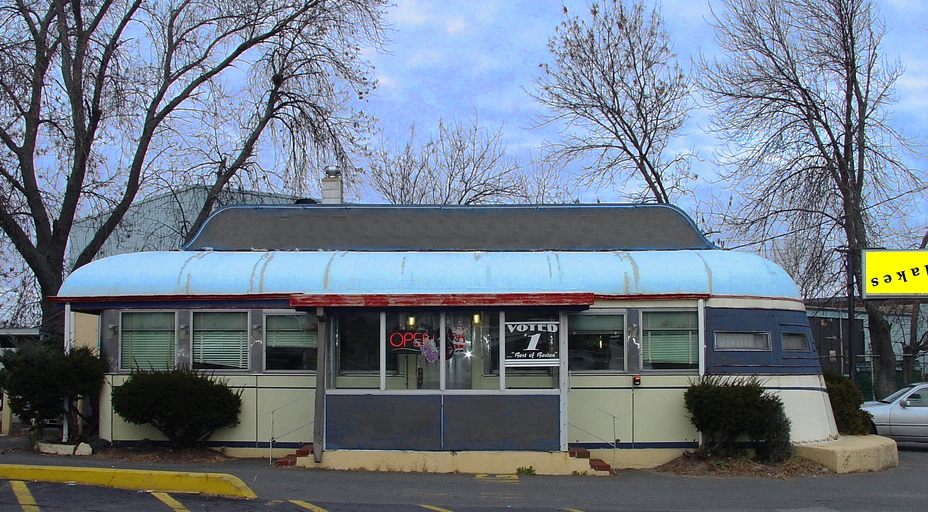
For the last five years, Rich and Bike took the time to meet me at Blakes Diner at least twice a week. We used the pretext of breakfast to get together. We had no real schedule. Blakes was at the epicenter of a map of each of our houses. Outside, near the road, a sign proudly bragged, “Home of the World’s Best Biscuits.” We often joked we should sue them for misleading marketing. The biscuits at Blakes were a lot of things, but good wasn’t one of them. Each of us would meticulously order a breakfast plate. None of us ate anything except the hash browns. For purely antiseptic reasons, we doused them in Louisiana hot sauce before eating. The coffee was incredible, though. Each of drank at least four cups per visit.
Earl, the owner, was the cook. He was a retired Navy man. His idea of good food was “a lot of it.” Everyone loved him, and he was often asked to run for mayor of our quiet little town. If he missed a day, his wife cooked in his place. She was not lovable. If a tourist or someone passing through made the mistake of coming in and saying something critical, Earl’s wife had no qualms about tossing an f-bomb grenade on them as they scrambled to escape the diner. The Yelp reviews provided a reliable map to determine on which days Earl was absent.
After we initially started frequenting Blakes for breakfast, Rich casually asked Earl who the namesake Blake was. “I got the signs for free from a surplus sign shop.” It seemed like a logical enough reason for the three of us. “Why is the word ‘Blakes’ missing an apostrophe and upside down?” Earl turned away from his stove for a moment. “I wanted people to look at the sign and have questions. Curious people tend to come inside.” Rich slapped the table and said, “Good enough for me!”
Rich retired as a policeman after getting shot four times in the neck and chest ten years ago. To his wife’s surprise, he went back to college and finished his degree and then earned his accreditation as a teacher. He worked a day each week as a substitute and also tutored a few of the local kids who needed it. Bike, however, was one of those people who could earn a dollar just sitting on a park bench. For several years, he somehow made a decent living buying and selling obscure bicycle parts to enthusiasts and collectors. As for me, I retired at fifty-one. My partner bought out my half of the business we mutually owned in exchange for a comfortable annuity. I spent most of my days walking and reading. I had decided I’d get a new hobby once I depleted the town library book collection. Bike kept interrupting my plan by handing me a surprising variety of great books he found online. While I never saw him reading, I was certain he read voraciously. His vocabulary was stellar, and he loved using words no one would dare use in normal conversation. “Logomaniac,” he’d say, as if the word meant something to us mortals.
Alice, the veteran waitress, asked me, “Hey Kirk, are you going to eat your food this morning?”
“Is it safe?” I asked her, winking.
“Safe isn’t a real thing. This isn’t the Marathon Man, although I would like to pull a couple of your teeth.” Alice smiled. We did the dance of wit every time we met.
“I’ll let you get back to your other tables, Alice.” She laughed. Except for us, there were only two other diners, and both sat at the counter chatting like old friends. In this town, we figured they probably knew each other’s business already.
“Bike, Rich, you need nothing, so I won’t ask.” She placed a full carafe of coffee on the edge of the table we shared, knowing she’d find it empty when she cleared the table.
Bike quipped, “My jentacular needs are indeed all addressed, Alice.” Both Alice and Bike looked at each other as if a duel were imminent before smiling. Rich laughed, but without the habitual large smile I’d grown used to.
As Alice walked away, Bike threw his inevitable parting shot, “Were that your voice would be as euphonious as your figure is lithesome.” I couldn’t help it. I snorted, even though technically Bike offered a compliment hidden in an insult. I’m certain Alice smiled as she departed, though I couldn’t see her face as she moved away.
For a couple of minutes, we alternated between drowning our hash browns in hot sauce and gulping coffee. Like all great friends, we didn’t need an intensity of words to keep us company. Earl hollered across the diner, “Enjoy your food, gentleman!” and waved his spatula in the air in our general direction. We saluted with our coffee cups, another of our many rituals.
For fifteen minutes we gossiped. We’d deny it amounted to that outside the confines of the diner. Our conversations were stuffed with anecdotes, riffs, one-liners, and a barrage of rapid-fire nonsense once we started talking. Through it all, Rich was almost his usual self.
As I stood up and climbed out of the booth, I threw a $10 tip on the table. Bike waited until I was out before moving. Rich also stepped out of the booth and turned his back toward the counter. He took his right hand out of his jacket pocket. In his hand, he held a pistol. He laid it on the table and quietly whispered, “I need your help. I haven’t needed this in years, but I think I’m going to.”
Bike stopped and sat back down as all three of us looked at the gun. “Holy howitzer!” He whispered.
Josh stood on the embankment of the fifteen-acre catfish pond, watching the sun touch the horizon. The Phillips Brothers recently constructed this particular pond, and it was still devoid of fish. Thousands of dragonflies and insects flew above it. Now that Josh owned the land by birthright, he was confident that fish would never swim in it. Soybeans were the future for Josh. He’s seen enough catfish and live-haul trucks loaded with contraband to last him a lifetime. It wasn’t his place to judge his father and grandfather for their choices in how best to make money. How much money did a man really need, though?
He could see the Rawling’s house in the distant break in the treeline past the expansive rice field, beyond the edge of the series of catfish ponds stretching out to one side. The Rawlings clan were as mean and loyal to one another as any family in the Delta. All eleven of their kids were adopted. They were the closest neighbors both by proximity and character. The Rawling’s didn’t put fences around their properties. Anyone foolish enough to trespass ran the risk of disappearing into the swamps of Monroe County. Most people weren’t aware that the Rawlings single-handedly funded the Delta College Fund. It paid for college for a dozen Monroe County residents a year, provided each graduate came back to live and work in the area. No one dared break their promise to return.
Josh’s ears still rang with a muffled, high-pitched whine. He reached up and pulled off his hat. His grandfather (who he called Grand-pére due to his grandfather’s vague French past) gave him the hat the day he turned 18. He then poured two shots of whiskey. After they both downed their shots, his grandfather shook his hand and then threw a punch at Josh’s nose, a jab which Josh barely side-stepped. His grandfather laughed and said, “I guess you’re quick enough, after all.” Josh suspected that his Grand-pére moved to Arkansas to escape the choices he’d made when he was younger. While he missed his Grand-pére, he also felt lighter in spirit after his passing. Some people cast larger-than-life shadows; things seldom flourish in the shadows. On a whim, he flung the cowboy hat into the pond. It lay flat on the surface for a moment and began to slowly sink into the surrounding water.
After a minute of observing the approaching sunset and listening to the muffled crescendo of insects calling, Josh held up the Colt 1911 pistol in his left hand, surprised to see that it had a splash of blood on it. The Colt was a gift from his Grandma Eva on his eighth birthday. She claimed that she had used it to kill two men when she was younger, a story Josh didn’t doubt, especially since whispers of it reached his ears through the years. He had dared to ask her about it once. Instead of addressing his questions, she enigmatically said, “Death is a private matter. I think you’ll find out for yourself if you live long enough.”
He had fired the gun at least a thousand times in the intervening years. The first time he fired it at another person, he killed the man who had already fired a shot at him and missed. The County Sheriff had walked up to him and slapped him on the back. “That was some fine shooting, Josh. Let me know when you want to come work for me.” The newspaper wanted to interview him and print his words under the headline “Local Man Saves Neighbors.” Truthfully, he felt nothing when he shot and killed the would-be robber at the Save-A-Lot grocery store. He was driving by the small store on Adelade Avenue when he saw a young man leaving the store and firing his pistol into the store. Josh didn’t think about what he was doing. He stopped the truck, stepped out, and waited until the robber turned to look at him. The robber lifted his gun and fired one shot. Josh calmly raised his pistol and shot him through the right eye. He found out later that the robber was his third cousin, Johnny Ray Terry. Johnny’s father shook his hand at his son’s funeral and nodded his head. Josh felt like he owed Johnny’s family a little of his discomfort. Being at the service afforded anyone with a grudge to say words or throw their punches. Waiting for other people to do what they had to always led to more problems. As his Grandma Eva would say, “Get down the road as quickly as you can. It’ll save you a lot of steps.”
The second time he fired his beloved gun at another human being with murder in his heart. He couldn’t muster up regret for either occasion.
Barely ten minutes ago, his dad had looked up from his place at the rough wooden table. The table held a map of the county, a pile of legal documents, and a bottle of whiskey. He looked up. “Don’t point it unless you’re going to kill the person at the other end of the barrel,” he coldly told Josh. He didn’t seem concerned that Josh was pointing a pistol at him. The irony of his dad failing to realize that he violated his own rule earlier in the afternoon didn’t seem to register as he spoke.
Josh did not wait for his dad to say another word. He squeezed the trigger and the Colt, less than two feet from his dad’s face, fired directly into his dad’s forehead. The boom inside the cabin was thunderous. Josh carefully placed another pistol, one taken from his dad’s gun cabinet, on the floor. His dad fired it a couple of hours earlier, outside, as Josh walked toward the cabin after getting out of his truck. Instead of returning a shot, Josh had turned and walked the perimeter road of the property. It didn’t even occur to him that his dad might fire another shot toward his back. In his heart, he already knew what needed to be done. If a man tries to kill you, he’ll never relent if you let him walk away.
His dad slumped over on the table by the time Josh’s hand touched the front door of the cabin to leave. Josh walked across the yard and then crossed the access road to reach the closest of the catfish ponds. Mosquitoes accompanied him on his trek. Josh ignored them. Everything must eat, after all, and suffering inevitably resided alongside survival.
Josh flung the Colt pistol high in the area, and it landed about halfway across the pond, splashing neatly. He knew it would stay there, half-buried in the sediment at the bottom of the pond until it would be recycled and replaced after its ten-year lifespan dwindled. Grandma Eva would want the pistol to be lost to time, of that he was sure. Her death six years ago seemed impossibly distant. Cancer tried to kill her for eleven years, starting in her chest and invading anywhere it could. It took a freak accident to beat her. Until yesterday, Josh didn’t know that his dad was responsible for the accident.
After today, there would be no inquiry, no hard questions, and no suspicious glances, even if someone suspected the truth. In quiet places where time slows to a crawl, justice has its own rules, ones independent of the wider world. Josh hadn’t murdered his dad; he simply paid forward the cruelty his dad had birthed by killing his Grandma. Most people can respect such decisions in their hearts. Josh wasn’t one to justify the distinction between greed and love.
As Josh’s ears began to absorb sound again, he could hear the shattering wall of insects making their nightly melody of chirps.
Life would go on, and the fables and stories would intensify, just as it always had in this quiet farming community.
Josh used the wall phone in the cabin to call Sherrif Medford. “Yeah, my dad is dead. There’s no hurry. I’ll be here waiting on the porch.” He hung without waiting for the dispatcher to respond. He didn’t look back toward the table where his dead father slumped. That part of his life was finished.
He would change clothes, clear the table, swim in the pond, and coat his hands with diesel first, though. Finally, he’d sit on the porch in the Arkansas night, waiting for the rest of his life to begin. Josh couldn’t wait for the land in front of him to fill with soybeans and a peaceful life. He was thankful for the promise of the static of a normal life.
Grand-pére would find all this amusing, fifteen years after his death.
Beyond, Monroe County made its descent into night.




 P.S. Parenthetically Speaking