08032014 A Funny Cancer Story (Updated)

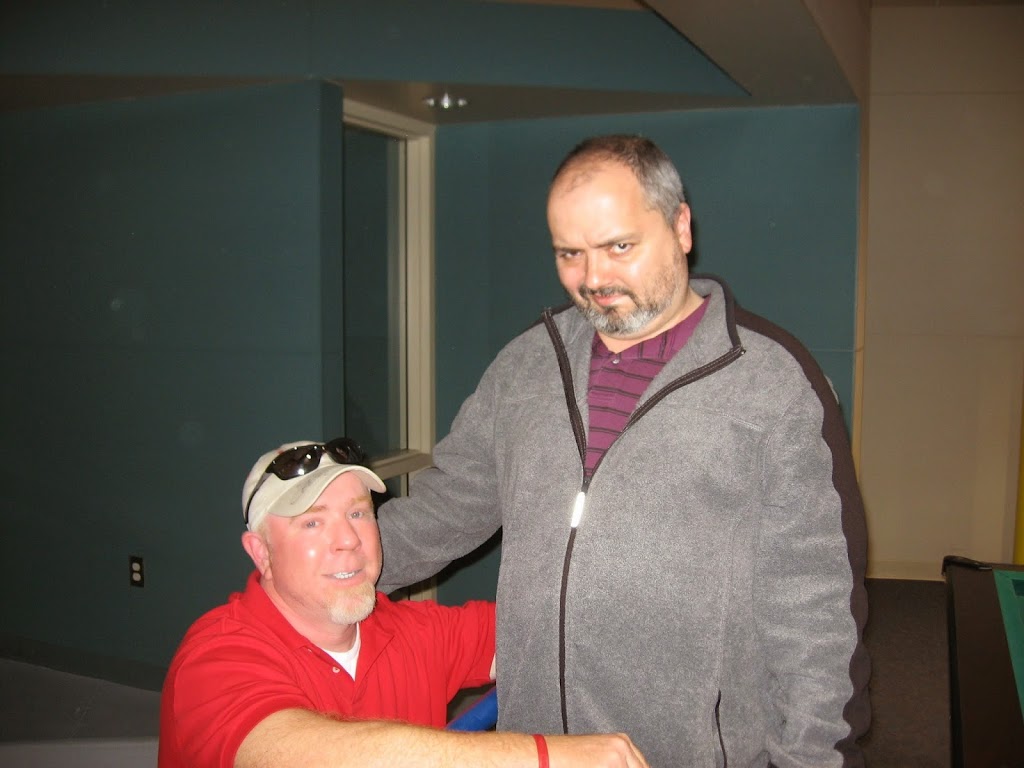
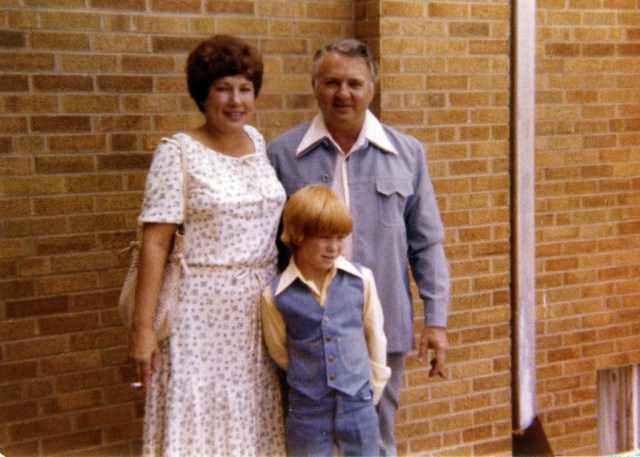
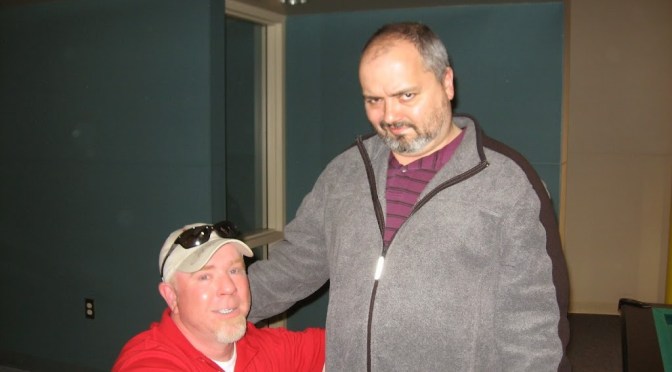
(This is a picture of me and Jimmy horsing around during one of his son’s birthday celebrations.)

One day toward the end of my cousin Jimmy’s cancer struggle, I stayed with Jimmy during the day. Jimmy’s girlfriend had to leave town for the day to suffer through her state licensing exam for either cosmology or cosmetology (just kidding), so I offered to wander around and spend the day with Jimmy. The day was broken into long periods where Jimmy would pace and smoke, followed by more smoking. I was accustomed to seeing him smoke but on that day, he smoked as if he had to get them all smoked, forever. He wanted me to run him to a convenience store and drive around. (While looking back at the dates, somehow I had forgotten completely that Jimmy insisted on driving over to the new house he was to move into with Alissa.) We stopped at EZ Mart before going over to check on the new house, chiefly to get Jimmy more cigarettes. We couldn’t go inside the house, but we walked around and traded terrible commentary about the house. Jimmy wondered if there was room in the backyard for “muffin-fetchin” dogs, a long-running joke we shared. After leaving the house, we went back to the same EZ Mart we had visited before seeing the house. I honestly can’t believe I forgot that part of this story as I wrote it. The mind is a strange thing!

Coming back, the traffic around Joyce Street was unimaginably terrible. Jimmy had lit another cigarette as I drove, joking and carrying on. As I reached the intersection to turn right into the side road leading to Jimmy’s apartment, Jimmy fumbled the lit cigarette.

Jimmy looked at me and said, “Dude, I think I am on fire!” He said it as if someone had just handed him a roll of $100 dollar bills and a fresh pizza, except he uttered it in quiet amazement.

Since he was wearing baggy shorts, he couldn’t tell whether the cigarette was on him or had fallen to the carpeted floor. By the time I realized he had dropped the cigarette, there was already smoke in the air. Traffic was piled up front and behind. The look of surprise and bewilderment on Jimmy’s face both made me laugh and terrorized me simultaneously. “Hold on,” I hollered and hit the gas, going to the left hard. (Joyce Street, even on great days, is already akin to a Vehicular Roulette in that area.) Incredibly, some idiot behind me did the same, darting into oncoming traffic behind me. My goal had been to get turned onto the side road, slam on the brakes, then jump out to run around the car, fling open Jimmy’s door and find the cigarette before he burst into flames. The car behind me threw a wrench into my plan, making it very dangerous. I floored it for a second, then hit the brakes. The car behind me screeched to a halt as I started to get out of the car.  He then swerved around me, giving me the one-finger salute as well as some interesting curse words to brighten my day. I had wanted to throw my door open but had to wait to see what the car behind was going to do. It was one thing to potentially let Jimmy catch fire, but on the other hand, I didn’t want my driver car door ripped off the hinges by an angry driver as he sped past.

Smoke was coming from near the door. I couldn’t figure out if it was him smoldering or the carpet. Jimmy was under the influence of a lot of medication, so it was possible that he was, in fact, ablaze without really knowing it. I ran around the car, opening the door as if I were the Incredible Hulk and with enough force to have flung it to three miles into the air. It turned out the cigarette had smoldered on the carpet, burning it, producing smoke. I handed Jimmy the cigarette back an couldn’t help but start to laugh at him as he put the cigarette back in his mouth. And then he laughed and laughed and laughed.

As I got back in the car, he said “I’m so sorry for catching your car on fire, X.” I laughed again and said “At least we’ve got a good story to tell.” (I say this a lot no matter how bad something is that happens.) Despite knowing how I am about stuff, he seemed to be genuinely alarmed about the carpet. At the time, he probably didn’t know how close we had been to having someone drive over the top of us while we were sitting in my Honda, trying to get out of the crazy Joyce Street traffic.

“Promise me you won’t tell Alissa. She won’t think this is funny.” The way he said it made me laugh even harder. I think it would have been MUCH more complicated trying to explain to Alissa how I had gotten us killed than explaining a funny story about Jimmy torching my car. I reassured Jimmy that it was no big deal which led him to worry that maybe Dawn would be upset. I told Jimmy that she would only be upset if I drove the car home while it was on fire – and ran it inside the house. Over the next hour, Jimmy continued to be worried about the car but as I told crazier and more outrageous jokes about it, even he started to realize it was a great story.

(Sidenote: this story happened on either March 12th or 13th, 2013.)


Jimmy – The Unfinished Blog Post

I wrote this blog post quite a while ago. It looks nothing like it once did. Neither does my mind, for that matter. As tightly as I cling to the idea of how cancer punished Jimmy, as much as I want to remember the lesson of how fleeting our chances can be, I still find myself incredulously shaking my head at disbelief at how life doles out its reward and pains.
 

This blog post was longer by a factor of 5, if you can believe it. I’m tired of seeing it in my draft file, challenging me, reminding me that I’m not supposed to be a perfectionist or concern myself so much with presentation. Jimmy would tell me to “fire that thing off” and light up a cigarette, laughing at me. I deleted about ten minutes of reading; I regret doing it now, but like life, it serves no purpose to focus exclusively on what we lost. I can hit “save” on this blog post and get up to have a cup of coffee. It would be a joy to be able to go have a cup with Jimmy, watching him pace the concrete outside, smoking, chatting, and wondering out loud what might happen next week.

A couple of years ago, I Jimmy was dying of cancer. His journey with the disease was like so many other people’s. He initially was defiant, suffered through the uncertainty and treatments, remission, followed by the punch of a relapse and of the reality of it coming back to get him. I wish he had followed through on his initial plan to write about his experiences, even if all he used was Facebook. Those words would be comforting to me now, even if writing carelessly or negligently. They would be his words, allowing me to hear his voice in my head, walking me through his choices in life. He told me differing reasons as to why he stopped doing it after just a couple of entries. Fear and fatigue were definitely factors in his reluctance to share. When his cancer recurred, I think he knew he might have to admit defeat; defeat as he saw it, anyway. Jimmy didn’t want to write a story of defeat, even if no one else would have read his story in that light. Someone once said that life is inevitable defeat but the game can still be enjoyed.

When Jimmy’s cancer came back, he went through intense denial about the likelihood of dying. I don’t blame him. Jimmy’s faith was supposed to insulate him from further abuse from the disease. In many ways, the cancer returning stunned Jimmy, as he had worked out promises to god in his head about using his new opportunity in life and take advantage of it, more so than he had done before when he had lost focus on the frailty of our lives. I do believe that his intention was to figure out a way to parcel out his experience with cancer and share it in the best way he could – had he survived.

Jimmy was also especially at odds with the idea that smoking, dipping or drinking could have had any effect on his cancer’s development. He continued to smoke during his remission and when the cancer came back to attack him. Jimmy loved to smoke. It defined the personal moments in his life, shaped his day into increments of being alive. It is a habit he learned from his mother, a million cigarettes into her lifetime. To be clear, I don’t fault Jimmy for continuing to smoke after his diagnosis. It would be easy for me to jump on it and preach about it – but smoking isn’t something that is easily set aside. When you are facing your demise, anything that can ease the pain of dealing with it is twice as hard to kick off one’s back. Each of us gets to decide how we would handle the slow death spiral that comes with cancer. No matter what I would write about it now, the truth is that I can’t say definitively what I  might actually say or do if I were in his shoes. I know that if smoking is what kept Jimmy saner while dealing with cancer, I will not judge.I always knew that when his urge to smoke waned, he was ready to let life slip past him.

We couldn’t get my cousin to make choices about the rest of his life, as he was so focused on his self-affirmation of survival. Trying to get him directed toward further treatment or hospice was an admission of defeat for him. His stubbornness interfered with the quality of his life in the last few months. He was lucky to have his girlfriend during this – and  my cousin misbehaved enough that it was a constant surprise that he kept her around. Jimmy had the infamous Terry attitude and the anger that gave him rein to lash out when he didn’t feel well. The medication he was on liberated his temptation toward anger.  For a time, he did his best to drive away his girlfriend. But she stuck with him through it all. Jimmy threw her off her orbit sometimes, but she was still circling, connected to him. Despite Jimmy’s issues before with his girlfriend, I kept reminding him of the urgency of being alive and respecting those who had been steadfast in their support and helping him.

When I went over after work to see Jimmy and discuss hospice and options with him, he knew that I was there to be honest with him. One thing Jimmy could always expect from me was honesty, even if it was the type of truth that made him say “Ouch!” and even when I thought he was being dumb. Jimmy had been missing the doctor’s guidance toward hospice and focus on quality of life for as long as he might continue to survive, and insisted that the decision to discontinue all his chemo and radiation treatments again was a positive sign and that he was going to live through it. After considerable setbacks with another round of chemo and a few hospitalizations, Jimmy’s doctor ended treatments and prescribed hospice, with the expectation that Jimmy follow-up accordingly. When we left the treatment center, Jimmy was already talking about how good of a sign it was that his treatment was ending – that it meant that he was going to get better. It was a terrible moment, one with fangs at my throat. Even for me, it was a minute of two of suffocating desire to run away from it.I aged a year or two in those moments; my normal confidence had fled and I couldn’t imagine being in his shoes.

(In an attempt to be clearer, the objective of me talking to Jimmy wasn’t to dishearten him or to in any way ‘preach’ at him. The objective was to get him to change his focus toward a better understanding of his choices and options for the remainder of his life. His denial of some things was directly hurting his medical situation and those around him.That being said, it was his right to do what he wanted.)

Finding the words to get Jimmy to listen to me was one of the toughest things I’ve ever had to do. I made an impassioned and heart-felt attempt to get through to Jimmy to take the first step toward accepting hospice treatment and shifting his focus toward making decisions while he still could. Jimmy had already witnessed and suffered the effects of his mom recently becoming ill and dying fairly quickly. She died without much of her wishes, medical or material, known – this in turn, caused Jimmy a LOT of horrible issues with some family, all of which could have been sidestepped with minimal preparation. I never could get Jimmy’s mom to follow through with a living will, a regular will, or any of the other necessary decisions and planning. She was a very smart woman but for whatever reason, didn’t follow through, leaving Jimmy to suffer the consequences with another family member whose motivations were less-than-reputable, in my opinion.

Jimmy felt that admitting he needed hospice was the first step toward acceptance of his death. Jimmy had all the hospice information there at the apartment with him. I walked him through what had happened, what his doctors had been trying to tell him, as well as all his options, where he could live and how he could continue to expect his family and friends to help him.

“You think I’m going to die, don’t you?” was Jimmy’s response. It broke my heart for a while to hear him ask in such a plaintive, accusatory tone. “Yes,” I told him. “Your cancer is going to win, sooner rather than later.” I reassured him that in reality, little had changed – that the only difference between the present and five years ago was that he could be assured his death was to be sooner rather than later. We talked about his renewed faith and how he could use that to focus himself on living the rest of his life the way he needed to.After talking to Jimmy at length, I told him that a pastor was coming over to talk to him and to ask him any questions he might have, and that we could figure out how to help him get as much choice out of his life as was feasible. Praying and offers of comfort were supposed to be part of the equation, too. Jimmy’s outlook was immensely more optimistic and informed. We talked about how beautiful the Hospice Lodge was and Jimmy kept saying he needed to go spend at least one night there. He also spoke of understanding how his medication and frustration were making him lash out at Alissa and the girls and how having Noah see him that way wasn’t what he wanted in his memory. Then, the pastor arrived. The comforting acceptance vanished…

The pastor came over to get my cousin to listen to the necessity of making plans for how to spend the rest of his life in comfort, as well as making all the decisions to take care of his girlfriend and son, as well as all his things, before leaving us. When the pastor arrived, instead of talking to Jimmy as both a comforter and counselor to help him make plans, he used the opportunity to pray with Jimmy, insisting to God that his cancer would be taken from him and to focus only on surviving the disease. No mention was made of hospice, what course of treatments were left, or any discussion of the decisions Jimmy should focus on. The literature regarding hospice was ignored and after the pastor left, no further mention was really made of it. I had hoped, too, that the pastor could make a personal connection with Jimmy about not letting his disease continue to anger him and affect his bond with his girlfriend and her two children. I was very frustrated that the pastor missed his chance to address all the other needs and things Jimmy needed to hear.

His method was full of vocal holy spirit and not focused on counseling. I don’t understand it. Maybe I’m not supposed to.

(Sidenote: If Jimmy could come back for a day and listen and see what the consequences are to his not having made certain decisions back when he could have…To this day, over 18 months later, people he wanted to protect are still dealing with the aftermath of it. Jimmy would not be happy about it. I would look him in the eye and call him a goofball for not taking the lesson of his mother’s death and how his half-sister behaved and using it to make better decisions.  I tried and tried from the outset to get him to use his mom’s example to motivate himself to make the decisions he wanted, to disclose them to everyone who would need to know, and to face the mortality. He wanted Noah to have things, but he also wanted Alissa to not have to stress. That’s why he chose to marry her so late into his life. Not out of fear and not out of regret or obligation; rather, as an affirmation of life and the realization that he was going to go ahead of his time, even though he had so much more to live for. I’m both surprised and amused by how a couple of people behaved, even after his passing. Jimmy made his declaration loud and clear when he married Alissa. It would embarrass me to step up and fight against his wishes in this instance, were I not observant enough to look at his life and see that his marriage signaled his priorities and his wishes.)

Until right up before Jimmy died, he would look at me and say “I’m not dead yet,” or more likely, “I ain’t dead yet.” The last few times he was half-joking, just to get a rise out of me. He even asked me the day he got married. When Alissa, Jimmy and Alissa’s dad and step-mom dropped by the house one afternoon, as tired as Jimmy was, he looked me dead in the eyes and said “I ain’t dead yet” and came into the house.

About a week before Jimmy died, I was certain that he was going to be gone that Saturday. He stopped breathing for what seemed like a minute, his skin grew discolored and his condition could not have been worse. When oxygen arrived, he showed vast improvement. Alissa had to make the decision to give him oxygen or not. Had she not, Jimmy would have left us that Saturday afternoon. It would have been a good day to die. The next day, he was outside, smoking, talking about how close to death he had been. It was his Indian Summer, one that afforded him mental acuity and the ability to laugh at the absurdity of it all. “That’s the way to go,” he said. But he wanted to smoke when he work up that next day – a sure sign that he wasn’t ready to dive into death just yet. He had the twinkle in his eye that day.

Someone very close to Jimmy joked that maybe he should have been smoking during his viewing. No disrespect was meant by the comment and it has a harsh truth to it. When I mentioned his mom having smoked over a million cigarettes before her death, it was no exaggeration. Even at 3 packs a day, 365 days a year, over 50 years, it surpasses a million cigarettes.

He died on a March Monday afternoon, in his relatively new home, married, and had not survived long enough to see his son Noah graduate, and without the chance to use the knowledge that cancer had cruelly given him: that all these plans we make, things we hold in esteem are nothing without happiness, health, and people we enjoy in our lives.

Jimmy died months ahead of my mom. For whatever reason, his absence has so far made a much bigger impact on my life than my mom’s passing. I don’t hide this fact or sugarcoat it. I feel like Jimmy could have done a few things so much differently had he lived a few more years. When the cancer came back he was certainly mad and resistant to the idea of dying. But I wonder what might have become of his new marriage and his better job at the Budweiser. It feels like he and might have had a much different appreciation of one another and been around to suffer and appreciate middle age together. Cancer is a scary infection, one which challenges everything you are hoping for and all too easily takes your optimism and burns it in front of you.

I use Jimmy’s suffering to compare how I might react to the same challenges. I know I would not do well.

I work to remember the good and bad times with Jimmy before cancer defined him. His life was a long bookshelf, with cancer being but a blip on one end. It sometimes is so hard to look back and see past the long interlude when cancer start its dance.

10102013 Almost All Things Should Have a Transfer Requirement Upon Death

I would like to change the way we own things in our society. Apart from the side effect of encouraging people to be more responsive to their own lives, it should also simplify the ridiculously complex legal issues surrounding our passing.There’s no reason to fail to simplify so many things that make death and dying so complicated. If we were ever to endeavor toward such a change, the lawyers might object, but we can figure out a viable way to satisfy most people’s concerns.

I would  revise automobile titles so that a “transfer upon death” would be required to be listed on each title, removing arguments about vehicles from the equation when someone dies. The same would be true for real estate. Anything with a registered title would indicate “transfer upon death,” and not be subject to our archaic laws related to wills and estates. “Payable upon death” declarations for bank accounts, stocks and bonds would also be required; again, exempt from the death process.

For most things, it would be impossible to own or register something without clearly delineating how the item should be handled when the original owner dies. Once, when I mentioned something similar to this, a clever person responded by saying that we should pass a law indicating that if you don’t indicate a person to inherit, everything will be donated to the IRS for sale. He said this should be enough of a kick in the pants for most people to become motivated to followup.

Without writing 100 pages regarding the details, I think that the general spirit and idea are profoundly good ones. As with all things important, it is complicated to address. But should it be addressed? Yes.

A Website To Make Your Age More Interesting

You’re Getting Old Link

This website isn’t as straightforward as you would think. Once you input your information, you should scroll and read through all the information on the results page.

Everyone who takes a minute to do more than a cursory glance has discovered something new.

One thing that I find informative is how the results compare an event in the past to your birthday, versus your birthday to present day. It compresses time into a surprisingly narrow and rapid series of events.

For me, it was interesting to think about time in gaps. For example, in 1976, the US’ 200th birthday, I was only 9 years old, but I remember hearing about WWII, thinking it was ancient history. But for those telling the stories, it was less than 30 years before, a long generation. From 1976 until now is much more time than from when I was 9 back to WWII. It adds an almost hidden element to time. Our memories both compress and elongate history.


07062013 Gift Hoarders and Re-Gifting

“If it is a gift, the best way to use it is to use it yourself or find a great home for it where it will be used or appreciated.” -x

I would never choose to be offended if anyone were to give a gift from me to another person. Once I give it, it is yours to appreciate or give. No questions asked. If I were to paint something for you and later you decided that you didn’t want it (or it looked like a 90 year-old cocaine user painted it) you don’t have to hide it and then throw it on the wall before I come to visit.If I give you an expensive collection of Japanese Toenail Clippings, give it to someone else who has an appreciation for that sort of thing.There’s no reason to dedicate a corner of your house to things given to you that you can’t dare give away or discard. Truthfully, as people age, the accumulated clutter of gifts over the years might reach the ceiling if people didn’t tactfully rid themselves of old gifts.

We might have less complicated lives if we could all look at each other and agree that some of our gift choices are just plain crazy. Since people’s tastes change and sometimes we just get tired of looking at the same stuff all the time, there is no shame or crime in recognizing that we no longer really want something that was given to us. If you are a weirder person than average, it is statistically likely that you are going to guess wrong more often than people you know.

All of the above is part of the reason I enjoy trying to give personalized gifts, whether they be picture cups, or blankets printed with family pictures, calendars or anything else weird or fun I might think of. Most of the time, though, I spend more time and effort decorating the box or packaging the gift is being put into for giving.

I don’t mind if you re-gift presents I’ve give you. Only you know if you were genuinely appreciative when I gave you something. It’s not my job to judge your state of mind or whether you cared that I gave you a gift. We can do our best to surprise those we love with interesting and beloved gifts. But let’s face it, most of them are going to the the equivalent of a 6-foot Elvis robot.


Expediency Over Quality

I’m trying not to be cynical about some things…

But whether due to the economy or not, I’m hearing a lot of chatter about people feeling like they are being forced to put out terrible quality service or products. To clarify, I would say that these same people are saying it feels like they are being “pressured” more than in the past. The common refrain is that the available time given to get anything done isn’t increasing, but the expected output is.

Whether it might be relabeling not-so-fresh meat or produce at the grocery store, using less reliable brake pads on cars, not doing as much follow-up at the dentist office or just not taking the time to clean up the details for anything customer service related – people are either saying they are being pressured to do lesser quality or I’m noticing it more. My gut instinct is that people are indeed saying it more.

With each anecdote, I’m hearing that people are getting the “wink” from the people giving the orders where they are employed. In other words, look the other way if possible and fix the issue later if there is a complaint. (But I might add that the Open Secret rules applies – you aren’t supposed to acknowledge that corners are being cut…)

Running lean is a valuable tool to reduce costs. But it tends to reduce quality and increase the likelihood of customer dissatisfaction.

It seems obvious, doesn’t it?

“If you don’t have time to do it right, you ain’t gonna have time to fix it later, that’s for sure!” -x


We Are All Unreliable Witnesses (and memories can’t be trusted)

Since I’ve started genealogy, I’ve discovered that almost everything we do, think, say, and recall is riddled with inconsistencies and errors. Not that I didn’t know that before. One look at my idea of fashion proves that point.

An example: I’ve heard the story repeatedly that my maternal grandfather William A. Cook lied about his age to gain entry into the U.S. Army during WWII. Turns out, it’s completely untrue. My favorite cousin sent me a discharge paper from his personal wallet. His original birth date is on the document. He used his original DOB on everything that’s come up so far.

Among other things, I’m waiting to see when and if he and my maternal grandmother Nellie Cook were ever married. Family says that a marriage license had been seen but that grandma had scratched over the dates repeatedly. While I haven’t visited any of the likely 6 county courthouses yet, no one has any source verification, other than “they were married.”
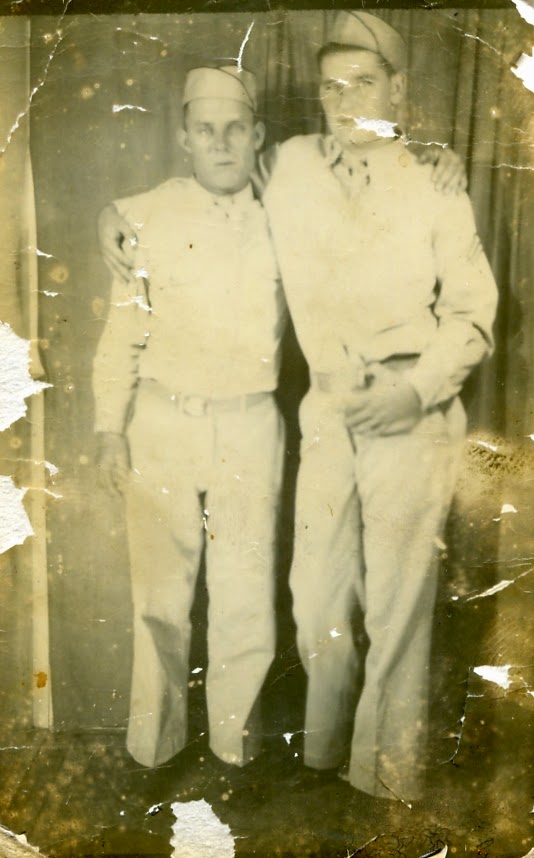
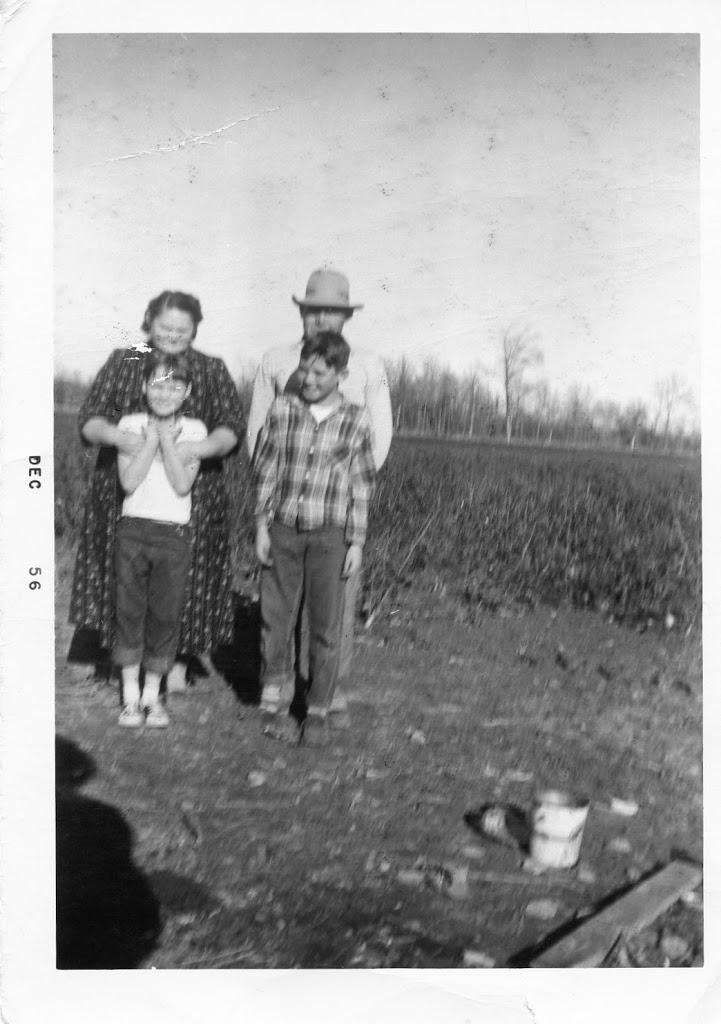
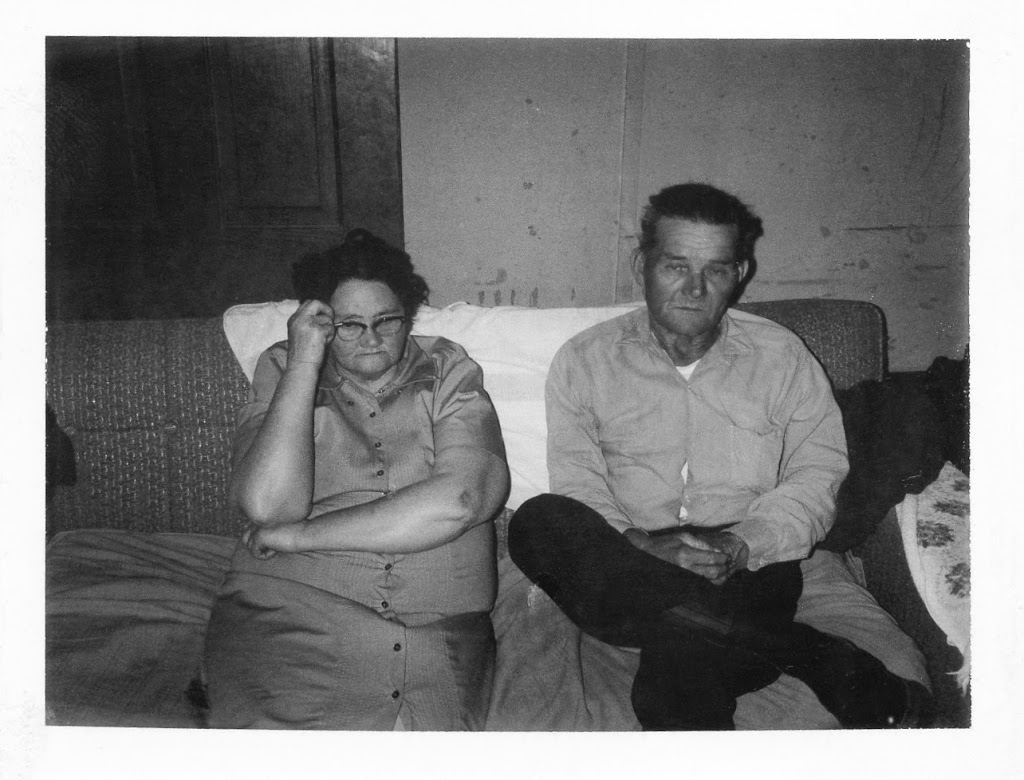
This picture of my grandparents was taken in Rich, when they lived relatively close to White Church and cemetery there.

 Start with NOTHING as a precondition.

One of my earliest blog posts dealt with the errors and inconsistencies of our family stories.

Now, more than ever, I am convinced that much of what we “know” from memory is a large Swiss cheese.(And the more motivated we are to be revisionists, the easier it is to convince ourselves…)

As I learn more about cognitive function and memory, I wonder what percentage of my collective memories might be wrong.

Since having my DNA tested, I can now say that I have NO detectable American Indian bloodline. For some reason, another close family member had still believed that we were at least a small part Indian.Where the stories originated, I’m not sure. As with most issues, the family member kept insisting that “so and so” told him/her that we had Indian ancestry. When I mentioned that I had asked several of the elder generation and told them I was getting DNA-tested for confirmation, all stated that they had no idea where the mistaken idea of Indian ancestry originated. Still, the family member persisted – no amount of facts would sway him/her.

But as it was repeated, it became a truth, probably forever. That’s how family myths get passed down erroneously. 

Perhaps a future genetic marker will contradict the genetic information I’ve discovered, but I doubt it. One of the great values of new technology is that it wipes the slate clean, truth or otherwise, whether we like it or not.

10102013 Jesus-Zach Galifianakis Picture and Its Many Uses

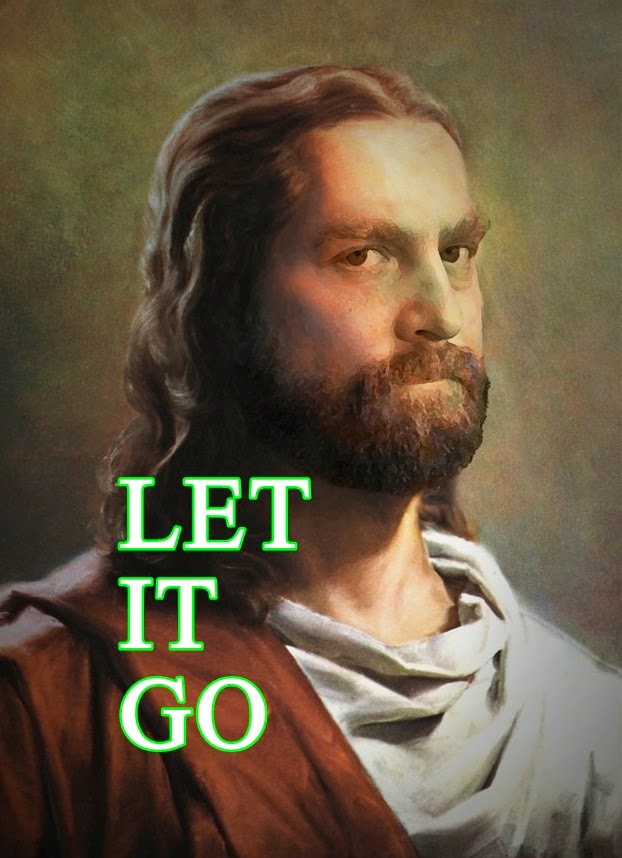
Take a look at this picture. It is the iconic picture of Jesus that many of us stared at while growing up in our grandparent’s houses – the one which made the hair on the nape of our neck stand on end when we were trying to get by with something forbidden.

Or is it?

No, it’s actually a very clever morphed Jesus-Zach Galifianakis hybrid picture. This picture makes me laugh out loud, literally, sometimes.

I’ve used many times to wrap presents with. Those who don’t look closely think that I’ve used a picture of Jesus. Those who look really closely and who also follow pop culture really get a laugh out of it.

I’ve used this picture on personalized coffee mugs that I’ve had made.

I’ve used this picture as a centerpiece on xmas decorations and things of that nature. Many people never notice that something isn’t quite right about the picture.

I tried to convince myself to make a large framed version of this and sneak it into the church I most often attend. I couldn’t quite do it, although I’m certain that the pastor would have laughed until he cried. It’s not like any of us old fogies can see well enough to catch the tomfoolery at first glance, anyway.

It’s not so much that I’m subverting anyone’s beliefs, but that it is a great example of subversive humor.

Churches Should Be Taxed

 Churches should be taxed, as well as treated as employers in all aspects of the law.

This post will anger a lot of people, but it’s just my opinion here on the fringes.

And yes, it should include property taxes, unemployment taxes, everything a small business should have to endure.

While many will disagree with me, most of it boils down to simple “we don’t do it that way,” rather than because it wouldn’t make more sense.

Quote on Privacy From Dilbert Blog

“We tend to fear losing our privacy until it’s gone. Then we wonder what all the fuss was about. It turns out that the bigger challenge than retaining privacy is getting anyone to care about you at all…” -Scott Adams

Although not strictly related, here’s a facebook post from a while back:

“Facebook is one of the biggest technological marvels in the world. It is often the equivalent of an email, a phone call or a visit all in one package. Yet, we vainly try to use it to ‘control’ the array of positive and negative happenings in their lives. Use it to share with those you respect and love; otherwise, I will have to find you and yank out your nose hairs for vague-posting. Instead of hinting, share. If you can’t share openly it is best to post nothing and thereby quell the potential for inquiry. Everyone close to you already knows both the joys and sorrows of your life. Share or silence are the 2 available options, at least in my opinion. Amen.”

We can hide well as individuals in a mass of people but anyone is easily uncovered in 30 seconds or less, for free, on the internet. If you don’t mind paying a little, you can uncover anyone in 5 seconds. Where do you live? Do you own a house? Who are you related to? What’s your phone number? Date of birth? Where did you go to school? Who were your friends? Who are your friends? No matter how private you think you are, I can find the answers to all of these questions incredibly easily. Most of it is information you’ve willingly provided. You don’t need the NSA to snoop, intercept, or do surveillance to get this information. 

Everything you do everyday reveals your life. Your phone tracks you, your car tracks you, cameras at ATMs and on roadways track you. Other people’s movements help track you. Your friends and coworkers assist in your every move.

It’s easy to go to bed, convinced that you haven’t added to the invasion of your privacy. If you are alive in this modern world, you can be certain that your life added to the database today.

If you know that your life is being scrutinized, even anonymously, why not share the meaningful bits with the rest of the world? It is just as viable an option as being superficial.