Another study supports the contention that social media can cause some people to experience lesser lives. The tendency for people to share only the glittering moments with their cohorts erodes the fundamental and inescapable reality that life is often a mouthful of houseflies. Not only do people share an incomplete narrative of their lives, but they also portray unrealistic body images. While people often lie, mirrors don’t. It’s half the reason we almost don’t recognize people when we encounter them in real space and time.
As for me, I try to prepare people for the inevitable letdown when they meet me by truthfully comparing myself to a taller version of Danny DeVito. The mistaken idea that we must be beautiful is a strange lie. Time bludgeons most people with casual disregard. It’s no accident that the people who we most often label as beautiful after a certain age tend to share the ability to laugh often and often at themselves.
Many people lose the ability to distinguish between daily reality and the personas crafted by social media. As we age, we discover that most people spend much more time on the couch than they admit and tend to suffer the effects of gravity more than they’d care to admit. Sure, people like frou-frou cuisine, but they most often dine on ramen noodles, hastily prepared sandwiches with the dregs found in the refrigerator, or fast food that looks like what a hungry teenager might request after a hangover.
I had stopped at the Harp’s on my side of town after work on a Tuesday afternoon after work. It was around 1 in the afternoon. Nearby, a mother and daughter were shopping for something for supper. I don’t know why the daughter wasn’t in school, but I suspect she might have been ill. I’m paraphrasing the conversation. And yes, I was eavesdropping. I was on the spaghetti sauce aisle, looking for light alfredo sauce. I prefer it because although it contains two million calories, the word ‘light’ in the name allows me to pretend I’m eating healthy.
I overheard a mom berating her daughter for posting something ‘negative’ about the family’s life. The daughter had posted something about hating her school schedule because of how mean several of her classmates were.
The younger daughter stared at her mother with a bit of incredulity. “So you’re saying ‘Be positive,’ right?” She asked.
“Yes,” snarled the mom in response. “All that bad news and negative energy drags everyone down.”
The daughter anticipated this sort of response. I almost applauded her, like an episode of Ally McBeal. “Then explain to me how you spent over an hour talking to four different people, complaining about everyone and everything. It’s the same thing. You’ve infected those people with your bad news and criticisms.”
The mom spoke too quickly. “Well, two of them were family members.”
“So, you’re saying that talking about negative things hurts people, yet you support your argument by telling me that it’s okay if you talk negatively in your family life, the very people you hold the closest? But it’s not okay for me to share less negative things online, with people I rarely talk to? What’s the point of social media if a bit of honesty isn’t ruining all the fun?”
“Keep it off social media, I said!” The mom had become a little pissed off.
“Well, keep it out of my ears, baby boomer. Positivity doesn’t mean quite what you think it does. Facts aren’t positive or negative. Our reactions are.”
I think it’s obvious who is considering the implications of her behavior more closely than the other.
I gave away the fact that I had overheard by nodding toward the purported daughter and laughing. The mom noticed me standing in the aisle with five jars of light alfredo. My wife later was surprised by how many jars I had purchased. I kept picking them up in order to be able to eavesdrop the conversation.
Because I couldn’t resist, I said, “I think I’ll put this on Facebook.” The daughter laughed.
I’m keeping my promise, a month later.
Be positive, fools.
Even if you’re only positive that almost everyone suffers a similar array of deep valleys and high peaks, and often on the same day. Stop curating your reality with such perverted diligence. It’s no feat to imagine what you’re not sharing, precisely because of our shared humanity.
There’s nothing quite like the realization that you might not have any pants to wear. No one wanted to see me prancing around sans pants twenty years ago; the situation hasn’t improved any, especially as pizza became my closest friend. The only time being pantsless is a benefit is when door-to-door salesmen make the mistake of ignoring my “No Soliciting” sign. The neighbors haven’t complained about screaming people fleeing my house. Since I don’t answer the door, I wouldn’t know if they did. It’s a win-win.
As a minimalist, I have the least amount of clothing of any other adult that I know. I tend to keep only a bit more than I need. After my last long-term successful weight loss, I dropped my guard and discarded the pants that looked like MC Hammer had designed my wardrobe. I’m generally relentless about getting rid of clothes I can’t or won’t wear.
Like all idiots, once I lose weight, I assume that I will somehow defy years of forgetting my promise not to get too large again.
I name this tendency/disease Pizzaheimer’s.
Over the last few months, I’ve adopted a more care-free diet, one characterized by total surrender to the joys of excessive stuffing. I tend to wear work pants instead of blue jeans. No matter how bad you think I might look in blue jeans, it’s worse. Imagine Danny DeVito wearing jeans and roller skating.
Because I have to wear slacks at work and my job being very physical, I wear both the relaxed fit and stretchy version of my preferred pants. (Note: I’m not too fond of using the word ‘slacks’ in reference to pants.) These give me the ability to kneel or bend without accidentally hitting a high note – and from splitting my the seat of my pants in an impromptu show of agility and exposed anatomy. The undesirable consequence of this is that I can put on 20 lbs without needing to get a size bigger pants. George brand pants do indeed stretch without complaint. So do I.
Because I may have to dress above my normal sloth-like appearance in a few days, it occurred to me that I might need to try on my normal dress wear pants. As you might expect, none of them fit. Either a magical seamstress has reduced them in my closet, or my battle with fat has been an unnoticed defeat. I’m going with the latter.
As a result, after work today, I had to buy more clothes, ones that don’t expose me to the risk of public nudity if I bend over. The numbers are getting a little large, too. As a general rule, if walking the distance displayed on your pants would wear you out, it’s probably not a good waist size, either.
It’s not my fault, though. I suffer from Pizzaheimer’s.
Near a large metropolitan area in the north, a family sits in stunned hurt and despair as the patriarch surprises them with another fit of rage and accusation. The day, like so many others, now lies in tatters. His addictions seldom yield to a retreat toward family, humility, or humanity. He cannot be reached inside his defensive slide toward loss and oblivion. Though the entire family is in attendance, hurt and pain fill the air, needlessly exacerbating lives populated by trouble. Happiness has fled the building. It’s the price demanded by addiction. These words, the ones you’re reading, are treasonous through the very act of expressing them. Addictions grow in the silences and spaces between the moments of our lives.
In a small town not too far from here, a family gathers to be with their loved one as his body fails him. While the reason for gathering is not joyous, the symbolism of family fills their heavy hearts. A long life can be both celebrated and clung to with fanged fingers. Life is always a treasured embrace, and we rarely wish to exit the dance willingly; the veil of tomorrow beckons us.
I’m connected to both of these happenings. I couldn’t help but observe their overlap, forming a perverse Venn Diagram. They took place at the same hour and minute; neither was aware of the other.
There is no lesson here, no plea to seize the day or bite one’s troubled lips.
I am merely that fish in the bowl, observing, surrounded by an alien wilderness that I’m somehow connected to.
.
As I was about to finish work, I thought I’d go to Subway to eat lunch. I couldn’t get the image of a double-tomato sub out of my mind. My wife was off in another part of the state so I could choose to eat anywhere. Just to stay in practice, I pretended to have the “I don’t care where we go to eat” argument with myself.
I left work and automatically drove toward Springdale instead of choosing one of the 946 places in Fayetteville. The traffic in Springdale got the better of me. One driver, in particular, seemed to be using a random speed generator to determine her speed. I was fantasizing about participating in an impromptu demolition derby and missed my turn for Subway. Naturally, I ended up at one of the breakfast diners which are coming back in popularity, a place I never choose.
Since I’ve put back on some weight, it didn’t trigger any warning bells as it should have. Let’s be honest, as comforting as the food at these places might be, there should be a heart on the sign by the highway. With an arrow through it.
I parked and as I entered, I waved at a large elderly man sitting on the bench near the main entrance. He was still there, immobile, when I left.
I sat at the counter until my ‘salesperson’ asked what I might like. (They aren’t waitstaff at this diner.) As I started to answer, she mentioned their special peach waffles. I never eat waffles, so of course, I ordered it. As for the rest, I told her to surprise me. She surprised me by bringing a plate-sized but thin waffle covered in peach syrup, eggs, hashbrowns, four pieces of toast, and two pieces of sausage. In the background, I could clearly hear the high-pitched mechanical scream of a bathroom scale. To balance it out, I chose the preferred drink of people who are fooling themselves: Diet Coke.
It was strange to eat at the counter of the diner in part because the entire end of the diner was filled with Latinos animatedly talking. Being a long-time citizen of Springdale, such a detail is not something that passes without me noticing. I tried not to eavesdrop – but I will say that they didn’t consider that I could understand what they were saying. I could write an entire season of “Desperate Housewives” from their conversations. Also, if your name is Pedro and you live near the Supercenter, you should leave town for a few days. (One of those women I overheard is probably going to eviscerate you Friday night after you get off work.)
When the salesperson asked me about the peach waffles, I logically concluded that the peach waffles would be adorned with sliced peaches. Instead, my waffle was slathered with an engine oil-like syrup that somehow simultaneously was sweeter than an entire bag of pure cane sugar and made me think of an insulin syringe inserted directly into my eyeball. I tried to calculate the total caloric value of the lunch I’d been served but the online tracker kept crashing due to insufficient digits available.
Despite knowing better, I ate most of my lunch. A feeling I can only describe as a malaise came over me, one characterized by an inability to think clearly. I recognized it immediately because for the shortest of moments I had the urge to watch Fox News. I tipped the salesperson/waitress exorbitantly in hopes that she might use a bit of the money to eat somewhere else when she finished working.
I waved ‘bye’ to the old man seated on the bench. Much to my surprise, a cardiologist didn’t jump from the bushes and tackle me.
Life is a series of choices. I learned again that I should ignore my instincts – and any buildings with an excessive quantity of yellow paint on the outside.
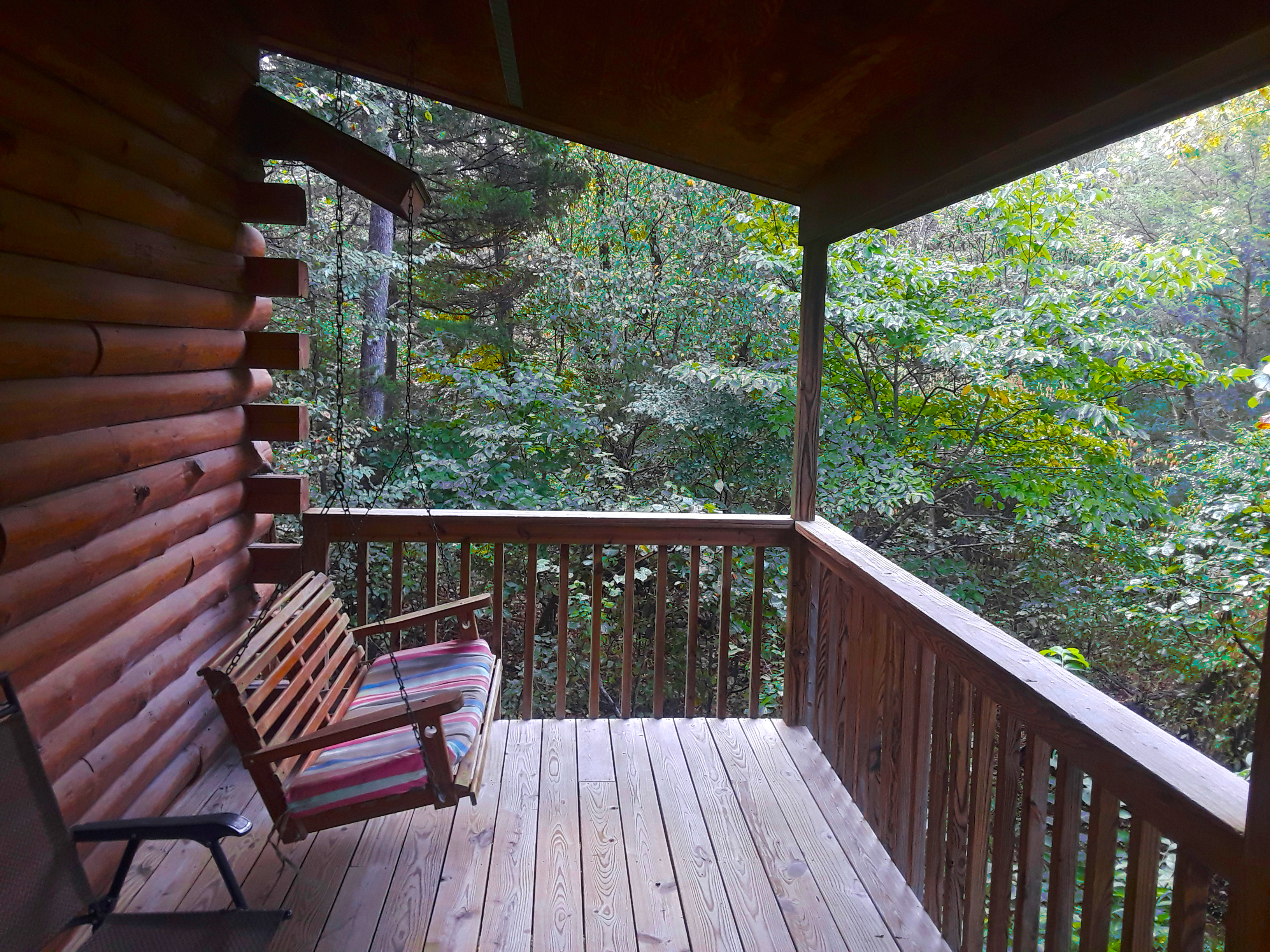
This is the porch on Cabin #3. The porch and its swing is one of the best features that many other places surprisingly fail to include.
Last weekend, we had a chance to get away for the weekend to Wisteria Lane Lodging. At the last minute, we decided to extend the weekend by a day, if possible. The owner at Wisteria Lane gave us the green light. Instead of 2 nights and three days, we stayed for three nights. We stopped at the grocery store and loaded up on food for four days. The difference the extra day made was immeasurable. Vacationing in far-flung destinations has its appeal, I’ll admit, but knowing that we can drive less than forty-five minutes to be in the middle of nowhere with no one to intrude is difficult to surpass.
No cellphone, no internet, no outside world was imposing upon us. Unlike many of the competitor’s cabins, it’s possible to go and see no one during the entire stay. The cabins have satellite television; the solitude is best experienced without the world’s intrusion, in my opinion. I took a laptop loaded with shows and music, along with cables to use the flat screen television to project them.
Dawn and I don’t leave the valley unless we must. Many people who know me superficially are surprised that such isolation is enjoyable to me. Going without wifi and cellphones probably scares those who haven’t experienced it in the last few years. The disconnection is a welcome privilege. It’s a great way to measure your addiction to connectedness.
For those who love to walk or ride mountain bikes, the area is ideal. It’s possible to encounter no cars during your ride or hike on the maintained dirt rods.
While it only rained a bit during our stay, we sat on the hanging porch swing and listened to the thunder of the insects around us as the sun sank below the upper rim of the valley’s treeline.
Wisteria Lane is located North of Eureka and Holiday Island, in a deep valley populated with five billion trees. Cabin #3 & #4 are the best, in my opinion, given their location toward the inside of the forest. Each cabin has a long, covered porch facing the creek running through the valley. Each porch has a gas grill, which allows guests to cook in any weather, either using the grill or the full kitchen inside.
After our trip, I noticed that I hadn’t been billed for the extra night. The owner told me that she was treating Dawn and me to the extra night at no charge. A great trip made more exceptional due to the generosity of the owners.
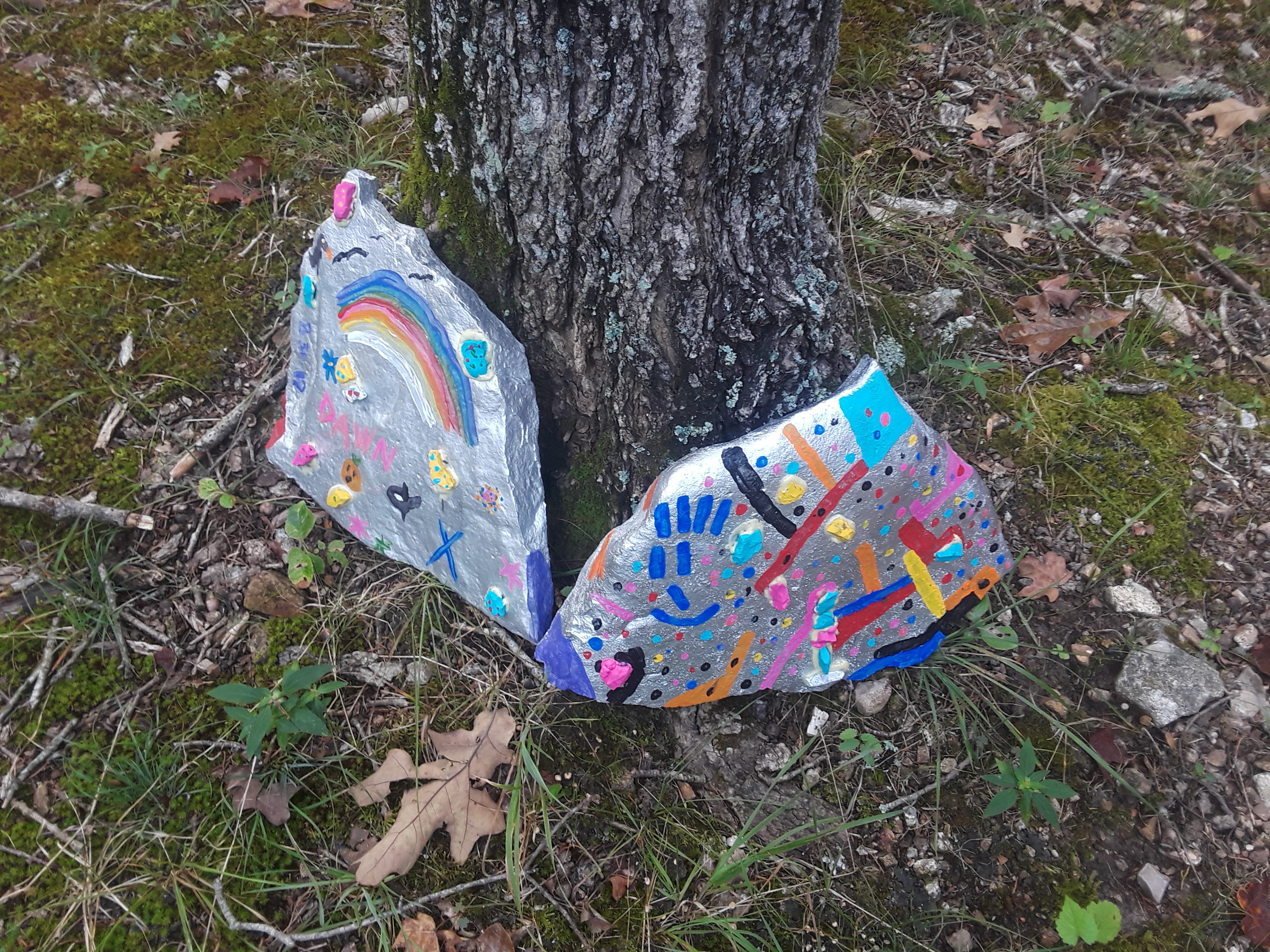
We usually take the time to paint rocks during our stays. We tend to go a little further than most guests.
“Too much time on your hands” is criticism from those who believe their own choices are superior to those being criticized. A lot of our modern lives can technically be identified as a little bit stupid. It’s possible we’re all drinking the Kool-Aid in pursuit of our own hobbies and interests.
From my vantage point, all of of us are bit actors, engaged in our dramas of needless stupidity. I admit my own hypocrisy as I judge what people choose to do with their time, even as you might catch me alphabetizing my pasta collection or writing poetry in imaginary languages. I recognize my dedication to oddities.
“Time you enjoy wasting is not wasted time” is a cliché for a reason.
“What a waste.”
“That’s pointless.”
Watch sitcoms or dramas? “Do” your hair? Play sports? Watch sports? Read fiction? Complain? Nap? Watch movies about killer clowns? Go to movies? Cook complicated dishes with ridiculously-named ingredients? Iron clothes? Dust? Wash car? Shop for clothes? Have pets? Hunt outside? Hunt inside? Like puzzles and crosswords? Paint your fingernails?
TMTOYH people forget that all of us do illogical, stupid, or wasteful things. All of us, especially those of us who vote. Claiming that other people have too much time on their hands falls neatly into the same hypocritical category of criticism; it serves no one.
I suggest that the “too-much-time-on-your-hands” folks have got too much time on their hands, not enough glue between their lips, and a failure to appreciate how much of their own time they spend doing ridiculous things themselves – such as criticizing other people for their choices.
To all those watching, your choices look a little ridiculous. As do mine. If I want to put on over-sized clown shoes and dance like I’ve succumbed to explosive diarrhea for a new Youtube channel, so be it.
P.S. It’s exactly as bad as the old farts who mock the younger generation for watching other people play video games, yet also spend a considerable chunk of their own lives watching other grown me in tight pants play sports. And often on television. Moreover, they pay to watch, too. Jeesh.
An acquaintance of mine reached out to ask me to take a jab at people who are hypocritical about his decision to spend money on fireworks. I’ll call him Slartivaniskivich for this post; mostly because you can’t pronounce his name that way and drop it in casual conversation. Slartivaniskivich felt he couldn’t do the subject justice. Me neither. But I can do it an injustice. There’s no point in being able to capably explain one’s opinion when modern news and entertainment clearly proves that incapably expressing oneself draws more eyes and ears. Being murdered by words never hurt anyone, and all the screaming basically counts as exercise anyway.
Are fireworks stupid? Of course. Is spending money on them totally discretionary, nonessential, and probably a demonstration of craven immaturity? You bet your ass! As long as there’s NASCAR, lite beer, and wine coolers, people are going to spend their money on blowing things up. Or, themselves, depending on quickly they can jump out of the way of danger. For Youtube’s sake, I hope we can reach a delicate balance between horrific stupidity and amusing stupidity.
Dear Karen and John: is the $200 you’re spending every six weeks on your hair, hair coloring, and eyebrows winning you any awards? Is that $110 blouse, the one with fluted sleeves and a tapered waist, worth it? Do you pay for someone to rid your yard, the one you’re seldom in and maintain mostly because you’re supposed to, of weeds? What about those golf clubs, fishing reels, and guns? How about those pyramid-scheme ‘nutrition drinks,’ the ones which cost an unknown amount of money per month? Or energy drinks? Are the cigars you smoke given to you at no charge? Are you washing your car every week in the automated lane? Are you having someone detail your car once a month? Are you subscribing to a meal delivery plan? Have those extra cable packages? Hulu? Netfilx? Eating out for lunch five times a week – and supper 3 or 4 more times? Your daily double latte? Your purchase of lottery tickets? Bottled water? Prepared foods? Do you have credit cards and pay interest on them? Pay for your checking account? Do you smoke? Do you drink? Do you were cologne or perfume? Do you go to yard sales? Do you have storage units? Do you have clothes or shoes you never wear? Manicures? Pedicures? Pediasure? (Ha!) Do you buy your pets special ice cream? Buy brand name products without question? Does your shampoo cost more than $4 a bottle? Do you have needlessly complex cellphones filled with paid apps? How about your subscription music services? Or those custom floor mats, vanity plates, or wheels on your vehicle? Do you own a golf cart, ATV, or motorcycle? Is your house bigger than 1200 square feet? Take vacations or do getaways, whether it’s to the beach, Mexico, Branson, or some other vomit-fueled amusement park? Do you have a favorite sports jersey? Do you collect things of any kind? Does your furniture ‘have to’ match? Do you have special utensils or dinnerware for special occasions? Do you own leather or fur jackets? Do you dry clean clothing?
Obviously, the point is that almost everyone wastes a LOT of money on stupid foolishness. Often, it’s spent for enjoyment and as a means to distract yourself from the ordinariness of daily living.
How you waste your money is your choice. How other people waste their money is their choice. It’s strange that you don’t feel a slap upside your head as you mouth criticism toward people who wasted their money on fireworks. You’re probably wearing $50 sunglasses as you mouth off – or wearing a pair of expensive shoes, even as the other 45 pair in your closet gather dust.
By way of example, a popular cliché sometimes exhorts us to spend our money and time on experiences rather than things. While fireworks are indeed ‘things,’ they also provide the experience of sharing the visual explosions with family and friends. They give a chance to upload videos of the displays that literally no one ever watches. They also give us a laugh if someone blows a finger off. Fireworks are social, even if some of the people involuntarily involved in their use aren’t keen on the experience. Additionally, fireworks give doctors the opportunity to practice their craft with stitches, scalpels, and surgeries, and firefighters the chance to put out roof fires all across these beautiful United States.
Invalidating another person’s stupid choices doesn’t enhance your enjoyment of your foolish choices. Okay, that’s not true. Mocking the choices of others can be fun, even if we don’t like to admit it. I’m saying that based on the 50+ years of observing people as they observe others.
From where I’m sitting, we’re all guilty of wasting our money on some seriously stupid things.
I’d write a bit more, but I need to go buy a polishing cloth for my silverware.
If your sibling, parent, friend, or neighbor wants to waste his money on fireworks, substitute any of the things you waste your money on.
There’s your post, Slartivaniskivich. Now you can link to it once the inevitable and repetitive arguments arise about how you choose to spend your money.
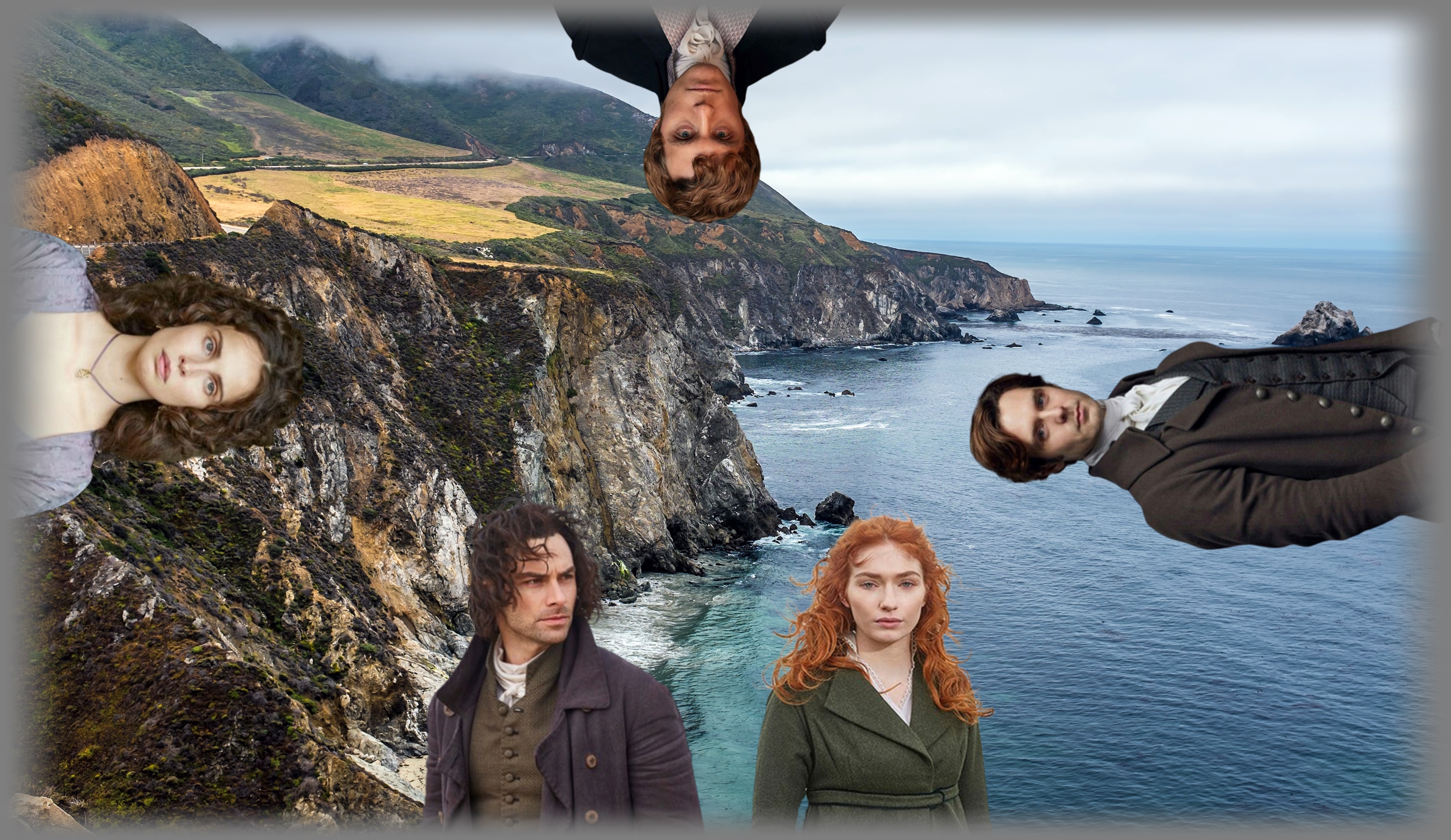
The series finale of Poldark ends, as Ross turns away from Demelza and boards the ship to France, to spy for the British… “I will return,” he says, his devilish grin belying nothing.
It’s likely he will return, albeit years older, in the inevitable sequel which will pass to the next generation of Poldarks, assuming both he and his friend Dr. Enys survive their foray into French espionage.
In the finale, George sees the ghost of Elizabeth once last time. Her back was turned as she entered Trenwith, even as George departed his adopted home, perhaps forever. For me, this was the nod to the sentiment of the series. It’s inescapable that some of the show is indeed soap opera-ish. Almost 90% of all the plot twists could have been avoided if people simply communicated directly. On the other hand, this sort of logical human discourse would make good drama impossible.
The actor who played Poldark in the original version of the series in the 70s made several appearances in this series. Poldark’s horse Seamus has its own Twitter account. (Yes, really.) If you want to visit Trenwith, it’s Chavenage House, in Beverston, Gloucestershire. If you were confused by the layout of the surrounding mines, villages, and towns, don’t be: in reality, they are not proximate. (And Poldark didn’t travel everywhere via the coastline and cliffs, as the series would have you imagine.)
Like Elizabeth’s ghostly return, the rebirth of another Poldark storyline is inevitable. Everything rests on the shoulders of the writers who can imagine the full world that Poldark brought to us.
The series finale is a call to remember that the principal characters will carry on, even if in our imaginations.
All of our stories must end in a predetermined conclusion. Drama, laughter, and finality.
May this serve as a tentative ‘goodbye’ to the series. I will miss the show, but certainly not the hat.
I am certain that another line of Poldarks will live to remind us what we found so sublime and delightful in this series. I’m predicting that they’ll find another unnaturally good-looking actor to serve as the focus of the revival. Don’t bother calling me, BBC One. I’m busy.
.
*I was hesitant to post this. People tend to jump over subtlety and substance by unforgivingly bringing their own observations to things unsaid.
On a recent Wednesday, in a town which can be found in several states across the South, I entered a local eatery to pass a bit of the time away from the blistering reach of the summer sun. I gladly surrendered in the fight against it. I could tell that the little place was a hub for all manner of necessary human activity: gas, small groceries, food, and tobacco. The place was packed with smiling faces, each focused on satisfying their hunger.
I went inside, ordered a bit of deliciousness, and sat down at one of the dozen rectangular white tables scattered on one side of the convenience store. It wasn’t my intention to get another bite to eat. I’d already had lunch across the street. Overcoming the scent of the food filling in the air, however, was impossible for a man of my age and girth. Bacon and butter are my beloved enemies.
I casually watched through the glass as a young mom ignored her little daughter as she strained to reach over into the ice cream case. Her short arm stretched, and her fingers moved like scurrying spiders in their attempt to reach the unattainable buckets of ice cream. Her brother watched from the opposite end of the case, undoubtedly anticipating that she’d either reach the ice cream or fall into it. They were all behind the ice cream case on the employee’s side. The mom looked up and noticed my gaze. Without hesitation, she turned and struck the little girl forcefully on the back. It seemed like an instinctive reaction to her guilt at being observed. The girl shrieked in a small voice, and the mom grabbed her by the nape of the neck. The scream died. I could tell it was a long-rehearsed dance between them. The young mom then looked to her right, toward a stern older woman with a scream of a ponytail at the other register. It turns out that the young mom was an off-duty employee of the store, there to feed her four children. The old lady with the austere ponytail was undoubtedly the young mom’s boss. I later observed the family huddled around one of the tables, each devouring their pieces of chicken as their fingers became increasingly greasy. Watching little kids lick their fingers in deep appreciation is one of the minor joys in life. The little girl didn’t seem to recall being hit like an approaching tennis ball. I silently hoped that the hits weren’t frequent. I could easily see how much the daughter loved her mom. I hoped she could maintain that love as she grew.
Atop the ice cream case was a placard, one of those telling the world that the owners love their god and country, stand for the flag, and for anyone who felt otherwise, they should use the door as quickly as possible. I had a feeling that many visitors of different customs or appearance had seen the placard through the years and winced, many of them understanding that they weren’t welcomed there and were simply tolerated for the purpose of commerce. There’s no nuance in such signs, even if the owners believe there is. It’s the equivalent of a harsh, angry shout; this world needs more whispers and gentle examples of encouragement.
It wasn’t until I noticed the placard that I questioned much of the content of my experience there. My eyes wandered around the store, finding confederate flags in more than one place. Such flags are not a guarantee of other sinister inclinations; their presence, though, tends to accompany such attitudes. People can fly confederate flags and be good people. I’ve learned that the combination seldom proves the exception, leaving those without prejudice to be lumped in and suffer with those who use the symbols as shortcuts for unforgiving opinions. It’s unfortunate and unfair for all of us. Each of us in our own private lives tends to embrace ambiguity and understand that people are a spectrum of conflicting ideas.
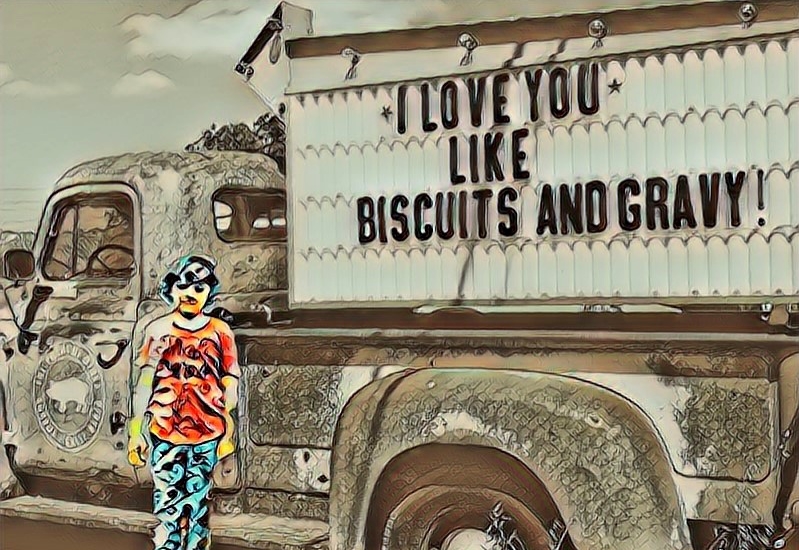
Inside the store, the air was thick with the scent of biscuits, gravy, and fried chicken. While I was inside, there was a constant, impatient line, slowly shuffling forward, and the tables were filled with people, each bubbling with a conversation. Unlike my adopted hometown, there were no faces of other color or snippets of foreign languages. There was no rainbow there and no spectrum of humanity. Once noticed, such absences are hard to unsee. There should have been other faces, though, because despite the small-town population, there were industries and occupations which were comprised of a majority of minorities. I was curious to know where those people enjoyed their lunch. I would describe the mood of everyone as happy and concentrated on their own bit of life.
Because of the recent tragedies, many of the conversations were about guns and violence. I could hear two distinct conversations ridiculing those who wanted things to change. The conversations merged into one, with the participant’s voices rising in volume. We all became involuntary listeners.
At the furthest table, a man in overalls and a plaid shirt leaned back and cocked his head toward the bulk of the tables and said, “Ain’t no one here going to disagree. Not in this town. We love our guns and those who don’t can leave.” Even though I was in a distant place, I laughed, the kind of raucous, loud laugh that makes my wife cringe sometimes. The speaker looked toward me with surprise, probably in an attempt to gauge my allegiance. Externally, I looked like them. Maybe my bright purple laptop case signaled a departure. Nothing else about me raised suspicion that I might differ strikingly from most of them.
The loud-voiced man’s false bravado revealed his temperament, one not accustomed to nuance or differing opinion. It’s a common affliction in places where the realm is small, and the courage to speak up is often swallowed to keep the peace. I doubt he was actually as harsh as the situation implied.
“You think they should take our guns away?” He challenged me. Several people turned their heads to look in my direction. I could see the owner standing next to the food counter, waiting to hear what foolishness would jump from my mouth.
All I could think to say was, “If you drink and can’t stop yourself from driving, you should lose the privilege of driving. But I don’t know who ‘they’ are.”
An older woman wearing a bright red shirt seated with two very young kids said, “That’s right!” as if she were in church and reciting a well-worn and enthusiastic “Amen.”
The original speaker abruptly leaned forward again in his chair as the conversations in the room went momentarily quiet. He wasn’t expecting a response to his oration, especially to encounter disagreement among his own tribe. Each table resumed speaking in subdued voices. I’m confident that several people were wondering how a traitor like me had entered their eating-place without being noticed. Truthfully, it gladdened me a little bit. I couldn’t get the smile of satisfaction off my face. The old lady who had invoked the informal amen smiled back at me and nodded.
Regardless of our individual opinions, each of us continued to eat our delicious food. Differences over guns seldom distract those with fried chicken on their plates.
A little later, I listened as the owner pulled up a chair and sat at a table nearby with one of his customers. He smiled and exuded friendliness. After a few seconds of listening to his conversation, I realized that the smile was a little forced. He had a lot to say about guns and the attitudes recently expressed in his eatery. I tuned him out. It’s unwise to strive to overhear words that you know will only serve to bait you toward a base response. We all vent, sometimes to the point of letting our mouths outrun our honest hearts. I’m afflicted with the tendency too. It would be unwise for me to paint him in a situation where one’s self-defense mechanism might override his ability to express himself honestly.
Not all the signs and symbols for these places are visible. That ideas and differences weren’t welcome somehow pervaded the room, though. The divisive placard on the ice cream case didn’t help much. Each of us loves our lives, our friends, and our families. Most of us appreciate our community. We don’t need code words or exclusion to feel like our lives are full. When I departed the store, I noted vehicles with confederate flags and harsh bumper stickers with rigid, us-vs.-them messages. Strangely, people don’t stop to think that at a certain level, we are all ‘them’ to other people.
The smell of fried chicken and gravy should be a sign of welcome for all those who appreciate a full stomach. Such a thing is a unifier, drawing us to places where each of us brings our differences and yet somehow joins in the spectacle of community.
If I could, I would ask the owners to remove their placard and relics of the confederacy. I’d ask them to instead let their smiles and kind words serve as both example and proof of their living creator flowing through them. The placard and things like it can only serve as whistles of perceived prejudices. Armed with love and fried chicken, it’s difficult to imagine a divided world. We preach our best sermons by example. I think that so many people feel cornered into a defensive position when the world stops seeing that everything is intertwined and complex. Except for love, few ideas worth fighting for can be encapsulated on a bumper sticker, placard, or t-shirt.
It is possible to love your religion and customs while also openly loving other people’s opportunity to do the same. Acknowledging their choices in no way denigrates your ability to live a good life in the way that you see fit. Only when we demand allegiance to our choices does our society suffer.
Let the chicken and gravy be sufficient to unite us.
We live in the United States of America, a place where all of us have an equal voice to be as proud or as ignorant as our own hearts require. There’s room for ignorance and intellect on all sides in this crowded room of togetherness. Let the best argument always prevail, though. Losing respect for the best ideas leads us all away from the truth and fried chicken.
All those in agreement say either “Amen,” or “Fried chicken and gravy.” They both come from the purest of hearts.
.
This picture is of my brother, me, mom, and dad. I’ve written before how ambivalent I am about this picture. On the one hand, I’m glad that the picture exists. On the other, it is horribly misleading because it might convince bystanders that we were a happy family.
Before highway 412 modernized us, we intimately knew highway 68. Before its expansion and encroachment all along the yards lining it, it was a typical narrow road passing through NWA. It was a vital artery connecting the small towns that dominated our corner of the state. It’s “Old 68” now, truncated and lost to failed bridges that isolate it from its replacement. I once knew parts of the old 68 with precision. There were many times I would ride back to our home with my drunken dad, praying to the silent god who presumably watched over idiots like him. On the other hand, I knew such hopes were truly childish because Dad had killed a cousin of mine in a DWI accident. This knowledge invalidated the whispers of hope I had. Sometimes I’d pray for a horrible crash to engulf us and put an end to the uncertainty; other times I’d wish to just get home in one piece.
The land over on the far side of Tontitown was simply beautiful. I find myself forgetting this at times. Rolling hills, thick trees, creeks crisscrossing where the land permitted, and open expanses of fields filled the area. For the most part, property owners weren’t aware of kids traversing their land. As long as we respected their property, those that were aware simply chose to ignore us as we did what kids do best. There were times where we’d set off walking and have no idea where we were heading. Chiggers, mosquitoes, and snakes often accompanied us. When you’re young, you assume that such things are a required tariff in order to enjoy life.
Because my family moved more often than a pack of unwanted nomads, I lived in Tontitown more than once in my youth. The first long stretch followed our trailer in City View Trailer Park in Springdale burning down, rendering both at least 100,000 cockroaches and us homeless. We moved to the western fringe of Tontitown, near the bend where the new 412 first veers away from the original 68. When 68 was rerouted and renamed 412, it cut across Road 852. Technically, it wasn’t and isn’t Tontitown – but everyone considered it to be so. It was not too far from the infamous and now-defunct Blue Hole swimming spot, home of the coldest water imaginable. When I was young, I didn’t even realize that Blue Hole Road was a real name.
We moved to Washington County Road 852 to stay with Leta, the widow of a paternal cousin. Dad had a penchant for sleeping with a variety of people, and choosing from the woodpile didn’t deter him. It took me several years to pinpoint precisely how Leta fit in the family tree. Her husband, my dad’s distant cousin, had died a few years prior. Leta had an interesting life, and despite all the other surrounding confusion, I now know that I would be fascinated if I could go back in time and have an adult conversation with her. She wasn’t a warm person; on the other hand, I didn’t understand how much of an interruption we might have been to her life.
I’ve written before about the place being the perfect alignment of isolation, anger, and addiction. Highway 68 ran across the north, leaving the land below it pristine and only accessible through a complex series of dirt roads. I was in 7th grade, and because of the fire, I had lost everything. The house was small, and even the so-called bedrooms were nothing more than imaginary boundaries inside the old house. We all shared one bathroom and a clawfoot bathtub. Ancient box fans provided most of the airflow into the house. The outside of the house was covered in tan brick-theme tar paper, similar to what was commonly found in the area where I was born. While we lived at Leta’s, Dad spent time filling the inside of the house with dark paneling. We shared one console television in the living, very close to the front door, connected to an old tv antenna outside.
My parents often fought, as they were prone to do regardless of the impermanence of their residence. My dad had several affairs, including the notorious relationship with Leta who owned the house. The adults around me drank more per capita than any household in Tontitown. The alcohol-fueled many days and nights of violence and terror. It also sometimes granted us too much freedom. At times, I forget that because Leta worked at the Venetian Inn at night and Mom worked split shifts and unusual hours at Southwestern Bell, our presence at the house overlapped in a crazy Venn diagram.
As much as I vilify the players in the drama in that period of my life, I am the first to admit that there were some spectacular adventures. The geography allowed for us to trek miles in several directions, to explode a ton of fireworks with a total disregard for human safety, fire a variety of pistols, rifles, and shotguns, and to escape the lunacy the adults brought to the table. I could go outside and climb on top of the barn past the gated fence, or if I was really ambitious, crawl up onto the roof of the house or clamber up one of the ten million trees. The house also had a simple covered front porch, bordered on one side by a massive pile of firewood. We dreaded the surprise announcements that we were going to have to help our Dad cut firewood. I have an entire book of stories about some of those mornings. I could sneak away across the barbed wire and read, as long as I could suffer the bugs and snakes inhabiting the area. It was at Leta’s that I found her copy of “Your Erroneous Zones” by self-help guru Wayne Dyer. It was a revelation and seemed to describe an attitude and life that seemed impossible. I could take my french horn down into a dense valley and sound like I was summoning the Valkyries. It was possible to walk and fill oneself with many grapes picked off the vines or find patches of blackberries thick with both briars and berries.
At night, the area seemed to revert to a time centuries ago. Dark was genuinely dark, and animals of all kinds inhabited every nook and cranny of the fields and forests. There was a couple of times that my Dad forced us to walk across the darkened fields and leave proof of our visits inside an abandoned house, once part of a now-forgotten community. My cousin Jimmy was unnaturally afraid of the dark and everything it might contain. We were more afraid of my Dad, though. One of those forced walks in the dark is now one of my most cherished memories. The house stands epically in my memory and its silhouette is still etched in my mind and often used as a comparison to measure foreboding. Had my parents been more normal, it could have been a paradise. My appreciation for the land of that area has only grown as I’ve aged. The land owes me no apology for the people who stained its beauty.
As much as I knew about the area, I knew much less than my brother who had more friends and didn’t hesitate to go out and work in the grapevines or tomato farms. When the trailer burned, it burned my connections to the friends I had at City View. Sometimes, though, old friends, especially my brother’s friends, would visit and the shenanigans would commence. There’s a reason we universally look back and hold dear those memories of such adventures. They encapsulate so much of the joy of being a boy and having the freedom to experience small pieces of the world.
We often had mega-barbeques, fish fries, and feasts. They were raucous affairs, of course, and many ended with fisticuffs, shouts, and blood-soaked shirts. On one occasion, the party ended because my dad threw an entire box of ammunition in the wood fireplace in the living room. I took advantage of those times by eating barrels of salad soaked in Viva Italian dressing, or bag after endless bag of Venetian Inn salad and rolls. Leta worked at the Venetian Inn and brought home a treasure of food from there each day she worked. I, of course, loved pasta. After eating several miles of it, though, I usually opted for endless salads. We would walk the long dirt road home, rain or shine, from the nearest school bus stop up near Mitchell’s service station. (Those walks home after school would dissuade anyone from choosing a large band instrument to learn.) I’d often eat a king’s meal of rolls, salad and sometimes 2 or more chicken breasts. I could make a pot of coffee and drink it all. I sampled a variety of wines, too. Leta didn’t mind. She knew that we were going to be unable to overcome our curiosity. Don’t be too concerned about the bit of wine. I had access to unlimited alcohol and a few drugs, which didn’t interest me.
I’m only reminiscing because one day not too long ago, someone online answered a comment about that area and Brush Creek, which lies not too far away. Another commenter mentioned the massage parlors in the area. It made me laugh, reading the comments of those who claimed they were all fables and made-up urban legends. Where men walk, you can be assured that vice follows.
For those who don’t know, Tontitown once harbored several houses of ill repute, stills for moonshine, and a bit of weed for those wishing to find them. It’s topography made it ideal for concealment while also not being so far out of the way that it was prohibitive to find it. The hills and hollers made intrusion unlikely. Not too far from where I lived out on the dirt road, one of the residents had a decent plot for marijuana growing, with a water well off the road, powered by an illegal electric connection that was off the grid. He resembled the actor Brett Gelman if he never shaved. He also looked exactly like Leta’s son, who was the personification of an ex-Vietnam hippie. Leta’s son struck me as crazy, but he was always kind to me and talked to me like an adult. I remember once when we drove to Timbuktu to visit him, and he was in the front yard, totally naked, taking a shower under a hand-made system of water hoses. It was hilarious.
Even though the accusation will make some people defensive, many of these unsavory places were known to law enforcement. I’m not alleging conspiracy, of course. People do crazy things often enough with the necessity of making outrageous claims. Someone I know very well loves telling the story of her dad, who was a Springdale policeman at the time, giving protection to someone involved. My dad was known to payoff DWIs under the table, not to mention bribing people to look the other way. It was common. I’m not telling the story to paint someone negatively; it was just the way many things were done. Monroe County, the place where I was born, was a significant conduit for all manner of vice, too. Everyone knew it. Dad had a temperament and way of finding the most clever places to get into trouble. “Friends in low places” would describe his circle. Regardless, though involved in the shady businesses never interfered in other people’s business and expected reciprocity in return. Minding your own business granted every mutual safety.
The massage parlor sat near 68, hidden in plain sight in a nondescript tan trailer. There were, of course, no signs or indications that nefarious goings-on could be experienced within. I used to amuse myself by imagining that some industrious and brazen entrepreneur would put up a huge flashing neon sign indicating “Sex Shop” near the place. Google Streetview hasn’t visited the road in over ten years. I know that many people got lost looking for the massage parlor because I remember Leta and others telling stories about the faraway neighbors getting late-night knocks on their doors, demanding to be let in.
Because Dad would drink to excess, he would mouth off, often without realizing he was spilling the beans. One evening, he had driven by the trailer with his bottle of Evan Williams between his knees. “That place will make a man out of you,” he said, as he punched me on the side of the head. I don’t remember why I was in the cab of the truck with him. I would choose the bed of the pickup even during a lava storm to stay away from Dad when his mood could shift.
Sometime after, Dad had pulled in to the small driveway next to the trailer. I was surprised because I was in the back of the truck. Dad’s dog Duke and I remained in the back of the pickup. A little bit later, Dad came out and proudly drank some of his whiskey and coke and drove home. I overheard him talking about the place to more than a couple of people.
It took me a bit to connect the dots. There was a cookout at Leta’s one Sunday, and someone said something about the convenience of having a massage parlor up the road. Mom threw her cigarette at the person joking about it and then hurled her half-finished beer into dad’s face. She shouted her favorite “MoFo” curse repeatedly as she left. (Many get-togethers ended that way.) Dad didn’t rush after her as everyone expected. He drank until the sun descended into the valley before reminding Mom of how dangerous he was. I don’t remember whether I cowered out of sight or managed to escape outside and down the road or through the surrounding landscape.
There were times when Mom would drink and then decide to go hunt for my Dad. She’d drive by the Red Door and all the other usual places that might contain him. I think after finding out about Dad’s presence at the massage parlor that she always took a moment to look over the area around it in hopes of seeing his truck. I’m not sure how many times I was forced to prowl with Mom. I do know that she had no business driving most of the time.
Or being married, now that I think about it.
I’m not sure how long this particular massage parlor stayed in business. (Long enough to increase Dad’s chances of getting his head caved in, though.)
If you missed it in a previous post, we moved after Mom discovered that Dad and Leta had been having an affair for a long time. I found them together one night, which is why I can state with such certainty this isn’t a figment of my mom’s fabled anger and imagination. Weirdly enough, we moved to a place very close to where I now live, to a tiny trailer on the road that would one day become part of the Don Tyson Parkway. That place was indeed a crucible of violence. Mom knew that Dad was unfaithful. Proof of it, though, inevitably started a predetermined sequence of weekend tirades.
Now that I know so much more about Dad’s inability to behave like a normal husband, it would be interesting to know whether Mom would kill my Dad after learning the new information. The breadth of my Dad’s infidelity goes much deeper and further than I suspected – and that’s quite a feat.
I have several stories that I’ve never told. Some of my reluctance arises from the involvement of other people who still walk the earth. While it is my right to share these stories, I’ve not done so because some of the unflattering biographies aren’t entirely in my control.
I don’t have a great record of our time out there on the western edge of Tontitown. I’ve mentioned before that my family simply didn’t own a camera. We relied on others to document our lives. There are pictures of our time there, but very few.
.
.
.
P.S. I wrote this story without stressing the storyline. I didn’t know how to create a central theme, so I didn’t. The story and words stand ‘as is;’ take from it that which you will.
The picture is one I took in 2006 after the house in Tontitown burned. I haven’t lived there for almost 40 years. It’s an unimaginable and detached amount of time. The inset picture is of me from around the time I lived in the house.
This picture is of Uncle Beb and my cousin Jimmy doing the Hambone dance. This picture shows the corner of the house that’s also in the picture of the house after it burned. You can see the wilderness near the road in the background.
This picture captures a common activity: everyone armed and shooting. My Uncle Bed, Uncle Buck, dad, and my cousin Jimmy. In the right circumstances, these gatherings were joyous.
The picture in the first comment is a picture one of my dad. He’s three sheets to the wind. He’d just rolled his beloved truck down into one of the deep hollers near our house late at night. He was oblivious that night. The aftermath and days after were violently unpleasant.