Very few people know that the word “villain” originally meant ‘farmhand’ or ‘villager.’ It doesn’t take a genius to figure out how the word morphed from descriptive to pejorative.
Our language is riddled with words that are based in class and hierarchy, which fascinates me.
I’ve always been interested in the pretentious rigidity some people judge language, both grammatical and orthographical.
It’s all made up. Struggling against it is a loser’s battle.
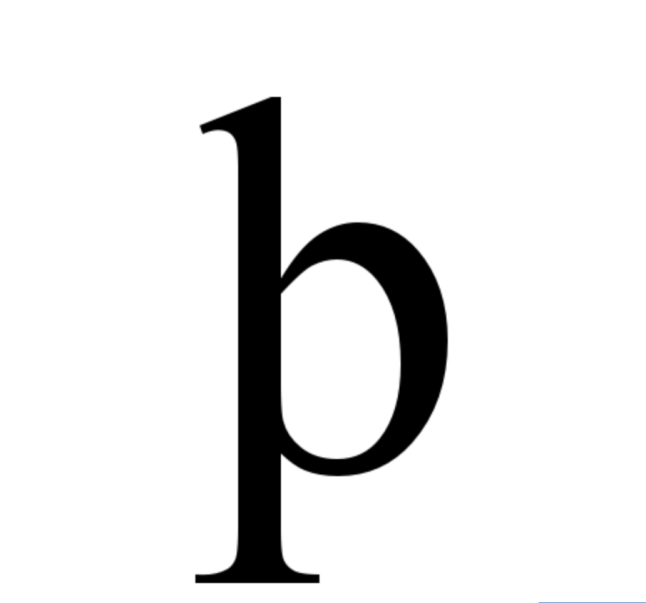
I love that language is messed up. The title of this post is a great example of people openly and mistakenly mispronouncing words. This one is based on the consequences of early printing presses originating from Germany. It’s never been pronounced with a ‘y.’ Mispronounced, though? Yes. Our language had more letters and one of them was the TH symbol which was spelled like a b with a line down the bottom of the left side. Having no easy way to represent the symbol, printers opted to use a’y’ to represent the letter that didn’t exist on their printing presses. And because language is formulated to allow us to decipher visual symbols into ideas and sounds, of course people pronounced it incorrectly.
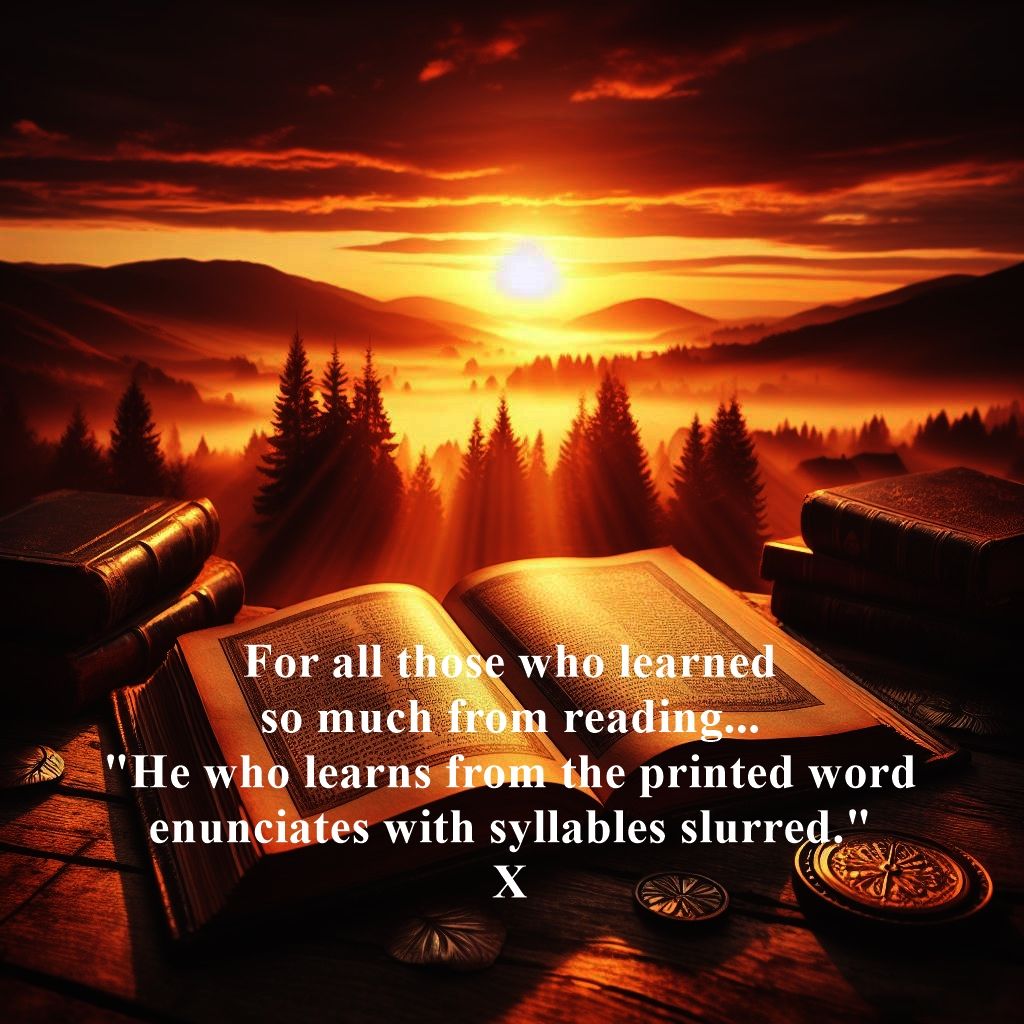
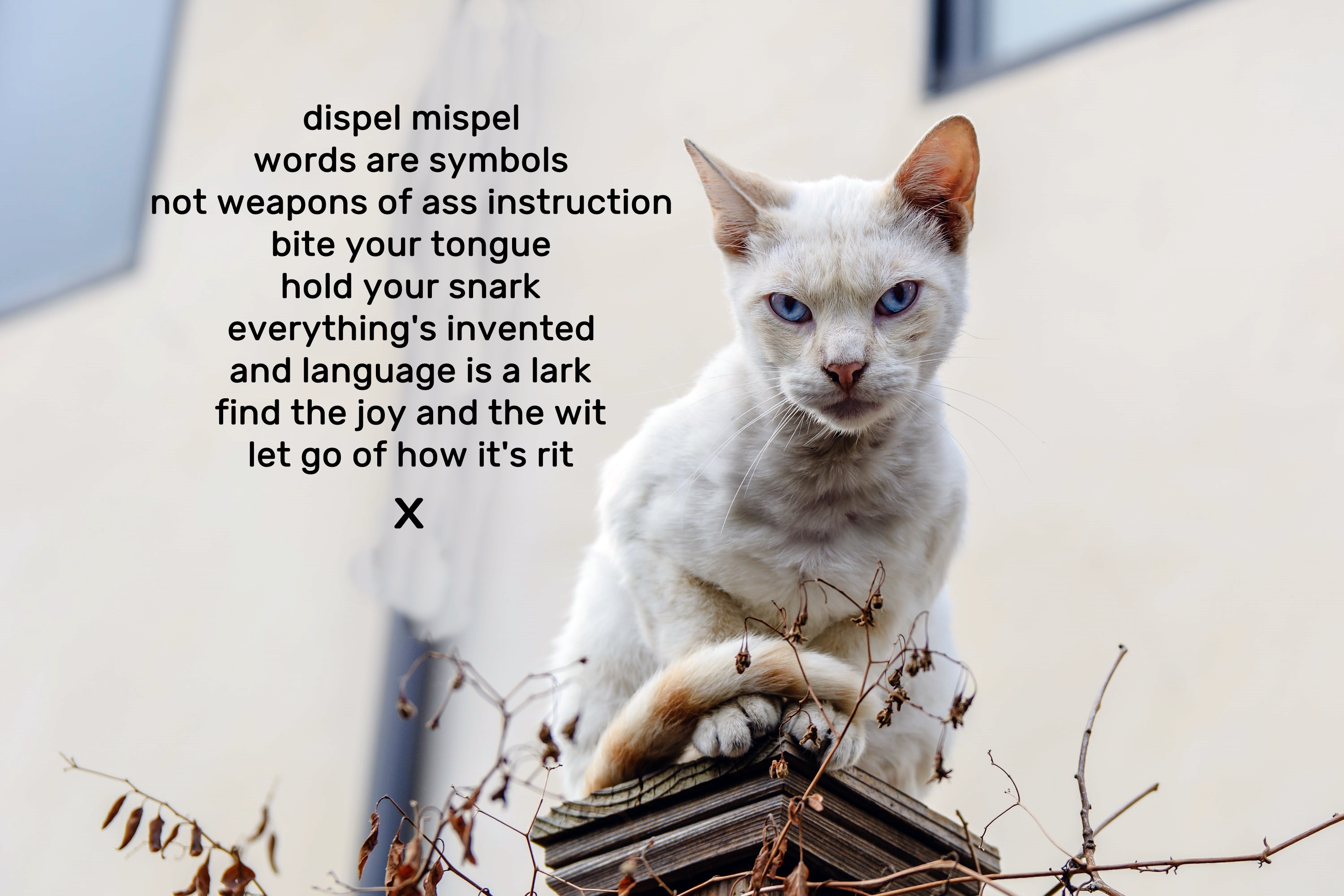
I l-o-v-e hearing words mispronounced. It is usually a sign that someone has learned a word from reading it. I devised this couplet to remind people to encourage language and vocabulary instead of mocking it. English “rules” are arbitrary and devised with no rhyme or reason. We owe it to the stupidity of our language to mess with every aspect of it. Think about the magic of language. We translate little squiggles into ideas in our heads. And then we argue how the imaginary and arbitrary symbols are supposed to look or sound. As I age, my tolerance for supercilious and snarky attitudes has plummeted. Say it wrong. Spell it wrong. This language belongs to all of us. All the rules we claim will one day be meaningless. Since I speak and read more than one language, I am comfortable and fearless in navigating all the errors I make when communicating. Most people are nervous when speaking or writing. There’s no reason to be. No matter how careful you are, you’ll sound or seem a bit ignorant to someone, somewhere. You have permission to break the language. If you run into someone who is a bit of a wet blanket about your right to do so, look them in the eye and say, “I’d like an eXpresso.” And prance away.
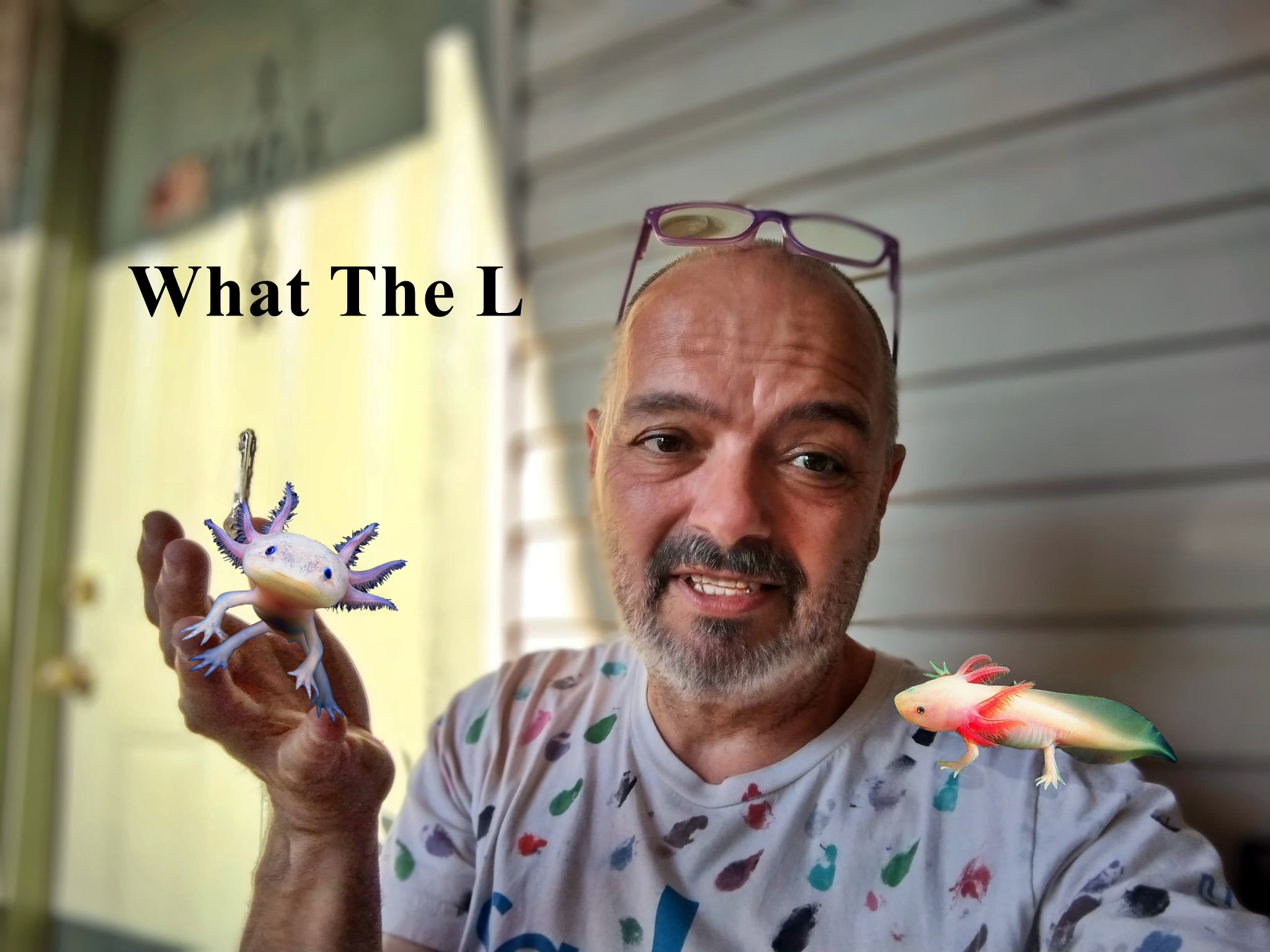
People aren’t familiar with axolotls. (Unless they do a lot of hallucinogens.) They’ve probably seen Pokémons based on axolotls or salamanders. It’s a beautiful creature native to a couple of lakes in Mexico. They have no eyelids, are deaf, and don’t undergo metamorphosis like their salamander counterparts. (Much like incels. PS The word “incel” is a portmanteau of “involuntarily celibate.”) Axolots can be induced to replace their gills with lungs and become land creatures. They also are intensely studied because they can regenerate literally any body part.
The word axolotl is derived from the Nahuatl language. I find this fascinating because it’s the perfect example of people arguing about how to say the word “axolotl.” Most people say “AK-suh-laa-tul.” But that’s not actually how you pronounce the word if you’re saying it like a native. It’s supposed to be more or less pronounced “ah-sho-lote.”
The Nahuatl language considers the “tl” as an odd single sound that’s not comfortable for English speakers. Much like any polysyllabic word for that matter – such as “compassion.”
As for me, I’m not concerned with pronunciation. It’s just another branch of the pointless navel-gazing about language that frustrates me. Language is not static, everyone has their own set of rules about spelling and pronunciation, and it’s idiotic to me to worry needlessly about it. I LOVE it when people mispronounce words, especially when it results in the purists shrieking and running from the room with their armpit hair on fire.
More often than not, the grammar police and purists are wrong anyway.
Noun: A word that describes the feeling that something is about to go miraculously well or so terribly wrong that it might scar you forever.
You can’t step away from the moment, nor would you want to.
Whatever happens, you know it is inevitable, necessary, and life-changing.
You’ll either be fulfilled or left vacantly discontented.
There are words that approximate the feeling, but none capture the personal essence of that infinite certainty that what is about to happen will be a liquid miracle or massive catastrophe. A liquid miracle is one that seeps into everything in your life and finds its way into everything about you: love, an epiphany, the motivation to suddenly just “do” the thing that you couldn’t do before.
The risk of love, the birth of a child, surgery, or the moment when all your reasoning collapses and your course of action becomes a decision rendered as involuntary action and certainty. It is a surrender to the idea that you don’t have control of the outcome.
You’ll be changed forever.
You want it and fear it.
Because our language is entirely invented and arbitrary, I have as much ability to create new words as anyone. Words are what we say they are, just as love and happiness are. I’ve always been fascinated by words and language – and especially the absence of any controlling factor to create and use them. The Dictionary of Obscure Sorrows made me realize just how ridiculous our defense of grammar and etymology is. I will put a link in the comments to a TED talk by the creator of that fascinating idea.
PS If you find yourself in a crux moment, one in which life will either reward or bash you for having the audacity, please remember that you might as well fall or jump into the opportunity. Ask.
“Life is exactly like wanting to go for a ride and jumping on a bicycle with square wheels.” – X
Think of the name “Dr. Seuss.” Pronounce it in your head.
You’re wrong. Almost everyone pronounces it wrong.
He took the pseudonym from his mother’s maiden name.
All his close friends and family pronounced it to rhyme with “Joyce” or “Zoice.” If you are saying it like “Soose” or to rhyme with “Zeus,” you’re wrong.
There are multiple reasons why Dr. Seuss went along with the mispronunciation. You can look it up if you’re interested.
You’ll also discover the heart-breaking suicide of his first wife. She knew that Dr. Seuss was having an affair with one of her best friends, while significant health problems were affecting her.
Not that I ever get writer’s block, but he’d sit in a room of hats and try one on to stimulate his creativity.
Depending on whom you ask, he might have coined the word “Nerd” in his book, “If I Ran To The Zoo.” That book is no longer printed, among several others, for reasons based on perceived prejudice. He also wrote and illustrated a book for adults about seven naked ladies.
“Green Eggs And Ham” was written on a dare that he couldn’t write a book with fewer than fifty words.
“I wrote a few children’s books. Not on purpose.”Steven Wright * “Writing is a socially acceptable form of getting naked in public.”
Paulo Coelho (one of my favorite quotes…)
*
There’s no question I’m a writer. I’m not a paid writer; at least not much, I should say. I don’t monetize my blog, despite sometimes getting a lot of traffic. People drive by train wrecks, so attention isn’t always to one’s benefit.
Whether I’m a good writer is in the eye of the beholder.
More specifically, even Stephen King or Pat Conroy have detractors. Some people like steak with ketchup, others prefer theirs rare and bleeding.
“The road to hell is paved with adverbs.” – Stephen King
Someone recently critiqued me, saying that I am the Thomas Kincade of writing. They didn’t mean it as a compliment. (Kinkade died from alcohol and valium when he was 54.)
I took it as a compliment in the sense that he found a way to live while doing what he loved. The rest of his life wasn’t so golden. For some, his work was seen as overly sentimental or garish.
After I wrote this, someone asked me to add, “You’re the Earnest Hemingway of bullsh*t.”
I love writing, even as I bedevil people with my imperfections and shotgun-style of sentimentality and offbeat humor.
I know it’s not for everyone. Nothing is.
If you hate the way I write, I rarely take it personally.
There is a magic, though, in knowing that anyone is hearing my words in their head as they read. For a moment, I’m connecting directly to another person.
This is one of the strongest powers of writing, the internet, and social media.
As technology advances and reading for pleasure declines, connections to other people always have value.
I hate that a lot of people are nervous about writing or worrying about their command of the impossible rules of English. Writing is communication, not perfection.
When I’m in the zone and writing, time and loneliness dissipate. * P.S. “If you can’t annoy somebody, there’s little point in writing.” ‒ Kingsley Amis
The world is more interconnected than I’d imagine, even though I think about this often.
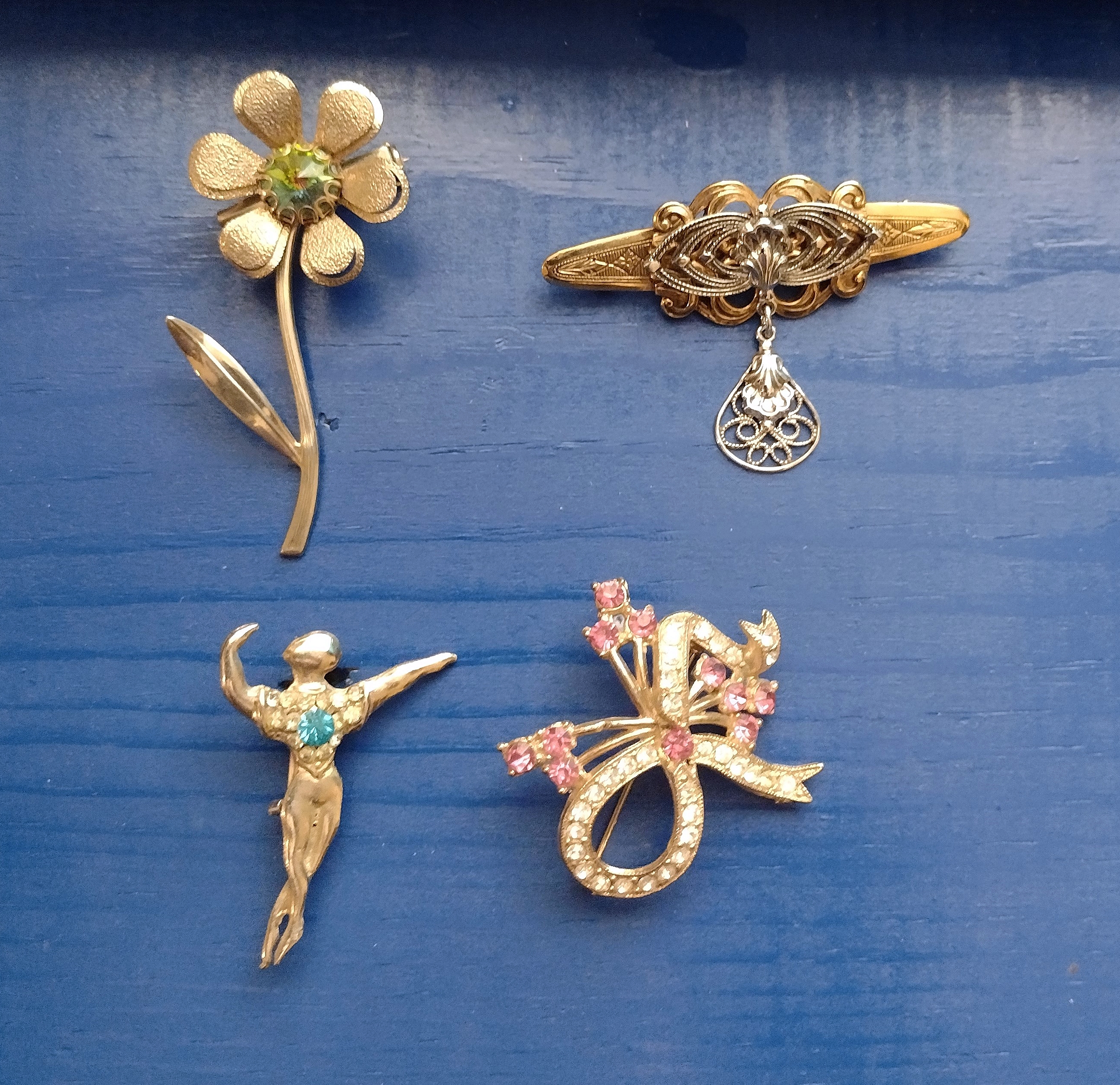
I received a text today: “X, the brooches are 1/2 off. You ought to come and add to your collection.”
Not having a-n-y idea who the text was from, I resisted the urge to reply. Before making it home, I imagined that it could only be one of two places, so I pulled into the flea market parking lot and went inside.
I limited myself to four, although they were affordable.
When I went to pay for them, I didn’t mention the text.
“Hello, X,” the cashier said.
The cashier remembered me, noting I didn’t have a brooch on my shirt today. (I’d forgotten it, along with several other things, even though I had the items next to the door.) I still had on my work badge. It is difficult to overlook the single large “X” on it.
“You can’t beat half off of something you’d buy for full price,” she added.
I told her that I was about to embark on making my own and deciding whether to get soldering tools or use felt and glue. With enough creativity, just about anything can be converted to a brooch or clip.
“But I will still stop by and see what catches my eye. It’s mainly color, of all kinds.”
When I got home, I laughed, realizing that one of today’s projects was painting some long floor tiles cobalt metallic blue. They, of course, aren’t going on the floor. What kind of foolishness would that be? 🙂
Part of my laugh was that it didn’t occur to me to ask who sent the text, or if I had encountered multiple coincidences by picking that particular flea market.
The mystery remains.
And I love that this is true.
P.S. Grammatically speaking, both ‘broach’ and ‘brooch’ are correct for these pieces of jewelry.
One of my favorite people asked me half-jokingly if “heretoforward” was a word. When she used it, I understood it in context.
My short answer to the question? Yes, because it conveyed meaning.
Is it proper? Who cares?
I added it to my dictionaries to ensure I use it in the future without being reminded of some arbitrary rule.
“Heretofore” is a ‘real’ word. It supposedly means ‘before now,’ or ‘previously.’
If that stupid word is a ‘real’ word, then so too is ‘heretoforward.’ English is stuffed with ridiculous words, thousands of them, most of them orphans.
It reminds me of the word ‘overmorrow,’ which means ‘the day after tomorrow.’ It’s a good word, one that shouldn’t have fallen out of favor. If we’re going to use logic, let’s take a hard look at some of the rules we take for granted, especially those which make it hard for regular people to immediately understand how our language can be used. I didn’t put the word ‘properly’ in that last sentence because ‘proper’ is a unicorn.
Regarding language, I am not a perfectionist and certainly not a purist. I like language that breaks things and evolves rapidly. If you search the ‘language’ or ‘grammar’ tags of my blog, I’ll probably irritate you with my consistent message: language exists in its present form because we politely agree that it does. It really is that simple.
You can accuse me of laziness all you want. Heretoforward, it won’t bother me. I’ll be over here doing whatever I want with the language. I won’t stray too far because I’m not writing “A Clockwork Orange.” The point is to convey meaning. If I can do that while causing the purists’ hair to stand on end, even better.
Since I’m helping someone new learn a bit of Spanish, I find myself reminding her that English is a bastard language and trying to impose its arbitrary rules on other languages is a recipe for disgust.
P.S. Commenting to tell me how stupid I am wastes your time, not mine. Ha!


 P.S. Parenthetically Speaking