Category Archives: Personal

Almost a Juror in a Murder Trial in Washington County

20160516_085908


I sat and wrote this mostly in one continuous effort, so please forgive the errors, boredom-inducing commentary, and staggeringly ineffective points. In my own defense, I was around lawyers today. I wanted to get much of this written down while it was still fresh, for comparison after I have time to think about it more. I’m going to leave out details, as some of it is accusatory and would probably get me into some trouble – being honest is rarely rewarded.

Of the hundreds of citizens called for jury duty in Washington County every year, I was one of the few both interested and anticipating the process. Not only does my employer still pay me as if I were working, but the process itself was something I was looking forward to seeing from the inside. I’m one of those rare unicorns who would have loved the experience. I knew that my desire to be called, in conjunction with the lack of legitimate financial or personal reason to not serve, was going to doom my enthusiasm – and not just because that seems to be the way everything associated with the government sometimes seems to work. Lord forbid that people who are both able to serve and interested in service get picked, much less serve on a jury. Somehow, it seems so much less fair to know that defendants and prosecutors are working with citizens who would rather be anywhere on the planet other than being forced into jury duty. I was expecting people to be disinterested, but I was put off by the level of frustration and lack of candor about the preconceptions and misconceptions about crime, criminals, and mental illness from many of the prospective jurors.

After getting the 3-month call of service, several weeks passed without any hint I might be selected. Finally, the call came and I showed up early today at the Washington County Courthouse. Part of the reason to arrive early was to people-watch and to observe the discomfort, nervousness, and behavior of those involved. As I always do, I brought a stack of index cards to take notes – or to take them until someone told me that I couldn’t do so. People laugh at me a lot when they see that I actually do have index or note cards in my back pocket. Even while waiting in the lobby area on the 4th floor of Judge Lindsay’s courtroom with the other 70 or so potential jurors, I wasn’t nervous and passed the time attentively listening and watching. Almost without exception, no one wanted to be there or be picked. Most joked that it was the befitting beginning for a Monday morning. I told several people that I was excited by the learning process – they looked at me with leprosy-filled eyes of suspicion or laughed because telling people you wanted jury duty is so rare that it sounds foreign when spoken aloud. It seemed as if a few people knew what kind of case it was going to be and that it would take a few days if it wasn’t settled. I don’t know how  they knew that or where the information came from. At that point, I didn’t hear them say it was a criminal case, but they did talk among themselves and one of them seemed to be familiar with previous hearings related to the case. One was a female voice seated around the corner to the right. As more people entered the lobby outside the courtroom, it got harder to pick out conversations, especially when the gentleman who works recycling was talking. I mostly stood in front of the glass case (the one with the 1980 Wash. County Bar members pictured) to the right of the elevators, facing the doors to the courtroom and the clerk’s office, basically dead center of all the people, seated and standing. The female deputy was mostly behind me, talking. Her voice made it hard to hear any of a conversation taking place to her right. It seemed like one of the women knew about the case, too, but I didn’t hear the specifics. They were all potential jurors, as they were identified by roll call once inside the courtroom.

When we all were called inside the courtroom, I deliberately sat in the middle, as far up front as possible in the front row, directly behind the defense table. Most of the other people did their best to get away from the action, so to speak, just as happened when we were all in school. The judge caused a murmur, as it turns out the case was for Samuel Robert Hill, a 27 year-old who was initially charged with capital murder and capital attempted murder, back on August 20th, 2014, in Elkins. It was the same case in which his mom shot Capt. Reed of the Sheriff’s office, claiming she thought Capt. Reed was her son Samuel as he approached her in the dark, intent on killing her as she escaped out a window. He’s also charged with aggravated assault due to allegations he beat his wife at another residence before driving over to where he shot his father. That charge will be tried separately and the defense has previously won the right to keep that from even being mentioned at the murder trial. Most people had no inkling they were there for a murder trial, although some definitely did. Since the initial charges, the charges were amended to take the death penalty off the table, as well as for the defense to claim an affirmative defense of mental defect at the time of the crime. With the capital punishment being off the table, I knew I could serve and listen to the law and the instructions related to it. When the judge explained that the capital portion had been removed, there were several verbal exchanges from the jury pool. It was my overactive imagination, of course, but I thought of the spectators inside the gladiatorial stadium.

I was able to sit 6’ from the defense table, close enough to read notes if I had wanted, and also with a clear view of the prosecution table. (I keep seeing the defendant’s unusual tattoo inside his left ear lobe.) While sitting there, I had no memory of the crime as it was described to us all. Several of the jurors talked about having memories, but almost no one spoke up, which is not the way the process is supposed to occur. When I got home and googled it, the fact that his mom shot the sheriff (deputy) (sorry, Eric Clapton…), jogged my memory. I remember people joking about it because it seemed like everyone in that house in Elkins was armed. Being so close, I had the chance to watch the defendant and his two attorneys very closely, see their body language, and watch them as they watch us, waiting to be called up to sit in the jury box.

The elderly lady sitting on the pew with me to my left was angry she was there at all. With the judge’s first question, she aggressively insisted that she believed that anyone charged by the police was 99.99% guilty. I think she meant it, too. The judge dismissed her. Behind me, among the courtroom pews full of potential jurors, I heard more than a few people make comments in agreement with the elderly lady who was dismissed for believing that defendants were basically all guilty. In reality, all of those people should have been sent home, too – but none were. The bailiff and the waiting police officers to my left next to the door undoubtedly heard the murmurs, too. There were several others dismissed as well, following her, for different reasons. Exactly as I predicted, I was picked to be seated among the first 12 numbers called. With the exception of one number, I noted the juror numbers as they were called up before and after me.

From there, it was voir dire, listening to the defense and prosecution ask us a series of questions about our fitness, opinions, and ability to be impartial based on the law and instructions. Since I was seated on the far left of the jury box, I had a perfect line of sight for the judge, defense, and prosecution. I watched all of them closely. The prosecutor talked a long time, much longer than the defense. For presentation and likeability, the defense lawyer John Baker was much more likeable and disarming. The two office workers seated on the other end of the table from the prosecutors were watching more much closely than the lawyers for the state – the dark-haired lady second from the end in particular seemed to have more interest in the proceedings and based on the documents she was holding, already had a good idea who they didn’t want, based our very basic questionnaire and/or appearance. While the judge and lawyers talked to us and asked us questions and explained points of law, I watched the body language of the prospective jurors. I was one of the few people who was in no way bored and felt comfortable being there – and felt okay turning to look down all the jurors who were seated to my right. I made eye contact with the defense lawyer and the prosecutor as much as possible. I could tell that the prosecutor was expecting some surprises in the judge’s instructions, ones that would benefit the defense over prosecution. Remember that the defense wasn’t denying that the defendant killed his step-father, just that he was out of his mind at the time, vaguely speaking.

The defense lawyer specifically asked us about the points of law associated with the absence of the defendant choosing to testify. Most jurors nodded their heads in agreement when he asked everyone if they felt that they defendant was guilty or hiding something if he didn’t testify. Most of the courtroom nodded their heads in agreement, whether they were seated and waiting or on the jury. While the prosecution would have tried to get me kicked out, here is what I would have told the defense attorney if he asked me: “No, since your defense is predicated on admitting that your client killed his step-dad, you are also maintaining that he was or is suffering from a mental defect. It would be idiotic to put someone of uncertain mental stability on the stand, even on his own defense, and doubly so if your intent is to get him help.” My answer would have been heard by every potential juror in the room, even if the prosecution would have thrown me out the window. It was truly a lost moment for the defense. What the lawyers didn’t see was what I saw from my viewpoint. Other than the court reporter and the judge, I had a great view of most of the courtroom. I wish they had they seen almost everyone nod their heads in agreement with the idea that a defendant who chooses to not testify is almost certainly guilty. It wasn’t a lukewarm agreement – it was confident and almost universal. This observation added to my premise that they defendant wasn’t going to get a fair review if most of the courtroom basically just agreed that if he didn’t get on the stand, he was lying or hiding something. This right to not testify, despite being described as a right and a point of law, one necessary to be on the jury, was obviously unimportant to most of the jury pool. But it was ignored. To be more specific, I think a reasonable person not involved in the case would have seen this and assumed that the jury pool was mostly comprised of people who could not be follow the law and not draw an inference of guilt or deceit solely because the defendant would not get on the stand. From this pool, though, the jury was chosen. Even if for that reason only, I knew that the jury pool was tainted. That was my opinion – and I was paying attention.

Ask yourself and your friends. I think most of them will say the same thing about a defendant not testifying- and there’s nothing wrong with believing it. Most people will say it is common sense and the way it should be. But as a point of law and for being chosen to sit on a jury, you shouldn’t serve if you truly believe that a defendant is lying because they invoke their right to not testify.

Since my group was the first seated, I knew most of us weren’t going to make it. If you’ve never witnessed voir dire and the juror questioning in smaller trials, it is important to remember that while each side has a certain number of strikes and challenges, the truth is that in the beginning, both sides almost never challenge the opposition if you don’t both call the same jurors out. It is only during the latter part of the juror voir dire system that the defense or prosecution starts trying to fight to keep certain people on or off the jury. A murder trial has larger implications and I knew that both sides were going to play it safer and then dig their heels in. Seeing the jury, I knew that, in general, older white males weren’t going to fare well during selection, for example. Older people in general seemed to have made up their mind.

After the initial presentation by both the defense and prosecution, both went up to Judge Lindsay’s bench and the clerk turned on the static generator for the intercom, presumably to mask the sound. There were a couple of problems with this, though. First, the courtroom is very small and even despite my old ears, I could still associate sounds with lip movements. Second, I also had a great view of the prosecution table. Third, it is easy to understand words in context and in this case, one commonality for all of it was that almost every comment or sentence started with the word “juror,” then “number” and then the juror number. Keep in mind that with the exception of one juror on the panel, I had noted on my note card the juror number for all of us. (That juror was a young red-headed female,  who was asked to leave when she said she couldn’t get past the grisly nature of the murder.) The judge almost immediately interrupted to tell the courtroom to be quiet so that the two teams and he could hear other. The net effect of his asking for silence resulted in me being able to hear and/or ‘see’ every juror number being called, including mine. I leaned to the older gentleman on my right, telling him that both he and I were being excused. “What did I do or say?” was his demeanor to my comment. He told me that they probably would have excused him anyway if they had discovered he was a pastor. He could see my note card with juror numbers on it, in two rows. No one had ever said I couldn’t note juror numbers – or anything else for that matter. He had his cellphone in his front shirt pocket so I asked him what time it was. I had heard 3 phones ring while seated in the pews, either softly or vibrating. The bailiff and court personnel didn’t seem to notice. A lot of jurors had cellphones, something that probably was a bad idea.

According to my count, only 4 remained. The judge called out 3 names, and the rest of us were excused. I’m not sure where I counted wrong, but it wasn’t too far off, given the circumstances. Even though I estimated 70 people had been called to the cattle call, I also realized that they were going to encounter some issues later in the day as they attempted to fill 12 seats and 2 alternates. I also predicted that juror selection was going to take much longer than anticipated. What troubled me is that I had already seen and heard a lot of evidence that jurors weren’t exactly being honest about their foreknowledge of the crime, their attitude about mental illness, their attitude about the defendant needing to testify, and the presumed guilt of someone being charged for such a crime. Nothing about it seemed fair or impartial. I was surprised that it wasn’t obvious to everyone else. It wasn’t just because I had been paying careful attention since I entered the building. It seemed like that sort of thing was commonplace and almost expected. Were roles were reversed, I would have asked these questions: “Did any of you overhear people before or after y’all were called in talking about the case? Or do you think you did?” “Do you know of anyone who might have used their cellphones inappropriately?” The latter I would ask after each round of jurors.

Were I ever charged with a crime, or a close family member, I would not want the kind of indifference or lack of transparency from most of the jury pool. It is not what we have in mind when we think of a fair jury. After thinking about for a day, it pisses me off a little.

As we went to see the court clerk to get a note of excusal, I told the youngest excused juror at the desk he would have never made it past a defense challenge, anyway. As the clerk asked for my information, I went through the process of repetition of my name a couple of times, as I well know how weird it is. The gentleman who I had told that he wasn’t going to be picked then said, “Oh, that’s what you meant about your name.” I told him that the two sides were working on incorrect assumptions about people and their biases – and that based on what I had just seen and heard, that the defendant’s affirmative defense of mental illness was going to be ignored and that he would be found guilty without being able to invoke mental illness as a defense.

PS: After the clerk gave me my notice of excusal, I lingered in the outer office by the unattended desk for a long moment. I pulled out my wallet to put the notice away and as I did, both the defense lawyer and the prosecutor came out the courtroom inner door and stood there talking, where I could hear them.  After the prosecutor asked, “Are you sure you don’t want so-and-so on the record?” I also used the bathroom on the 4th floor before I left, as the judge had given the remaining potential jurors a short break so that the two lawyer teams could confer. The bathroom had about 15 men in it, basically every male called to jury duty who hadn’t been excused.  Here’s what I heard: “God, how boring!” And, “I hope they don’t pick me.” Or, “He’s not crazy.” Another guy waiting in line answered him by replying, “He’s got to testify!” “Did you see that tattoo in his ear?” (I don’t know if it was a tattoo, just that jurors called it one. And I had seen it up close while seated behind the defense table.) Followed by commentary. As I was leaving, another guy pointed out that he couldn’t go through the entire week like that.  These people are among those I left behind me in the building, almost certainly some of whom were going to be chosen to sit in judgment. I’m sure there are some lessons in there somewhere, or criticisms of how things work. I heard other commentary, but I am omitting it on purpose. Looking back, I think that several people would like to forget that they talked that way, especially those chosen for jury duty. Their disinterest and disdain for the niceties of law and mental illness will be fogged by the spectacle of the trial and their own specific renditions of their memories. Collectively, though, I wouldn’t want such a group to be the one chosen for me or my family if we are ever charged with a serious crime, especially if we are guilty. I mean no disrespect toward them as individuals! But to deny a lack of enthusiasm or to deny that you already had intense preconceptions which could seriously impact the trial goes against what we shared in moments and commentary.

Edit: I’m adding a few details a day later, and I’m not too sure I should include it, because it seems damaging to bring it up, but it is bothering me. I don’t want to get called to explain or to try to remember faces with some of the commentary I heard. Some of the potential jurors definitely had previous knowledge of the case – but didn’t mention it during questioning by the judge or the attorneys. Some jurors didn’t believe that mental illness was ‘real,’ or shouldn’t affect being found guilty, no matter how crazy they might have been when they commit a crime. This goes in direct contradiction to what we were told to consider, especially by the defense lawyer. I’ve been wondering all day just how many people with those attitudes made it on the jury – I’m sure some must have. It is part of the reason I predicted yesterday that the defendant’s mental defect defense would be thrown out completely by the jury. From my experience, I’ve found that people are mostly not receptive to mental illness reasons for behaviors, including crime. I’m certain that this carried over and contaminated the jury pool, as people just weren’t being forthcoming. I don’t want to say ‘dishonest,’ because everyone believes they can overcome bias – even when it is invisible to them. Just as people know they can’t go around justifying bigotry, they also can’t go around saying socially unacceptable things about mental illness or the legal process.

The prosecutor made a point to describe in detail the necessity of using our common sense, but to follow the points of law over our our misconceptions and preconceptions. Overwhelmingly, I think this contributed to the direction of the jury. Because if you feel that those who don’t testify are guilty or that mental illness isn’t a real defense, you aren’t going to let facts confuse you out of continuing to believe them. The deck was therefore stacked before one word of testimony was uttered.

(Also, without being too specific, it would be wise to not let people use their cellphones, as you can be certain that despite being told not to do so, people are going to google the trial or crime as soon as they think they have privacy. FYI – for anyone over judicial proceedings such as this one. While I wouldn’t want the scrutiny, I’ll edit this comment to cover my specific situation. Most of the potential jurors had sat through a LOT of advisories, questions and warnings about what to do or not to do about the case. After my group was mostly excused, that left around 30-4o potential jurors, all of whom now had heard specifics of the case. They are then given a break. As you would imagine, all of them had cellphones. How many of them do you think used their break to look up the background of the case during that break? How many saw the parts in the news accounts that weren’t allowed to be brought up in trial, such as the allegations that the defendant had beaten his wife prior to killing his step-dad? If they did, don’t you think they would talk about it, given the chance? How many of those people ended up on the jury? Don’t you imagine that people using the stall in the bathroom succumbed to curiosity and looked it up, despite being warned not to do so?)

After leaving the 4th floor bathroom, I went directly out of the building and made 5 or 6 index cards full of notes, some long, some bullet points to jog my memory when I would write a recap. I stopped before I got home and did the same again because I had accumulated another long list of ideas and questions I wanted to try to incorporate. Most of them I’ve added either that day or a day later. I softened my language because I don’t want to be judgmental and I don’t to be second-guessed or questioned. My goal wasn’t drama or blame, but they are side effects.

So, even though I would have worked to listen to instructions and to be attentive to the law, I would like to say that the defense team made a horrendous error by eliminating me from the juror pool – or at least an error by not fighting for me to stay there. Unlike many of my other counterparts, I wanted to be there and had looked forward to the process of several days of a trial. And while I am unabashedly liberal, despite my constant humor and irreverence, I would have relished the chance to listen. Absent the threat of capital punishment, it would have been much easier to listen and help people decide.

The defendant is going to be found guilty and his affirmative defense of mental illness will not sway the type of juror that I saw to be remaining.

I’m not making this prediction based on points of law or familiarity with the case notes – quite the opposite. But I went in there early and dedicated my time to practice human observation. I wanted to watch people, to listen to them, and be part of the process. While I was excluded from the trial, I cannot understand how anyone will be surprised when the defendant is found criminally guilty. I would have been an ideal advocate for the idea of ‘preponderance of the evidence.’ Unlike a murder charge, using an affirmative defense of mental defect doesn’t require the same burden of evidence for the defense. In other words, it’s easier to achieve that point. I would have listened closely, but I also don’t have – or hide – a disdain for mental illness that many other people do.

Most of the witnesses for the prosecution were police. The defense already stipulates that the defendant killed his step-father. In this context, the truth is that the prosecution wants to color the scope of the proceedings by bludgeoning the juror with the brutality of murder. And it will succeed in this case. I’m certain that the most of the jurors will not be able to separate the criminal act from the separate issue of mental defect at the time of the crime. Most people wouldn’t, and that is exactly why the defense did itself a disservice by not fighting to keep me on the jury for trial. I could already see that the crime details were going to be presented harshly – as they should be, except with the net effect that people would rather not let someone off if such a crime had been committed.

Again, I know it sounds whiny to complain about not getting chosen for jury service – and not only because it sounds crazy. It’s because I can see the path already chosen by what happened today. Should I charge someone a lot of money for this type of insider observation?

Or I can just wait until the next time when I get called and my enthusiasm has turned to apathy or hostility toward the process? The only question I was asked directly was basically “If you hear rumbling, hear drops hitting the roof, and wake up to the ground being wet, what happened?” My answer “Precipitation.” That’s it. Despite my sense of humor and mouth, I didn’t say anything crazy – because I literally said nothing.

I didn’t say or do anything provocative, even when the prosecution talked about motive, intent, and mind reading. In short, I was a great candidate for jury service, just as were most of the people who were excused the same time I was. On the surface, I was perfect for both sides. Yet, I was excused for reasons and criteria not observed. In other words, invisible evidence or ‘feelings / instinct,’ the very things both sides said should in no way be allowed into our minds during the trail. 9 out of 12, or  75% of a representative cross-section of this county was excused for no reason whatsoever, for criteria which cannot be measured or observed.

Even though I was in a very small group of people who wanted to be called, several of those dismissed for no reason were irritated at their dismissal. They didn’t want to be there, but they didn’t really expect to be told “go home” without cause. The prosecution had said “Don’t take it personally” at the early stages. How else can it be taken? Each of us were eliminated for reasons we will never know, or for no reason at all. That’s not the kind of legal system people are going to rally behind. They feel like they were accused – although of what, they can never know. In my case, I heard many reasons from other jurors why they shouldn’t be a part of any jury process – but almost certainly were.

What was it I heard while standing outside the courtroom waiting to go in? “Great. What a waste of time. 12 people too stupid to get out of jury duty.” It’s a cliché, of course, but it took a different twist after experiencing the process.

It is strange for me to go into a process that is universally disliked or perceived to be negative by almost everyone – except I went in with an unnaturally positive outlook. I don’t mean to come across as negative about the day or experience, but it had a big dose of everything I had hoped it would not. I learned some things, many of which I would have rather remained ignorant about.

I’ve made my prediction and I would love to be wrong. But I see it coming. Their is no way the defense is going to get an impartial trial for a mental illness defense. Too many of the jurors weren’t forthcoming about what they knew about the case or their attitudes about mental illness and the defendant’s right to not take the stand. If he truly was ‘crazy’ at the time, it won’t matter because based on what I saw and heard, the jury pool mostly already had their own ideas. I wanted to call the defense team and tell them that they were fighting a losing battle. I told my wife more than once that the jury had no intention of following the evidence or the law from the outset of the jury selection, much less the trial.

And the process of jury selection failed to eliminate those who shouldn’t be seated to hear such a case. Or maybe I’m stupid – maybe all criminal trials are conducted that way – with a veneer or process and pomp but concealing deep conflicts.


Regards, X


Oxfam Report: Give Us A Break

Oxfam Poultry Practices Report

.
I am putting the link to the Oxfam report on practices in the poultry industry in the comment section, as well as a couple of others. It’s a comprehensive report across several states and companies. This isn’t a hatchet job from a single source– it is a serious reminder that many people are treated with inhumanity in some industries. I challenge anyone with an opinion to read the report in the link in the comments. For anyone who has worked a production poultry line, I am certain that you will be nodding your head in agreement while saying, “No Sh*%, Sherlock.” If you are in poultry management, it will piss you off because you either agree that it is inhumane or you will disagree because you will claim the issue doesn’t exist or, at least, isn’t as bad as some would have us believe. If you believe the latter, cash your check and ignore me.

For those working production lines, especially poultry, this report highlights the ongoing substandard practices found in many poultry plants. I’ve written about it many times.

I don’t want to hear blanket objections such as “But it doesn’t happen at my plant.” If it doesn’t, that is great news – and I mean that. In your case, the bad managers or companies are harming other companies in your field.

I’ve witnessed the type of inhumanity described in the Oxfam report. People were denied convenient access to the bathroom or were arbitrarily delayed. Production speed and cost vs. efficiency factors directly affected the staffing levels needed to give safe and necessary bathroom access. Did people suffer and sometimes urinate themselves? Yes. It may be going on right under your noses, even at your plant, where you think it doesn’t happen. In line production jobs, the odds are greater that people are made to feel bad for needing to go to the bathroom. “Hold it or else” can still be heard echoing the plant’s lines, in various languages.

The lower on the socioeconomic rung you or your job falls, the greater the chance that you are faced with the need to go to the bathroom but don’t have permission. If you’ve never worked in such a position, you are lucky. For politeness, I refer to ‘peeing,’ when in reality, who among us has not intestinal cramps so bad we couldn’t stand up, only to run for the bathroom before defecating ourselves? All of us – because we are human. That’s how people end up standing in production spots with urine or worse trailing down their leg. Of course they are ashamed and afraid to talk about it.

Being bilingual gave me a much better insight into how systemic and pervasive the problem was. Most of the poultry industry is minority-staffed and this reality distances the owners and managers from those doing the work, both in economic overlap and language.

I often give companies the benefit of the doubt, despite continuing to hear bathroom horror stories from many people. I still hear stories of people being denied bathroom breaks or being made to wait. The same factors from my past still affect human beings working in the poultry industry. Reports such as this one remind me that companies will all too often lose sight of the humanity of those doing the work.

Again – I am not saying ALL poultry plants operate this way, nor any specific one, local or distant. I am saying that it is still widespread. Further, I knew some great administrators and poultry managers who would say they never condone denying people access to bathrooms. Likewise, I knew that bathroom abuse was happening at their plants, on their watch. They would never believe it, even today. The people they trusted to run their plants felt like making people feel like they were not entitled to bathroom access was saving them money and that it was the right thing to do to perpetuate a system that humiliated or denied people the right to bathroom access; a necessary evil, if you would like to call it that. Regardless of whether the corporate offices or plant management know about unsafe and inhuman practices, the truth is that the entire company culture is their responsibility. These types of practices don’t become common unless cost is stressed at the expense of intangible considerations, including the human impact. If you can’t make a profit without doing things like those described in the report, find another business.

It costs money to operate production lines. Staffing to allow a human being to step off and go urinate, take their medications or do necessary bodily functions of course has an economic impact. We all know that if companies could engineer a way to mechanize all the production elements without people that they would do so. Until they do, however, it is an ethical and moral obligation for the company to honor people’s humanity and not only condone bathroom access, but to acknowledge and embrace it. Avoid the reputation of behaving like monsters and encourage training so that everyone from the production workers to the plant managers must structure their processes in such a way as to ensure that people aren’t standing in a line peeing themselves or being made to feel less-than-human because they need to step off their production spot to relieve themselves. One story of a grandmother peeing herself because she couldn’t get permission to leave her spot is one story too many.

It is such an obvious thing to say that I get angry writing it. If your mom worked at a poultry company and she said that her line supervisor laughed at her for asking (or begging) to go to the bathroom, I am sure that your first impulse might be to remind them via knuckle sandwich that your mom is a human being who needs to go to the bathroom when she asks. Would you be surprised to know that some production keep track of how many bathroom breaks you need – and would reprimand you for violating their arbitrary number? Is once a week too much? Once a day? If you’ve had nothing except jobs which honor your humanity, this will sound like a bad movie script to you.

Imagine all the times you went to the bathroom during the last work day you had. Imagine this: no matter how bad your need, imagine that you worked with hundreds of people and that you had to wait for someone to give your permission and replace you when you needed to go. Now imagine that instead of seeing someone walk up to you and allow you to go, that they called you ‘lazy’ and told you that you had to hold it an hour until the next line break. Or that you had to beg and provide intimate details of why you needed to go. Or decide whether to go without permission and risk losing your job. Now imagine that your mom, wife, or sister had to hear that kind of horrific inhumane response. That scenario is reality for a lot of people.

Kudos to those companies which don’t denigrate people like this. Shame to those which still do. I don’t doubt a single word of the Oxfam report.

When asked about the Oxfam report, many of the CEOs and marketing departments of some of the poultry companies were “outraged,” and “will be checking on the veracity of these reports.” Dear millionaires, can I save you some time? Call me. Of course this craziness is still going on. Not because some report says so. It’s because the people working on the line jobs at your companies say so, day in and day out. The reputation of line positions isn’t accidental. You’ve created it one bad incident at a time.

I put it out of my mind as I’ve moved on to jobs which aren’t monstrous in this regard. I still hear stories, though. And I read reports such as the one I mentioned. I hear it in English and Spanish.

Countless times people have asked me, “How do I find out if these things are true?” It’s strikingly simple, even for management. Find the lower-end employees, the ones working sanitation and production jobs, the ones with mops and knives, the ones speaking Spanish or other languages. Stand around them, listen, and ask questions. Listen again. Then ask them a question like this: “Is it common to be denied access to the bathroom?” All of them will tell you, “Of course.” That’s a problem. It’s a human problem aggravated by a profit motive.

Those doing the work experience the reality and consequences of cost control over humanity more directly than anyone else. If you can get them to talk, listen. And treat them with respect. They are doing jobs that we won’t, all so that we can eat the things we want to.

My food tastes like garbage when I think that people were treated this way in the United State while they were making my food. Raise the price of your product if you need to, if it allows people the right to behave and be treated like human beings worthy of respect for their biology, if not their humanity.

Lives on The Line Link


Lives On The Line Full Report

Humanity aside, if a company perpetuates an environment wherein treating people like this happens, what do you imagine is ‘really’ going on in the production and food safety side of the equation?” – X
PS: I started writing this yesterday, after seeing it on a “Southern Poverty Law Center” comment. Within 60 seconds of me posting this, someone who knows me well had tagged me on social media on another site to draw my attention to it. That’s how much this issue bothers me.


About Pictures…

memories


As important a moment as a wedding might be, it is a singular event, out of focus when compared to the bulk of one’s life. Weddings are rare May snows when silhouetted against the millions of daily moments that comprise the range of our lives. It’s easy to be joyous for a wedding. It’s much more difficult to live a good life without at least some pictures that bring us back to moments of turmoil or indecision. Weirdly enough, we mentally fog them over much of the time, allowing nostalgia to cloud our recollections of pain, struggle, or loss.  Our minds revere the ability to discolor our past in an emotionally satisfying palette. A good picture taken even in circumstances of unhappiness can later paradoxically bring us peace and joy.

Sifting through boxes and albums personally assembled by someone is an invitation into their private life. Whether selected photos are chosen for strategic intent or personal worth, they are placed there with care, as significant slivers of that person’s life. Each picture is a moment someone thought to capture for future review and reflection. All too often, a picture snapped in haste or humor evolves to become a touchstone memory in someone’s life. A great picture reveals a truth we didn’t even recognize. The things or people we believe to be memorable are often supplanted by memories we simply failed to appreciate as they approached.

After doing many archive projects for friends and family, I continue to find myself confronting the complexity of the people in the pictures. Seeing a person’s life spread out in front of me tends to demonstrate that each of us travels the same byways – and if we are lucky, with people who catch us in moments of mirth.

Quite often, as I am digitizing a picture of another person, I suddenly see that person from a new perspective. Whether it is a moment of coy surprise, insidious delight or unadulterated glee, something in the picture feels alive and spans across the days or decades from when it was taken. I feel like Christopher Reeve’s character in “Someone In Time,” imagining that time is indeed an illusion and some unseen hand has flung open a door facing backwards in time. As strange as it may sound, these moments are profound. For anyone who has never done a project with the photos of a person’s life, the concept might seem slightly doubtful.

In parting, let me remind you to take your pictures and then let them breathe. Share them. A picture not shared is a life unrevealed. Time will brick up your door moment by moment, leaving your view cluttered if you do not reflect back by peering into the individual memories that pictures provide us. Don’t let your life be frittered away by the attempt to simply capture moments – but equal to that caution should be the urge to share and reveal oneself in pictures to those in your life.


A Song I Wrote


I made this strange song. It’s intended to be both metaphor and actual. I wrote the music, added the effects, and decided that a traditional approach wouldn’t work for me.

.
The woman’s voice is that of my mom. She had her demons and those shadows still silently creep up behind me. She was more than what plagued her, as are we all.

.
This is as personal as it gets. It’s not intended to inflict harm.

.
I fully expect people not to “get” it.


Pat Conroy Crossed the Bridge

marsh-1441547333zVr


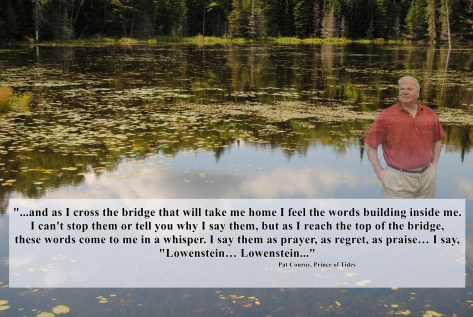
Pat Conroy, one of the best American authors to have ever penned a word, died yesterday. So often did I read his books when I was younger that I imagined grooves were created in my mind, ones filled with lyrical prose, and places brought to life, whispering their presence long after the book was closed. Whether it was in “Prince of Tides,” or “Beach Music,” Conroy knew how to create that echo of resemblance to things both real and imagined, and a desire to live in those worlds. The world has lost something mystical with his passing.

A Shoe Full of Gas For Monday

20160125_134532

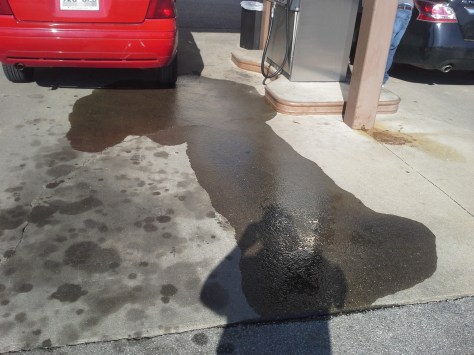
A few things to bear in mind: it’s very warm, very windy, and gas is less than $1.50 today. Those conditions are necessary to help explain why it wasn’t solely my innate stupidity that was at fault. (This time.) I was standing facing the gas pump, with the nozzle to my back and right. As the total cost went over $15, I thought, “Man, that wind is COLD” as the air felt like it was blowing up my right pants leg. Really – it suddenly felt super cold. It didn’t occur to me that it wasn’t the wind. I’m a genius like that.

After a few seconds, the gasoline smell was overwhelming. I looked around and gas was spewing out of my gas tank, even though the nozzle was completely inserted. Naturally, my brain froze, as did my hand. I stood there with a Monroe County look of idiocy on my face – a very common look for me, I’m told. Instinct finally took control and I grabbed the nozzle and shut the gas off. At the same time, I realized my shoe was indeed full of gasoline, and my pants were soaked.

I went inside and waited patiently as the clerk rolled her eyes in irritation at the two younger guys in front of me, who were bickering. Incidentally, they had pulled up to the pump to the East of me and were bickering as they exited their own vehicle. I watched them closely, as they both put on their hoodies, which I find isn’t very smart when entering a store. Honestly, I was wondering if they were going to rob the place. That’s my final excuse for being distracted, by the way: I was imagining robbery scenarios. One’s mind wanders when pumping gas.

When the 2 yahoos were done arguing with one another and paying, I told the clerk that the shut-off wasn’t working properly and a LOT of gasoline had spewed all over me and into the parking lot. Given the eye roll and the way she was sneering at the two gentlemen, I figured it was going to be a real treat to interact with her. I told her in succinct yet precise detail exactly what had happened and that both the parking lot and I were covered in gas. Her response: “Oh great, I guess I will have to go out and put down some cat litter.” That’s it. I gave her a moment, waiting for her customer service skills and training to kick in. When she said nothing else, I told her that I had checked my car and the nozzle and that the shut-off on that pump could not be trusted.

She didn’t have any comment, just a sigh of exasperation, so I departed, reeking of gasoline and my right shoe sloshing from being filled with gas. I took pictures of the spill and told the lady on the other side that the shut-off hadn’t engaged. I took pictures because sometimes the things I do or say are not exactly credible, given my penchant for either exaggeration or outright fabrication.

I stood there trying to decide whether to shed my shoes and socks and leave them there. It didn’t seem like a good option to throw my pants out, either, given the lengthy explanation that would be required by the Springdale police if they stopped me sans socks, shoes AND pants, regardless of how warm the day might be. I knew my car was going to be fume-filled, even though I live very close. I opted to keep my shoes on and to drive home. As I was about to leave, it occurred to me that it might be interesting to watch to see if a clerk would come out to throw chat and/or disable the pump pending it being checked for safety. No one came out while I waited, so I left, my eyes watering from gasoline.

I wondered how big the fireball would be if someone errantly discarded a lit cigarette out their window and into mine as I drove home and whether my wife would see the fireball from the office window.

I called Corporate Offices after experiencing a pang of guilt. I knew I couldn’t trust the clerk and be certain the pump would be put out of commission. The person I talked to was nothing short of exceptional and assured me she was dealing with every aspect of the situation. She and I were both laughing and I lied, saying I didn’t know the name of the clerk. The clerk was undoubtedly having a rough day, made worse by the 2 yahoos who preceded me at her register. If I could tell her, though, I would assure her that my shoe full of gasoline had been the perfect ending to an atypical Monday.

(The picture shows how much gas onto the parking lot, but doesn’t show how much went onto me. The aforementioned yahoos are still bickering before getting into their car, on my right.)


Personal Items Transformed…

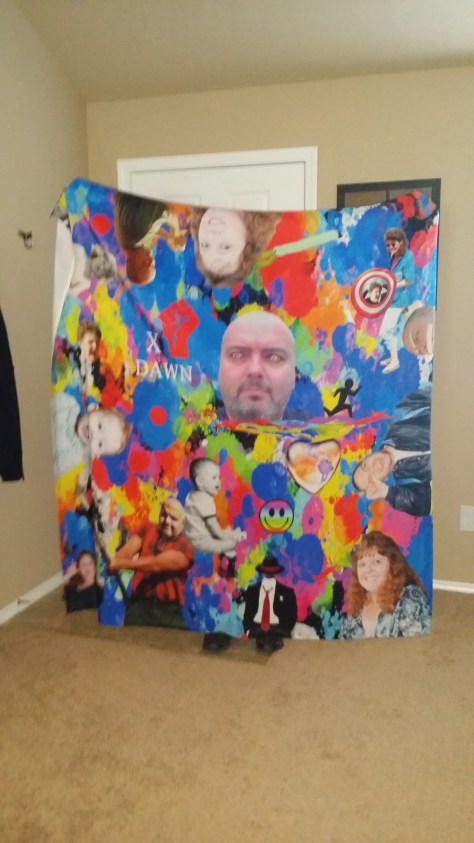
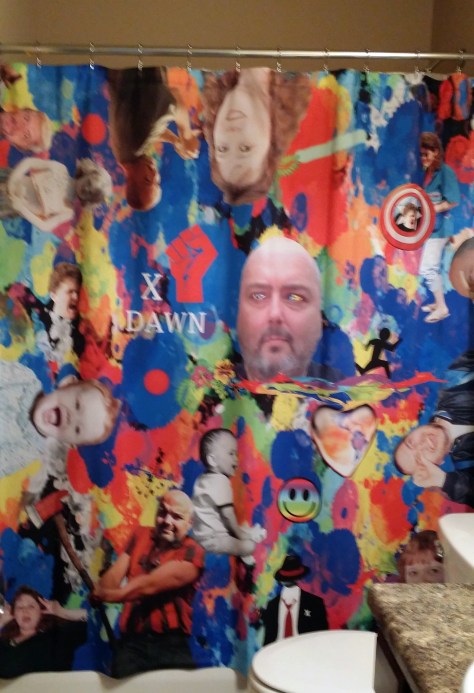
I had a custom fabric shower curtain made for Dawn. It didn’t cost as much as you would imagine, but it totally changes the bathroom. The vibrancy of colors reminds me of Willy Wonka, or what might occur if you let a crazy person decorate your house. One picture is of me holding it up in the living room, the other is after I put it up in the bathroom and the last image is the original image I used to make the shower curtain. There are multiple pictures of Dawn, her sister Darla and me. I think I surprised Dawn with this one. (See what happens when I don’t get to see a doctor? )

shower curtain

shower curtain 01122016 (1)

shower curtain 01122016 (2)

The shower curtain was made by CafePress, who I normally don’t use. The fabric, colors, and quality seem to be fantastic. While most people thought it was creative and really interesting, a few played the ‘creepy’ card, which is a good sign. Playing it safe with personal items is a good way to be boring.

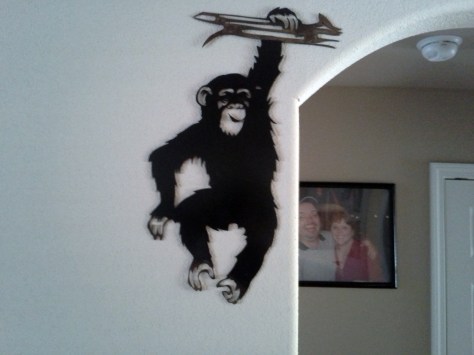
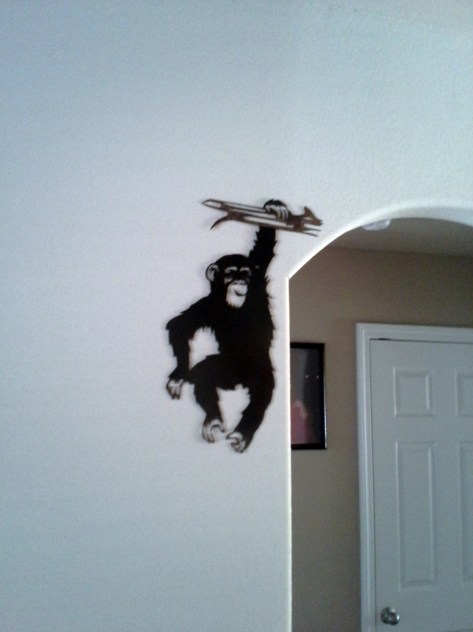
In a weird coincidence, another one of Dawn’s surprises arrived just minutes before the custom shower curtain: a 24″ metal flat sculpture I had someone make for Dawn. I just installed it in the archway coming out of the living room. Dawn likes monkeys and since I couldn’t seem to find exactly what I wanted to get her as a surprise, I had a craftsman make it for me. The pictures don’t do it justice.

etsy monkey sculpture 01122016 (1)etsy monkey sculpture 01122016 (2)


You Might Have a Problem…

contrast-light-from-a-window-1403452662fzn


I’m never going to finish this or be able to cram the six or seven additional stories into the post, so I’m going to just post it, imperfections and badly expressed ideas left to fester.
.
A post earlier in 2015 on one of the “Remember (your hometown here) When?” social groups made me laugh, grimace and ponder more than it should have. Some inconsiderate poster had sidetracked the post with an inelegant and uncomfortable comment about the people in question being racist. (Not about the current people posting; rather, about people of a previous generation many of the current generation knew.)
.
As an inconsiderate poster myself, I understand the issue from both sides. It is a fine line trying to decide whether to voice contrary – or negative – opinion when a chorus of voices is saying the opposite. I am confident the detractor believes she was correct in claiming that someone was racist, especially 30-40 years ago. She had some very specific anecdotes to substantiate her point, too. It was in bad taste to post as she did – but it is a member’s forum and people should be able to post their respectfully expressed opinions. Unfortunately, it also means that they can derail otherwise great memories. However, not everyone shares the same rosy, glossed-over version of our collective memories. Wanting open and honest discussion only when it fits a narrow line of commentary doesn’t help anyone.
.
We all walked the same streets, perhaps, but our shared hometown was not the same in spirit. Our attitudes about those streets are going to vary. It is possible to grow up in a town and love it passionately, even amidst racism or other social issues. Our human nature pushes us to try to make the best of whatever situation we find ourselves.
.
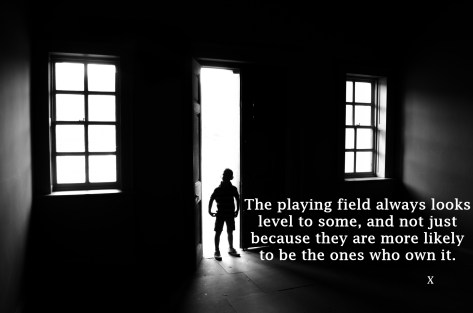
It is a common mistake for those of us who are not minorities to believe that we all experience the exact same reality or that our skin color did not detract or contribute to our lives. “White privilege” is controversial precisely because it pricks at the recognition that we have ideas we hold true which are unrecognizable as truths by those who are different from us. The playing field always looks level to some, and not just because they are more likely to be the ones who own it.
.
One of the regular discussion group members made a generic declaration of this sort: “I’m sure none of us were racist and we certainly didn’t know anyone who was.” Then, people jumped in with the other half of the formula: “If you don’t want to agree with us, go somewhere else with that type of commentary.” Or, “If you don’t have anything nice to say, shut the hell up.” I will agree that it would have been a better choice for the lady in question to skip the commentary – but I am not the person in question and I do not know what prompted the poster to move to action, to cannonball the discussion with accusatory claims of racism. She may have been just stirring the pot to get the Black Sock Mafia in a tizzy. There is a chance, though, that she had suffered directly because of the people of the past in question. I’m not guessing or judging what pushed her to lash out that day. I stick my foot in mouth with such regularity that I can’t legitimately point the finger too harshly at others when they do it.
.
(Sidenote: I was surprised to discover that many regular posters on the hometown group in question were unaware that a companion site almost exclusively for minorities exists – and has more members and participation than the hometown memory group I’m discussing. What a shame that both groups don’t live and interact on social media – or that they can’t.)
.
In regards to the “no racism in our town” argument, I can assure that there was indeed both overt and hidden prejudice infecting the town in question. Racism was a hallmark of youth – and I have stories I love to share. There is a reason that some places still bear the reputation of prejudice today, regardless of the strides made. It is not indicative of how they want to be perceived and I’m not saying it is fair to automatically label anyone from there as racist – that is stupid and unhelpful. The label should only be used where appropriate and not lightly. Like so many important social and civil issues, the people working hard to improve everyone’s lives are striving to get past what happened before, to improve it, and to avoid a repeat of our exclusionary history.
.
(Calling someone ‘racist’ without both strong evidence and a need to do so is no better than calling someone by a racially charged nickname. It is much more helpful to limit one’s critique to the specific words or behaviors, as we all make the major error of adding motive to what we perceive as a wrong action or utterance. People are saying ‘racist’ far too often and without evaluating a person’s viewpoint. I’m guilty of it. Usually, it is more likely the person is just an ass, not that he or she is racist. People lash out in anger and use the hot button words too quickly.)
.
However, speaking from direct personal experience, the towns of my youth indeed had prejudice, and not just the casual “n-word” bombs being dropped with routine regularity. Many whites generally hated minorities. They were vocal about it, at least among people who they believed to be sympathizers. They resented integration, being told they couldn’t call minorities by the slurs they had learned throughout their lives or that as employers they couldn’t treat some people as second-class citizens. If someone had an obstacle in life, it could easily be blamed on minorities.
.
All of these people lived among their neighbors, attending church, running businesses, marrying, and living their lives. Most of them learned to be bigots from their family and surrounding communities. They didn’t ‘stick out’ necessarily. It was not common for them to be forcefully called out on their racism.
.
“It’s just a word. Why is everyone getting offended?” It wasn’t just a word. It was a gateway insult that represented so many worse underlying attitudes about people solely because they were a different skin color. “Well, I wasn’t talking about normal (n-words). This guy is a real (n-word.)” I heard so many versions of that concept. None of them were creative. Whether people want to know it is true or not, if someone is still using the “n-word” in casual conversation (and usually softly or secretly whispered), the chances are that they need to understand that we are looking at them as if their hair is on fire. It’s not the word that is the problem: it is their attitude toward other people.
.
To be clear, I really believe that not everyone who uses the ‘n-word’ is a racist. They might be ignorant or not understand what they are saying, but their attitude isn’t one of denigration or denial toward other people. It’s a small distinction that is often overlooked when discussing racism. People who use the ‘n-word’ tend to be racist, but it is not fair to use a wide brush and label all who use it as racist. It tends to be a sign of poor education or refinement, but most of us can be guilty of that. As humans, we grab the most easily used word, no matter how volatile, to lash out and express our anger.
.
Yes, the racists get terribly angry when their attitudes or behaviors are labeled. Each racist, though, feels that his or her attitudes were legitimately earned and that their conclusions were reached via rational thinking and practical observation of the world. For anyone to tell them that they are both wrong and in need of education is just about as offensive as anything else you could say to them. They are the first to scream “Political Correctness” or to sidestep away from the glare of accusation. They didn’t earn their prejudices, but it is almost impossible to get an otherwise smart person to stop and consider the loose sanity upon which most prejudices are built. Some of the worst lashing out and retaliation I’ve ever seen resulted from people being called out on their prejudices. They do not let go lightly. Prejudices scar people’s self-awareness.
.
We are moving incrementally away from prejudices. It is built into our nature, though, and it takes work from all of us. It is difficult to believe that I once sat as a very young boy with my mom eating soup one night and couldn’t believe it when she told me that integration was so late coming to the place of her childhood. She told me that integration was one of the worst ideas ever devised. She loved it when we moved north, where blacks were a rare presence. When she worked for Southwestern Bell, there were a couple of times she was furious because she claimed that blacks got special treatment in scheduling, promotions, and raises. She blamed them for many of the workplace problems – yet later she was proud as anyone could be when a black co-worker she had picketed with got a huge raise and better hours for all of them.
.
I don’t know how to describe much of her racism. If there was a problem in her life and blacks were present, it often became their fault. If no jobs were available, it was because minorities were taking them all or getting welfare to sit at home. Taxes too high? Deadbeat minorities. And on and on. Ignorance of the world and a failure to understand that people are people and remarkably similar no matter where you find them.
.
My mom was guilty of saying and doing some of the most hateful racist things. Yet, the person she would have identified as one of her best friends before her death was black. Mom genuinely loved her. It’s that type of complexity that proves that people can slowly learn and move away from the idiocy that poisoned them when young. She was still very prejudiced until the end of her life, but the door had been opened. She rationalized it by thinking of her friend as different from all the rest. While I was growing up, I’m sure I heard my mom say the ‘n-word’ at least as often as she said the word ‘hello.’ Sometimes, she screamed it through a rolled-down window or across the street. It made some social interactions interesting, if that is the right word to use.
.
Therein lays the key to surviving all the hate: we are all individuals. Lumping us into definable groups is a shortcut for other goals, but it allows many to point hate toward those who don’t deserve it.
.
There is no shame in admitting that our ancestors were indeed racist. Don’t defend it, call it ‘our heritage,’ or minimize the magnitude of it. The shame is moving forward without stomping out the last vestiges of prejudice or turning a blind eye when it comes out in our modern world.
.
For those who say we should just ‘move on,’ I think almost all of us would love to do just that. But in so doing we have to address the very real shadow on ongoing racism and prejudice. It’s easy for the majority to want to move on, to forget past stupidity and hatred.
.
The towns of my youth were overall no more racist than the average small town in America. I’d like to think most people weren’t racist and didn’t appreciate its presence. Racism was pervasive, though. Insisting that it didn’t exist is a disservice to the past and to ourselves. “The good old days” for many whites do not harken to the same memories as those of minorities. I wouldn’t understand someone who blamed me for the sins of my parents or some of my family. They own their prejudices. I was lucky enough to get past most of it. Not all of it, of course, because racism leaves a stain that tends to inspire guilt or an awkwardness where none should be present.
.
If you aren’t racist, don’t get mad if someone accuses your ancestors of being so – because many were. You’re not responsible for their attitudes. It’s just a fact of history. Our country condoned owning other people, disallowing women the right to vote, rounded up people and put them in camps all because of their appearance.
.
We’re learning and improving as a country and as a people. The world is a much better place now and it continues to improve. I’m proud that we elected a black president. Even though people often get angry when it is mentioned, he wasn’t elected because he was black. He was elected because he was qualified for the job. That’s the way things should work.
.
Don’t get mad if someone reminds us, even inelegantly, that our ancestors were sometimes bastards. We probably believe some things now that will be interpreted as horrifying to future generations.
.
As for the woman derailing the ‘remember when’ post with specific allegations of racism, she only galvanized more anger. Her message was packaged in a way that no one would listen to it. It would be impossible, though, to get her to believe that the stories of racism she knows aren’t true, because many of them must be.
.
The fringe conservative movement of late has emboldened some to be more aggressive in voicing or acting on their racism and xenophobia. At its heart, racism is a focus on ‘the other,’ ignoring the shared human experience we should all be enjoying. It encourages people to jump to unsupported conclusions while fanning the ignorance of distrust and fear of ‘the other.’
.
It’s strange to hear the “n-word” from people I love dearly, or to know that they think less of other humans solely because of skin color. I understand it though. And I see clearly that it will lessen with each generation, unless the younger members of the family somehow immerse themselves in another pocket of prejudice.
.
I know a couple of people who have re-embraced their racist roots and do so because of their exposure to poverty and crime-filled areas. They see symptoms of poverty and crime and assume their genesis arises from skin color. It’s an old formula for social failure. With their prejudices comes the tired anger.
.
I feel sorry for them. Telling them so would only provoke anger and defensive posturing.
.
And so it goes.

A Children’s Book for Xmas

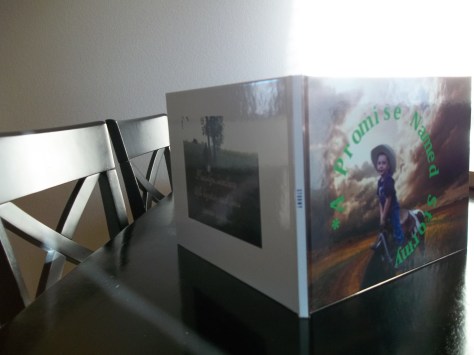
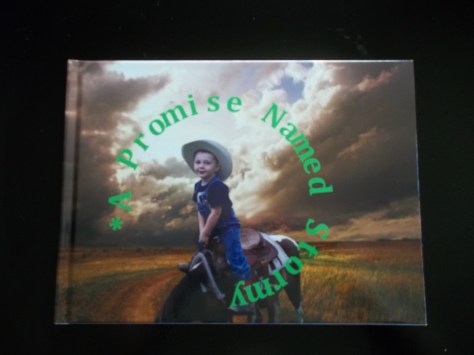
Recently, I finished one of the best surprises I’d made in a while. I made a very basic story book with many edited pictures for a friend’s son. While the premise of the story was religious in nature, really I just wanted to try to make something that might be remembered fondly.

.
After getting all the ideas compiled, I was pleasantly surprised to find out that Snapfish was offering something similar to what I wanted for a steal. I would have paid $100 per book, as I spent many, many hours editing the photos and trying to get the project to fit inside the confines of the finished book. I bought two copies, as I needed to ‘see’ it with my hands.

.
It was a labor of love and it was something that I had a great deal of fun and moments of introspection doing it. I made dozens of pictures I discarded. Toward the end, I realized that I was letting myself get too far astray from the purpose of the story book – and from that realization, it was easy.

text page 4text page 6text page 7text page 10text page 11text page 20text page 21text page 30text page 31text page 40text page 41text page 50text page 51 - Copytext page 60text page 61 (2)text page 70text page 71text page 72text page 80text page 81text page 90text page 91text page 100 (2)text page 101text page 140

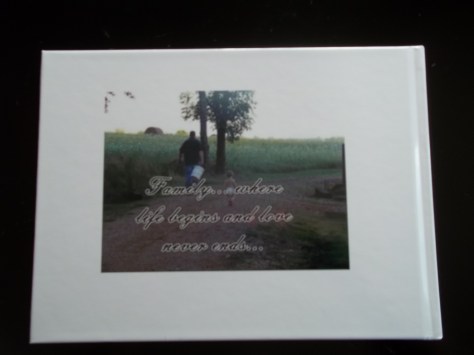
Here are pictures of the book once finished…


1111122222333333

The book was a success with the child’s mom. I had so hoped it would be both a surprise and a treasure. So much of what I do is far from expectations. I sent the extra to her mother, the child’s grandmother, hoping it might be as well-received with her.

From there, I made a video version of the book and made it available to the mom digitally. It too was a success. I used a surprising song to provide the background music: Disturbed: The Sound of Silence.


I Ponder

941529ebe34193af34efb6eccf059a80-horz


I do a lot of searching, either for family trees, yearbooks, missing people, or just plain curiosity. I’ve found a staggering amount of familiar faces in annuals from all over the United States. Usually, I finish my list of interesting tidbits with more questions than I start with.
.
This is a picture of Bill Flanagan as he appeared in the 1964 Springdale High School yearbook. I have three points: #1, he looks exceedingly like Anthony Michael Hall from his younger days in “The Breakfast Club.” (Which is why I paired him with his doppelganger in my picture.) ‪#‎B‬, he is wearing sunglasses in his picture. I’ve looked at hundreds of yearbooks from the 60s – seeing a pair sunglasses is rare. #6, it is possible he is blind, in which case I am more intrigued than ever. (He’s not wearing glasses in the 1963 annual.)
.
The picture is from 51 years ago, so I’m sure someone in my expanded overlapping circles would know someone who knows him. I’ve found a weird assortment of missing people in the last few years. One constant in my efforts is that someone always knows something that leads to the person in question.
.
But his picture is an example of one of those things I’m not sure I want to investigate. I’ve had his yearbook picture for a couple of years. Each time I encounter it, I tend to ask myself why I have a picture of Anthony Michael Hall and then I remember the unexplained picture from the 1964 yearbook.
.
All the stories in my head I’ve created to explain Bill Flanagan’s sunglasses probably eclipse the reality he went on to live. I hope not. I hope his life was absolutely fascinating.
.
His picture from the annual is frozen in time, existing in dusty closets and in the bowels of the internet, maybe forever. I see his picture and wonder about the roads he walked, the people he met, and why he had on sunglasses for this yearbook picture.
.
I prefer to continue to wonder rather than to know, even as I am tempted to find his life story. In my imagination, Bill Flanagan lived a life too full to capture in a synopsis. I hope we all do and that you too find your pair of sunglasses in each moment.

.

PS: I used a weird numbering system to confuse some and annoy the perfectionists.