Category Archives: Social Media

Avoidance

adam-wilson-6UIonphZA5o-unsplash


This is a personal post. It’s not designed to anger or offend. These are just words, written imperfectly by me without a great deal of redaction, except to protect people’s privacy, even when such protection isn’t warranted. For the gatekeepers who inevitably say, “Don’t put that on social media,” it’s likely that you’ll continue reading, anyway. We’re all voyeurs. Surprisingly, our lives are amazingly similar, no matter what veneer we cast to cover our craziness.

On another note, I’m writing this as myself. It’s my story and one that is mine to tell. Anyone who feels they have the right to question the content or motive of what I share should probably put on a life jacket and then go find a lake to jump into.

It isn’t easy to engage meaningfully with someone if you can’t determine if they are connected to reality or not. With addicts and alcoholics, it can be an exhausting exercise in futility to invest your time and energy communicating with them. I’ve dealt with angry alcoholism all my life. I’m still terrible being myself around it – if that makes sense. It’s one of my most profound faults. I know that the only rational choice is to jump away from this type of addiction due to the short length of time we each have to live. Knowing and doing are opposite sides of the canyon for me. I get irritated with myself when I forget the lesson I’ve learned at least a dozen times.

Like most people, I happily find that my phone rings less often. When it does ring, I find myself dreading to know the identity of the caller. If there’s a voicemail, I don’t even listen to it, all due to one caller. The stupidity of it all is disheartening. I don’t want to dread the call.

While it might be an excuse I differentiate between garden variety alcoholism and angry alcoholism. The impacts of the two kinds yield staggeringly different results. I’ve struggled with an abnormal number of angry alcoholics and rarely had issues with the boring ones. I suspect that most people know exactly what I mean, even if they can’t put it into sensible words.

The truth? I can’t stand angry alcoholics. They give regular alcoholics a bad name. Am I kidding? No, not really. I owe it all to the angry alcoholics of my youth. Each subsequent angry alcoholic stupidly things he or she has magically figured out something new or that he or she has everyone fooled.

If you don’t have a daily connection to the world around an alcoholic, as is the case with many of our friends or relatives who are elsewhere, it’s especially difficult to navigate the pitfalls of maintaining a real connection. We all recognize that we lose touch with the essential part of someone’s life and personality in the best of circumstances. Illness or addiction further erodes our connections. You can forget the idea that you can peacefully navigate someone’s alcoholism AND discuss and address their addiction out in the open. You’re going to get burned.

I’ve learned that anyone who can openly discuss their addiction, previous or current, is probably going to do well in life. Those who demand silence are the worst kind of addict. They’ll ruin your life to avoid dealing with their issue.

The very nature of addiction demands secrecy. Once you see past the curtain that addiction demands, everything you see is infected by that peek.

I’ve found myself in that position. I can’t get past the inability to know if I’m dealing with someone communicating with me authentically.

An alcoholic put me in this position last year. Only by accident did I discover that he’d fabricated an elaborate and false narrative around almost all of his life. He’d lost his job, his health, and his ability to be rational. By accidentally comparing facts with a family member of his, the complex web of falsehoods collapsed. It was a confirmation and revelation, one which still makes me feel guilty; initially, it brought up the anger from a few years ago, when the same alcoholic almost caused me to have a literal nervous breakdown.

Those of us with self-doubt don’t respond well when guilt is thrown into the equation. Because of the malignancy of the alcoholic’s need to maintain the façade of normalcy, I even doubted what was plain to me – and my instincts, which have been honed by a lifetime of exposure to such behavior.

The revelations that erupted from the mess changed the way I looked at the last twenty years. It corrupted my memories of anything that happened since I was a child.

When I tried to force a confrontation to get past it, it went to a very dark place. It’s one that I haven’t pulled myself out of in regard to the alcoholic. I spoke in anger – and righteous anger at that. It sounds unfair to say it, but righteous anger in the face of that kind of behavior is the most human response possible.

After a while, another family member of the alcoholic who was my touchstone for the alcoholic’s reality told me that there was no upside to keeping me informed. While I understood the family member’s fatigue of the melodrama that resulted from the collision between reality and fiction, it robbed me of my ability to distinguish the truth. They stopped bridging the connection between us. The alcoholic used deceit and misdirection to avoid real conversations about the consequences of his addiction.

The result of this, however, is that it’s been almost insurmountable for me to talk to the alcoholic, which makes me feel even guiltier.

My upbringing has damaged my patience in dealing with such behavior. It’s easier to stay sane and balanced by avoiding the spectacle of addiction consequences.

If I talk to the alcoholic, I’ve no way to know which parts aren’t true. Given the huge disparity between this,truth and fiction that I discovered last year, I’m convinced I’m still being “had.” While I can talk to the alcoholic, it almost feels like roleplay – and I’m an actor forced to adopt the role that I’m crazy and that the alcoholic is normal.

It pisses me off.

My guilt with the recognition of the abhorrence I feel toward having fake conversations makes me immobile. I can’t call – and I can’t answer calls from the person.

I would love to write the person in question and have him write in return. That option, though, is not available for reasons that don’t make sense. The alcoholic can read and write as an incident involving my blog proved.

So, I can superficially engage while struggling with my guilt and distress, or I can continue avoiding contact. Given that the family member of the alcoholic probably doesn’t want to expose old wounds again, I’m left with terrible options. All of them diminish me and diminish the alcoholic.

Many people, like me, have lesser lives because we’re forced to exorcise people from our lives to live with any joy in our hearts.

It’s an imperfect world.

I sit. I wait. I dread.
.
.

P.S. “Agreeing to things just to keep the peace is actually a trauma response. When you’re doing this you’re disrespecting your boundaries. No more making yourself uncomfortable for others to feel comfortable. You have control now. Use your voice. Take up space and use your voice.” – I close with these words because someone posted it on their social media around the time I was having the most difficulty with this issue. There’s no doubt that these words would evoke an anger response, for reasons that are complicated to explain.
.

 

Don’t Shoot the Messenger

jen-theodore-Yg4BTWOPYO4-unsplash.jpg
Apparently, many Facebook users are unaware that they can easily block messages from a person WITHOUT also blocking them on Facebook.

Think of it as being able to go out and meet a friend without worrying about them calling you at midnight – or when their cat needs a taxi. Because they can’t. That’s how blocking on Messenger works. You choose. You don’t have to rip your phone out of the wall if you’re not giving people your phone number to call you.

Let’s face it, we all have a few friends who can’t resist sending the modern equivalent of chain emails via Messenger. They probably need to read the directions for a box of toothpicks. They just can’t help it. You can’t change them. Others, for whatever reason, seem to be prone to sending viruses to us, or getting hacked/cloned and sending malicious links with titles such as “Video Of You I Found!” or something politically charged like “Obama Killed Your Grandfather” to grab our attention and make us click the link before we turn on our brains.

Sidenote: for those of you who don’t know, it is always wise to start a new Messenger chat by using personal words that inform the recipient that it is from a ‘real’ person, rather than a bot or hacker. Something like, “Hey, this is X. I really like the idea of you wearing a sweater made of pink insulation” will do nicely.

There’s no reason you can’t use Messenger safely. It’s no different than being friends with crazy people. You don’t just yank open your mailbox without listening for a timer in there. Instead of throwing the baby out with the rose-scented bathwater, I suggest a more reasonable approach: block each offender as they send you nonsense, instead of punishing yourself and all your other friends. Get a suspicious message? Get 2,652 gifs that would give anyone a migraine or cause convulsions upon viewing them? Block the person who sent it.

I don’t know how many crazy and clueless friends you have, but I think it would take less time to block each person as they behave stupidly than it would to misuse the incredible communication platform that works on almost any platform or device, from anywhere in the world. We have our problems with social media, to be sure, but most of the consequences are our own fault, precisely because we aren’t using them as intended.

I could be wrong – but it seems like you might be over-reacting or not thinking clearly about how you’re dealing with this.

If you post “Stop sending me stupid messages on Messenger!” the idiots are not going to realize it is them you are referring to. That’s what being stupid does to us. It explains voting, comb-overs, and wearing tight clothing. They don’t get it. Stop preaching to everyone. Target each offender when they send you a message. It only takes once, and you’re done.

P.S. You can use Facebook to private message someone without using Messenger. All you need to do is post and set the privacy control to that specific person. Only that person will be able to see.

And if you’re going to say something ridiculous like, “But something could go wrong!” you’re already using the wrong platform. Something did go wrong. You’re making it hard for the rest of us to contact you when you should be only making it hard for the idiots to do so.

Signed, An Idiot

The “It Is What It Is” Cliché Comparison


jiri-sifalda-qanYic2XMZk-unsplash.jpg

“Truth sounds like hate to those who hate truth” has to be one of the most meaningless clichés on social media. It’s clever, but meaningless, like a quick conversation at the coffee kiosk on an early Saturday morning.

I see it used by fundamentalists, by liberals decrying the prejudices of conservatives, and all manner of people who need a convenient way to stigmatize those they identify as their detractors.

“Any quote, axiom, cliché, or saying that can be equally used by polar opposites is meaningless in all contexts. It is the “it is what it is” of social knowledge.”

The Tenderfoot Allocation Hyprocrisy

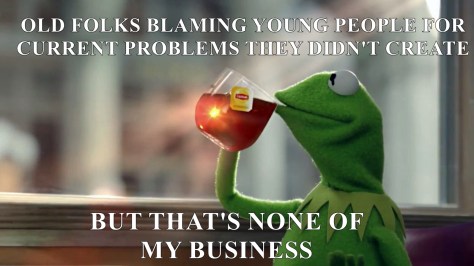
OLD FOLKS BLAMING

A bit over-the-top, stereotypical, and harsh comment designed to derive a rise in people’s blood pressure:

Regarding those “Bring back home economics class so that millennials can actually learn something” memes… Given that 1/2 of workers live paycheck-to-paycheck, I’d say that the problem isn’t young people not knowing how to change their oil, bake a cake, or sew a button. I’d say it’s the majority of their elders failing to understand real economics – or having practical views and solutions for pervasive economic policies that benefit everyone.

The younger generations didn’t get us to here.

We did.

Secret Snark


gratisography-30H.jpg


I have a standing request with my wife that if I do something idiotic, I’d rather everyone know, immediately. Whether I’ve downed six beers and driven my car through the window of a convenience store while not wearing pants, accidentally shot my big toe with a revolver, or erroneously voted for a Republican, I’d rather the information be shouted from the rooftops than whispered in secrecy. If any of my idiocy results in my untimely demise, put it on social media, with pictures. People need visuals to admire while their eyes go wide in surprise, especially if I’m wearing clown shoes and holding a can of Schlitz as I lie in a pile of broken glass and covered in frozen, individually packaged frozen burritos. (Yes, that is an awfully specific scenario, isn’t it?)

Likewise, when I keel over from a massive coronary event, I don’t ask that people say only good things about me in public and whisper, “What a jerk that guy was” in private. Go ahead and load up the insult cannon and fire away. If you know me well, you have permission to share the stupid things I’ve said and done. The truth doesn’t get cremated simply because the sand ran out in my hourglass. If someone asks what killed me, it’s okay to answer, “Definitely pizza and Mexican food.” We all know it won’t be a jealous husband or from jogging too far on a sunny Saturday morning.

If I permit you or don’t, the truth is that you’re going to say those things anyway. You might carefully curate who you say them to, but they’ll come out in small bursts of sharing. It’s what we all do. I ask that you at least be creative. Don’t say, “Man, he could be a real a%%.” Instead say, “Did you know that Preparation H once considered using him as their spokesperson due to his familiarity with the subject matter?” That’s the kind of joyous snark that’s worthy of a person’s life.

No matter how good of a person you are, people have commentary about you, your life, and choices. All of us are misunderstood, and each person in our circle has a different idea in their heads about who we are. We often forget that much of our lives isn’t a result of conscious choice; rather, we’ve careened along in life and allowed circumstance, luck, and chance to shape the sum of our lives. That might be comforting, but it is a conclusion with merit.

Along the same lines, many of us have a closet full of guarded secrets. We think that we’ve managed to conceal them from the world. We may have succeeded to a degree, but people likely know. They might snicker, judge, or even revel at those things. It’s better to stop guarding them and move past them as quickly as possible. We’ve all done some bone-headed things. (Except maybe Josh, but we’ll leave him out of this.)

I would write more, but I have to go pick up my clown shoes from the Novelty Shop.

If I see you drive through any windows, I’ll stop and take some fantastic pictures of you lying there. They don’t call it ‘social’ for no reason.

The Vexation of Remembrance


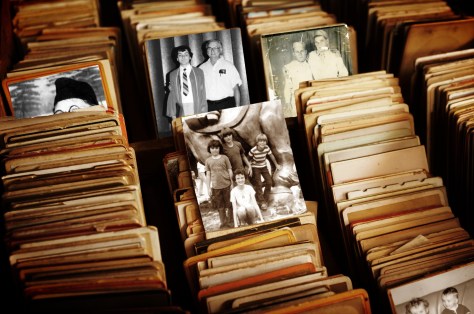
nostalgia bloom.jpg
I’ve used this picture before. It seemed inescapable that I use it with this post, too.


Why does someone share opinions or ideas with anyone? Not just on social media, but in real life, either atop the peaks of success or attainment or in the valley of sorrows? It’s akin to attending a reception where the doorman punches each attendee in the face before entry and then demands $50 and an explanation regarding each attendee’s intentions.

It’s always a risk. There’s always someone fearful of the wrong opinion, a slight to one’s perceived reputation, or of secrets spilling out into the world. No one wants an unfiltered look at their heart laid bare for others to witness, even though the total of our words and actions does precisely that each day that we survive to walk the earth. It’s like a nude selfie after going to a pizza buffet. Our choices are plainly visible to anyone who bothers to examine us.

No matter the depth of gauze you might use to soften your sentiment or words, the truth is that each of us brings our baggage with us – and filters which bend our perception.

A few years back, a local writer who is now deceased saw me use a quote of Anne Lamott’s that I had written about over and over: “You own everything that happened to you. Tell your stories. If people wanted you to write warmly about them, they should have behaved better.” It encapsulated much of the struggle he had endured trying to get his story out without bruising other people’s toes. He read one of my earliest blog posts, one in which I described a discussion I had with a cousin, one who attempted to defend the indefensible regarding my alcoholic and violent father.

The writer fell in love with Lamott’s words precisely because of their simplicity and unassailable truth. He said, “Holy #$%t!” when he read the link I sent him. “There’s no market for that, X.” Maybe not, I told him, but if someone’s writing for themselves, market and reception are distant concerns.

Here’s the excerpt from one of my first, and absurdly long, blog posts:

“…Years ago, a distant cousin in the family (who I will call Tom because his name is Tom) asked me what right did I have to talk about another family member’s misbehavior, especially the things that “ought not to be talked about.” He initially asked me in my Aunt Barbara’s living room. We were standing next to the stuffed mountain lion that stood guard there for as long as I could recall. I asked him where he learned the difference between what should and could not be discussed. He laughed when he realized that he was about to say “from family.” I then pointed out that despite the idea that things shouldn’t be discussed, somehow, through some mysterious force, everyone seemed to know all the deep, dark secrets, just in differing amounts. While probably no one knew everything, everyone knew something. I then went on to say that the things that happened in my life or that were done to me were MY life, too and that perhaps people should stop and think about the things they say and do, or to make amends at the point in their lives when they realized that they might have gone too far. Tom and I talked about dad’s legacy and how he and I had come to the point that dad would have been able to start a new relationship with me, given enough time – we just ran out of road before we could run the race. Tom was surprised that I could talk openly about some of the meanness of my father and still laugh and want to hear stories about the hell-raising, fun-filled dad. I told him that I would have loved for dad to have had a carefree life or to have been able to come to terms with his hateful way of drinking the world away. Mom and dad weren’t huggers, and they didn’t express themselves in tender ways. Had they been merely distant instead of angry at times, that would have been at least a step toward normalcy. I told Tom that it seemed deceptive for the older generation to keep some of the secrets because it kept us from knowing our parents and family fully, whether it be warts and all. I still feel that way. Tom walked away with a new perspective about me and certainly a different one about my dad. It was the first time he talked to me as an adult, and it was the first time that it sank in that the behavior that Tom loved in Dad from a distance also made him a monster to me, his son. I remember asking Tom whether it was a bigger sin for me to talk or write about my dad’s mistakes than it was for him to inflict violence on his family? Tom had no answer for that rhetorical question. (Note: this discussion would have been markedly different if I had truly known the depth of what my Dad had done in his life. I would not have been so kind.)…”

Regarding the above note, I included a picture of me when I was young. I edited it to protect the privacy and identity of another family member. The other family member wasn’t at the point in his life where he felt free to speak openly. Not publicly, anyway. It’s unavoidable to conclude that my carelessness in openly talking about “things that ought not to be talked about” probably saved my life, even if family members threatened, shrieked, and denied.

If you are sharing yourself authentically in the best way you can, I believe that silencing your narrative is a loss for everyone. So what if you don’t get it quite right? Which idiot decided that perfection is the goal of communication? None of us are going to feel exactly what we do today when tomorrow greets us.

It’s easy to pick and choose your criticisms, especially of anyone who shares stories. It’s why most people choose silence. Just as silence does not grant consent, it also does not convey honesty.

I don’t sit and spend hours taking the time to write what I clearly label as my opinion to seek sympathy. The stories, the opinions, and the words are mine to share. Hopefully, it is obvious that I’m not sending them as aimed barbs when I’m not. I am a fairly heavy-handed writer and it’s inescapable when I’m pointing the finger. The parts of my life I share are parts of my life, even if they intersect with the lives of others.

Also, I completely agree that we are all villains in someone else’s narrative. There’s no escape for me in this regard, either.

If my stories sometimes seem harsh, it’s only because the fury or depth of what I experienced is reflected there.

Life is both bloodied lips and serene sunsets.

Anyone who reads my posts knows that I have constantly asked that everyone take the time to write their stories in any way that they can. I put out in the world what I would enjoy hearing from others. We are all repositories of stories. Many are joyous and humorous; others are numbingly horrific. They are all pieces of us.

Each time I’ve shared a piece of myself, someone has reciprocated and reached out to share a bit of their humanity with me. I’m always surprised and humbled. It’s both a reflection of trust and an expression of the need to share with another person. It’s fundamental.

It’s also true that sometimes I’m misunderstood or my motives maligned. I can’t control the unexpected reactions, no more than my writing can alter one second of history. Writing about it, however, changes me. It softens the otherwise fall-without-a-parachute plunge that some days bring me.


A Harp’s Melody

Another study supports the contention that social media can cause some people to experience lesser lives. The tendency for people to share only the glittering moments with their cohorts erodes the fundamental and inescapable reality that life is often a mouthful of houseflies. Not only do people share an incomplete narrative of their lives, but they also portray unrealistic body images. While people often lie, mirrors don’t. It’s half the reason we almost don’t recognize people when we encounter them in real space and time.

As for me, I try to prepare people for the inevitable letdown when they meet me by truthfully comparing myself to a taller version of Danny DeVito. The mistaken idea that we must be beautiful is a strange lie. Time bludgeons most people with casual disregard. It’s no accident that the people who we most often label as beautiful after a certain age tend to share the ability to laugh often and often at themselves.

Many people lose the ability to distinguish between daily reality and the personas crafted by social media. As we age, we discover that most people spend much more time on the couch than they admit and tend to suffer the effects of gravity more than they’d care to admit. Sure, people like frou-frou cuisine, but they most often dine on ramen noodles, hastily prepared sandwiches with the dregs found in the refrigerator, or fast food that looks like what a hungry teenager might request after a hangover.

I had stopped at the Harp’s on my side of town after work on a Tuesday afternoon after work. It was around 1 in the afternoon. Nearby, a mother and daughter were shopping for something for supper. I don’t know why the daughter wasn’t in school, but I suspect she might have been ill. I’m paraphrasing the conversation. And yes, I was eavesdropping. I was on the spaghetti sauce aisle, looking for light alfredo sauce. I prefer it because although it contains two million calories, the word ‘light’ in the name allows me to pretend I’m eating healthy.

I overheard a mom berating her daughter for posting something ‘negative’ about the family’s life. The daughter had posted something about hating her school schedule because of how mean several of her classmates were.

The younger daughter stared at her mother with a bit of incredulity. “So you’re saying ‘Be positive,’ right?” She asked.

“Yes,” snarled the mom in response. “All that bad news and negative energy drags everyone down.”

The daughter anticipated this sort of response. I almost applauded her, like an episode of Ally McBeal. “Then explain to me how you spent over an hour talking to four different people, complaining about everyone and everything. It’s the same thing. You’ve infected those people with your bad news and criticisms.”

The mom spoke too quickly. “Well, two of them were family members.”

“So, you’re saying that talking about negative things hurts people, yet you support your argument by telling me that it’s okay if you talk negatively in your family life, the very people you hold the closest? But it’s not okay for me to share less negative things online, with people I rarely talk to? What’s the point of social media if a bit of honesty isn’t ruining all the fun?”

“Keep it off social media, I said!” The mom had become a little pissed off.

“Well, keep it out of my ears, baby boomer. Positivity doesn’t mean quite what you think it does. Facts aren’t positive or negative. Our reactions are.”

I think it’s obvious who is considering the implications of her behavior more closely than the other.

I gave away the fact that I had overheard by nodding toward the purported daughter and laughing. The mom noticed me standing in the aisle with five jars of light alfredo. My wife later was surprised by how many jars I had purchased. I kept picking them up in order to be able to eavesdrop the conversation.

Because I couldn’t resist, I said, “I think I’ll put this on Facebook.” The daughter laughed.

I’m keeping my promise, a month later.

Be positive, fools.

Even if you’re only positive that almost everyone suffers a similar array of deep valleys and high peaks, and often on the same day. Stop curating your reality with such perverted diligence. It’s no feat to imagine what you’re not sharing, precisely because of our shared humanity.