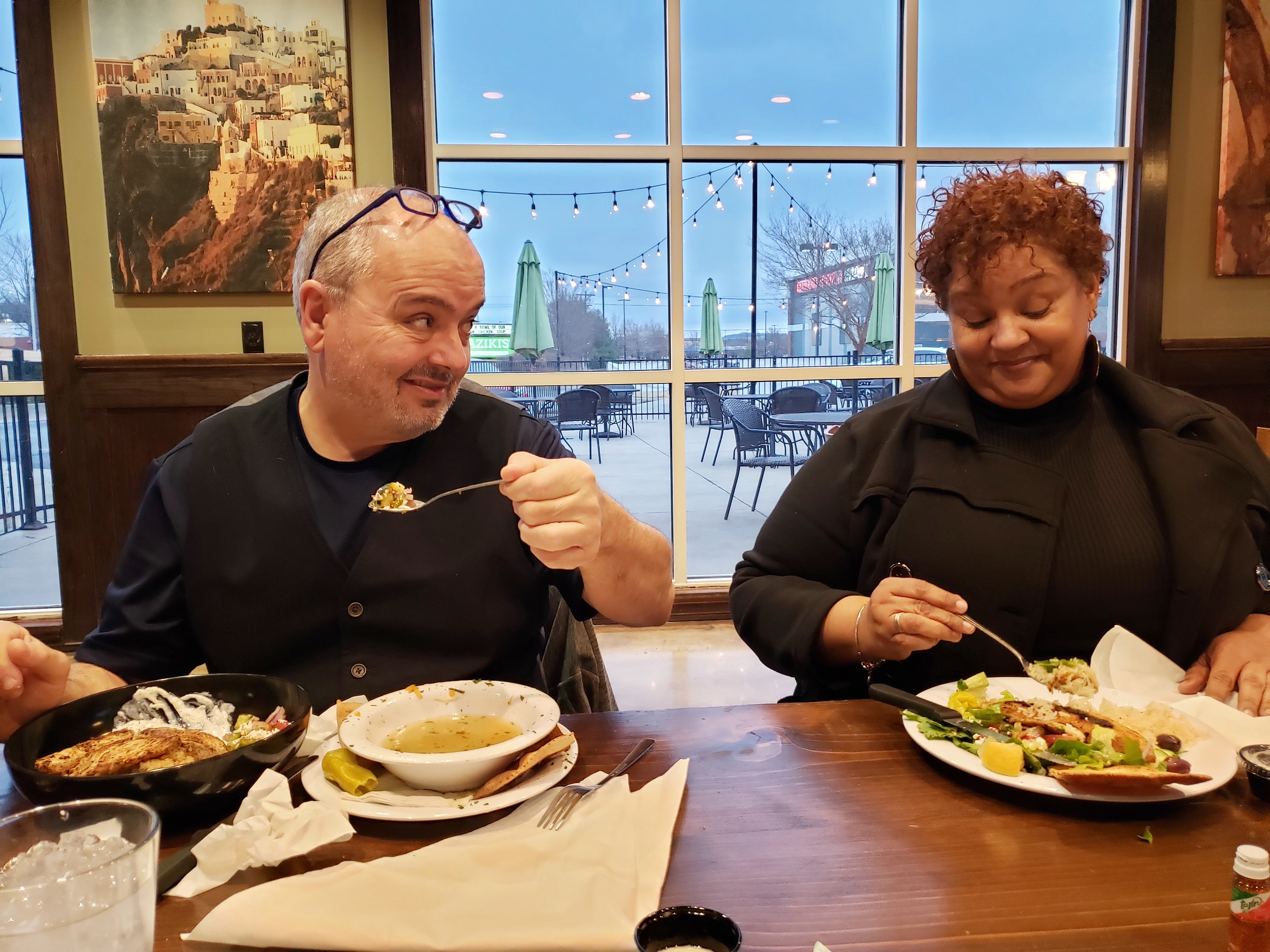
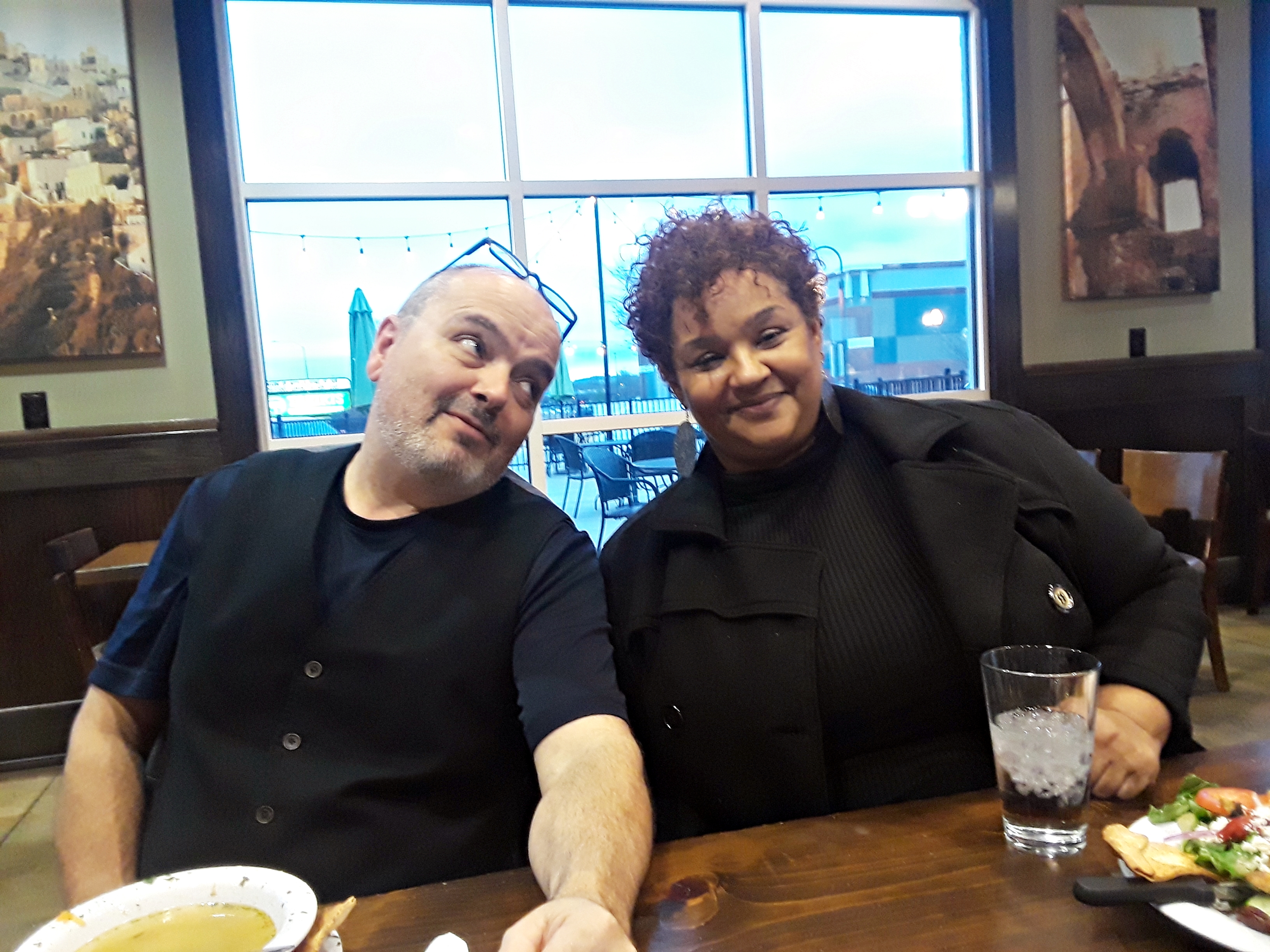
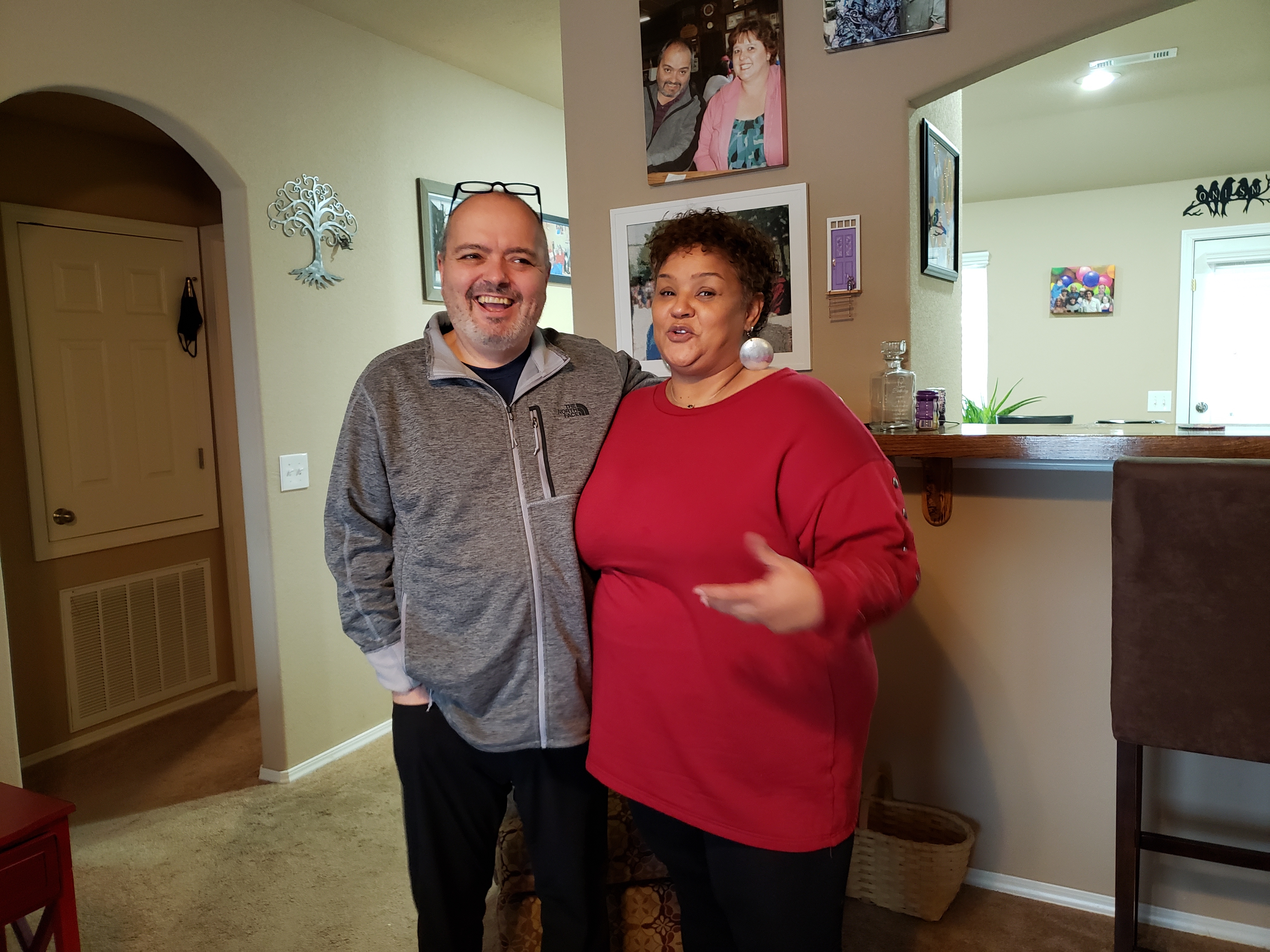
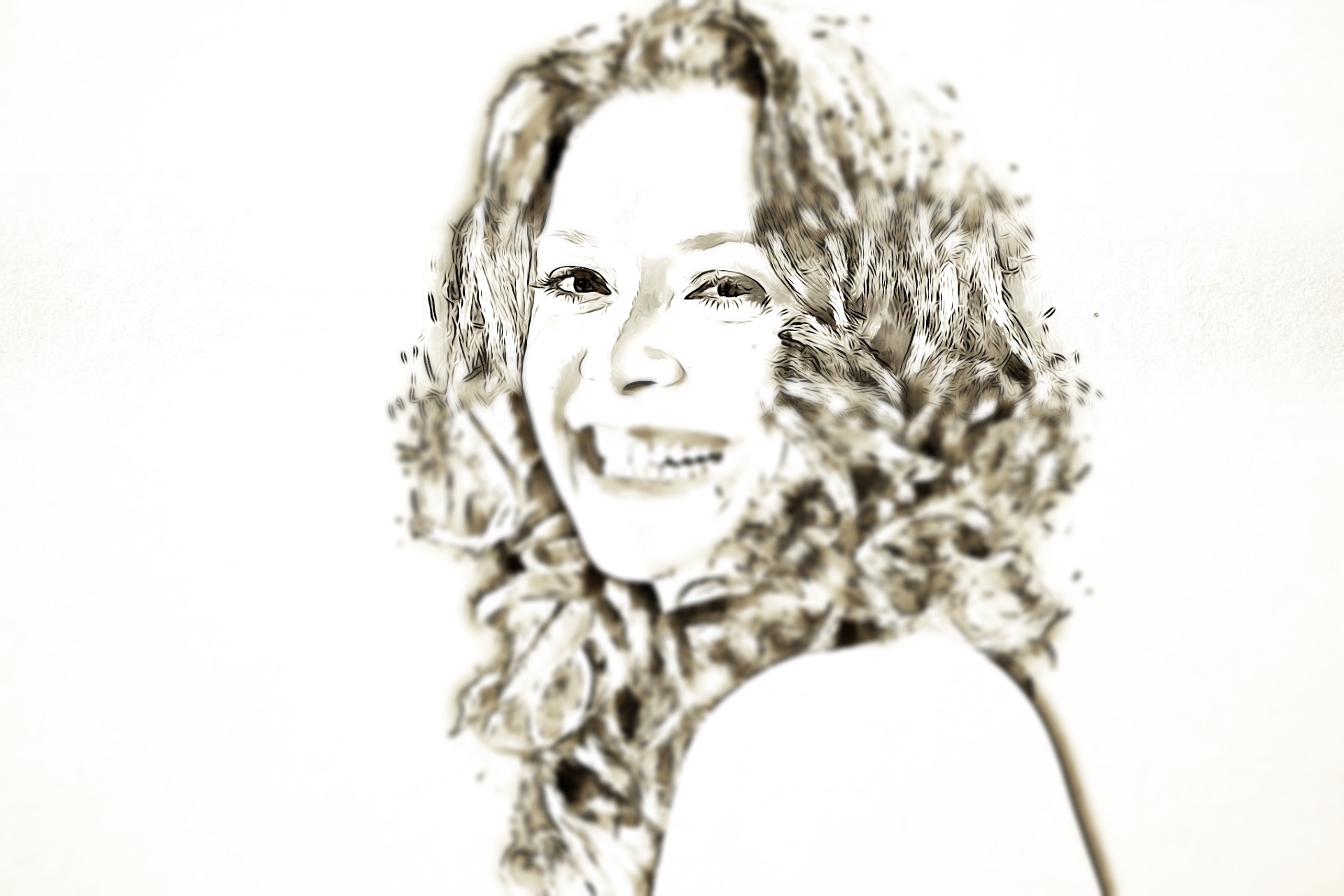
On Father’s Day 2019, I discovered that my ancestry and DNA quest had not been in vain: I found a sister (or we found each other), one whose existence defied any possible expectation. We didn’t meet initially – and then the pandemic struck. We both survived 2020. So, ironically, we met for the first time on New Year’s Day. While y’all were eating black-eyed peas, I was meeting a reflection of myself and wondering about the spectacle of life and how decisions made five decades ago continue to reach forward. Unlike other parts of my life, this has been a reward, one welcomed by both of us. How we got here was the result of other people’s decisions. We still have questions, though one of which is no longer what we might be like in person: Carolyn is as kind, witty, and outgoing as I could hope.
When Carolyn arrived, I discovered that I had met my match for the longest hug ever. I’m also not the baby of the family any longer. I kept telling her that I saw Aunt Barbara is so much of her mannerisms and look, which compliments everyone involved.
It’s incredible how good-looking we both are, isn’t it? 🙂 Due to Carolyn’s presence next to me in the pictures, I realize how much of my Dad’s devil-may-care attitude is reflected in me. I’m still wondering how it is possible that Carolyn is my sister.
I also met her youngest son, who tolerated our hours of catching up on 48 years of missed lifetime as we sat, talked, and pondered into the night.
When I was younger, I suspected that I might have family in the world. I’m still amazed that I kept the hope into my 50s – especially to find someone who seems to be a bit like me, even if she got there from an opposite path.
This strange, strange world holds a few surprises still.
Carolyn and I are the two truths; the lie is that love and truth can be concealed, even in a world convoluted by people’s inability to tell their stories due to fear, shame, or for some other human reason that eludes definition.
Though it isn’t a contest, I am convinced that I won the New Year’s Day contest for the most rewarding.
P.S. You might wait until we hear Carolyn’s opinion; you’d have to be crazy to accept mine without corroboration.
Exhausted as I was, I was awake again at midnight last night. I didn’t initially fall to sleep at first. I died a little death, one that immersed me into blackness. I certainly wasn’t quietly whispering a prayer for 2020. This was the first year in many that my eyes were open at midnight on New Year’s Eve.
The power went out long enough to cause everything to flicker and beckon to be reset. The cat screamed and demanded attention. Because I live in east Springdale, the locals insisted on going out into the cold and rain and using their finest and largest artillery to announce the New Year. Several of the guns were truly cacophonous. I felt the vibrations in my ribs, like a discordant xylophone. It was amusing to note that I ended the year forty-five pounds lighter than I’d started it, with my sanity along for a wild ride.
For all those who made promises to go to the gym, I can save you a lot of time and money, if you’ll listen. Just ask me. I’m wrong about a lot of things, but not this. Even though we tell ourselves that there must be some external and elegant solution to most of our problems and habits, the truth is that simplicity and focus will get you there more quickly. Get those first. Your best resolution might be to take a long moment, even a month, to consider your life.
Running in place won’t get you where you want to be.
“An optimist stays up until midnight to see the New Year in. A pessimist stays up to make sure the old year leaves.” – William E. Vaughn
“The secret of change is to focus all of your energy, not on fighting the old, but on building the new.” -Socrates
“The calendar reminds us when we are. We’d be better served if it told us who we are.” – X
“The proper behavior all through the holiday season is to be drunk. This drunkenness culminates on New Year’s Eve, when you get so drunk you kiss the person you’re married to.” — P. J. O’Rourke
“If you’re making a resolution, I’d remind you that the New Year is just a way to make the same old mistakes again. Don’t make a promise to change. Be the person you are supposed to be and the rest will follow, hell or high water.” – X
“Why would I need a resolution to remind myself that I am perfect just the way I am?” – Unknown
“The most negative word of 2020 was the word ‘positive.'” – Unknown
Everyone knows I’m not an expert regarding nutrition and fitness.
The yearly promise to work out is just about on us. If you want to build strength, that’s great. If you’re going to lose weight, I would ask you to read this first. Then, decide to focus on your food choices, where you will save yourself time, trouble, and money. Skip the gym if you want to lose weight. You can walk anywhere.
As an adult, I have yo-yoed a few times. The lesson I learned makes people skeptical: if you want to lose weight, stop stressing so much about exercise. Just keep food out of your mouth as much as possible. And when you eat, eat foods that fall in the Venn diagram of what you like and what is healthier. Over time, that change alone will work miracles for you.
It’s equally valid that most of us suffer from a misunderstanding regarding the role exercise plays in the realm of weight loss. Our metabolic rate is set already. Most of the energy we expend isn’t variable. Activity is, of course, a portion, but not as significant as most of us believe. Most of our culture is immersed in the ‘exercise more’ mantra. Science demonstrates that weight loss occurs more efficiently through healthier diet choices – even if you don’t increase your activity level. We should focus much more on our public and private food policies.
Note: exercise yields impressive benefits to us physically and psychologically. Stop reading into my point. Exercise isn’t as important as diet, though, in weight maintenance. It is one of the biggest fundamental flaws that plague us. (I imagine Rob reading this and already arguing.)
People of the same body composition, sex, and other factors have markedly different metabolisms, which results in the one using a lot more calories than the other. Despite what some will preach, no one definitively knows why this is the case. Those same two people can engage in the same diet and physical activity – and one of them will weigh less than the other.
If you want to increase your basic metabolic rate, the science is settled: greater muscle mass requires much more energy to sustain. I’ll leave it to you to read the literature. Running will burn calories while building muscle mass will burn more calories even while you are resting. A word of caution, though: as you increase your muscle mass, your body will trick you into consuming more fuel to sustain it.
If you’ve tried diets, especially gimmicky ones, it’s not you who failed. They don’t address the science of human physiology and weight. Don’t start any program that you can’t do for the rest of your life! If you can’t imagine yourself making better food choices for the rest of your life, you will not succeed. All long-term weight management plans that work start and end with healthy food choices. It is that simple. Simple observation will remind you that it is EASY to lose weight. It is damn near impossible to keep it off.
We can all agree that our energy intake is based on the food we put into our mouths. If everything is equal, reducing how much you put into your mouth will inevitably cause you to lose. If you go on a starvation diet, you can expect your body to fight back by lowering your metabolic rate. You’ll need to adjust your plan of weight loss accordingly. Not that most people can do it, but the best way to lose weight is to do it on a very long, consistent schedule. I can’t say I didn’t fall victim to the all-or-nothing approach. It gives results. They don’t last, though. That is true for almost everyone who diets to lose weight.
You have to eat to lose weight.
This sounds ridiculously simple.
For a variety of reasons, people tend to eat more after intense exercise. They also tend to overestimate how many calories they’ve burned while exercising. Other behaviors undermine our exercise routines, as well. Regardless of how much you exercise, it takes a vastly disproportionate amount of activity to overcome overeating caloric intake.
I’m in no way saying that we shouldn’t exercise more. Exercise is vital for good health but not as crucial for weight loss and maintenance.
You can read the last paragraph as many times as you’d like.
Poor diet has a more significant impact on obesity and weight than exercise. Science says it. Not me.
I don’t remember where I read it, but someone said, “You can’t outrun a bad diet, no matter how much you run.”
I’ll remind you one more time that I am not saying exercise doesn’t offer benefits; they don’t compare to healthy eating where weight is involved.
This isn’t a justification for laziness. However, it is a bold statement to tell you that if you need to lose weight, whether for weight loss or better health, you will see a significantly greater result if you focus first on diet.
If you do it incrementally, you’ll have a greater chance to maintain the weight you achieve. Fighting your body’s set point comes with significant risk. Very few people can adapt to a new diet and regulate how they do it sufficiently to give their body time to adjust. The longer you were overweight, the greater this tendency will be. Our bodies don’t resist gaining weight nearly as much as they resist losing it, even to go to a normal weight naturally.
Less than 10% of people who commit to losing weight tend to keep it off long term. If you can think of obesity as a disease, you’ll likely adopt lifestyle changes that stick. Even though it isn’t rocket science, some of the changes include avoiding high-fat foods, avoiding needless sugar, some form of exercise, avoiding unnecessary snacking, regularly weighing, eating less for each meal, choosing more filling and healthy alternatives, and maintaining a record or awareness of what you’re eating.
Though it borders on stupidly obvious, most people do best when their activity is based on walking, free and always available. Everything that complicates your ability to exercise and eat healthily will be an impediment if you want to maintain your weight. For this reason, gyms, specialty exercises, and expensive supplements aren’t sustainable long-term for most people.
Please keep it simple.
Find healthy food. Eat it instead of the foods to which you are accustomed – as much as possible. Reduce snacking. If you can do that for six weeks, you will see a loss in weight. Find literature that is based on science, using some of the things I’ve mentioned here.
Here it is, for most people, boiled down to its essence: if you are overweight, you are overeating.
Nothing can change that.
Likewise, though, there is a way out if you are truly willing to look at what you eat and admit it’s a problem.
“Humor is in the eye of the beholder but in the craw of the begrudging.”
Underestimating the distance chasm between intent and receipt is one of my greatest weaknesses. But also one of my strengths. How much love, mirth, and creativity fail to shine because we suffer the illusion that we have any control over the manner in which anything is interpreted.
“That which can be adequately explained by stupidity should not be attributed to malice.” It’s a wise cliché for a reason. My version is better: “That which can be adequately explained by humor, stupidity, or simple oversight should not be attributed to malice unless the other guy is a real asshole; in which case, fire away.”
It’s not that we can’t spout malice with frequency.
The reality is that most of the people we allow in our lives just don’t behave that way, not really. And if they do, it’s our fault, not theirs, that we gave them room in our sumo ring.
For every angry word, a laugh is displaced. For every frown, a smile withers. . .
“It’s always funny until someone gets hurt. Then it’s just hilarious.” -Bill Hicks . “Keep your sense of humor. As General Joe Stillwell said, ‘The higher a monkey climbs, the more you see of his behind’.” -Donald Rumsfeld . “I am as bad as the worst, but, thank God, I am as good as the best.” -Walt Whitman . Here’s an old one: “I, for one, like Roman Numerals.” .
Fletch sat restlessly in a booth near the back of Joe’s diner, a place with food that was close to inedible. He loved the owner, though, a small, wiry woman who seldom hesitated to remind everyone that she was from Alaska. She hurled insults like candy. Today, he was glad to see she wasn’t cooking. She ranked dead last in cooking ability compared to anyone.
“What will you have? Something on the light side? Your pudge is a bit pronounced, Fletch.” In case her words weren’t barbed enough, she pulled at her imaginary love handle on one side.
“I’m meeting someone, so just coffee for now, Ellie. Thanks.” He ignored her insult. He did smile and shake his head, though.
“You’re meeting someone? Didn’t the last girl show you up? I’m going to start charging you booth rental.” She walked away before he could reply. She was a terrible cook but amazingly fast and efficient. He assumed she went to bed at night fully clothed.
Fletch indeed had lousy luck with women. The last two women no-showed, and the last one didn’t call, email, or even pretend to explain. “Ghosted” was the phrase his co-worker offered. At least a ghost has the courtesy to haunt you, he thought. Over the last two years, Fletch lost most of his enthusiasm. At forty-five, love was a picture of a menu inside a window he couldn’t even reach. He endured several dates, horrified looks of surprise when he asked someone out, and empty inboxes and swipes on the two dating websites he foolishly attempted to use. He was outclassed at every turn. He joked that he lost his touch being married for twenty years. The truth was that he never had the touch. His wife asked him out, told him they were getting married, and then failed to tell him she was in love with her dentist. He found out the hard way by finding them on the picnic table in the back yard on July 4th. He hated that picnic table already. Seeing his wife on it in that position convinced him to make firewood out of it.
Ellie returned in five minutes. She put a cup of coffee on the table in front of him. Then, she put a plate of hashbrowns and a hamburger patty with grilled onions next to it. Before he could ask, she said, “Who are you kidding? She ain’t coming. And you’re like clockwork with the patty and onions. And I didn’t cook it!” She placed a finger against her lips to tell him to be quiet. As before, she pivoted, push the empty food tray next to her hip, and marched off. “Hopefully to Alaska,” Fletch whispered.
On a whim, Fletch decided he wanted to try Sriracha on his burger patty, so he got out of the booth and made his way around the “L” of the diner and went to the waitress alcove where most of the good extras were stored. As he passed the register, he heard the doorbell’s chime and the other waitress murmuring with the new customer.
Going back to his booth, he held up the Sriracha bottle to show Ellie, who rolled her eyes at him. “You better have insurance if you’re going to eat that, old man!”
As he neared his booth, he could see that a woman sat with her back toward him in the next booth. She wore an absurd purple hat. Her reddish-blond curly hair cascaded down past the collar of a bright blue jacket. She held a purple cellphone against her right ear. Scooting into his booth, he thankfully realized he could barely hear her soft voice.
He squeezed the Sriracha onto the plate in an optimistic tiny mountain. As he did, he realized he could make out the words of the woman in the booth behind him. “Remember to send a card to Raymund. And another to his Mom. Find the antique desk Joyce wanted tomorrow before you forget again.” Fletch guiltily tried not to listen. Her voice was soft and sweet, like someone who never raised her voice. She continued to murmur for another thirty seconds until Ellie approached.
“Hey, Sarah! Stole another hat, didn’t you?” Ellie was the same with all of her customers. “Do you want decaf this time? I know you get a bit nervous.” Fletch heard Sarah laugh softly. He tried to guess her appearance. He couldn’t imagine based on her voice.
He listened as Sarah and Ellie traded barbs back and forth like an elaborate tennis match. Sarah was getting the best of Ellie, something Fletch thought to be impossible. When Sarah asked her, “Can I buy you a gallon of Oil of Olay, Ellie? Those small bottles aren’t working out for you,” Fletch couldn’t help himself. He laughed loudly and involuntarily.
“Oops!” Sarah said behind him.
Ellie stepped forward a few steps and said, “Eavesdropping, huh? I would have never figured that being a peeping Tom wasn’t enough for you.” She went back to Sarah and apologized for the rude intrusion. They both laughed. Fletch felt his face get hot.
When Ellie marched off, he was surprised when Sarah asked from the other booth, “What’s your name? Is Ellie your mom or what?” Fletch laughed again.
“I wish,” he said. “I’d love to inherit this terrible diner when Ellie dies. It is my dream to serve terrible hashbrowns.” This time, Sarah laughed.
“Oh? How much does being a food critic pay? I’m interested in getting paid for doing what I already do.” She paused to give him a second to consider his reply. Fletch could tell she was accustomed to rapid-fire wit.
“What do you do? The message you left was all over the place.” Fletch instantly realized he admitted to hearing her entire phone call.
“Believe it or not, that message was for me. I’m a stern boss. I find hard-to-find items for people. And they pay me. Can you believe it?” He could hear the smile in her voice.
They continued to talk until Ellie returned with Sarah’s food.
Surprisingly, Ellie put the plate and cup of coffee down in front of Fletch. He arched an eyebrow. “Hold on, buster,” she told him.
She went to Sarah’s booth.
“Sarah, I’d like you to meet Fletch. He is a good guy but got showed up for another date. Besides being the world’s best cook, I am a renowned matchmaker. So, save all of us some trouble and sit and eat with Fletch. The food’s on me, especially since Fletch will try to duck the check anyway.” Sarah laughed loudly. Fletch already loved her laugh.
He felt her weight shift away from his back on the other side of the booth seat. In a couple of seconds, he felt a hand on his shoulder. “Oops,” Sarah said and laughed nervously when she accidentally put her hand on his shoulder instead of the edge of the booth. Sarah smoothly swung herself into the booth.
Fletch looked across at her. She was smiling. He didn’t mean to stare, but her eyes seemed to be smiling at him, too. An awkward pause stretched into several seconds. Finally, Fletch looked away. “I don’t bite,” Sarah said. “Not at first.” Surprised by her joke, Fletch looked back up at Sarah’s face and laughed.
Ellie, who still stood there, said, “See? I told you. I’ll leave you to it.” She walked away. She turned and looked at Fletch. “But I expect to be invited to the wedding.” She cackled in glee as she marched off.
“Tell me about this awesome date you had lined up, Fletch,” Sarah said, still looking at him intensely.
Thirty minutes later, Ellie returned to see that their plates were cold and untouched.
Six months later, she laughed when she opened the envelope to find an invitation to the wedding.
.
.
.
.
.
{Joe’s Diner was in another story I wrote. I wrote a novella about the owner and the place but couldn’t give it the life it deserved. Now, I visit it in my mind.}
“Humor exists solely to amuse oneself, much in the same way that sex can be both terrible and phenomenal for two people, depending on which one you ask.” – X
Mikel sat in his car in front of the post office, staring out across the street and at the limbs of the trees blowing. The December bleakness that he usually loved felt like it invaded his skin. He watched two young men struggle to load the back of a utility van as they moved inventory from the store across the street. The virus claimed it, too. On previous visits to the post office, Mikel saw a constant stream of customers there. Over the last few months, the visitors dwindled. Like everyone else, Mikel fought against the waves of untimely news and reduced optimism that permeated his life.
Mikel went inside and put his key in the lock. Inside his box were a dozen Christmas flyers and an orange notification slip, one marked 12-18 and advising him he had a package he could pick up inside from one of the clerks. Mikel loved the moment between discovering he had a surprise and finding out what it might be. As he grew older, the likelihood of something noteworthy seemed to diminish, even as his optimism continued to trick him into believing something magical could be waiting.
He needed a surprise this year. As it had for many, 2020 continued to hit him with needless changes and shocks. He had the virus in early May. In June, he lost his dream job, the one he planned to keep for the rest of his life. In July, when he started the new job, he met someone who found him to be interesting, funny, and worth being around. She liked him to call her “Flan,” due to her ability to consume ten of the desserts in an afternoon. Several times they went out, she proved that her nickname was well-earned. She also demonstrated her incredible range of curse words in Spanish, which was both funny and endearing.
In October, Flan’s Mom had a mild stroke and needed medical care. Within a week, Flan moved a few hundred miles away. Just like that, Mikel earned another 2020 kick in the face.
In the last few weeks, Flan started calling him and writing as her Mom improved. They fell in love all over again. Three days ago, Flan called to tell him that her Mom had the virus but wasn’t critically symptomatic. “Be careful, Flan,” he told her. He knew Flan was exposed. “I am. I made you something, Mikel. I hope you like it,” she said devilishly. “Check your box every day!” Those words echoed in his head.
The clerk handed him a soft package. Mikel thanked him with a “Merry Christmas, Burt!” He laughed. “My name is John,” the clerk hollered back and laughed from the thick sheet of plastic hanging between them. Mikel walked back out into the lobby to open the package. For a second, Flan’s real name Marcy confused him when he saw it in the return address. His excitement growing, he placed his items on the long table in front of the window, Mikel started to tear open the package. His phone rang, surprising him. Distracted, he swiped the notification and answered.
“Is this Mikel?” A raspy voice uttered the question.
“Yes, this is Mikel. Who is this?” Mikel loathed calls from people he didn’t know.
“This is Angela. Angela Thompson. Flan’s Mom.” She spoke with no tone whatsoever in her voice. Mikel swallowed down a short gulp of apprehension.
“I hate to tell you this, Mikel. Flan passed away this morning.” Her voice cracked as she forced the words out.
“What? How? I just talked to her three days ago.’ Mikel’s voice became thin as he spoke. He could feel his head start to pound.
“We both had the virus. Flan was more or less okay until yesterday at noon. I called an Uber in the evening, and she went to the Urgent Clinic and then to the ER at the hospital. She went down fast. I’m so sorry.” She stopped talking. Mikel held the phone to his ear, trying to process that Flan was dead.
“Mikel? Are you there?” Angela asked.
“Yes,” he whispered.
“If you’ve not opened the surprise she sent you, it might be better if you don’t. Or wait a few days.” Angela told him.
“Okay… I won’t,” he said, looking at the package and knowing he would open it as soon as he got off the phone. “Thanks for calling me, Angela.” Mikel clicked the ‘end conversation’ button. Since he was in shock, it didn’t occur to him to ask about a funeral, arrangements, or to offer sympathy to Angela.
Mikel picked up his keys and wallet from the long counter, grabbed the unopened package from Flan, and walked outside. The wind hit him as he left the post office. He didn’t notice. Climbing inside his car, he sat with the engine idling. He used his keys to rip the liner of the package and tear it open. Inside, there was a long, soft scarf made of vibrant colors. He pulled it out of the package, laughing. Flan often teased him about his aversion to scarves. There were days she said she could wear four simultaneously. “You’ll love them, you’ll see!” she would say to tease him.
As the scarf came free of the package, a piece of paper fluttered to the passenger seat, face down. Mikel reached for it, knowing it was one of Flan’s infamous notes. She always had a flair for humor and saying the wrong thing in the most right way possible.
He turned the note over and held it above the steering wheel: … Dearest Mikel (spelling doubtful, though you claim it’s correct): Christmas is here, whether your watch tells you it is the 25th or not. You can feel it in the air! I know 2020 interrupted what would have been a torrid love affair for the ages. Note: I’m talking about us! I know you didn’t have the nerve to ask me the question. So I’m going to do this right. Mikel, though you didn’t tell me, I know you love me. Here’s how to claim this offer. Put on the lovely scarf I made for you (even though you say it will itch) and take a picture with it on. Send it to me with a thumbs up. Once you do that, I will move back after New Year’s. Or you can move here. Either way, we’re going to be together. Whether it is proper or like two love-crazed lovers doesn’t matter. My answer to the question you didn’t ask is “Yes.” Love, Flan
P.S. I don’t know why you are still reading this stupid note. You should be taking a picture by now and saying “Yes” back to me! We’ve wasted enough life already. …
Mikel re-read the note. He put it down on the passenger seat and then picked up the scarf and pushed his face into it. Within moments, he was sobbing.
When his eyes had no more tears to share, he sat up and looked out at the cold street in front of him. He imagined Flan sending him the note and scarf, excited by the idea of waiting for a “yes” from Mikel. She even shared her plan with her Mom. Now, she would never get her answer. They’d never share the joyful moment of acceptance. 2020 claimed another life and another love.
Mikel sat in the car in silence.
He would need a moment, maybe a lot of them. When the shock wore off, he would call Flan’s Mom back and tell her everything that needed to be said.
He knew that thousands of people, all across the world, were living moments just like this. .
I am still surprised that most people’s minds aren’t cluttered with a million observations about the people and places in their days. There’s not enough time to consider them, repackage them, and appreciate them. Even with the virus, the one that supposedly slowed the world’s spin a bit, I find myself accelerating toward a crucible that I can’t quite define.
I don’t get writer’s block and I even find myself not understanding how a musician runs out of ideas, lyrics, and brilliance. While watching the new “Selena” series, I rolled my eyes at least 50 times as the musicians struggled to find ideas and inspiration. If we are blocked or stifled, all we have to do is open ourselves up to the great people we have around us. We all survive by collaboration; it’s worth your time to stop struggling and listen to people as they live their lives. There’s enough story here for a thousand books and a library of music.
There’s too much life out here with so many people inhabiting our world in a way that deserves recognition. Humor, love, tragedy, and even the moments when you find yourself organizing your kitchen cabinets on Saturday night all carry weight.
I wish y’all could get ICS too. We could flood the world with our stories. Love, X .