Another idea that came around to visit me again.

Another idea that came around to visit me again.

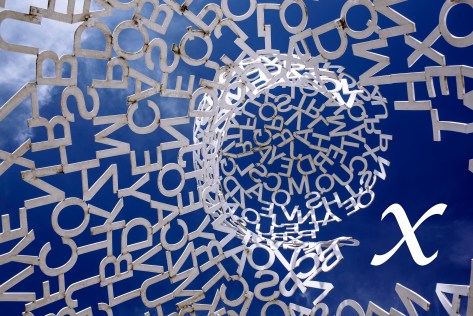
This picture is one I made early last year, but it came back to me in a couple of different ways today. – X

The more you resist this truth, the greater your disappointment will be.

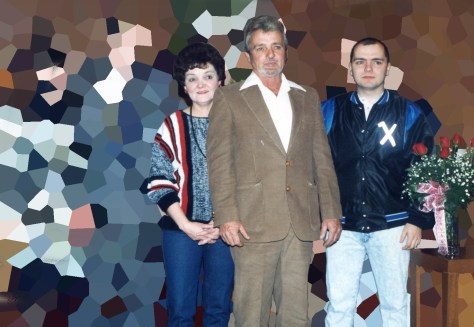
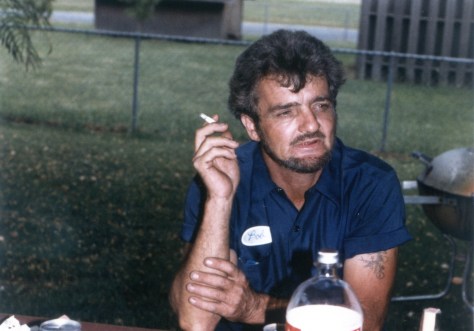
As you get older, photo albums become museum exhibits, each page containing an increasing number of people who’ve departed. From life to history, exchanged laughter to memory, photos measure our metamorphosis into two-dimensional objects, even as our minds scramble to keep the growing blank spaces filled in.
One day, if we are lucky, loving hands will choose our picture to honor a place in their album. We’ll sit in frozen repose, our life encapsulated inside a rectangular slice of paper. Maybe someone will look at our features and shed a tear for our passing and perhaps even laugh uproariously as we are remembered in our glory of ridiculousness.
In time, though, even those hands will succumb to frailty and find their own place in an album chosen by another friend or family member. We are each a link in the perpetual chain of human memory.
This is not a call-to-action, nor another “carpe diem.” Rather, it’s a call-to-inaction.
I ask you to sit in silence and look at the arc of your life, one measured in mirth, connections in time, and moments. It’s impossible to reflect on one’s own life without appreciating the immensity of days most of us have been given. Each passes us by, though, and afterward, we are left to wonder how they slithered past.
Your series of rectangles will wait there for you, somewhere in the nebulous fog of time, even if you reach then unprepared.
We ask for things when moments always suffice.
.
.
.
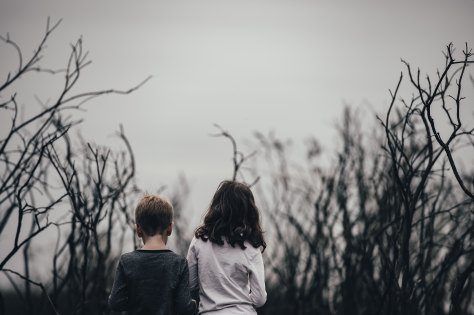
P.S. This is a picture I took years ago, in 2006. I was feeding the ducks and the half-submerged and hesitant turtles lurking near the bank of the pond. The lady and boy were visiting. While it was her clothing which caught my attention, it was the incredible wit of the young boy who stole the moment. He was a delight and my wife kneeled down to discuss important matters of zoology with him. I didn’t snap a picture because I was overwhelmed by the interesting people and moment. I don’t remember any other details about the encounter, except that it was a late Monday afternoon.
The internet is supposed to be inhabited by trolls. Many believe that Facebook is a place of mindless drivel. Longer posts involving reading are a waste of time, according to some people.
Recently, I wrote a story titled “Lady Bird 1962.” I didn’t write it for profit, perfection or pride. I have a list of several thousand thoughts, stories, and one-way deadends. Lady Bird flew around in my head until it became to be a real story in my own imagination.
A few of my friends read the story on my personal page.
Thousands of strangers read it when I posted it on my public Facebook page. Despite being seen by so many people, I didn’t get one negative comment or trollish snark. For those who shared it, I got to read how much the story meant to them personally, as if they were standing in the snow with Lady Bird, or looking at her through the prism of a windshield, decades ago.
This social media experiment we find ourselves in, the one which polarizes so many people, doesn’t have to be exclusively for public discourse. It can be, even if only infrequently, a means to create a connection to people.

From my upcoming autobiography, “Onions & Cigarettes.”
.
.

.
.
My new book, “Stem First: How To Lose Weight by Eating Gross Stuff” is about to be published in paperback.
.
My new book, “Stem First: How To Lose Weight by Eating Gross Stuff” is about to be published in paperback.
.

.
.
“The tables have turned,” he shouted triumphantly.
“But the chairs remain upright,” I retorted.
.
.

.
.
I wish that the sequel to “Mad Max” would have been titled “Mad Max: Beyond Palindrome,” because then I could watch the movie from the end or beginning and it would end the same.
.
.
Cupid shot me with a rubber arrow. I shot him with a rubber bullet. Love is a dangerous game.
.
.

.
.
Cupid shot me with a rubber arrow. I shot him with a rubber bullet. Love is a dangerous game.
.

“Time flies, and usually in the middle seat.” -x
.
.
a poem -and movie plot
we met by the water, in silence
his head underwater, defiance
hello detective
.
.

.
.


Lady Bird, 1962
She had stood outside in the snow for several minutes, admiring the winter birds high above her. The Pennsylvania sky was as overcast and majestic as her secret mood. The alchemy inside her granted her both patience and anticipation, each uneasy with the other. The infrequent passersby would note her demure presence as she shifted her hands inside her coat pockets. Many would take a second lingering glance, as something in her eyes and face seemed exotically out of place in the slush and roadside snow.
I alone dared to pull over and shut off the engine to my car. Inside it, I remained for a long moment, momentarily unsure of myself and caught off guard by the uncertainty. I smashed my cigarette out in the console ashtray, reached for my camera and exited the vehicle. The wind ran up the legs of my pants, causing me to shiver and clutch one side of my coat hastily.
Without preamble, I swallowed my fear and I crossed the slushy street and asked, “Can I take your picture?” My voice came out like a high-pitched plea. She laughed.
“Of course, although I don’t know why you would want to.” She laughed again. She motioned for me to come closer.
Once I reached her side, she pointed up and I followed the arc of her arm as she raised it.
“Those birds, they only seem to come around for 2 or 3 days a year. If they land nearby, they’ll talk to us in their own way. And if you throw them bread, they will swoop past you close enough to touch, if you were so inclined.” Her voice took on a lilting cadence as she spoke as if she were reading her own diary in the late hours of the night.
I watched the birds as I stood beside her. From her pocket, she removed a carefully-folded paper sack. She opened it and reached inside, then scattered pieces of dark bread in the snow.
“Wait,” she whispered, her head still pointed toward the sky.
She threw another handful, higher in the air, and the pieces arced and fell.
The birds, high above us, had taken notice and began to point their bodies downward. Within seconds, a dozen birds were swirling around us, their wings making rhythmic noises as they approached. Each bird had a small swath of red on their necks as if to mark their squadron with a uniform insignia.
Almost in unison, the birds extended their talons and landed. They began poking rapidly at the rye bread pieces on the white snow. As the bread disappeared, the birds began clucking and squawking in staccato bursts. They sounded like old ladies, with voices ruined by clouds of cigarette smoke, each trying to shout down the others.
As the woman tossed more bread pieces on the ground, the birds would take turns grabbing a piece as the others continued their squawking. Their collective noises sounded like out of tune violins but I could discern the haunting melody of it nonetheless.
“Isn’t it beautiful?” She asked me.
I nodded yes as I listened and watched. I was hesitant to speak, lest the lingering magic of the moment notice me observing it.
With no more bread in her pockets, she put her hands back inside them and waited. The birds restlessly paced, their squawks becoming a disharmonious crescendo. They lifted off but instead of taking to the sky, they looped around us two or three times as they rose. After reaching 30 or 40 feet, their squawks ceased, leaving an exquisite absence of sound. The woman laughed again, a laugh tinged with delight, and it reminded me of a row of shattered icicles falling from an early morning roof.
I stepped away from the woman, raised my camera, and pointed it at her. She looked away from the sky for a moment and smiled at me. I pressed the shutter button and felt the moment already begin to fade away, like watching an old friend sitting in the back of his parent’s car, waving as he pulled away.
As I lowered the camera, something must have registered in my face, as she ran the few step between us and hugged me, one filled with warmth.
I got back into my car, once again inside the familiar and known. As I started the car, I looked back one last time, to see her there, faced turned upward in silent joy as she watched her birds flying high.
I’ve never shared this picture with anyone before today, all these years later.
I’ve witnessed the width and breadth of this fascinating world. Nothing, however, lingers in my heart like the stolen moment I shared with Lady Bird. I do not know who she is or anything particular to her story but I do know that sometimes if we dare, the most common thing can shatter itself to reveal the wondrous.
Those birds are still up there, flying high, waiting for us all, if we dare. Lady Bird might be just around the corner for you, too.

*Written as a response to someone who says it shouldn’t be done this way…
.
.
“Very,” I whisper into the wind. I look up for a second, seeing a world devoid of words, yet never at a loss for perfect expression.
Around me, a gathering mist settled and the air moved with a tinge of chilliness. My coffee had long since turned cold, absently set aside and neglected.
Sitting on the park bench at the edge of the woods, I read the words which had cascaded from my mind, through my fingers, and onto the paper on my lap. I imagined the voice of a high school English teacher, almost deafening with assumed authority. In my head, I heard her lecture us all about using words lazily. Her principal argument was that our language was an ocean of possible variations and that we owed it to ourselves to avoid banality. “Treat the word ‘very’ like a curse,” she would say, and “Choose a word more powerfully suited to your audience.” Her age granted her solemnity in her own mind; to me, it was a reminder that she was the gatekeeper to the way things once were. She erred on the side of the thesaurus, confident that complexity equated to prose. I learned her dance and to use words like suffocating blankets.
Hearing her ghostly voice in my head, I reminded myself that sometimes language was a thing of comfort and better-suited toward a regression toward simplicity. For most of us, “mom” was our first word, and words such as “fireplace,” although unimaginative, evoke emotional memories. The basic words survive precisely because of their universal connections. Since then, I’ve heard and read a 1,000 admonitions regarding words of simplicity or substitution and ‘very’ inevitably sits on the list. I read them all in the shrill voice of an unimaginative authority. They are not wrong, I will admit. They are not right, either, not entirely, and certainly not to me.
For all the thousands of childhood hours spent inside books, most of the authors wrote and spoke to me as friends and none seemed to evoke the authoritarian spectacle of my teacher. Rules were made to be understood and then discarded as needed, or locked away inside a private box until they learned to bend and behave to the will of the person giving them new life. Magic forever resided in the outlying edges of words.
For much of my life, my amateurish efforts have helped me overcome the grip of perfectionism which seems to haunt people who earn their living sharing words with strangers. I look at words like I might an expanse of piano keys, each key assigned a note but when played as a whole, an infinite stream of beauty. “Very” was one of those piano keys, easily substituted, but placed there with reason. Today’s melody might be one of majestic and operatic symmetry; tomorrow’s might be suited for an intimate dinner. I would not presume to tell the man clearing my sidewalks of snow that the roads were perilous. He’d rather know that they are risky.
Even as I sat on the bench, quiet and unmoving, an entire universe was swirling in my thoughts. I thought of my past, of my youth, and of the slow pop of the logs in the wood stove of the shotgun house in a field of cotton. That thing was both heat and community, a thing beyond its confines.
“How very beautiful, this thing of memory,” I whisper.
The thing that belied my simplicity of language was also somehow responsible for juxtaposing creativity and expression.
May your ‘very’ be forever at your lips, even if you’re told it shouldn’t be.
X
Screams, pleas, and jabs to our collective heart.
The scene fades in.
A wide expanse of blurry green sharpens into focus, revealing a singular line of white rectangles, each adorned with a cross or a star, dates separated by too little time, names engraved into impermanent stone.
A solitary and motherly figure stands against the backdrop, a fading sun illuminating her weary face, one resigned to futile expressions of sorrow.
“You know what upsets me the most about this last shooting is that we’re not gonna be upset in a few weeks – and that’s not okay.”
Her head shakes with incredulity at the needless violence.
She suddenly sits on the ground, unable to feel a call to action in this moment.
The echoes of silenced voices surround her.
Tomorrow will be another day, for some of us.
.
.
.
*I wrote this, using the actual words of someone I know, a mother, in response to the latest large shooting.