I love that TikTok is a mix of ridiculous, perverse, and legitimate entertainment and information.
People are surprised that I’m a fan. TikTok is the wild west of the internet. You have to take the time to find the things you like and curate what fills your eyes and ears.
As with so many other things, it can be a timesuck, too. Find the comedy, music, and genres you enjoy and focus on them. TikTok is like 100,000 channels of content in short increments. If a 55-year-old man like me can find value in it, anyone can.
One of the surprising finds on TikTok: the counselors who have decades of experience working with couples and individuals. If you listen carefully to those who share their insights, you can open up a world of understanding in your heart and head. All of us want to be happy and satisfied. Sometimes we need to hear it from an external source to validate it. Sometimes we need to be challenged to at least consider that we could be doing things wrong.
One of them is Dave Worthen. He’s not a typical TikToker; he’s older and uses simple language to communicate his messages. He’s been seeing people for over four decades. He’s seen and heard it all.
While I don’t agree with some of Dave’s content, I had to concede that I lack his education and training, much less decades of working with couples about these issues. His expertise gives me pause to wonder what I might not like about some of his content.
Discomfort usually signals cognitive dissonance.
Knowledge is never a mistake. Nor is self-reflection and considering that we all share so much in common.
If you’re interested, search for @daveworthen.
You can find him on YouTube, Instagram, and other places.
One I previously posted (and gets shared a lot): “On a long enough timeline, you’re gonna be an asshole.”
Yes, even you, even if you don’t believe it and no matter what you intended.
Corollary: “On a long enough timeline, you’re gonna completely contradict yourself and everything you said you believe in.”
Corollary Observation: “The more judgmental you are about someone else doing it, the more likely your contradiction will eclipse their apparent misstep by a country mile.”
When you get older, you witness these coming to fruition both in your life and in the lives of the people most critical of you.
You’d think we would learn to stifle the urge to condemn, judge, or criticize.
We usually don’t.
The smugness of our humanity is that we often believe that WE will never say, do, or think some things that we judge others for.
The truth? We haven’t had a long enough timeline for it to slap us in the face.
Life is eventual and cyclical and preys on all of us.
Instead of asking, “WTF were they thinking?” perhaps we should inquire, “WTF was I thinking?”
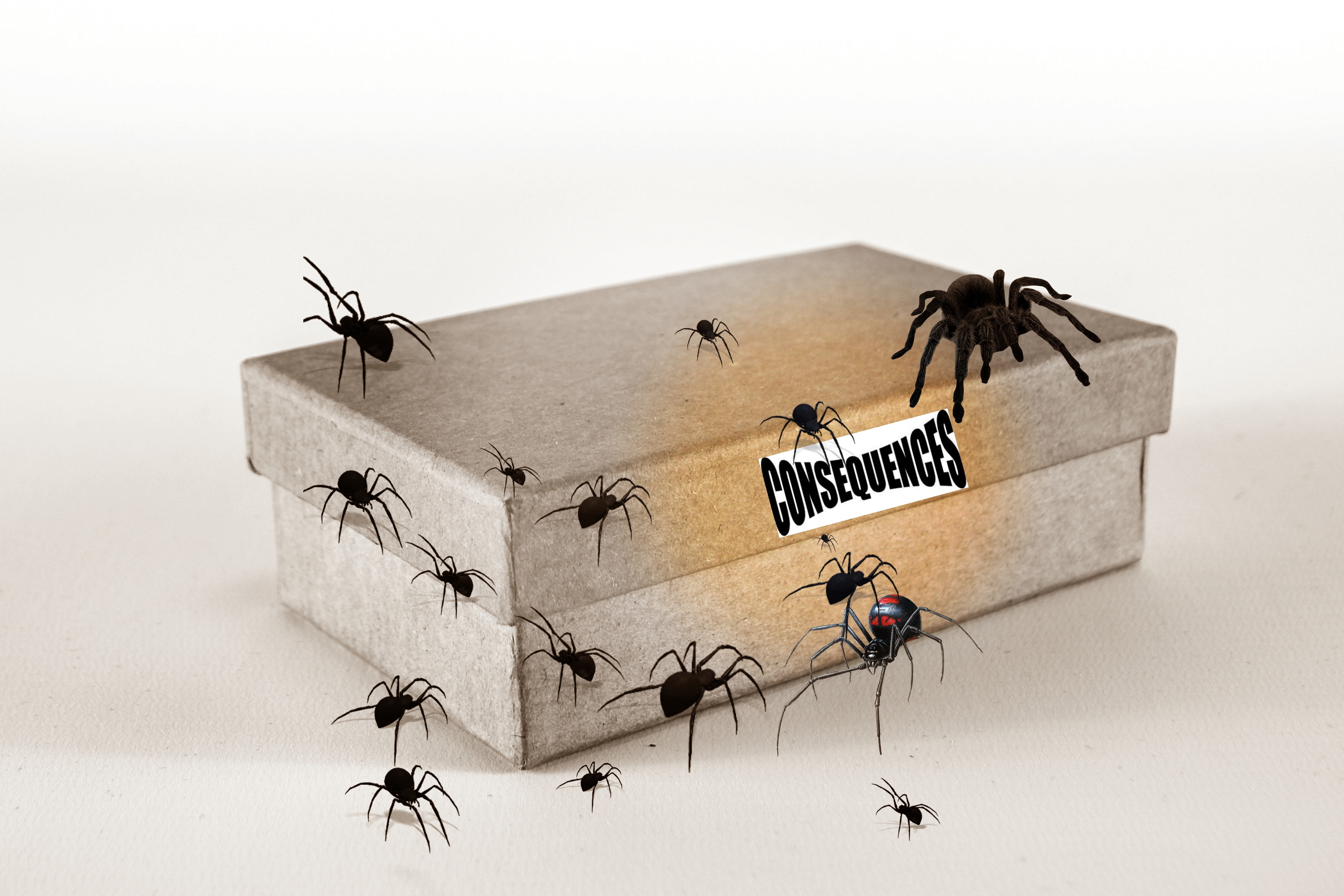
Because it is still true that we judge others for their actions and ourselves for our intentions. It’s why I grappled with living with the consequences of my intentions. Though they were initially benign, it was like opening a mysterious big box of spiders out of curiosity. Before long, you find yourself covered in spiders. You react uncontrollably, in slow motion to yourself and in hyperdrive to observers, and you cannot extricate yourself.
There is no do-over button, no mulligan for salvation, and no life eraser.
It’s hard enough when you flub something; it’s that much harder when other people haven’t learned that it will be their turn in the barrel one day.
I will sit and watch the next person pick up the box of spiders. And because they are human, observe them mimic my missteps.
I’ll remind myself that they are on their own timeline and bite my tongue in recognition of my urge to forget that we are all sometimes covered in spiders.
On so many levels, I’m in better shape than I’ve been in 40 years. And I understand myself in a way that renders me at unease. I’m barraged and flooded with realizations and truths. Though some of them are sublime and labyrinth, most of them seem so obvious that they can only fall on deaf ears or hard hearts. One of the hallmarks for most people as they age is that they become cemented, too certain, and find themselves in a narrowing field of pleasures, tastes, and choices.
I’m an optimist. Or at least that’s my self-identifying delusion. It’s a good thing that our brains operate on an as-if protocol. It’s also sometimes undesirable because we filter out facts and reality and create stress and unhappiness in ourselves. Most of it stems from the fact that we believe things should be another way. The rest of it is because our bags are packed for today with all the things we’ve said and done throughout our life. It’s a rare person who can jettison that nonsense and start truly fresh.
One of the things I’ve learned about myself is that I value wit and creativity. But I think I might willingly trade all of it for mindless present-moment joy. Maybe that makes sense to you, and maybe it doesn’t. It’s a delicate balance to practice carpe diem but also to be practical. Most of us swing too far in one direction or the other, which robs us of a fuller life. There are so many details to attend to, a mountain of meaningless activity. It is so incredibly easy to spend our time and energy trying to self-delegate those things instead of ignoring them entirely.
Because I said a lot of the things that I know to be true will fall on deaf ears or hard hearts… I’m pretty sure we all need to collectively stop doing all those stupid things that don’t add anything to our happiness. I don’t need to make a list. I’m quite certain you have an idea of exactly what I’m talking about in your head already. For some people, it’s dusting or vacuuming. Or ironing their clothes. Or flossing every day. For others, it’s sharing time with people who don’t make them enthusiastic or seem to appreciate them. Or doing things that they once loved but no longer do. The list is endless, and you can fill in your own. The world won’t stop spinning if you just stop.
That’s really the lesson of it all, anyway. This globe will continue spinning whether you’re on it or not. Everyone says they appreciate how fast time flies and how short life is. But if you’re like me, I know damn well you can count on one hand how many people live enthusiastic, fulfilling, and joyful lives.
You probably have a lot of people around you who spend too much time being negative or complaining. This is weird, given that few of us really have horrendously significant problems that merit losing focus on the opportunity to thrive and be satisfied, if not joyous, that we’re still here at all. It’s a joy to witness someone with legitimate and terrifying obstacles who somehow still manages even a smile, much less a positive attitude.
It’s Sunday. So maybe you can pick one thing, activity, or belief that no longer serves you. And hurl it out the window, even if it hits your neighbor on the head.
I guess we could call it life decluttering.
Sometimes I catch myself standing somewhere with the overwhelming realization that I’ve been too busy majoring in minors. Knowing it’s true doesn’t translate to making it true. All the overthinkers out there understand this.
Most of us, by 40 years of age, had a pretty good idea of what makes us happy. Or distracted enough to be a suitable alternative for that.
And then we continue doing the things that didn’t get us there or keep us there.
And so, we dive into a routine that propels us ever faster away from who we’re supposed to be.
And then that one day comes, and we realize that we didn’t choose at all.
We followed.
X .
PS The picture is from somewhere around 1996. I like the picture because I look stupid. In other words, it’s perfectly accurate! .
After seeing how many people read my posts about relationships, it confirms that everyone is interested in having a full life that includes a relationship.
People are uncomfortable. Most of us want to be happy and to be loved in a way that we minimize to other people. We want to feel normal, whatever that is. We want to let our guard down, forget our history, and forgive ourselves for the misfirings of our previous attempts at being lovable and loved.
The basic premise of the things I write is that you have to drop your guard and be the person you want to be your partner. Whatever behavior, words, and attention you seek, you must telegraph that in everything you do. If you don’t, it’s not reasonable to expect your potential partner to live up to that standard. Most of us don’t take the time to honestly just DECIDE what it is that will light us up and make us happy.
The dissonance of not allowing yourself to feel and hope with abandon based on the past is a struggle for everyone. What if I get hurt? What if I hurt someone, and that someone could have been my ideal partner?
It works in reverse! You must be that person first, the one with an open heart and a loving soul. Yes, you could get your heart shattered. Of course, that is a possibility.
The alternative is to keep being guarded, distrustful, or fearful.
If you do, which might be understandable, the outcome will be a lonelier and less fulfilling love life.
If you surrender to the possibility of hurt, you at least open yourself up to the chance of being loved the way you’d like. If you don’t, you greatly reduce your odds of getting there.
You can’t control the world, much less other people.
But you can BE the image of lovingkindness to your partner.
Anyone who doesn’t appreciate that openness and effort is foolish. They will look back one day and know they missed their chance. Probably while they were chasing an imaginary and unattainable relationship without changing themselves.
There is hope for you, if you’re not living a life with someone who lights you up. If there weren’t, what would be the point?
Surrender a bit of yourself and open up to the chance, the hurt, and also the love.
Please stop reading if you’re uncomfortable with sexuality.
I didn’t polish this post. It’s not perfectly well-expressed. That’s okay because I’m not sure my subconscious allows me to process and share exactly what I want or need to.
Most people can’t rationally and calmly think about their partner’s fantasy life, which runs congruently in their heads, whether they are physically with a partner or alone. This is true even though they undoubtedly experience their own. Imagining them getting pleasure by thinking about being with another partner naturally stirs up ancient reactions in our lizard brains. As a result, a lot of couples never openly talk about what goes on in their heads.
Sometimes, they don’t even dare to discuss what gives them pleasure.
Studies regarding fantasy life yield some conclusions that cause discomfort. Some of the most common female fantasies are sex with strangers, sex with a specific celebrity, sex with multiple people, being dominated, sex in unusual places, oral sex (giving and receiving), exhibitionism, forced/reluctant sex, rough sex, same-sex encounters, sex with previous partners, watching others have sex, age discrepancy sex, and even romantic/passionate sex. Men share a great deal of the same fantasies. A common denominator in them is novelty, taboo, or things they’d most likely not participate in.
It’s hard for many people to distinguish between fantasy and life. It triggers an avoidance reaction. That’s because our brain renders real what we imagine. We feel the excitement but also the stress, jealousy, or other unintended issues about ourselves.
The truth is that you can’t really know what is going on in your partner’s head most of the time. But if you’re participating physically, you should focus on your partner’s pleasure. If they aren’t comfortable talking about their fantasy life, there’s a reason. It’s usually complicated, partly because we are still programmed to avoid discussing it. Yes, even when we are in a committed relationship or marriage.
Our largest sexual organ is our brain.
It’s a rare couple who can freely share fantasies without animosity, jealousy, or other emotions. Brain studies reflect this.
“Don’t ask, don’t tell” dominates many people’s lives.
It doesn’t help men to know that women are far superior biologically to them concerning sexual activity and pleasure.
Because our brains are adept at creating thoughts (or dreams) that our body reacts to physically, it is no wonder that fantasy life is so crucial for sexual fulfillment for so many people.
They just don’t talk about it. Not really. The outliers do, that’s true.
I think anyone reading this should read all the major sex studies about sexual pleasure. At least those who are interested in their sexuality. You can Google it by searching for “Most common female sexual fantasies” (or male) and then focus on the percentages of frequency for all types. It might surprise you. At a minimum, you won’t feel so freakish, of that, I’m sure. If you’ve not considered it in depth, though, it might bring discomfort. It might also bring revelation to both you and your partner.
One of the best examples is cuckolding, wherein a man shares his female partner with another man. Over half of men in almost all studies report using it as a fantasy. The mechanisms to explain this can be complex or simple, both from an evolutionary/biological and social viewpoint. It goes against our basic tendency toward jealousy or territoriality. It’s not rational. And that’s the point.
One of the most common fantasies is a threesome. The odd thing for me? That doesn’t arouse me at all to imagine being with two women. I know that sounds like I might be lying. I am not interested in touching two women simultaneously. Both of us pleasuring my partner, though, that is arousing.
Imagining my partner in a threesome, however, is arousing, no matter the combination of sexes. It’s not something I could deal with in real life, though. In a fantasy framework, it’s arousing.
If I transpose that same scenario and try to imagine her having done it in real life, it acquires a negative cloud immersed in retroactive jealousy. It is very hard for me to process rationally.
The same is true for fantasies involving virginity.
Like most men, milf eroticism is arousing, as is the idea of my partner giving someone their first experience. For reasons that fascinate me, it turns me on. Hearing about such real-life encounters in that capacity is another thing entirely. Personally, though, I do not enjoy fantasies of being someone’s first sexual partner. I know that seems contradictory, but it’s entirely normal – not that “normal” is really normal, anyway. I suppose it is to be expected that for me, being taken by someone for the first time is arousing, as is the idea of my partner doing so. But I admit I tread carefully about imagining it in real life, as those thoughts bring unwanted consequences. I’m hard-wired toward monogamy. The commonality of both scenarios is the excitement of finding one’s sexuality or the gift of such an offering.
I realize that I seem to have contradicted myself. Cuckolding fantasies don’t interest me per se. Yet ones where my partner gives someone the gift of their first sexual experience do. I’m guessing it doesn’t trigger the same emotional and visceral jealousy response.
As for my retroactive jealousy, like most people, I have to be able to be sexual with my partner while being aware that some of these fantasies are playing in her head or what gives her literal physical pleasure.
I recently heard someone say, “Don’t be afraid of her toys. They are teammates, not competitors.”
I have to appreciate fantasy life in the same way.
Whether people talk about it or not, it is a huge part of their sexuality.
I was sexually active during my previous adult life, of course. I underwent a transformation when I realized that there were things I liked that surprised me. Being with someone who you trust helps. Knowing they find pleasure in it is what makes it sublime.
When they do share, it’s important that you protect their secret fantasy life. It’s secret for a reason.
Everyone should explore as much of the playground as they can. For love, for intimacy, for each other. Where there is trust, it is immeasurably easier.
Trust yourself and trust your partner.
I trust mine. I’d be in a world of hurt if I didn’t.
And remember, fantasy is not reality. Don’t judge. Or try. That’s hard enough for most of us. We are harshest to ourselves.
If you’re an adult, you should not be worried about responding quickly, double-replying, or being enthusiastic with your communications. Anyone worth your time will appreciate the energy and contact. If you feel that you’re reaching out too much, be aware that someone who dissuades you from doing it isn’t your ideal partner. Move on. The initial stages of chemistry or interest always start with enthusiasm and interaction. Always. If you’re being told it’s too much, move on. I’m being totally serious. People love knowing that what they say is interesting. When they hear it from someone they are wild about, they will encourage that behavior, not minimize it.
People seek out interaction of all kinds when it’s from someone who lights them up.
Without getting sidetracked by all of it, the dynamic of anxious versus avoidant personalities inevitably gets tangled up in this issue. Some people begin to question themselves or get the idea that they are extra. But maybe extra is what the other person really needs. Maybe they’ve never had it before. Or, more likely, they are not far enough down the timeline yet to appreciate the fact that attention and affection are one of the rarest commodities and should be cherished.
As always, put yourself into the shoes of both sides of the argument.
It feels true because you know it is.
When you’re head over heels or enthusiastic, you crave the other person’s interactions.
Please don’t lessen yourself or back away from being extra.
Someone will appreciate it and tell you constantly.
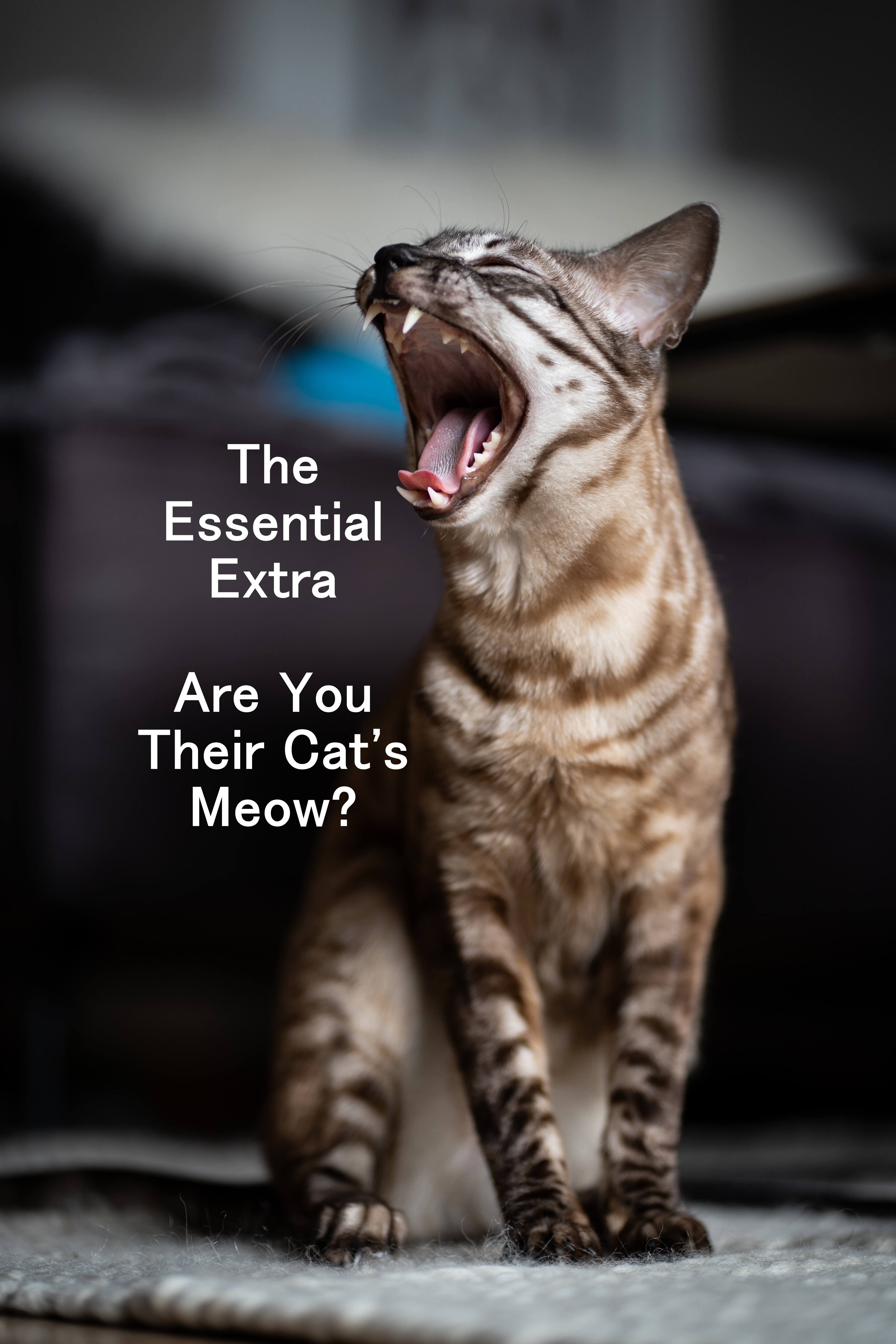
Generally speaking, someone who thinks you are the cat’s meow will do nothing except encourage your interactions. And reciprocate by doing the same for you. Even if they are busy, tired, or distracted by the million distractions that come at us in this modern world.
Preface: A while back, I warned y’all that I’d write more things outside my comfort zone. The analytics are clear, though: posts about relationships, behavior, or anything adjacent to these topics are read by many people. I’d suppose it is because relationships are the central element of our lives. Most of us experience the same issues.
I’ve made no secret of the fact that I’ve been on both sides of the coin.
I’m not ever going to be on the other side again.
I’ve been to therapy to discuss all these issues in detail. I’ve read every major relationship and sexual study out there. I’ve spent a lot of time digesting the conclusions. They all convince me that the blueprint I followed for most of my adult life is the only way I can be happy. To remind myself, I ask myself where not doing things the right way led me. Obviously, I was off course! Had I not been, I’d be happily married to someone who follows the same relationship blueprint I’m looking for. I can’t blame other people, not really. Not taking time for deep consideration would result in further disappointment for me.
And because it’s the only way to happiness for me, I’m assuming it will be more than enough for most people.
There is a difference between adultery and infidelity. Don’t fool yourself. Infidelity can be equally damaging. It violates trust, a promise, and commitment to your partner. It involves breaking any romantic, emotional, or intellectual agreements that you share. It does not require these agreements to be spoken. It’s true that boundaries and expectations between people might vary. But if you think rationally, you’ll discover that most of us have the same expectations. We certainly overlap regarding things that we know would hurt us.
Infidelity: any action or behavior that either makes the partner doing it feel guilty – or any action or behavior that is kept hidden or secret because the partner is aware that it will cause emotional hurt. This is true because it is infidelity to the relationship the moment either half of the first sentence becomes reality.
Don’t overthink it. It’s simplicity in its rarest form.
“Fidelity” is an old word, coming from a mix of “loyalty, faithfulness, trustworthy.” Generally speaking, if you can’t write it, say it, or do it openly and in front of your partner without a reaction, it probably falls on the wrong side of the line. You might argue and fight my interpretation. Obviously, though, behavior and words that are intentionally kept from your partner must have some impetus toward concealment. Motives may vary. The consequences don’t.
Behavior that is benign rarely gets cloaked. (There are exceptions.) If you don’t trust your partner to react rationally, that signals a bigger problem between you. The act of concealment, misdirection, or minimizing deservedly draws scrutiny. It’s not rational to keep things from your partner based on how they might react. Their reaction, if they are your ideal partner, won’t be out of proportion or indicate anything other than their confusion or hurt. You have to put in the work when misunderstandings arise.
Healthy relationships with an ideal partner require transparency.
Transparency is a child of honesty.
Stop defining infidelity as a specific act. If it triggers you to conceal or if it will hurt your partner to see it, hear it, or hear of it, it’s infidelity. Yes, I know my comments are a bit general.
Examples: flirty behavior, however you define it. Giving someone the impression they hold your interest. Secret conversations in any form. Sexual innuendo, as it leads to the false (or correct) interpretation that you are available. Sharing your time and emotional energy with someone. We all have a set amount of time, focus, and energy. If it’s spent with someone else, it’s done to the detriment of the relationship. Etc. Again, these are general comments, not an exclusive or inclusive list or blueprint. I didn’t include any physical examples because I’ve distinguished between adultery and infidelity.
Infidelity is a huge slippery slope of defense mechanisms, explanations, and rationalizations. A kiss, though physical, is infidelity.
The behaviors that get hidden or concealed are the stepping stones to a breach in your emotional intimacy.
The modern era makes it harder to honor your relationship.
Just reverse roles when you’re engaging in actions or behaviors that trigger recognition in yourself. How would you feel if your partner did it? That’s how you know you need to do things differently.
Compassion on a fundamental level.
We all want to be loved and appreciated. To achieve that, we have to learn and follow behaviors that contradict what led us to where we are.
Entering the convenience store, I noted several people waiting or milling around. A couple of them seemed uncomfortable. Within a second, I realized why. A woman was standing near the counter, berating the workers for some kind of misunderstanding or error regarding the gas pumps. No matter the content of her argument, all I witnessed was someone forgetting the stupidity of such behavior. Her anger possessed her. I could see it contaminating everyone witnessing it. The woman in question stomped out, hollering, “Never mind! I give up.” When I exited, I could see her angrily talking to another person at the pumps in a different vehicle. “Spread that anger infection some more, yes, please,” I said to myself in my head. I hope I remember the experience the next time I feel anger flare uncontrollably inside me. Anger seldom looks attractive on anyone.
On the short leg of my drive home, I followed behind a Jeep. It happened quickly, so I had no reaction time. The plastic cover inserted into the missing back window frame blew out. I watched in slo-mo as it flipped over a couple of times and went under my car. It seemed inevitable that it would have flipped up and hit my windshield directly. I followed the Jeep, honking my absurd horn. It slowed as if to turn left. I honked again, and the Jeep instead continued straight. As it neared the light ahead, it turned red. When the Jeep stopped, I hopped out and ran to the driver’s side. “You lost your back window back there. It didn’t damage my car, but it’s still on the road. You’re going to be a bit cold without it. Have a great day!” I gave him a thumbs-up and ran back to my car.
Because no one knows how to easily turn into my driveway, the Jeep contained ahead, and I turned in. After parking, I watched the road for a minute. The Jeep went back by in the opposite direction. The driver undoubtedly decided that the cold warranted a return trip for the plastic window insert. It made me happy to think I took a chance to let him know. I’d recommend some screws or duct tape if he’s going to put it back on.
As for Gûino, he will be 15 early next year. He’s a spry, healthy cat for his age. If he is so inclined, he can scrunch down and jump seven feet straight up. There’s no doubt about it that he shouldn’t go outside. When I moved here, and he came back to live with me, his paws didn’t go far from the door and certainly not downstairs. He’s grown familiar with the building, the pitbull who loves cats (really) on the end, and some of the residents. I stopped letting him out in the dark after a particularly scary moment a few weeks ago. But one of his joys is to scamper out the door and sniff, discover, and explore. It could easily result in a surprise or tragedy for him. There’s no denying it. But at his age, given the unlikely scenario that he’ll survive as long as I’d like him to, I stopped struggling with the overwhelming worry he would get lost, kidnapped, or fatally hurt out there. I try to monitor him. Sometimes he fools me. I have three Blink cameras to surveil him. If the worst happens to him, I will be devastated. I’ll feel immensely guilty. I temper that possible outcome against his age. To be inside all the time when I know he’s grown to love scampering outside, sometimes forcing me to chase him on the upper landing, up and down stairs, and across the parking lot. It’s a game to him.
Erika sent me a video from her Blink from yesterday. Gûino had already enjoyed his prison yard time but decided to dart out the door without written permission from me. So, to startle him into remembering he can’t do that, I chased him all the way down the building and stairs, all the way back inside my apartment. And yes, I know I was running a little bit fruity in the video accompanying this post.
I want him to have a longer life. But I’d rather him have a fuller life, even if that brings risk.
As someone who narrowly avoided precarious death a few times, it’s hard to convince me that risk is entirely real.
Though I’m not dogmatically religious, I’d like to write an incongruous post that merges the Black Eyed Peas with the Christian Bible.
The aforementioned group has a current hit called “Don’t You Worry.” It’s vibrant, energetic and a call put away your worries and concerns. It’s one of those throwaway songs, full of pop momentum and repetitious lyrics. It’s also delightful in a way that belies its formulaic lyrics. I’m certain they weren’t inspired by a call to remember that control and worry are the provinces of people unfocused on what’s essential to happiness, especially from a spiritual viewpoint.
I have a lot of issues with religious texts. Sometimes though, truth is where you find it.
Whether it is Matthew 6+, or a verse from my favorite book of Ecclesiastes, among several others, one of the essential truths of most religions is that we are forces living inside bodies. And we’re not supposed to be mental prisoners to the outcome of our worries.
Not to ignore them or blindfold yourself; rather, to rejoice at this moment and to dance with joy. It’s something that older people forget to do as if such a thing is only an option for the young.
The Black Eyed Peas song evokes a reaction in me. Something about it strikes a call to action to remember that for everything, there is a time and place. Maybe it’s because I love the book of Ecclesiastes.
And if your head is cluttered with worry and concern, no matter how justified, you might be distracting yourself from the opportunity to remember to live. To give up control and surrender. To dance, sing, and feel the physical world. But not to such a point that you forget that everything that makes your heart sing can’t be quantified.