Category Archives: Social Rules

Quick, Change Artist

max-felner-_yrCYuCjMYo-unsplash

This is my infrequent post about what’s been said and written before.

If we are doing things right, we change. It usually happens incrementally and may pass unnoticed. At times, we also change in precipitous upheavals.

Our opinions, our underwear, our hair, and our viewpoint.

Those of us who share what we’re thinking run a much greater risk of what we’ve said being used to bludgeon us later – even if we no longer believe what we once did. In some cases, we never believed it.

Thinking out loud is impermanent; writing out loud leaves a traceable mark.

Even when we’re being authentic and unafraid of scrutiny, what we say and write is routinely perverted into its opposite.

I’m a moving target. It’s not because I’m being obtuse or evasive. Okay, obtuse maybe.

I learn new things. I change, adapt, and surprise myself. One thing that doesn’t surprise me is my ignorance because it is the default state for humans. We’re blank slates. We learn. We unlearn. What we continue to believe is a choice of action or inaction.

If we’re lucky.

I’ve been wrong a lot in my life. It will happen again. I’ll change my mind.

What once seemed so damned obvious is now clouded and obscure. Things I ‘knew’ as right now seem ludicrous. This process won’t change, not if I’m lucky.

If that bothers you or disarms your ability to point accusingly at me, I’ll buy you an ice cream cone. You can either enjoy it or put it on top of my head. It’s your choice – just as it’s your choice to embrace the fluid nature of what we know, believe, and put into practice.


Weird For Normal’s Sake

andy-losik-B2146LWQ03I-unsplash

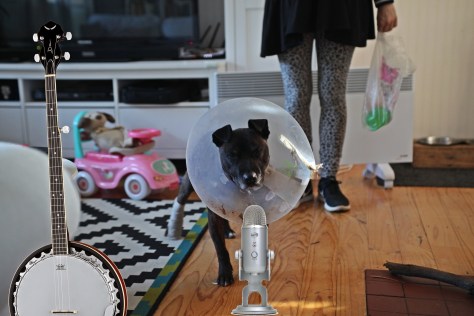
“What’s wrong for being weird just for weird’s sake? Plenty of people are being normal for normal’s sake. And they look anything but normal in the process. Normal isn’t a thing and it never has been. It’s a fraud masquerading as an ideal. We have people putting fake fingernails on top of their real ones, injecting fat into their lips, acting like their human emotions and reactions should be repressed in favor of whatever the prevailing notion is. Worse, we have people who don’t recognize what real humor is or the difference that motive makes in regard to everything we do and say. Be authentic. That’s normal. If you want to shave one eyebrow off, do it. It’s no weirder than having painted on eyebrows – or gluing fake eyelashes onto your real ones. The next guy can put a quarter-size hole in his earlobe or another hole in his nostril but thinks he has the right to tell you that you can’t say “Hello” in Klingon if you damned well want to? Get your banjo and play it as loudly as you want to, even if you sound like you’re being electrocuted.”

– From “The Old Man Chronicles”

$5 Is The Price For Happiness

allef-vinicius-v-W5jleF0HE-unsplash

Hey, Mr. Impersonal Retailer: today, I erased the damage you did to one of your customers.

On the way home, I listened with interest to the NPR story regarding the necessity of human contact, especially in contrast to the demands of the pandemic. Without much thought as to whether I needed to go inside, I pulled into a store. The story was still very much on my mind as I made my meandering way about the store. I wandered like one of Trump’s sentences.

Mr. Magoo helped me at the self-checkout. I had an item that needed approval. I was focused on being kind to him, as Mr. Magoo and I have a storied history. In the past, he upset Dawn a couple of times. He is a fervent follower of the anti-customer credo: “He’s not happy until the customer isn’t happy.” Because of my history with him, I try to remind myself to be as neutral as possible when interacting with him. Without going into specifics, I’ve repaid my debt to him by way of several pranks.

On the opposite self-checkout belt, less than 3 feet across from me, I saw a dark-haired woman quickly step back from her cart. Another cashier, one I often refer to as Mrs. Molasses, had left her customer to approach the dark-haired female customer. If people had floating icons above them, the cashier’s would be a languidly flashing “E for Empty” icon. From the other side, another worker approached, trapping the customer near the belt and between the two employees, both of whom were very close to the customer.

As I’d made a couple of passes through the store, I noted that no one seemed to feel any urgency. I’m not blaming them; I’m just commenting on the overall atmosphere of the store. For whatever reason, I had two employees who seemed to have suddenly acquired an unnatural interest in the female customer across from me. I assumed she was trying to steal something.

They were inside her personal space, despite the coronavirus, despite the floor markings and signs, and despite the fact that they were too close even for precovid society. Regardless of their motivation to be so close, they were ignoring the bigger issue of what prompted the fluid rules regarding purchases in the first place. Whatever triggered their sudden enthusiasm, it caused them to ignore all the social distancing protocols.

The customer had already stepped back. Her body language told me she was upset. To my surprise, Mrs. Molasses admonished the woman for having two cans of Lysol in her cart. The other employee, on the other side of the cart, berated the customer for ignoring the ‘one per customer’ signage. She had two 6-packs of toilet paper. Their tone suggested she had killed a puppy on Aisle 7.

“I’m so sorry, there’s so much toilet paper, even huge packs of 36 rolls. And the Lysol was all on clearance. I didn’t think it mattered,” she said, looking back and forth between the two employees. Her eyes were teary, and her voice sounded alarmed.

I won’t say precisely what one employee said as she grabbed one of the 6-packs from the customer’s cart to put it out of her reach. The other employee grabbed the Lysol from the customer’s cart. The customer cringed and flinched as they did so.

The Lysol can was huge, I’ll admit. It had a clearance tag on it and was marked down to slightly under $5. The 6-pack of toilet paper was much smaller than the 12, 18, or -36 roll packs still on the shelf. I made a pass through the toilet paper aisle during today’s retail adventure.

Regardless, the employees were enforcing the ‘1-per-customer’ rule literally. That the Lysol was marked for clearance or that the woman could have said, “Please exchange my two 6-packs for one 36-pack,” was completely ignored.

It wasn’t what each employee said that mattered, not really. It was their body language and tone. They saw an opportunity to express their authority. I don’t know what prompted them to be so needlessly harsh.

Because the employee grabbed the toilet paper so quickly, I didn’t have time to react to what prompted the tirades. I did, however, have time to say, “Miss, might I have that can of Lysol?” She looked up at me and at the can in her hand. She was weighing telling me “No.” I couldn’t imagine what might be her reason. Instead, she said, “I can’t give it to you. You’ll have to pay for it.”

I bit my tongue, as four or five clever things to say sprang to mind.

“Uh, okay, given the nature of commercial transactions, I’ll offer money in exchange for the can of Lysol.” The employee only grew more confused.I had to spell it out. “Yes, that’s fine.”

It provided the female customer a brief moment to collect herself.

I waited inside the double entrance. I saw Mr. Magoo looking over at me a couple of times, even though I was about fifty feet away. I think he knew what I was up to.

In a couple of minutes, the female customer who’d been accosted approached.

“Ma’am, I bought this fine large can of Lysol and suddenly realized I no longer need it. I’d like to give it to you as a gift, if you don’t mind.” I probably sounded crazy, especially since I was wearing my mask.

The woman reached out and took it. “Why, thank you. This means a lot.” She trailed off, uncertain of what to say.

I jumped in. “I apologize for the way those employees treated you. If they’re so interested in safety, they’d require everyone to wear masks. And everyone noticed how they invaded your personal space at the register. That was uncalled for. They are officially on my prank list.”

The woman’s eyes teared up. She was about to cry.

“I can’t thank you enough. I don’t know what to say,” she told me.

“Then say nothing and have a good day. Put those assholes out of your mind and focus on the people doing it right.”

Way behind the customer, I could see Mr. Magoo gesticulating in dismay to one of the employees. It was obvious he was communicating that I bought the female customer the can of Lysol. I waved and smiled. Perversely, I hoped that Mr. Magoo would make the mistake of trying to approach me and reprimand me for doing the horribly unjust thing of buying a can of Lysol for another person. He’s learned the hard way that I am very unpredictable.

The female customer and I left the store, both now happier than when we’d entered.

It cost me $5.

I’m not sure how close to edge the female customer was before I intervened.

When she left, I knew she was happier and that what I’d done had lightened her mood drastically.

Let’s face it: that’s often a difficult feat.

X

It’s Better If You Don’t Share

4444
I didn’t put the stupid fake picture first, given the way that the header picture is invariably the one first seen.


—NOTE (Below) : Misleading Title from a worse Facebook page—


rereer

343334
My initial response to the above-debunked picture appearing on my FB feed for the 12th time…
3453453
My nested response underneath…

The fake posts by social media users abated. Inexplicably, I had TWELVE repostings between today and yesterday. I don’t know whether people suddenly became more stupid or if those running the conspiracy and fringe social media sites upped their game. It could be both – and often is. It’s no secret that people are often both stupid and lazy. How they could have missed the countless debunkings though, is beyond belief.

I don’t know why I’m still so surprised that otherwise smart people don’t check what they share. By uploading an image to Google Images, I can usually see what portion of its usage occurs on conservative vs. alleged liberal media. If it’s mostly one side, it’s probably drivel, whether shared by liberal or conservative.

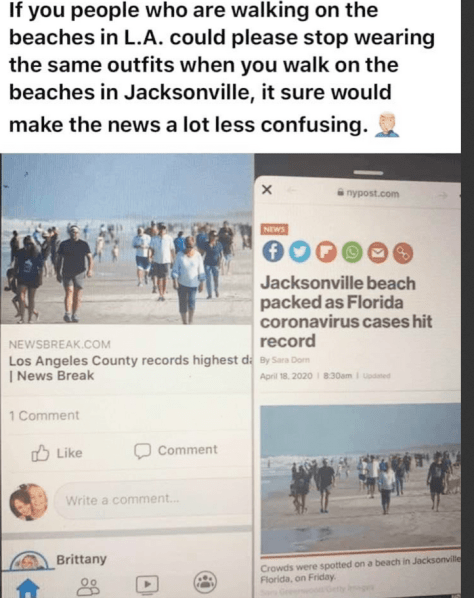
The picture with this post was debunked a couple of weeks ago. Despite this, those who can’t or won’t use their critical thinking skills continue to share it as it makes its way around the internet. There is no media bias, at least not as pictured. I’m not a fan of the NY Post, given its owner, but they used a properly credited picture of the beach. The other FACEBOOK page operated by News Break aggregated the story. The FACEBOOK posting used another image from the same website. The NY Post website did nothing incorrect here – and neither did the News Break FACEBOOK page. A few politically-influenced social media sites have continued to improperly report the juxtaposed images in support of the incorrect and erroneous claim that its proof of the elusive media bias that evidently occurs everywhere. In turn, people who are inclined to believe such claims outright, even in cases that are demonstrably not evidence of media bias, share these posts ad infinitum.

What the picture does expose is the ever-growing need for people to use social media to share their own words or ideas. It insulates them from being ‘had’ by the very media they claim they can either trust or not trust. By continuing to share such incorrect stories, they themselves become guilty of what they accuse others of doing. By presenting every word and image on their page as their own, the worst that can be challenged is their opinion. Posting/sharing what others produce exposes them to scrutiny and being fooled by partisan or cause-oriented falsehood.

If I sound a bit irritated, it’s because many of the people who are shouting the loudest about ‘fake news’ or the unreliability of the media quite often use questionable sources to get their ideas, especially social media sites. No matter how often I point out that they are being victimized by their choices, they, of course, get irritated and angry. No one enjoys being asked to correct provable wrongs. On the other hand, that’s what responsible people do: they correct errors and push back against ego preventing them from saying, “Oops.” Sooner or later, we are all going to repeat/share/post something that is literally wrong. How we respond when someone points it out is the single biggest determinant of whether we are capable of discourse and conversation. Along that line, the safest thing to do is to avoid sharing something that you didn’t create. Doing so and then digging in when it’s pointed out that it’s wrong tends to lead people to the conclusion that discovering what is essentially true or right isn’t high on your list of priorities. Above all, always be very cautious about sharing an alleged news post from a Facebook source. They are notoriously unreliable. I have hundreds of them blocked, both conservative and liberal alike. Likewise, I use LeechBlock on my browser to block a huge list of websites that are prone to extremism.

Granted, even though I meticulously pointed all this out, the odds of the outright false post being taken down approach zero. The people who make the “fake media” claim tend to ignore such requests at a rate much higher than their crazy liberal friends. It’s a hallmark.

P.S. Many users aren’t aware that some of their posts are flagged by Facebook as “FALSE” as they post them. If you show the poster that Facebook has done this, they’ll invariably shout, “BUT you know nothing Facebook says or does is true.” And then I’ll point out that the fake post they are arguing about was itself a Facebook post and that they are contradicting themselves. It’s a sublime moment; one of joy for me and seething anger for them.

I know I’m an idiot. In my defense, I don’t use other people’s websites or links on my pages. What you read is my opinion and interpretation. It’s not poorly-expressed as objective truth. It’s opinion.

FactCheck Link

Poynter Link

Politfact Link (Same Beach, Different Conspiracy)

Snopes Link


The Social Media Revelation Observation

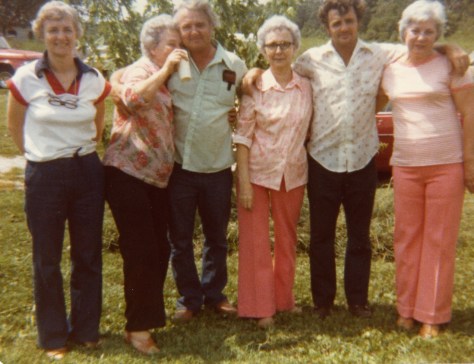
james buck terry around 1965
This is my Uncle Buck, with his first wife. The picture is from 1965.

You must either post or perish. The road between reassuring affirmation and privacy is indeed narrow. If you fail to share the complex and multi-faceted path that got you here, people will not understand your sudden departure from the thing you declared to be angel’s elbows and dancing unicorns.

Corollary: If you don’t share a multi-faceted explanation for the arc of what you’ve experienced, people will judge you on single-issue concerns. We’re all voyeurs and we all tend toward oversimplification.

If you’re going to use social media, you must do so while bowing to the truth, even if it is not immediately glittering.

Don’t imply your life is perfection while you are eating hotdogs over the sink or looking out your window with teary eyes. We only share our humanity when we share it all. No matter what you’re going through, we’ve probably experienced it or helped someone else as they did.

Almost everyone agrees that sunlight is best. Yet, most shroud their goings-on with a bent elbow.
We not only judge when we have incomplete information, but also when we have all the information. It’s a no-win situation. But if you opt for secrecy when you claim everything is perfect, I’m going to look at you cross-eyed when you want to know why everyone is so curious.

You can’t have both affirmation and privacy: they are mutually exclusive.

P.S. I wrote this rule while in observance of someone whose marriage disintegrated. It’s a trajectory I’ve often seen: joy, distrust, implications, none-of-your-business posts, followed by resignation and a push toward the next phase of life. Repeat. But it applies to so many other areas too.


The Gift Of Memories

aaa uncle buck scanned (68)
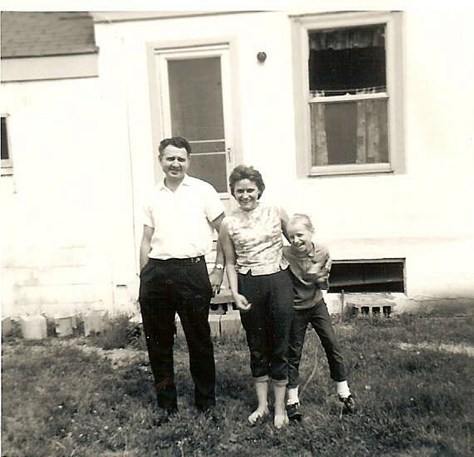
My Aunt Ardith and cousin Jimmy, standing in the front yard of their house on Ann Street.

Once again, I opened my email to discover a message telling me exactly what I needed to hear. A sister of one of my paternal aunts wrote me, telling me she’d noticed I added another 100+ pictures of her sister on Ancestry. These are archived in original resolution. My aunt’s sister told me she’d cried a bit, something she hadn’t expected. I wrote her back and told her I put every usable picture I owned of my aunt on there, in the hopes they might last forever, for anyone to see. I also told her I did the same for my uncle and my cousin Jimmy, both of whom now have hundreds of pictures on their respective pages. If you didn’t guess, putting so many pictures on accounts is a rarity.

It was a labor of love and honor. It’s the least I could do. These pictures are in my possession, but I don’t think I own them. They belong to us all – anyone who shared moments, laughter, or time with those in the pictures.

Yesterday, I wrote a post about high school pictures. I used a horrible picture of myself from many years ago. It was a bit satirical, but the message was one I’ve written about a few dozen times: vanity and hoarding regarding pictures is sinful. I’ve never owned a picture that I haven’t offered to everyone who might have an interest. I don’t get the urge to hoard pictures in a box, under a bed, or in a seldom-used closet.

More than one person got irritated at me for preaching the gospel of sharing. Some people righteously guard their past appearance, as if history isn’t going to kick that door open with time anyway. Others play the role of Gollum and greedily keep their pictures hidden in the crook of their unapproachable arms. The last tendency lessens everyone’s ability to remember and cherish people in our past who’ve passed on to the next life.

When my aunt’s sister reached out yesterday, she didn’t know that it was what I needed to hear. My actions months ago opened her heart again, even if for only for a while yesterday. In those moments, she could see that I had paid homage to her sister, to life, and to people we love.

All those pictures? Some of them have been downloaded dozens of times, each time by someone who discovered my treasure, one freely given. I am merely the guardian.

Love, X

High School Picture Vanity? (The Picture Rule)

chicago 2005 217XXX

Do I have your attention with this horrible picture? Is it completely real or photoshopped? Who knows! Who cares? It’s more or less me back in 2005. I’ve posted it before. It makes me laugh, precisely because it makes me look like the “before” picture for both the South Beach Diet and John’s Guide To D-I-Y plastic surgery.

I enjoy the posts about people complaining (gatekeeping) about people posting their high school pictures. It’s true that it doesn’t “help” current seniors. Let’s be honest, though. High school pictures don’t seem to help anyone. Except comedians. We all love a crazy high school yearbook picture. We can’t help it.

They do, however, remind us that our idea of hairstyle and fashion was never as great as we’d imagined. This is the case of every graduating class in the history of… well, history.

I know it’s not an ironclad rule, but I distrust anyone who is truly upset about anyone seeing their high school pictures. Not only are almost all of them available online, but they are precisely the pictures more likely to survive the next 300 years because they are public and otherwise in the hands of so many other people. They are copied, indexed, and even included in genealogy websites.

What am I saying? You’re screwed if you don’t want people to see your pictures from school.

Years ago, I scanned and archived several years of Springdale High School’s yearbooks. I also uploaded them to all the relevant SHS FB class pages, for everyone to share and enjoy. It look me 100+ hours. It was a huge way for all of us to get acquainted again, whether we liked it or not!

By the way, a huge number of yearbooks are available on classmates. Get a free account and start looking. Other websites carry college yearbooks, too.

.
The Picture Rule: If you’re complaining about the existence of your high school pictures, you’re probably at the mercy of either an exaggerated vanity or a profound scarcity of a sense of humor.

P.S. I have almost never been stymied finding EVERYONE’S yearbook picture, not to mention the address you lived at when you were 7. Your life is an open book, no matter how badly you want to stick it under the bed where no one will ever find it. The more you want to hide your pictures, the more likely your brother-in-law is passing it around secretly via text, email, or DM.

P.S. Redux: If you are desperate to find someone – or a picture of them – let me know and I’ll get enough details to sleuth them out in the interest of both lovingkindness and transparency.

Love, X

The Jerks Raised Their Hands And I Didn’t Notice

aaa uncle buck scanned (91)

I didn’t know it then, but I learned much more than I thought back when I changed my birth name.

In regard to my struggle with addicts, anger, and sociopaths in my life, I look back and now wonder how I didn’t see the bright neon light flashing above my head.

I struggled, even as the answer flashed repeatedly. My instincts knew. I can see them in action as I re-read some of my posts about my struggles with my name change.

Let’s face it: my ‘struggle’ completely derived from other people’s reactions, all of which were choices they made.

Here’s what I learned: ALL the assholes from my earlier life self-identified when I changed my name. They raised their hands. They showed me who they were, each one. All those who had already demonstrated violence, anger, and addiction in my youth showed me that their true colors and outlook about the world hadn’t changed. The only people who refused to immediately attempt to respect my crazy choice to change my name were already less-than-good people.

Some of my family and friends didn’t understand (or agree) with my decision. But the good people among them, the ones I could count on, all unilaterally tried to get used to the idea that the person whose identity I was born with was no longer a person. Did they forget sometimes? Yes, but not with malice. It bears repeating that some had concerns I’d lost my mind. Willingness to change shows the ability to love without agreement or even understanding.

Rigidity in attitude, though? Pathology.

The rest? All of them fall into my list of people who didn’t respect me as a person in the first place, or could only see me in terms of their own narrow and dark view of the world. There was a spectrum of disrespect. Not all were raging sociopaths. Some were. I’ve documented the variety of disrespect I endured from some. I’m not painting them all with the same brush of anger or lunacy.

I now see that their disrespect was just another symptom of their disease: simply put, they weren’t good people to begin with, not people I would have chosen to be in my life absent from the confines of exposure due to geography or family ties.

If I could go back and choose, I think it’s obvious that my choices would be quite different.

I still would choose to change my name.

This time, though, as the assholes came forward, I’d open the door for them and slam it behind each one of them.

And march forward with my life.

Which is what I should have done.


A Few Words About Sociopaths

img715
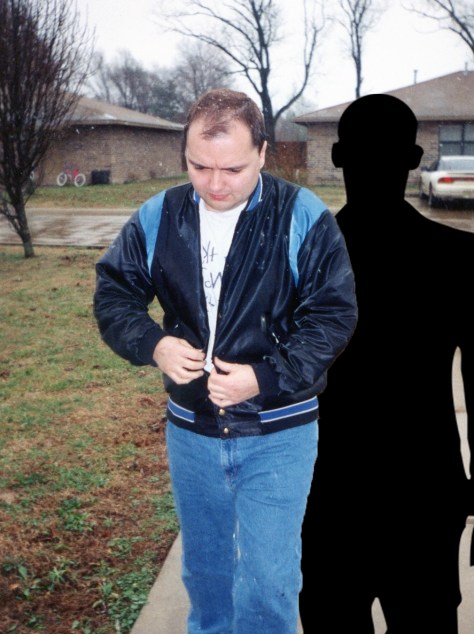
That’s me in the jacket, 1997ish. The shadow is the lurking presence of what I brought with me from my childhood.


One of the tactics of addicts or sociopaths is that they time their harshest manipulations around major life events: big trips, funerals, weddings, birthday parties. Any gathering or otherwise stressful social interaction will suffice for them. Their anger at you festers. They bide their time, bite their tongues. And wait.

Your wish to get through the happy day increases your stress level. Addicts and sociopaths secretly wish for your suffering. They lay the groundwork, seeding insecurity. If you’re normal, you won’t understand how much pleasure and joy sociopaths can derive from the suffering of others. There are more of them in the world than you’d think.

Near the day in question, they’ll unleash a fresh hell upon you.

You’ll flounder and attempt to deal with the symptoms, rather than the disease.

If you’re looking back at your shared trajectory with someone you believe might be a sociopath, examine how many outbursts coincided with life events. It’s another sign.

My mother was an absolute tyrant in this regard. Another close family member followed her lead into adult life. He/she became blind to the fact his/her life slowly devolved into a miserable cycle of anger and control. As people fled in hurt, their departure should have signaled that something was wrong. Sociopaths, though, paint themselves as victims to other people’s search for normalcy. One thing they cannot abide is for another person to demand control and freedom from them. Departure is the ultimate treason.

The sociopath is the disease. Excising it is the only viable option, one we should run to with greater velocity.

We all make the same mistake: we attempt to navigate their well-placed mines instead of simply walking the other way.

You have to learn to cut ties more quickly. If you can develop this skill when you’re younger, you’ll be able to live a much happier life.

A lot of my adult life was diminished by my own stupidity. I tried to continue relationships with sociopaths and addicts. Some of it is because of family loyalty; we need a primer to teach us to demand change (or silence) especially from those closest to us. Family affiliation does not grant either access or proximity. It is one of the sociopath’s worst tools. They say things such as “We’re family.” Or, “You only have one family.” Worst: “You only have one sister/brother/mother/father.”

If you’re otherwise a good person, trust your instincts. If someone’s presence, words, or behavior triggers feelings of insecurity, something’s wrong. Figure out if the rupture lies within or without. Ask yourself if your life is better or worse by the other person’s involvement. Do you tolerate such behavior from strangers? If not, use it as a signal that something’s wrong.

Don’t open their emails, don’t answer their phone calls, and certainly don’t show up in the same place they’ll be. If it is your occasion, forbid their presence. As they recruit people to their cause through manipulation, ignore those impassioned and angry pleas. It’s a short-term gain. Take the long view.

Use a display of outward calm to communicate your dedication to taking back control of your own life. Don’t veer into the unwinnable territory of explanation. No matter how many words you’ll spew, not only will those words be used against you in the worst way possible (and out of context), you will be wasting your energy. In turn, that leaves you with less ability to live a good life.

Let your “No” be a whisper and leave your shouted “No” only for those times you’ve lost all inhibition against unleashing your anger.

The No Rule: let your “No” be a whisper. If someone demands an explanation for your “No,” start with the assumption you’re being manipulated.

Sociopaths love driving you past the point of control and then using your entirely normal response as an accusation against you. Observers won’t see the gaslighting. All they will see is you screaming in anger at your family member or friend.

When I was younger, I tried hard to distance myself. I had no real sense of self-worth. I knew where I was trying to go. Because of the pathology of many members of my family, I came into adulthood ignorantly. Interpersonal skills? Not much. I should have declared my independence and stuck to it unilaterally. I would have moved past some of my future obstacles much more quickly. Would my life have been lesser? Maybe. I don’t know. But, I do wonder who I would have substituted into my life absent some of my addict and sociopathic family. Something would have filled the void. Would it have been better? Again, I can’t know – and that’s on me.

If I had it to do over again, I would cut anyone angry or addicted from my life when I changed my name. I would abandon any attempt to bridge the infinite divide between me and people who were fundamentally different from me. Everyone would have been put against the backdrop of my poor grasp of normalcy.

As I got older, my ability to tolerate sociopaths waned. As my life moved toward a larger understanding of self, my joy in living a life free of drama became self-evident.  That kind of tranquility gave me greater latitude in saying “No” to the screeching urgency of the sociopaths demanding access to my life.

It is with this post that I give my final “No” to the sociopath who won’t take “No” as an answer.


You’re Not Going To Believe This One (Read Until The End)

dylan-nolte-HNXi5znlb8U-unsplash

This is true commentary. Some of it isn’t mine to share. I do no disservice to anyone by hitting the high notes of shame and secrecy. When I open up and share, sometimes people share stories with me. Some of them are stunning. Others are evil. A few are joyous. In a bit, I’ll share the general truth of one such story. I’ll do so by telling it anonymously. Whether it happened in Rogers, Arkansas, or Topeka, Kansas, it is a true story.

Throughout my life, I’ve been on the cusp of several discoveries. Some of have been personal, while others have been the sudden surge in my perception of the world. Given the outright ignorance that was mine to claim when I was young, I find myself surprised by who I am. My early life was cloistered and smelled of copper, whiskey, and sweat. Its soundtrack was a cacophony of shouts. I don’t think some of you truly take me at my word: my life was small for the first part of my life. I understood very little and my ability to grow to understand it was limited by the pathology of who I came from. Nature vs. Nurture lost a fight in my head.

An inquisitive mind took me places. DNA broke down doors. I was 52 before discovering I had another sister, one fathered by my racist Dad. While it was an accident, it would have not happened had I not insisted on following family questions over a long road. Revisionists shouted at me my entire adult life. Most wanted allegiance; when not given, they demanded silence. Failing that, they resorted to sustained anger. Their voices are fading though, leaving me to write the history of all the lives I intersected with. I was stunned to know that my suspicions about my Dad were right. DNA collectively slapped my naysayers in the mouth.

When my Dad fathered my sister, he didn’t know about DNA. He didn’t have an idea that it would expose his behavior 40+ years later. Unlike the news stories I found detailing Dad’s misadventures with crime and his DWI fatality, DNA lurked behind the scenes. I won’t share the details of my Dad’s case because they’re not mine to share.

DNA opens doors that people forget existed.

Which leads me to this inept segue…

Many years ago, a doctor told a young woman that her child died during or shortly after childbirth. The woman went home, heart-broken, and barely managed to move ahead with her life. She later delivered another child with the same doctor. That child lived to adulthood.

In secret, the doctor ‘gave’ the baby to a family who wanted children. The baby hadn’t died after all. This family ended up with two such ‘adopted’ babies. They were aware of the circumstances under which the baby was taken illegally from the mother and that the ‘adoption’ papers were forgeries. The stolen baby grew up with her new family.

When the doctor started his nefarious endeavor, DNA wasn’t a calculation. Paperwork could be falsified, lies told, and an impenetrable cloud of confusion could conceal what he’d done.

The doctor? He wasn’t an average doctor. He was respected, known, and had access.

He earned a rich living, had children of his own, and probably excused away his monstrous behavior by convincing himself that the stolen children would have a better life.

This isn’t a new story. It still happens. DNA makes it more difficult to conceal.

I wonder how many of you knew this doctor, or unknowingly knew the mother robbed of her child? Or went to school with the doctor’s children? What would the doctor’s children think of him if his crime were shared with the world? If you’re reading this, it’s possible you’re related to the doctor or know someone else who had their baby stolen from them. It’s one of the reasons I repeatedly tell people to get DNA tests.

Human behavior covers a wide swatch of possibilities. Doctors, midwives, and churches have all taken turns robbing young women of their children.

Because I’ve run across many variations of human deceit, I know statistically that many people out there aren’t related to the people they think they are. Some, although in increasingly smaller numbers, live a life absent a startling truth, one which DNA can help expose.

In this case, the adopted baby girl grew up used DNA testing to find her biological family. She reached out to her birth mom, the one who’d been told she was dead. I try to imagine the shock and horror of getting such a call – one from the adult daughter you’d mourned. I imagine the further horror of realizing that she’d risked having another baby girl stolen her by having her second daughter delivered by the same doctor.

The adopted baby, now an adult, and the mother who suffered a stolen baby attempted to confront the doctor, who still practiced. They confronted him decades after the fact.

How many times can you imagine the doctor stole babies from young mothers?

Did I mention that this is a real story?

The doctor never discovered the agony of being charged with a crime. He didn’t face public shame by looking out the window and seeing a news crew pull up in the parking lot, knowing his crime had been exposed and his face shown on the nightly news.

I wrote a long post about it but didn’t have permission to tell it to the world. I did enough research to discover that the salient points were easily substantiated.

So, I leave you with this doubt: are you SURE you know who your parents are? I’ll say it again. Because of my personal involvement with other cases, I say with full confidence that some of you are living without the truth.

Love, X