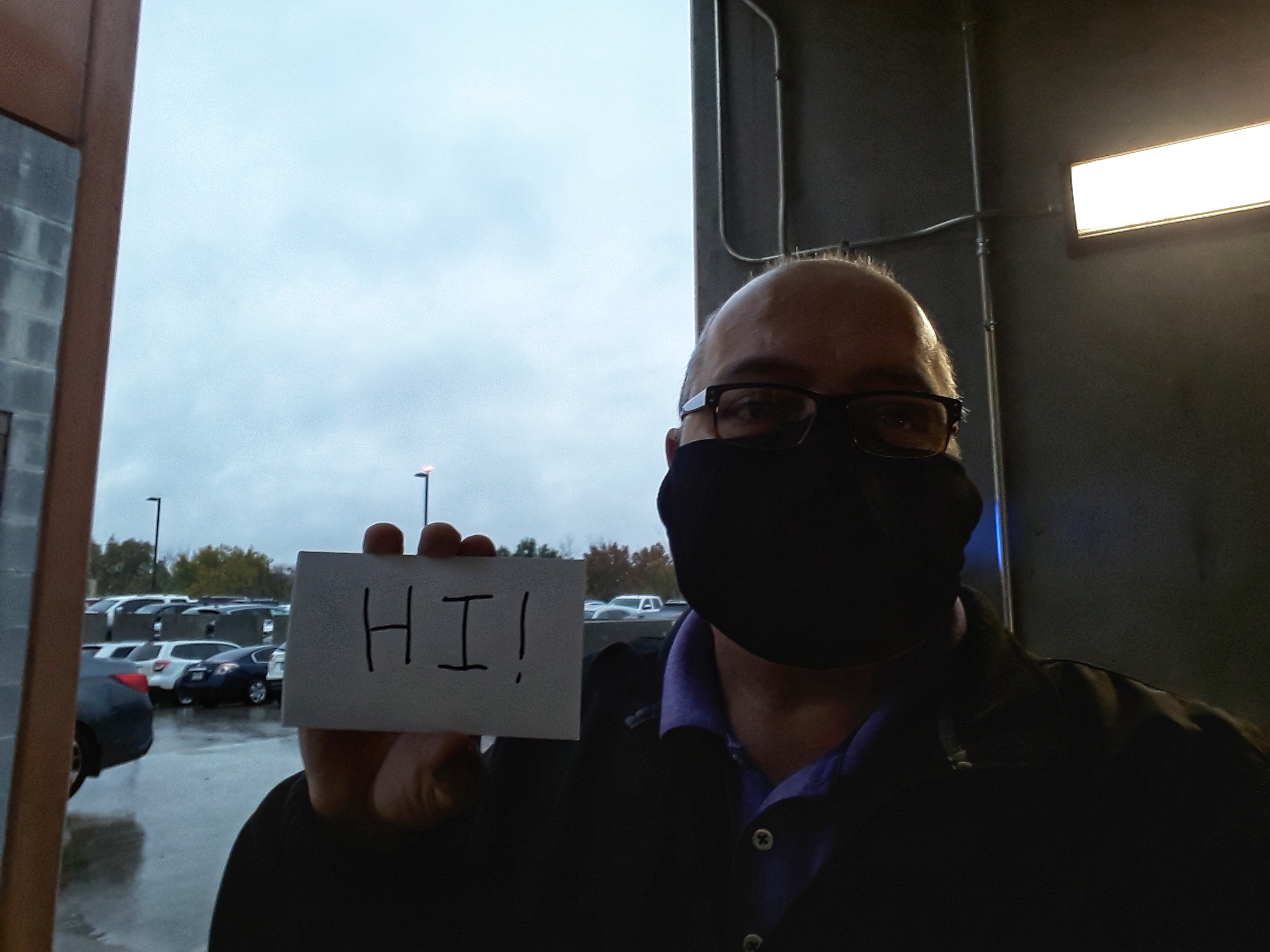
I stopped at the Subway by the airport after work. While arbitrarily attempting to comply with the contradictory multitude of signs regarding covid-safety, I moved along behind a man and a woman as they traded a succession of misheard questions and comments from the sandwich artist. I suspect that the sandwich artist was a mumbler before the epidemic put a mask on his face. Mumbling is one of my gifts, too, passed through my dad’s DNA.
As I neared the end of my sandwich trek, a commotion at the register commenced.
“Ma’am, we don’t have anywhere near one hundred dollars in the store.” The clerk spoke to the woman in front of me. He waved a $100 bill back toward her. “Can you let me leave my information and an IOU? I’ll be back to pay.” The clerk traded a can-you-believe-this look with the other worker standing next to him. The wife exchanged a look with her husband, one that said, “I might lose my literal mind here.”
I tapped the husband on the shoulder. As he turned, I said, “Let me buy y’all lunch. You can pay it forward. We don’t need to exchange information. Just enjoy your day!” He smiled but also nervously looked at his wife. “Oh, thanks!” the wife said. I let her rattle off a few pleasantries, the ones we’re obligated to offer when someone catches us off guard.
When I left the store, the husband and wife were pulling around the corner. The husband waved exaggeratedly at me. He seemed genuinely enthusiastic about it. When I looked at my receipt, I realized that only one of them ordered a meal. It occurred to me that I might have saved that husband’s life – or the life of the people in the Subway had no one stepped up to show either logic or compassion.
The title of this post popped into my head as I ran from work today. All of us have our struggles. I catch myself in surprise by the dusk in my head. Though I wasn’t consciously thinking about it, I’d walked across the parking lots and sidewalks in the rain, still wearing my mask. It was an absurd moment. “Lost in my thoughts” doesn’t begin to describe the floorless circumstance of my mind. If you’re lucky, you’ve had meditative moments of selflessness like that. In dense moments, they often save us from what streams in our heads.
Ricardo Arjona recently released another album. One of the songs, “El Amor Que Me Tenía,” among others, hit me like an anvil. I learned a lot of poetry and vocabulary from Arjona. He’s known for his turn of phrase. It fundamentally resonates with me. Musicians like him broke open the capacity in me to see beyond language. If Spanish were to become my primary language, I would devote myself to speaking like Ricardo Arjona writes his music, no matter how perplexed people become. I find myself wishing we spoke English the same way, too, but it is difficult to find anyone interested and willing to spend the day deconstructing the absurdity and content of what we say. (Yes, such a willingness is one of the things by which I evaluate a person. Those who demonstrate such an interest won’t ever be disappointed by circumstance.)
One of my co-workers from another department is an avid Arjona fan, too. He got excited when he realized that I had the new album. It amazes him that a gringo like me can appreciate such musicians’ subtle capture in his native language. I brought it, and though we don’t overlap many hours a week at work, I played it on the computer/jukebox I rebuilt at work. Today, my co-worker returned briefly to pick up something. He asked me to put “El Amor Que Me Tenía” on again. I did and increased the volume in the vast space to the point that the angels trembled. I left him there in the back of the room. As the song started, he sat and listened with the rapt attention of one enthralled. It’s rare to see another adult so rapturously engage with a song. When the song ended, he stayed seated for the next song. He emerged from the shadowy area in the back and looked reinvigorated. Whatever it is in that song, it found its way inside him. We now have a shorthand we can use to connect to that kind of music and message.
Whatever the moment with his immersion in the song was, it is a shame that we don’t have such moments several times a day. They ground us in our humanity, and in the parts of our lives we let slide from our grasp. *
P.S. “This amazing story was brought to you by me.” (A line I felt obligated to steal from a winsome writer.)
I still buy an entirely new set of socks each time I need them. For me, they are like new tires. Buying a few is tomfoolery. As comedian Steven Wright does, I wear and sort my socks based on thickness rather than color. Colorblind people everywhere are in my corner.
If that joke doesn’t work for you, try this one by Steve Martin: “I like a woman with a head on her shoulders. I hate necks.”
Since you’re already a fan of mine as evidenced by the fact that you still somehow find the nerve to read what I write, you also know that I do not fold socks. It’s not that the mechanics of it escape me. It’s the folly of the days of one’s life spent doing it. Before you attack me, NO, I do not know what I’ve otherwise done with this amazing bunch of time I’ve saved by not folding socks.
Often, I of course use the old laundered socks as packaging material. Years ago, I accumulated them and packed them into my mom’s surprise packages I sent her. I sometimes wear the socks the last time when I’m on a trip and discard them once worn. There have been times I’m certain that housekeeping wonders what kind of lunatic discards his socks.
Not that y’all care to know, but I do the same with my underwear – except I don’t use those in my mailings, unless you ask me to. People tend to react unexpectedly upon opening a surprise box and discover underwear in various stages of decomposition. The idea of having underwear with different birthdays amuses me.
Before you mock me, I’ll admit that I CAN intermittently replace my socks and underwear without a total replenishment. But what else would I do with this obvious wealth I’ve accumulated in life? If one cannot splurge and buy a new set of underwear in its entirety, that is when life gets truly oppressive. You won’t find that written anywhere unless you inherited the diary of a madman.
For all the above reasons, perhaps you can now see why I am a liberal.
This post isn’t what you’d expect. The title does convey an essential element of formal wear, though. Being fit brings a lot to the table. And also the absence of a lot, if you’re both humorous and literal.
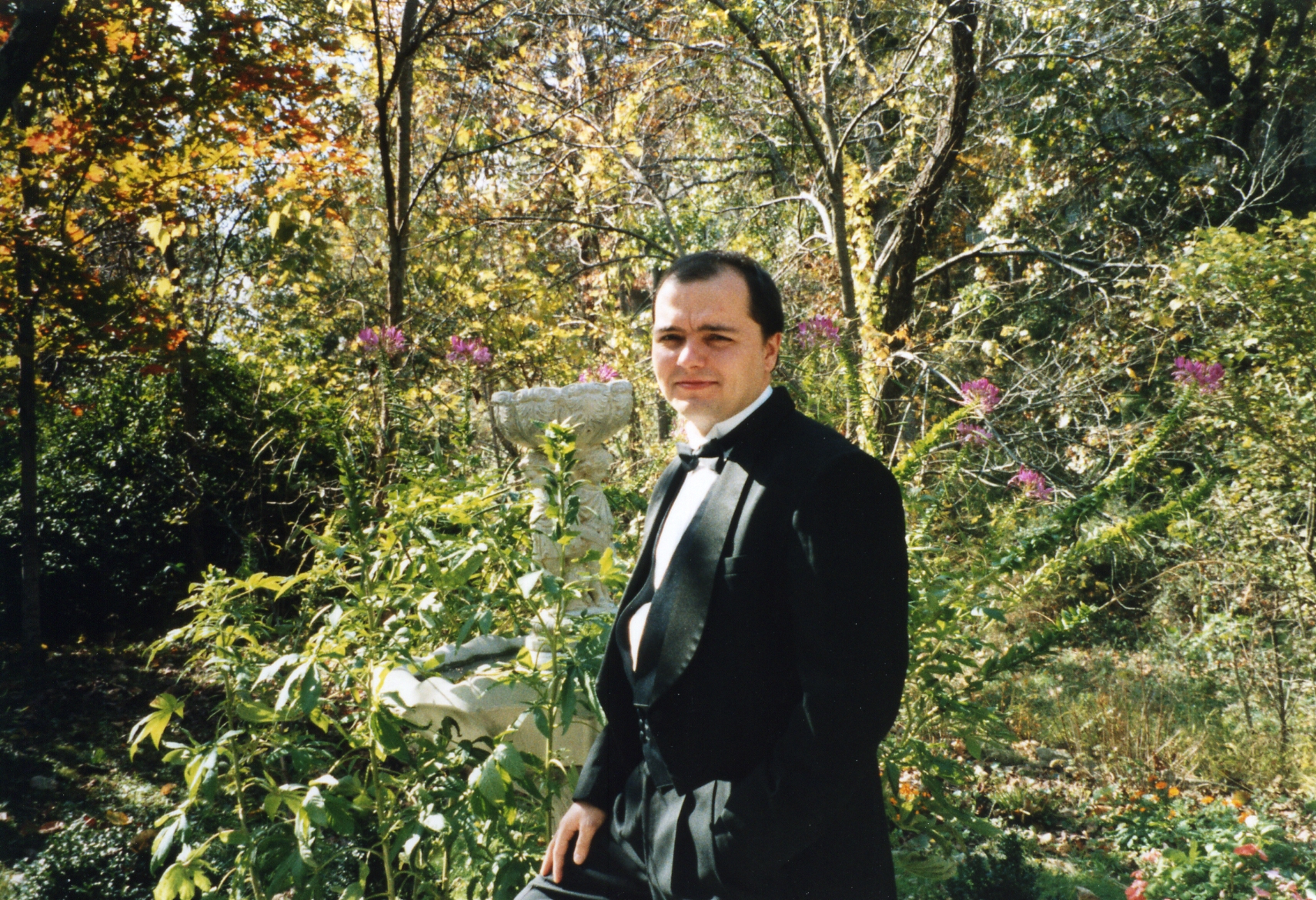
Unless I’ve missed one in my minimalist clothes collection, I don’t own a tie. And if I did, I only briefly learned twice how to tie a real one properly; much of my experience was with a clip-on. Men aren’t supposed to admit this sort of thing – just as they aren’t supposed to admit to avoiding events requiring them. Sure, you’ll find a few pictures of me wearing a suit. They are all based on the magic of illusion. I’ve known a few men who love wearing suits and would admit it.
When I was younger, I went through a phase when I loved suit vests. I still do. Being overweight ruined the fun stupidity of them for me. I had a Snoopy vest that brought out the idiot in my eyes.
I’ll tell you that I don’t like the formal rigidity of suits. That’s true. As with suit vests, I like the feel and look of a suit coat when worn with incongruous jeans or comfortable pants. Modern suits that fit well cost more than my entire wardrobe, though. Hideous ones are, of course, almost free at several retailers.
Who we are inside them doesn’t change. Suits don’t add solemnity. Even though it paints me outside of normalcy, I don’t particularly appreciate that society nods its head and agrees that such things are worth the discomfort, cost, and hassle. This dislike approaches ridiculous irritation where formal attire might be expected. A wealthy crowd is easy to spot once you zero in on how well everyone looks in their suits.
Weirdly, though, I can see that some people and some suits look stunning, much in the way that the angularity and cut of a uniform might. None of these handsome people look like Danny DeVito, though. Many men find that suits are very attractive on a woman; ask yours, and you might be surprised.
The common denominator for a good suit is that the person wearing it already looks fit and at ease before putting them in the suit’s artificial embrace. Tom Cruise or Brad Pitt can’t save a K-Mart leisure suit, though. Now that I’ve written all that, I think I will have to buy a suit once one fits properly. The only question is whether it will be purple or gray. .
After decades of watching people, I can share an obvious secret with you.
People don’t work to learn another language because it exposes us to our ignorance. It’s not because they’re lazy. They are nervous or scared. If you find someone who doesn’t fear their ignorance being on display as it diminishes, keep that person in your life. They are rare. All of us start from complete ignorance for every language. When we already know one before starting a new one, what we think we know trips us like an endless bucket of banana peels.
If you are lucky enough to speak English as a first language, trust me when I tell you that you won the lottery without purchasing a ticket. Please do everything in your power to forgive others as they struggle with the mess we’ve made of our language. Please take a second and consider that they’re using another language. I know that the necessity of needing to speak or write another language ADDS pressure to those in that position and adds difficulty. Whether it is the case for you, I’m an idiot if a proverbial gun is to my head.
Also, if your accent is remotely like mine, you might sound a bit weird. As the old joke says, the last thing you want to hear your brain surgeon say is, “Y’all are going to be alright.” I’ve butchered so many words that I should have a Dexter spinoff. One thing some don’t know about me, though, is that language is a melody that excites me, and when I find myself forgetting what once was at my disposal, I feel a bit of loss.
For language, all any reasonable person is going to ask is that you try. It helps to be able to laugh at yourself. People learning other languages is a joy to witness. There’s no better comparison than observing a child conquer something complex; mastery soon seems inevitable. Laughter and self-observance is a considerable part of a good learning plan.
Yes, people don’t take the time, that’s true. With a couple of other people before, I proved to them that a person could learn a LOT of another language by just learning one word a day. Like all learning, words begin to associate, stick to another, and create grooves in your brain that you might even realize have formed, in the same way lyrics fall surprisingly from your lips. You’ll soon learn phrases, insults, and wit. Anyone lucky enough to hit the milestone of laughing at a joke that isn’t directly translatable experiences a deep satisfaction at having done so. For me, I will never forget the abstract joy of telling my Sarge/Lieutenant On the Edge of The Prairie joke in Spanish.
Most of us only use around 800 different words a day. I’m not talking about Tiffany or Jessica, who seems to rattle off 800 a minute. They only use four different words, and two of them are both the word “like.” Sorry, Tiffany.
Truthfully, it is not the words per se that create difficulty for us. It’s the connecting words and the ridiculous verb tenses we allow in our language. If you can overcome your initial fear, you can communicate a lot of information using words as a toddler does. You don’t need the word “sublime” in your vocabulary during a typical day – nor do you need to master the future perfect tense, subjunctive or otherwise, in either English or the language you are learning.
I know there are people out there who have always toyed with the idea of another language. If you learn nothing else from me, please hear this: if I can get to a decent level of mastery, anyone can. Even if you only remember a few words, those few words will push your mind outside of its normal limits.
“I don’t look for exoneration, though I want it. There is no one in this world who can be both aware of my actions and the reasons for them except for me. Since I don’t pardon myself, I expect no less from others.” -X
I do look for understanding, and if that’s not possible, acceptance. All of us desire to know who we are and that who we are is of consequence to someone.
“Never attribute to malice that which can be adequately explained by stupidity.” I fail in this regard a lot, even as I continue to hope that others will assume no failure of character on my part.
“We judge ourselves by our intentions and everyone else by their actions.” -S. Covey
If you think above these for a few moments, the hypocrisy of how true it all is numbing. I’m working on it. Honestly, I always will be. I can’t imagine aiming for an authentic life without such reflection.
Most of us tentatively feel our way through our lives, wanting more of the invisible things that bind us, yet distracted by things around us. Awakening to our houses’ solid walls, we forget that whatever else we are, we are not focused on the sublime and unknowable lives of satisfaction that could be ours. It is possible that you’re different than me, and that you don’t get distracted by the volume of “other” that surrounds and confounds me.
“The bitterness of knowing the truth is that it is impossible to unknow.” The same idea has been expressed in many ways. I see “the truth hurts, but lies are worse” frequently on social media. Like all universal knowledge, it becomes fuzzy and self-referential the more you try to grasp it.
Knowledge changes us, even if we turn the recognition of it away from prying eyes or panic that it will change us. Whatever we are is already essentially invisible, leading us to hold close the changes we can’t share. In part, it explains why people suddenly seem to change; they trapped their truth until it couldn’t be contained. While the catalyst might have exploded in a single moment, the ability to reveal ourselves is frightening.
We learn something, we figure another thing out, or knowledge breaches our defenses. When we compare it to what we knew before, it’s inescapable that we’ve changed too. Whatever malleable ideas make us a person, a new insight either dents us or expands us.
For those of you who don’t know the agony of insight, it often results in paralysis. Whether you understand that something fundamental to you cannot be right or that you’ve spent time furthering people or a life that you didn’t seek, it is at once liberating and confining. If I were a betting man, I would predict that the postcovid world will shatter us as we wonder if our attention wasn’t in the wrong direction. I do hope it continues to break us of our obsession for things.
Some of my insights include the idea that if God exists, he cannot be an interventionist. Unseen dangers fly above and around us and narrowly miss us with ridiculous frequency regardless of who we are or our accomplishments. That youth and health are no more a guarantee of a long life than any other factor. That certainty of the world or myself is the surest sign I am about to reminded that I am ignorant of both. That love is the glue that both expands and contracts.
Of all my insights, I think the one that traps us most might be that we are indoctrinated into the false promise of security by the right choices. It’s possible to make only the right choices and still fail – or be unhappy. It’s a bitter truth. With the finite number of breaths I was given, how could I possibly know what would lead me to a satisfied life? Not one without agony, because such lives are absent.
I find myself inside the pinball machine, bouncing from one reaction to the next – even as the tally of my remaining steps allotted to me fades. Because we’re human, I suspect you also often look out into the world and deeply feel the disparity between who you are and your place in it.
I have no answers. As I’ve aged, I’ve been glad to see that so many people have admitted that they are struggling for meaning and unsure of themselves. Those who seemed to have surety and confidence often are better at distraction or demeanor. A few years ago, I told a graduate that “the secret to life is most of us are winging it.” His dad, though a brilliant man, told me, “He is not ready for that certainty.”
With love comes turmoil. With life, hardness.
As late as yesterday, someone told me to “choose your hard.”
The census worker stood by my custom address plate when I emerged from around the blind corner of the house, holding a long metal ladder over my head like an idiot. I didn’t know he was standing there; the ladder was over my head for purely ridiculous reasons. The truth is that it seems perfectly safe and reasonable to run around one’s house with a long metal ladder above one’s head, much in the same way that scampering inside the house with two pairs of open scissors seems safe. I’m 53, so stupidity hasn’t so far been fatal. Check back tomorrow, please.
The census worker must have noted a large shadow was overtaking him because he turned around quickly. I’m not sure what he was thinking – only that he was perplexed. Without bothering explaining why I say so, he was the embodiment of what a census taker should look like. I wish he had been wearing a green accountant’s visor. It could save us all a lot of guessing and speculation as the workers navigate through neighborhoods. (If you’re with the Census Bureau, you’re welcome.)
“I completed my census form online a long time ago,” I told him. “Sorry about listing myself as a Vulcan. It was hard enough searching for ‘human’ on the checkboxes.”
“Yes, I saw that in my system. I’m doing a follow-up on a few of your neighbors.”
“Well, you’ve come to the right place,” I told him. “I’m X, bilingual, and do genealogy and general nosiness.”
He smiled. “I’m having problems getting these two houses to respond. I’ve been here before, left notes, etc.” He pointed across the street.
“Yes, you’re not going to get a great response rate here for the reasons you’d expect.” I told him the number of people residing in each house and their general age, ethnicity, and why I thought they wouldn’t respond no matter how many times he knocked, called, emailed, or parachuted into their respective backyards. The census worker seemed surprised when I told him that the first house he pointed to had 6 cars usually parked everywhere. (It looks like a parking lot. The entire neighborhood is slowly becoming one – a fact I predicted when we moved here. A closed set of streets that allows parking on both sides is doomed to become a hazard.)
“You’re going to need to bring a minority census worker with you. You need to come back at 6 p.m. and approach the house when one occupant is already outside. And say, “We need your help” instead of whatever has been scripted for you.” The census worker nodded. We talked for a few minutes.
Before surprising the census worker, I noticed someone sitting suspiciously along the curb a couple of times. I imagined several imaginary scenarios for him: assassin, assessor, or inept thief. I’m still surprised that people distrust census workers. That says a lot about my sheltered life and privilege.
The total number of residents in those two houses is 15-17, depending on the time of the year. That’s a lot of federal money and representation missing. Multiply it by the likelihood that the same pattern is being repeated over much of Springdale, and you get the idea of how massive the problem is.
I’ve done more than my share to help people understand what the census is for and why citizenship is irrelevant for the purposes of counting. I can understand why some people might not be so trusting, given the White House’s occupant in the last few years. Since the census is being prematurely closed down this year, it is a certainty that we’re all being undercounted. Whatever else is going on, the current president isn’t helping matters.
Whether every person should be counted is an issue for us to decide and remedy via the constitution. Until we change the way we do it, we rely on accuracy to share dollars and representation. I get a little cranky about constitutional arguments, as the group of rich white men who wrote it managed to demean well over half the population when they did so.
I have a few white American friends who are also deliberately not participating in the census. Some do so out of privacy fears, some simply because they don’t understand how it impacts them, their community, or their children. The others fall into a category I call “boneheadedness.” That’s what democracy is for: to irritate one’s neighbors. As a liberal, I do my part.
Everyone failing to be counted is doing all of us a disservice. Unlike failing to vote, it is inaction that literally costs us.
With the technology we have today, it is difficult to understand why such a herculean bureaucracy is needed to do what consistently applied technology can. Before I pat myself on the back, I admit that such a system would rely on people much smarter than I am – and not as prone to shenanigans.
Meanwhile, countless residents refuse to answer their doors or reply to the mail the census bureau sends.
As for neighbors who didn’t answer directly, they can thank me for doing the heavy lifting for them. If I had the inclination, I would knock on their doors and leave a note to let them know that their secrecy in itself draws attention to a handful of possible explanations that tend to draw increased scrutiny rather than less. Unlike many, I understand their reluctance and remind myself that my reality is not theirs and to stop blinding myself to it.
I enjoyed talking to the census worker. He was impressively smart about a lot of topics. They really need the green visors, though. .
Notes: The 2020 census was conducted with fewer than 1/2 the total census workers we used in 2016. Many Americans don’t know that everyone alive inside the United States is supposed to be counted. This is the first census that allowed responses by mail, internet, phone, and in-person. For those who don’t do genealogy, census data is released 72 years after it was taken. (This information is incredibly valuable to us tracking ancestors.)
I hope you find it in your heart to forgive me for writing stories in related batches. Like any storyteller with a labyrinth of brain cells, I find myself wandering between branches of the same story. At times, what seems interesting to others is evident to me. In others? I’m clueless.
As I attempted to finish this, I thought of the innumerable times I’ve wondered about how I acted and what I was trying to say with this story. I’m not sure. It’s an apology at heart, though inexpertly written. It’s a wildly imperfect recounting, too. And that’s good enough for me. The day is too long to slow the urge to share. One of these days, as I write, it will be the last time I do so, though I won’t know it. As with the millions of stories everyone holds close to their secret hearts, they will vanish and with no witnesses to bring life to them.
As my senior year in high school ended, I moved to Elm Springs. I’ve written a few stories about it, both the violent end of my parent’s marriage and others about the whimsical encounters of life I experienced there. Nostalgia paints it in a way that evades mundane description.
This one is an apology. Though it is likely that the person I needlessly harmed doesn’t recall, I do. I’ve done so many things that are much worse than this. Trying to explain why my brain zeroes in on this relatively small story and goes back to my choice to be cruel offers no explanation.
A friend I didn’t initially know very well named Don Braden occasionally came over in the summer. I can’t even remember how it started for him to visit. For anyone to come over to my house was an anomaly. Only a couple of people in my childhood knew the shorthand of dread that I experienced at the idea of others knowing the content of what passed as a homelife for me. Many of us experienced this, and it is a strange common ground upon which to stand with human beings. A couple of childhood friends knew: Troy Duncan, Mike Hignite, and others to a much lesser degree. It is no accident that, despite the intervening distance, the fondness I feel for them is distilled nostalgia. I can’t explain why there were some people I could just say, “My parents are violent and drink too much. It might not be safe at my house. Also, I don’t know what the heck I’m doing.” I have no gauge or measure to explain what allowed or compelled me to be forthcoming to some and guiltily silent with others.
Don would sometimes ride my terrible bicycle (or his, too maybe? – please pardon my lack of recall) as I ran several miles around the long circuit of the lake’s roads. He was an awkward guy – but certainly not to my level. I’m confident I misjudged how smart he turned out to be. He had a quick wit and smiled relentlessly. While I ran, having him talk to me was a welcome way to relax and melt the miles away.
One of the things Don didn’t know was how uncertain the storm of my Dad’s anger could be. I don’t recall Dad exploding in anger in front of Don, but I remember snarled mumbles and veiled complaints. Due to my limited ability to warn people, I didn’t know how to navigate the implications of just yelling out, “It might not be safe here.” Don gave no indication (that I remember) that he had any idea of what a terrible family life might be like. As I grow older, I am still astonished to discover that people precisely like me were hidden in plain sight. Some make my stories of vulgar violence seem meaningless. I think and hope that Don’s childhood is what shaped his effortless ability to laugh. And that he still possesses the superpower of humor.
If I did yell out a warning about my parents and didn’t remember doing it, I know that I wasn’t entirely honest. There were a couple of times before Dad ran off to Monroe County to start a new life that Don barely missed an outburst, both coming and going.
I liked running and riding with Don. But the fear of ‘something’ happening convinced me to be a lesser human being to him.
One early afternoon, Don drove over. He knocked. Instead of answering the door, I hid in the back. The console tv in the living room, visible from the front windows, blared. He waited. Finally, he retrieved a large watermelon from his vehicle. He broke it on the concrete porch in front of the house, creating a delicious mound of watermelon pieces and running juice. Instead of coming out and admitting I was at home, I went out the back door and waited. How long I waited, I don’t remember. Don ate handfuls of the watermelon. At some point, he decided that no one was at home or coming out. He cleaned his hands with the water spigot outside and left.
It was a dumb thing to do. In my defense, I was an idiot. I don’t know if it would have helped him to know that my stupidity and lack of understanding of how to deal with people was the problem – not him. I don’t understand how letting him stand outside with a broken watermelon could have saved him from any potential craziness had my Dad came home, much less violently. That seems to highlight precisely how muted my ability to be logical regarding my situation was.
I didn’t keep up with Don. I didn’t keep with most people. Don went to the Air Force, someone told me. And I was glad for him.
Though I found Don on social media. I didn’t reach out to him. He is smiling and apparently living a good life. I wouldn’t want him to remember that I was a jerk, nor to disturb his life. If Don miraculously ever reads this, I, of course, later figured out that Don could have been a great friend, especially if I could have been honest so he could see that I was just an idiot. It’s easier to be friends with an idiot than a bad person.
Not that my blip of hideous behavior could deflect someone from the trajectory of a great life, but it is increasingly evident that we have no idea whatsoever what the smallest thing can do to affect another person’s life. Given the terrible things I’ve said and done in this life, I haven’t been able to put this one aside. I can’t explain my reluctance to share other stories of pure craziness and yet find this one stuck in my throat.