All posts by X Teri

A Weekend Away From the World


5

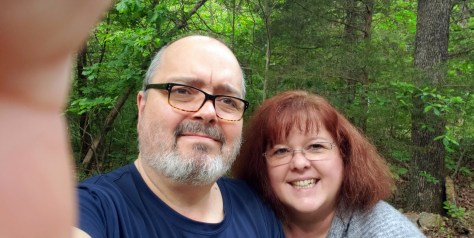
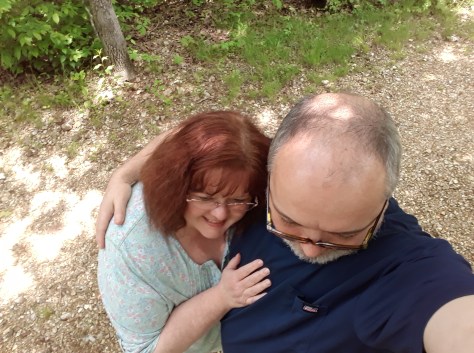
Dawn wanted to take pictures using her phone; her camera is significantly better than mine. She handed me the phone as she said, “Here, you can take them better.” She said that despite the years of insurmountable proof that the opposite was true. ” Thus, two of the best photos are obscured by my inexpert fingers. They are my favorites, of course.

1

15


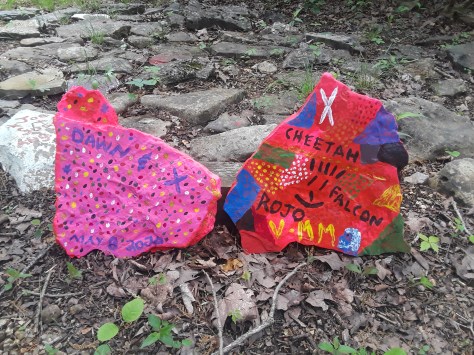
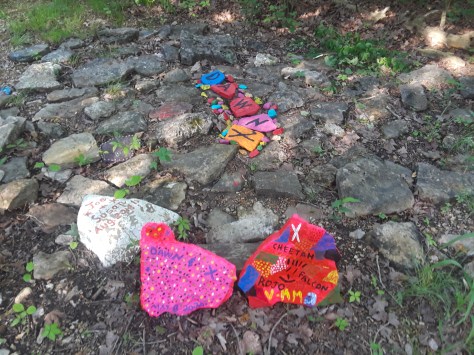
After painting a couple of rocks, something Dawn said that triggered a thought in my head, which is usually a dangerous sign. We were outside the cabin admiring the rocks that had surprisingly survived months (and even years) exposed to the elements. One of our previously ambitiously executed projects was somewhat intact but missing a couple of elements.

19

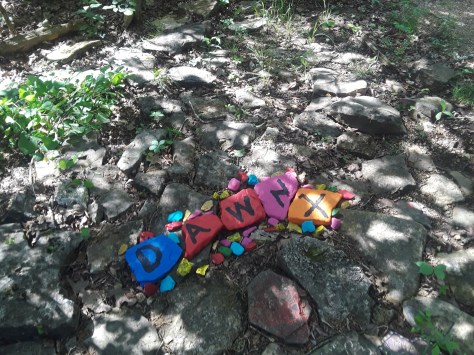
Because I had exhausted the obscenely bright neon color as the base of the two large rocks, I had an inspiration. Because I had a surplus of gloves, I opted to collect 5 medium rocks and approximately 50 small rocks. I sprayed a huge glob of several colors on aluminum foil and used my hands to roll the rocks around in my hands and paint them that way. Luckily for me, my unreplenished grab bag of paints contained about three dozen bottles of varying paints. It was a bit of overkill. Once we painted the large number of rocks, it looked quite striking against the backdrop of the surrounding forest and subdued colors nearby.

11


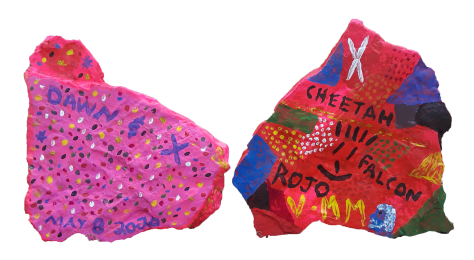
I made the png cutout version to better see the first two rocks we did. Not wanting to be outdone, I completed mine a nod toward my two favorite cousins, Beth and Lynette. I added a face on the bottom that was supposed to register surprise. I hope they don’t mind that I might exposed their secret identities again. Visitors to the cabins will drive up and see the two neon rocks and undoubtedly question what “X, Cheetah, Falcon, and Rojo” have to do with a getaway cabin. I challenge them to exceed my creativity and/or weirdness.

13


I took one from over the top of our heads, in case anyone needed to see such a picture.

7

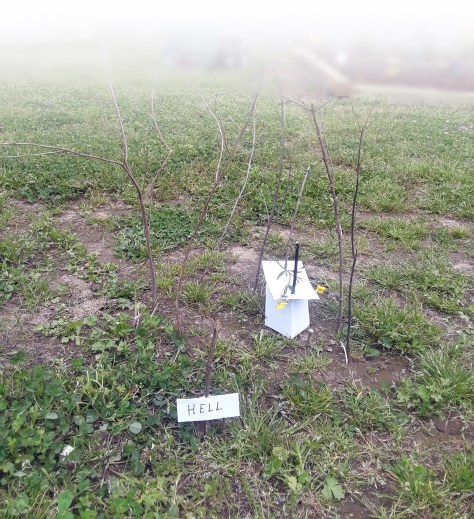
When we arrived back to our normal lives here in Springdale, we went to see my in-laws. While the adults talked, I took the time to build a little town from what I could find in the yard. (Plus my invaluable index cards, of course.) You have to find your fun wherever it may be found.

25 (2)

This picture is when Hell broke loose, pun intended. It was implied that I couldn’t leave my creation standing. For that reason, I had to pretend a tornado hit Hell and demolished it. I hope everyone is okay.

25 (1)

35

25


About About

777777jj

About leaned against a rough tree in the deep darkness, his breath coming in huge, ragged gasps. About wasn’t born with the name. His dad argued and fought to name him Beauregard, after a civil war general who later spent his life advocating for black civil rights. About’s dad died the day after he was born, however, when a tree fell the wrong way and crushed him. “That’s enough of that name,” his mom had solemnly pronounced and told everyone that his name was “About.”

His friends back in his small Kentucky hometown high school nicknamed him “About Dead,” after a line drive hit him in the chest while playing second base as a freshman on the varsity team. About was one of the best baseball players anyone had witnessed. When the ball hit him, his heart stopped for four minutes. While resuscitating him, his Uncle Desi, who was also the volunteer coach for the team, died of a heart attack himself. About’s story briefly made the national news, probably due to the incongruous death of his Uncle while reviving him. The day About got out of the hospital, his mom drove him directly to the cemetery to bury her brother Desi. About never played another sport.

His breath slowing a little, About estimated he ran for twenty minutes, ignoring branches tearing against his shirt, arms, and face. There was no illuminating moon in the night sky, and the light was dim. The dozens of small cuts on his face and arms itched with a fiery intensity.

About survived a mass shooting in 2005. A bullet shattered three of his ribs, and another traveled from his left armpit and exited near his spine. About was at Eastern Kentucky University to give one of his friend’s kids a ride back to school after a holiday break. He stopped for a cup of coffee near the university after dropping Christine off near the common eating area. He sat by the window to people watch. Across the street and not too far away, a disgruntled ex-employee of the university opened fire with a gun he stole. Because About was nowhere near the shooter, no one inside the diner initially understood what had happened. A policeman who sat in an unmarked car near the scene fired four shots. His report book remained unfinished in his lap. One of the bullets instantly killed the active shooter when it entered his left eye and exited the back of his head, even though the officer fired from a seated position inside the car. Two other shots miraculously traveled across the street, exploded through the coffee shop window, and hit About as he sipped his coffee. About was in a coma for ten days afterward, during which time the officer who stopped the shooter killed himself. The fourth bullet he fired struck and killed a woman sitting on the low wall on the edge of the street. In a coincidence, the policeman had been on duty just two days since a paid suspension following a shooting during a domestic violence call. The victim in the home shooting was the Aunt of the woman sitting on the wall near campus. As for About, he no longer believed in coincidences.

Five years later, when his truck was hit from behind by an unseen drunk driver, he went off the side of a steep valley road, tumbling end over end for fifty feet. He lay there bleeding for four hours until a passing local driver noticed the missing guardrail and investigated. Two surgeries later, scars traversed his back and right arm. He was whole, though. Many nights he lay in his restless bed wondering what force saved him. As he lay in his truck at the bottom of the ridge, he hallucinated and talked to someone or something he couldn’t quite see. While in the hospital, he vividly dreamed whatever it was at the bottom of the holler followed him to the hospital, too. The voice insisted it wasn’t his time to depart. Six months later, the drunk driver turned himself in to the Kentucky State Police. He was already dying of pancreatic cancer. About told him and the Staties that he forgave him and to let him live the rest of his life in peace.  The drunk driver died of electrocution five days after reporting to prison.

People laughed at his nickname. “What do you mean, ‘About Dead,’ is your nickname?” Almost everyone asked. He politely recited the fact that a freak accident in boot camp almost killed him. It did, however, kill six new recruits and the drill instructor who’d served twenty-seven years in the Army. His friends became superstitious when he came back to his hometown to recuperate. The Army sent a Colonel to ask him to accept an honorable discharge on medical grounds. Truthfully, the Army was superstitious about the incident and didn’t want About back for reasons unrelated to his injuries. His friends dropped the ‘Dead’ part of his nickname. Kentucky grandmothers have preached for generations that it’s best to not jest at the things we don’t understand. Afterward, depending on how much interest the other person showed, he’d list off the other near-misses. Most people became uncomfortable. If he noticed their discomfort, he had a litany of jokes to appease them. He often said, “You can find me in the “About Section,” he’d say and laugh. If he was feeling particularly humorous, he would tell them that he was the brother of “Mostly Dead,” a joke he stole from The Princess Bride.

A year ago, About abruptly left his hometown and moved to another Kentucky town, one with about twice as many people as his hometown. He couldn’t tell his few remaining friends that he’d seen something in his peripheral vision. Often, as dusk approached, he could feel its long shadow behind him. He’d look, only to see the encroaching greyness of night. There were nights he lay motionless in bed, slowing his breathing, and waiting for an hour with his eyes closed to slits. Though he could see movement in the dark and shadows, he never spoke to it or acknowledged that he was aware of it. Whatever it was, it followed him to the middle of Kentucky, not too far from Mammoth Cave National Park. Because of his previous injuries, he had a full-body scan. This eliminated the possibility of a physical cause for his hallucinations. About would have preferred a definitive physical reason for his hallucinations.

As insomnia took its toll, About asked his co-worker Styles if he could stay in his cabin the following weekend. “Sure! It’s about time. You’re going to love it. Nothing but deer, fish in the creek, and a million trees to keep you and whoever you’re taking with you good company,” Styles said good-naturedly. He knew About didn’t have a girlfriend. “Watch out for bears, though. They don’t talk much.” Styles was rich due to his parent’s wealth. He still worked in the County Clerk’s office to keep himself busy. No one could believe that someone so friendly could be so rich. Coincidentally, Styles had the entire county map memorized, as well as almost every song written between 1980 and 1988.

After work Friday About drove the back roads across Highway 70 and Joppa Ridge. Style’s cabin was at the literal edge of the dense treeline. It seemed to be all porch. It had a hanging porch swing on one end and a netted sleeping area on the other. Styles often slept on the porch or out on the ground in a sleeping bag thrown near the firepit about twenty feet from the cabin. About noted that Styles had kept his promise; there was a massive pile of firewood and fallen tree limbs to feed the sizeable firepit. About took his supplies out of the back of his truck and carried them inside. He didn’t need much to keep him sustained. The fridge was well-stocked.

Around eight o’clock, About poured himself a few fingers of scotch from the kitchen cupboard and grabbed a bag of Style’s homemade beef jerky. He went out on the porch and sat on the stone steps. He left the gun inside. He couldn’t imagine how he’d need a gun. He knew that wildlife would not approach the cabin. Not tonight, anyway. The shadow would keep them at bay. About no longer felt foolish for thinking that way.

As the light faded, About sipped from his glass of whiskey and took another bite of the delicious beef jerky. Somewhere in the distance, a loud crash echoed. About didn’t flinch. He knew it was just letting him know it was out there. About downed the remainder of the whiskey and put the bag of jerky behind him. He clasped his hands and listened. Every few minutes, a crisp breaking of a limb would echo. The sounds made a long arc to his left. They stopped. About realized he had almost entirely stopped breathing. For at least an hour, no sound stirred. Forests are not dead places, even at night. Something is always on the hunt for food. No fireflies blinked across the expanse of grass leading up to the dirt road. The quiet was total and intoxicating.

As the ice settled in his whiskey glass, About jerked back to consciousness. He couldn’t shake the feeling that the shadow was behind him in the total darkness, sitting on its haunches near the door. Just as the thought coalesced, a board on the long porch groaned and settled. About felt the ridges of his scars light up with goosebumps.

About stood up slowly and then gingerly stepped forward down the steps and toward the firepit. He fished a lighter out of his pocket and flicked it. The light seemed unimaginably bright in the total darkness. He bent in the windless night and put the flicker of flame against the kindling and grass under the wood piled in the firepit. Immediately, a whoosh of flame shot up. About stepped back, but did not turn. Within a couple of minutes, the fire was going intensely. Careful to avoid turning his head toward the cabin, About threw more wood on top of the wood already in the firepit. He continued to throw it on, even as the ends began to hang over the wide edges. The fire roared.

About circled the edge of the firepit, away from the cabin. He kept his eyes downcast. Somehow, he sensed looking at it directly would provoke it. He picked up the longest remaining limb as he edged around the firepit. The fire continued to grow in intensity. It cast shadows of its own, as sparks crackled and made their way upward to disappear. On the opposite side of the firepit, About used the long limb to push and cajole the limbs and fire to an even greater height.

About dropped the limb on the fire. As he did, he looked up, squinting between the flames reaching upward. Through the fiery tendrils, he saw it. As his heart leaped, it saw him. Moments later, About realized that he was running. His ears filled with the screech of the shadow. He didn’t decide to run. His body took control. Twenty minutes later, he was panting in the forest, leaning against one of the million trees around him, weirdly remembering the baseball game that almost killed him.

Behind him, something cracked and broke.

About stood up and turned.

It was time.

He had always been in these woods, forever, a shadow of his own making.

*

If you visit Mammoth Cave National Park, build a fire and sit beside it. As the night encroaches, listen.

As the shadows pass over you, don’t look closely.

 

¡ Doh !

thought-catalog-V5BGaJ0VaLU-unsplash


Did you know that being generally unhealthy makes you more prone to other diseases and infections?

A team of researchers in Switzerland spent 19 years investigating the link between underlying health issues and onset diseases. On March 23rd, 2018, Dr. Wayne Kerr was inventorying the medical literature section of Barnes & Noble in Lucerne. Suddenly, he found it, the proof his team spent 19 years and millions of dollars investigating. He stood up, screaming for one of his research team members, who was also in the store.

As Dr. Leigh King ran up to him, Dr. Kerr held up the book he discovered:

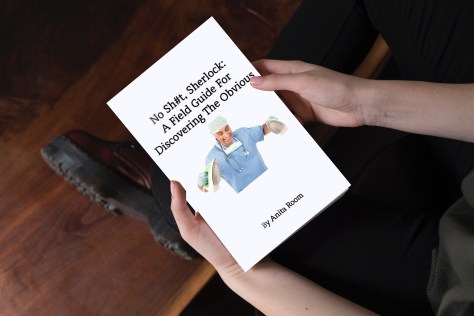
“No Sh#t, Sherlock: A Field Guide For Discovering The Obvious.”

.

.

.

.

.

P.S. I wrote this after reading someone’s post on social media. His post was rather smart, a fact that amplified my mirth at the idea floating around in my head as a result…

Did you know that being generally unhealthy makes you more prone to other diseases and infections?

A team of researchers in Switzerland spent 19 years investigating the link between underlying health issues and onset diseases. On March 23rd, 2018, Dr. Wayne Kerr was inventorying the medical literature section of Barnes & Noble in Lucerne. Suddenly, he found it, the proof his team spent 19 years and millions of dollars investigating. He stood up, screaming for one of his research team members, who was also in the store.

As Dr. Leigh King ran up to him, Dr. Kerr held up the book he discovered:

“No Sh#t, Sherlock: A Field Guide For Discovering The Obvious.”

The Whole Hogg Episode

X cargill ID


In the 90s, I worked at Cargill in Springdale. Much of the work was dehumanizing. Oddly enough, the proximity and close quarters also made it possible to interact with a wide swath of people. Despite the brutality of the job, some of us managed to make use of our shared time there. We shared jokes, insulted each other with the skill of a French sailor, and learned each other’s language. The racists lurking among us didn’t. They despised the fact that Latinos willingly applied to work the line jobs. As many faults as I had with the job, I was able at times to see the job from the viewpoint of someone who would have worked any job, even with gritted teeth, for the rest of his or her life. I was lucky to get the job. During the annual layoff at the end of the year, I signed up to work on the other side of the plant instead of drawing unemployment, with the goal of seeing what other jobs were available. It turns out, a lot were. I never returned to the Jeffrey Dahmer side of the facility.

I started on the turkey evisceration line. It is nothing like you would imagine. Unless you are imagining a bloody, violent mess, in which case, bingo! you’re right after all.

On Fridays, it was common for the supervisors to walk down the interminably long line of employees as we worked with vacuum guns, scissors, knives, and bare hands. We wore high boots, smocks, plastic aprons, and a variety of other things to make us as uncomfortable as possible. As they walked, they would go through their pile of checks and find each employee’s corresponding check and put it in our pocket. Some people would have them placed in the back of one of their boots. This was usually a strategic mistake, as the work environment was filled with water, blood, and an assortment of internal organs that shouldn’t be flying around.

Based on the moisture component, I was one of those who objected to the check being put in my boot. In my case, I didn’t care if the supervisor wanted to lift my smock and find an outside pocket to jam the check into. It didn’t threaten my fragile masculinity.

At this point, I’d like to mention that it was ludicrous that checks weren’t handed out on our hour-long break. That’s an argument for another day. Many women didn’t appreciate the check system at all, for obvious reasons.

Back to the story… some supervisors would ignore your request and jam the check into your boot despite your objections. Given that you’re standing in front of a fast-moving line filled with increasingly stripped-down recently deceased turkey carcasses, it’s hard to step away from the line.

One supervisor, in particular, was named Robert Hogg, with a double ‘g’ in his surname. For whatever reason, I loved yanking his chain. Looking back, he was comparably great as a supervisor. The fact that he didn’t hang around as long as many spoke highly of his character. Robert and I engaged in a tit-for-tat game of oneupmanship about many things. One thing I liked about him was that he could issue an edict from management and simultaneously acknowledge the absurdity of it – while letting me know I needed to do it, regardless of how stupid we agreed it was. I could respect that. I still do.

After a couple of Fridays of Robert trying to jam my check into the back of my boot, I hatched a foolproof plan…

It’s worth noting that I was prone to zaniness when I was young. I would wear mismatched shoes, my shirts inside out, or draw and paint on my clothes. Anything I could do to cause a bit of commotion or eye-rolling was something I was interested in furthering. As an example, one of my fondest memories was after we had a big meeting regarding drug use and policy. There were hundreds of us working on the evis side of the plant. I entered the bathroom and opened 4 or 5 packets of sugar alternative. I wiped it all over my top lip and across my nose. As I exited, one of my conspirators literally screamed, “Hey, you have something under your nose!” Naturally, about half the heads in the breakroom turned to look at me, some managers included. I pretended to be caught off guard and wiped crazily at my nose and sniffed loudly. After an awkward pause, most of the breakroom laughed. “I picked a bad week to stop snorting cocaine,” I said. (One of the managers took the time later to seriously inform me that while he thought it was a great prank, that I should take appearances into consideration before doing anything similar in the future. “Have you seen my face? I asked him. My question didn’t help, now that I think about it.)

Before the next Friday, I went to a flea market and bought some pants and then a variety of safety pins. I cut the pockets off the pants and then sewed all the pockets closed. During our first break, I cut my boots down to ankle height with a pair of scissors.

After our first break, Robert steadily went down the line, inserting paychecks. As he neared, it was difficult for me to keep a straight face.

Robert lifted my smock and started to put my check into my boot. Which weren’t there. Rather, they were cut too low to put anything there. He then pulled my smock higher to expose my pockets.

“What the…” he started to say.

He looked around the sides and noted I didn’t have pockets at all. Finally, it dawned on him that my pants were inside out. I had used safety pins to create belt loops to hold my belt (and pants) up while I worked.

Robert laughed for several seconds.

“Okay, you got me!”

It’s still a victory I count as one of my fondest.

.

.

P.S. When this ID card was printed, I only had 1 legal name, like Cher or Madonna. People often called me other names, ones unbecoming for polite society.


A Wildly Accurate and Inaccurate Post About Badminton

shuttlecock-sculpture-580754_1920

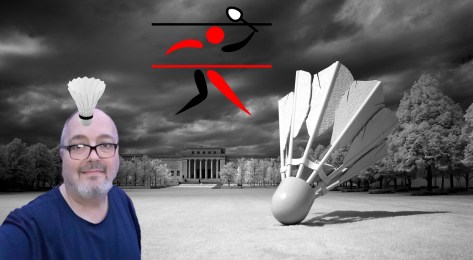
Many of us, especially those of us whiter than a bleached bag of rice, played badminton in our backyards when we were younger. Let’s admit it: we didn’t know what we were doing. Like a game of Monopoly, we made up the rules as we played. We ran into parked cars, brick walls, and probably smacked each other a few hundred times with the rackets. Sometimes, we even hit each other accidentally.

Whether badminton is a sport is obvious. The intensity with which you argue about this question itself serves as a reliable indicator whether you measure your ice cubes, watch the Harry Potter series with Klingon subtitles, or really ‘feel the burn’ when you walk fast to the garage for another 6-pack of spritzer water.

Joking aside, some matches have recorded hit speeds of 200 mph. Moreover, many people don’t know that the intensity of competitive badminton greatly exceeds that of tennis and typically requires twice as much distance covered per match.

If you already know the correct spelling for the word “badminton,” it’s likely that you also eat ketchup on your mac and cheese, not that there’s anything wrong with that, you psycho.

(Trivia Break) Gerbils can detect the smell of adrenaline in human sweat.

The game was invented in India in the 19th century after Lord Valdemort (no relation) noticed several of his servants waving swatters around in the boudoir. One of the servants accidentally threw a stuffed finch from the bedside display and the others began to swat it playfully back and forth. Although they broke several thousand dollars worth of vases and had to be put to death, the game was born. This entire paragraph is wildly inaccurate.

Despite my aversion to sharing facts, the name of the game owes its origins to the estate of the Dukes of Beaufort on which it was developed, rather than the once-popular theory that two drunk ladies intentionally kept pronouncing their illnesses incorrectly.

(Trivia Break) The Canary Islands were not named after birds, which I am certain most people don’t know. It derives its name as it passes through Spanish and Latin for “dogs.”

It’s no accident that the first 3 letters of the word cleverly telegraph the amount of fun you’re going to have while playing. While some people claim to enjoy playing, some people also like to eat raw hamburger and watch “The Bachelor.” People can’t be trusted.

The word “badminton” itself is offensive enough, but factoring in ‘shuttlecock’ and ‘racquet,’ and you have a guaranteed chuckle for anyone under 15 years of age.

While reading about it, I saw that formal badminton games are played indoors, while casual games are played outdoors.

Again, though I detest facts, competitive badminton is played indoors due to the fact that light winds can affect the shuttlecock as it flies. Whether those light winds are meteorological or gastrointestinal is a subject each family will debate on its own. Thanks to Aunt Maude for the chili.

The disadvantage of playing outdoors is that one runs the risk of other people observing you trying to play.

To my surprise, I discovered it is a summer Olympic sport. I presume it’s played as a literal reenactment of the movie “Dodgeball.” It’s the only explanation that makes sense.

When badminton first became an Olympic sport, over one billion people watched. While I like to joke about it, worldwide it is one of the most popular spectator sports. That still blows my mind, like discovering that you’re 14% more likely to die on your birthday than any other day of the year. (It’s true, by the way.)

A regulation badminton court is 20 X 44 feet, while the net is supposed to be 5 feet in the air. (And presumably connected to the ground, if you were wondering.) Attempts to replace the regulation net with a complex series of barbed wires were rebuffed, despite many advocates for watching the game demanding that barbed wire would result in a more entertaining game, much in the same way that baseball would be more enjoyable to watch if spectators could randomly fire pistols at those playing.

Even though you will think I’m making this up, a traditional shuttlecock or birdie consists of 12-14 duck or goose feathers – and those feathers are required to be from the left wing only of the bird, no matter what the bird might have to say about it.

Quoting from the official rulebook, here’s how the game is played:
1) Each participant should be motivated to play out of sheer boredom 2) Each player should have his or her own mosquito swatter or approved racquet 3) Alcohol or epilepsy help the game 4) Score is kept by constantly arguing about where the net is, how big the play area is, and how afraid you are of your family members. 4) The winner is declared when someone runs facefirst into a car parked too close to the net.

Sports Illustrated tried to do an article of the “5 Most Interesting Things To Happen In Badminton” and could only find one answer: “Nothing.” Not wanting to offend the Badminton World Federation (BWF), which coincidentally is a real thing, the editors instead ran an article mocking lawn bowling, which appeased badminton fans.

Given the competitive disadvantage of many sports, the truth is that a young person could do worse than attend a school with a competitive badminton team. If you can get a scholarship for bowling, Cornhole, fencing, rifle, water polo, and skiing, badminton is a great alternative. (All of those are real, sanctioned sports in the NCAA, if you thought I was joking.) For those considering playing badminton in college, you’ll be able to visit overseas, where badminton is incredibly popular.

One actual theory as to why it’s not as popular here sounds strange: sports that don’t utilize spheroid objects tend to fare worse both in participation and viewership. You might laugh at me to admit this, but this theory made me think way too long about the intangibles of this sort of fact.

In closing, badminton is a very physical sport. It’s much more popular than most Americans realize. Also, even though it’s totally unrelated, if you earn $20,000 a year, you are actually in the top 5% of wage earners in the world. That’s not made up, either.

P.S. I know this post is about badminton; if you read closely, though, you discovered a couple of crazy facts along the way. In closing, the average human body contains just enough fat to create 7 bars of soap.

It’s Better If You Don’t Share

4444
I didn’t put the stupid fake picture first, given the way that the header picture is invariably the one first seen.

–


—NOTE (Below) : Misleading Title from a worse Facebook page—


rereer

343334
My initial response to the above-debunked picture appearing on my FB feed for the 12th time…
3453453
My nested response underneath…

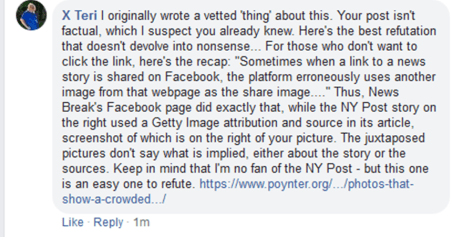
The fake posts by social media users abated. Inexplicably, I had TWELVE repostings between today and yesterday. I don’t know whether people suddenly became more stupid or if those running the conspiracy and fringe social media sites upped their game. It could be both – and often is. It’s no secret that people are often both stupid and lazy. How they could have missed the countless debunkings though, is beyond belief.

I don’t know why I’m still so surprised that otherwise smart people don’t check what they share. By uploading an image to Google Images, I can usually see what portion of its usage occurs on conservative vs. alleged liberal media. If it’s mostly one side, it’s probably drivel, whether shared by liberal or conservative.

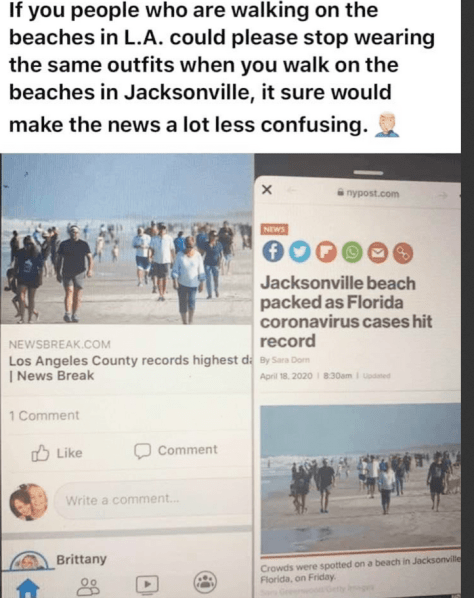
The picture with this post was debunked a couple of weeks ago. Despite this, those who can’t or won’t use their critical thinking skills continue to share it as it makes its way around the internet. There is no media bias, at least not as pictured. I’m not a fan of the NY Post, given its owner, but they used a properly credited picture of the beach. The other FACEBOOK page operated by News Break aggregated the story. The FACEBOOK posting used another image from the same website. The NY Post website did nothing incorrect here – and neither did the News Break FACEBOOK page. A few politically-influenced social media sites have continued to improperly report the juxtaposed images in support of the incorrect and erroneous claim that its proof of the elusive media bias that evidently occurs everywhere. In turn, people who are inclined to believe such claims outright, even in cases that are demonstrably not evidence of media bias, share these posts ad infinitum.

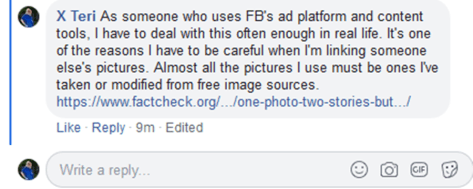
What the picture does expose is the ever-growing need for people to use social media to share their own words or ideas. It insulates them from being ‘had’ by the very media they claim they can either trust or not trust. By continuing to share such incorrect stories, they themselves become guilty of what they accuse others of doing. By presenting every word and image on their page as their own, the worst that can be challenged is their opinion. Posting/sharing what others produce exposes them to scrutiny and being fooled by partisan or cause-oriented falsehood.

If I sound a bit irritated, it’s because many of the people who are shouting the loudest about ‘fake news’ or the unreliability of the media quite often use questionable sources to get their ideas, especially social media sites. No matter how often I point out that they are being victimized by their choices, they, of course, get irritated and angry. No one enjoys being asked to correct provable wrongs. On the other hand, that’s what responsible people do: they correct errors and push back against ego preventing them from saying, “Oops.” Sooner or later, we are all going to repeat/share/post something that is literally wrong. How we respond when someone points it out is the single biggest determinant of whether we are capable of discourse and conversation. Along that line, the safest thing to do is to avoid sharing something that you didn’t create. Doing so and then digging in when it’s pointed out that it’s wrong tends to lead people to the conclusion that discovering what is essentially true or right isn’t high on your list of priorities. Above all, always be very cautious about sharing an alleged news post from a Facebook source. They are notoriously unreliable. I have hundreds of them blocked, both conservative and liberal alike. Likewise, I use LeechBlock on my browser to block a huge list of websites that are prone to extremism.

Granted, even though I meticulously pointed all this out, the odds of the outright false post being taken down approach zero. The people who make the “fake media” claim tend to ignore such requests at a rate much higher than their crazy liberal friends. It’s a hallmark.

P.S. Many users aren’t aware that some of their posts are flagged by Facebook as “FALSE” as they post them. If you show the poster that Facebook has done this, they’ll invariably shout, “BUT you know nothing Facebook says or does is true.” And then I’ll point out that the fake post they are arguing about was itself a Facebook post and that they are contradicting themselves. It’s a sublime moment; one of joy for me and seething anger for them.

I know I’m an idiot. In my defense, I don’t use other people’s websites or links on my pages. What you read is my opinion and interpretation. It’s not poorly-expressed as objective truth. It’s opinion.

FactCheck Link

Poynter Link

Politfact Link (Same Beach, Different Conspiracy)

Snopes Link


Not My Houseshoes

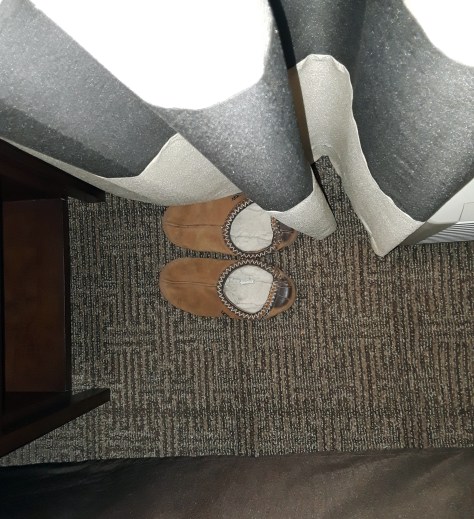
20190805_055054

In August of last year, Dawn and I stayed at a hotel in a small town. The first room they put us in had an unusual issue with the plumbing. Like everyone does, we animatedly discussed the minutiae of our initial problem. The clerk wasn’t exactly convincing in her portrayal of ‘interested.’ In her defense, she was stuck without a maintenance person – an all-too-common problem in hotels today as businesses reduce labor and stretch support staff needlessly thin. Dawn was much more patient than I was. I was hoping she’d unleash me and allow me to pull shenanigans. She vetoed any fun response. I took a picture of her sitting and watching the door, waiting for the promised visit by the clerk/involuntary maintenance worker. She took care of all the interaction with the clerk. Later, I agreed she was right. My involvement would have been a more exciting story, though. Of that, I’m certain.

I’d like to confess that she could have rightfully murdered me at that point, and I would have agreed I had it coming.

Part of being married is to know when to alternate whose turn it is to be either indignant or creatively bitchy. It’s an art.

We ended up moving to another room.

We checked all the plumbing first. Once middle age arrives, only a fool fails to prioritize the usability of every bathroom within a mile.

Because we’d already changed rooms, we laughed and said we’d keep this one even if we found a corpse under the bed. (Last year, there was another well-known story that included an undiscovered corpse under a hotel bed, by the way. I wish I could get THAT lucky. What a great story, if a terrible weekend.) Like everyone else, I have some great “terrible room” stories. At least 6 of mine involve Brinkley, Arkansas.

Because we’re married and set in our ways, I navigated around the bed to ‘my’ side on the window side. As I stopped near the bedside table, my feet bumped my houseshoes on the floor. Then it occurred to me that I didn’t have houseshoes and that even if I did, I wouldn’t have brought them. I prefer to run my bare feet across the unimagined nastiness of the hotel carpet.

Not wanting to alarm Dawn, I didn’t say anything about the houseshoes. I did tell her about the t-shirt in the drawer. I didn’t tell her about the half-full whiskey bottle behind the curtains or the weird lettuce and unknown meat sandwich in the closet. Instead, I decided I’d tell her later. I did check the sheets like I was searching for lost treasure, though. We often bring our own comforters, pillows, and box fan, precisely because we aren’t savages.

(Note: I’m no longer amazed about how much alcohol there is in a dry county.)

I do wonder about the hotel and what other goings-on we missed while we stayed. Since I chose not to tell Dawn about the houseshoes or other nonsense until the next day, I laid in bed and itched, imagining that the sheets hadn’t been cleaned in months.

It’s a small price to pay. Just as one doesn’t return food at a restaurant, it’s equally valid that you never change rooms twice at a hotel. You’re better off sleeping in the garbage bin behind Walmart at that point.

.

.

P.S. Regardless of grammar, “houseshoes” is correctly spelled, even if it’s not.

.

20190804_150824

You’ll note that the bed is unmade. One of the first things I do is pull all the covers and sheets we don’t use off the bed and neatly fold them. I also place them in a clean space and put a notecard on them, indicating that they are “clean” and not used. While I know I’m not the only weirdo who does this, I do laugh when I imagine what the clerk or housekeepers think when they see that an unused room needs the bed made again. Dawn and I are also guilty of leaving the room exceptionally tidy when we depart.

Ashes To Ashes To Box

20200430_095507

“I’m going to save a lot of money on the receptacle for Aunt Melinda’s ashes, X!” She seemed genuinely excited.

“How so?” I asked.

“My Aunt Melinda was a clairvoyant, seer, and psychic,” Susan told me.

“Okay, I still don’t see how her being a psychic will save you money,” I told her.

“Look here.” She help up her phone for me to see the image. “FedX makes a medium box.”

Random Act of Ice Cream

alvin-mahmudov-vKuEhorbvYI-unsplash-removebg-preview

Random Act of Kindness: I stopped the ice cream truck as it slowly trolled the neighborhood. I handed the driver a pile of money and told him to give the neighbors down the street a few houses on the left whatever they wanted. I don’t know the family, but there were 6 or 7 young children outside playing. The woman watching the passel of kids reluctantly approached the ice cream truck as he waved and said, “It’s free!” I heard one of the kids scream, “Papi! Free ice cream!!” All the kids ran en masse toward the van, dancing and singing as only young children can. Mom and Dad ended up with ice cream too. I went back outside a couple of minutes later to see the children still excitedly comparing selections and laughing with complete abandon.

I didn’t do much today, but I managed to give a few children a moment of complete joy. Not only did they each unexpectedly get a treat, but they were able to choose whatever their heart desired. Despite my age, I can remember what such a rare treat felt like when I was young in heart and body.

P.S. I teared up a bit.

Nothing To See Here, Just Commentary

The absurdity of some people is astonishing. Earlier in the day, I entered a popular non-essential store. Not a single person wore facial protection. Most didn’t pretend to observe safe distancing. My post isn’t about that, though. At best, such stores have shown a compliance rate of 1 in 5.

It’s about the huge store packed with people. Outside, a disinterested man stood stoically and tapped his tablet as each person entered and exited. The stacks of carts were marked “Disinfected,” even though I could see that they hadn’t been. Human boredom and lack of interest had caught up with the process. It’s only natural. The guy collecting empty carts was doing so without any PPE, and pushing the dirty carts into the holding area. I watched as he started a new line and pushed it all the way through to where the customers could grab them. The zombie hitting his tablet observed him doing it, but said nothing. Customers would assume that the signs saying “Disinfected” were in fact clean. They weren’t. I said nothing because this store does not welcome commentary.

Inside, signs were everywhere, warning of the necessity of maintaining social distancing and practicing safety first. About 1 in 4 or 5 wore facial protection, including employees. A customer stood 2 feet away from the deli attendant, leaning over to within a foot. Neither flinched as they engaged in an animated conversation. Along the back, where the slaughtered animals lay packed in small packages, a woman with a small girl in her cart passed, coughing openly and without a facial covering – and without bothering to cover her mouth.

At one of the registers, the clerk wore gloves. She used the same pair of gloves across customers, touching their groceries, coupons handed to her, as well as reaching over to handle their cards and press buttons on the self-pay kiosk at the station. She handled cash, handing it across without sanitizing her hands. The customers were mostly doing the same.

Waiting for my wife, I watched the behavior of both employees and customers. Other than the number of signs, it was no stretch to imagine we were back to normal. I could make a list of no-nos. You get the idea, though.

Waiting in line, I noted the blue tape on the floors, spaced 4 feet apart. (Not 6) Of the customers ahead of us, 1 wore a mask. None of the others did. I watched our cashier handle things handed to her by the the customer. The cashier handed one back and then put her fingers inside her mask and pulled it down, then run the back of her left arm across her face and nose. She reached back up and pulled the mask up as the customer handed her more items. A manager was called as the light flashed above. The cashier pulled her mask down again, hooking her fingers inside her mask. She wiped her hand across her face again. The manager pulled her mask down and handled the same items handed over by the customer. She leaned in and repeated herself a few times. Her face was 2 feet from the customer and even closer to the cashier, whose mask was down. They finally figured out the coupons and how to ring up the items separately. She pulled her mask back up and left.

I began to load my things on the conveyor. The cashier didn’t throw a separator on the belt. I moved around within the 4 foot sections of tape. “Sir, can you move back?” the cashier hissed at me. “Yes, of course,” I replied as I retrieved the separator and moved back around, shaking my head at the stupidity of her focus.

In the next line back, a woman with a small boy was simultaneously hollered at by the cashier. I had seen them twice earlier in the store. At one point, the woman carefully reminded the boy to keep his distance to avoid touching things.

The people currently at the cashier weren’t wearing facial protection. The cashier pulled her mask down by putting her gloved fingers inside her mask and hollered, “Move back!” The woman apologized. The man behind her, fed up with the charade the store offered, cursed and said, “Just check the f%%% out already. No one is covering their face and you’re sticking your fingers inside your mask and using the same gloves on everyone, so what exactly are you doing correctly?” Stunned, that cashier went back to work. The woman with the small boy, although embarrassed, nodded in appreciation to the man. Note: when the man reached the register where the other cashier had hollered, he politely asked her to use sanitizer on her gloves before handling his groceries. She reluctantly complied.

My cashier kept looking over her shoulder, trying to get a good look at the man who had admonished the other cashier, even as she checked out my items. I had no doubt she was going to say something mean to him. I made eye contact with her to let her know it would be wise for her to say nothing. Had she done so, I was going to say something that would have really angered her. While she checked us out, I observed her reach inside her mask twice and scratch her face. I knew she had barked at me because she was unhappy that someone required her to wear a mask. It’s easy to bark at customers. It’s a mistake to bark at those of us who’ve made the extra effort.

The entire store is a testament to the folly of viral safety. Though there practices and protocols in place, the people who are supposed to enforce them don’t. I observed employees without masks, employees failing to wipe carts (as promised), stick their fingers in their masks, constantly pull them down, stand much to close to both one another and customers, wear gloves across multiple people, fail to use sanitizer on hands/gloves, and handle items across the customer-employee barrier.

Two weeks ago, I (correctly) predicted there would be an increasing rush to back away from isolation protocols.

I’ve witnessed the push grow. Stores here in Arkansas are great places to observe customers and see whether they think the protective measures should be followed. Lowes, Home Depot, furniture stores, Dollar Tree, Dollar General, and many grocery stores have driven home the observation that our compliance rate was always low.

I’m out in the world everyday and have been since the virus started. My job requires me to be out in it.

Even before the virus, I had many problems with people in my profession failing to practice basic contact precautions. Even with the virus, I’ve continued to witness what can only be called ongoing stupidity.

I’m not making a case for whether our protocols are warranted, or even that I know the answers. I’ve many instances of perplexity in confusion as I watched employers and public institutions wing it as the virus made its demands.

I am saying, though, that our single biggest problem is that we’re more committed to the idea of safety theater than actual safely. Human sloppiness will always derail our efforts to protect the public safety.

It’s always been that way. And always will.

Proper safety costs money. It costs effort. And most of all, it requires consistency.